The best first route is selective
A strong Tamil Nadu temple towns itinerary is not a race through every famous shrine. The state has thousands of temples, many active pilgrimage traditions, several architectural periods and very different landscapes. A first trip works best when it gives each place a job. Chennai introduces the modern coastal capital and nearby Pallava heritage. Kanchipuram or Mamallapuram adds early stone architecture and a northern sacred-city setting. Thanjavur anchors the Chola story. Madurai brings a living temple city with Pandya and Nayak layers. Rameswaram ends the route with island pilgrimage, sea, memory and long-distance devotion.
This seven-day plan is therefore a framework, not a timetable. It avoids fixed opening hours, ticket prices, current drive times, queue estimates and live festival claims. Those details can change because of rituals, local holidays, maintenance, weather, security or crowd arrangements. Use the plan to choose a logical sequence, then verify current information close to travel through official temple, district, transport and weather sources.
The route suits visitors who want temples as more than photo stops. It includes sacred practice, architecture, inscriptions, food, city life and rest. It can be done by private car with local drivers, a mix of rail and road, or city stays with hired transport for specific days. The important choice is not the vehicle. It is the pacing: fewer transfers, fewer temples per day and enough margin to respond respectfully when a living site is busy or partly restricted.
Why Chennai, Thanjavur, Madurai and Rameswaram belong together
Chennai is the easiest entry point for many travellers and a useful reminder that Tamil Nadu is not only an ancient landscape. The city lets you adjust after arrival, visit a museum or historic neighbourhood, and make a controlled day trip toward Kanchipuram or Mamallapuram. Kanchipuram is associated with major temple traditions and India's UNESCO tentative-list record for its temples. Mamallapuram, listed by UNESCO as the Group of Monuments at Mahabalipuram, offers Pallava-period rock-cut and structural monuments in a coastal setting. Choose one if time is short.
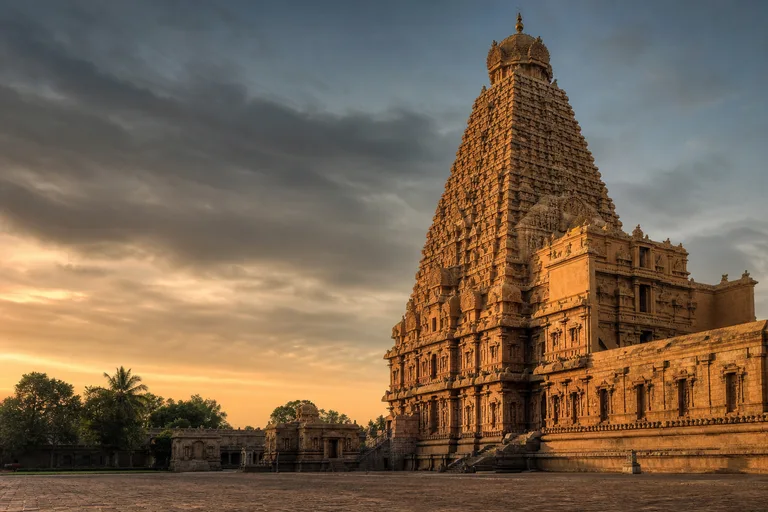
Thanjavur changes the scale of the journey. Brihadisvara Temple is part of the UNESCO-listed Great Living Chola Temples, along with Gangaikondacholisvaram and Airavatesvara at Darasuram. The phrase "living" matters because these are sacred places as well as protected heritage sites. Inscriptions, stone, sculpture, ritual movement and the surrounding town all contribute to the visit. A rushed hour at the main temple misses the relationship between monument, worship and city.
Madurai adds a different temple-town intensity. Meenakshi Amman Temple sits within a dense urban core of markets, processions, food, worship, traffic and daily work. The value of Madurai is not only one complex but the way sacred geography, city streets and social life remain intertwined. Rameswaram then moves the route to an island setting where Ramanathaswamy Temple, pilgrimage bathing traditions, Pamban crossing, Dhanushkodi memory and coastal exposure shape the experience.
A realistic 7-day temple towns itinerary
Arrive, recover and choose one low-pressure cultural stop. Good first-day options include a museum, a historic neighbourhood, a temple exterior visit or a coastal walk if current weather and local conditions are comfortable.
Pick one direction. Choose Kanchipuram for a sacred-city and temple-architecture focus, or Mamallapuram for Pallava monuments and coastal heritage. Trying to do both deeply in one day usually weakens both visits.
Use the transfer as part of the story rather than wasted time. Keep the afternoon light, especially if heat or rain is active. If you arrive early, take a first unhurried look at Thanjavur rather than adding a distant detour.
Give Brihadisvara Temple real time. If your group has energy, add the palace or a carefully chosen delta stop. Darasuram or Gangaikondacholapuram may deserve a separate day on a longer trip.
Reach Madurai and stay near the experience you most want. Keep the Meenakshi temple area, palace context, food and rest in a compact plan. Avoid crossing the city repeatedly during hot or crowded periods.
Move to the island with daylight margin. Treat Pamban as context, not a roadside spectacle. If temple participation is important, confirm current procedures before arranging the day around it.
Prioritize Ramanathaswamy Temple, town context and one coastal or memorial stop if conditions allow. Dhanushkodi should remain conditional on weather, access and daylight.
Add two or three days for Kumbakonam, Darasuram, Gangaikondacholapuram, Tiruchirappalli or Chettinad. The extension should deepen the route, not merely increase the count of temples visited.
Examples for different travellers
The same route can be tuned without changing its backbone. Families usually need fewer temple complexes per day, better rest blocks and hotels chosen for easy access. Architecture-focused travellers may spend more time in Thanjavur and the Kaveri delta. Pilgrimage travellers may give more time to Madurai and Rameswaram, but should still leave room for queues, rituals, bathing procedures, dress rules and personal energy. Food-focused travellers can use the same cities to understand filter coffee, tiffin, Madurai meals, temple-town dining and coastal food traditions without turning the trip into a restaurant checklist.
Chennai for arrival, one Kanchipuram temple focus, two nights in Thanjavur, two nights in Madurai and a single Rameswaram day. Skip remote add-ons when children or elders are tired.
Chennai, Mamallapuram, Thanjavur, Darasuram, Gangaikondacholapuram and Madurai. Hold Rameswaram for a later pilgrimage-and-coast trip if the week is already full.
Chennai arrival, Kanchipuram, Madurai and Rameswaram with fewer museum stops. Keep temple participation details current and follow local instructions over any online itinerary.
Choose Chennai, Thanjavur and Madurai only. Use the saved time for neighbourhood walks, reading plaques, source-guided visits and rest during difficult weather.

Temple etiquette that makes the itinerary better
Temple travel in Tamil Nadu requires more than logistics. Dress modestly according to each site's displayed expectations, remove footwear where required, keep voices low in worship areas and give processions or queues clear space. Do not photograph sanctums, rituals, priests, worshippers or restricted areas unless permission is explicit. Some places may restrict bags, cameras, phones or particular clothing. Treat those rules as part of the visit, not as an inconvenience.
At heritage sites, do not touch carvings, lean on walls, trace inscriptions or climb for a better view. Stone surfaces hold evidence and damage can be cumulative. At crowded temples, move with the flow instead of stopping suddenly in narrow passages. If a shrine is not accessible to non-Hindu visitors or has restricted entry, respect the boundary. A temple town is not a museum arranged around the visitor; it is a living place where residents, worshippers, staff, vendors and travellers share limited space.
Build etiquette into the itinerary before the trip. Carry clothing that works for temples even on hot days. Keep socks or an easy footwear plan for heated ground. Bring water, but check where it can be carried. Decide in advance that you will skip a photo rather than obstruct worship or traffic. These small choices make the journey calmer and more respectful.
Best season, packing and current checks
For many visitors, the more comfortable broad window for Tamil Nadu temple towns is the cooler part of the year, roughly from November to February. Even then, crowds, festivals, school holidays, rain and coastal wind can shape the experience. March to June can be demanding because of heat, especially around stone courts, open streets and long transfers. The southwest and northeast monsoon contexts affect regions differently, and Rameswaram's exposed coast needs special attention to wind, rain and sea guidance.
Pack for heat, walking and worship rather than for a single weather label. Useful basics include breathable modest clothing, a light rain layer in season, sun protection, a refillable water bottle, simple medication, offline copies of bookings and temple-appropriate footwear management. If your route includes elders or children, shorten exposed afternoons and book stays that reduce repeated transfers.
Before each major move, check current weather warnings from the India Meteorological Department, official district information, temple or HR&CE guidance where applicable, railway or road transport updates and your accommodation's local advice. Google Maps is useful for navigation, but it cannot confirm ritual access, safe sea conditions, festival crowd rules or whether a heritage area has temporary restrictions.
Frequently asked questions
How many days are enough for Tamil Nadu temple towns?
Seven days is enough for a focused first route if you choose one region sequence and avoid trying to include every famous temple. Ten to fourteen days gives a calmer pace for Darasuram, Gangaikondacholapuram, Tiruchirappalli, Chettinad or Kumbakonam.
Which Tamil Nadu temple towns are best for a first trip?
Chennai with Kanchipuram or Mamallapuram, Thanjavur, Madurai and Rameswaram make a strong first route because they show different historical and sacred landscapes. The best choice depends on whether your priority is architecture, pilgrimage, food, family pacing or photography.
Should I visit Kanchipuram or Mamallapuram?
Choose Kanchipuram for a sacred-city and temple focus. Choose Mamallapuram for Pallava monuments, reliefs, rock-cut architecture and coast. With only one day from Chennai, do one well rather than both quickly.
Does this itinerary include temple opening times?
No. Temple schedules, rituals, queues, photography rules and access arrangements change. Confirm current details with official temple or local authority sources before travel.
Can families use this route?
Yes, but families should reduce transfers, avoid long exposed afternoons, keep rest time and choose fewer temple complexes per day. Thanjavur and Madurai reward slower stays.
Related My Tamil Nadu guides
Sources and further reading
- Great Living Chola Temples
UNESCO World Heritage Centre. Used for the serial World Heritage context around Thanjavur, Gangaikondacholapuram and Darasuram. - Group of Monuments at Mahabalipuram
UNESCO World Heritage Centre. Used for Pallava monument context near Chennai. - Temples of Kanchipuram
UNESCO World Heritage Centre tentative-list record. Used for Kanchipuram's heritage framing. - Temple Guide
Government of Tamil Nadu, Hindu Religious and Charitable Endowments Department. Used as an official starting point for temple verification. - Regional Meteorological Centre Chennai
India Meteorological Department. Used for weather-warning and seasonal-check guidance.