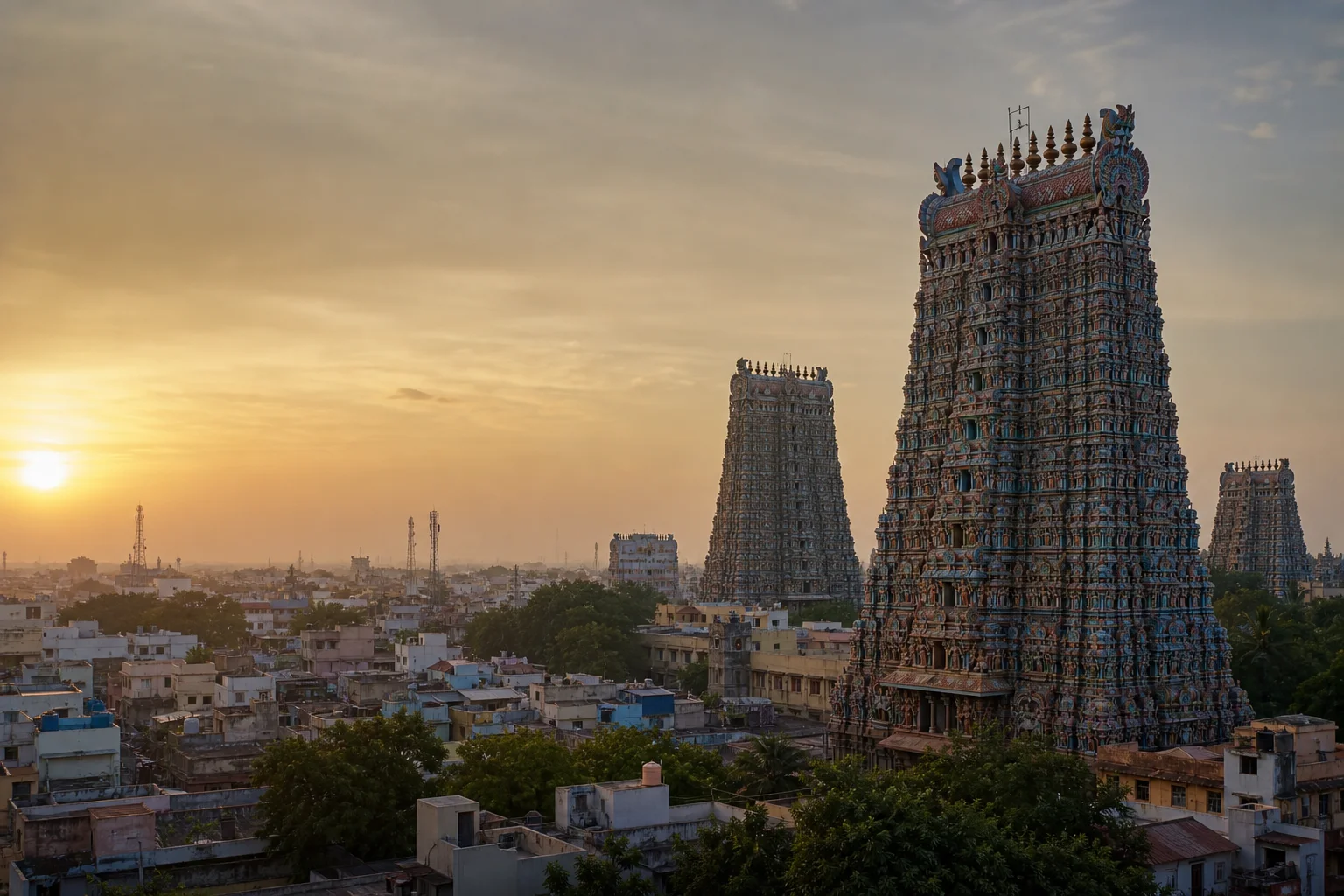
Pandya city, temple centre and living cultural landscape
Madurai Guide: History, Temples & Things to Do
Madurai is one of Tamil Nadu's most historically resonant cities: a place associated with Pandya power, classical Tamil literary memory, a major living temple, Nayak architecture, markets, pilgrimage and a distinctive southern urban culture. A useful visit looks beyond a single monument while giving history the prominence it deserves.
On this page
Start here
Why Madurai
Madurai gives visitors an unusually direct relationship between city form and living heritage. Streets, markets and religious activity radiate around the Meenakshi-Sundareswarar Temple, while the palace, museum, tanks and nearby hill sites reveal different periods and communities. The city works especially well for travellers who want history and worship to remain connected to everyday life.
It is also a strong base for the wider south. Pilgrimage routes, archaeology, hill temples and journeys toward Rameswaram or the far-southern districts can begin here, but Madurai itself deserves enough time for a slower reading of its layers.
Historical context
A short history of Madurai
Madurai is deeply associated with the Pandyas and with classical Tamil literary tradition. Sangam literature cannot be read as a modern city record, but it is central to the cultural memory of Madurai as a royal, poetic and commercial centre. Archaeology, inscriptions and later texts must be used together when reconstructing the early city, and claims of uninterrupted urban form should be made cautiously.
Political control changed across the medieval period. Chola expansion, the later Pandyas, the Madurai Sultanate, Vijayanagara authority and the emergence of the Madurai Nayaks each affected the region. The Nayak period is especially visible in the present city. Thirumalai Nayak's seventeenth-century palace and additions associated with the temple and public ceremonial spaces demonstrate courtly architecture, engineering, stucco work and the organization of an important capital.
Colonial administration altered institutions and infrastructure, while Madurai became an important centre of trade, textile work, political mobilization and the freedom movement. The Gandhi Memorial Museum, housed in the historic Tamukkam Palace, interprets Gandhi and the national movement while also linking to Tamil Nadu's political history.
Modern Madurai is a regional centre for education, healthcare, commerce, transport and pilgrimage. Its historic core remains active rather than preserved as a museum district. This continuity is valuable, but it also means congestion, worship and local work take priority over a visitor's sightseeing schedule.
Plan your visit
Places to explore in Madurai
Access, opening details and current conditions should be verified with the responsible official source before travel.
Meenakshi-Sundareswarar Temple
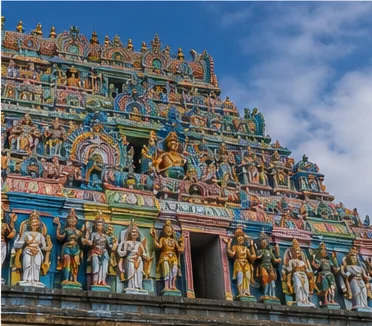
The temple is the ritual and spatial centre of Madurai. Towers, halls, shrines, sculpture and processional streets reflect multiple periods, especially major later additions. Religious narratives should be understood as tradition rather than archaeological proof.
Verify timings, dress, permitted items and festival access through the official temple.Thirumalai Nayakkar Palace
Built for Thirumalai Nayak in the seventeenth century, the surviving palace is important for its monumental courtyard, arches and stucco work. The Tamil Nadu Archaeology Department maintains the monument and site museum.
Check current conservation, visitor and programme notices.Gandhi Memorial Museum
Located in Tamukkam Palace, the museum presents Gandhi's life and the freedom movement. Its building also carries Nayak, colonial and post-independence institutional histories.
Confirm gallery access on the official museum site.Vandiyur Mariamman Teppakulam
The large temple tank is important to Madurai's ritual geography and public landscape. Water level, festival arrangements and access vary, so it is best treated as a contextual stop rather than a guaranteed event experience.
Koodal Azhagar Temple
A major Vishnu temple within the city, useful for understanding that Madurai's sacred landscape extends beyond the better-known Meenakshi complex.
Thirupparankundram
The hill and Murugan temple form an important sacred and geological landmark south of central Madurai. Access, crowd patterns and temple requirements should be checked locally.
Alagar Koyil and the Alagar hills
The temple landscape northeast of the city connects worship, architecture, seasonal ritual and the foothills. It requires a separate half-day approach rather than being squeezed into a central-city walk.
Historic core and markets
The streets around the temple combine textiles, flowers, metalware, food, worship supplies and dense movement. Explore respectfully, avoid obstructing business and ask before photographing people.
Choose your pace
Things to do in Madurai
Begin with the historic core
Walk a limited circuit around the temple streets to understand urban form before entering individual monuments.
Compare sacred and courtly architecture
Pair Meenakshi Temple with Thirumalai Nayakkar Palace to see how different institutions shaped space.
Use museums for context
The Gandhi Museum and palace site museum connect objects and political history with the city.
Explore southern food traditions
Try established categories such as tiffin, parotta-based meals, biryani traditions, drinks and sweets without relying on unsupported superlatives.
Add one landscape excursion
Choose Thirupparankundram or the Alagar hills according to interest and available time.
Observe living culture
Flower markets, tailoring, worship, street food and evening movement are meaningful when approached without turning residents into a spectacle.
Living places
Temples, heritage and interpretation
The Meenakshi-Sundareswarar Temple is both a major architectural complex and an active place of worship. Its present form contains work from different periods; simple statements that assign every tower or hall to one dynasty are misleading. Visitors should follow official rules on queues, photography, clothing and restricted spaces.
Madurai's heritage also includes Jain beds and inscriptions in surrounding hills, Vaishnava and Murugan temples, Nayak-period structures and colonial-era institutions. These layers connect naturally to the statewide history and temple guides, but individual site claims need excavation, inscriptional or official monument sources.
Everyday context
Culture and food
Culture
Madurai's identity is tied to Tamil literary memory, temple ritual, markets, textiles, political oratory, cinema and the rhythms of a southern regional centre. Chithirai is an important ritual season, but dates and public arrangements change annually and are not published here without official confirmation.
Sungudi textile traditions, jasmine cultivation and trade, folk performance and temple-linked arts are associated with the wider Madurai region. They should be described through makers and communities rather than as decorative souvenirs detached from labour.
Explore Tamil Nadu culture →Food
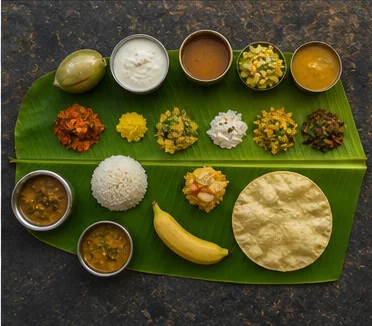
Madurai's public food culture is known for busy tiffin shops, parotta and salna combinations, meat preparations, biryani traditions, street snacks, sweets and drinks such as jigarthanda. These categories have many variations and should not be assigned a single origin story without evidence.
Vegetarian temple-town cooking, household meals and regional produce are equally important. This phase does not rank restaurants; operating hours, hygiene and quality require current review.
Explore Tamil Nadu food →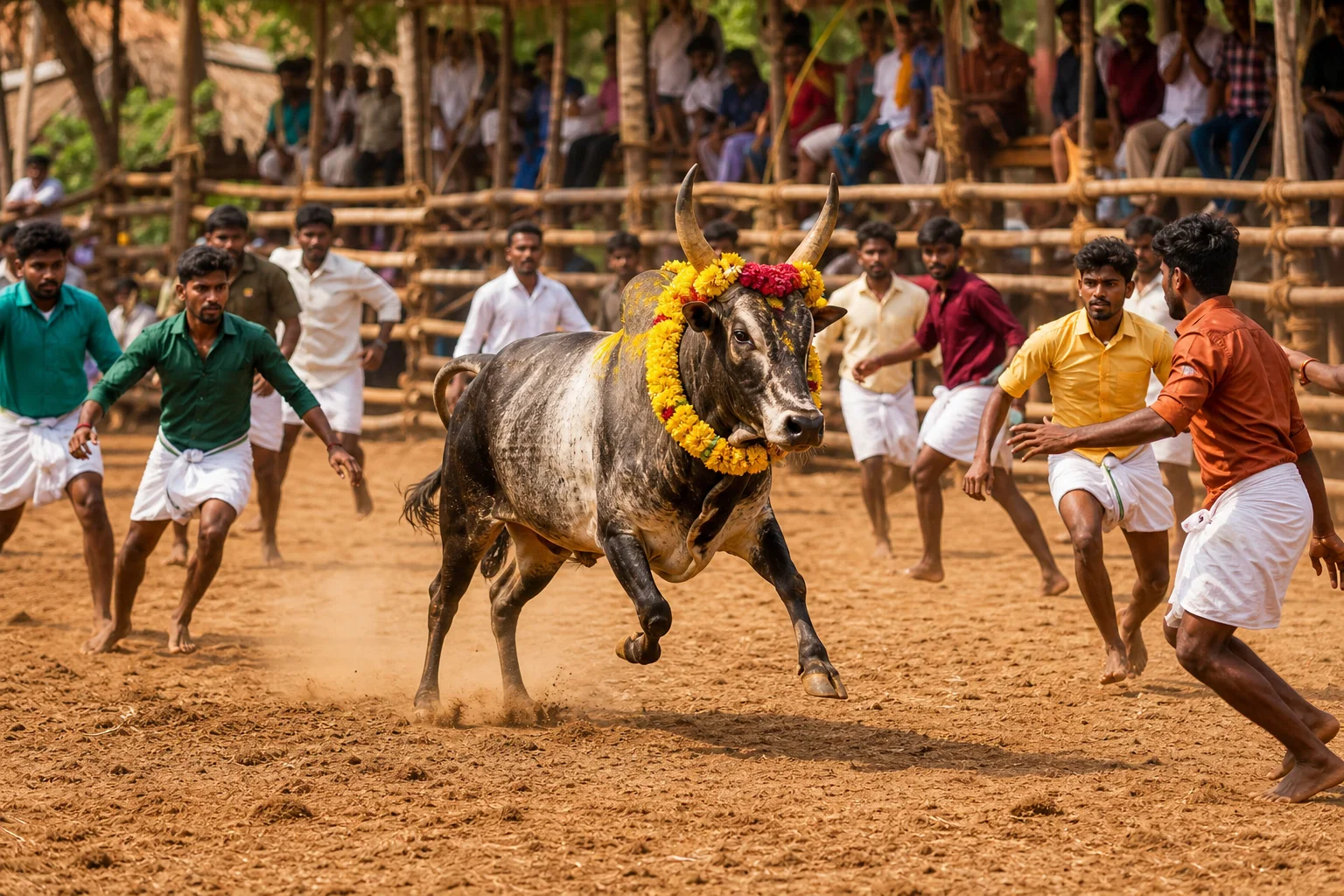
Travel with context
Nature, season and month-by-month planning
Landscape and ecology
The Vaigai plain and nearby rocky hills give Madurai a landscape identity beyond its built centre. Hill temples, inscriptions and dry-zone ecology can be combined carefully, but heat, access and protected-site rules should shape any outdoor plan.
Seasonal planning
Madurai's inland setting can make heat a major planning factor. Spread walking across morning and evening, reserve shaded or indoor sites for demanding hours and carry water without assuming temple or museum facilities will always be available.
Rainfall and festival crowds vary by year. Use IMD forecasts, temple announcements and district notices rather than fixed seasonal promises. A culturally important month can also be a more logistically demanding time.
January
Often suitable for longer heritage days; verify Pongal-period arrangements.
Open month guide →FebFebruary
Useful for city and hill-site plans with normal sun preparation.
Open month guide →MarMarch
Heat-aware pacing becomes increasingly important.
Open month guide →AprApril
Festival context may be significant in some years; confirm dates and crowd controls.
Open month guide →MayMay
Use shorter outdoor blocks and reliable hydration.
Open month guide →JunJune
Plan around heat and possible changing rain conditions.
Open month guide →JulJuly
Check forecasts before combining city and hill sites.
Open month guide →AugAugust
Maintain flexible outdoor plans and temple verification.
Open month guide →SepSeptember
A transition month best judged through current forecasts.
Open month guide →OctOctober
Rain may affect roads or outdoor visits; retain flexibility.
Open month guide →NovNovember
Potentially useful for heritage travel, subject to current rain conditions.
Open month guide →DecDecember
Popular for travel in many years; confirm accommodation and temple notices.
Open month guide →Practical access
How to reach and get around Madurai
By air
Madurai has an airport serving the region. Routes, terminal information and onward transport should be checked with the airport and airline.
By train
Madurai Junction is a major rail access point for southern Tamil Nadu. Use Indian Railways for current trains, platform information and availability.
By road
Intercity buses and roads connect Madurai with Chennai, Tiruchirappalli, Thanjavur, Rameswaram and the far south. Do not rely on fixed travel-time claims; conditions vary.
Getting around
Central temple streets, the palace and some markets can be combined with focused walking, autos or taxis. The Gandhi Museum, Teppakulam and outer temples require separate local transport.
City buses serve many areas, but routes and frequency are current information. Agree on an auto or taxi method before departure and avoid building a day around repeated crossings of the central core.
Plan by days
Suggested Madurai itineraries
These are editorial sequences, not promises of travel time. Confirm access and adapt the pace to current conditions.
A focused introduction to sacred, courtly and modern history.
- Day 1Morning at the Meenakshi temple area; palace and site museum later; finish with the Gandhi Museum or Teppakulam according to verified access.
Add an outer sacred landscape and more time for food and streets.
- Day 1Historic core, temple and Nayak palace.
- Day 2Gandhi Museum, one outer temple or hill landscape, and an unhurried regional meal.
Use the third day for archaeology or a wider regional excursion.
- Day 1Temple-centred Madurai.
- Day 2Nayak, museum and market histories.
- Day 3Choose Alagar hills, Thirupparankundram or a verified archaeology-focused outing rather than combining all three.
Continue nearby
Places around Madurai
Open map tools
Map of Madurai
Interactive map data is not loaded on this static page. Open Google Maps for current place details and directions.
Before you go
Practical travel guidance
Temple preparation
Confirm dress, permitted items, queues and festival arrangements directly with the official temple.
Heat
Build shade and rest into the day; do not assume every historic site has extensive facilities.
Families
Limit dense street walking and alternate active sites with calmer museum time.
Older travellers
Reduce transfers and verify step-free access at each historic property.
Photography
Restrictions vary in temples and museums; ask before photographing people or rituals.
Markets
Keep passages clear and treat vendors and worshippers as participants in daily life, not props.
Saved only in this browser. No account or personal data is required.
Responsible travel
Respect active worship and queues
Do not touch inscriptions, sculpture or painted surfaces
Ask before photographing people
Avoid litter around tanks and hills
Use local guides only with clear terms
Support textile and craft sellers without blocking working spaces
Questions
Frequently asked questions about Madurai
How many days are enough for Madurai?
Two days gives most first-time visitors a balanced view. One day can cover the central core; three days supports an outer temple or archaeology-focused excursion.
Is Madurai only a pilgrimage destination?
No. Pilgrimage is central, but the city also offers Pandya and Nayak history, museums, markets, food and modern political culture.
Are Meenakshi Temple timings provided here?
No. Timings and access arrangements change, especially around festivals. Use the official HR&CE temple website.
Can the palace and temple be visited together?
They form a sensible central-city pairing, but current opening information and the intensity of temple queues should shape the sequence.
What food is Madurai known for?
Its public food culture includes tiffin, parotta-based meals, biryani traditions, meat dishes, snacks, sweets and jigarthanda, with substantial variation.
Is Madurai suitable for families?
Yes, with a paced plan, heat preparation and fewer transfers. Verify facilities at historic buildings.
Should Keezhadi be included in a city day?
Treat it as a separate archaeology-focused outing and verify current museum or site access before committing.
Can visitors photograph inside temples?
Never assume permission. Follow signs and staff directions, especially around sanctums and rituals.
Editorial trust
Sources and further reading
Major factual claims were checked against the references below. Last reviewed 8 August 2026.
- History of MaduraiMadurai District AdministrationReviewed 8 August 2026
- Tourist places in MaduraiMadurai District AdministrationReviewed 8 August 2026
- Arulmigu Meenakshi Sundaraswarar TempleGovernment of Tamil Nadu HR&CE DepartmentReviewed 8 August 2026
- Tirumalai Nayakkar PalaceTamil Nadu State Department of ArchaeologyReviewed 8 August 2026
- Official museum history and galleriesGandhi Memorial Museum, MaduraiReviewed 8 August 2026
- Regional Meteorological Centre ChennaiIndia Meteorological DepartmentReviewed 8 August 2026
- Official railway booking portalIndian Railway Catering and Tourism CorporationReviewed 8 August 2026