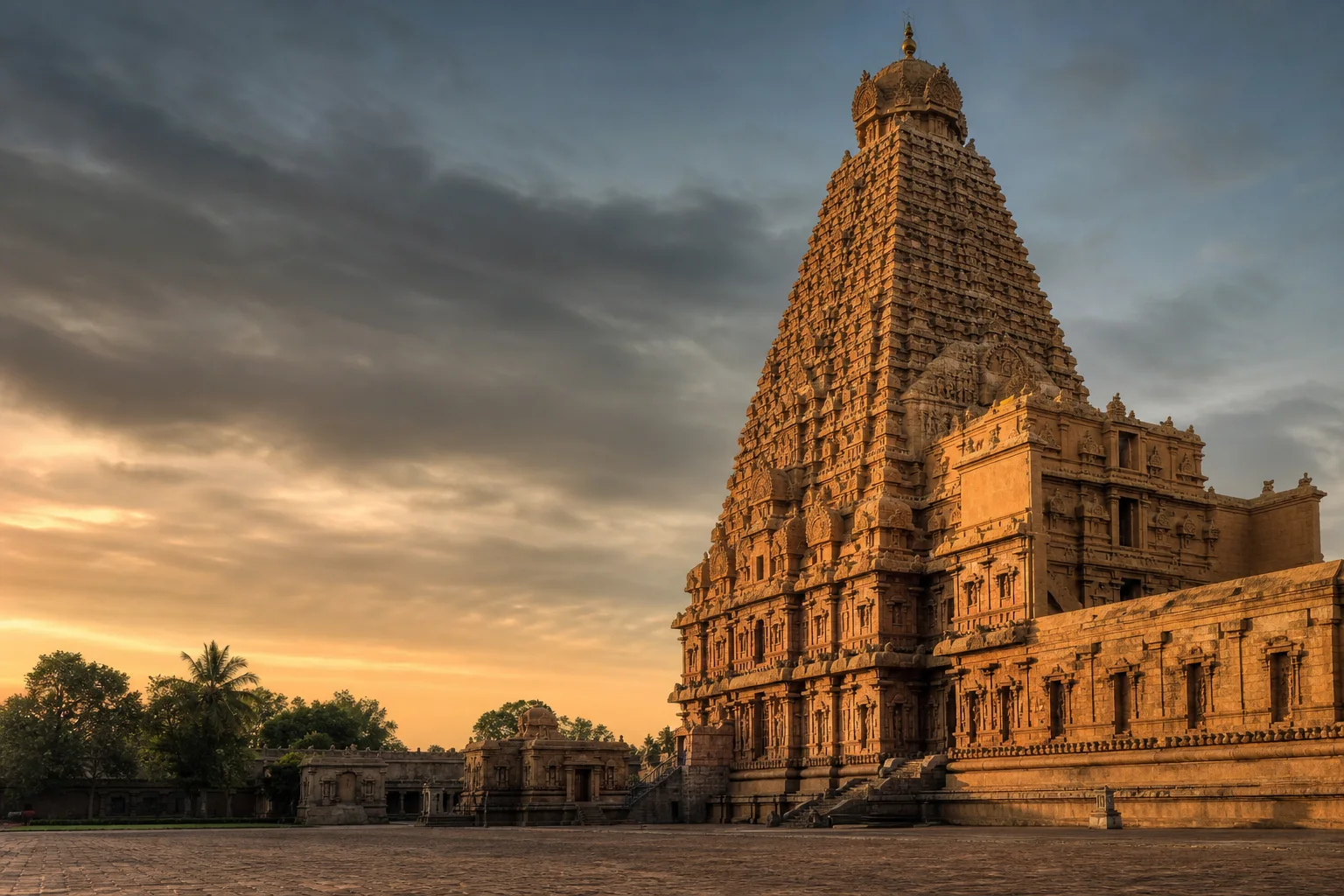
Chola capital, living temple and delta cultural centre
Thanjavur Guide: Chola History & Heritage
Thanjavur is where Tamil Nadu's history, temple architecture, inscriptional record, court culture and Kaveri delta landscape meet with exceptional clarity. The city is anchored by Brihadisvara Temple, yet its full story also includes Nayak and Maratha courts, manuscript traditions, painting, music, agriculture and a modern regional centre.
On this page
Start here
Why Thanjavur
Thanjavur offers more than a famous silhouette. Brihadisvara Temple can be read simultaneously as a living Shiva temple, a royal Chola foundation, an architectural achievement, a field of inscriptions and a monument with later additions. Few places allow architecture, political history, worship and art history to remain so visibly connected.
The palace complex and Saraswathi Mahal Library then shift the story forward into Nayak and Maratha Thanjavur. Music, dance, painting, bronzes, manuscripts and delta agriculture place the city inside a wider cultural region rather than isolating it as a monument stop.
Historical context
A short history of Thanjavur
Thanjavur rose to major political prominence under the Imperial Cholas, whose power was centred in the Kaveri region from the ninth century. The delta's agrarian resources, temple institutions, settlements and routes supported a state with far-reaching military, administrative and cultural influence. Inscriptions provide unusually rich evidence, but they must be read as records created for specific royal, temple and social purposes rather than neutral chronicles.
Rajaraja I founded the monumental temple now known as Brihadisvara or Peruvudaiyar Kovil. UNESCO records its consecration in the early eleventh century and identifies it as the first great example in the sequence represented by the Great Living Chola Temples. Architecture, sculpture, murals, bronzes and inscriptions connect royal authority with religious patronage and skilled labour. The achievement should not be explained through unsupported legends about impossible construction methods.
Thanjavur later came under Pandya, Vijayanagara and Nayak influence. The Nayak court contributed to the palace and cultural institutions. Maratha rule from the late seventeenth century created another important period of scholarship, performance, medicine, literature and collecting. The Saraswathi Mahal Library was nurtured across Nayak and Maratha rule, while Serfoji II is especially associated with its development and wider intellectual projects.
Colonial power changed the court's authority and the region's administration. Thanjavur nevertheless remained a major centre of music, dance, religious scholarship and agricultural life. Modern city identity still depends on the relationship between a working delta, educational and cultural institutions, tourism and living worship.
Plan your visit
Places to explore in Thanjavur
Access, opening details and current conditions should be verified with the responsible official source before travel.
Brihadisvara Temple
The city-defining Chola monument rewards slow attention to massing, axial planning, sculpture, inscriptions, murals and later shrines. It remains an active temple, not only an archaeological site.
Temple and monument access rules must be verified before travel.Thanjavur Palace complex
The palace area contains structures and collections associated with later courts. Bell tower, halls, art displays and institutional spaces should be approached as a complex with variable access rather than one uniform museum.
Saraswathi Mahal Library
The library preserves manuscripts, books, maps and paintings fostered by successive courts. Public exhibition access represents only part of a much larger research collection.
Consult district or library notices for current public access.Royal Palace Art Gallery
The collection helps connect Chola and later-period art with the region. Labels, gallery availability and conservation arrangements should be checked on site.
Sangeetha Mahal
This performance hall belongs to Thanjavur's later court history and continuing musical identity. Current programme access is not assumed.
Rajarajan Site Museum
A state archaeology museum offers material context for the Chola period and the wider region. Verify working days and gallery status directly.
Schwartz Church
The church near the palace adds a European missionary and Maratha-court connection to the city's historical landscape without displacing its dominant Tamil contexts.
Delta edge and markets
Thanjavur's food, craft and urban life depend on the wider Kaveri delta. Market observation and countryside travel should respect farms, irrigation works and private property.
Choose your pace
Things to do in Thanjavur
Study the temple in layers
Begin with overall planning, then examine sculpture, inscriptions and later additions without rushing.
Connect temple and palace
Use the palace complex to understand that Thanjavur history continued through Nayak and Maratha courts.
See manuscripts in context
Approach the Saraswathi Mahal Library as a knowledge institution, not simply a display of old books.
Look closely at painting and bronze
Compare media, patronage and religious use rather than treating 'Tanjore art' as one timeless style.
Listen for the music history
Use verified programmes or institutional displays to connect Thanjavur with Carnatic music, dance and instrument traditions.
Understand the delta
Make room for the agricultural setting that supported settlement and continues to shape food and economy.
Living places
Temples, heritage and interpretation
UNESCO lists Brihadisvara at Thanjavur with the temples at Gangaikondacholapuram and Darasuram as the Great Living Chola Temples. The group demonstrates development in Chola architecture and art while retaining active worship. A World Heritage label does not make every story told about the monument historically verified.
Inscriptions are fundamental to Thanjavur's history because they record gifts, administration, personnel, ritual and royal claims. Visitors should never touch, trace, wet or mark inscribed surfaces. The palace and library preserve later layers that are equally necessary to understanding the city.
Everyday context
Culture and food
Culture
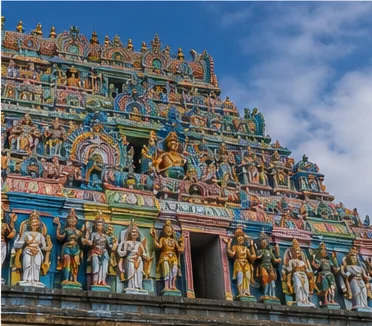
Thanjavur is associated with Carnatic music, Bharatanatyam histories, bronze casting, the veena, manuscript scholarship and a distinctive painting tradition. Each emerged through networks of court, temple, hereditary artists, religious institutions and later public academies; none should be reduced to a souvenir label.
Thanjavur painting is recognized for a relief-like surface, rich colour and gold work in many devotional compositions, but modern production varies. Buyers should ask about materials, maker and process rather than assuming every object has the same provenance.
Explore Tamil Nadu culture →Food
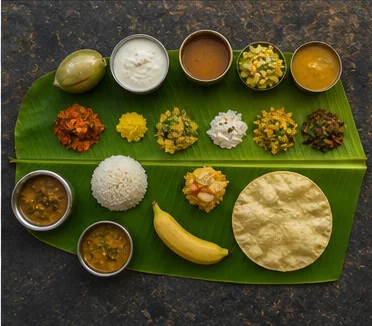
Delta agriculture gives rice a major place in Thanjavur foodways, alongside pulses, vegetables, greens, tamarind, coconut and regionally varied meat or fish cooking. Court, temple and household histories also influenced festive and ceremonial foods.
The city's food cannot be separated neatly into 'Chola' or 'Maratha' dishes without documentation. This guide therefore emphasizes the delta setting and living regional practice rather than invented royal recipes or restaurant rankings.
Explore Tamil Nadu food →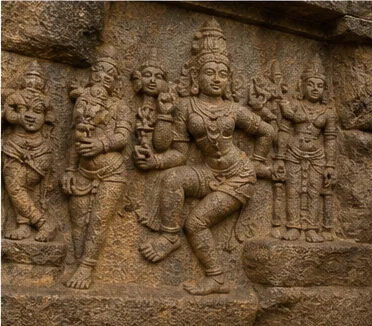
Travel with context
Nature, season and month-by-month planning
Landscape and ecology
The Kaveri delta is a managed cultural landscape of rivers, channels, fields, settlements and wetlands. It is productive rather than untouched nature. Rain, irrigation, crop cycles and water conditions change what visitors see, while farm access always depends on permission.
Seasonal planning
Thanjavur's lowland delta setting requires heat-aware planning for much of the year. The temple's open spaces and walking between palace institutions can be demanding at midday, so distribute outdoor and indoor stops thoughtfully.
Northeast-monsoon rain can affect roads and low-lying areas. Agricultural appearance changes with water and crop conditions. Temple festivals and music events require current official dates rather than assumptions based on earlier years.
January
Harvest-season context may be visible; confirm Pongal and temple arrangements.
Open month guide →FebFebruary
Often useful for architecture-focused days with sun protection.
Open month guide →MarMarch
Plan earlier temple study and indoor afternoon stops.
Open month guide →AprApril
Heat-aware pacing becomes essential.
Open month guide →MayMay
Keep outdoor exposure shorter and carry reliable hydration.
Open month guide →JunJune
Current rain and heat conditions should guide countryside plans.
Open month guide →JulJuly
Delta appearance depends on water and cultivation; avoid assumptions.
Open month guide →AugAugust
A flexible heritage plan works better than a fixed rural circuit.
Open month guide →SepSeptember
Use forecasts and local access information for delta travel.
Open month guide →OctOctober
Northeast-monsoon rain may affect plans; monitor IMD.
Open month guide →NovNovember
Retain road and cancellation flexibility during rain.
Open month guide →DecDecember
A popular heritage period in many years; verify events and visitor access.
Open month guide →Practical access
How to reach and get around Thanjavur
By air
Tiruchirappalli is an important airport gateway for many Thanjavur journeys. Flight and onward transport information must be checked currently.
By train
Thanjavur railway station connects with parts of Tamil Nadu and beyond. Use Indian Railways for current trains and seat availability.
By road
Road and bus links connect Thanjavur with Tiruchirappalli, Kumbakonam, Madurai and delta towns. Conditions and journey times vary.
Getting around
Brihadisvara Temple and parts of the palace zone can be combined with short local transfers. Autos, taxis and buses serve the city, while a hired vehicle is often more practical for wider delta monuments.
Do not treat Darasuram and Gangaikondacholapuram as quick urban stops. They are separate World Heritage components requiring a geographically sensible day and current transport planning.
Plan by days
Suggested Thanjavur itineraries
These are editorial sequences, not promises of travel time. Confirm access and adapt the pace to current conditions.
A concentrated history-to-culture route within Thanjavur.
- Day 1Study Brihadisvara Temple in the morning; use the palace, art gallery and Saraswathi Mahal context later; finish with a slower city or cultural stop.
Add collections, craft context and one coherent delta extension.
- Day 1Brihadisvara, inscriptions and the palace institutions.
- Day 2Choose a focused Great Living Chola Temples extension or a delta culture and craft day; do not attempt every site.
Continue nearby
Places around Thanjavur
Open map tools
Map of Thanjavur
Interactive map data is not loaded on this static page. Open Google Maps for current place details and directions.
Before you go
Practical travel guidance
Temple conduct
Respect worship, dress requirements and photography restrictions throughout the complex.
Reading inscriptions
Look without touching, tracing or applying any substance to stone.
Heat
Use early outdoor study and shaded museum time later.
Collections
Library and gallery access may change for conservation or institutional reasons.
Delta travel
Avoid entering fields or irrigation structures without permission.
Accessibility
Historic thresholds, uneven surfaces and upper levels require venue-specific checks.
Saved only in this browser. No account or personal data is required.
Responsible travel
Protect inscriptions and painted surfaces
Keep active worship routes clear
Do not use flash where prohibited
Buy crafts with questions about maker and materials
Respect farms and water infrastructure
Avoid unsupported stories when sharing the site's history
Questions
Frequently asked questions about Thanjavur
What is Thanjavur best known for?
Brihadisvara Temple and Chola history are central, alongside the Maratha palace, Saraswathi Mahal Library, painting, music and delta culture.
Is one day enough for Thanjavur?
One focused day covers the major city sites. Two days allows deeper museum time or one coherent Chola-temple extension.
Is Brihadisvara Temple only a monument?
No. It is a living Shiva temple as well as an ASI-protected and UNESCO-listed heritage property.
Are temple timings listed here?
No. Current access, worship schedules and restrictions must be checked officially.
Can visitors see manuscripts in the library?
Public displays and access vary. The research collection is much larger than what may be visible to casual visitors.
Should Darasuram and Gangaikondacholapuram be added to one day?
Only with realistic transport planning. They are separate places and deserve time rather than a rushed checklist.
What food should visitors expect?
Rice-centred delta meals, tiffin, vegetable, pulse, meat and fish traditions vary by household and community; no restaurants are ranked here.
Can inscriptions be photographed?
Follow site rules. Never touch, trace or alter the surface to make lettering more visible.
Editorial trust
Sources and further reading
Major factual claims were checked against the references below. Last reviewed 8 August 2026.
- Great Living Chola TemplesUNESCO World Heritage CentreReviewed 8 August 2026
- History of Thanjavur districtThanjavur District AdministrationReviewed 8 August 2026
- Chola history and ThanjavurThanjavur District AdministrationReviewed 8 August 2026
- Heritage of ThanjavurThanjavur District AdministrationReviewed 8 August 2026
- Saraswathi Mahal LibraryThanjavur District AdministrationReviewed 8 August 2026
- Regional Meteorological Centre ChennaiIndia Meteorological DepartmentReviewed 8 August 2026
- Official railway booking portalIndian Railway Catering and Tourism CorporationReviewed 8 August 2026