
Sri Vaishnava temple-town
Ranganathaswamy Temple, Srirangam
Srirangam is at once a temple, pilgrimage centre, theological landscape, residential settlement, and sequence of monumental enclosures. Its official administration describes seven enclosures and many shrines; its historical form reflects Chola, Pandya, Hoysala, Vijayanagara, Nayaka, and later interventions rather than one construction campaign.[1]
Significance
Why this temple matters
Within Sri Vaishnava tradition, Srirangam holds foremost status among the Divya Desams praised in the Tamil hymns of the Alvars.[1]
Its spatial importance lies in the movement from inhabited outer streets through successive sacred thresholds toward the reclining Ranganatha shrine.
Religious tradition
Sacred meaning and living practice
This section reports tradition as tradition; it does not substitute devotional chronology for material history.
The official temple account uses sacred titles including Bhuloka Vaikuntham and situates Srirangam within Alvar hymn and Sri Vaishnava tradition.[1]
Accounts of the icon's sacred origin and journey are presented as temple tradition. Political disruption, restoration, inscriptions, and building phases require historical sources of a different kind.
Documented history
Patronage, construction and change
The temple's long record includes patronage by several dynasties, periods of disruption, return and restoration, and major early modern building. Individual claims should be linked to specific inscriptions or structures.
Srirangam became a central place in the history of Sri Vaishnava institutions, teaching, commentary, and ritual. Theology and institutional history overlap but are not identical.
Modern administration manages a very large active complex where residential, commercial, processional, devotional, and conservation needs meet.[1]
Chronology
A phase-based timeline
Entries describe documented or carefully qualified phases, not an uninterrupted biography of the site.
Alvar devotional landscape
Tamil Vaishnava hymns establish Srirangam's major sacred place in tradition.[1]
Patronage and institutional growth
Inscriptions and structures record support from changing rulers and communities.[2]
Restoration and enlargement
Major architectural and institutional works contributed to the visible complex.
Living temple-town
Official administration publishes changing darshan and festival information.[1]
Architecture and art
Reading form, movement and surface
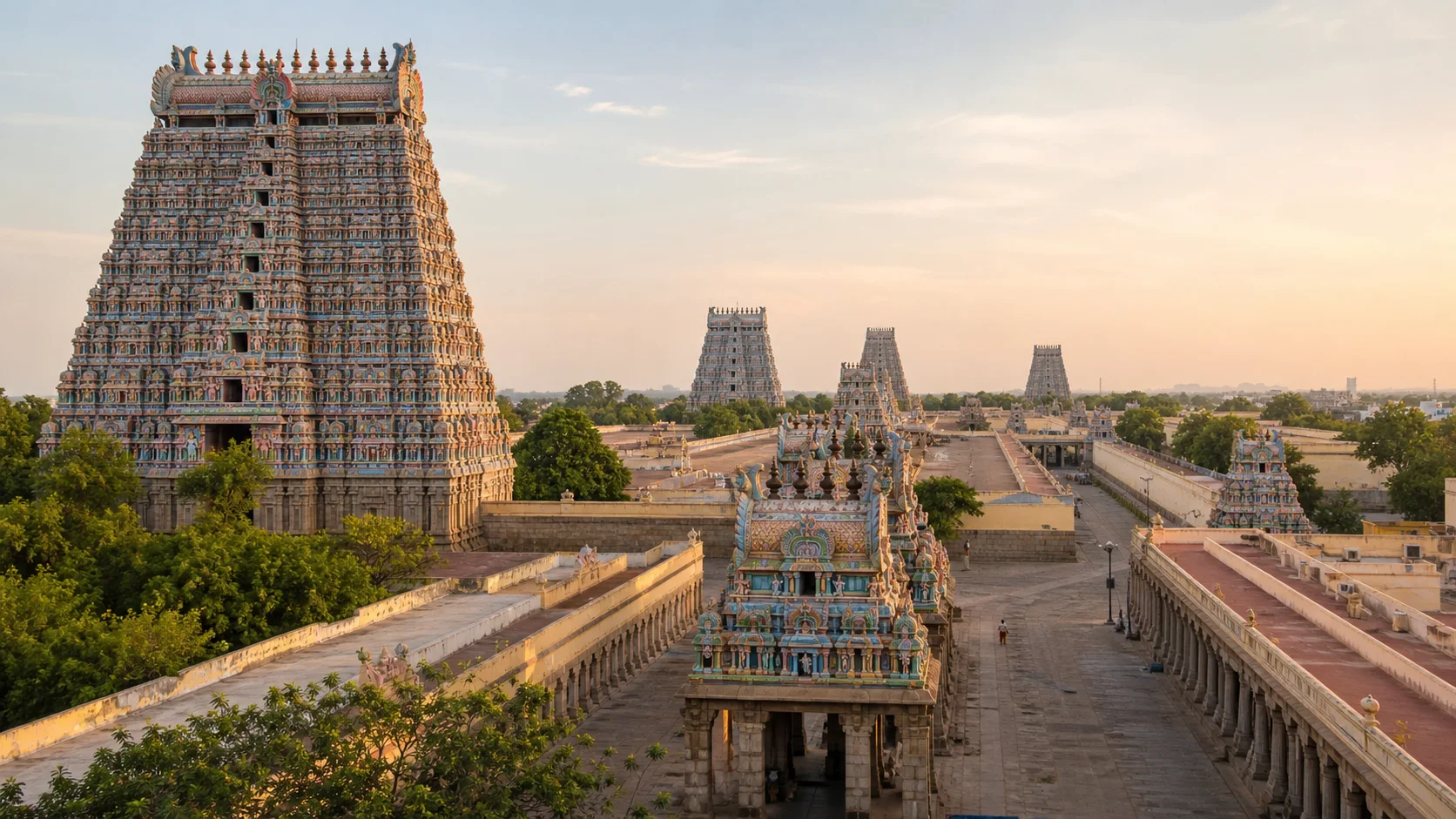
Seven concentric enclosures organize sacred hierarchy and urban life. Gopurams, streets, halls, shrines, tanks, kitchens, and service spaces form an inhabited temple-town rather than a single courtyard monument.[1]
The Rajagopuram is one phase within this larger spatial history. A meaningful visit attends to thresholds, changing street character, ritual routes, and the distinction between public and restricted areas.
Material record
Inscriptions, archaeology and conservation
The large inscriptional corpus supports study of land, gifts, ritual, institutions, conflict, and repair. Numbers repeated in popular summaries should not replace reading catalogued inscriptions and translations.[2]
Official schedules can include temporary seasonal notices. A date range on the authority website must not be generalized into a permanent timetable.[1]
On-site focus
What to notice
Seven concentric enclosures
Ranganatha reclining Vishnu shrine
Sri Vaishnava devotional and institutional history
Multiple gopurams including the modern Rajagopuram
Temple streets embedded in a living settlement
Festivals and sacred calendar
Vaikuntha Ekadashi and other annual observances can substantially change access and crowd patterns.
Use the official temple site for the current festival calendar, darshan interruptions, entry points, and queue guidance.
Site-specific reading
How to look closely at Ranganathaswamy Temple, Srirangam
This guide uses the building, inscriptions, institutional records and living tradition for this particular place rather than a universal temple-history template.
Begin with Seven concentric enclosures, then compare it with Ranganatha reclining Vishnu shrine. Together they help explain why Ranganathaswamy Temple, Srirangam belongs to the historical frame described as Historically layered medieval to modern complex. Do not assume that every visible surface belongs to the same campaign: repair, patronage and continued use can leave distinct layers within one complex.[1]
A second useful focus is Sri Vaishnava devotional and institutional history. Read it alongside the site's present status, Living HR&CE-administered temple. That status affects what can be entered, photographed or touched, but it does not by itself date the fabric. The evidence section above identifies what the cited records can support and where a broad attribution is more responsible than an exact year.
Sri Vaishnavism; foremost Divya Desam in temple tradition remains central to how worshippers understand this place. Sacred accounts are therefore kept visible and labelled as tradition, while construction history is tied to the cited material and institutional record. This distinction allows devotion, architecture and chronology to be understood together without making one stand in for another.
On site, choose two or three questions instead of trying to document everything. Notice how seven concentric enclosures relates to movement, where ranganatha reclining vishnu shrine sits within the complex, and how light, sound or crowd flow changes around sri vaishnava devotional and institutional history. Record uncertainty in your notes and use the numbered sources below for follow-up research.
Plan your visit
Prepare for Srirangam island, Tiruchirappalli, then verify locally
Tamil Nadu HR&CE Department is the responsible authority named for this guide. Changeable details are linked rather than frozen into the page.
Before travelling to Ranganathaswamy Temple, Srirangam, confirm opening arrangements, restricted areas, worship or monument access, photography rules and any festival-day changes. Conditions at Srirangam island, Tiruchirappalli can differ from another site even when both share the same administrative category.
Check Tamil Nadu HR&CE DepartmentBuild a focused visit
Give priority to Seven concentric enclosures and Ranganatha reclining Vishnu shrine. If time or access is limited, these provide a more meaningful reading of this site than rushing through every enclosure.
Arrival and orientation
Search for Arulmigu Ranganathaswamy Temple Srirangam Tamil Nadu and verify the correct entrance, parking or drop-off point. The map handoff does not claim current travel time, road access or queue length.
Access and effort
Living HR&CE-administered temple can involve site-specific thresholds, surfaces or controlled routes. Ask the authority directly about step-free access, seating or assistance, especially when viewing Sri Vaishnava devotional and institutional history is important to the visit.
Photography and care
Rules around Multiple gopurams including the modern Rajagopuram may depend on conservation, worship and crowd movement. Follow signs and staff instructions; do not use flash, tripods or drones unless explicitly permitted.
Respect the place in front of you
Ranganathaswamy Temple, Srirangam is described here as living hr&ce-administered temple. Let that present role guide behavior: make room for worshippers and local users, keep voices low, avoid touching historic or sacred surfaces, and never turn a restricted route into a shortcut for a photograph.
Map handoff
Srirangam island, Tiruchirappalli, Tiruchirappalli
Open a live place-name search for orientation, then confirm the final approach with the responsible authority.
Your visit
Srirangam island, Tiruchirappalli visit checklist
Selections are stored only in this browser. No account or personal profile is required.
Regional context
Nearby places to research
These are planning prompts, not clickable destination pages or promises of current access.
Visual orientation
Images with explicit provenance
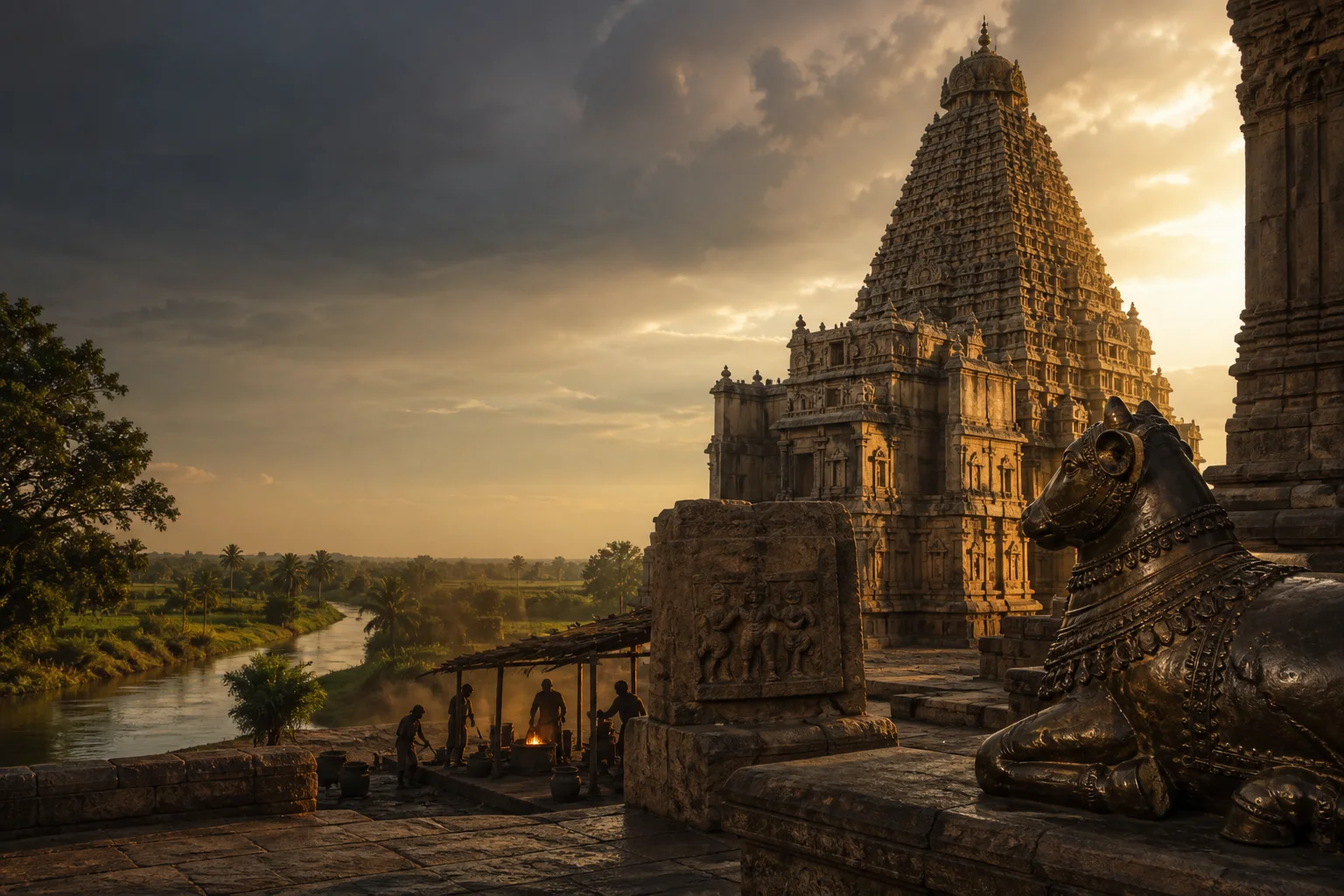
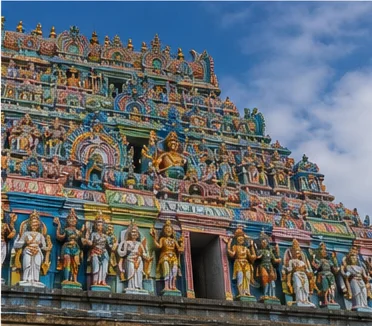
All images below are project-created editorial representations. They are not documentary photographs and should not be used to verify architectural detail.

Questions
Frequently asked questions
What should I notice first at Ranganathaswamy Temple, Srirangam?
Begin with Seven concentric enclosures and Ranganatha reclining Vishnu shrine. They connect the site's visual character with its documented historical frame.
Is Ranganathaswamy Temple, Srirangam an active place of worship or a protected monument?
Its current status is: Living HR&CE-administered temple. Follow on-site instructions because worship, conservation and visitor access can overlap differently at each site.
How can I verify current access at Srirangam island, Tiruchirappalli?
Use the official link for Tamil Nadu HR&CE Department and confirm again close to the visit. This guide does not freeze changing hours, tickets, queues or festival arrangements.
What is the historical frame for Ranganathaswamy Temple, Srirangam?
Historically layered medieval to modern complex. The documented history and evidence sections explain the supporting records and keep sacred tradition distinct from material dating.
Editorial trust
Sources and further reading
Historical, religious-tradition and current-information checks were completed separately. Source type and review date remain visible.
- 1Arulmigu Aranganatha Swamy Temple, SrirangamTamil Nadu HR&CE DepartmentOfficial temple administration · Reviewed 9 August 2026
- 2EpigraphyTamil Nadu State Department of ArchaeologyOfficial evidence guide · Reviewed 9 August 2026
- 3Inscriptions in Tamil scriptTamil Nadu State Department of ArchaeologyOfficial epigraphy guide · Reviewed 9 August 2026
- 4The Chola DynastyMy Tamil NaduReviewed historical guide · Reviewed 9 August 2026
Historical fact-check: chronology and attribution were checked against the listed heritage, archaeology, inscriptional and institutional records.
Tradition fact-check: devotional claims are attributed to temple or religious tradition and kept separate from independently documented construction history.
Current-information fact-check: the responsible authority link was checked on 9 August 2026; changeable hours, fees and service promises were not frozen into this page.