
Strategy, movement, memory and shared rules
Traditional Games of Tamil Nadu
An introduction to board, counting, movement, team and festival-linked play, with no claim that one printed rulebook represents every household or locality.
Orientation
Quick overview
Traditional games in Tamil Nadu include counting and strategy boards, chase and hopping games, team contests, songs, selection rhymes and festival-linked activities. They are learned in homes, neighbourhoods, schools, clubs and public events. Some require crafted boards; others use lines drawn on the floor, seeds, stones or the players' own movement.
Tamil Virtual Academy's educational material classifies folk games in several ways and notes shared features such as team selection, agreed rules, pauses and expectations of fair play. It also shows why no list is final: names, participants, materials, songs and penalties vary by place and period.[1][2]
A game can preserve social memory without being unchanged or uniquely Tamil. Related mancala, hunt, race and hopping games occur elsewhere in South Asia and the world. Cultural significance comes from how people name, teach, adapt and remember a game in a particular setting, not from an unsupported claim of invention.
HOW TRADITIONS MOVE
Local rules are part of the game
Many games circulate by demonstration. Players agree where to start, how pieces move, what counts as capture, whether a round continues and how a winner is decided. A household may treat its version as familiar while another uses a different board, counter count or name. Writing down rules is useful when it identifies whose version was recorded.
Tamil Virtual Academy describes folk games as traditional practices with unwritten rules accepted by participants, including local methods for choosing who begins or dividing teams. Such descriptions document patterns, not a universal code.[1][2]
Before teaching a group, state the chosen version and invite players to share alternatives. This prevents a museum label or commercial board from being mistaken for the only authentic form. It also makes disagreement a normal part of transmission rather than a fault.
COUNTING GAME
Pallanguzhi and the rhythm of distribution
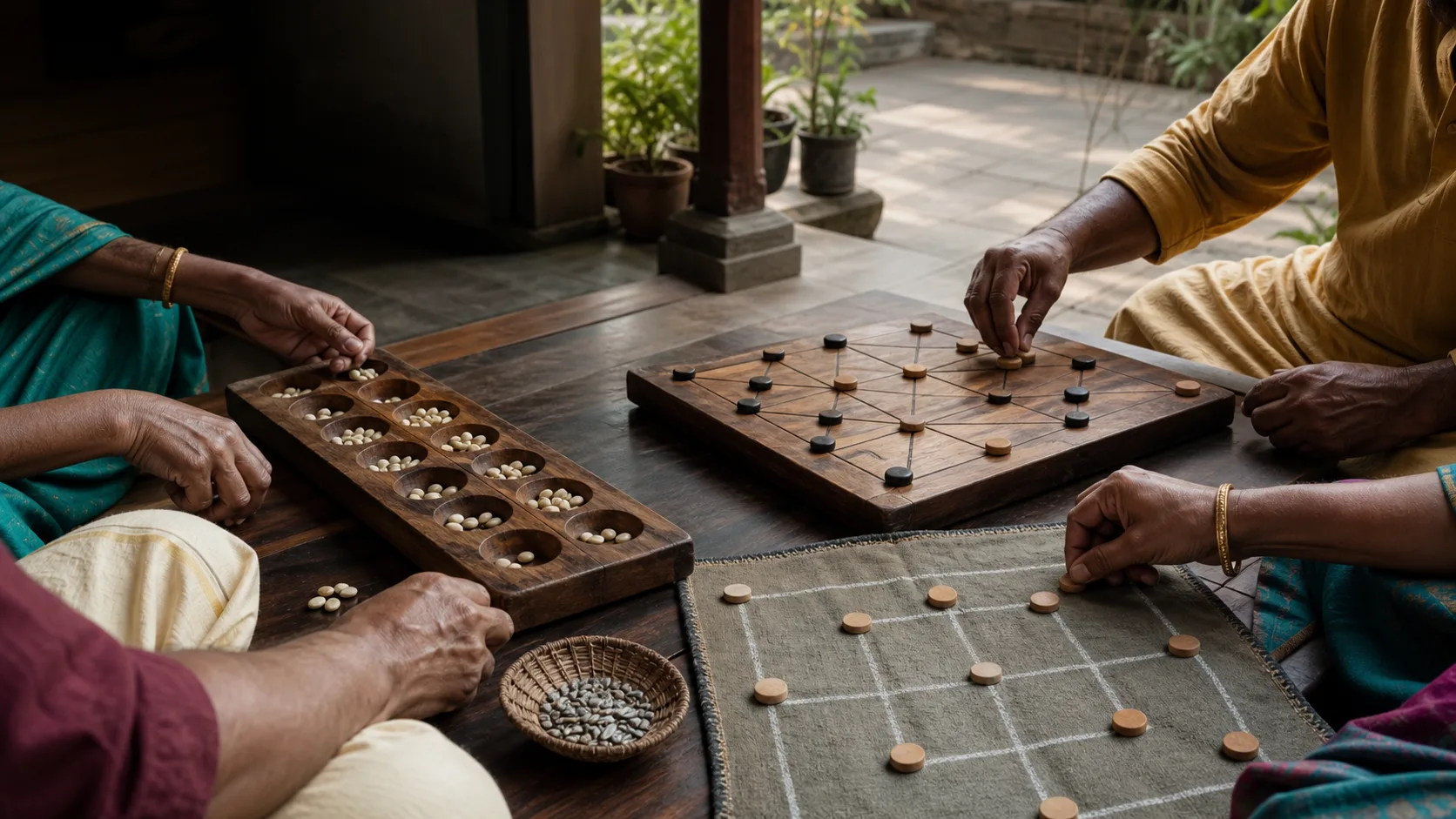
Pallanguzhi is a mancala-type game often played on a board with two rows of cup-like pits, using seeds, shells or counters. Players distribute pieces in sequence and collect them according to an agreed local rule set. Counting, prediction and memory matter, but exact opening counts and capture rules differ.
The board may be a crafted wooden object, a portable modern version or hollows improvised in another surface. Material beauty should not eclipse teaching and play. A displayed board without its rules, owner and context tells only part of the story.
Use counters too large to swallow when children are present, keep seeds clean, and avoid rare natural materials or objects taken from protected places. The guide does not publish one mandatory ruleset because local variation is itself documented in traditional play.[1]
ASYMMETRIC STRATEGY
Aadu Puli Aattam: unequal pieces, different objectives
Aadu Puli Aattam, often rendered as goats-and-tigers, is an asymmetric strategy game played on an intersecting-line board. The two sides have different numbers, movement possibilities and aims. That asymmetry teaches planning, blocking and the value of position rather than chance alone.
Board geometry, number of pieces and capture conventions can vary. Explain which arrangement is being used before play. The animal names are strategic roles on a board, not instructions involving live animals, and cultural demonstration should never stage wildlife or animal handling.
Related hunt games exist across regions. Similarity does not erase Tamil names and memories, nor does it prove one exclusive origin. Comparative study works best when it documents the actual board and rules rather than relying on visual resemblance.
RACE AND MORAL ALLEGORY
Paramapadam and changing board meanings
Paramapadam is a race game in which players move according to throws and encounter advances or setbacks on a gridded board. Historical and contemporary boards may connect movement with moral or religious ideas, while commercial versions can resemble snakes-and-ladders games. Artwork, labels, board size and interpretation vary.
A surviving or printed board should be dated and sourced before claims are made about its symbolism. Modern boards may simplify, secularize or redesign older imagery. The game's current family use can be meaningful even when players do not follow a detailed allegorical reading.
Dice or casting pieces should not be conflated automatically with gambling. Context, stakes and local practice matter. This guide discusses ordinary play and does not encourage wagering.
OUTDOOR PLAY
Nondi, chase games and team play
Nondi is a hopping-game name associated with marked ground patterns and balance, with local variations in sequence and play. Other children's games involve chasing, hiding, throwing or songs used to select a player. The Tamil Virtual Academy material records classification, team formation and play songs, showing that spoken performance can be part of a game.[1][2]
Kabaddi is now a codified competitive sport as well as a game with varied regional histories. A cultural guide can discuss breath, tagging, evasion and team strategy in general terms, but organized play needs rules, suitable surfaces, refereeing and trained supervision. Traditional does not mean automatically safe.
For hopping, chase or contact games, inspect the ground, remove traffic and obstacles, adapt for participants' mobility and stop when heat or fatigue rises. Do not reproduce old punishments, rough contact or exclusion merely because an account calls them customary.
FESTIVAL CONTEXT
Uriyadi and play linked to public celebration
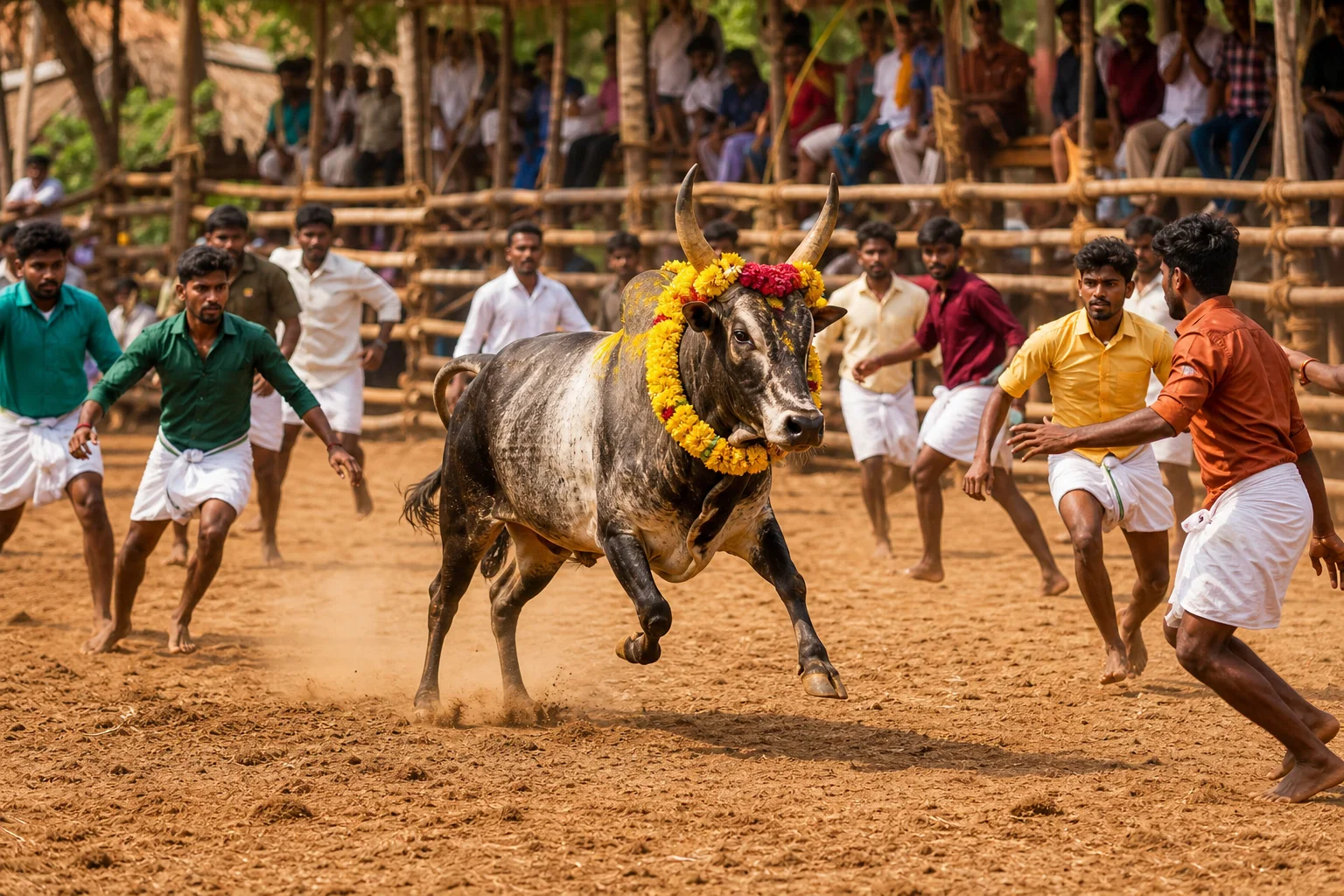
Uriyadi commonly involves attempts to strike a suspended pot in a festival setting and may be linked with Krishna traditions. Local organizers decide height, blindfolding, crowd control and participation. These are live safety arrangements, not evergreen facts.
A public event may combine devotion, competition and spectacle. Visitors should follow barriers and staff directions, avoid entering the activity zone and never improvise a street version. This page does not provide instructions for striking suspended objects or moving through a crowd.
Festival-linked play should be described with the specific place, community and annual notice. A tourism listing may confirm that an event is promoted, but only the responsible organizer can confirm whether it will run, who may join and which safety measures apply.
LEARNING AND REVIVAL
Schools, museums, clubs and family memory
Traditional games are taught through family memory, educational lessons, heritage programmes, clubs and commercial sets. Revival can widen access, but it also selects certain games, standardizes rules and sometimes turns living practices into decorative products. A good programme records who taught the version and lets participants actually play.
UNESCO's traditional sports and games programme frames play as cultural heritage connected with education and inclusion. That broad framework does not certify a specific Tamil game or rule set. Local documentation remains necessary.[4]
Museums and archives can preserve boards, photographs and oral histories. Community workshops can preserve correction, humour and strategic knowledge that objects alone cannot hold. Current sessions, age limits and access should be confirmed with the organizer.
Editorial method
How to read a living culture carefully
These principles keep practice, history, memory and modern representation in proportion.
A cultural practice is not a specimen sealed at one date. It is learned, repeated, adjusted, argued over and sometimes deliberately revived. Household routine, hereditary training, religious observance, public institution, classroom, stage, market and social media can all sustain the same named tradition in different ways. This guide therefore identifies the setting behind a claim instead of treating one version as the Tamil version.
Documented history and community memory answer different questions. An archive can date an organization or law; a repertoire can preserve techniques not fully explained in writing; an oral account can reveal how practitioners understand continuity. The page labels these forms of evidence so a meaningful tradition is not dismissed for lacking an inscription, and a compelling story is not quietly converted into a settled historical fact.
Terms used in English often flatten distinctions. Classical, folk, ritual, domestic, sacred, secular, traditional and modern are useful only when the page explains who is using the label and why. A practice may move between these categories over time. It can also carry unequal histories involving caste, gender, patronage, labor and access, even when a present performance is celebratory.
Variation is not an exception to be corrected. District, language register, religion, community, occupation, age, migration and family history all influence practice. This page describes patterns supported by the cited institutions while leaving room for people whose experience differs. Phrases such as 'many households' or 'in some performance lineages' are intentional evidence controls, not vagueness.
Responsible participation begins with context and consent. Observe before entering a working space; ask before photographing a person, ceremony, lesson or design; pay clearly for instruction or craft; follow venue and household rules; and avoid asking a practitioner to stage sacred or private activity as entertainment. Cultural respect is practical behavior, not a decorative disclaimer.
Archives have their own silences. Court, temple and government records often preserve patrons, rules and institutions more readily than the voices of performers, artisans and household practitioners. Photographs may be staged or captioned by outsiders. A catalogue can identify an object while omitting who prepared its materials or taught the technique. Reading against these gaps is necessary, but a gap cannot be filled with an attractive invention.
Transmission is rarely a clean line from an ancient text to a present learner. People learn by watching, correcting, repeating, listening, memorizing, improvising and discussing. Printed manuals, recordings and online demonstrations can widen access while leaving tacit skills difficult to capture. When a page says a tradition is transmitted, it should ask what is transmitted, by whom, in which setting and under what conditions.
Language matters because technical terms do not always map neatly into English. A translation may clarify a first encounter while losing social register, poetic resonance or several possible meanings. This guide keeps essential Tamil or specialist words where they help and explains them in context. It avoids treating an English gloss as the complete definition of a term used differently by practitioners.
Institutions preserve and reshape culture at the same time. An academy can stabilize a curriculum, a museum can conserve material, a government inventory can make a practice visible and a festival can create paid stages. Each also selects what counts as representative. Institutional recognition is therefore evidence of recognition and activity, not proof that one approved version exhausts a tradition.
Migration and digital circulation create new cultural geographies. A practice learned in Madurai may be taught in Singapore, Toronto or Dubai; a pattern posted online may return to Tamil Nadu in altered form. Diaspora continuity is not a lesser copy, yet its setting differs from a temple, agrarian household or Chennai concert hall. Place remains important without becoming a purity test.
Cultural continuity includes disagreement. Practitioners may debate costume, repertoire, religious meaning, ownership, caste history, innovation or commercial use. Reporting that debate does not weaken the tradition. It shows that people care enough to contest its future. The editorial task is to identify positions and evidence fairly rather than manufacture a unanimous community voice.
Time words require care. Ancient, classical, medieval, traditional and modern are not interchangeable compliments. An old text can describe a concept without proving that today's full practice existed in the same form; a modern institution can preserve older material while changing presentation. Whenever chronology matters, a page should name the evidence and the particular feature being dated instead of assigning one age to the whole tradition.
Religious significance is also situated. A movement, pattern, song, object or festival action may be an offering in one setting, an artistic study in another and a marker of family identity elsewhere. Sacred meaning should be reported through practitioners and responsible institutions. It should neither be dismissed as folklore nor converted into a universal instruction for every reader.
The visitor's presence changes a cultural setting. Cameras alter attention, applause can interrupt ritual timing, and requests for explanation can add unpaid work. A responsible encounter accepts that some knowledge is private, specialist or learned slowly. The aim is not to collect every symbol in one visit, but to leave with a more accurate sense of people, place, skill and uncertainty.
Material details deserve the same care as celebrated meanings. Powder, thread, instrument wood, costume stitching, floor surface, fuel and storage all influence what can be made. Substitution may respond to price, regulation, ecology or access. Documenting those choices helps explain how practice continues without judging every new material as decline or every old material as inherently superior.
Finally, evidence should remain traceable. A reader ought to be able to distinguish a government inventory from a practitioner's account, a peer-reviewed argument from institutional history and a current programme from a permanent fact. The numbered sources on this page are a starting set rather than a claim to final authority. Future revision should add practitioner-led and Tamil-language scholarship wherever rights and reliable access permit.
Practical participation
Learn Through Safe Play
Choose a clearly documented version, agree the rules and keep participation accessible and safe.
Name the version
Record who taught it, where and which board or rule set is being used.
Agree before play
Set starting pieces, movement, capture and winning conditions together.
Adapt safely
Use suitable counters, clear ground, shade, water and supervision for physical play.
Welcome variation
Compare household rules without declaring one version universally authentic.
Regional orientation
Geographic context
This is place-name context, not a claim that a cultural boundary can be drawn as a precise modern polygon.
Rules and names vary by household, locality and teaching context
Google Maps is provided only as an orientation fallback. It does not verify cultural boundaries, opening hours, businesses, events or access.
Visual guide
Images with explicit provenance
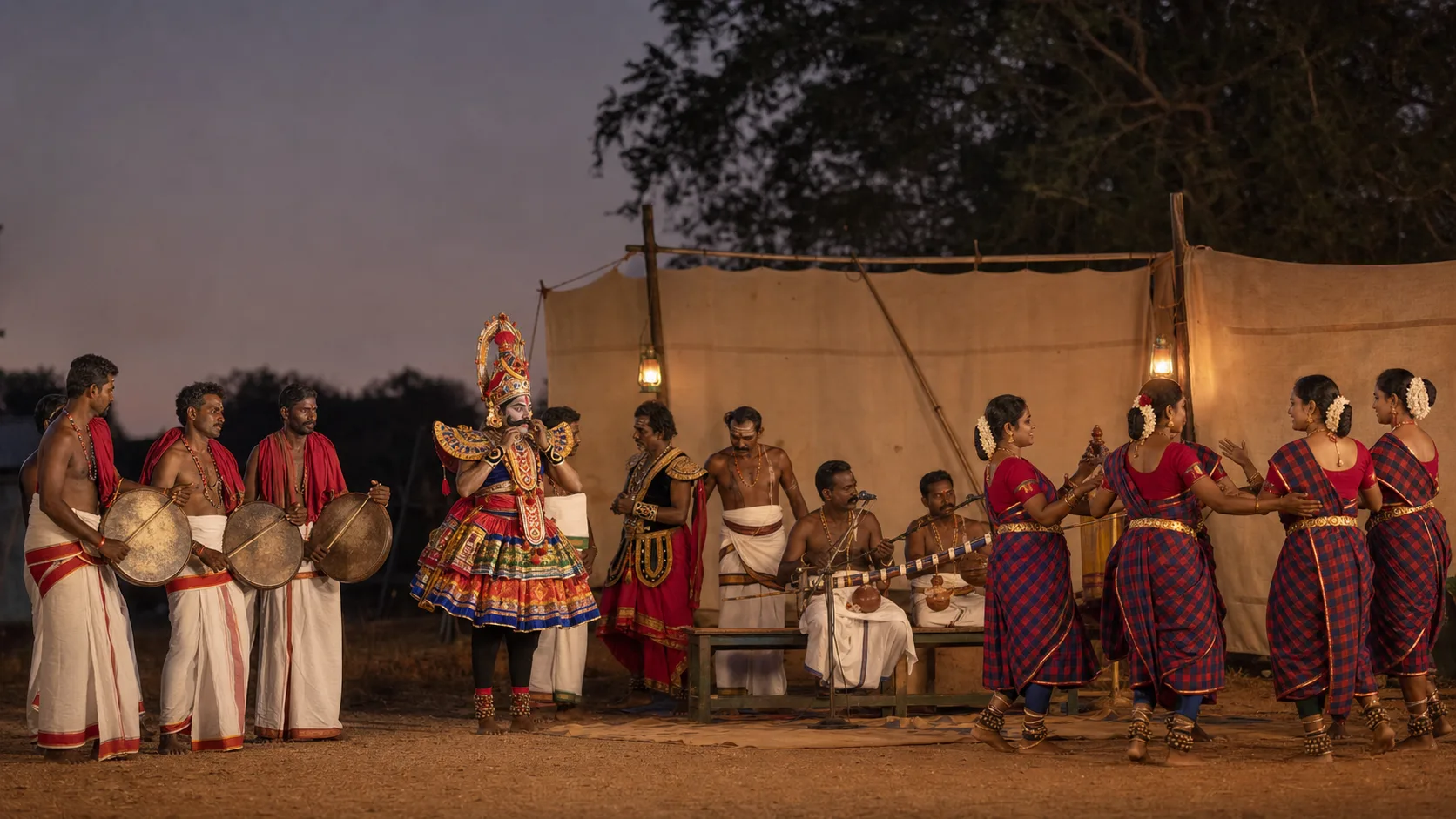
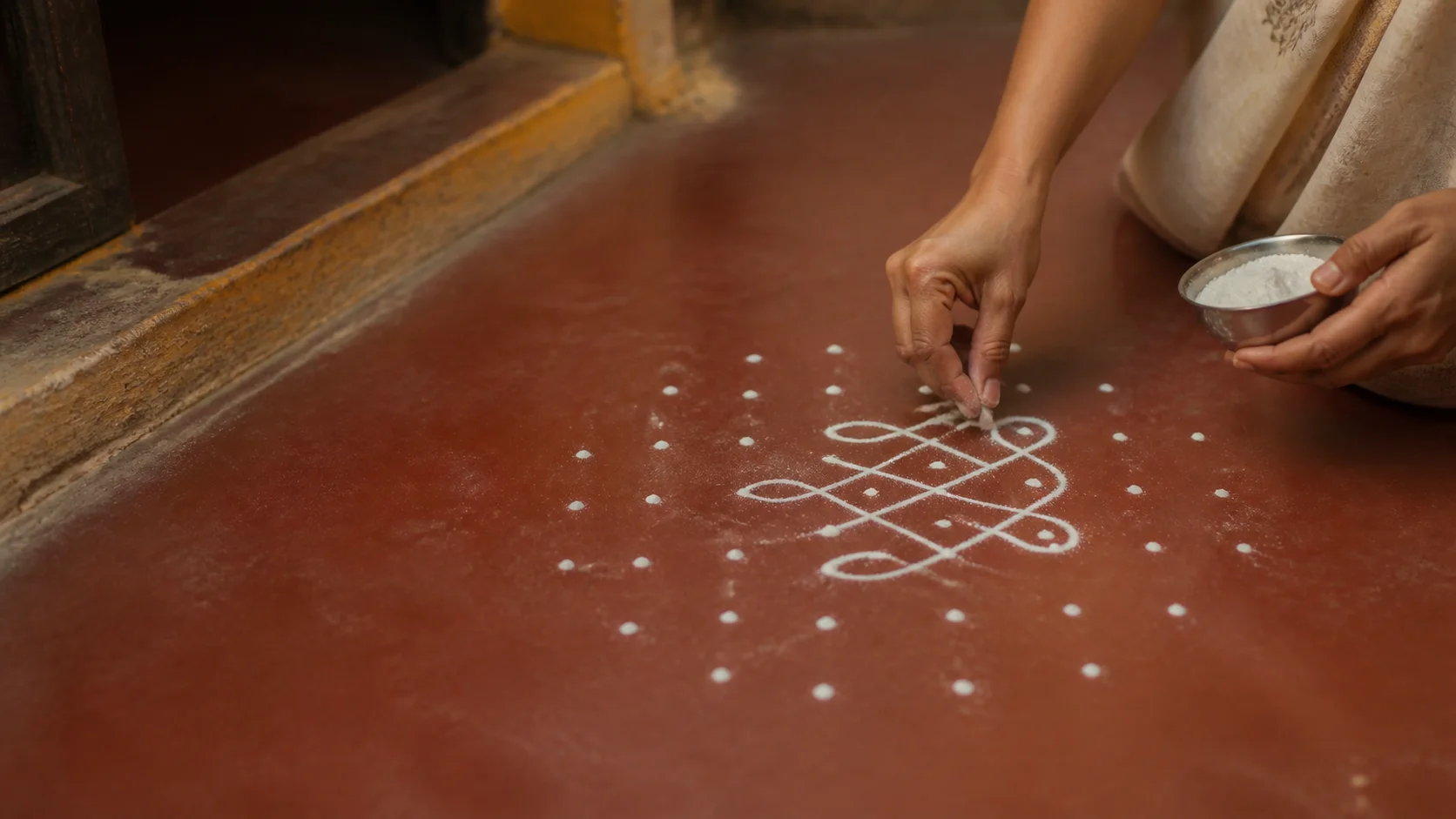
All images are original project-created editorial representations. They are not documentary records of a named person, maker, performance, meal, business or historical event.
Questions
Frequently asked questions
Does every community in Tamil Nadu share the same practice?
No. Language, repertoire, rules, participation and meaning vary by region, community, institution, household and generation.
Is the practice unchanged from ancient times?
No. The guide separates early evidence from later transmission, institutional change and present-day practice.
Can visitors photograph people or materials?
Ask the person, institution or event organizer first. Archives, performances, lessons and private homes may restrict photography or recording.
Are the page images documentary evidence?
No. They are clearly labelled project-created editorial representations and do not depict a named artifact, practitioner or event.
How were claims checked?
Government, university, archive and scholarly-institution sources were reviewed. Uncertain dates, origin stories and universal claims remain qualified.
Is there one official Pallanguzhi ruleset?
No. Board and capture rules vary. State which household, publication or teacher's version you are using.
Is Aadu Puli Aattam played with animals?
No. Goats and tigers are the names of unequal strategic pieces on a board.
Are all traditional physical games safe for children?
No. Ground, weather, equipment, contact and supervision matter. Adapt or omit unsafe elements.
Editorial trust
Sources and further reading
Claims are cited inline. Source type, author or institution, publication information and review date are visible here.
- 1Folk GamesTamil Virtual AcademyCurrent learning resource · Government of Tamil Nadu educational source · Reviewed 13 August 2026
- 2Nattuppura VilaiyattukalTamil Virtual AcademyUpdated 2019 · Government of Tamil Nadu educational source · Reviewed 13 August 2026
- 3Folklore: An IntroductionTamil Virtual AcademyCurrent learning resource · Government of Tamil Nadu educational source · Reviewed 13 August 2026
- 4Traditional Sports and GamesUNESCOCurrent programme overview · Intergovernmental cultural and education source · Reviewed 13 August 2026
Fact and sensitivity review: Documented history, living tradition, oral tradition, religious significance and modern practice were checked as separate claim types on 13 August 2026. Food pages were also reviewed for unsupported origin, GI, health, restaurant, price and availability claims.