
Wheat, ghee and an unsettled origin story
Tirunelveli Halwa
A translucent wheat sweet identified with Tirunelveli, examined through technique, local memory and competing histories rather than an unsupported 'original' claim.
Orientation
Quick overview
Tirunelveli halwa is a glossy wheat-based sweet strongly identified with the city. Common production involves soaking and grinding wheat, extracting a liquid, then cooking it with sugar and ghee until starch, heat and repeated stirring create an elastic, translucent mass. Exact ratios and workflow are maker knowledge, not a single public formula.
A Tirunelveli municipal planning document records halwa as a notable city food and presents one historical account involving a merchant and a Lala sweet shop. A government technical bulletin gives a different chronology connected with the Nawabs of Arcot. These conflicts are why the page does not announce one settled inventor, year or 'original' business.[1][2]
The national GI registry was checked, but this page found no basis to claim registered GI status for Tirunelveli Halwa. Absence from a search is not a permanent legal conclusion; it is a reason to avoid the badge and re-check the official registry before any future claim.[3]
FOOD CRAFT
Extracting wheat and building texture
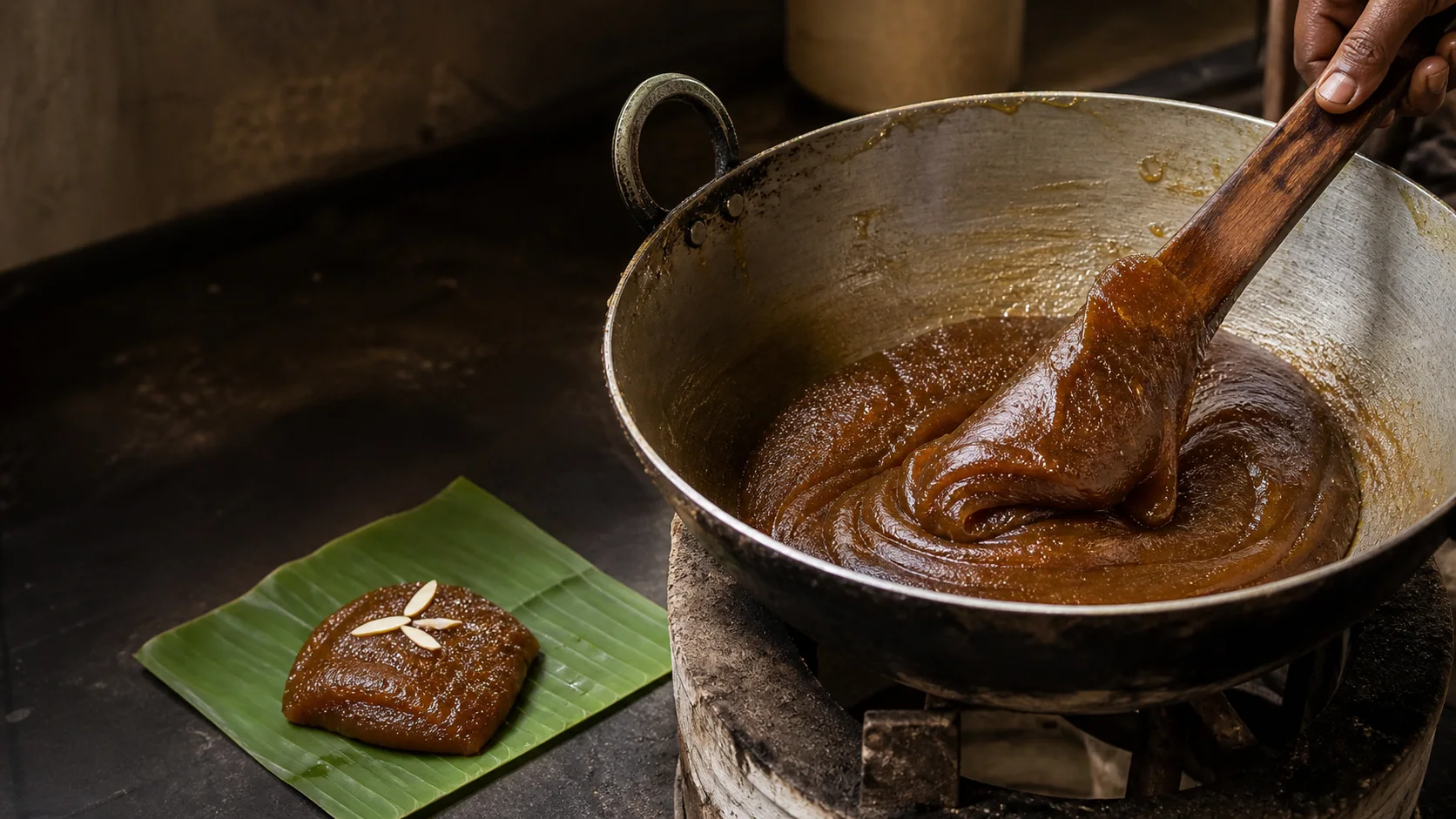
Whole wheat is commonly soaked, ground and strained to separate a starch-rich liquid. Resting or fermentation may figure in maker practice. During cooking, sugar and ghee are incorporated while the mass is stirred and folded. Heat management affects color, gloss and release from the vessel.
This description is not a home recipe. Large hot sugar-and-fat mixtures can cause severe burns, and the handling technique requires experience. It is more useful to understand why texture records time and judgment than to reduce the craft to three ingredients.
SENSORY GUIDE
Gloss, pull and the limits of appearance
A familiar Tirunelveli style is amber-brown, glossy and soft with a slight elastic pull. Ghee carries aroma and helps the mass release. Color can vary with sugar treatment, cooking and ingredients. Nuts may appear in some products but are not the only sign of quality.
A photograph cannot verify wheat source, ghee, freshness or method. Dark color does not prove age, and shine does not prove purity. Traceable labeling and the maker's explanation are stronger than a visual authenticity test.
ORAL TRADITION
Lala, court and shop narratives
One widely repeated family of stories connects north Indian or Rajasthani Lala cooks with southern Tamil courts or estates and later commercial production in Tirunelveli. Details differ: the patron, date, route and first shop are not stable across accounts.
The municipal plan mentions an early merchant story, while the ICAR bulletin places fame in a different eighteenth-century context. Both are institutional publications, yet they conflict. The responsible conclusion is not to average the dates; it is to say that Tirunelveli adopted and localized a wider halwa family and that the exact commercial origin remains unsettled.[1][2]
LIVING TRADITION
How a sweet becomes city identity
Rail and road travel, gifting, family visits and shop networks helped the name Tirunelveli halwa circulate beyond the city. People compare texture, warmth, wrapping and memory as much as ingredients. That social reputation is real even when the first-maker story is uncertain.
Businesses can preserve craft and family knowledge, but longevity claims are commercial claims unless documented independently. This site does not select an 'original,' repeat opening hours or rank shops. A visitor should check current conditions and buy from a clearly identified, hygienic source.
CLAIM CHECK
GI, brand and geographic reputation
A famous place name is not automatically a registered geographical indication. GI registration is a legal status recorded by Intellectual Property India for defined goods and applicants. No GI statement is made here for Tirunelveli Halwa.[3]
A trademark or business name is also not the same as a GI. Packaging may use words such as traditional or original without establishing collective geographic protection. Readers should distinguish law, family history and marketing.
PRACTICAL TASTE
Buying, carrying and serving
Ask when the batch was made, what ingredients and allergens it contains, how it should be stored and whether the packaging suits the journey. Ghee-rich sweets can leak in heat, and shelf-life promises belong to the maker's current label rather than a general cultural guide.
Serve a modest portion and attend to texture before sweetness overwhelms the palate. Food memory is part of the experience, but no health benefit is claimed. Wheat, dairy, nuts or cross-contact may matter for some diners.
Editorial method
How to read a regional cuisine carefully
These principles keep a place-associated food from becoming a single recipe or marketing story.
Regional cuisine is an archive of land, water, labor, trade, household economy, religion, migration and taste. A restaurant menu records one commercial version; it cannot define every kitchen in a region. This guide uses named dishes as points of entry and keeps vegetarian, non-vegetarian, everyday, festive, community-specific and commercial settings distinct.
Dish names travel. The same name may refer to different textures or ingredients, while closely related preparations may have several names. Ingredients also shift with season, cost, dietary practice and availability. The page describes common associations rather than issuing an authenticity test based on one recipe. It intentionally does not reproduce a full recipe or claim that a modern plated version is ancient.
Origin stories need stronger evidence than popularity. Family memory, trade history, local pride and business publicity may preserve valuable clues, but they do not always agree. Where several accounts circulate, this guide names the disagreement and avoids selecting an 'original' shop, inventor or date without documentary support.
Heat is not a complete description of Tamil food. Chilli, black pepper, souring agents, aromatics, roasted pulses, coconut, sesame, curry leaves, grains, greens and cooking technique create different balances. Some preparations are assertive; others are mild, sweet, fermented, steamed or gently seasoned. Individual kitchens tune them differently.
Food experiences also involve people and working conditions. Ask before photographing cooks or vendors, avoid blocking a counter, disclose allergies without assuming a shared kitchen can eliminate cross-contact, and judge hygiene from current conditions rather than reputation. This page does not rank businesses, publish hours or promise that a dish will be available on a particular day.
Agricultural evidence and culinary evidence should not be confused. A crop report can show that turmeric, millet or coconut is grown in a zone; it does not prove how every household used it or when a named dish emerged. Cookbooks, oral histories, menus, account books, utensils and market records answer other questions. Strong food history combines several evidence types and keeps their limits visible.
Season and preservation help organize kitchens. Fresh greens, mango, tubers, fish, milk and festival ingredients have different calendars, while drying, fermenting, pickling, roasting and storing extend availability. Refrigeration, transport and supermarkets change those relationships. Calling an ingredient seasonal should therefore identify the place and period rather than assume an unchanging annual menu.
Labor belongs inside the story of taste. Washing, grinding, fuel management, repeated stirring, leaf preparation, service and cleanup can take more time than a dish's final appearance suggests. Large ceremonial meals depend on coordination and often on specialists. Crediting only a host, chef or brand can hide women, assistants, farmers, vendors and craftspeople whose work makes the meal possible.
Geographic names can describe reputation, style, production or marketing, and these are not identical. A dish sold far from its associated town may still carry a recognizable method, or it may use the name loosely. Legal GI status is a narrower question checked through the official registry. This guide never infers registration from fame, packaging or a repeated tourism slogan.
A tasting note is an observation, not a verdict on identity. Texture, aroma, heat and sweetness depend on temperature, freshness, portion and the taster's experience. Describing those qualities precisely is more useful than declaring a dish best, pure or original. Regional significance does not depend on winning a ranking.
Practical participation
Taste This Region
Taste the craft without turning business mythology into history.
Ask about the batch
Freshness and storage are current maker information.
Notice the texture
Gloss, pull and release reflect practiced cooking.
Treat origin as open
Different institutional accounts do not agree.
Check allergens
Wheat, dairy and nuts or cross-contact may be relevant.
Regional orientation
Geographic context
This is place-name context, not a claim that a cultural boundary can be drawn as a precise modern polygon.
A city-associated sweet with wider commercial circulation
Google Maps is provided only as an orientation fallback. It does not verify cultural boundaries, opening hours, businesses, events or access.
Visual guide
Images with explicit provenance
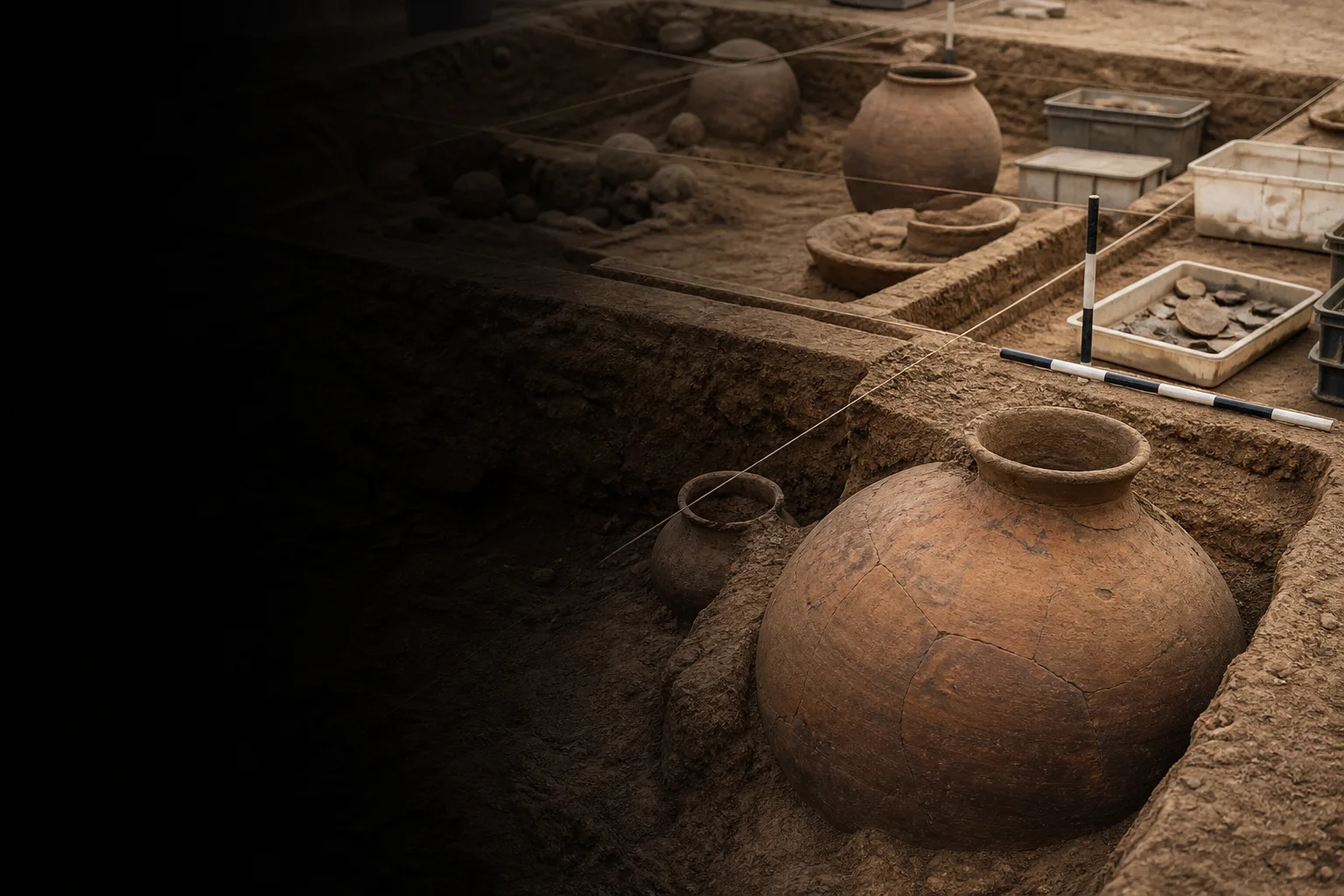
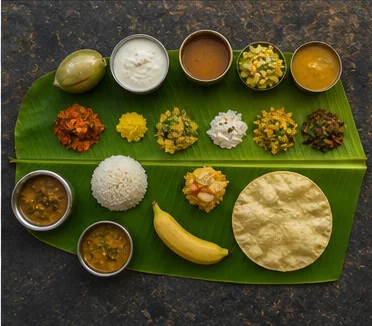
All images are original project-created editorial representations. They are not documentary records of a named person, maker, performance, meal, business or historical event.

Questions
Frequently asked questions
Is this the only authentic version?
No. Recipes and meal structures vary across households, communities, seasons and cooks.
Does the guide recommend a restaurant?
No. Restaurant quality, hours, prices and hygiene are current information requiring a separate review process.
Are full recipes included?
No. The page explains ingredients, techniques and cultural context without presenting a standardized recipe.
Is every dish very spicy?
No. Tamil regional cuisines balance heat with sourness, aromatics, grains, pulses, coconut, sweetness and technique in different ways.
Can dietary safety be guaranteed?
No. Ask the person preparing the food about ingredients and cross-contact; names alone do not establish allergen or dietary status.
How were origin claims handled?
Documented history is separated from oral tradition, family memory and commercial claims. Unsettled stories remain unsettled.
Which shop invented Tirunelveli halwa?
This guide does not identify one. Published accounts conflict on dates, patrons and early businesses.
Does Tirunelveli halwa have a GI registration?
No GI claim is published here because a registration was not verified in the official registry during review.
Editorial trust
Sources and further reading
Claims are cited inline. Source type, author or institution, publication information and review date are visible here.
- 1Tirunelveli Master PlanTirunelveli Corporation, Government of Tamil NaduMunicipal planning document · Official local-government source · Reviewed 9 August 2026
- 2Halwa Technical BulletinICAR-Central Plantation Crops Research InstituteTechnical bulletin · Government research publication · Reviewed 9 August 2026
- 3All GI ApplicationsGeographical Indications Registry, Intellectual Property IndiaCurrent registry · Official legal registry · Reviewed 9 August 2026
Fact and sensitivity review: Documented history, living tradition, oral tradition, religious significance and modern practice were checked as separate claim types on 9 August 2026. Food pages were also reviewed for unsupported origin, GI, health, restaurant, price and availability claims.