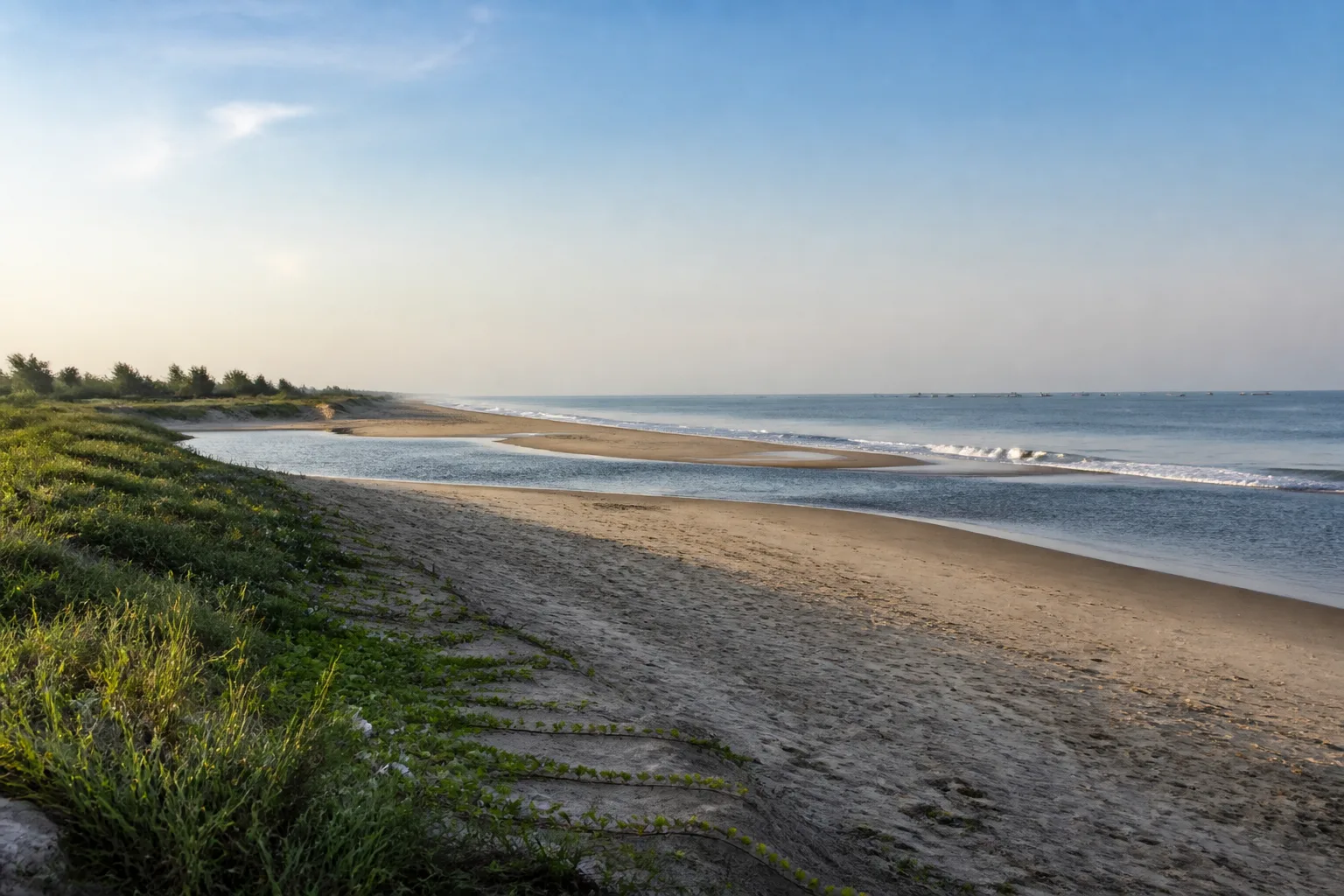
Why these beaches are in the news
Tamil Nadu’s coast has a fresh reason to attract attention in November 2026. Reports of the 2026–27 Blue Flag awards identify Silver Beach in Cuddalore, Kameswaram in Nagapattinam and Ariyaman in Ramanathapuram as newly recognised beaches. The Cuddalore district administration published its Silver Beach announcement on 13 November. The New Indian Express reported the Kameswaram recognition on 15 November, also identifying the three first-time recipients. These are dated announcements, rather than an assumption that every coastal attraction now has the same facilities.
For a visitor, the useful question is what to do with that news. A certification can help you investigate a destination, but it cannot choose your travel date, transport or comfortable walking distance. This guide turns the announcement into a practical planning exercise. Its suggested itineraries are editorial examples, not advertised packages, personal trip reports or promises of conditions on arrival.
Sources for this section: Cuddalore district: Silver Beach announcement, 13 November 2026, Kameshwaram Blue Flag recognition, 15 November 2026.
What Blue Flag recognition can tell you
Blue Flag’s own criteria explain a programme concerned with environmental education, water quality, environmental management, safety and services. Its recognition applies to a managed site under the programme’s requirements. It should not be read as an endorsement of every business using the beach name, nor as a guarantee that any nearby stretch of shoreline offers equivalent services.
Treat the label as a starting point for better questions. Where does the managed area begin? Which entrance should visitors use? Are the services you need operating on your date? What do the noticeboards say today? A beach may be worth visiting for a walk even when entering the water is inappropriate. Conversely, attractive photographs and a familiar certification logo do not replace the instructions of staff at the actual site.
Save the location of the recognised beach, rather than a generic map search for the district. Similar spellings and informal location pins can send a driver to another access road. Ask your accommodation or the site contact to confirm the entrance in writing before you travel.
Sources for this section: Blue Flag programme criteria.
Choose a coast that fits your existing journey
The three newly recognised beaches are in different districts. That makes this a choice between regional trips, not a sensible checklist for one short outing. Start with the place where you will sleep, then choose the beach that fits that base. The return journey matters just as much as the outward one, especially when part of your group wants to leave early.
A visitor already staying around Cuddalore can investigate Silver Beach without turning the day into a cross-state drive. Someone with an established Nagapattinam-area plan can consider Kameswaram. A traveller whose bookings are in Ramanathapuram district can look at Ariyaman as a possible addition. These are geographic planning suggestions; check the actual road route from your hotel before deciding that a beach is nearby.
Do not move all your accommodation simply to collect another name on the list. A shorter outing, a proper meal and a relaxed return often make a better family day than several beaches seen through a vehicle window. If the beach is your main reason for travel, choose flexible arrangements and confirm access first.
Build a visit around a realistic purpose
Decide what success means before you book. For a family with young children, it might be time outdoors, a short permitted walk and an easy place to change clothes. For a photographer, it might be observing the shoreline from an authorised public area. For an older visitor, it might be a comfortable viewpoint without a long walk through loose sand.
These goals need different information. Ask about the surface between parking and the beach, the distance to seating, toilets and the practicality of the return walk. The presence of an accessibility symbol in a promotional photograph is not enough to establish that the entire route will suit a particular wheelchair or walking aid. Describe your specific needs when speaking with the operator.
Leave a genuine option to shorten the outing. Avoid making a meal reservation far beyond the beach or tying the visit to the last possible return connection. A coastal stop becomes much easier to enjoy when nobody feels compelled to stay because the rest of the itinerary depends on it.
A family afternoon example at Silver Beach
Imagine a family already based in Cuddalore who want a modest outdoor afternoon. Their plan starts with lunch near their accommodation, followed by a check of the latest local notices and confirmation that the intended entrance is open. They arrange a return pickup before leaving. They carry drinking water, a small bag for rubbish and a change of clothes, without assuming a particular shop or changing room will be operating.
At the entrance, they read the information board, identify the staffed area and agree where to meet if separated. One adult stays responsible for the children throughout the visit rather than assuming that the presence of a lifeguard transfers that responsibility. If water access is restricted, they keep the outing on land and move the rest of the afternoon to a meal or another suitable indoor activity.
The success of this example is its flexibility. No exact opening time, entry charge or swimming entitlement is assumed. Those details must come from the current site information. The family’s investment is in time together, so a shorter visit still achieves the purpose.
An overnight example for Kameswaram or Ariyaman

A couple planning a regional weekend could choose one beach as the main outdoor stop, with accommodation in the same broad travel area. On the first day they arrive, settle in and confirm the next day’s transport. They ask for a current entrance pin, whether any access restrictions apply and which services will actually be available. They keep the evening unhurried rather than adding another long transfer.
The next day’s outing has a clear stopping point: enough time for an authorised walk and a meal, followed by a return well before their onward journey. If the beach cannot be visited, the accommodation becomes a useful base for a different local activity. That alternative should be something they would enjoy anyway, not a distant destination chosen in a hurry.
This example works because the coast complements an existing regional visit. It does not rely on a beach being an all-day resort. Before paying for a package, ask what is included, whether transport is shared and what happens if the beach visit is cancelled. Keep that answer with the booking confirmation.
Read conditions separately from the award
A recognition announcement and a daily access notice answer different questions. The first describes an award; the second tells you what is possible now. Check the date on both. If a social-media post uses an old image of calm water, it provides no evidence about the conditions you will find on your visit.
Use the district administration and official weather information for the wider situation, then follow the site’s current restrictions. Ask a simple question before leaving your accommodation: is the planned visit permitted and practical today? If the answer is unclear, keep the day flexible. Do not turn a non-refundable meal or vehicle booking into a reason to ignore a closure.
It also helps to separate land-based recreation from water activities in your itinerary. Write down which parts of the day remain worthwhile without entering the sea. A conversation, a permitted shoreline view and a local meal can be a complete outing. No certificate makes an unfamiliar stretch of water suitable for unsupervised experimentation.
Spend locally without buying an unclear package
Responsible beach tourism includes the people providing everyday services. A straightforward meal, a clearly agreed vehicle fare or a purchase from a local business can be more useful than an expensive package whose contents are vague. Ask for the full price before paying, including parking, waiting time and any separately charged activity.
Compare like with like. A transport quote for a brief drop-off is different from a vehicle that waits and returns you to your hotel. A room advertised with beach access may mean a road journey to a public entrance. Ask for distances and the route, rather than relying on the word beachfront. Keep receipts and booking messages accessible offline.
Use a simple budget with separate lines for transport, food, accommodation if needed, and a contingency. Avoid publishing or relying on an invented universal beach budget: starting points and group sizes vary too much. The useful saving is often choosing one accessible destination and allowing enough time to enjoy it.
Leave the managed beach as you found it
Read the local instructions about waste, restricted areas and permitted activities. Bring only what you can carry back. If a bin is full or absent, keep the rubbish in your own bag. Do not leave food packaging beside a collection point and assume it will remain there until staff arrive.
Treat working spaces with the same care as visitor facilities. Keep clear of boats, equipment and access routes used by local residents. Ask before photographing identifiable people, especially children. Avoid treating someone’s workplace as a prop for a travel image. A friendly request and willingness to accept refusal are part of being a considerate guest.
For photographs, stay on permitted paths and do not move signs, barriers or natural material to improve a composition. A good image should record the visit you were allowed to make. If you share the outing online, name the place accurately and mention the date so others do not mistake your experience for a permanent promise.
A final planning note to keep on your phone
Before departure, save the beach name, entrance location, return transport details and the current contact you used to confirm access. Add one sentence describing the purpose of the trip: for example, a short family walk with a flexible return. That sentence is surprisingly useful when an itinerary starts expanding into several unrelated stops.
On arrival, check the site information before unpacking everything. Confirm where you can go, which services are operating and where your group will meet. At the end, allow enough time to leave without rushing the people who walk more slowly. A well-planned beach day is measured by how comfortably it works for the whole group.
The November announcements are an invitation to learn more about Tamil Nadu’s coast. Use them to ask better questions and choose a manageable destination. Keep current access information, environmental responsibility and your own travel needs at the centre of the plan.
Sources & Further Reading
These authoritative references support the historical, geographic, or seasonal context in this story. Current conditions and operating details still require a fresh official check.
- Cuddalore district: Silver Beach announcement, 13 November 2026 · Cuddalore District Administration
- Kameshwaram Blue Flag recognition, 15 November 2026 · The New Indian Express
- Blue Flag programme criteria · Foundation for Environmental Education
Related Stories

Tamil Nadu Northeast Monsoon 2026: A Rain-Smart Travel Guide
The northeast monsoon began over Tamil Nadu on 15 October 2026. Use this practical guide to read warnings, protect bookings and reshape a route safely.

Rameswaram as an Island: Temple, Pamban, Dhanushkodi and the Sea
A connected reading of Rameswaram's sacred town, mainland crossing, exposed eastern coast and protected marine context rather than four unrelated stops.
Frequently asked questions
Which Tamil Nadu beaches received new Blue Flag recognition for 2026–27?
November 2026 reporting identifies Silver Beach in Cuddalore, Kameswaram in Nagapattinam and Ariyaman in Ramanathapuram. Check the linked dated announcements and current site information before travelling.
Does Blue Flag mean I can swim whenever I visit?
No. Certification is not a daily permission to enter the water. Follow current restrictions, signs and instructions at the beach.
Can I visit all three in a single day?
They are in different districts. Choose one that fits your accommodation and transport instead of treating them as a short beach-hopping circuit.
Are entry fees and facilities confirmed in this guide?
No universal fee or operating timetable is asserted here. Confirm the entrance, charges, accessibility and services for your chosen date.
Are the pictures documentary photographs of the new beaches?
No. They are existing contextual editorial illustrations and are labelled accordingly; they do not verify current beach conditions.
Editorial attribution
Prepared and reviewed by My Tamil Nadu Editorial Desk. Modified 15 November 2026.