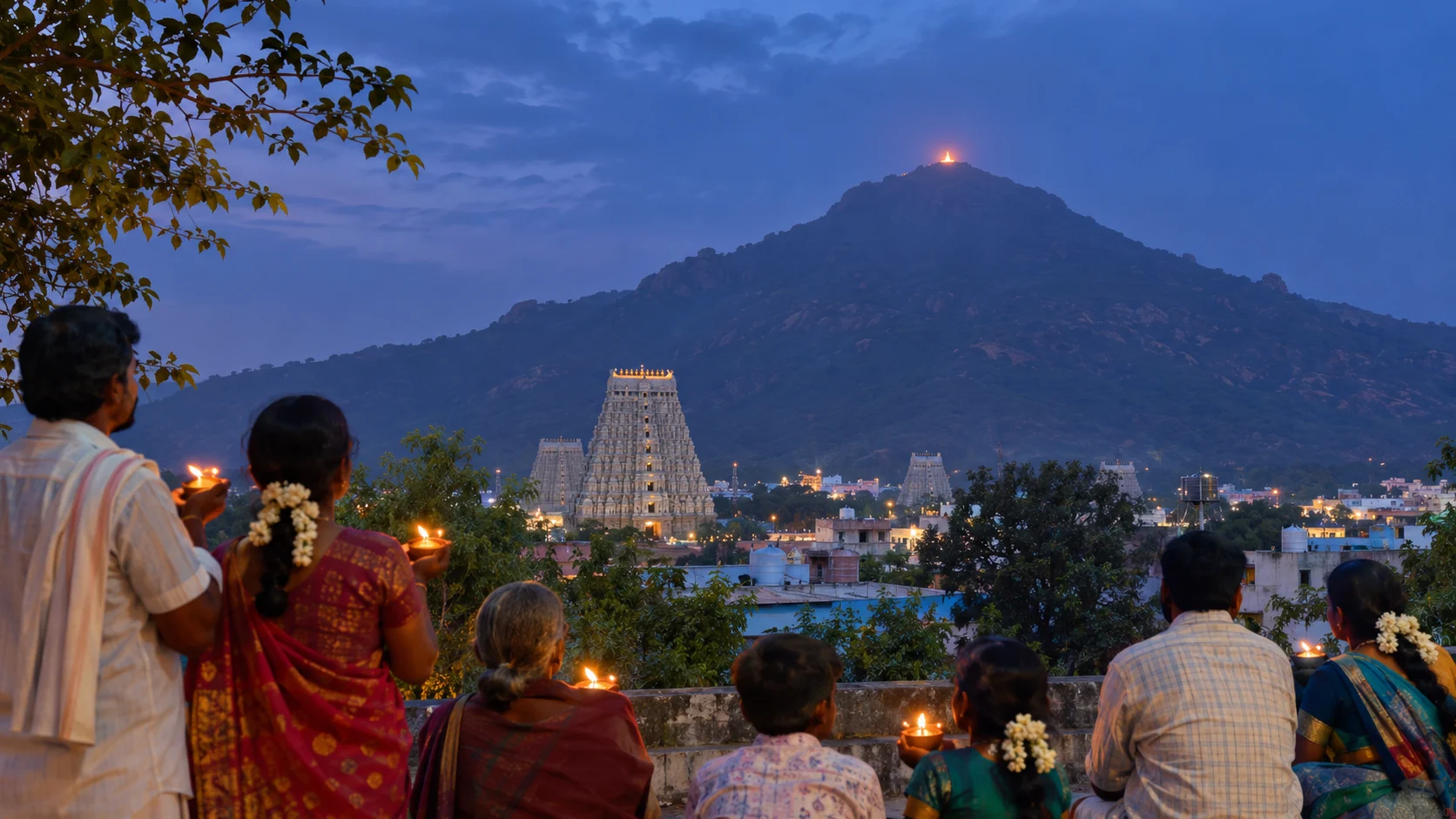
Mark 24 November, then verify the temple programme
The Tamil Nadu Hindu Religious and Charitable Endowments Department's 2026 festival calendar places Karthigai Deepam on 24 November. Tiruvannamalai district describes the Karthigai Brahmotsavam as a ten-day festival that reaches its best-known moment on the full-moon day, when the Mahadeepam is lit on Arunachala at about 6 p.m. The hilltop light is visible across a wide area and expresses the association of Arunachala with Shiva as fire.
The date is stable enough to plan around, but the sequence of temple rituals, chariot events, entry arrangements, restricted zones and public viewing instructions belongs to the current temple and district programme. Do not build a minute-by-minute itinerary from an old invitation, video or previous year's police map. Look for the 2026 notice close to travel.
Karthigai Deepam is not only a visual event. For devotees it sits within worship, fasting, lamps, temple processions, Girivalam and a sacred relationship to Arunachala. A visitor does not need to imitate every practice, but should approach the town as a living pilgrimage landscape rather than a festival backdrop.
Sources for this section: November 2026 festival calendar, Karthigai Deepam.
Plan for a pilgrimage city operating at exceptional scale
The district administration states that lakhs of people gather for Mahadeepam and that hundreds of thousands undertake Girivalam on full-moon and festival days. At that scale, the normal map of Tiruvannamalai changes. Vehicle diversions, remote parking, pedestrian channels, queues, temporary bus arrangements and restricted approaches can all matter more than the shortest route shown on a phone.
Separate four decisions: how you will reach the wider town, where your vehicle or bus will stop, whether you will seek temple darshan, and where you will be before and after the evening lighting. A plan that treats these as one simple arrival at the temple gate is likely to fail. Walking distance can grow when traffic controls move drop-off points away from the centre.
Choose a meeting point that is outside the densest approach and understandable without mobile data. Every member of the group should know it, along with the accommodation name and one phone number written on paper. Matching clothing, a shared photograph taken that morning and a rule not to split impulsively can reduce confusion.
Sources for this section: Karthigai Deepam, Girivalam route.
Arrive with the official transport plan, not a normal-day assumption
Tiruvannamalai has a railway station and road connections to major Tamil Nadu towns, according to the district administration. Festival-day capacity and stopping arrangements are separate questions. Railways and state transport operators may announce special services, while police can change bus stands, parking areas and access routes. Verify the service number, boarding point and final festival-day stop directly.
If arriving by private vehicle, do not expect to drive to your hotel or the temple at the usual time. Ask the property whether the road remains reachable under festival controls and whether parking is genuinely reserved. A room confirmation is not a vehicle-entry pass. Carry only what can be managed through a long pedestrian transfer.
A same-day arrival shortly before sunset creates the least margin. Delays, queues and diversions can leave a visitor stranded between a distant drop-off and the viewing area. When possible, arrive earlier, sleep in a verified accommodation and learn the immediate streets before the largest crowd forms. Never pay a stranger for a claimed special pass without verifying the issuing authority.
Sources for this section: How to reach Tiruvannamalai, Karthigai Deepam.
Decide whether darshan, Deepam viewing and Girivalam belong in one day
The Girivalam road around Arunachala is about 14 kilometres, or eight and a half miles, according to the district page. On an ordinary full-moon night that is already a substantial walk. During Karthigai Deepam it can involve dense pedestrian movement, slow sections, long standing periods and a far greater time commitment than the distance suggests.
Temple darshan can also require a separate queue and its own entry rules. Do not promise an older adult, child or first-time visitor that all three goals will fit neatly: a full temple visit, a preferred evening viewing place and a complete Girivalam. Rank them before leaving. It is respectful to choose one principal act and let the rest remain optional.
Do not climb Arunachala or seek a restricted summit route because the beacon is on the hill. Access controls protect pilgrims, staff and the landscape. Follow current district, forest, police and temple instructions. Girivalam itself should stay on the authorised public route; shortcuts through dark or private land are not a spiritual advantage.
- Choose one principal goal for the day.
- Treat the 14-kilometre Girivalam as a serious walk.
- Confirm current temple entry and queue arrangements.
- Follow all hill-access and crowd-control restrictions.
- Keep a shorter plan for children, older adults and anyone unwell.
Sources for this section: Girivalam route, Karthigai Deepam.
Example: a family protects an older pilgrim's energy
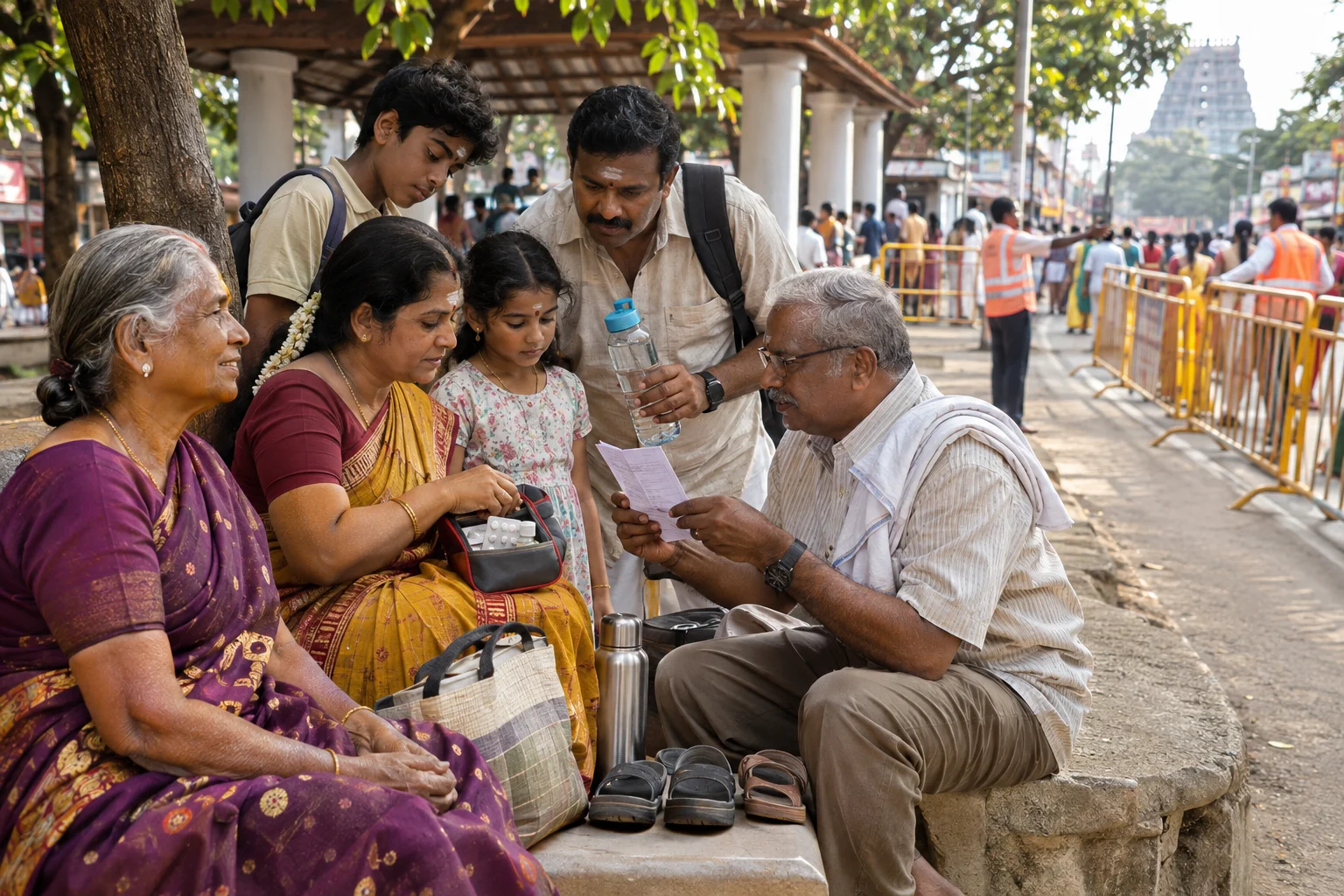
A family of six includes two older adults, one child and three younger adults. They arrive the previous day and confirm the accommodation's pedestrian access. Their principal goal is to witness the evening Deepam from a permitted public area. Temple darshan is attempted only if the morning queue and health of the older adults make it reasonable.
They do not plan the full Girivalam for everyone. Two younger adults may undertake it at another suitable time, while the larger group keeps a shorter walking plan with seated rest. Medicines remain with the people who use them, not in a vehicle parked kilometres away. Each person carries water without overloading one bag.
Before entering the managed route, they choose a meeting point outside the main crowd, write the accommodation number on paper and agree that nobody will turn back alone. After the lighting, they wait for the first surge to ease rather than forcing an immediate exit. The family experiences the festival together because it gives up the idea of completing every possible act.
Sources for this section: Girivalam route, Karthigai Deepam.
Make health, weather and footwear part of the pilgrimage plan
Late November falls within Tamil Nadu's northeast-monsoon season. Rain at Tiruvannamalai is not guaranteed, but a current warning can change walking comfort, visibility, drainage and transport. Check the district forecast and alerts close to departure. A thin rain layer is more useful than an umbrella in a dense crowd, where raised objects can obstruct others.
Wear simple, broken-in footwear appropriate to the route and current temple rules. Carry prescribed medicines, water, a small snack where permitted and minimal valuables. Heavy bags, elaborate camera equipment and loose plastic become burdens over long pedestrian distances. Keep hands available for balance and for assisting children or older adults.
Anyone with chest pain, breathing difficulty, dizziness, dehydration or severe fatigue should stop and seek help rather than pushing toward a ritual target. Know the current medical-aid points from official arrangements. A pilgrim can participate through darshan, lamps, prayer or viewing without completing a 14-kilometre walk.
Sources for this section: Girivalam route, November 2026 festival calendar.
View the Deepam without turning worship into content
A wide public view of Arunachala can be more meaningful than competing for the closest possible position. Respect barricades, one-way pedestrian flow and spaces reserved for worship or emergency movement. Do not hold a phone above other people's heads for long periods, push forward for a live stream or use a drone over the town, temple or crowd.
Photography rules can vary inside temple spaces and around processions. Ask before photographing ritual, priests or individual devotees. Never use flash in a way that disrupts worship, and do not publish identifiable images of people in vulnerable or intensely devotional moments without permission.
Lamps require equal care. Place them only where organisers or the household permits, keep flame away from clothing and crowds, and do not create a line of lamps on a pedestrian escape route. The meaning of Karthigai Deepam is not strengthened by leaving oil, plastic, food waste or broken clay where others must walk.
Sources for this section: Karthigai Deepam, November 2026 festival calendar.
Design the exit before choosing the viewing place
The lighting moment concentrates attention; the minutes afterward concentrate movement. Before settling into a viewing area, identify which direction you can legally leave, whether the route leads toward your accommodation or transport point and what you will do if the group is separated. Do not assume that a road used on arrival will remain two-way after the event.
Keep enough energy and water for the return. A distant parking area can feel much farther after hours of standing. If special buses or trains operate, confirm their boarding location and final departure rather than following a crowd that may be heading elsewhere. Build a long buffer and accept that moving slowly can be safer than trying to beat everyone to the exit.
If rain, crowd controls or an official instruction changes the plan, leave by the directed route. Do not wait in a blocked street for a private vehicle to reach you. Drivers should use authorised pickup points and should never stop across a pedestrian channel, emergency lane or temple approach.
Sources for this section: How to reach Tiruvannamalai, Karthigai Deepam.
Build a respectful 2026 plan in five decisions
First confirm the 24 November date and current temple programme. Second verify the special train, bus, parking or traffic plan for your actual arrival. Third choose one principal goal: darshan, permitted Deepam viewing or Girivalam. Fourth design the health, meeting-point and exit plan around the least mobile member of the group. Fifth check weather and official restrictions again before entering the densest area.
Keep accommodation and payment verification inside that sequence. Festival demand creates opportunities for fake rooms, unofficial passes and misleading transport claims. Use the property's official contact, record the cancellation terms and avoid paying an individual account for privileged access that cannot be confirmed by the responsible authority.
Karthigai Deepam rewards patience. The hill, temple, lamps and movement of pilgrims form a sacred landscape larger than any one photograph or checklist. A successful visit is not measured by how close you stood or how many kilometres you forced into one day. It is measured by whether worship, safety and other people's space remained intact.
Sources for this section: November 2026 festival calendar, Karthigai Deepam, Girivalam route, How to reach Tiruvannamalai.
Sources & Further Reading
These authoritative references support the historical, geographic, or seasonal context in this story. Current conditions and operating details still require a fresh official check.
- Tamil Nadu Temple Festival Calendar: November 2026 · Hindu Religious and Charitable Endowments Department, Government of Tamil Nadu
- Places of Interest: Karthigai Deepam, Tiruvannamalai · Tiruvannamalai District Administration, Government of Tamil Nadu
- Full Moon Day and Girivalam · Tiruvannamalai District Administration, Government of Tamil Nadu
- How to Reach · Tiruvannamalai District Administration, Government of Tamil Nadu
Related Stories
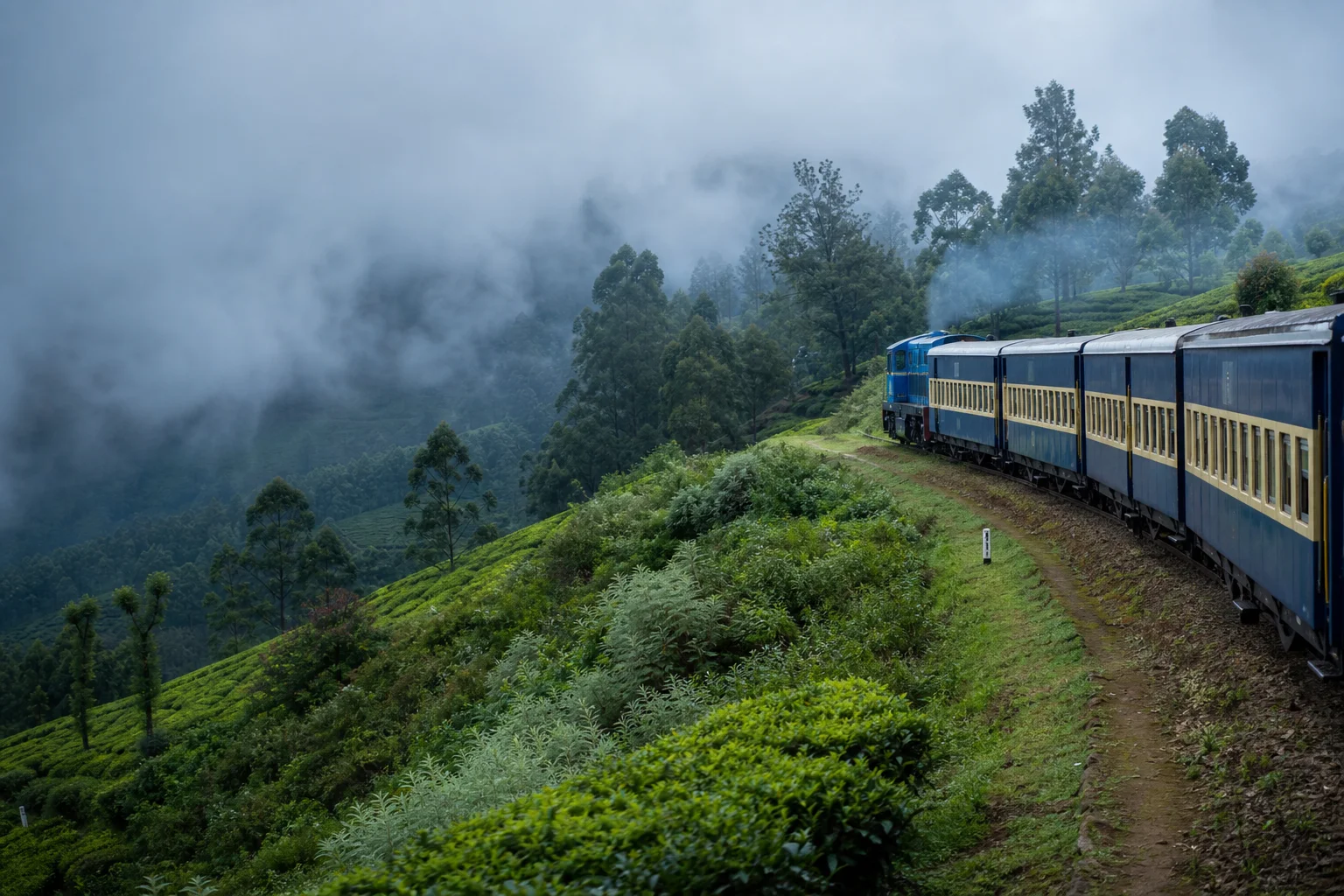
Tamil Nadu Festival Travel 2026: How to Plan Trains, Buses and Return Trips
A practical guide to Tamil Nadu's festival travel rush, with train, bus, Chennai-return, family and temple-event planning examples.

Fake Tamil Nadu Tourism Booking Sites: How to Verify Before You Pay
TTDC is warning travelers about fraudulent websites misusing its identity. Learn how to verify hotels, tours and boat-house bookings before paying.
Frequently asked questions
When is Tiruvannamalai Karthigai Deepam in 2026?
The Tamil Nadu HR&CE festival calendar lists Karthigai Deepam on 24 November 2026. Confirm the current temple programme before travel.
What time is the Mahadeepam lit?
The Tiruvannamalai district page describes the hilltop Mahadeepam as being lit at about 6 p.m. on the full-moon culmination. Follow the 2026 official programme for the current timing.
How long is Tiruvannamalai Girivalam?
The official district page describes the road around Arunachala as about 14 kilometres, or eight and a half miles.
Can I complete temple darshan, Mahadeepam viewing and Girivalam in one day?
Some fit, experienced pilgrims may attempt it, but crowd and queue time make the combination demanding. Rank one principal goal and keep the others optional.
Can visitors climb the hill for the Deepam?
Do not assume hill access is permitted. Follow current district, police, forest and temple restrictions and never use an unofficial route.
Should I drive to the temple?
Festival traffic controls may move parking and drop-off points far from the centre. Use the official 2026 transport and parking plan rather than a normal-day route.
Is Karthigai Deepam suitable for older adults?
It can be, with a shorter plan, verified seating or rest options, medicines, water and no obligation to complete Girivalam. Build the day around the least mobile person.
What should I carry?
Carry identification, water, prescribed medicines, light rain protection, a charged phone and power bank, simple footwear and minimal valuables.
Where is a good place to view the Deepam?
Use a permitted public area with a safe exit and follow official crowd controls. This guide does not certify a specific 2026 viewing point.
How can I avoid fake rooms or passes?
Verify the accommodation or issuing authority through its official contact, request written terms and do not pay for unverified privileged access.
Editorial attribution
Prepared and reviewed by My Tamil Nadu Editorial Desk. Modified 2 November 2026.