
A calm first journey
Tamil Nadu for First-Time Visitors
Begin with one region, a realistic pace and a few meaningful priorities. This guide connects the practical decisions without turning Tamil Nadu into a checklist.
Orientation
Start with the decision, not a slogan
Tamil Nadu is a large and varied state. A first visit becomes easier when it has one clear purpose: a city and its museums, a temple and heritage corridor, a hill base, a coastal journey, food and culture, or a slower combination of connected interests. Trying to sample every famous place usually produces more transit than understanding.
The state is not one uniform cultural or geographic experience. Tamil is central to public life, but communities, languages, food, worship, architecture and daily routines vary by place and setting. Respect begins with observation and specific questions rather than assuming that one custom represents everyone.
Separate evergreen knowledge from current facts. History, geography and cultural context can be researched before booking. Weather, warnings, transport, access, schedules, events and prices need official verification close to travel. The site links these layers without inventing live certainty.
This is an evergreen planning guide, not a live operating feed. Forecasts, warnings, transport schedules, ticket availability, opening arrangements, access controls and prices can change after editorial review. Follow the linked official service close to departure and treat a clear unavailable state as more trustworthy than a guessed answer.[2][3]
START SMALL
Choose a region before choosing attractions
For an urban introduction, Chennai offers major transport connections, museums, neighbourhoods, coast and cultural institutions. A central route can connect Tiruchirappalli, Thanjavur and Kumbakonam. Madurai can anchor a southern cultural and temple journey. Coimbatore can support western movement and upland connections.
These examples are not fixed circuits. Use the city, district and destination directories to understand the places, then remove any stop that requires backtracking or a rushed transfer. A short trip should usually stay with one base; a longer trip can move in one direction.
Do not choose a place only from a photograph. Read whether it is a living temple, protected monument, museum, forest, coast, town or working neighbourhood. Each asks for different time, conduct and current checks.
REALISTIC TIME
Count nights, transfers and recovery
Arrival and departure days are not automatically full sightseeing days. Note the actual hotel nights, arrival hour and onward connection before choosing a duration guide. One or two priorities per half-day often produce a better first visit than a dense sequence.
Every hotel change includes packing, checkout, station or road access, finding the next property and settling in. The cost is attention as well as time. Keep the base when two places can be understood from it without an unreasonable day trip.
Use the itinerary pages as planning frames and the Trip Planner for deterministic matches. Neither tool knows a future delay, opening change or personal energy level; retain the right to shorten the day.
LANGUAGE AND COMMUNICATION
A little Tamil and patient clarification go far
Tamil is widely used across the state. English and other languages may be used in many travel settings, but proficiency cannot be assumed. Learn a greeting and thank-you, keep addresses written clearly, and ask which language the other person prefers.
Names can have several English spellings. Kancheepuram and Kanchipuram, Kanniyakumari and Kanyakumari, or Tiruchirappalli and Trichy may refer to the same place in different systems. Match the station, district and destination rather than relying on spelling alone.
Translation apps can help with basic text but may miss politeness, pronunciation or context. Do not use sacred, political or identity-laden phrases as decoration. When a person helps translate, credit the effort and avoid making their speech a performance.
SACRED PLACES
Visit temples as living institutions
A temple can be architecturally and historically important while remaining an active place of worship. Current opening arrangements, queues, dress expectations, photography, bags and access can vary by temple and occasion. Check the official temple or HR&CE source and follow signs and staff instructions.[4]
Remove footwear where required, dress respectfully, avoid obstructing worship and never assume every ritual is open to every visitor. Ask before photographing people, ceremonies or restricted interiors. A no-photography rule is not an inconvenience to negotiate away.
Temple festivals can change movement, crowding and access. An exact annual programme must come from the responsible institution. Build flexibility and never use an evergreen article as proof that a ceremony will occur at a particular hour.
FOOD AND WATER
Explore food regionally, without treating one menu as universal
Tamil food includes varied vegetarian and non-vegetarian traditions, rice and millet foods, seafood, meat, pulses, vegetables, tiffin, sweets, snacks and beverages. Region, community, household, occasion and migration all matter. Use the Food hub to understand context rather than collecting one list of compulsory dishes.
Ask about ingredients and dietary needs clearly. Terms such as spicy or vegetarian can be interpreted differently, and cross-contact cannot be assumed absent. This guide does not certify vendors or provide medical advice.
Carry water appropriate to personal needs and current conditions, but follow rules about taking food or drink into temples, monuments and protected places. Dispose of waste responsibly and avoid treating markets or working food spaces as staged attractions.
PAYMENTS AND CONNECTIVITY
Keep more than one lawful way to pay and navigate
UPI is an instant payment system operated within India's regulated payment infrastructure and is widely visible through merchant QR codes. Eligibility and onboarding depend on the traveler, bank, app or approved product. International visitors should use current official information rather than assuming an ordinary foreign account will work.[9][10]
Cards, cash and digital payments may each fail in a particular place because of connectivity, acceptance or account conditions. Keep a lawful backup and protect PINs and one-time codes. Never approve a payment request you do not understand.
Mobile coverage varies, especially on rural, hill and forest routes. Save essential tickets, addresses and maps offline, while remembering that an offline map cannot show a new closure. Recheck when connectivity returns.
TRANSPORT
Verify every long transfer with the operator
Train, state bus, flight, city transit, taxi, auto and car can all be useful. Select by corridor and full transfer burden rather than prestige. Confirm the exact station or terminal, date and boarding point through Indian Railways, TNSTC, the relevant urban operator, airport or airline.[5][6][7][8]
Keep realistic margins, especially on separate tickets. Arrange late-night or remote arrivals before travel. Accessibility must be confirmed per vehicle, station and destination.
Map estimates are orientation tools, not promises. Traffic, weather, road work and stops change them. A first journey becomes calmer when it includes fewer transfers and a backup for the day with the most consequences.
BEFORE EACH DAY
Use a short current-information routine
Check the forecast and official warnings, then verify the attraction, temple, forest, transport or event that anchors the day. Save the relevant contact or booking record. If the official source is unavailable, treat the fact as unconfirmed.
The Today page makes provider status visible for weather, events and notices. It does not replace the authority issuing a warning or operating a service. Follow through to the named source for consequential decisions.
Tell a trusted person the plan when appropriate, keep identification and essential personal items secure, and ask accommodation staff about the most practical local arrival or departure point. This is general planning guidance, not a safety guarantee.
Saved in this browser
First Tamil Nadu Trip
Use this as a planning prompt, then confirm current facts with the responsible operator or authority. Nothing is sent to a server.
Visual orientation
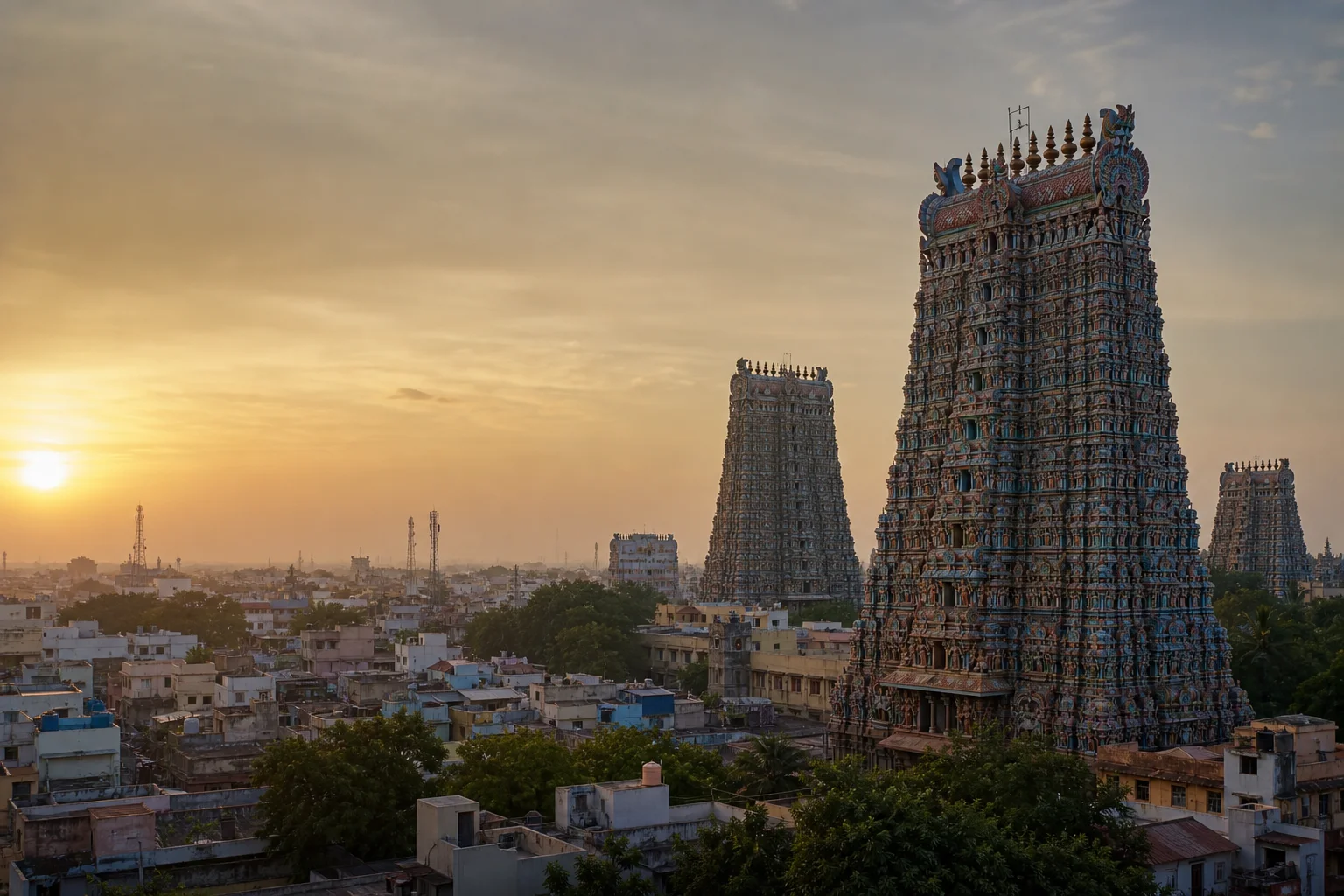
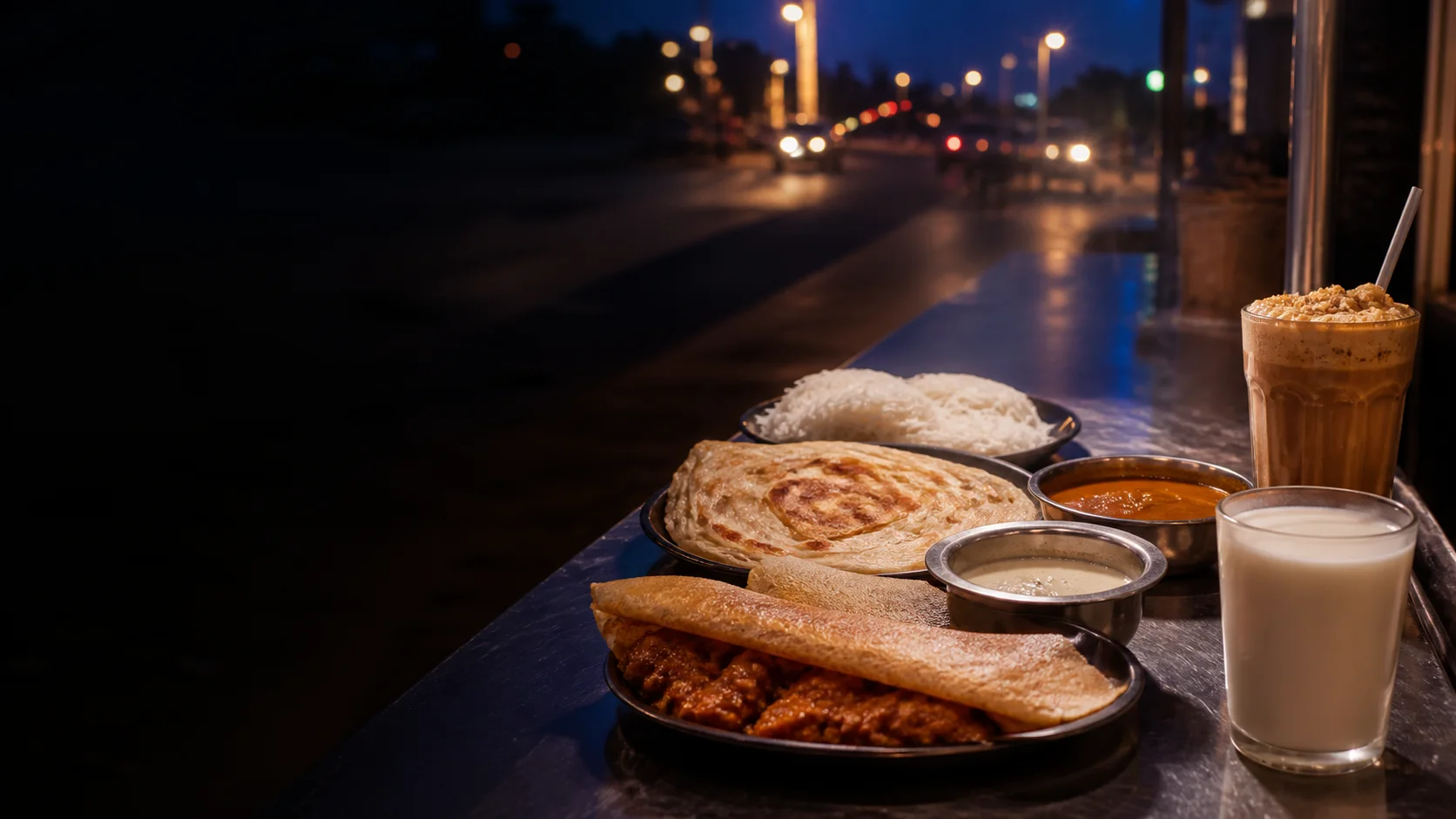
Project-created travel perspectives
These editorial images are not evidence of current weather, access, schedules, prices, businesses or crowds.

Planning questions
Frequently asked questions
How many days should a first Tamil Nadu trip be?
Use the nights actually available. A short trip should usually focus on one base; longer trips can connect nearby regions.
Is English enough for travel?
English may be used in many settings but cannot be assumed everywhere. Clear addresses, patience and a few Tamil courtesies help.
What should I wear to temples?
Use respectful clothing and verify the exact temple's current rules; expectations vary.
Can I photograph inside temples and monuments?
Only where current rules allow. Ask before photographing people or ceremonies and obey restricted-area signs.
Can international visitors use UPI?
Products and eligibility change. Check NPCI's current official international-visitor information and keep another lawful payment method.
Should I book every transfer in advance?
Book critical long-distance segments where appropriate, but keep the itinerary flexible for current conditions.
Is Tamil Nadu one climate zone?
No. Coast, plains, delta, far south and hills differ. Check exact destinations.
Does this guide guarantee safety or access?
No. It provides planning principles; current official warnings, operators and local authorities decide real conditions.
Editorial trust
Sources and current-information handoffs
Major factual claims are cited inline. Operating details, warnings and availability must still be rechecked at the official source.
- 1Tamil Nadu destination overviewMinistry of Tourism, Government of IndiaOfficial tourism overview · Reviewed 14 August 2026
- 2Regional Meteorological Centre ChennaiIndia Meteorological DepartmentOfficial forecast and regional weather service · Reviewed 14 August 2026
- 3Tamil Nadu and Puducherry weather warningsIndia Meteorological DepartmentOfficial current warning service · Reviewed 14 August 2026
- 4Temple GuideHindu Religious and Charitable Endowments Department, Government of Tamil NaduOfficial temple-administration directory · Reviewed 14 August 2026
- 5Passenger Reservation EnquiryIndian RailwaysOfficial rail schedule, availability and PNR service · Reviewed 14 August 2026
- 6Online Ticket Reservation SystemTamil Nadu State Transport CorporationOfficial state bus booking and passenger-information service · Reviewed 14 August 2026
- 7Commuters CornerChennai Metro Rail LimitedOfficial metro timetable, fare and station-information hub · Reviewed 14 August 2026
- 8Chennai AirportAirports Authority of IndiaOfficial airport information · Reviewed 14 August 2026
- 9Unified Payments InterfaceNational Payments Corporation of IndiaOfficial payment-system overview · Reviewed 14 August 2026
- 10UPI One WorldNational Payments Corporation of IndiaOfficial international-visitor payment information · Reviewed 14 August 2026