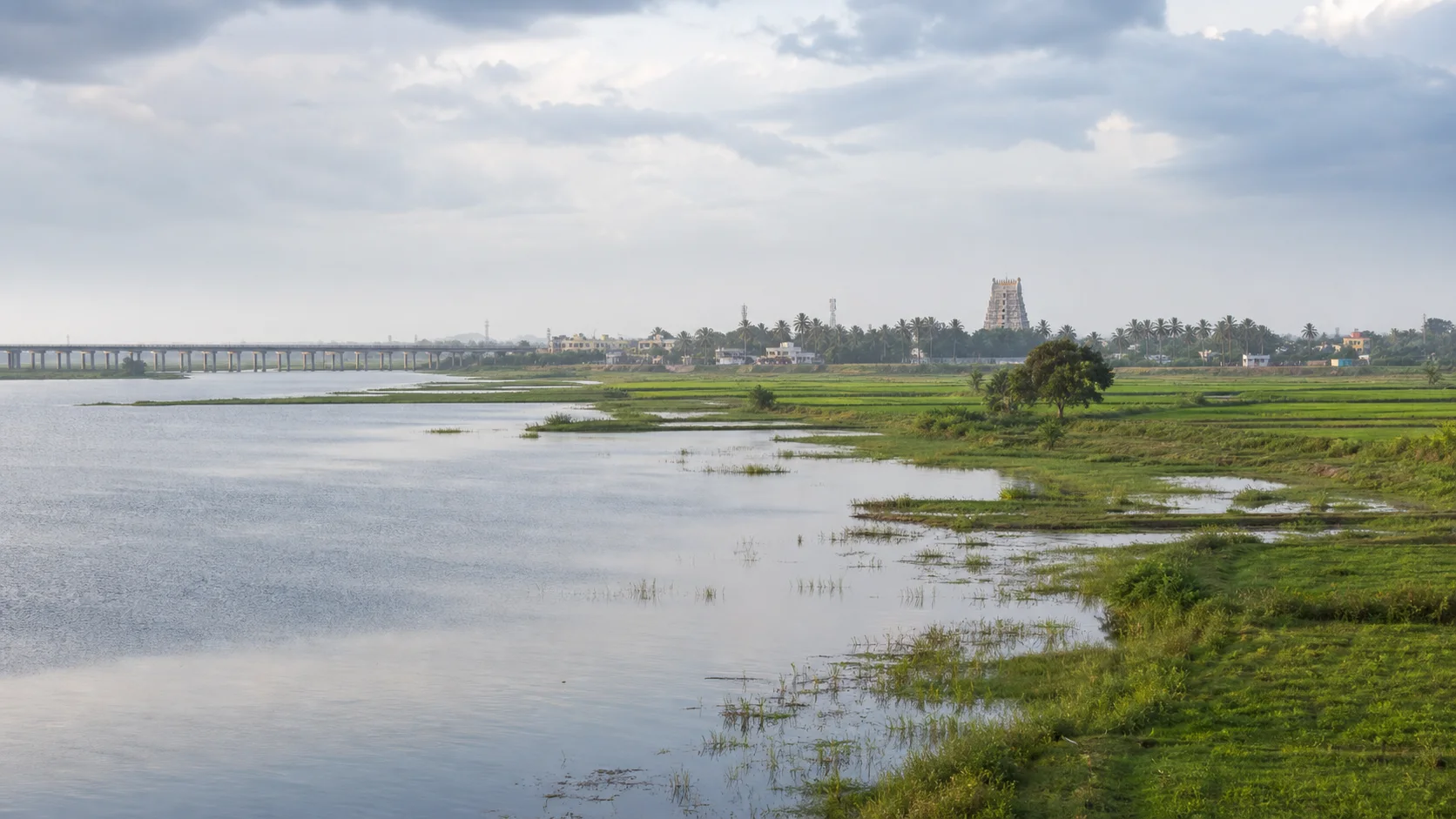
Lakes, temple towns, coast and industrial transition
Tiruvallur District: Temples, Lakes and Places to Explore
Tiruvallur district stretches from temple towns and agricultural blocks to reservoirs, the Pulicat lagoon edge, industrial centres and dense urban areas connected with metropolitan Chennai. Tiruvallur town is the headquarters, but the district is much broader than either that town or the generic idea of 'Chennai suburbs'.On this page
District overview
Understanding Tiruvallur district
The district was formed from the earlier Chengalpattu administrative area. Its current revenue divisions and taluks include very different landscapes, from coastal Ponneri to inland Tiruttani and metropolitan-edge Avadi.[tiruvallurAbout][tiruvallurAdmin]
The district includes places connected to Chennai's economy and planning, but that relationship does not make the whole district a suburb or erase agricultural, temple and coastal identities.
Why it matters
Why explore Tiruvallur?
Tiruvallur town's Veeraraghava temple and Tiruttani's Murugan temple make living religious geography a major district theme.[tiruvallurHome][tiruvallurPlaces]
Poondi reservoir and other water bodies connect drinking-water systems, river history and public infrastructure.
Pulicat links lagoon ecology, fishing, maritime trade and Dutch-British remains on the district's coastal edge.[tiruvallurPlaces]
Avadi, Gummidipoondi and adjoining corridors show industrial and urban transition, while agriculture remains important across several blocks.[tiruvallurAgriculture]
Land and water
Geography and regional identity
The district links inland plains and low hill areas to reservoirs, river systems, Pulicat lagoon and a short coastal edge.
Poondi reservoir lies across the Kosasthalaiyar/Korttalaiyar system and forms part of Chennai's wider water-supply geography.[tiruvallurPlaces]
Pulicat is a shared lagoon landscape extending beyond one district and state boundary; this page discusses only the Tamil Nadu district context.
Urban growth, industry, agriculture and water infrastructure compete for space, making district geography a planning issue rather than scenery.
Evidence and change
Historical overview
The district administration relates the region to Pallava, Chola, later state and colonial phases, but surviving evidence differs by site and should not be flattened into one timeline.[tiruvallurAbout]
Tiruvallur's current district identity followed administrative division from the older Chengalpattu/Kancheepuram framework.
Pulicat became an important European trading settlement on a much older inhabited coast; Dutch and British remains belong within fishing and lagoon histories, not an isolated colonial attraction.
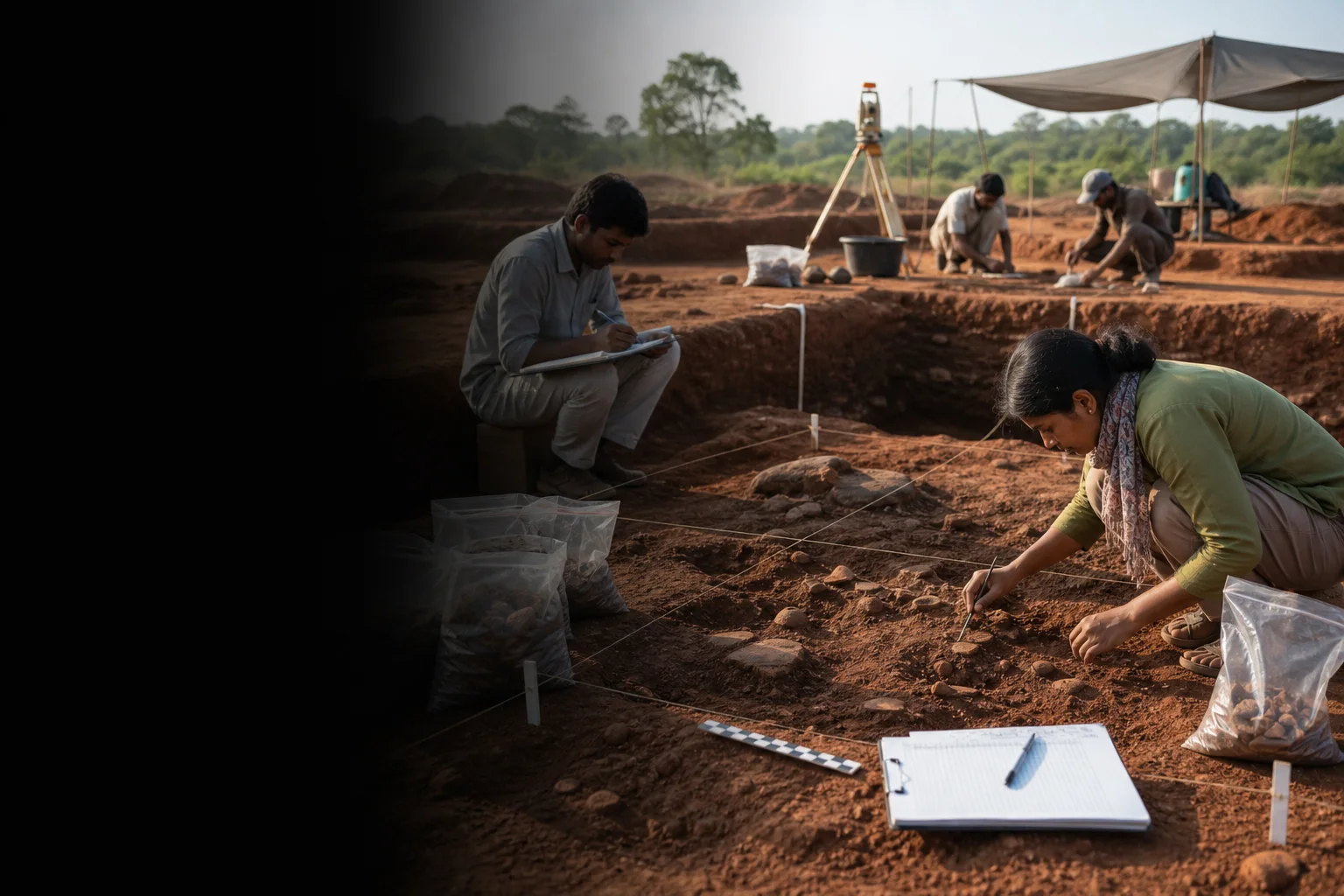
Stone-tool discoveries around Poondi and Gudiyam are important to Indian prehistory, but remote or protected locations are not promoted as casual trekking destinations.
Continue with Tamil Nadu history →Within the district
Cities, towns and local centres
These are district contexts, not newly created destination pages.Tiruvallur
The headquarters town centres administration, rail movement and Veeraraghava temple traditions.
Avadi
A corporation and transport hub whose identity is connected to, but not swallowed by, metropolitan Chennai.
Tiruttani
A Murugan pilgrimage centre in the district's inland hill setting.
Ponneri
Agriculture, lagoon access and transport connect the town to the coastal part of the district.
Gummidipoondi
Manufacturing and northern transport routes coexist with villages and cultivated land.
Pulicat / Pazhaverkadu
Fishing, boat building, maritime heritage and wetland ecology overlap at the coastal edge.
Living and protected places
Temples and spiritual places
Veeraraghava Perumal Temple
A major living Vaishnava institution in Tiruvallur town; festival and access information must be current.
Tiruttani Subramaniya Swamy Temple
A major Murugan hill temple in Tiruvallur district; no queue or transport promise is made.
Periyapalayam Bhavani Amman Temple
A living goddess temple whose annual crowd conditions require official planning.
Tiruvalangadu temple context
Shaiva sacred and performance traditions belong to a wider district cultural landscape.
Interpret carefully
Heritage and architecture
Pulicat maritime remains
Cemetery, church, settlement and trade history should be read beside living lagoon communities.
Poondi prehistory context
Stone-tool history is educational; remote access should never bypass official permission.
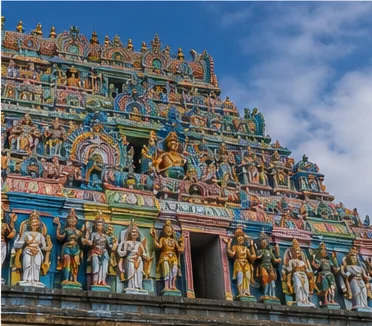
Temple towns
Living institutions preserve ritual, architecture and settlement memory across the district.
Water infrastructure
Reservoirs, tanks and channels are part of modern and historical public works.
Living knowledge
Culture, food and regional products
Culture and festivals
Temple festivals, Murugan devotion, Vaishnava traditions, lagoon communities and northern Tamil rural practices create multiple cultural settings.
Pulicat craft and boat-building references require consent and present-day verification; communities are not display objects.
Metropolitan migration has reshaped language, work and neighbourhood life in Avadi and eastern taluks.
Food and cuisine
Food changes across urban Avadi, agricultural interiors, temple towns and the Pulicat fishing coast.
Seafood, paddy and pulses can be discussed as production contexts, but no dish, catch or business is guaranteed.
District agriculture sources support crop context; this guide avoids converting department statistics into travel marketing.[tiruvallurAgriculture]
Making and provenance
Regional products and crafts
Agricultural production includes paddy and pulses in documented district programmes, with patterns varying by block and season.[tiruvallurAgriculture]
Boat building and palm-leaf work are associated with Pulicat-area communities in district accounts, but scale and maker access require local confirmation.
No GI claim is made for a Tiruvallur product in this phase.

Landscape first
Nature and wildlife
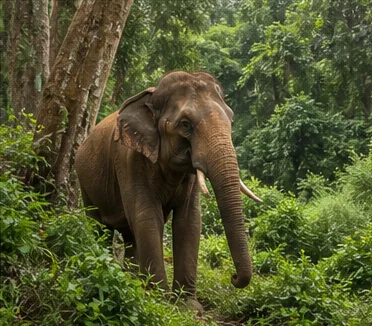
Pulicat lagoon supports bird habitat and fisheries, but access, water conditions and sightings are variable and authority-led.
Poondi and other reservoirs are infrastructure with safety and security rules, not unrestricted recreation zones.
Low hills and archaeological landscapes may contain restricted or difficult terrain; no off-route exploration is encouraged.
Work and change
Economy and livelihoods
Agriculture, manufacturing, logistics, defence-linked institutions, services, fisheries and metropolitan commuting all shape the district.
Industrial estates do not define every taluk, and urban expansion should not erase water or farming landscapes.
Current production counts and employment statistics are deliberately omitted.
Build a coherent route
Places to explore in Tiruvallur
Tiruvallur town
Connect administration, rail movement and living temple heritage.
Veeraraghava Perumal Temple
Verify current worship and visitor arrangements.
Tiruttani
Plan pilgrimage with current transport and crowd checks.
Pulicat
Respect fishing work, habitat controls and weather.
Poondi reservoir
Use designated public areas only and follow security rules.
Avadi
Read industry, transport and metropolitan growth as district history.
Ponneri
Connect agriculture and lagoon routes without assuming access.
Gudiyam-Poondi archaeology context
Learn through official archaeology sources; no unsupervised expedition is recommended.
Choose your pace
Things to do
Read water as public infrastructure
Understand reservoirs and tanks before treating them as recreation.
Visit a temple town respectfully
Use current religious and crowd information.
Study Pulicat in layers
Connect fisheries, ecology and maritime history.
Compare town and corporation
Tiruvallur and Avadi represent different district roles.
Learn prehistory without trespass
Use museum and official interpretation rather than remote-site adventure.
Observe agriculture responsibly
Stay on public routes and seek permission.
Use rail geography
Stations reveal links toward Chennai, Arakkonam and the north; confirm current services.
Plan nature conditionally
No bird or water condition is guaranteed.
Conditions, not promises
Best season and current checks
Coast, lagoon, inland town and low hills can experience different wind, heat and rain on the same day.
Northeast-monsoon rain and severe coastal weather require official IMD and district warnings.[imd][warnings]
Temple festivals, reservoir access and bird movement are current matters, not evergreen promises.
Plan by days
Suggested duration
1 day
Choose Tiruvallur town, Tiruttani or Pulicat as one focused district story.
2 days
Pair one temple-town route with a separately verified water or maritime context.
3 days+
Add urban-industry and agricultural interpretation without rushing across the district.
Regional access
How to reach
Rail
Tiruvallur, Avadi and other stations serve different corridors; confirm current services through Indian Railways.
Road
Multiple national and state routes cross the district, but live traffic and travel time are not supplied.
Air
Chennai's airport can serve the region; airport geography does not place it in Tiruvallur district.
Local movement
Getting around
The district is too varied for one local transport rule. Towns, lagoon areas and hill-temple routes require separate current plans.
Reservoir, forest-edge, archaeological and coastal sites may have access limits beyond what a map displays.
Place-name links
Map of Tiruvallur district
No fabricated coordinates or heavy map embed are used.Map data is not embedded on this lightweight page. Open a place-name search in Google Maps for current roads, business details and directions.
Continue geographically
Nearby districts
Continue by subject
Related My Tamil Nadu guides
Practical planning
Save a district checklist
Saved only in this browser. No login or personal data is needed.
Questions
Frequently asked questions about Tiruvallur
Is Tiruvallur district just part of Chennai suburbs?
No. It includes headquarters and temple towns, agriculture, industry, reservoirs, low hills and Pulicat's lagoon coast.
Is Pulicat in Tiruvallur district?
The Tamil Nadu town and district context are in Tiruvallur, while the lagoon extends across a wider interstate landscape.
Can I visit Poondi as a picnic spot?
Use only currently designated public areas and follow reservoir security and safety instructions.
Are wildlife sightings guaranteed at Pulicat?
No. Habitat conditions, season, access and sightings vary.
How many days are useful?
One day suits one focused place; two or more are needed to compare different district landscapes.
Are Tiruttani temple timings shown?
No. Check the official temple or district source.
Why is the spelling Tiruvallur used?
It is the spelling used by the current district administration; variants appear in other contexts.
Editorial trust
Sources and further reading
Major factual claims were checked against authoritative references. Last reviewed 9 August 2026.- Tiruvallur DistrictTiruvallur District Administration · Official district portalReviewed 9 August 2026
- About Tiruvallur districtTiruvallur District Administration · Official district profileReviewed 9 August 2026
- District administrative unitsTiruvallur District Administration · Official administrative recordReviewed 9 August 2026
- Tourist placesTiruvallur District Administration · Official district visitor recordReviewed 9 August 2026
- District agricultureTiruvallur District Administration, Agriculture Department · Official agriculture recordReviewed 9 August 2026
- Forest and wildlife informationTamil Nadu Forest Department · State governmentReviewed 9 August 2026
- Regional Meteorological Centre ChennaiIndia Meteorological Department · Official weather authorityReviewed 9 August 2026
- Tamil Nadu and Puducherry warningsIndia Meteorological Department · Official warning serviceReviewed 9 August 2026
- National Train Enquiry SystemIndian Railways · Official transportReviewed 9 August 2026