Coastal capital and cultural metropolis
Chennai Travel & City Guide
Chennai is Tamil Nadu's capital, a Bay of Bengal metropolis where older temple settlements, colonial-era institutions, modern industry, music, cinema, education and everyday coastal life share the same urban landscape. This guide treats the city as a place to understand, not simply a list of sights.
On this page
Start here
Why Chennai
Chennai is useful precisely because it cannot be reduced to one monument. A morning can move from a living temple neighbourhood to a state museum, a modern cultural institution and the seafront. The city's value lies in those transitions: sacred and civic architecture, older trading settlements, colonial records, film and music industries, universities, markets, residential districts and a coast used by fishers, walkers and families.
It is also a practical gateway. Major rail terminals, an international airport, intercity roads and the growing metro network make Chennai a strong starting point for northern and coastal Tamil Nadu. A well-paced visit should still resist treating the city only as a transit stop.
Historical context
A short history of Chennai
The present metropolis grew from places with histories older than the English East India Company's settlement. Mylapore and Triplicane preserve long religious and literary associations, while communities along the coast maintained fishing and trading relationships. The district administration places the wider area within historic Tondaimandalam and notes the influence of Pallava, Chola and later powers. These earlier layers matter because the colonial city did not begin on empty land.
Fort St George became the institutional centre of the Company's settlement in the seventeenth century. Madraspatnam and Chennapatnam expanded and gradually formed a larger town. French occupation and British restoration formed part of eighteenth-century conflict, after which Madras developed as an administrative, military and commercial centre of the Madras Presidency. The port, railways, courts, colleges and professional institutions changed both the physical city and its connections across southern India.
Colonial growth was unequal and should not be described only through grand buildings. Black Town and later George Town were shaped by Indian merchants, craftspeople, labourers and communities from many regions. In the twentieth century, the city became important to the freedom movement, the non-Brahmin and Dravidian movements, Tamil publishing, theatre and cinema. After independence it remained the capital of Madras State and later Tamil Nadu. The official name changed from Madras to Chennai in 1996; both names continue to carry historical meaning in institutional and cultural contexts.
Modern Chennai extends far beyond the old fort and port. Automobile manufacturing, information technology, healthcare, education and a large creative economy sit beside neighbourhoods whose street plans still reflect temple tanks, bazaars, railway colonies or planned suburbs. Read more in the main history guide rather than treating the colonial period as the city's entire story.
Plan your visit
Places to explore in Chennai
Access, opening details and current conditions should be verified with the responsible official source before travel.
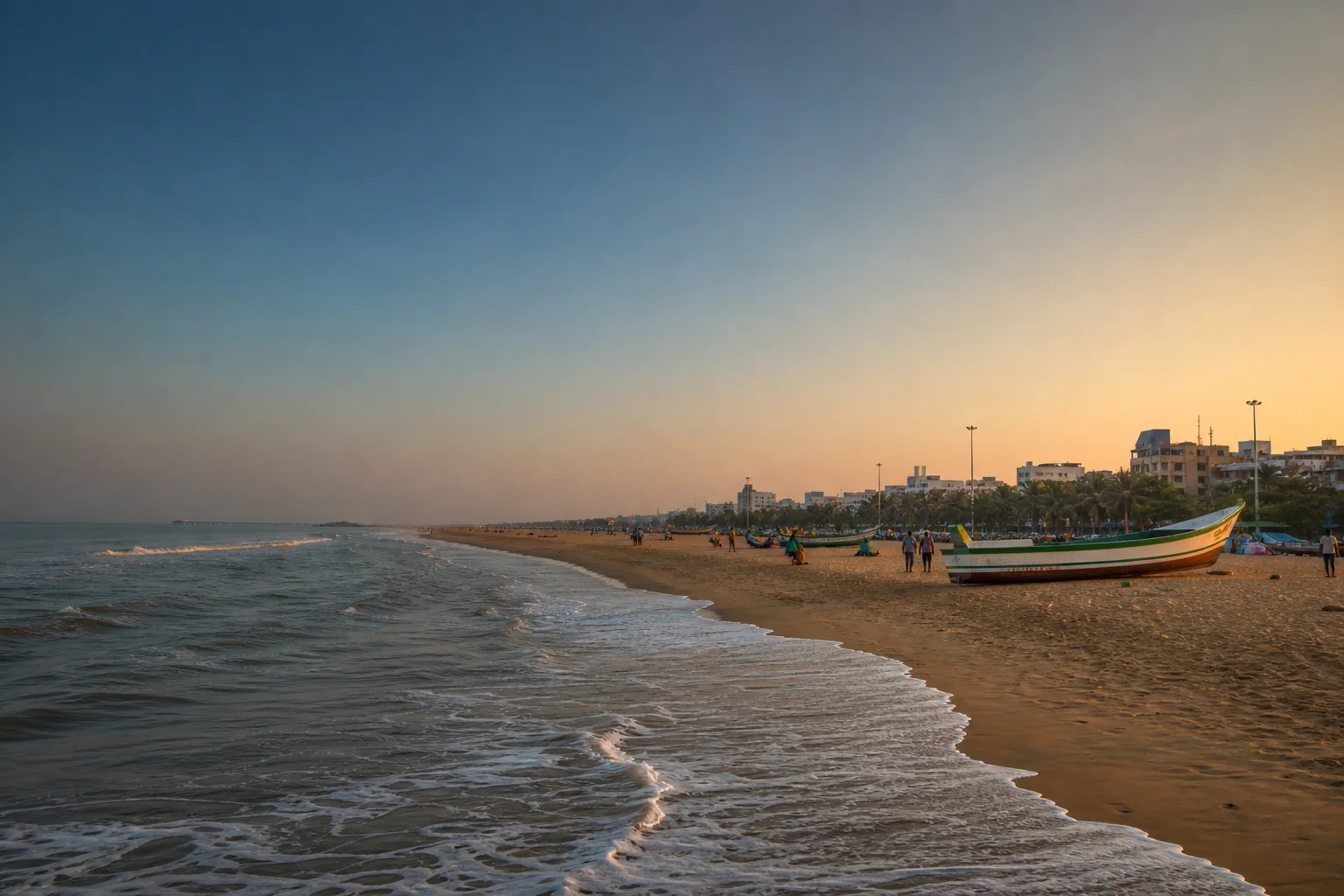
Marina and the central seafront
A broad public shoreline framed by civic buildings, memorial landscapes and long-standing fishing communities. Visit for the scale of Chennai's coastal geography, not as a swimming recommendation; sea conditions and safety instructions must be followed.
Current access and sea warnings should be checked locally.Fort St George
The fortified Company settlement became a major administrative centre. The complex helps explain how trade, military power and government shaped colonial Madras; access to working government areas may be controlled.
Verify museum access and security rules before visiting.Government Museum, Egmore
Its archaeology, bronze, numismatic and art collections provide context for South Indian history beyond Chennai. Gallery availability changes during conservation and renovation.
Consult the museum's official notice before travel.Kapaleeshwarar Temple and Mylapore
A major Shiva temple anchors a dense area of streets, tanks, flower sellers and religious institutions. Present structures and additions belong to layered histories; visitors should treat the complex first as a place of worship.
San Thome and the southern seafront
The basilica and surrounding neighbourhood reflect Chennai's long Christian and coastal histories. The area connects naturally with Mylapore and the beach road without implying that every site shares the same historical period.
Triplicane and Parthasarathy Temple
Triplicane combines a major Vaishnava temple, historic residential streets, educational institutions and the Chepauk area. A walk is rewarding when undertaken with attention to worship, traffic and private residential space.
Kalakshetra and cultural institutions
Chennai's performance landscape includes sabhas, academies, colleges and artist-led institutions. Programmes and visitor access vary, so the experience should be planned from official calendars rather than assumed.
George Town
North Chennai's historic commercial core is better explored as a working district than as a curated heritage zone. Markets, religious buildings and trading streets reveal the city's plural urban history, but walking conditions can be intense.
Choose your pace
Things to do in Chennai
Read the city through a museum
Use the Government Museum to connect sculpture, inscriptions, bronzes and archaeology with places elsewhere in Tamil Nadu.
Walk one historic neighbourhood
Choose Mylapore, Triplicane or George Town and focus on street pattern, worship, commerce and public architecture rather than rushing between distant stops.
Experience the coast responsibly
See the seafront at a comfortable hour, follow sea warnings, avoid litter and respect fishing workspaces.
Attend a verified performance
Check an institution's current programme for Carnatic music, Bharatanatyam, theatre or contemporary performance.
Explore Chennai through food
Compare neighbourhood tiffin, Tamil Muslim cooking, seafood, bakery traditions and newer metropolitan food cultures without claiming one dish represents the whole city.
Use public transport as orientation
Metro and suburban rail can reveal Chennai's scale while reducing time spent in road traffic; confirm the current network and service information first.
Living places
Temples, heritage and interpretation
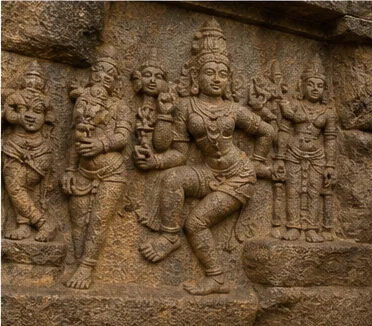
Chennai's temple heritage belongs to active communities. Kapaleeshwarar, Parthasarathy and Marundeeswarar temples are among the city's important sacred landmarks, but dress, photography and access rules differ. Timings and festival arrangements are deliberately omitted here and should be checked with the temple or HR&CE.
Churches, mosques, colonial government buildings, Indo-Saracenic institutions and twentieth-century civic architecture broaden the heritage frame. Fort St George, the High Court precinct, the museum campus and university buildings should be read alongside neighbourhood histories and the labour that made the port city function. The statewide temples guide provides architectural and visitor context.
Everyday context
Culture and food
Culture
Chennai is a major centre for Tamil publishing, theatre, cinema, Carnatic music and Bharatanatyam, while also supporting contemporary art, independent music and multilingual cultural work. The December music season is influential, but schedules, ticketing and venues change each year and must come from organizers.
The city's culture is neighbourhood-based as much as institutional. Temple festivals, church feasts, mosque streets, markets, political meetings, beach gatherings and cinema fan cultures occupy different public worlds. A visitor should avoid presenting one elite performance tradition as the total culture of Chennai.
Explore Tamil Nadu culture →Food
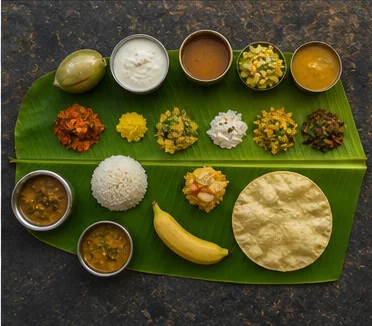
Chennai's food reflects migration and metropolitan scale. Idli, dosa, pongal, vadai and filter coffee are visible parts of its tiffin culture, but the city also has Tamil Muslim biryani traditions, coastal seafood, Andhra influences, long-standing bakeries, vegetarian messes, canteens and food brought by communities from across India and beyond.
Plan by neighbourhood and meal rather than chasing an unsourced 'best restaurant' list. Hygiene, opening hours and quality change, so this phase explains food traditions without endorsements. Explore the broader food pillar for regional context.
Explore Tamil Nadu food →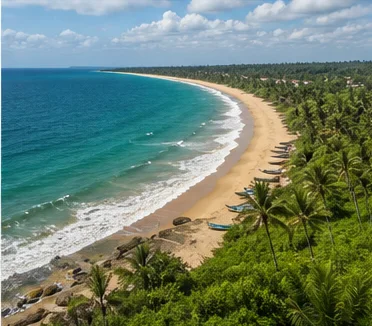
Travel with context
Nature, season and month-by-month planning
Landscape and ecology
Chennai's natural systems include the Bay of Bengal coast, rivers, estuaries, marshes and remnant wetlands. They are not empty scenic backdrops: they support livelihoods, migratory birds, flood regulation and urban biodiversity. Beach and wetland visits should respect barriers, nesting areas and local safety directions.
Seasonal planning
Chennai is a low-lying coastal city, so planning must account for heat, humidity, intense rain and occasional severe weather rather than relying on a single 'best season'. Outdoor heritage walking is generally easier when daytime heat is less demanding, but even then conditions vary.
The northeast-monsoon period can bring heavy rain and disruption. Cyclone-related warnings require close attention to the India Meteorological Department and district administration. Festival and performance seasons can enrich a visit while also increasing demand around particular venues.
January
Often comfortable for longer urban walks; verify festival and performance schedules.
Open month guide →FebFebruary
Useful for museums, neighbourhoods and coast visits with normal heat preparation.
Open month guide →MarMarch
Warmer conditions become more noticeable; shift walks toward morning and evening.
Open month guide →AprApril
Plan heat-aware days with museums or shaded stops during the most demanding hours.
Open month guide →MayMay
Prioritize hydration, indoor culture and flexible coastal visits.
Open month guide →JunJune
Heat and changing rain patterns require current forecasts rather than assumptions.
Open month guide →JulJuly
Build shade and rain flexibility into city days.
Open month guide →AugAugust
Conditions remain humid; verify beach and event information.
Open month guide →SepSeptember
A transition period when current forecasts matter more than seasonal labels.
Open month guide →OctOctober
Northeast-monsoon risk becomes important; monitor official warnings.
Open month guide →NovNovember
Heavy rain or coastal weather may disrupt plans; retain cancellation flexibility.
Open month guide →DecDecember
A major cultural month in many years; confirm programmes and book only from official sources.
Open month guide →Practical access
How to reach and get around Chennai
By air
Chennai has a major international airport connected to the city by road and public transport. Flight times, terminal details and onward services change; use the airport and airline sources close to travel.
By train
Chennai Central and Chennai Egmore are the best-known long-distance terminals, with other stations serving parts of the metropolitan region. Confirm the correct station and live schedule through Indian Railways.
By road
National and state highways connect Chennai with northern, central and coastal Tamil Nadu. Urban traffic can significantly affect a plan, so group nearby neighbourhoods instead of crossing the city repeatedly.
Getting around
The metro is useful for many central, airport and employment-area journeys; suburban rail reaches a different set of corridors. Metropolitan buses, autos and app-based taxis fill the gaps. Routes, fares and service hours are current information and should be checked with operators.
Walking works best inside a chosen neighbourhood rather than as a citywide strategy. Pavement quality, crossings, heat and traffic vary. Families and older travellers will usually benefit from a base near their main interests and fewer cross-city transfers.
Plan by days
Suggested Chennai itineraries
These are editorial sequences, not promises of travel time. Confirm access and adapt the pace to current conditions.
Choose one coherent Chennai story rather than attempting the whole metropolis.
- Day 1Morning in Mylapore and its temple neighbourhood; afternoon at the Government Museum; early evening on the central seafront if weather and safety conditions permit.
Add colonial and commercial history without repeating long cross-city journeys.
- Day 1Mylapore, museum collections and the seafront.
- Day 2Fort St George context, George Town or Triplicane, followed by a verified cultural programme.
Use the third day for a deeper theme or a slower family pace.
- Day 1Temple neighbourhood and museum foundations.
- Day 2Colonial city, markets and coast.
- Day 3Choose arts institutions, southern Chennai, urban nature or a child-friendly museum and park plan.
Continue nearby
Places around Chennai
Open map tools
Map of Chennai
Interactive map data is not loaded on this static page. Open Google Maps for current place details and directions.
Before you go
Practical travel guidance
Pace
Group places by neighbourhood; Chennai's size makes frequent cross-city journeys tiring.
Clothing
Use breathable clothing for the coast and carry a modest layer suitable for active religious sites.
Families
Balance outdoor stops with museums or shaded breaks, and verify gallery or facility access.
Accessibility
Conditions vary sharply between modern transit, historic buildings, markets and beaches; check each venue directly.
Photography
Ask before photographing worship, people, markets or working fishing areas; follow institutional restrictions.
Safety
Follow sea warnings, use established crossings where possible and keep official weather alerts available.
Saved only in this browser. No account or personal data is required.
Responsible travel
Keep beaches and public spaces free of litter
Respect fishing workspaces and residential streets
Follow dress and photography rules at religious sites
Use public transport where practical
Do not enter protected wetland or nesting areas
Support institutions and makers without disrupting their work
Questions
Frequently asked questions about Chennai
How many days are enough for Chennai?
One day can introduce one or two neighbourhoods. Two days gives a useful first overview; three days supports museums, heritage, coast and culture at a calmer pace.
Is Chennai only a gateway to other Tamil Nadu destinations?
No. It is a major historical and cultural destination in its own right, though its transport network also makes it a useful starting point.
How can visitors get around Chennai?
Combine metro or suburban rail with buses, autos, taxis and focused walking. Choose accommodation near the main cluster you plan to explore.
Can visitors swim at Chennai beaches?
Do not assume any stretch is safe for swimming. Follow local warnings, lifeguards and official coastal advice.
Are temple timings listed here?
No. Timings, rituals, dress rules and festival access can change and must be confirmed with the temple or HR&CE.
What is a useful cultural experience?
A museum visit, a neighbourhood walk and a current programme from a recognized music, dance, theatre or arts institution offer complementary views.
When should Chennai weather be checked?
Check before booking and again close to travel, especially during periods of heavy rain or coastal warnings.
Does this guide recommend restaurants?
Not yet. Restaurant recommendations require a separate current editorial and disclosure process.
Editorial trust
Sources and further reading
Major factual claims were checked against the references below. Last reviewed 8 August 2026.
- Chennai tourism and visitor informationChennai District AdministrationReviewed 8 August 2026
- History of ChennaiChennai District AdministrationReviewed 8 August 2026
- Tourist places in ChennaiChennai District AdministrationReviewed 8 August 2026
- Museum history, collections and visitor noticesGovernment Museum, ChennaiReviewed 8 August 2026
- Official Chennai Metro informationChennai Metro Rail LimitedReviewed 8 August 2026
- Regional Meteorological Centre ChennaiIndia Meteorological DepartmentReviewed 8 August 2026
- Official railway booking portalIndian Railway Catering and Tourism CorporationReviewed 8 August 2026