Capital district, port city and cultural centre
Chennai District: History, Places and City Guide
Chennai district is the compact administrative heart of Tamil Nadu's capital, but it is not a synonym for the much larger Chennai Metropolitan Area. This guide stays inside the modern district while explaining how the city, corporation, port, coast and metropolitan systems overlap without sharing identical boundaries.On this page
District overview
Understanding Chennai district
The district administration and Greater Chennai Corporation cover a defined urban territory. The Chennai Metropolitan Area is a planning region that extends beyond Chennai district into neighbouring districts; a metropolitan address or transport corridor therefore does not prove that a place lies inside Chennai district.[chennaiAdmin][cmda]
This page provides district-wide orientation. The existing Chennai destination guide focuses more closely on a visitor's city experience, while district links connect administrative geography to history, temples, culture, travel and seasonal planning.
Why it matters
Why explore Chennai?
Chennai matters as the seat of Tamil Nadu government and as a major civic, educational, commercial and cultural centre.[chennaiHome][chennaiProfile]
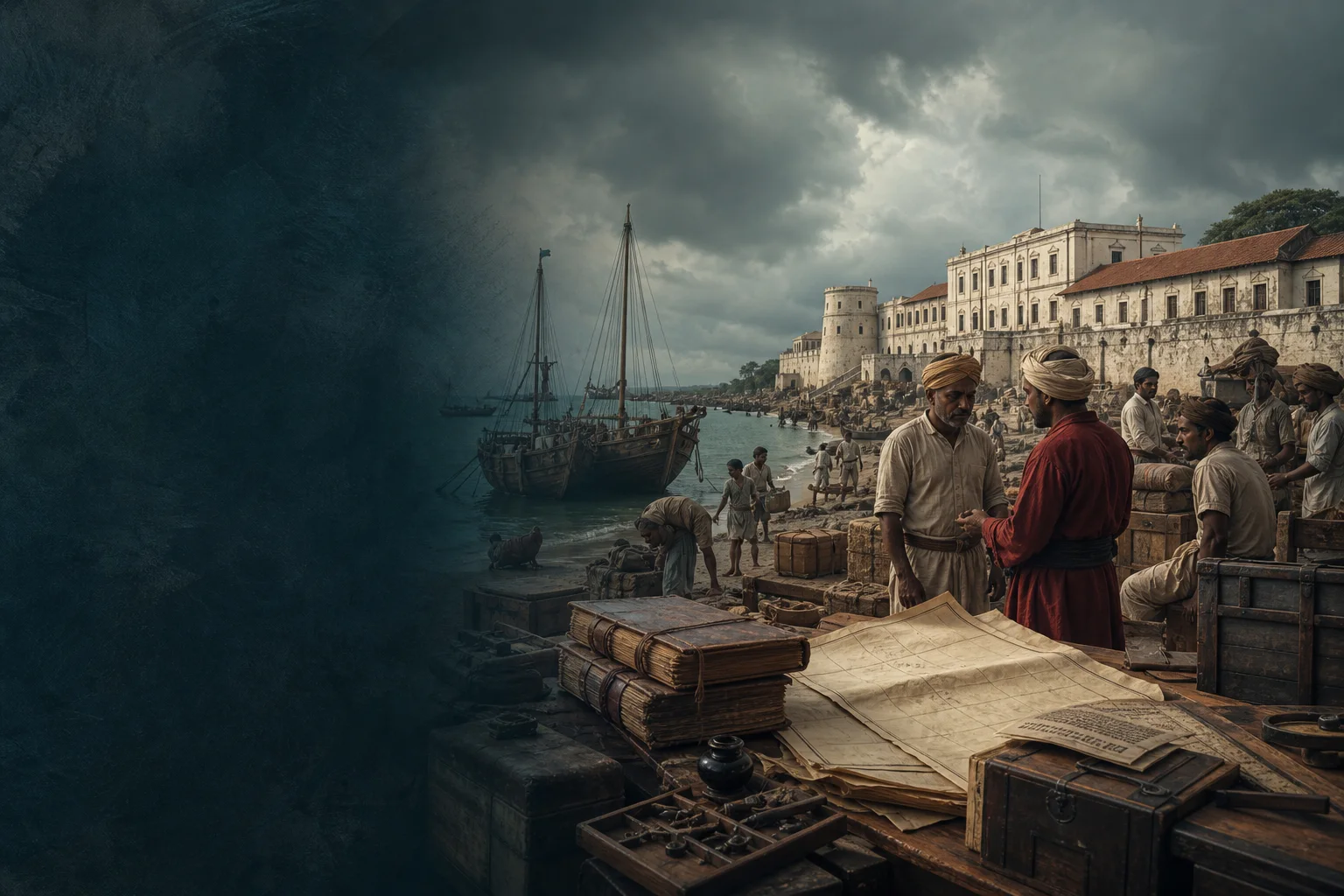
Its importance predates Fort St George: temple settlements, fishing communities and trading places formed part of the coast before the English East India Company's seventeenth-century settlement.
Fort, port, railway, museum, court, university and neighbourhood histories explain how colonial Madras expanded through unequal but deeply connected Indian and European institutions.[chennaiHistory][chennaiPlaces]
Modern Chennai is also a centre of cinema, publishing, engineering, healthcare, education, music and dance; district history must include both working neighbourhoods and landmark institutions.
Land and water
Geography and regional identity
The district occupies a low-lying Bay of Bengal coast shaped by dense construction, beaches, rivers, canals, estuarine edges and remnant wetlands.
The Cooum and Adyar river systems, Buckingham Canal and coastal drainage are civic and ecological infrastructure rather than ornamental scenery.
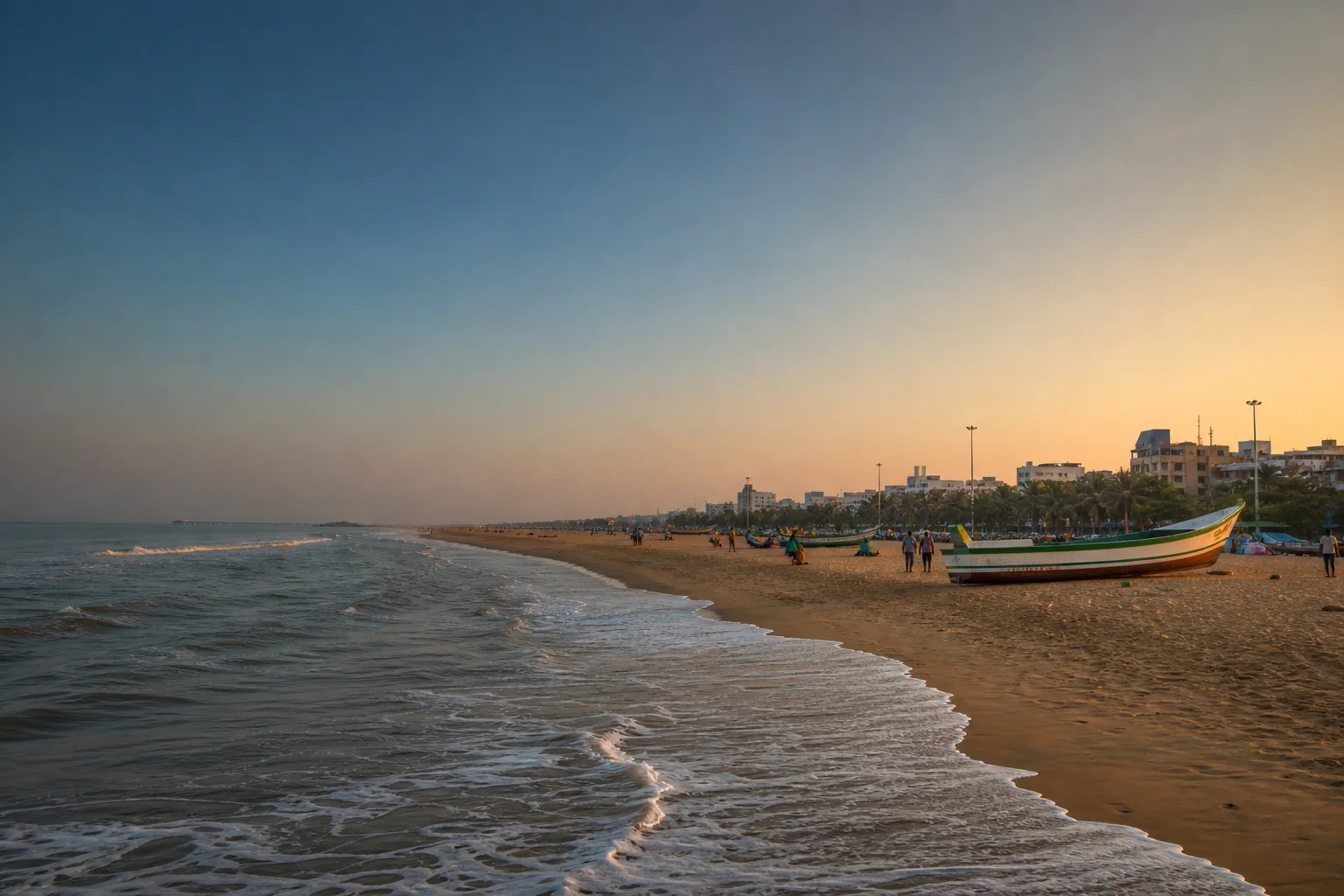
The long shoreline includes public recreation, memorial landscapes, fishing workspaces and exposure to rough sea, erosion and severe weather.
Because the metropolitan area extends outside the district, airport, suburban, industrial and IT references must be checked against current administrative boundaries before being labelled Chennai district.[cmda]
Evidence and change
Historical overview
Older settlements such as Mylapore and Triplicane connect the district to religious, literary and maritime histories that cannot be reduced to the colonial city.
Fort St George became the institutional core of the East India Company settlement. George Town, port labour, Indian merchants and plural religious communities were essential to the city's growth, not peripheral to it.[chennaiHistory][chennaiPlaces]
Madras developed into an administrative capital of the Presidency, with rail, port, courts, colleges, museums and public works creating regional connections alongside colonial inequalities.
After independence the city remained the state capital. Its modern district structure, municipal system and wider metropolitan region now overlap in ways that require careful geographic language.[chennaiAdmin][cmda]
Continue with Tamil Nadu history →Within the district
Cities, towns and local centres
These are district contexts, not newly created destination pages.George Town
Markets, religious buildings, port-linked streets and civic institutions reveal the plural growth of north Chennai.
Egmore
The Government Museum, railway connections and surrounding institutions make Egmore a strong historical anchor.
Mylapore
Temple streets, tank, churches, music institutions and residential life form overlapping histories.
Triplicane
Parthasarathy Temple, Chepauk and dense residential streets connect worship, education, sport and politics.
Tondiarpet and Royapuram
Rail, fishing, industry, labour and old religious institutions broaden the district beyond its central monuments.
Adyar and southern Chennai
Institutions, river and coastal landscapes show the district's twentieth-century and environmental layers.
Living and protected places
Temples and spiritual places
Kapaleeshwarar Temple and Mylapore
A living Shaiva temple neighbourhood whose worship and festival arrangements require current official confirmation.
Parthasarathy Temple and Triplicane
A major Vaishnava centre embedded in a dense residential and institutional quarter.
Marundeeswarar Temple
A living temple in the southern district whose active religious role should lead interpretation.
Plural sacred heritage
Churches, mosques and smaller shrines are part of the district's coastal and commercial histories; no one tradition represents the whole city.
Interpret carefully
Heritage and architecture
Fort St George
Working government and protected heritage require security and access checks; the Fort Museum interprets colonial records.
Government Museum
Archaeology, bronzes, art and natural-history collections connect Chennai to the wider state.
George Town
Commercial streets and religious diversity show Indian agency within the colonial port city.
University and civic precincts
Courts, university buildings, railway stations and public architecture document changing institutions.
Living knowledge
Culture, food and regional products
Culture and festivals
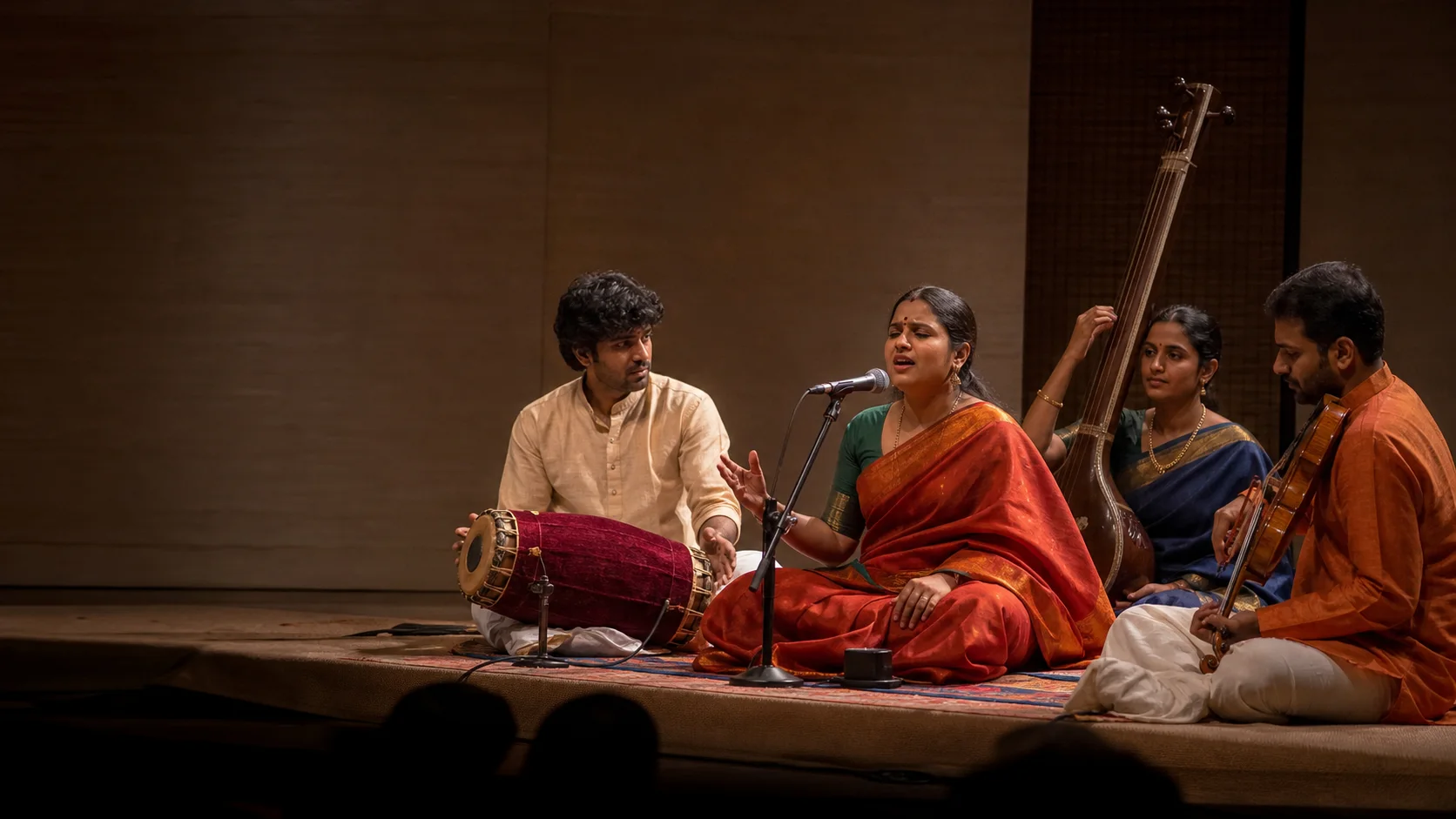
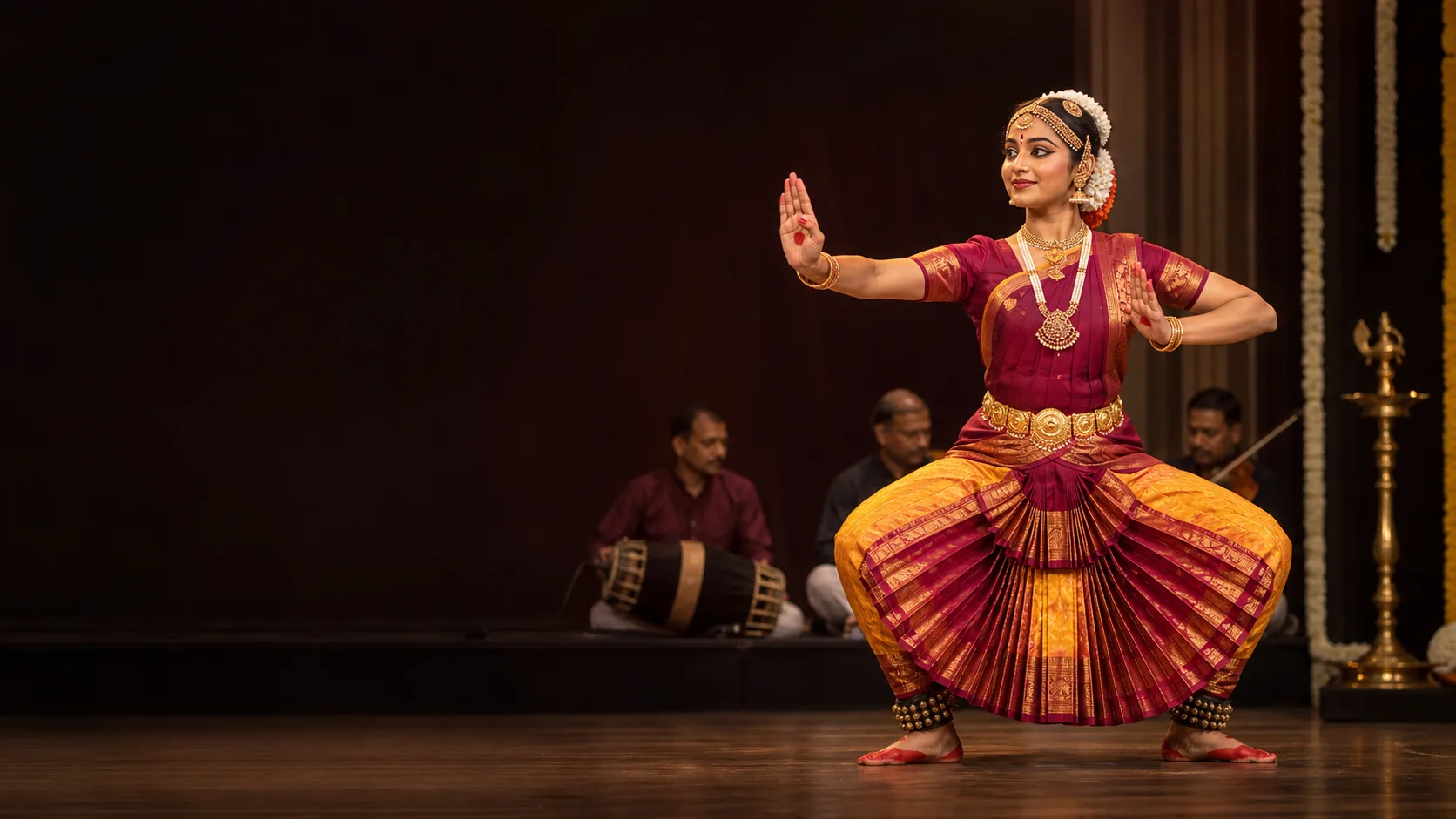
Chennai is a major centre for Carnatic music and Bharatanatyam, but the city's arts also include cinema, theatre, publishing, visual art and contemporary music.
The widely known December performance season is a current programme ecosystem, not a fixed historical event list; venues and artists must be checked annually.
Neighbourhood festivals, church feasts, mosque streets, political culture, markets and beach gatherings complicate any single image of Chennai culture.
Food and cuisine
Chennai's food is metropolitan: tiffin traditions sit beside Tamil Muslim cooking, seafood, bakeries, canteens and food carried by migrants from across Tamil Nadu and beyond.
A district guide should connect food to neighbourhood, labour, market and migration rather than publish unstable restaurant rankings.
No dish is described as exclusive to Chennai, and no health or authenticity guarantee is attached to a business or preparation.
Making and provenance
Regional products and crafts
Publishing, cinema, music institutions and design are important cultural economies, while the port and industrial systems connect the district to a larger metropolitan economy.
No GI is assigned simply because a product is sold in Chennai; registry status depends on the official geographical indication record.
Craft purchases should identify maker, material and provenance instead of using a vague 'traditional Chennai' label.
Landscape first
Nature and wildlife
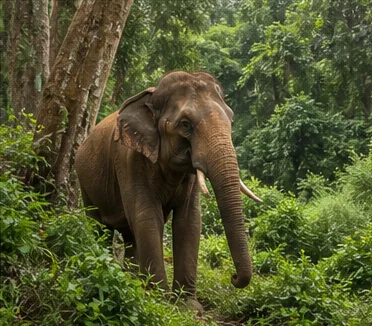
Urban nature includes shore, estuary, river, canal and wetland systems. Access and habitat sensitivity matter even when a landscape looks like open public space.
Birds or other wildlife may be present, but sightings are never guaranteed and sensitive sites require official guidance.
Swimming is not inferred from the word beach. Sea warnings, lifeguard instructions and district notices decide safe coastal use.
Work and change
Economy and livelihoods
Government, port activity, education, healthcare, finance, media, commerce and services shape the district's working identity.
Industrial and technology corridors often extend beyond district boundaries, so metropolitan economic language is used only when clearly labelled.
Markets, fishing work and informal economies remain as important to understanding Chennai as landmark corporate districts.
Build a coherent route
Places to explore in Chennai
Fort St George
Read the fort as a working administrative precinct with controlled access.
Government Museum
Use archaeology and bronze collections to connect the district with statewide history.
Marina and central seafront
Observe civic and working coastal landscapes while following sea guidance.
Mylapore
Explore temple, church, tank, market and cultural institutions at walking scale.
Triplicane
Connect living worship, residential streets and Chepauk history.
George Town
Read markets and plural sacred sites as a working district, not a themed quarter.
San Thome
Connect Christian heritage with the southern seafront.
Adyar river and institutional landscape
Understand waterways, education and twentieth-century growth without entering restricted habitat.
Choose your pace
Things to do
Study one neighbourhood deeply
Choose Mylapore, Triplicane or George Town instead of crossing the city repeatedly.
Use the museum as a foundation
Build context before visiting monuments elsewhere in Tamil Nadu.
Attend a verified arts programme
Use official venue calendars rather than old listings.
Read the coast responsibly
Respect fishing work and current safety instructions.
Compare sacred architectures
See how temple, church and mosque histories occupy different neighbourhoods.
Use public transport as geography
Metro and suburban rail reveal scale, but current routes need operator confirmation.
Explore food by neighbourhood
Choose a documented regional or community context rather than a ranking.
Connect city and district
Use the city guide for visitor detail and this page for administrative scope.
Conditions, not promises
Best season and current checks
Chennai's coast can be hot and humid, while lower-heat periods often make walking easier. This is a tendency, not a forecast.
The Northeast Monsoon can bring intense rain and disruption. Cyclone or rough-sea warnings must come from IMD and district authorities.[imd][warnings]
Cultural seasons and temple festivals can change demand and movement; exact dates belong to current organizers.
Plan by days
Suggested duration
1 day
Choose one district story: historic centre, museum and coast, or one neighbourhood.
2 days
Add a second cluster such as George Town and Fort St George or southern cultural institutions.
3 days+
Use slower neighbourhood study and avoid unnecessary cross-city transfers.
Regional access
How to reach
Air
The airport serves the metropolitan region; verify terminal and district geography rather than assuming every airport-area place is inside Chennai district.
Rail
Major terminals and suburban stations serve different corridors; confirm the correct station through Indian Railways.
Road and urban transit
Metro, suburban rail, buses and roads overlap, but live routes, fares and traffic are intentionally not hardcoded.
Local movement
Getting around
Group visits by neighbourhood. Walking quality, heat, crossings and pavement conditions vary sharply.
A map pin indicates location, not access. Security, worship, ticketing and habitat rules still require official confirmation.
Place-name links
Map of Chennai district
No fabricated coordinates or heavy map embed are used.Map data is not embedded on this lightweight page. Open a place-name search in Google Maps for current roads, business details and directions.
Continue geographically
Nearby districts
Continue by subject
Related My Tamil Nadu guides
Practical planning
Save a district checklist
Saved only in this browser. No login or personal data is needed.
Questions
Frequently asked questions about Chennai
How is Chennai district different from the Chennai Metropolitan Area?
The district is an administrative unit; the metropolitan planning area extends into neighbouring districts.
Is Chennai district the same as Chennai city?
Their territories substantially overlap, but district, corporation and metropolitan systems are distinct legal and planning concepts.
What is Chennai district known for?
State institutions, port and colonial history, museums, historic neighbourhoods, arts, education, food and coast.
How many days are useful?
One focused day can introduce a theme; two or three days allow coherent neighbourhood clusters.
Is Fort St George always open?
No access is assumed. It is a working government and security precinct, so check current official information.
When should I visit?
Use district-specific forecasts and warnings; lower-heat periods can help walking, while coastal rain risk requires flexibility.
Does this page cover places across Greater Chennai?
Only when clearly described as metropolitan context. Places are not assigned to Chennai district without checking current geography.
Editorial trust
Sources and further reading
Major factual claims were checked against authoritative references. Last reviewed 9 August 2026.- Chennai DistrictChennai District Administration · Official district portalReviewed 9 August 2026
- District profileChennai District Administration · Official district profileReviewed 9 August 2026
- Revenue administrationChennai District Administration · Official administrative recordReviewed 9 August 2026
- History of ChennaiChennai District Administration · Official district historyReviewed 9 August 2026
- Places of interestChennai District Administration · Official district visitor recordReviewed 9 August 2026
- About the Government MuseumGovernment Museum, Chennai · Government museumReviewed 9 August 2026
- Comprehensive Mobility Plan for the Chennai Metropolitan AreaChennai Metropolitan Development Authority · Official planning documentReviewed 9 August 2026
- Regional Meteorological Centre ChennaiIndia Meteorological Department · Official weather authorityReviewed 9 August 2026
- Tamil Nadu and Puducherry warningsIndia Meteorological Department · Official warning serviceReviewed 9 August 2026
- National Train Enquiry SystemIndian Railways · Official transportReviewed 9 August 2026