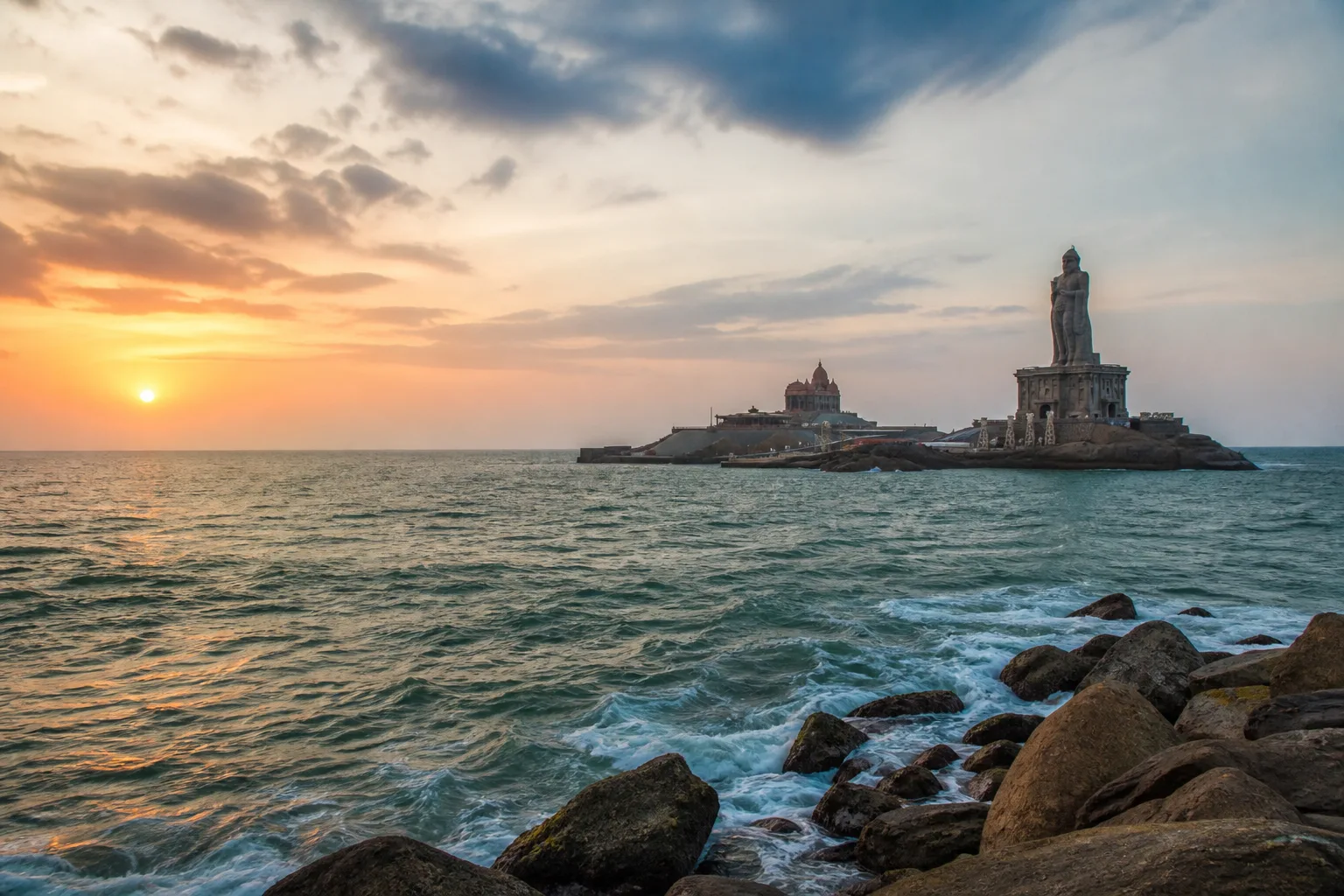
Southern tip, memorials and meeting waters
Kanyakumari Travel & Coastal Guide
Kanyakumari town lies in the officially spelled Kanniyakumari district at the southern end of mainland India. Its seafront brings together sacred geography, memorial architecture, ferry-dependent sites, fishing life and a wider district of coast and Western Ghats landscapes.
On this page
Start here
Why Kanyakumari
The district's official visitor list identifies the meeting waters, Thiruvalluvar Statue, Vivekananda Rock Memorial, Bhagavathi Amman Temple and museum among the town's key places. Wider district attractions such as Padmanabhapuram and Suchindram should be planned as separate excursions.[1]
A useful first visit should connect Kanyakumari's principal landmarks with the ordinary geography between them. Streets, water systems, markets, transport nodes, worship and regional food often explain more than a sequence of isolated photo stops. This guide therefore groups places by context and gives verification notes wherever current access may change.
The right pace depends on purpose. A one-day visit can establish the main landscape and one or two major sites; a second day allows museums, neighbourhoods or craft traditions; a third is better used for a carefully chosen nearby circuit. The itineraries below are sequences rather than promised travel times.
Historical context
A short history of Kanyakumari
Kanyakumari's significance is older than the modern visitor seafront. Sacred traditions centre on the goddess Kanniyakumari, while maritime movement and the wider southern landscape connect the town to the Indian Ocean world.
The official district guide distinguishes the offshore Vivekananda memorial and Thiruvalluvar statue and provides their historical and symbolic context. Current ferry and visitor arrangements must be checked separately because they are operational facts.[3]
Gandhi Mandapam and Kamarajar memorial contexts connect the seafront with modern political and commemorative history. Each institution should be interpreted from its own official record.
The spellings Kanyakumari and Kanniyakumari coexist. This guide uses Kanyakumari for the destination and Kanniyakumari for the official district, avoiding duplicate routes.
Plan your visit
Places to explore in Kanyakumari
Access, opening details and current conditions should be verified with the responsible official source before travel.
Vivekananda Rock Memorial
A memorial on a rock offshore, reached only through current authorized transport arrangements.
Check same-day ferry notices.Thiruvalluvar Statue
A monument to the Tamil poet and author of the Tirukkural.
Access depends on current official arrangements.Bhagavathi Amman Temple
A major sacred place closely associated with the town's identity.
Follow current temple rules.Gandhi Mandapam
A commemorative structure on the seafront connected with Mahatma Gandhi.
Verify current visitor access.Kamarajar Memorial
A place to encounter the public memory of K. Kamaraj.
Check current opening information.Government Museum
A possible indoor context stop whose current galleries should be checked.
Use the responsible institution's notice.Sunrise and sunset public viewpoints
Views depend on weather, horizon cloud and safe public access.
No sunrise or sunset view is guaranteed.Vattakottai
A coastal fort outside the town core and better treated as a separate road outing.
Verify route and site access.Choose your pace
Things to do in Kanyakumari
Read the seafront as a whole
Connect temple, memorial, ferry, fishing and public-space contexts instead of treating each as an isolated backdrop.
Compare town and district
Keep one day for Kanyakumari town and another for a chosen Kanniyakumari district circuit.
Plan around actual conditions
Check ferry, weather and sea notices before committing the day's order.
Read one place closely
Choose a museum, monument, temple or neighbourhood in Kanyakumari and spend enough time to understand its setting, materials and continuing use.
Build a regional food map
Ask what is made locally, what belongs to the wider district and what arrived through migration or trade. This avoids reducing a complex food culture to one famous item.
Use the map as a planning tool
Save official place names before travel, cluster nearby stops and open current directions only when needed. The map section provides direct Google Maps handoffs without embedding unverified business data.
Living places
Temples, heritage and interpretation
Bhagavathi Amman Temple is an active sacred institution. Dress, photography, queues and festival arrangements require current official guidance.
Memorials on and offshore have their own custodians and access controls. A combined ticket, ferry or bridge arrangement should never be assumed from old information.
The meeting-of-waters idea has cultural and geographic meaning, but visible boundaries between seas should not be promised as a permanent spectacle.
Everyday context
Culture and food
Culture
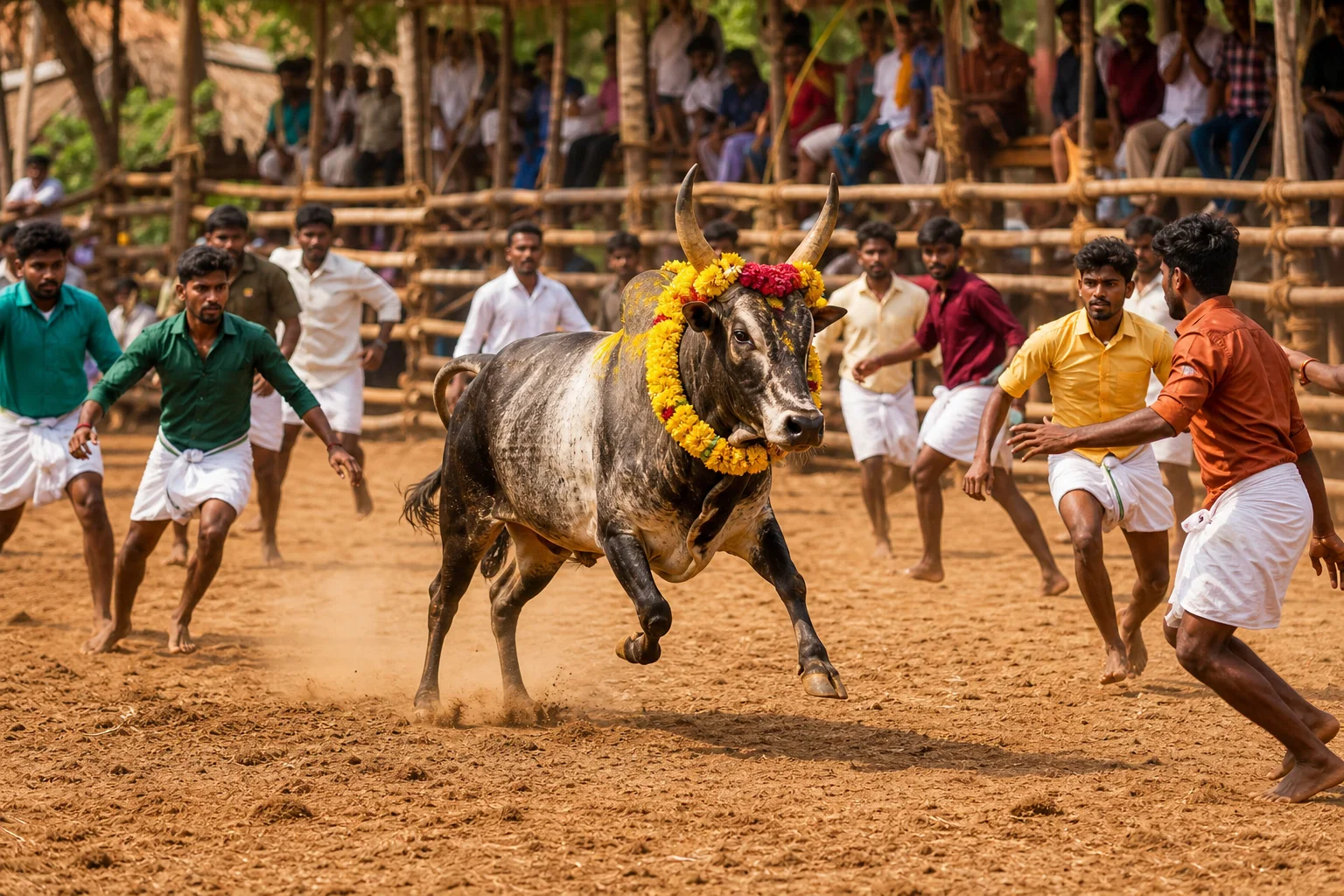
Tamil and Malayalam cultural connections are visible across the wider district, shaped by geography and history. The town should not be isolated from Nagercoil, Suchindram, Padmanabhapuram and rural landscapes.
Pilgrimage, commemoration and everyday fishing life overlap on the seafront. Visitors should not obstruct any of them.
Explore Tamil Nadu culture →Food
The district's food reflects coast, coconut, rice, spices and its relationship with neighbouring Kerala, but household, community and restaurant practices vary.
Seafood provenance and availability depend on fishing conditions. Ask what is current and local; vegetarian meals and tiffin are equally part of the destination.
Explore Tamil Nadu food →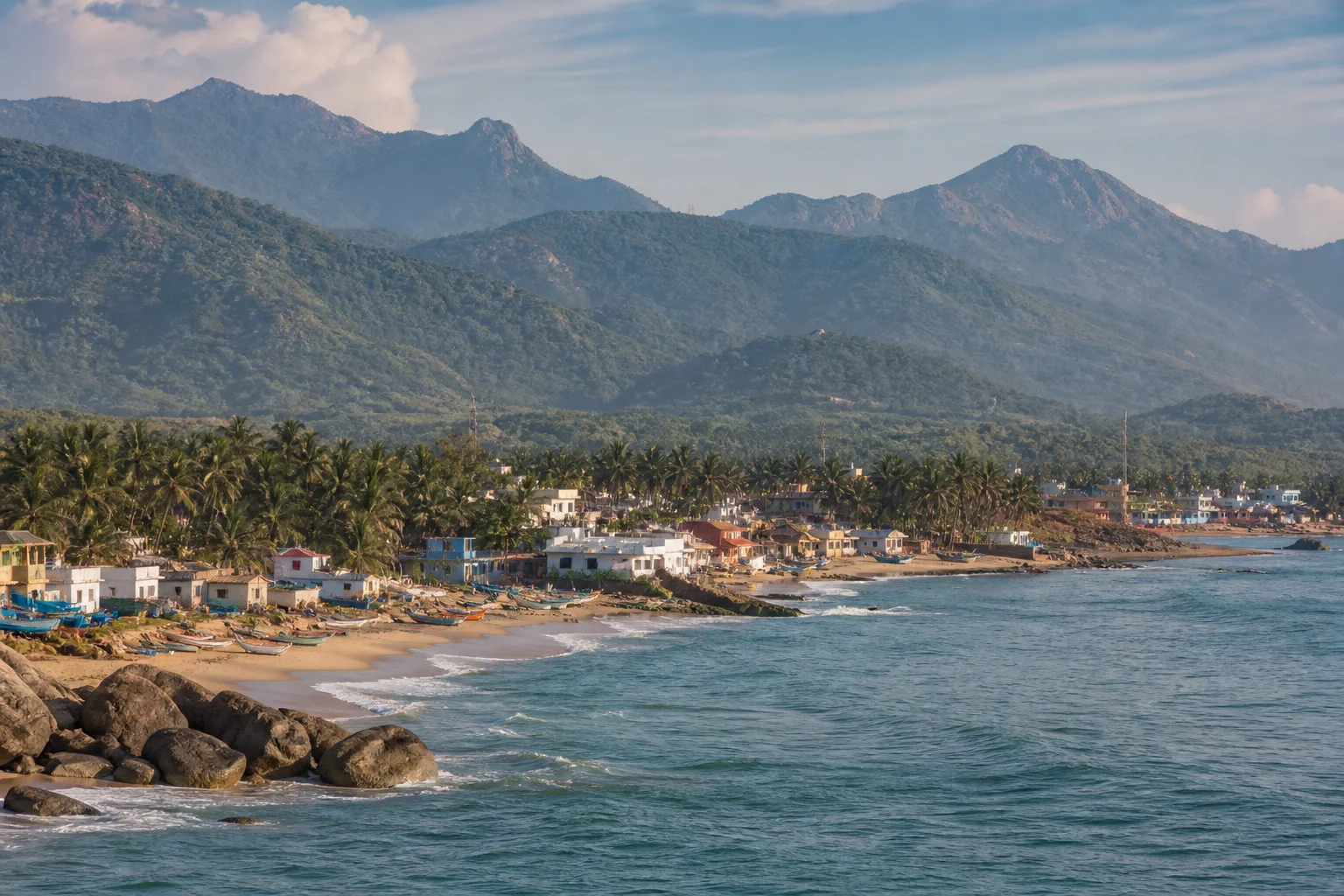
Travel with context
Nature, season and month-by-month planning
Landscape and ecology
The district joins coast, wetlands, cultivated land and Western Ghats environments within a compact area, but these ecosystems are not all visible from the town seafront.
Sea state, wind and rain control what can be done safely. Follow barriers and official instructions, and never climb wet rocks for a view.
Seasonal planning
There is no universal "best" month for Kanyakumari. Comfort depends on heat, rain, wind, visibility, local events and the kind of experience planned. Use the statewide month guides for broad patterns, then check the India Meteorological Department forecast close to departure.[4]
Cloud cover affects horizon views, while wind and sea conditions affect ferry operations. Northeast-monsoon rain can be relevant to the coast. Check the day itself rather than relying on a seasonal slogan.
Festival and holiday periods can change crowd levels, transport demand and access arrangements. They may also be culturally meaningful times to visit, but a guide should never promise an event date without checking the current official calendar. Keep bookings flexible where possible.
January
Often chosen for outdoor-oriented visits; verify local conditions and holiday demand.
Open month guide →AprApril
Plan early starts, shade and indoor pauses; check the current heat outlook.
Open month guide →JulJuly
Southwest-monsoon influence varies by region; confirm rain, wind and road conditions.
Open month guide →OctOctober
Northeast-monsoon conditions may affect parts of Tamil Nadu; verify the local forecast.
Open month guide →Practical access
How to reach and get around Kanyakumari
Rail
Kanyakumari has rail services; verify the train, operating day and station through Indian Railways.
Road
Road links connect Nagercoil, Thiruvananthapuram and Tirunelveli corridors; journey times vary.
Air connection
Thiruvananthapuram is a regional airport option with a road transfer; confirm the complete itinerary.
Local
The seafront is walkable for many visitors, while district excursions require separate transport planning.
Getting around
Keep the main seafront memorials, temple and museum area together. Suchindram, Padmanabhapuram, Mathoor and waterfalls belong to separate district circuits.
Keep each half-day centred on one part of Kanyakumari. Save destinations by their official or widely recognized place names, show drivers the written name when pronunciation may vary, and allow time for security checks, worship, weather or traffic.
Walking conditions vary by street, season and time of day. Use marked crossings where available, avoid isolated shortcuts after dark and ask the accommodation or an official visitor desk for current local advice.
Plan by days
Suggested Kanyakumari itineraries
These are editorial sequences, not promises of travel time. Confirm access and adapt the pace to current conditions.
A focused introduction to Kanyakumari that keeps the first day coherent.
- MorningVivekananda Rock Memorial and Thiruvalluvar Statue
- AfternoonContinue with a nearby cultural or food stop, leaving time to read the setting rather than race onward.
- EveningUse recognized public seafront areas while following police, weather and wave warnings; avoid isolated rocks or unlit shore sections.
Adds a second geographic cluster and more interpretation.
- Day 1Vivekananda Rock Memorial and Thiruvalluvar Statue, with a measured break and verified access.
- Day 2Bhagavathi Amman Temple and Gandhi Mandapam, followed by a neighbourhood meal or institution whose current programme has been checked.
Keeps two days local and reserves the third for a nearby circuit.
- Day 1Vivekananda Rock Memorial and Thiruvalluvar Statue
- Day 2Bhagavathi Amman Temple and Gandhi Mandapam
- Day 3Kamarajar Memorial and Government Museum. Confirm road, monument and protected-area access before leaving.
Continue nearby
Places around Kanyakumari
Open map tools
Map of Kanyakumari
Interactive map data is not loaded on this static page. Open Google Maps for current place details and directions.
Before you go
Practical travel guidance
Treat the sea as changeable
Swimming suitability cannot be inferred from a calm-looking shore. Follow lifeguards, warning flags and local restrictions.
Check wind, rain and ferry notices
Coastal conditions can change quickly. Verify official forecasts and any operator notice on the day.
Protect monuments from salt and touch
Do not climb, scratch or lean equipment against protected stone. Stay within marked visitor areas.
Carry sun and rain protection
Shade may be limited around open coastal sites. Water, a hat and a lightweight rain layer make the day more adaptable.
Respect fishing work
Boats, nets and landing areas are working spaces. Do not block access or treat equipment as props.
Keep a land-based alternative
If sea or ferry access changes, use museums, town walks and inland heritage as the day's main plan.
Saved only in this browser. No account or personal data is required.
Responsible travel
Visit Kanyakumari as a lived place. Ask before photographing people, ceremonies, artisans or private homes; keep entrances and working areas clear; and follow the custodian's rules at sacred, civic and protected sites. A ticket or public road does not make every nearby activity open to documentation.
Choose locally accountable services, carry reusable essentials and avoid single-use litter. Do not feed wildlife, remove natural material, climb monuments, fly a drone without permission or enter farms, forests, rooftops and water edges merely because a photograph appears possible.
Questions
Frequently asked questions about Kanyakumari
Why do Kanyakumari and Kanniyakumari use different spellings?
This guide uses Kanyakumari for the destination and the official spelling Kanniyakumari for the district. They are not duplicate destination routes.
Is ferry access always available?
No. Operations depend on current official arrangements and conditions. Check on the day and keep a land-based plan.
How many days are useful for a first visit?
One day can introduce Kanyakumari; two days allow a more balanced city or town experience; three days can include a selected nearby circuit. The answer depends on access and pace, not a fixed checklist.
Are the timings and fees on this page current?
No hardcoded timings or fees are presented as live facts. Check the responsible temple, monument, museum, transport operator or district authority close to travel.
Can I use Google Maps from this guide?
Yes. The map section opens a place search and directions in Google Maps. Verify the selected pin before travelling because similarly named places and user-edited listings can exist.
Does the checklist require an account?
No. Checklist choices are stored only in the current browser under a destination-specific key. Reset and print controls are provided.
Which language is most useful?
Tamil is the principal local language. English is often usable in visitor-facing settings, but learning a few courteous Tamil words and carrying written place names can make local communication easier.
How should I plan around festivals?
Use an official current calendar. Festivals can change access, traffic and demand, so plan respectfully and never assume that a ritual is staged for visitors.
Editorial trust
Sources and further reading
Major factual claims were checked against the references below. Last reviewed 9 August 2026.
- Tourist places in KanniyakumariKanniyakumari District AdministrationReviewed 9 August 2026
- Tourism informationKanniyakumari District AdministrationReviewed 9 August 2026
- Vivekananda Mandapam and Thiruvalluvar StatueKanniyakumari District AdministrationReviewed 9 August 2026
- Regional Meteorological Centre ChennaiIndia Meteorological DepartmentReviewed 9 August 2026
- Official railway booking portalIndian Railway Catering and Tourism CorporationReviewed 9 August 2026
- Official Tamil Nadu Tourism portalTamil Nadu Tourism DepartmentReviewed 9 August 2026
- Official temple guideGovernment of Tamil Nadu HR&CE DepartmentReviewed 9 August 2026