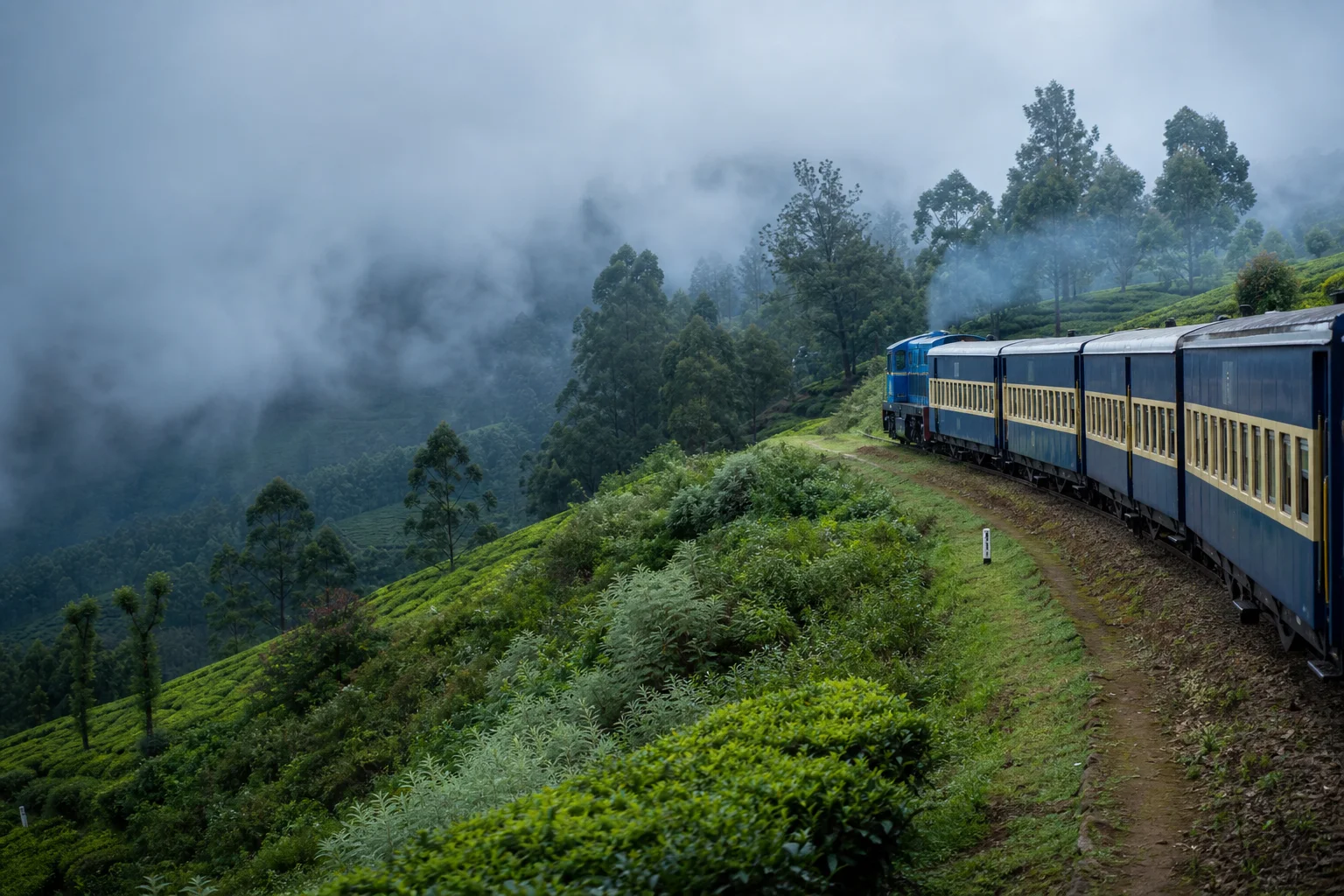
Nilgiri hill town, mountain railway and living highland landscape
Ooty Guide: Places, History & Things to Do
Udhagamandalam, widely known as Ooty, is the principal town of the Nilgiris: a highland landscape shaped by indigenous communities, colonial-era institutions, mountain transport, horticulture, tea, tourism and globally significant shola-grassland ecology. A responsible guide must look beyond viewpoints and postcard weather.
On this page
Start here
Why Udhagamandalam (Ooty)
Ooty offers a change of scale from Tamil Nadu's plains: winding access roads, a historic mountain railway, gardens, lakes, highland agriculture and nearby forest. The appeal is strongest when visitors understand that tea slopes and colonial buildings sit within a much older indigenous and ecological landscape.
It is also a practical base for Coonoor, Pykara and other Nilgiri areas, but distance on a map does not predict hill travel effort. Weather, forest permissions, traffic and road controls make a slow plan more useful than a long checklist.
Historical context
A short history of Udhagamandalam (Ooty)
Indigenous communities, including Toda, Kota, Kurumba, Irula, Paniya and other peoples of the Nilgiris, have histories and cultural relationships with the highlands that predate the colonial hill station. They are distinct communities, not one generalized 'tribal culture'. Museums can offer an introduction, but living people should not be approached as attractions or photographed without consent.
British colonial officials developed Ootacamund as a hill station and administrative retreat during the nineteenth century. Land use changed through roads, institutional buildings, gardens, introduced plants and commercial agriculture. This development was not an empty-land story: it transformed indigenous access, ecology and settlement. Churches, government buildings and town planning preserve material evidence of the colonial period while requiring critical context.
The Nilgiri Mountain Railway linked Mettupalayam, Coonoor and Udhagamandalam through a technically demanding mountain route. UNESCO includes it within the Mountain Railways of India for the engineering response to difficult terrain and its continuing operation. Train services are working transport and must be booked or checked through Indian Railways, not assumed from an evergreen itinerary.
Tea, horticulture, military institutions in the wider district and tourism reshaped the modern regional economy. Ooty is now a busy town under pressure from traffic, construction, waste and seasonal visitor peaks. Its future depends on treating the Nilgiris as a lived and ecologically sensitive region rather than a cool-weather commodity.
Plan your visit
Places to explore in Udhagamandalam (Ooty)
Access, opening details and current conditions should be verified with the responsible official source before travel.
Government Botanical Garden
Terraced grounds, plant collections and historic garden design make this a foundational Ooty visit. Slopes and steps affect accessibility, while flower-show dates and entry details require official confirmation.
Use the Nilgiris district page for current notices.Nilgiri Mountain Railway
The route connects engineering history with changing highland landscapes. A rail journey should be planned around current Indian Railways operation and availability, not guaranteed as part of every visit.
Ooty Lake and town edge
The lake is a constructed colonial-era landscape now used for recreation. Boating, access and safety are current operations; the wider setting also reveals tourism pressure.
Government Rose Garden
Terraced planting and seasonal displays provide a different garden experience from the botanical garden. Bloom and event expectations must remain seasonal rather than guaranteed.
Doddabetta area
The ridge landscape can provide broad Nilgiri views when weather allows. Visibility, traffic and access vary; a cloudy visit is not a failed visit if approached as a highland ecosystem.
Tribal Museum
Located at the Tribal Research Centre, the museum introduces material culture from communities across Tamil Nadu. Visitors should use it as a beginning for respectful learning, not a substitute for community voices.
Pykara
The Pykara area combines water, grassland, forest and visitor infrastructure west of Ooty. Access, boating and road conditions should be checked currently.
St Stephen's Church and colonial town
Churches, schools, clubs and administrative buildings reveal the hill station's colonial development. View them alongside the land-use changes that made that development possible.
Choose your pace
Things to do in Udhagamandalam (Ooty)
Ride the railway when confirmed
Treat the Nilgiri Mountain Railway as transport and heritage, with bookings and operation checked officially.
Compare two gardens slowly
Botanical and rose gardens differ in history, planting and seasonal character.
Read tea as a working landscape
Choose transparent, permitted estate experiences and avoid entering plantations uninvited.
Learn at the Tribal Museum
Use institutional interpretation as a starting point and maintain respectful language about distinct communities.
Photograph without trespass
Work from public viewpoints and never stop dangerously on hill roads or railway tracks.
Choose one outer landscape
Pykara, Coonoor or another verified excursion is more useful than rushing across the district.
Living places
Temples, heritage and interpretation
The mountain railway and colonial buildings are important, but they represent only one layer. Indigenous histories, older land use and environmental change must remain visible in the story. UNESCO recognition relates specifically to railway heritage, not to every attraction in Ooty.
Religious heritage includes churches, temples and community sacred places. Access to indigenous sacred landscapes is not implied by public tourism material. Visitors should follow local restrictions and avoid seeking private ceremonies or settlements as experiences.
Everyday context
Culture and food
Culture
The Nilgiris contains distinct indigenous, Tamil, Malayalam, Kannada and migrant cultural worlds shaped by trade, plantations, government service, tourism and military institutions. 'Ooty culture' is therefore plural and cannot be summarized by colonial nostalgia.
Toda embroidery and other community-linked crafts should be purchased through credible makers or cooperatives with attention to attribution. Tea, bakery culture, markets and horticultural shows are visible parts of town life, but current events require organizer confirmation.
Explore Tamil Nadu culture →Food
Ooty's food reflects highland produce, tea estates, bakeries, Tamil cooking and communities connected with neighbouring Kerala and Karnataka. Tea, vegetables, dairy products, breads and locally made snacks are relevant categories, but quality and authenticity claims require careful sourcing.
The wider Nilgiris also has community-specific millet, bean, meat and forest-produce traditions. These should not be commercialized or described without community-grounded sources. No restaurants are ranked in this phase.
Explore Tamil Nadu food →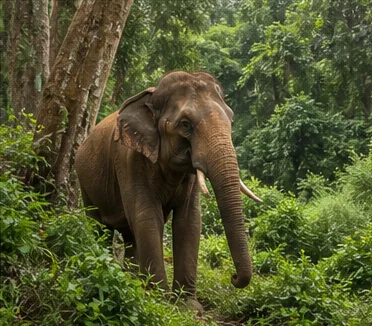
Travel with context
Nature, season and month-by-month planning
Landscape and ecology
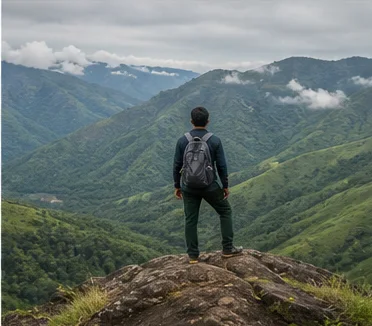
The Nilgiris form part of the Western Ghats, with high-elevation shola forest and grassland systems, rivers, wetlands and wildlife corridors. Tea and eucalyptus landscapes may look green but are not equivalent to native forest. Responsible travel distinguishes working plantations, restored habitat and protected ecosystems.
Wild animals can cross roads and settlement edges. Visitors must not feed, approach or block wildlife. Forest entry, trekking, boating and eco-tourism require current permissions from the responsible authority.
Seasonal planning
Ooty is generally cooler than Tamil Nadu's lowlands because of elevation, but that does not mean conditions are uniformly mild. Sun, mist, rain, cold evenings and rapid changes can occur within one trip. Pack layers and rain protection based on a current forecast.
Both monsoon systems can influence the Nilgiris, with local variation across slopes. Heavy rain may affect roads, visibility and forest access. Popular holiday and flower-show periods can increase traffic and demand; dates and access controls require current district information.
January
Cooler mornings and evenings are possible; pack layers from a current forecast.
Open month guide →FebFebruary
Often useful for town and rail planning, with changing highland conditions.
Open month guide →MarMarch
Warmer, brighter periods may occur; carry both sun and a light layer.
Open month guide →AprApril
A popular hill-travel period in many years; expect demand and verify controls.
Open month guide →MayMay
Garden events may occur, but dates and crowd arrangements must be confirmed.
Open month guide →JunJune
Southwest-monsoon influence can bring rain and low visibility.
Open month guide →JulJuly
Road, rail and outdoor plans need strong rain flexibility.
Open month guide →AugAugust
Green landscapes may coincide with wet conditions and restricted access.
Open month guide →SepSeptember
A transition period; current forecasts should guide every outer excursion.
Open month guide →OctOctober
Rain influence can continue or shift; monitor district and IMD notices.
Open month guide →NovNovember
Cool, damp conditions are possible; pack layers and check roads.
Open month guide →DecDecember
Holiday demand and cooler periods may coincide; confirm bookings and transport.
Open month guide →Practical access
How to reach and get around Udhagamandalam (Ooty)
By air
Coimbatore is an important air gateway for many Nilgiris journeys. Current flights and onward hill transport should be checked directly.
By train
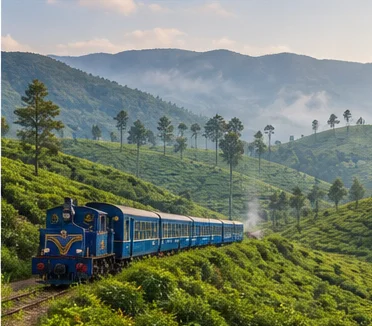
The Nilgiri Mountain Railway connects Mettupalayam through Coonoor to Udhagamandalam. Service, booking and rolling-stock information must come from Indian Railways.
By road
Ghat roads connect the Nilgiris with the plains and neighbouring states. Traffic controls, weather, vehicle restrictions and road condition can change, so use official district information.
Getting around
Local buses, taxis and arranged vehicles serve Ooty and outer sights. Town walking is possible in selected areas but slopes, traffic and rain affect comfort. Agree on routes and terms before a longer taxi day.
Rail can be useful between Ooty and Coonoor when confirmed, but it should not be the only connection in a tightly timed itinerary. Group westward places such as Pykara separately from Coonoor-side places.
Plan by days
Suggested Udhagamandalam (Ooty) itineraries
These are editorial sequences, not promises of travel time. Confirm access and adapt the pace to current conditions.
A town-focused introduction without pretending to cover the Nilgiris.
- Day 1Botanical Garden and a town heritage stop; lake or viewpoint according to weather; finish with tea or a market experience from a credible source.
Add one coherent landscape or rail experience.
- Day 1Gardens, town history and a paced family stop.
- Day 2Choose a confirmed railway-and-Coonoor plan or a Pykara-side landscape route.
Use the third day for learning and ecological context rather than more viewpoints.
- Day 1Ooty town and gardens.
- Day 2One outer corridor: Coonoor or Pykara.
- Day 3Tribal Museum, a verified nature programme or a slower tea and heritage day.
Continue nearby
Places around Udhagamandalam (Ooty)
Open map tools
Map of Udhagamandalam (Ooty)
Interactive map data is not loaded on this static page. Open Google Maps for current place details and directions.
Before you go
Practical travel guidance
Clothing
Pack adaptable layers and rain protection based on the current forecast.
Hill roads
Use experienced drivers, wear seat belts and never stop at unsafe bends for photographs.
Families
Choose fewer attractions and allow for slopes, queues and changing weather.
Accessibility
Terraced gardens, historic stations and viewpoints may include steep or uneven routes; verify directly.
Wildlife
Do not feed or approach animals and never leave vehicles where prohibited.
Visitor controls
Check district notices for any current vehicle, road, forest or entry requirements.
Saved only in this browser. No account or personal data is required.
Responsible travel
Do not litter or discard food on hill roads
Never feed or approach wildlife
Stay out of plantations and community land without permission
Use respectful language about indigenous communities
Avoid railway-track photography
Prefer fewer, slower stops over traffic-heavy sightseeing loops
Questions
Frequently asked questions about Udhagamandalam (Ooty)
How many days are enough for Ooty?
Two days gives a useful first visit. Three days allows a separate Coonoor, Pykara or learning-focused day without rushing.
What is Ooty's official name?
Udhagamandalam is the official name; Ooty remains the widely used visitor name.
When is a suitable time to visit?
It depends on rain tolerance, crowd preference and activities. Use month context with a current IMD forecast and district notices.
Is the Nilgiri Mountain Railway guaranteed?
No. Service and seats must be confirmed through Indian Railways; weather or operational needs can affect trains.
Is Ooty suitable for families?
Yes, with fewer daily stops, weather-ready clothing and attention to slopes and road travel.
Can visitors enter tea estates?
Only with permission or through a legitimate visitor programme. Tea fields are working private landscapes.
How should indigenous culture be approached?
Learn through responsible institutions and community-attributed work. Do not seek private settlements or photograph people without consent.
Are current e-pass or vehicle rules listed here?
No. Such rules can change and must be checked on the Nilgiris district administration website before driving.
Editorial trust
Sources and further reading
Major factual claims were checked against the references below. Last reviewed 8 August 2026.
- Tourist places in the NilgirisThe Nilgiris District AdministrationReviewed 8 August 2026
- Tourist places in OotyThe Nilgiris District AdministrationReviewed 8 August 2026
- Government Botanical Garden, OotyThe Nilgiris District AdministrationReviewed 8 August 2026
- Tribal Museum and Tribal Research CentreThe Nilgiris District AdministrationReviewed 8 August 2026
- Mountain Railways of IndiaUNESCO World Heritage CentreReviewed 8 August 2026
- Regional Meteorological Centre ChennaiIndia Meteorological DepartmentReviewed 8 August 2026
- Official railway booking portalIndian Railway Catering and Tourism CorporationReviewed 8 August 2026