Freedom Fighters · Poets & Writers
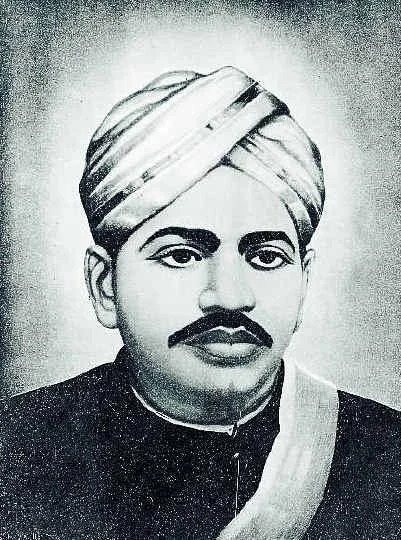
V.O. Chidambaranar
வ.உ. சிதம்பரனார்
5 September 1872 – 18 November 1936
V.O. Chidambaranar was a lawyer, swadeshi organizer, shipping-company promoter, labor activist, and Tamil writer. His work in Thoothukudi connected economic nationalism with port competition and worker organization, followed by prosecution, imprisonment, and a difficult later career.
Editorial status: Published · Reviewed 10 August 2026- Known for
- Swadeshi Steam Navigation Company and public organizing
- Movement context
- Swadeshi and Indian nationalist politics
- Profession
- Lawyer; later writer and public speaker
- Associated place
- Thoothukudi, then widely called Tuticorin
- Company founded
- 16 October 1906 [2]
- Life
- 1872–1936 [1]
Life and context
Who V.O. Chidambaranar Was
V.O. Chidambaranar was born in Ottapidaram in the present Thoothukudi region on 5 September 1872. He trained and practiced as a lawyer before becoming prominent in swadeshi politics. His initials derive from Valliappan Olaganathan Chidambaram, while public records and memorial usage employ several English forms; this site uses V.O. Chidambaranar as its primary name and keeps variants as search aliases rather than separate pages. [1][6]
His best-known institutional project was the Swadeshi Steam Navigation Company, organized in 1906 to operate between Tuticorin and Colombo in competition with established British shipping interests. The company linked nationalist appeals to capital, freight, passenger movement, and the practical risks of running a maritime enterprise under colonial commercial pressure. [2][5]
Chidambaranar also participated in labor and political mobilization in Tuticorin. His arrest in 1908, severe initial sentence, imprisonment, and later legal consequences became central to his public memory. A reliable biography must separate documented prosecution and prison history from stories amplified by later patriotic retelling. [3][4][1]
Life and context
Education, Law, and Entry into Public Life
Chidambaranar grew up in Ottapidaram, a town now within Thoothukudi District. His legal career placed him in contact with disputes, courts, traders, workers, and colonial administration. Law was not simply a background profession: it gave him organizational and rhetorical skills later used in political meetings and in defending public causes. [1]
The early twentieth-century swadeshi movement encouraged Indian production and enterprise while opposing the economic structures of colonial rule. In port cities, those ideas encountered shipping schedules, freight rates, credit, insurance, harbor access, and corporate law. Tuticorin's link with Colombo made it a practical arena in which economic nationalism could be tested. [2][5]
Chidambaranar worked among a wider network of organizers, investors, workers, journalists, and speakers. Biography often assigns a movement to one heroic founder, but a joint-stock company and a mass meeting require collective action. Recognizing that network does not reduce his leadership; it explains what that leadership actually involved.
Life and context
The Swadeshi Steam Navigation Company
The Swadeshi Steam Navigation Company was registered on 16 October 1906 and sought to serve the Tuticorin–Colombo route. It raised Indian capital and entered a market dominated by the British India Steam Navigation Company. Official accounts identify Chidambaranar as a central organizer, while scholarship places the venture within a contest over maritime commerce and imperial economic power. [2][5]
Operating ships required more than patriotic support. The company had to obtain vessels, manage finance, attract passengers and cargo, maintain services, and withstand aggressive competition. Reduced fares and commercial pressure affected sustainability. It is more accurate to explain these mechanisms than to say simply that one Indian company defeated a British monopoly. [2][5]
The enterprise did not survive as a durable carrier, but its historical significance lies in making swadeshi economic organization concrete. Investors and users faced real losses and choices. The episode also shows why political economy, port infrastructure, and corporate history belong inside the freedom-movement narrative rather than outside it.
Life and context
Tuticorin Labor and Political Mobilization
In 1908, labor action at the Coral Mill in Tuticorin became connected with wider swadeshi agitation. Government commemorative material describes Chidambaranar and Subramania Siva as important speakers and organizers in this environment. Working conditions, wages, hours, and dignity were immediate worker concerns; nationalist politics provided an additional public language rather than replacing those material demands. [3]
Labor history should not reduce mill workers to followers in a leader's biography. Their willingness to stop work and sustain demands made the action consequential. Chidambaranar's role matters because he helped connect legal advocacy, speeches, organization, and nationalist networks to a local industrial dispute. [3][1]
Tuticorin was simultaneously port, town, workplace, and political arena. Present-day Thoothukudi District contains this geography, but modern district boundaries should not be projected backward onto every event. Contemporary records often use Tuticorin, the colonial-era English name for Thoothukudi.
Life and context
Arrest, Trial, and Imprisonment
Chidambaranar was arrested in March 1908 amid political mobilization associated with planned Swaraj Day observances and speeches. He was prosecuted on sedition-related charges. The trial produced an exceptionally severe sentence at first instance, later reduced through appeal. The distinction between original sentence, appellate change, and actual imprisonment is essential; repeating only the most dramatic number creates a false chronology. [4][1]
He was imprisoned in Coimbatore and Kannur contexts identified in official and biographical accounts. Prison labor and hardship form part of the documented history, but details vary in later retellings. This profile therefore does not repeat graphic anecdotes or exact treatment claims without a source that identifies the record on which they rest. [1][5]
Imprisonment damaged his health, finances, legal career, and public position. After release, restrictions and the loss of his legal standing shaped his circumstances before later restoration. These consequences show how colonial prosecution extended beyond a prison term into livelihood and family life.
Life and context
Later Legal, Literary, and Public Work
After release, Chidambaranar did not simply return to the prominence of 1906–1908. He sought to rebuild his professional life and continued public and intellectual work under changed political conditions. His later years included legal practice after restoration, writing, commentary, and engagement with Tamil texts. [1][6]
The Tamil Virtual Academy's V.O.C. collection and related digital-library initiatives preserve editions and material associated with his writings. A profile should name this work without claiming that every digitized item is an original manuscript or that the online collection resolves textual history. Catalogues, editions, and provenance still matter. [6]
Chidambaranar died on 18 November 1936. His lifetime crossed the early swadeshi period, Gandhian mass politics, labor organization, and major changes in Indian nationalism. He should not be made to represent every phase equally; his strongest documented association remains the Tuticorin swadeshi, shipping, and labor context. [1]
Life and context
Places Associated With V.O. Chidambaranar
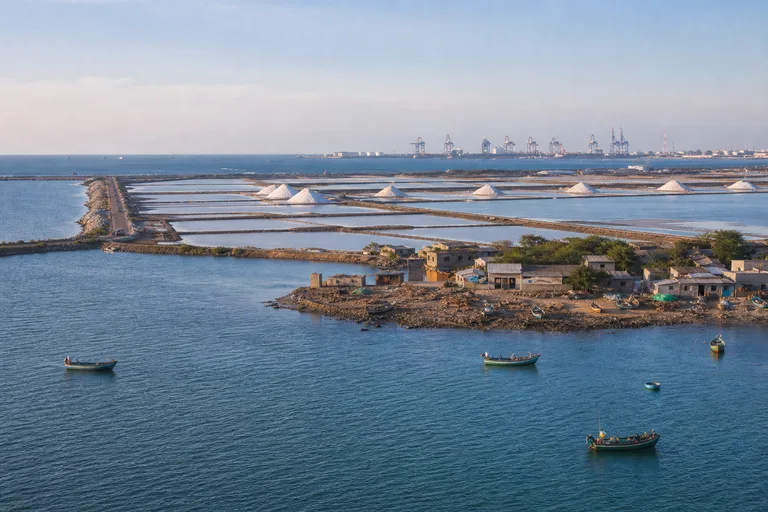
Ottapidaram is associated with his birth and early life. It lies in present-day Thoothukudi District. Thoothukudi city, widely called Tuticorin in records of his time, is the central place for the shipping company, public meetings, mill labor, and arrest context. The district guide provides current geography without turning it into a fixed map of colonial administration. [1][2]
Colombo, the other port on the company's route, is in present-day Sri Lanka and outside Tamil Nadu. The route illustrates movement across the Gulf of Mannar and Palk-region maritime world, not a domestic ferry inside current Indian boundaries. [2]
Coimbatore and Kannur are associated with imprisonment and later memory. Kannur is in present-day Kerala. These external locations are historically important, but this profile links only to existing researched routes for Thoothukudi and the Tamil Nadu freedom movement.
Life and context
Economic Nationalism, Labor, and Memory
Chidambaranar's legacy joins several histories often told separately: maritime enterprise, economic nationalism, courtroom politics, labor organization, imprisonment, and Tamil scholarship. The shipping company was a business with operational constraints as well as a nationalist symbol. The Coral Mill action was a worker struggle as well as a moment in public politics. [5][3]
The honorific Kappalottiya Tamizhan, commonly translated as the Tamil who sailed ships, is prominent in public memory. This profile treats it as an honorific rather than a literal claim that he personally served as a ship's captain. His primary name remains V.O. Chidambaranar so that the schema does not confuse title, name, and occupation.
Memorialization can simplify a difficult later life into a single triumph. A fuller account recognizes organizational courage while also examining company failure, worker agency, colonial law, imprisonment, and the uneven costs borne by participants. That complexity is the source of the history's value, not a challenge to commemoration.
Images with explicit provenance
Places and historical context

Chronology
Timeline
- 5 September 1872
V.O. Chidambaranar was born at Ottapidaram in the present Thoothukudi region. [1]
- 16 October 1906
The Swadeshi Steam Navigation Company was registered to operate in the Tuticorin–Colombo trade. [2]
- Early 1908
Tuticorin labor and swadeshi mobilization intensified around the Coral Mill and public meetings. [3]
- March 1908
Chidambaranar was arrested amid Swaraj Day agitation and later prosecuted. [4]
- 1908–1912
The original severe sentence was reduced on appeal; he served imprisonment before release in 1912. [1]
- 18 November 1936
Chidambaranar died after a later career in law, writing, and public life. [1]
Keep exploring
Places, periods, and connected guides
Related history
Associated places
Questions
Frequently asked questions
Who was V.O. Chidambaranar?
He was a lawyer, swadeshi organizer, shipping-company promoter, labor activist, and Tamil writer active especially in Tuticorin in the early twentieth century.
What was the Swadeshi Steam Navigation Company?
It was an Indian joint-stock shipping enterprise registered in 1906 to serve the Tuticorin–Colombo route in competition with established British shipping interests. [2][5]
What was VOC's role in labor history?
He helped connect legal and nationalist organizing with the 1908 Coral Mill labor struggle, while the workers themselves were the central agents of the action. [3]
Why was Chidambaranar imprisoned?
He was arrested amid 1908 political agitation and prosecuted on sedition-related charges; the severe original sentence was reduced on appeal. [4][1]
Was VOC a ship captain?
The honorific Kappalottiya Tamizhan celebrates his shipping initiative; his documented role was as organizer and promoter rather than a claim that he captained the vessels.
Is Tuticorin the same place as Thoothukudi?
Tuticorin is the older English form commonly found in colonial records; Thoothukudi is the current official name.
Editorial trust
Sources & further reading
- V.O. Chidambaram PillaiMinistry of Culture, Government of India · Official biographical recordAccessed 10 August 2026
- Swadeshi Steam Navigation CompanyMinistry of Culture, Government of India · Official historical recordAccessed 10 August 2026
- Coral Mill StrikeMinistry of Culture, Government of India · Official district history recordAccessed 10 August 2026
- Swaraj Day in Tirunelveli and TuticorinMinistry of Culture, Government of India · Official district history recordAccessed 10 August 2026
- Swadeshi Steam: V.O. Chidambaram Pillai and the Battle against the British Maritime EmpirePenguin Random House India / Google Books · A.R. Venkatachalapathy · 2023 · Scholarly bookAccessed 10 August 2026
- V.O.C. Digital CollectionTamil Virtual Academy, Government of Tamil Nadu · Government digital library collectionAccessed 10 August 2026