Rock-cut temples, inscriptions and Thondaiman heritage
Pudukkottai District: History, Places and Travel Guide
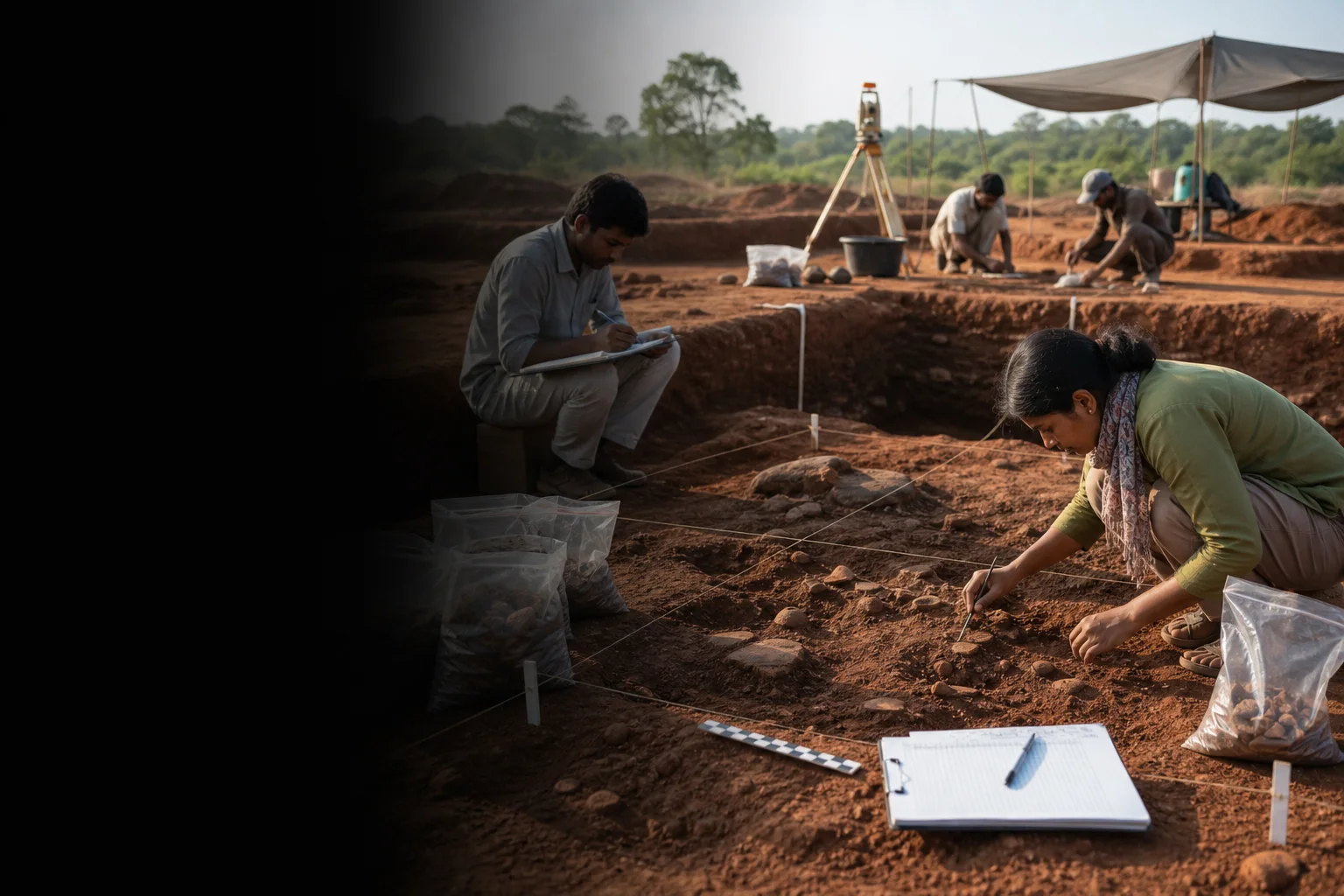
Pudukkottai district is one of Tamil Nadu's richest archaeological landscapes, with megalithic evidence, Tamil-Brahmi inscriptions, rock-cut sanctuaries, structural temples, murals, forts and the later Thondaiman princely state. Sittannavasal, Kudumiyanmalai, Narthamalai and Thirumayam need separate evidence-led interpretation rather than a single dynasty label.On this page
District overview
Understanding Pudukkottai district
The modern district was organized in the 1970s and includes areas drawn from earlier administrative units. Official district material identifies twelve taluks and an eastern coastal edge.[pudukkottaiAbout][pudukkottaiHistory]
Historical Pudukkottai state and modern Pudukkottai district overlap but are not identical concepts; each claim needs the appropriate boundary.
Why it matters
Why explore Pudukkottai?
The concentration of inscriptions, rock-cut sites, temples and burial landscapes allows long-term regional study without claiming an unbroken single culture.
Sittannavasal is important for Jain-associated cave, inscription and painting contexts; conservation limits are part of its meaning.
Kudumiyanmalai's inscriptions and Narthamalai's temple landscape demonstrate why art history, epigraphy and political attribution must be handled feature by feature.[kudumiyanmalai][narthamalai]
Land and water
Geography and regional identity
The district combines rocky plains, low hill complexes, tanks, cultivated land and a southeastern coast.
Many heritage sites occupy exposed rock or caves; heat, footwear, conservation rules and accessibility matter.
The coastal Aranthangi-Manamelkudi side has different landscapes and travel logic from the archaeology-rich inland cluster.
Evidence and change
Historical overview
Megalithic burial evidence and Tamil-Brahmi inscriptions document early activity, but a burial type or script cannot identify one modern community.[tamilBrahmi]
Pandya, Pallava, Mutharaiyar, Irukkuvel, Chola and later powers left different forms of evidence. Dynastic labels should follow inscriptions, securely attributed fabric and scholarship.[pudukkottaiHistory]
Narthamalai and Kudumiyanmalai contain layered monuments and inscriptions; not every feature belongs to the same date or patron.
The Thondaiman-ruled Pudukkottai state added palace, administrative and institutional histories before integration into post-independence administration.
Continue with Tamil Nadu history →Within the district
Cities, towns and local centres
These are district contexts, not newly created destination pages.Pudukkottai
Museum, civic buildings and Thondaiman-era context orient the district.
Aranthangi
A gateway toward coastal taluks and separate historical landscapes.
Illuppur
Nearby hill and heritage sites require route planning.
Thirumayam
A layered complex with living and protected elements.
Manamelkudi
A different fishing and coastal geography from the inland archaeology circuit.
Living and protected places
Temples and spiritual places
Kudumiyanmalai temple complex
Rock-cut, built and inscriptional layers require careful dating; worship remains active.
Narthamalai temple landscape
Multiple shrines and hill features should not be reduced to one monument label.
Avudaiyarkoil context
A major living temple in the district with distinct sacred and architectural interpretation.
Thirumayam sacred sites
Living temples and protected fort context require separate visitor behaviour.
Interpret carefully
Heritage and architecture
Sittannavasal
Jain-associated cave, inscription and painting contexts with strict conservation needs.
Kudumiyanmalai
Rock-cut architecture and notable inscriptional evidence, including musical notation context.
Narthamalai
Hill temples and Mutharaiyar-Chola transition questions require evidence-led attribution.
Thirumayam Fort
A later strategic landscape with current monument access controls.
Government Museum, Pudukkottai
Collections can connect portable finds to district sites without removing context.
Living knowledge
Culture, food and regional products
Culture and festivals
Living temple traditions, village festivals, inscriptional heritage and princely-state memory coexist without forming one timeless culture.
Jain heritage should be identified clearly rather than absorbed into a generic temple narrative.
Local communities are custodians and neighbours of heritage sites, not scenery for photography.
Food and cuisine
District food reflects inland dryland agriculture, tank-fed cultivation and coastal produce on the eastern side.
No dish is assigned exclusive Pudukkottai origin without evidence.
Local food exploration should support transparent, current businesses without inventing rankings.
Making and provenance
Regional products and crafts
Stone, metal, agricultural and household craft traditions require maker-specific research.
A historic style label is not a licence to buy removed architectural or archaeological material.
No unverified GI claim is published.[gi8b]
Landscape first
Nature and wildlife
Low hills, tanks, scrub, farmland and coast form varied habitats; protected-area or sanctuary information should be checked officially.[tnForest8b]
Rock surfaces, caves and painted interiors are vulnerable to touch, moisture, flash and graffiti.
Wildlife sightings and coastal conditions are never guaranteed.
Work and change
Economy and livelihoods
Agriculture, services, small industry, fishing and heritage-linked activity shape different parts of the district.
Archaeological tourism must not displace conservation or community access.
No current production, visitor or employment ranking is asserted.
Build a coherent route
Places to explore in Pudukkottai
Pudukkottai city
Begin with collections and administrative context.
Sittannavasal
Follow every photography and access restriction.
Kudumiyanmalai
Allow time to distinguish rock-cut, built and epigraphic layers.
Narthamalai
Use official paths and evidence-led interpretation.
Thirumayam
Separate protected monument and living temple etiquette.
Eastern coast
Plan independently from the inland archaeology circuit.
Choose your pace
Things to do
Build an evidence-first circuit
Use museums, inscriptions and site interpretation before dynastic storytelling.
Compare rock-cut and structural work
Observe technique without touching protected surfaces.
Read the princely state separately
Place Thondaiman history after the earlier archaeological layers.
Protect context
Never remove stones, sherds, inscriptions or architectural fragments.
Conditions, not promises
Best season and current checks
Exposed rock sites can be intensely hot; rain can make steps and paths slippery.
Museum, cave and protected-monument schedules require current confirmation.
This evergreen guide does not publish a forecast, waterfall-flow status, sea condition, forest opening, festival date or crowd prediction. Check the linked authorities close to travel.[imd8b]
Plan by days
Suggested duration
One day
Choose Pudukkottai city plus one nearby evidence-led site.
Two days
Use one day for Sittannavasal-Kudumiyanmalai or Narthamalai and another for city-Thirumayam.
Three or more days
Add Avudaiyarkoil or the eastern coast as a separate geographic circuit.
Regional access
How to reach
By rail
Pudukkottai and other stations serve different corridors; verify current rail service.
By road
Roads connect Tiruchirappalli, Thanjavur, Sivaganga and Ramanathapuram; sites are dispersed.
By air
Confirm the practical regional airport and onward transport.
Local movement
Getting around
A hired vehicle can support dispersed sites, but it does not grant entry. Carry water and plan around official opening and conservation rules.
Place-name map links support orientation only. Confirm the actual route, last-mile transport, parking, accessibility and return options locally.
Place-name links
Map of Pudukkottai district
No fabricated coordinates or heavy map embed are used.Map data is not embedded on this lightweight page. Open a place-name search in Google Maps for current roads, business details and directions.
Continue geographically
Nearby districts
Continue by subject
Related My Tamil Nadu guides
Practical planning
Save a district checklist
Saved only in this browser. No login or personal data is needed.
Questions
Frequently asked questions about Pudukkottai
Is Pudukkottai district the same as Pudukkottai city?
No. Pudukkottai city is the headquarters of a district whose archaeological sites, towns and coast are widely dispersed.
How many days are useful for Pudukkottai?
Two days gives a focused introduction; three or more days works better when the district combines distant landscapes or major heritage clusters.
Are opening hours and ticket prices listed?
No. Operational details change and must be confirmed with the responsible temple, museum, forest, district or transport authority.
Can the whole district be covered in one day?
A single day should focus on one geographic cluster. A district is an administrative area, not one compact attraction.
What should be checked before travel?
Check monument opening, conservation restrictions, cave or hill access, heat, coastal conditions and current transport.
Are the images documentary photographs?
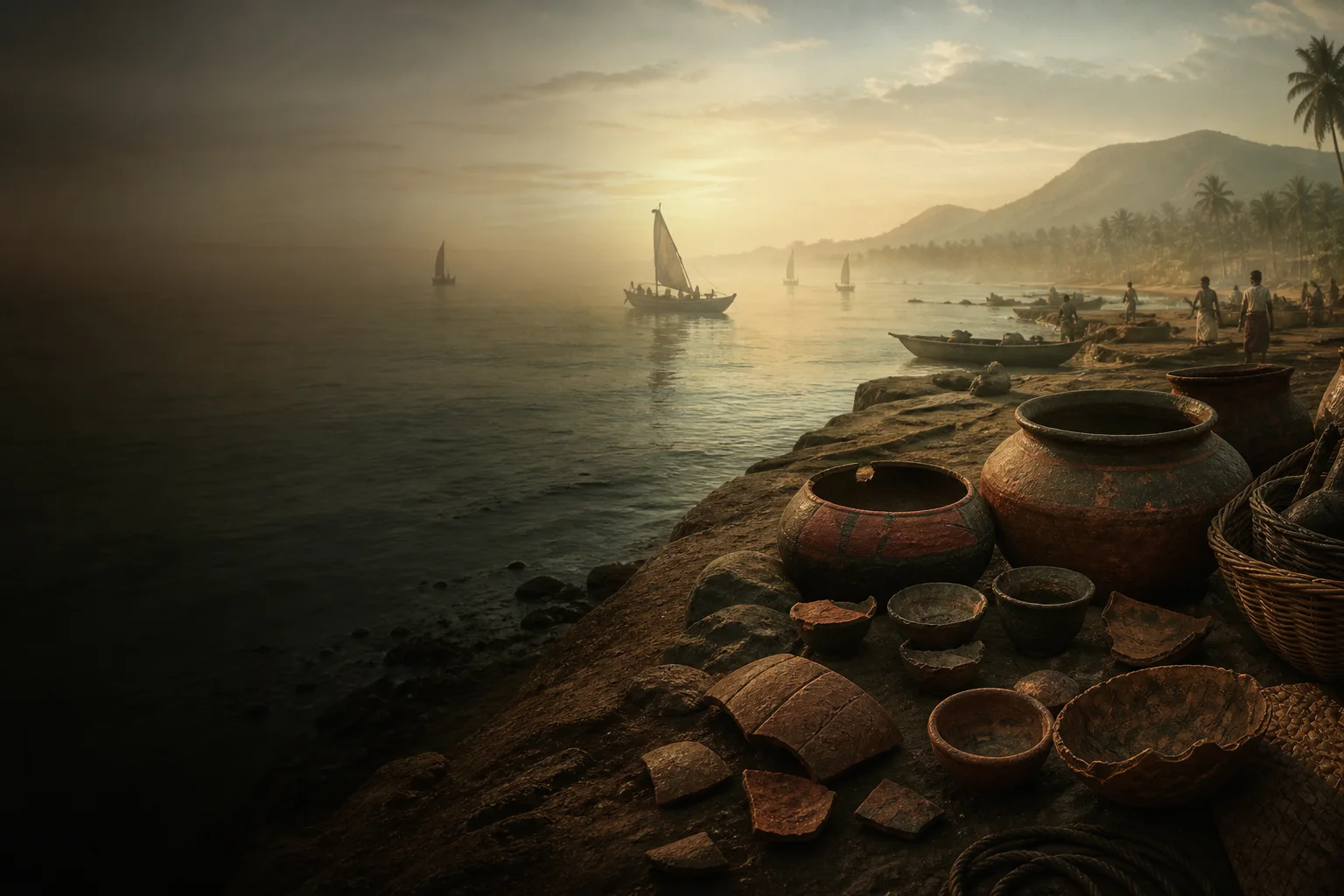
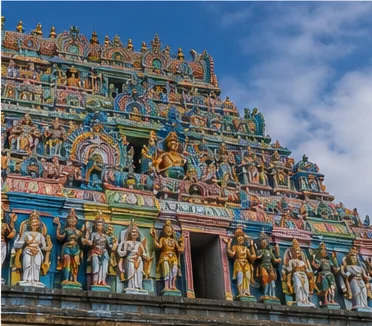
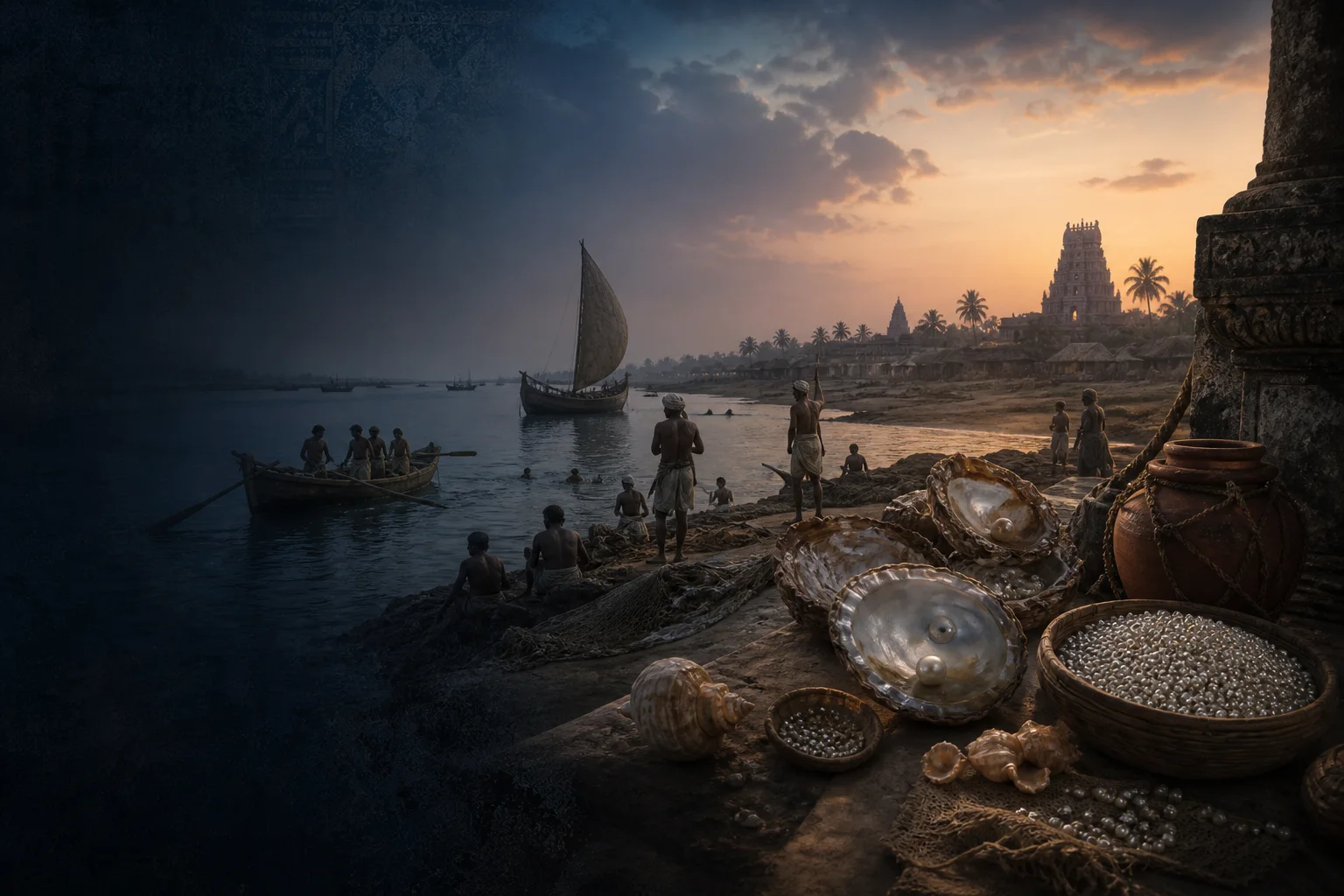
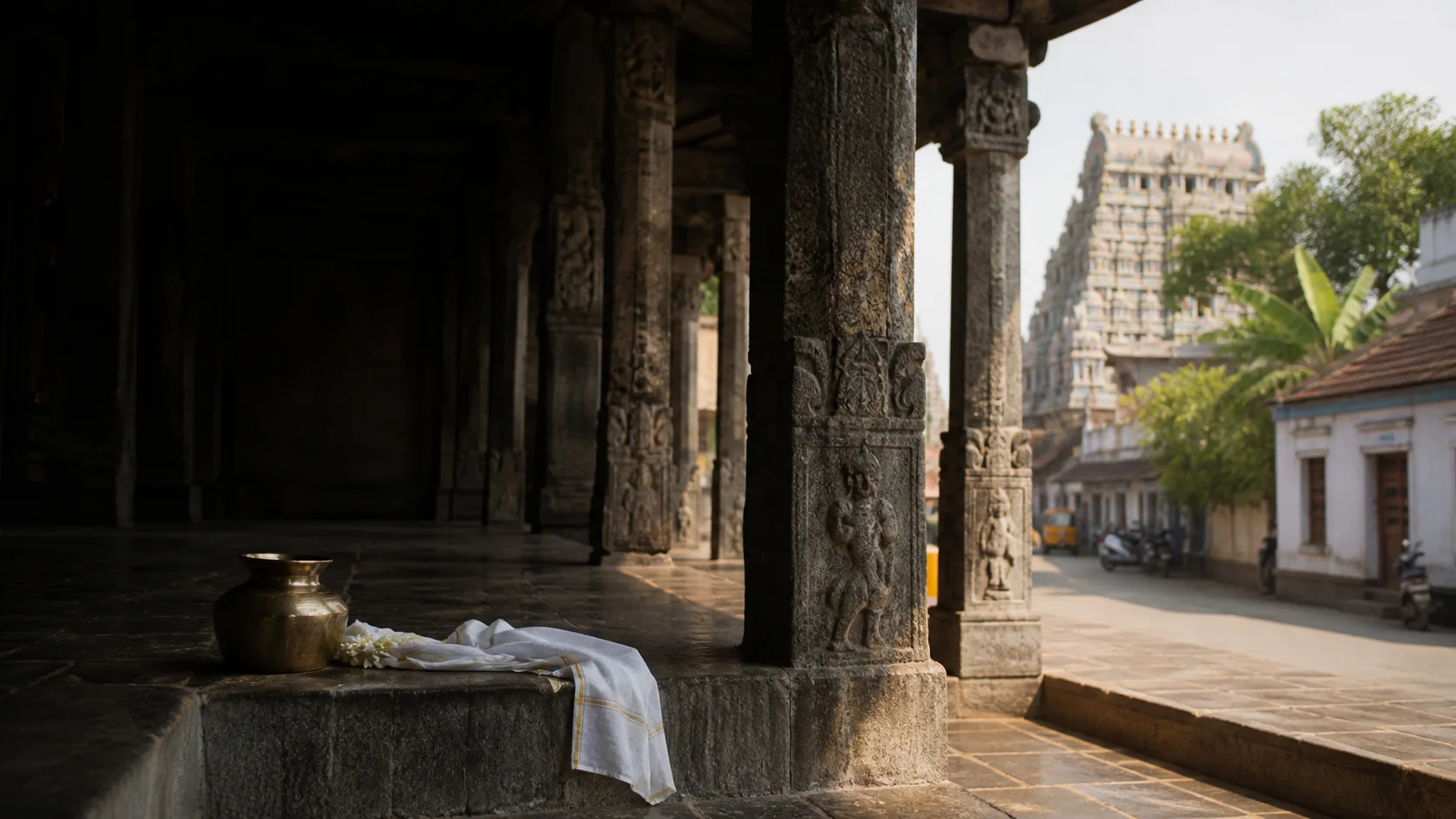
No. They are project-created editorial visuals and are labelled as non-documentary.
Does this guide guarantee transport or access?
No. Rail, bus, road, protected-area and coastal conditions need a current official check.
How does the map work?
It opens place-name searches in Google Maps without publishing invented coordinates or loading a tracking-heavy embedded map.
Editorial trust
Sources and further reading
Major factual claims were checked against authoritative references. Last reviewed 9 August 2026.- About Pudukkottai districtPudukkottai District Administration · Official district profileReviewed 9 August 2026
- History of Pudukkottai districtPudukkottai District Administration · Official district historyReviewed 9 August 2026
- Heritage tourism in Pudukkottai districtPudukkottai District Administration · Official district heritage recordReviewed 9 August 2026
- KudumiyanmalaiPudukkottai District Administration · Official district heritage recordReviewed 9 August 2026
- NarthamalaiPudukkottai District Administration · Official district heritage recordReviewed 9 August 2026
- Tamil-Brahmi inscriptionsTamil Nadu State Department of Archaeology · State archaeology authorityReviewed 9 August 2026
- Archaeology and epigraphy resourcesTamil Nadu State Department of Archaeology · State archaeology authorityReviewed 9 August 2026
- National Train Enquiry SystemIndian Railways · Official transportReviewed 9 August 2026