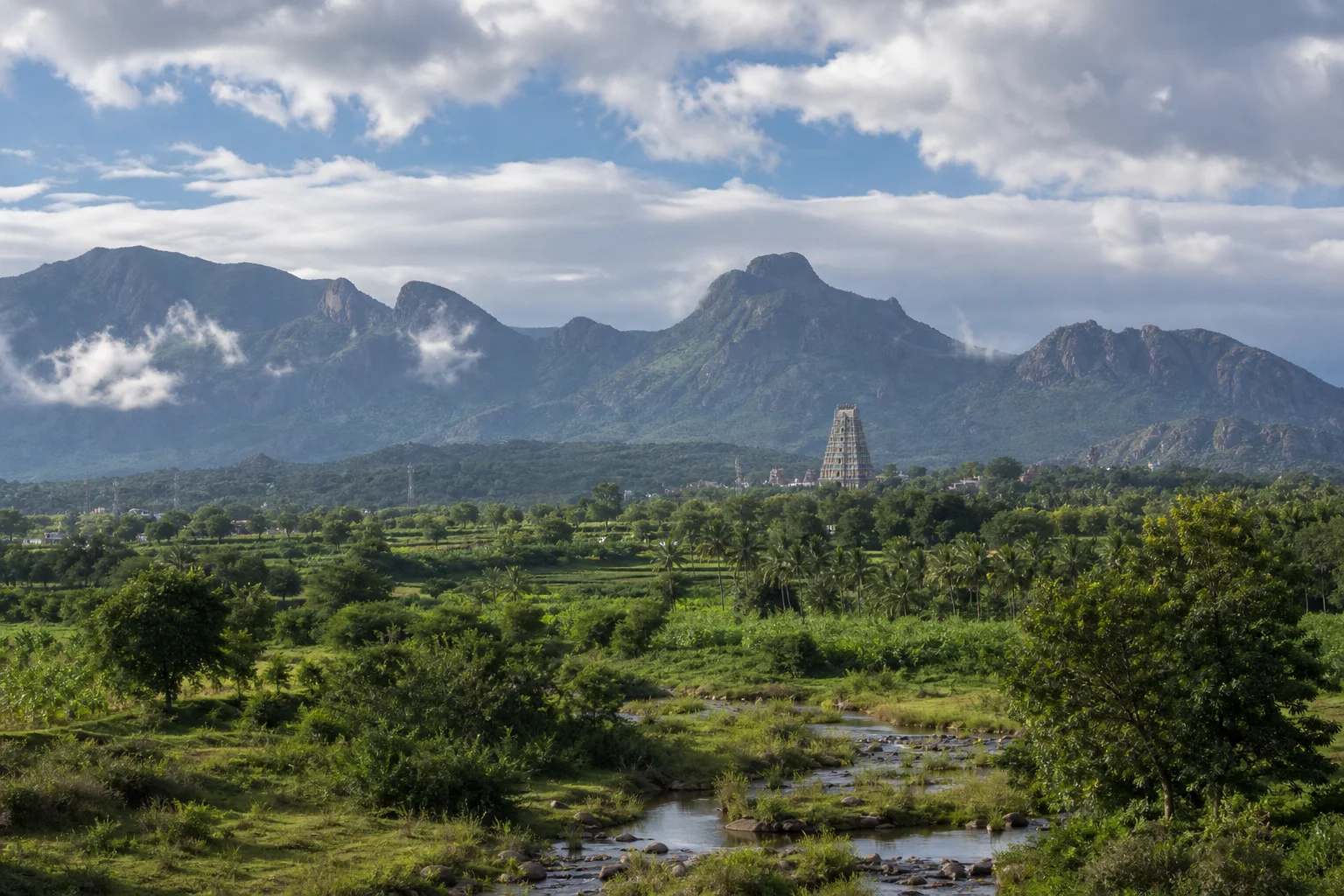
Western Ghats gateways, Courtallam and living Pandya heritage
Tenkasi District: History, Places and Travel Guide
Tenkasi district occupies a dramatic Western Ghats edge where temple towns, passes, farms and seasonal water systems meet. It must be described using its current post-2019 boundary: Courtallam and Sankarankovil belong here, not in modern Tirunelveli district.On this page
District overview
Understanding Tenkasi district
Tenkasi is a current administrative district with headquarters at Tenkasi. Older references often file its places under undivided Tirunelveli; that historical label should not override today's boundary.[tenkasiHome][tenkasiHistory]
The guide joins the Tenkasi-Courtallam cluster with Shenkottai pass country, Kadayanallur, Sankarankovil and rural landscapes without pretending they are one compact resort.
Why it matters
Why explore Tenkasi?
The district provides one of Tamil Nadu's clearest examples of how Western Ghats catchments shape settlement, agriculture, pilgrimage and visitor seasons.
Courtallam is culturally important, but the district is more than its falls: temple towns, trading centres, passes and villages hold distinct histories.
Its recent administrative formation makes careful geographic language essential.[tenkasiHistory]
Land and water
Geography and regional identity
The Western Ghats form the district's western wall and create passes toward Kerala. Foothills grade into cultivated and drier eastern tracts.
Courtallam's falls depend on water conditions. Individual cascades may be regulated, restricted or closed; an evergreen page cannot promise flow or bathing access.[tenkasiFalls]
Forest-edge routes are habitats and watersheds. Noise, waste and unapproved entry damage the same systems that support the district.
Evidence and change
Historical overview
Tenkasi's temple-centred history includes later Pandya patronage and inscriptions that require monument-specific reading rather than a single founding legend.[tenkasiHistory]
Shenkottai's pass geography connected movement across the Ghats, while markets and temple centres linked the district eastward.
Colonial and post-colonial administrative records commonly use Tirunelveli for this region. The new district boundary must be stated whenever older material is reused.
Sacred narratives attached to Kasi Viswanathar Temple and Courtallam should be labelled as tradition, separate from securely dated inscription or fabric.
Continue with Tamil Nadu history →Within the district
Cities, towns and local centres
These are district contexts, not newly created destination pages.Tenkasi
Kasi Viswanathar Temple, markets and transport form the principal urban context.
Courtallam
A seasonal visitor centre whose access depends on current water and safety conditions.
Shenkottai
A gateway shaped by cross-Ghat movement and rail-road connections.
Sankarankovil
A major inland town with its own sacred and commercial identity.
Kadayanallur
A town linking foothill production to wider markets.
Living and protected places
Temples and spiritual places
Kasi Viswanathar Temple
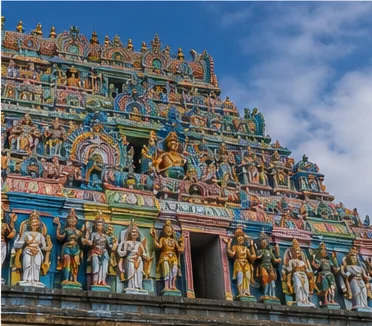
A living temple central to Tenkasi's identity; religious tradition and historical dating should remain distinct.
Courtallam temple context
Water, sacred landscape and town life meet near the falls; current arrangements require confirmation.
Sankaranarayanaswamy Temple
A major living pilgrimage centre in Sankarankovil with annually changing festival operations.
Interpret carefully
Heritage and architecture
Tenkasi temple town
Streets, markets and gateways reveal a living urban fabric rather than an isolated monument.
Shenkottai pass history
Transport and borderland movement help explain settlement and commerce.
Water infrastructure
Channels and cultivated landscapes show how mountain water becomes social infrastructure.
Living knowledge
Culture, food and regional products
Culture and festivals
The district's cultural life includes temple festivals, music, market routines and Tamil-Malayalam borderland contact.
Courtallam's seasonal public culture changes with water and visitor flows; current crowd controls are not predictable from an old calendar.
Local speech and food reflect movement across the Ghats without erasing distinct Tamil district identities.
Food and cuisine
Meals draw on southern Tamil staples, farm produce, market networks and western-border exchange.
Visitor-town snacks are part of Courtallam's experience, but hygiene, vendors and opening conditions are current matters.
No food is assigned exclusive district ownership without documentary or GI evidence.
Making and provenance
Regional products and crafts
Agricultural produce and small-scale trade vary between foothills and plains.
Craft and food sellers should be described by actual maker and place. Market popularity does not establish a protected geographical indication.[gi8b]
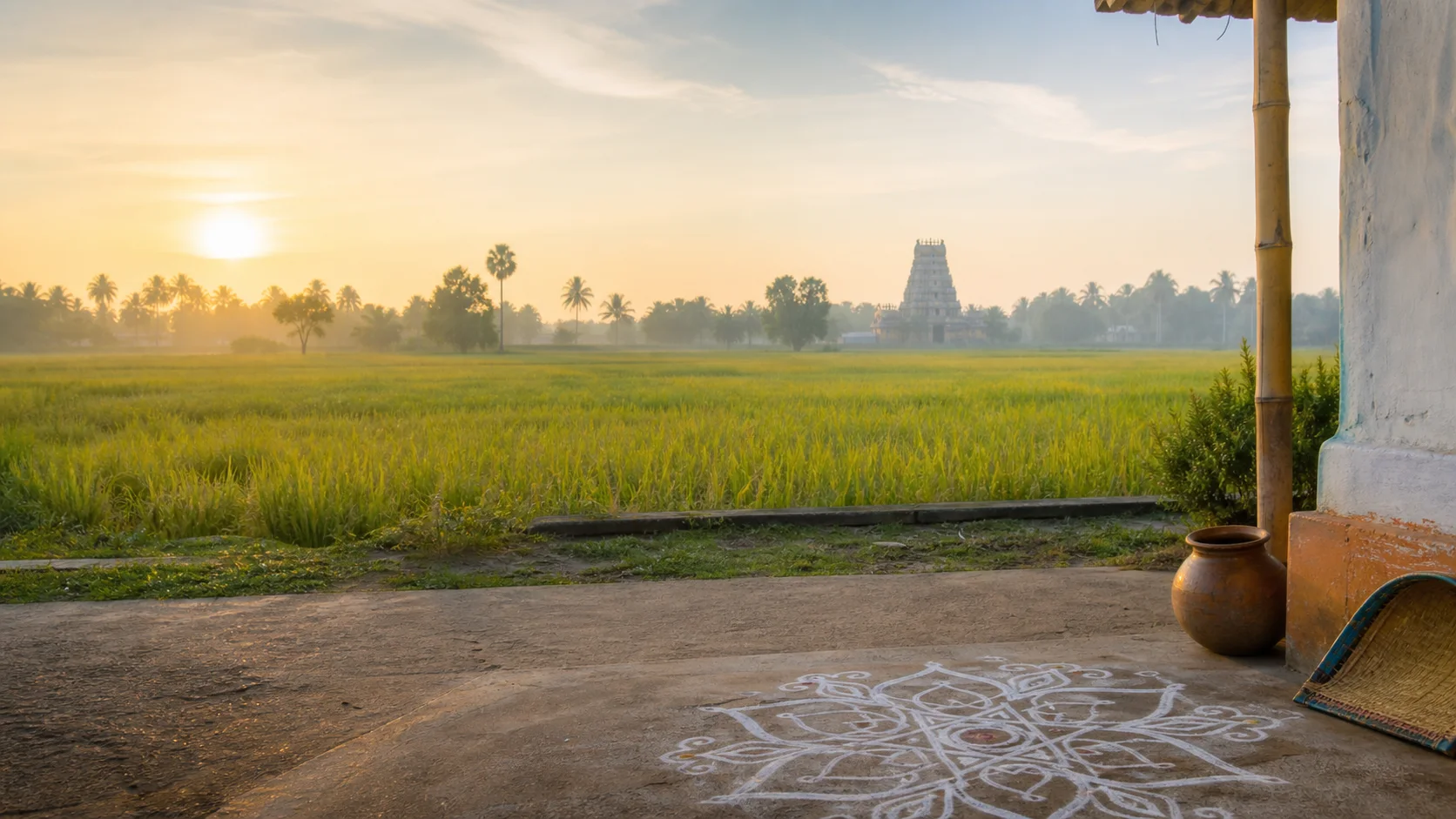
Landscape first
Nature and wildlife
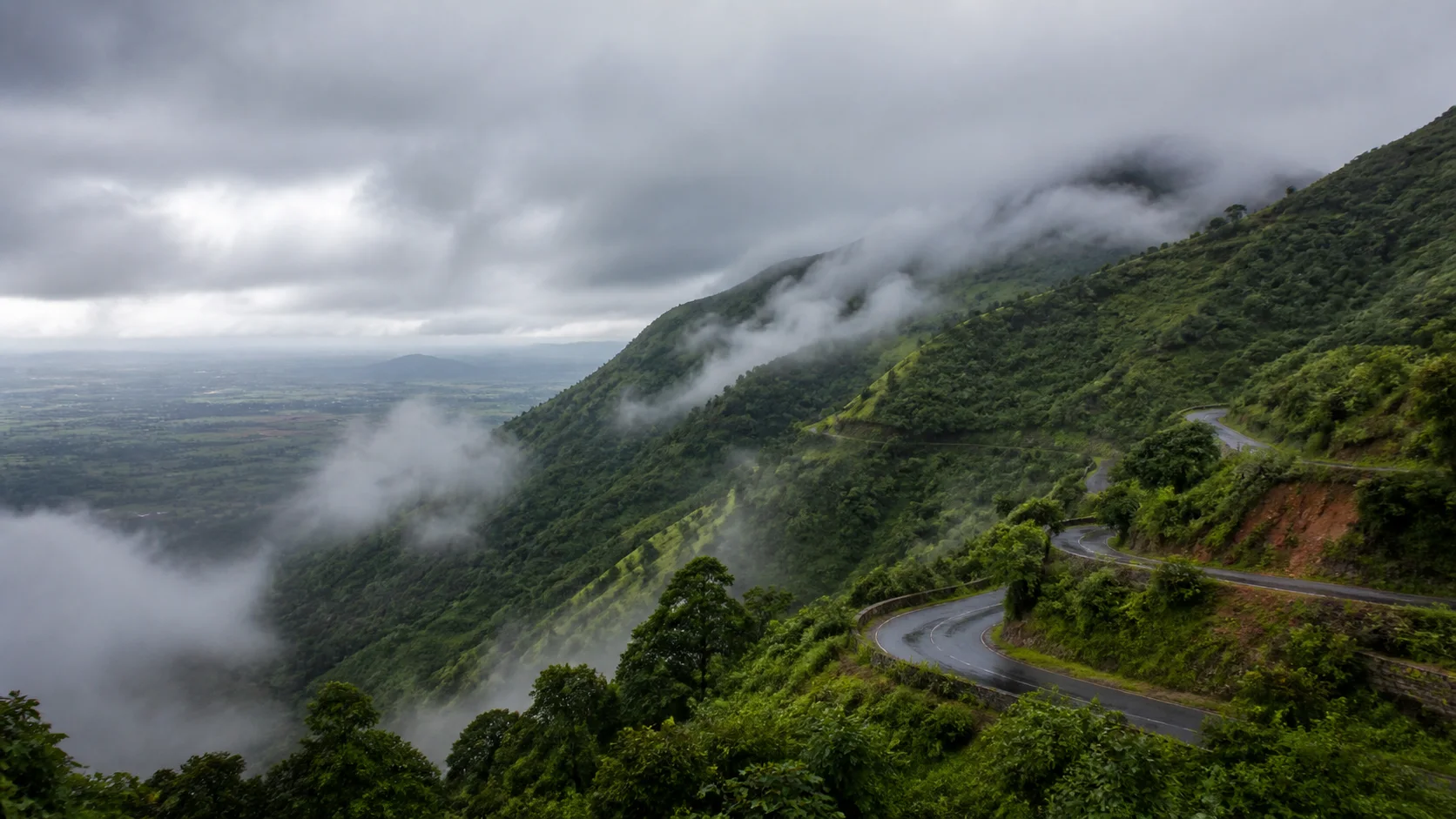
The Ghats support ecologically sensitive forest and watershed systems. Visitors must use authorized access and never expect wildlife sightings.[tnForest8b]
Waterfall bathing is not inherently safe. Follow barriers, police and district notices even when water appears calm.[tenkasiFalls]
Rain can improve scenery while also increasing road, current and slope hazards.
Work and change
Economy and livelihoods
Agriculture, trade, services, pilgrimage and seasonal visitor activity shape local livelihoods.
Shenkottai and other transport links support cross-Ghat exchange.
No live waterfall economy, crop output or visitor total is published here.
Build a coherent route
Places to explore in Tenkasi
Tenkasi
Explore the town as a living centre, not only a gateway.
Courtallam
Check each fall's current status before travel.
Shenkottai
Read rail, road and borderland geography together.
Sankarankovil
Allow time for an independent town context.
Kadayanallur
Connect markets and cultivated foothills.
Foothill villages
Use authorized roads and respect farms and forest boundaries.
Choose your pace
Things to do
Compare town and waterfall landscapes
See how visitor-season Courtallam differs from Tenkasi's year-round civic life.
Read a Ghats pass
Use Shenkottai to understand cross-mountain movement.
Visit living temples respectfully
Check current dress, queue and festival arrangements.
Follow water without chasing flow
Study catchments and cultivation even when falls are restricted.
Conditions, not promises
Best season and current checks
Courtallam is rain-sensitive; useful conditions cannot be guaranteed by month alone.
Heat, rain and hill weather may differ over short distances.
This evergreen guide does not publish a forecast, waterfall-flow status, sea condition, forest opening, festival date or crowd prediction. Check the linked authorities close to travel.[imd8b]
Plan by days
Suggested duration
One day
Choose Tenkasi and one nearby context.
Two days
Pair Tenkasi-Courtallam with Shenkottai or Sankarankovil.
Three or more days
Separate temple towns, pass country and conditional nature time.
Regional access
How to reach
By rail
Tenkasi and Shenkottai rail options require a current timetable check.
By road
Roads connect Tirunelveli, Kerala-side passes and northern district towns; verify weather and restrictions.
By air
Confirm the practical regional airport and onward transfer for the chosen route.
Local movement
Getting around
Local buses, autos and hired vehicles cover different clusters. Do not enter forest roads or waterfall paths simply because an online map shows a line.
Place-name map links support orientation only. Confirm the actual route, last-mile transport, parking, accessibility and return options locally.
Place-name links
Map of Tenkasi district
No fabricated coordinates or heavy map embed are used.Map data is not embedded on this lightweight page. Open a place-name search in Google Maps for current roads, business details and directions.
Continue geographically
Nearby districts
Continue by subject
Related My Tamil Nadu guides
Practical planning
Save a district checklist
Saved only in this browser. No login or personal data is needed.
Questions
Frequently asked questions about Tenkasi
Is Tenkasi district the same as Tenkasi city?
No. Tenkasi city and Courtallam are important centres within a district created separately from Tirunelveli in 2019.
How many days are useful for Tenkasi?
Two days gives a focused introduction; three or more days works better when the district combines distant landscapes or major heritage clusters.
Are opening hours and ticket prices listed?
No. Operational details change and must be confirmed with the responsible temple, museum, forest, district or transport authority.
Can the whole district be covered in one day?
A single day should focus on one geographic cluster. A district is an administrative area, not one compact attraction.
What should be checked before travel?
Check rainfall, waterfall flow and closures, forest permissions, hill-road conditions and temple schedules.
Are the images documentary photographs?
No. They are project-created editorial visuals and are labelled as non-documentary.
Does this guide guarantee transport or access?
No. Rail, bus, road, protected-area and coastal conditions need a current official check.
How does the map work?
It opens place-name searches in Google Maps without publishing invented coordinates or loading a tracking-heavy embedded map.
Editorial trust
Sources and further reading
Major factual claims were checked against authoritative references. Last reviewed 9 August 2026.- Tenkasi DistrictTenkasi District Administration · Official district portalReviewed 9 August 2026
- History of Tenkasi districtTenkasi District Administration · Official district historyReviewed 9 August 2026
- Courtallam waterfalls and access contextTenkasi District Administration · Official district visitor recordReviewed 9 August 2026
- Tourist places in Tenkasi districtTenkasi District Administration · Official district visitor recordReviewed 9 August 2026
- Forests, protected areas and visitor contextTamil Nadu Forest Department · State governmentReviewed 9 August 2026
- Regional Meteorological Centre ChennaiIndia Meteorological Department · Official weather authorityReviewed 9 August 2026
- National Train Enquiry SystemIndian Railways · Official transportReviewed 9 August 2026
- Registered Geographical Indications in IndiaIntellectual Property India · Official GI registerReviewed 9 August 2026