Artists & Musicians · Cultural Figures
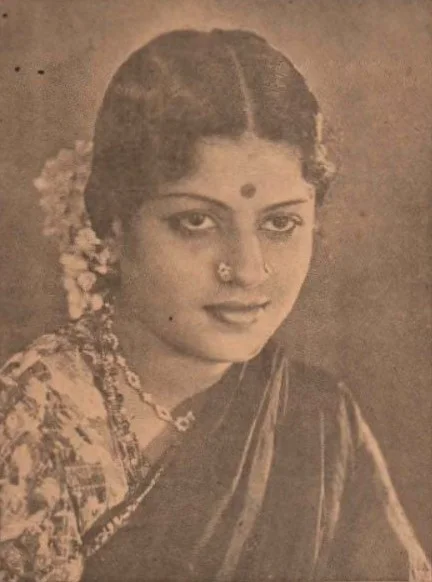
M.S. Subbulakshmi
எம். எஸ். சுப்புலட்சுமி
16 September 1916 – 11 December 2004
M.S. Subbulakshmi brought rigorous Carnatic musicianship, precise language and a wide devotional repertoire to concert, recording, film and international stages. Her career also illuminates women performers, hereditary music, broadcasting, institutions and the making of modern public culture across a century of technological and social change.
Editorial status: Published · Reviewed 10 August 2026- Born
- 16 September 1916 in Madurai
- Died
- 11 December 2004
- Field
- Carnatic vocal music
- Early training
- Her mother, veena musician Shanmugavadivu [1]
- UN concert
- United Nations Day programme in 1966 [5]
- Bharat Ratna
- Conferred in 1998 [7]
Life and context
Who M.S. Subbulakshmi Was
Madurai Shanmukhavadivu Subbulakshmi lived from 1916 to 2004 and became one of the most widely recognized Carnatic vocalists of the twentieth century. Her public career extended across concerts, gramophone records, radio, film, benefit performance and international cultural programmes. Official music institutions document her musicianship and honors, but acclaim should be explained through practice rather than repeated as a list of superlatives. [1][4]
Her repertory crossed Tamil, Telugu, Sanskrit, Kannada, Hindi and other language traditions, bringing compositions and devotional forms to different audiences. Breadth did not mean that all traditions became interchangeable. Diction, textual preparation, melodic grammar and concert context mattered. This page does not reproduce lyrics and does not treat devotional reception as a substitute for musical analysis.
Life and context
Madurai, Family, and Early Training
Subbulakshmi was born in Madurai into a family of musicians. Her mother Shanmugavadivu was a veena player and her earliest teacher, placing training inside a hereditary performance environment rather than a modern conservatory alone. Sangeet Natak Akademi citations identify this foundation and her early entry into professional music. [1][2]
The history of women from hereditary music communities is shaped by artistic knowledge, patronage, caste, gender and changing respectability. Later biographies sometimes transform early hardship and talent into a simple discovery story. A fuller account recognizes family pedagogy and the unequal institutions through which women performers entered recording, sabhas and cinema.
Life and context
Recording and the Formation of a Public Voice
Subbulakshmi recorded while still young, and the gramophone made voice, repertoire and name portable beyond a concert hall. Short disc formats affected duration and selection, while microphones changed relationships between vocal projection, accompaniment and listening. A recording is a performance shaped by technology and market, not a transparent copy of an entire live concert.
Broadcasting and repeated circulation helped establish recognizable renditions across regions. Popular familiarity can make one interpretation sound inevitable, but Carnatic compositions remain open to stylistic variation within their musical grammar. Discographies, label catalogues and archival audio are needed for exact dates; this profile avoids unverified claims about a first recording.
Life and context
Carnatic Musicianship and Concert Practice
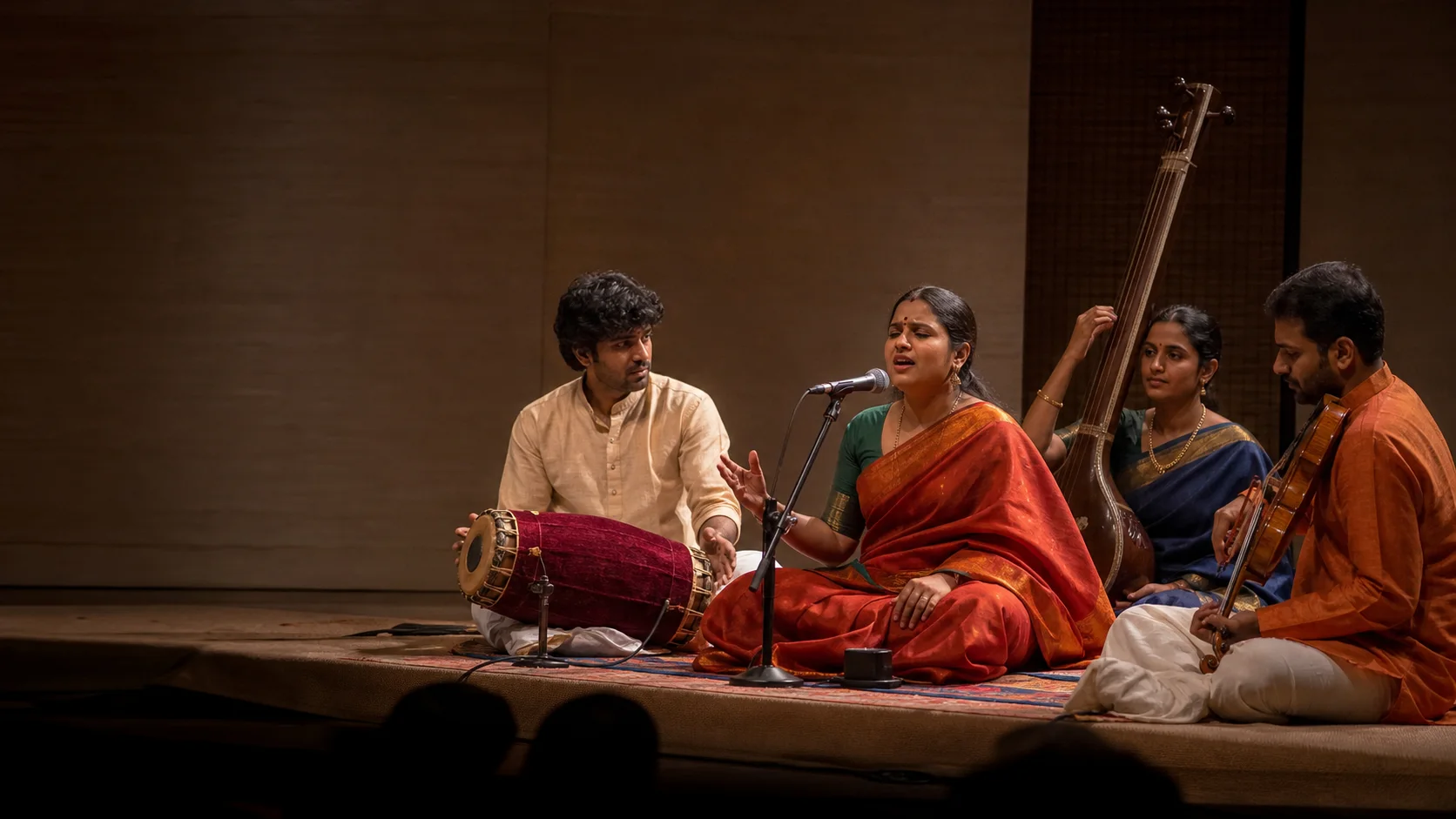
Official citations emphasize Subbulakshmi's raga presentation, diction and command of compositions. These qualities were produced through sustained training and collaboration with violin, mridangam, tambura and other accompanists. A solo-star narrative can hide the ensemble and the teachers, composers, language specialists and concert organizers who supported performance. [1][2]
Her programmes combined major Carnatic compositions, raga-based improvisation and devotional items. The balance varied by venue and occasion. Musical assessment should identify raga, tala, composition, improvisational form and accompanists rather than describe every performance as spiritual or flawless. Such vocabulary respects both artistry and the listener's ability to understand technique.
Life and context
Cinema and the Meera Role
Subbulakshmi acted in a small number of films, with Meera becoming the best known. Cinema joined performance, playback, image and a devotional narrative, extending her audience beyond the Carnatic concert world. Sangeet Natak Akademi identifies Meera in its official profile, but the film role should not eclipse her longer concert career. [1]
Film publicity also shaped the visual iconography through which later audiences remember her. Production stills and screen images are representations inside a role, not documentary photographs of musical life. Her eventual withdrawal from acting and concentration on music changed the balance of public identity without making the film years irrelevant.
Life and context
Chennai, Sabhas, and Musical Institutions
Relocation and performance in Madras placed Subbulakshmi within an expanding sabha, recording, newspaper and broadcast environment. Institutions could confer visibility and standards while also reflecting unequal access by caste, gender and social network. Her success as a woman did not by itself remove those barriers for other performers.
The Music Academy awarded her the Sangita Kalanidhi title in 1968, making her the first woman to receive it. This is a specific, institutionally verifiable first, not a claim that she was the first important woman in Carnatic music. Earlier and contemporary women musicians, including performers from hereditary communities, remain essential to the history. [3][4]
Life and context
International Performances and the United Nations
Subbulakshmi performed outside India in several institutional and cultural contexts. A documented landmark is the 1966 United Nations Day programme at the General Assembly Hall. The UN record verifies the event and date, while photographs document the setting. It should not be inflated into a claim that one concert introduced Indian music to the world. [5][6]
International reception involved diplomatic cultural presentation, diaspora audiences, concert organizers and translation across listening traditions. Programmes selected for these occasions were shaped by time, symbolism and audience. Their significance lies in documented cultural exchange and her stature as a performer, not in ranking one national tradition above another.
Life and context
Benefit Concerts and Public Service
Sangeet Natak Akademi records that Subbulakshmi gave many benefit concerts. These performances connected celebrity, patronage and fundraising, but exact totals and amounts require institutional accounts. Repeating large figures without a beneficiary, date and currency context creates false precision. [1]
Benefit performance also complicates the boundary between artistic and civic life. Musicians donated labor and reputation, while accompanists, venues and organizers made events possible. Public generosity is part of the record, yet it should not become a moral halo that prevents critical discussion of repertoire, institutions or the social structures of classical music.
Life and context
Honors and What They Document
Subbulakshmi received the Sangeet Natak Akademi Award, Akademi Fellowship, Padma honors, Ramon Magsaysay Award, Sangita Kalanidhi and Bharat Ratna. The official Bharat Ratna notification was published in 1998. Each honor documents institutional recognition at a particular time; it does not provide a universal ranking among artists. [1][7]
The first-woman distinction attached to the 1968 Sangita Kalanidhi is supported by the Music Academy. Gender milestones matter because institutions had long privileged men, but they should lead to questions about access and predecessors rather than an isolated exceptional-woman story. [3][4]
Life and context
Legacy, Listening, and Responsible Memory
Subbulakshmi's recordings continue to shape household listening, devotional practice, pedagogy and ideas of classical diction. Repetition can turn one version into an assumed standard, so historical listening benefits from comparison with her live recordings, different career periods and contemporary musicians. Copyright and performer rights must be checked before embedding audio or lyrics.
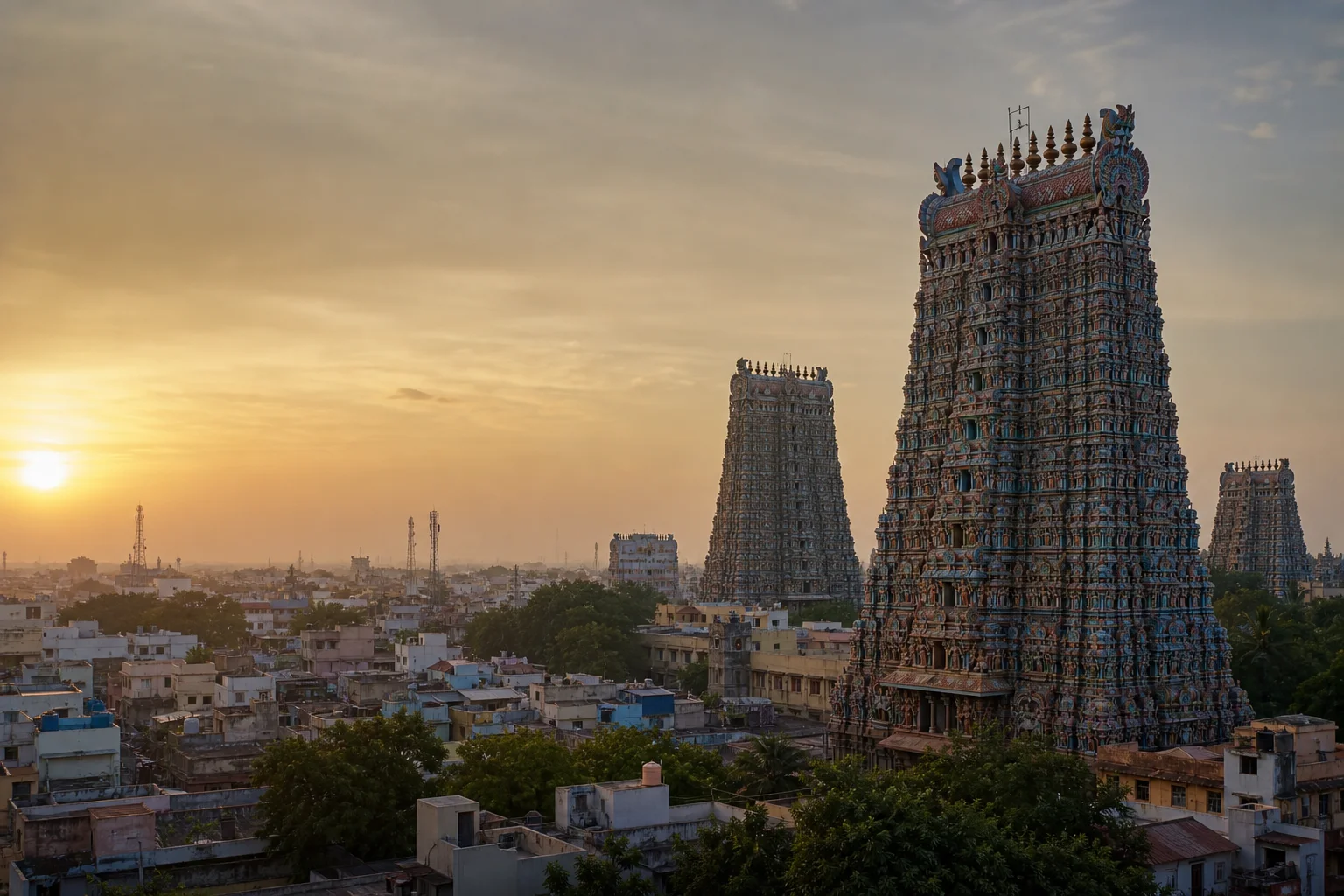
Her legacy connects Madurai, Chennai and international stages, but no destination can guarantee access to an archive or performance. Visitors should use the Carnatic music guide to understand concert practice and verify current programmes with institutions. A responsible profile credits family training, accompanists and musical communities while recognizing the exceptional scale of her documented career.
Serious listening benefits from dated recordings, complete concert lists where available, and named accompanists. Commercial reissues can omit original label details or combine sessions, so a familiar album cover is not enough to establish chronology. Researchers should compare catalogues, broadcast archives, institutional programmes and contemporary reviews before making a first-performance claim.
Her repertoire also invites language-specific study. Pronunciation, textual variants and composition history require expertise beyond identifying a title. When a recording is used for teaching or display, the performer, composer, lyricist where known, accompanists, source and rights holder should be credited. This avoids turning a celebrated voice into anonymous cultural background.
Current archives, exhibitions, events and digital streams can change availability or access terms. This evergreen guide links stable institutional records and does not promise that a recording or venue is currently accessible. Visitors and researchers should verify catalogues, programmes and permissions directly with the responsible institution.
Images with explicit provenance
Places and historical context
Chronology
Timeline
- 1916
Born in Madurai on 16 September.
- 1920s–1930s
Began recording and professional performance while young.
- 1940s
Appeared in films including Meera.
- 1956
Received the Sangeet Natak Akademi Award. [2]
- 1966
Performed for United Nations Day at the General Assembly Hall. [5]
- 1968
Became the first woman awarded the Music Academy's Sangita Kalanidhi. [3]
- 1998
The Bharat Ratna notification named her as a recipient. [7]
- 2004
Died on 11 December.
Keep exploring
Places, periods, and connected guides
Places
Questions
Frequently asked questions
What kind of music did M.S. Subbulakshmi sing?
She was principally a Carnatic vocalist with a broad repertoire that included compositions and devotional forms in several Indian languages.
Was she the first woman Carnatic musician?
No. Many women musicians preceded and worked alongside her. She was the first woman to receive the Music Academy's Sangita Kalanidhi title, a narrower verified distinction.
Did she perform at the United Nations?
Yes. The UN Digital Library documents her United Nations Day concert in the General Assembly Hall in October 1966.
Why are no song lyrics included?
Lyrics and translations carry copyright and textual-accuracy issues. This profile discusses repertoire without reproducing protected or unverified text.
Where should a visitor look for current concerts?
Use official venue and sabha programmes. Concert schedules are current information and are deliberately not hardcoded into this evergreen profile.
Editorial trust
Sources & further reading
- M.S. Subbulakshmi: Akademi Fellow citationSangeet Natak Akademi · Official award citationAccessed 10 August 2026
- M.S. Subbulakshmi: Akademi Award citationSangeet Natak Akademi · Official award citationAccessed 10 August 2026
- Sangita Kalanidhi recipientsThe Music Academy Madras · Institutional award registerAccessed 10 August 2026
- Sangita Kalanidhi M.S. Subbulakshmi, 1916–2004The Music Academy Madras · Institutional journalAccessed 10 August 2026
- Concert in observance of United Nations DayUnited Nations Digital Library · International organization recordAccessed 10 August 2026
- M.S. Subbulakshmi recital at United Nations HeadquartersUnited Nations Photo · International organization photo recordAccessed 10 August 2026
- Bharat Ratna notificationGovernment of India · Official gazette notificationAccessed 10 August 2026