Public Leaders / Modern History · Freedom Fighters
K. Kamaraj
க. காமராஜர்
15 July 1903 – 2 October 1975
K. Kamaraj rose from nationalist organization in Virudhunagar to lead Madras State and later the Indian National Congress. His government is strongly associated with school expansion and the statewide development of a school meal programme, but accurate history must distinguish these measures from programmes that existed earlier and changed later.
Editorial status: Published · Reviewed 10 August 2026- Born
- 15 July 1903 in Virudhunagar [1]
- Died
- 2 October 1975 [1]
- Chief Minister
- 13 April 1954 to 2 October 1963 [1]
- State
- Madras State, before the name Tamil Nadu was adopted
- Congress president
- Led the Indian National Congress during a major transition
- Education
- School expansion and development of the state meal programme
Life and context
Who K. Kamaraj Was
Kumaraswami Kamaraj lived from 1903 to 1975 and became a major Congress organizer, Chief Minister of Madras State and national party president. He is often remembered through personal simplicity and school policy. Those memories are important but can become hagiography when detached from budgets, administrators, local bodies, teachers, social movements and earlier policy experiments. [1]
His career links the freedom movement to post-independence electoral government. He worked through party organization more than public oratory in English, and his influence depended on relationships across districts and factions. The nickname kingmaker summarizes his role in leadership transitions after Jawaharlal Nehru, but it can exaggerate one person's control over parliamentary choice and internal Congress negotiation. [5]
Life and context
Virudhunagar and Entry into Politics
Kamaraj was born on 15 July 1903 in Virudhunagar. He left formal schooling young and worked in trade before entering nationalist activity. Later biographies use this limited schooling as a dramatic contrast with his education policies. The contrast is relevant, but it should not become a claim that administration needs no learning or that he alone understood children outside school. [1]
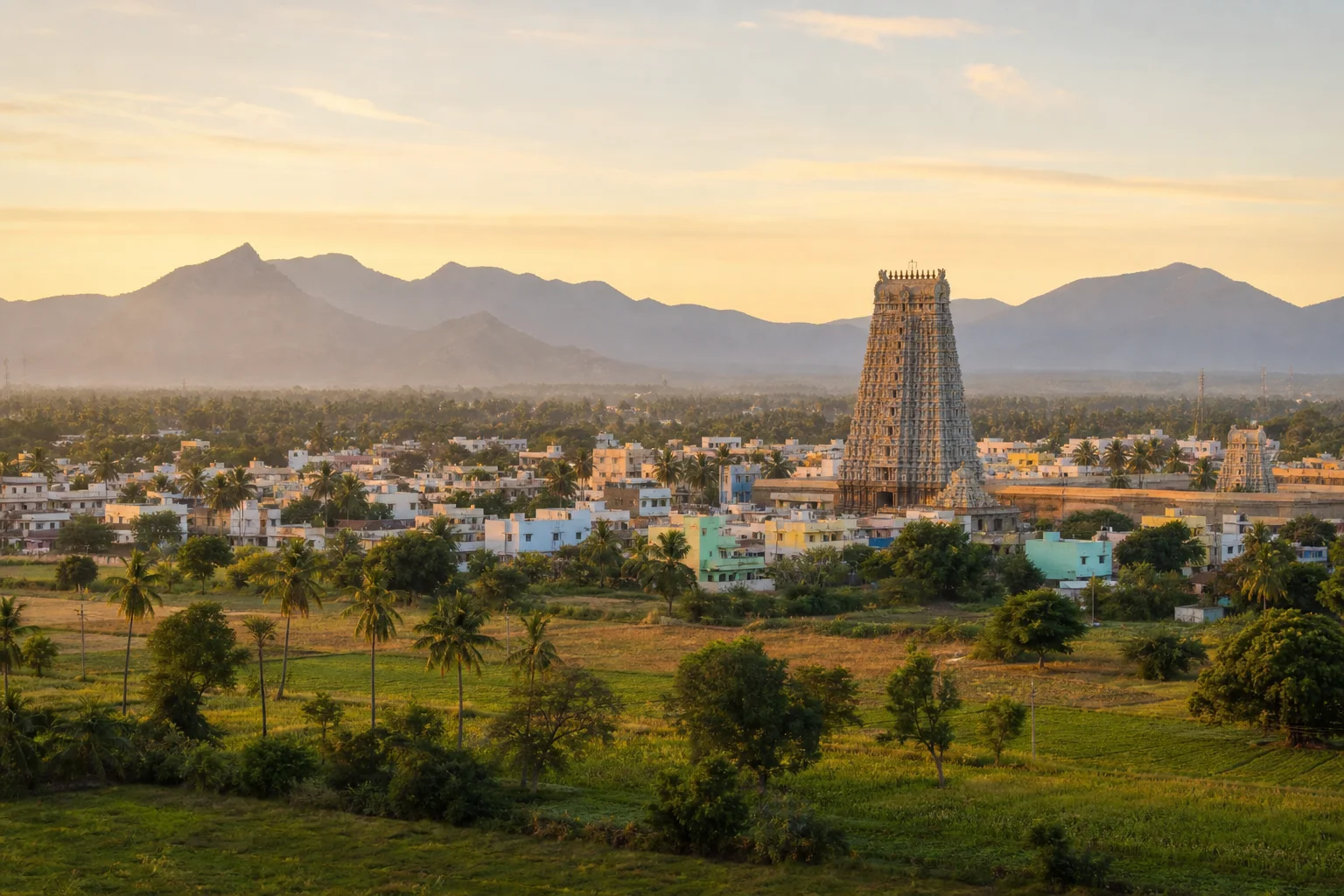
Virudhunagar was a commercial and politically active town in the southern Madras Presidency. Congress networks, merchants, workers, caste associations and print connected it to wider movements. Kamaraj's local organizing skill developed within these collective environments. Present Virudhunagar District did not have all its current boundaries during his childhood, so the district guide provides current geography rather than a colonial map.
Life and context
Freedom Movement Organization
Kamaraj joined Congress campaigns, participated in civil disobedience and spent periods in prison under colonial rule. The secure historical significance lies in sustained organizational work: recruiting, travelling, maintaining local committees and linking provincial leaders to district workers. Arrest totals and colorful underground stories vary across commemorative accounts and should be checked against prison, police or party records before being treated as exact. [4]
His rise also reflects the changing social composition of Congress politics in the Tamil region. Leadership was not simply bestowed by national figures; it required competition, alliances and constituency work inside a diverse provincial organization. Presenting him only as a loyal follower hides the strategic ability that later helped him navigate cabinet formation and party conflict.
Life and context
Chief Minister of Madras State
Kamaraj became Chief Minister on 13 April 1954 and served until 2 October 1963. The jurisdiction was Madras State, whose boundaries changed through reorganization and whose official name became Tamil Nadu only in 1969. Using Tamil Nadu informally can aid modern readers, but the period name matters for constitutional accuracy. [1]
His governments dealt with irrigation, electricity, industry, transport, rural development and education. It is misleading to convert every project opened during nine years into a personal accomplishment. Cabinet colleagues, civil servants, engineers, legislators, local institutions and central policy all mattered. A sound assessment asks what priorities and administrative coalitions his leadership sustained rather than counting commemorative lists without documentary support. [4]
Life and context
School Expansion and Access
Education became the defining public memory of Kamaraj's premiership. Accounts associate the period with opening schools, improving rural access and encouraging enrolment. Exact totals vary with definitions of primary schools, upgraded institutions, years and administrative sources, so this guide does not repeat a single dramatic number. The durable claim is that school access received sustained political priority. [4]
Access depended on more than buildings. Teachers, roads, household income, caste discrimination, gender, meals, materials and language shaped attendance and completion. Policies should therefore be understood as a system rather than one leader's gift. Later governments expanded and altered education programmes; recognizing continuity does not diminish the political choice to prioritize schooling during Kamaraj's tenure.
Life and context
The School Meal Programme: What Changed
Kamaraj did not invent school meals in Madras. The Government of India's PM POSHAN history records a programme for disadvantaged children in Madras Municipal Corporation in 1925. A government-hosted diagnostic study describes a statewide scheme from 1956 under Kamaraj, initially connected with Adi Dravida community schools. These are different milestones and should not be merged. [2][3]
The programme's aims connected hunger, enrolment and attendance, while implementation depended on local contribution and administrative capacity. Later Tamil Nadu governments, notably under M.G. Ramachandran, expanded the nutritious meal system further. The careful formulation is that Kamaraj's government developed and extended a state-level programme, not that one anecdotal encounter created school feeding from nothing. [3]
Life and context
Infrastructure, Industry, and the Limits of Credit
Public accounts connect the Kamaraj years with dams, irrigation, electrification and industrial projects. Some projects began earlier, continued later or involved Union government institutions. Dates of sanction, construction and opening are not interchangeable. Rather than attribute a long infrastructure list to one person, readers should use project records to identify which government approved, funded, built and commissioned each scheme. [4]
The larger political point is that his cabinet pursued development across rural and industrial sectors while expanding public services. Effects were uneven across regions and social groups. Land, displacement, labor and environmental consequences also deserve attention. A leader profile can identify policy direction, but district or project histories are better places to assess a dam, factory or irrigation system in detail.
Life and context
The Kamaraj Plan and Congress Presidency
In 1963 Kamaraj left the chief ministership under a proposal that senior Congress office-holders resign government positions to work for the party. The initiative became known as the Kamaraj Plan. It emerged from concern about party organization after electoral and policy pressures, but historians and political actors have interpreted its motives differently. [5]
As Congress president, Kamaraj participated in the leadership processes that resulted in Lal Bahadur Shastri becoming prime minister after Nehru's death and Indira Gandhi after Shastri's death. The familiar kingmaker label indicates influence, not unilateral appointment. Members of Parliament, party committees, regional leaders and competing candidates shaped both decisions. [1][5]
Life and context
Congress Split and Later Parliamentary Life
Relations between Kamaraj and Prime Minister Indira Gandhi deteriorated as Congress divisions deepened. The party split in 1969, with Kamaraj associated with the organization group commonly called Congress (O). This was a conflict over leadership, organization, policy and control, not a simple contest between virtue and ambition. [1]
Kamaraj returned to Parliament through a 1969 by-election and remained active until his death in 1975. Electoral defeat in the 1967 state election and later national office show that political careers can move between levels. His influence declined in the transformed party system, but defeat does not erase earlier governance and earlier popularity does not settle later political arguments.
Life and context
Legacy and Public Memory
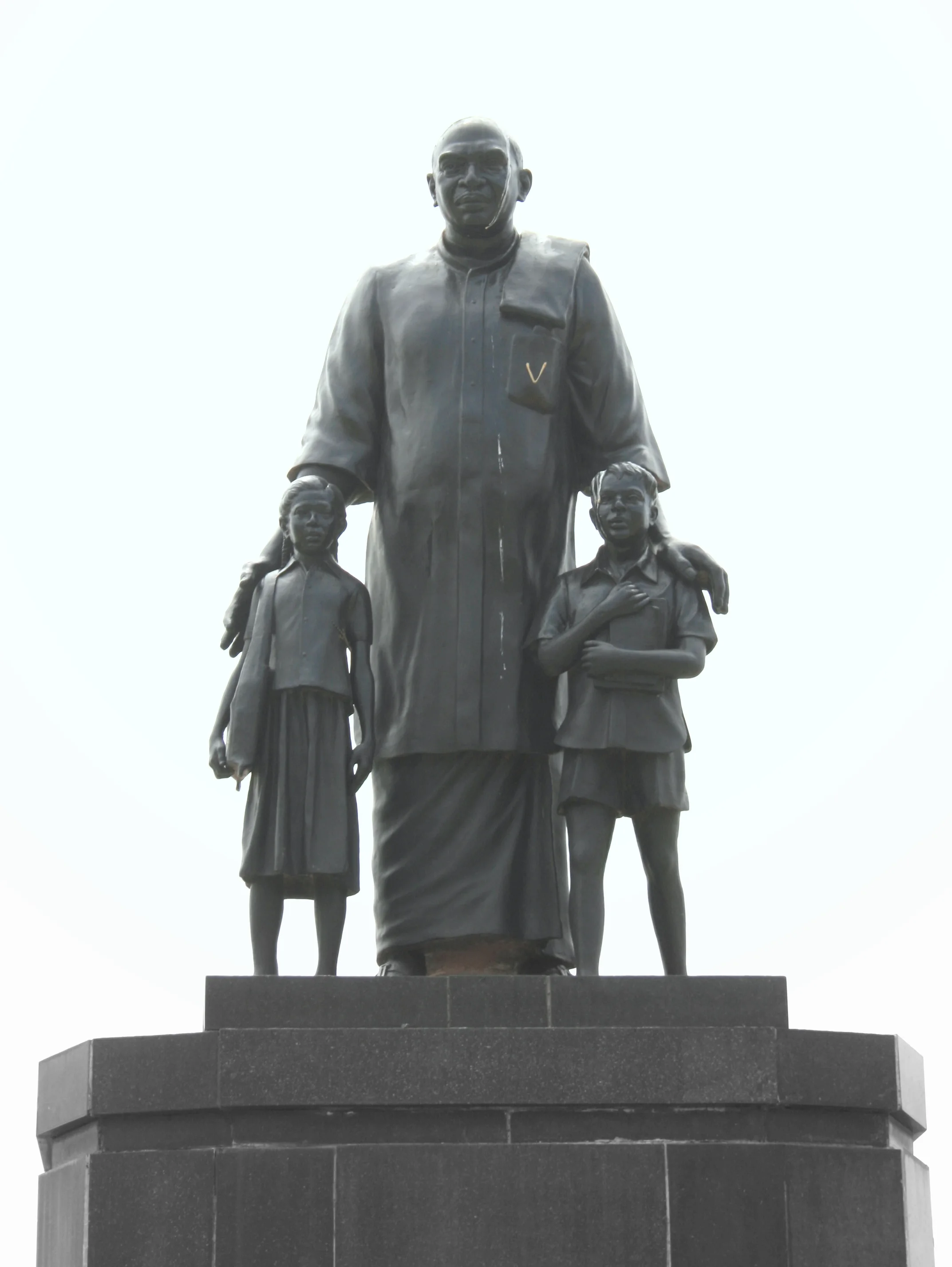
Kamaraj is commemorated through institutions, statues, transport facilities and annual observances, especially in Virudhunagar and Chennai. The strongest evidence for his education legacy comes from policy chronology rather than moral anecdotes about possessions or chance encounters. Official district pages preserve such stories as public memory, but this profile does not use them as proof of administrative causation. [1]
Responsible evaluation recognizes priority given to school access and meal provision while asking who implemented programmes and how outcomes varied. It also places him within Congress structures, caste and regional politics, constitutional government and post-Nehru succession. This wider view makes the profile more useful than either uncritical praise or a list of offices.
Images with explicit provenance
Places and historical context
Chronology
Timeline
- 1903
Born in Virudhunagar on 15 July. [1]
- 1920s–1940s
Worked in Congress organization and participated in anti-colonial campaigns.
- 1954
Became Chief Minister of Madras State on 13 April.
- 1956
State-level school meal expansion is associated with his government. [3]
- 1963
Left government under the Kamaraj Plan and became Congress president.
- 1964 and 1966
Played an influential role in Congress leadership transitions.
- 1969
The Congress split; he was associated with Congress (O).
- 1975
Died on 2 October. [1]
Keep exploring
Places, periods, and connected guides
Places
History and planning
Questions
Frequently asked questions
Did Kamaraj invent the midday meal scheme?
No. Madras Municipal Corporation had a programme by 1925. Kamaraj's government is associated with statewide development from 1956; later governments expanded it further.
Was Kamaraj Chief Minister of Tamil Nadu?
He led Madras State from 1954 to 1963. The state was officially renamed Tamil Nadu in 1969, although modern summaries often use the current name.
What was the Kamaraj Plan?
It was a 1963 Congress initiative under which senior office-holders were asked to leave government roles and strengthen party organization.
Did he personally select two prime ministers?
He was highly influential in Congress negotiations, but parliamentary and party decisions involved many leaders. The word kingmaker is shorthand, not a constitutional description.
Why avoid exact school totals?
Published totals vary by year and by whether they count new, reopened or upgraded schools. A precise figure needs a matching administrative series.
Editorial trust
Sources & further reading
- Eminent Personalities: Kumaraswami KamarajVirudhunagar District, Government of Tamil Nadu · Official district biographyAccessed 10 August 2026
- History of the Mid Day Meal ProgrammeMinistry of Education, Government of India · Official programme historyAccessed 10 August 2026
- Diagnostic Analysis of the Mid Day Meal SchemeMinistry of Education, Government of India · Government-hosted research reportAccessed 10 August 2026
- Administrative History of Tamil NaduManonmaniam Sundaranar University · University study materialAccessed 10 August 2026
- In a Congress crisis, recalling K. KamarajThe Indian Express · Historical explainerAccessed 10 August 2026
- Parliamentary biographical recordsParliament of India · Official archiveAccessed 10 August 2026