Public Leaders / Modern History · Poets & Writers
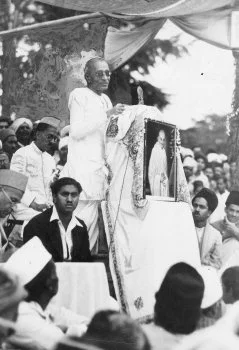
C. Rajagopalachari
சி. இராஜகோபாலாச்சாரி
10 December 1878 – 25 December 1972
C. Rajagopalachari moved between law, anti-colonial politics, constitutional office, state government, literature and opposition politics. His career includes the distinction of becoming independent India's only Indian Governor-General as well as policies and arguments that remain sharply debated.
Editorial status: Published · Reviewed 10 August 2026- Born
- 10 December 1878 at Thorapalli
- Died
- 25 December 1972
- Profession
- Lawyer, politician, administrator and writer
- Governor-General
- 21 June 1948 to 26 January 1950 [3]
- Madras government
- Premier, then later Chief Minister in separate terms
- Later politics
- Founder of the Swatantra Party in 1959
Life and context
Who C. Rajagopalachari Was
Chakravarti Rajagopalachari, commonly called Rajaji, lived from 1878 to 1972. He trained in law, entered nationalist politics, led the Madras Presidency government, held high office during the transfer of power, served as the last Governor-General of India, returned as Chief Minister of Madras State, and later organized opposition to Congress economic policy. His long career cannot be reduced to one constitutional distinction. [1][4]
Rajagopalachari was also a prolific Tamil and English writer, translator and newspaper commentator. Public memory often celebrates intellectual independence, yet his record contains policies that drew serious resistance, especially in education and language politics. This profile separates official chronology from interpretation and treats later praise, partisan criticism and Rajaji's own writings as different kinds of evidence. [2]
Life and context
Thorapalli, Education, and Law
Rajagopalachari was born at Thorapalli in the Salem region of the Madras Presidency, a place now located in Krishnagiri District. Modern district labels should not be projected backward without explanation. He studied in Bangalore and Madras, qualified in law, and established a legal practice at Salem. Professional success connected him to municipal and public work before nationalist organization became his principal occupation. [4]
His legal training shaped a style of argument that remained visible in administration and writing, but biography should not turn education into destiny. The wider setting included colonial courts, municipal institutions, caste associations, print debate and the changing Indian National Congress. Rajagopalachari's choices emerged from this environment and from relationships with Gandhi and other leaders, not simply from individual temperament.
Life and context
The National Movement and Gandhi
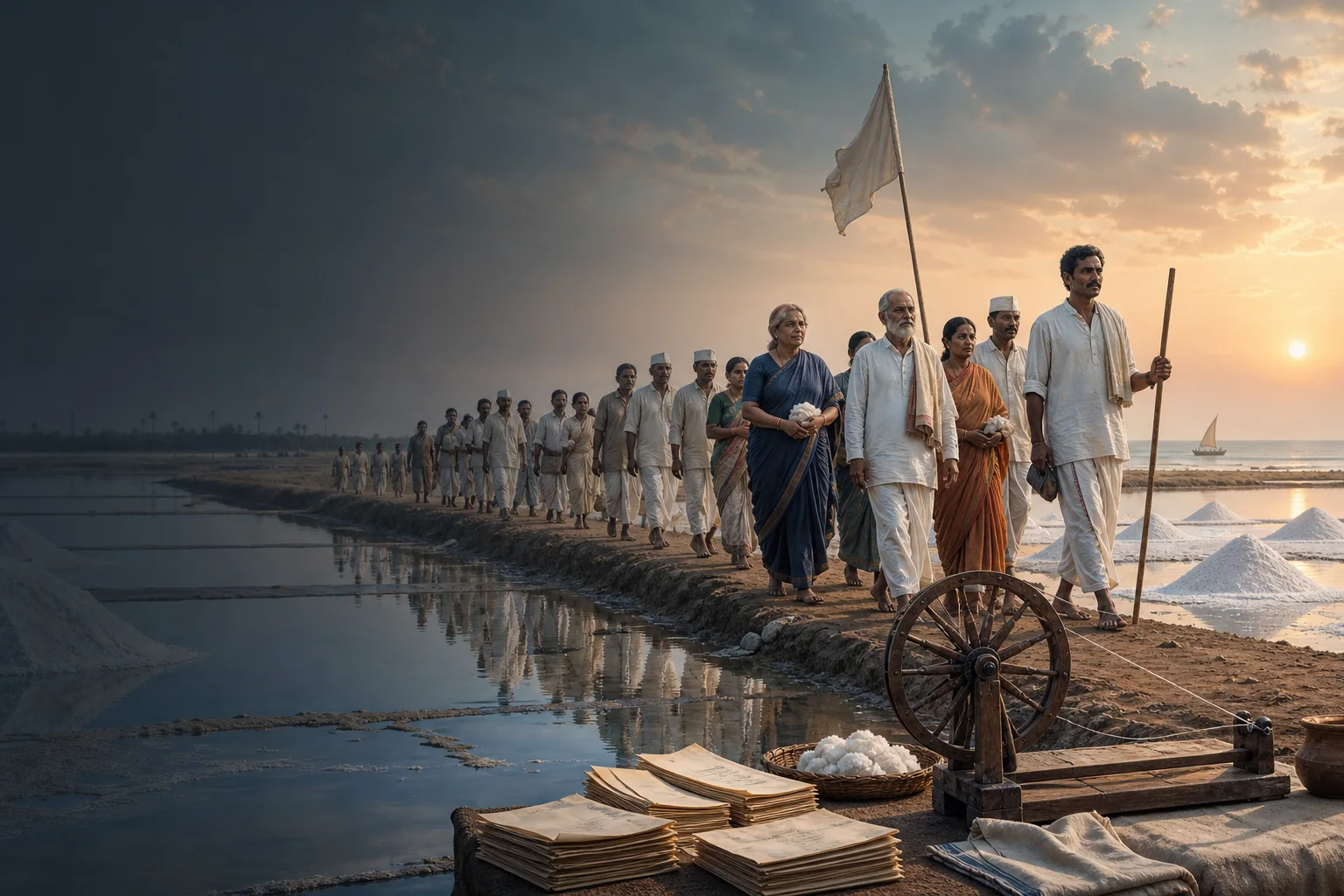
Rajagopalachari became closely associated with Gandhi and participated in non-cooperation, civil disobedience and Congress organization. In 1930 he led a salt march from Tiruchirappalli toward Vedaranyam, adapting the salt-law protest to the Tamil coast. The march involved local organizers and participants across its route; it should not be narrated as a solitary act. Gandhi Heritage Portal materials and private-paper collections provide routes to primary evidence. [5][2]
Closeness to Gandhi did not eliminate disagreement. Rajagopalachari frequently advocated negotiation or compromise when colleagues preferred continued confrontation, including during the Second World War. Labels such as moderate can describe a tactic but obscure the risks, calculations and changing context behind it. His proposals should be judged through their exact text, date and political audience, not through retrospective loyalty tests.
Life and context
Premier of the Madras Presidency
After the 1937 provincial elections under the Government of India Act of 1935, Rajagopalachari headed the Congress ministry in the Madras Presidency. The office was commonly styled Premier, not Chief Minister in the later constitutional sense. His government worked within limited provincial autonomy under colonial rule and resigned with other Congress ministries after Britain entered the Second World War without Indian consent. [4]
Policies of this ministry included prohibition measures, debt and administrative initiatives, temple-entry legislation and the introduction of compulsory Hindi in selected schools. Each had a separate history. The Hindi policy provoked a sustained anti-Hindi movement and became part of the political background from which Dravidian mobilization grew. It is not accurate to present the term as either uniformly successful reform or an isolated language lesson.
Life and context
War, Negotiation, and Political Disagreement
During the war years Rajagopalachari broke with dominant Congress strategy and argued for a negotiated route involving recognition of the Muslim League's demand for a plebiscitary process. The proposal often called the C.R. formula was an attempt to create terms for Congress-League agreement. It failed to secure consensus, and its meaning remains tied to debates over partition, representation and the conditions of transfer. [1]
This episode illustrates why a profile must distinguish proposal from outcome. Rajagopalachari did not control the League, Congress or British government, and later partition cannot be assigned to one formula. At the same time, his willingness to advocate an unpopular compromise became an important element of his public reputation. Private papers and contemporary correspondence are more reliable than simplified claims that he predicted every later event. [2]
Life and context
Constitutional Office and the Governor-Generalship
Rajagopalachari joined the interim government's executive leadership, served as Governor of West Bengal, and in June 1948 succeeded Lord Mountbatten as Governor-General. He remained until India became a republic on 26 January 1950. The President of India identifies him as the first and only Indian to hold the office in independent India. The wording matters: earlier governors-general served under colonial government, and the republic then replaced the office with the presidency. [3]
The office was constitutional rather than a continuation of viceregal rule in the old form. Cabinet government and the developing constitutional settlement shaped its powers. Photographs of ceremonies can make the role appear mainly symbolic, but the period included integration, refugee crisis, administrative transition and preparation for the republic. A biographical page should connect his service to those institutions without crediting him personally for every act of government.
Life and context
Chief Minister of Madras State
Rajagopalachari returned to head the Madras State government from 1952 to 1954. His appointment, legislative position and later election to the upper house belong to the constitutional politics of the period rather than a direct modern chief-ministerial election. The government faced food, education, language, land and administrative questions in a state whose borders and political coalitions were changing. [4]
The modified elementary education scheme associated with his ministry became especially controversial. Opponents argued that its shift system and connection between children and family occupations could reinforce caste-linked labor; supporters described resource and vocational aims. The scheme was withdrawn after political resistance and Rajagopalachari's departure. It should be called by its documented policy form rather than repeated through celebratory or condemnatory slogans alone.
Life and context
Writing, Translation, and Public Argument
Rajagopalachari wrote retellings and interpretations of the Ramayana and Mahabharata, essays, stories, political commentary and religious reflection in Tamil and English. These works widened his audience beyond office. A retelling is not a neutral reproduction of an ancient text: selection, prose style, moral framing and translation all belong to authorship and to the twentieth-century publishing world. [1]
His writing also complicates attempts to place him in one ideological box. Religious interpretation existed beside constitutional argument and criticism of centralized economic planning. Readers should distinguish literary reception from historical evidence about earlier periods. They should also avoid reproducing copyrighted passages; this guide describes his output without providing extended text or unverifiable quotations.
Life and context
Swatantra Party and Opposition Politics
In 1959 Rajagopalachari helped found the Swatantra Party, opposing what its leaders saw as excessive state control, licensing and Congress centralization. The party brought landholders, business interests, liberals and regional opponents into an uneven coalition. Calling it simply conservative or liberal can help orientation but cannot describe every candidate, state unit or policy. [2]
The party became a substantial parliamentary opposition before declining in the 1970s. Rajagopalachari's late politics demonstrate that independence-era leaders did not move in one direction after 1947. They disagreed over planning, property, federalism, civil liberty and foreign policy. Evaluation requires electoral evidence and party documents, not the assumption that opposition itself proves foresight or obstruction.
Life and context
Legacy and Responsible Historical Reading
Rajagopalachari is remembered as a nationalist, constitutional office-holder, chief minister, writer and dissenter. These identities overlap but do not cancel controversy over compulsory Hindi, education policy, caste and economic politics. Memorial speeches can document public recognition; they are not sufficient for judging contested policy. The PMML collections and selected-works project make his correspondence and speeches available for closer study. [1][2]
A responsible reading compares his own texts with cabinet records, legislative debates, movement criticism and scholarship. It also keeps present geography clear: Thorapalli is now in Krishnagiri District, Salem was his legal and political base, and Delhi and Kolkata relate to national offices. No one place should be marketed as a complete explanation of a career spanning the Madras Presidency and the Indian Union.
Images with explicit provenance
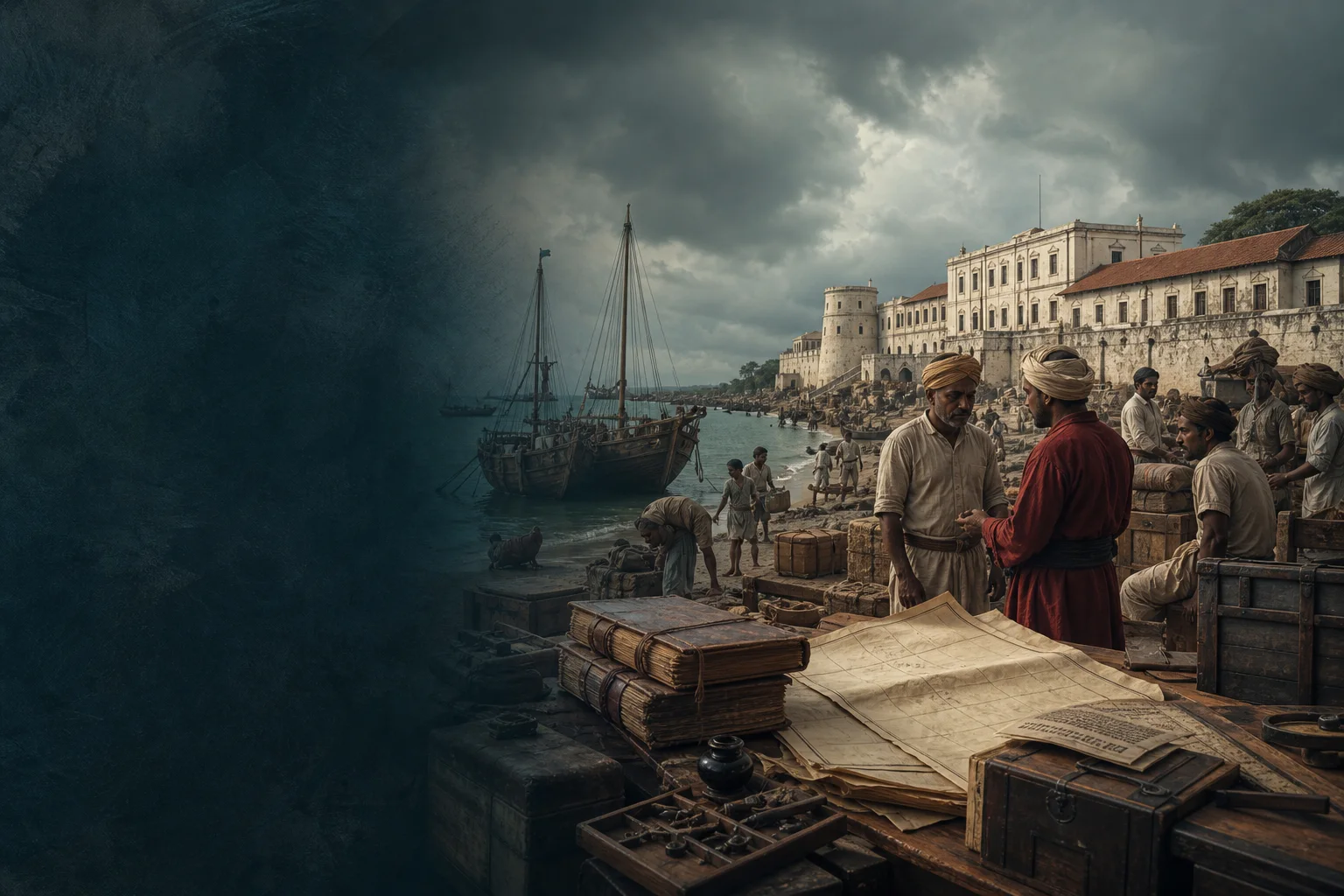
Places and historical context
Chronology
Timeline
- 1878
Born at Thorapalli on 10 December.
- 1930
Led the Vedaranyam salt march from Tiruchirappalli toward the coast.
- 1937–1939
Served as Premier of the Madras Presidency.
- 1947–1948
Served as Governor of West Bengal.
- 1948–1950
Served as Governor-General of India. [3]
- 1952–1954
Served as Chief Minister of Madras State.
- 1959
Helped found the Swatantra Party.
- 1972
Died on 25 December.
Keep exploring
Places, periods, and connected guides
Places
History
Questions
Frequently asked questions
Was Rajagopalachari India's first Governor-General?
He was independent India's first and only Indian Governor-General. Lord Mountbatten preceded him after independence, while earlier holders served the colonial state.
Why is he called Rajaji?
Rajaji is the widely used respectful short form of Rajagopalachari. Search records also use C.R. and Chakravarti Rajagopalachari.
Was he always in agreement with Congress?
No. He repeatedly disagreed over wartime strategy and negotiation, and later helped establish the Swatantra Party in opposition to Congress policy.
Why was his education policy disputed?
Opponents feared that linking part of a school day to family occupations would reproduce caste-linked work and inequality. Supporters emphasized scheduling and vocational aims. The political conflict and withdrawal are essential context.
Are his retellings primary sources for ancient India?
No. They are important twentieth-century literary works and interpretations, not direct evidence for the periods represented in epics.
Editorial trust
Sources & further reading
- Selected Works of C. RajagopalachariPrime Ministers Museum & Library · National archival research projectAccessed 10 August 2026
- List of the Papers of C. RajagopalachariPrime Ministers Museum & Library · Archival finding aidAccessed 10 August 2026
- President of India unveils bust of Chakravarti RajagopalachariPresident of India · Official recordAccessed 10 August 2026
- Parliament of India: Who's Who, 1951Parliament of India · Official biographical referenceAccessed 10 August 2026
- Gandhi Heritage PortalMinistry of Culture, Government of India · Digital primary-source archiveAccessed 10 August 2026
- C. Rajagopalachari private papersPrime Ministers Museum & Library · Archival catalogueAccessed 10 August 2026