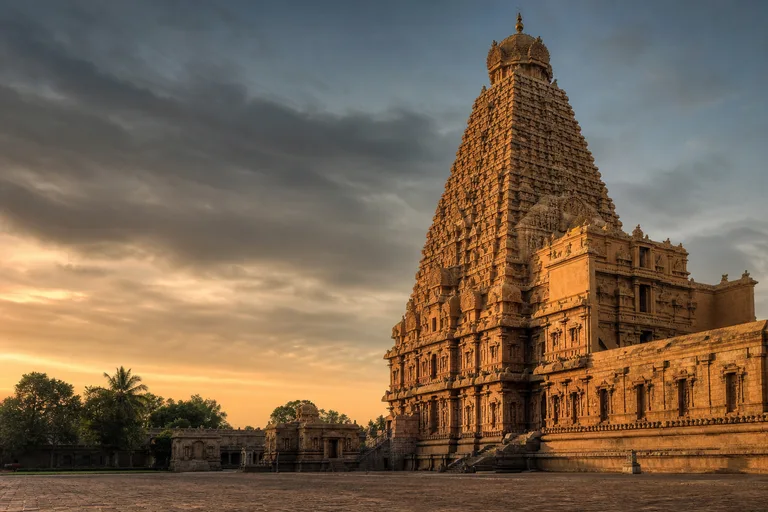
Great Living Chola Temple
Brihadisvara Temple, Thanjavur
Brihadisvara is a living Shaiva temple and an exceptionally well documented statement of Chola kingship, ritual organization, craft, and monumental stone construction. Rajaraja I's foundation was consecrated in the early 11th century; its inscriptions, soaring vimana, axial plan, sculpture, painting layers, and later additions require evidence to be read together rather than compressed into one origin story.[1]
Significance
Why this temple matters
UNESCO identifies Thanjavur as the first great example in the serial Great Living Chola Temples property and as a major achievement of the dravida temple form.[1]
The temple matters equally as an archive. Long inscriptions record gifts, personnel, ritual provisions, objects, and administrative arrangements, opening unusually detailed questions about the institution that sustained the monument.[1][3]
Religious tradition
Sacred meaning and living practice
This section reports tradition as tradition; it does not substitute devotional chronology for material history.
Worship of Shiva is continuous here, and the protected monument remains a religious place rather than a static exhibit. Devotional names, present ritual practice, and sacred interpretation belong to that living history.[1]
Religious tradition and documented chronology answer different questions. This guide preserves devotional meaning without using it to replace inscriptions, architectural sequence, or conservation records.
Documented history
Patronage, construction and change
UNESCO links the foundation to Rajaraja I and places inauguration and consecration in his reign, while acknowledging later interventions within the complex.[1]
The temple's Chola inscriptions are primary records produced within royal and institutional settings. Their detail is powerful, but royal language and the survival of records still require critical reading.[4]
Later dynasties, patrons, worship communities, and conservation authorities altered or maintained parts of the complex. The result visible today is historically layered even though the Chola core remains dominant.[1]
Chronology
A phase-based timeline
Entries describe documented or carefully qualified phases, not an uninterrupted biography of the site.
Foundation and consecration
UNESCO associates construction and consecration with Rajaraja I's regnal years.[1]
Institutional record
Inscriptions document endowments, personnel, objects, and ritual support.[4]
Additions and continued worship
Subsequent interventions became part of a living sacred complex.[1]
World Heritage inscription
The Thanjavur temple entered the World Heritage List; the serial property was later extended.[1]
Architecture and art
Reading form, movement and surface
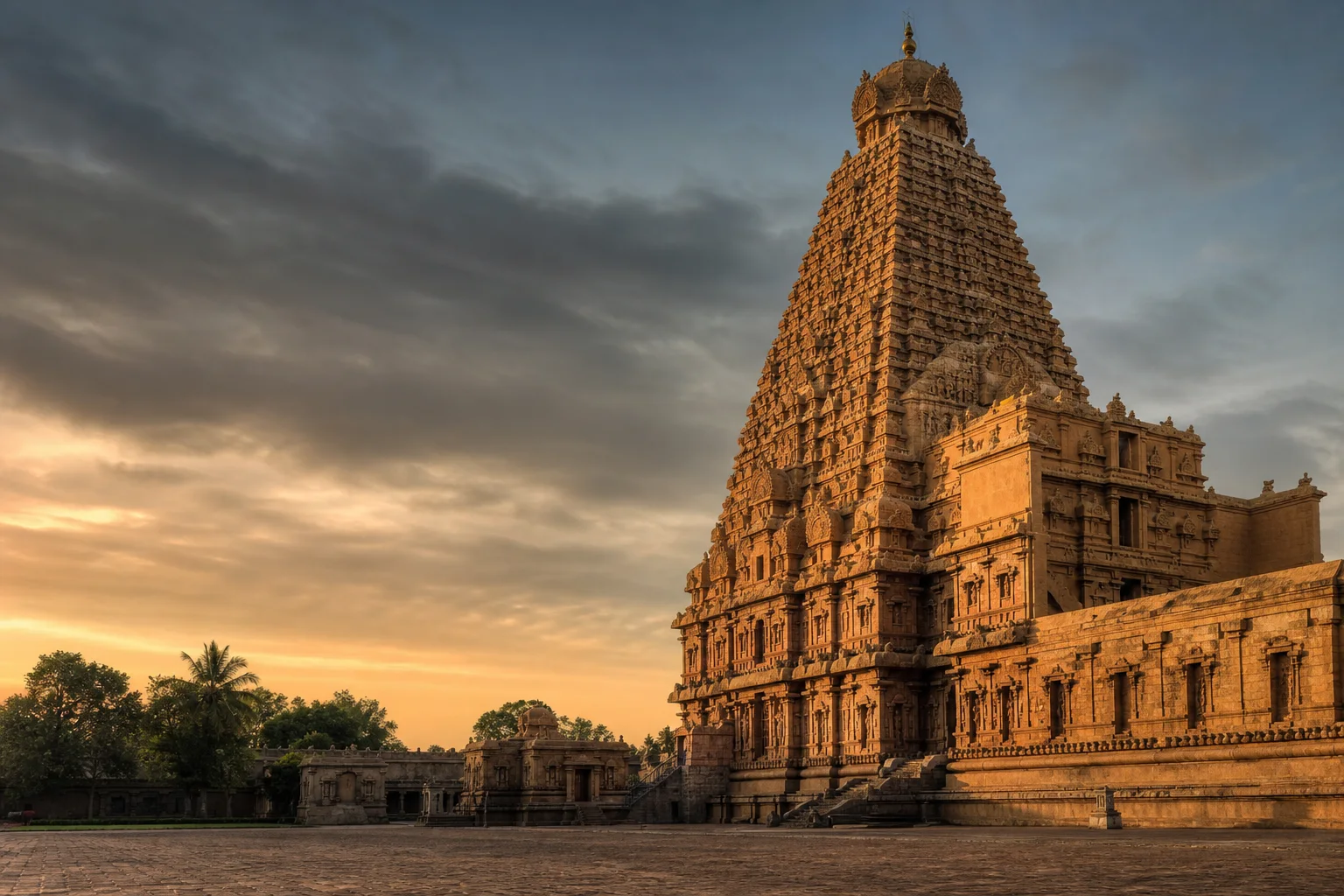
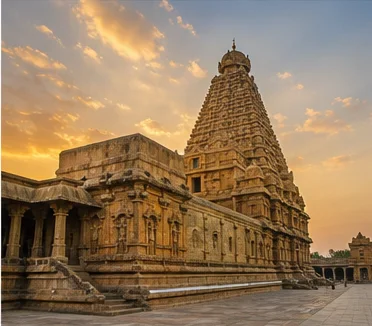
The dominant granite vimana rises above the sanctum in a strongly axial composition. Its controlled massing, enclosure, gateways, subsidiary structures, and sculptural programme should be read through movement across the precinct, not from the tower alone.[1]
Monumental scale did not eliminate fine workmanship. Mouldings, niches, guardians, inscriptions, and interior painting layers shift attention from imperial silhouette to the labor and knowledge embedded in individual surfaces.
Material record
Inscriptions, archaeology and conservation
Inscriptions are integral to the monument rather than detachable captions. They help identify the temple's inscriptional name, patronage, gifts, ritual requirements, and institutional roles, while the building fabric reveals sequence and adaptation.[3][4]
Do not chalk, wet, trace, rub, or touch an inscription to improve visibility. Such actions can damage evidence and are incompatible with responsible monument care.
On-site focus
What to notice
The monumental Chola vimana and axial temple plan
Extensive inscriptional record
Sculpture and surviving painting layers
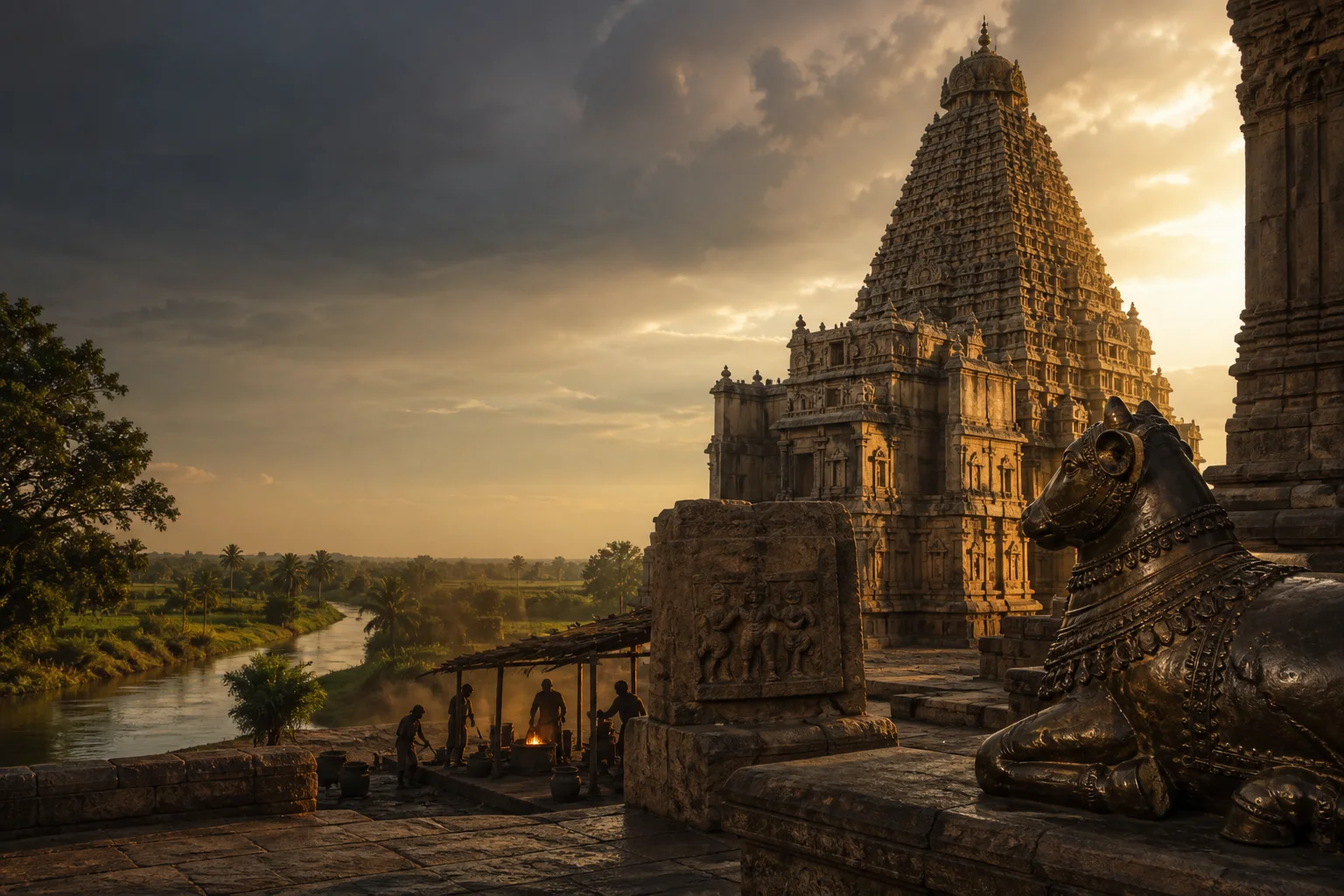
Nandi pavilion and later additions
Continuing worship within a protected monument
Festivals and sacred calendar
Festival dates and ritual schedules vary by religious calendar and temple administration.
Use the official HR&CE channel displayed at the site for confirmed current programmes.
Site-specific reading
How to look closely at Brihadisvara Temple, Thanjavur
This guide uses the building, inscriptions, institutional records and living tradition for this particular place rather than a universal temple-history template.
Begin with The monumental Chola vimana and axial temple plan, then compare it with Extensive inscriptional record. Together they help explain why Brihadisvara Temple, Thanjavur belongs to the historical frame described as Early 11th century CE, with later additions. Do not assume that every visible surface belongs to the same campaign: repair, patronage and continued use can leave distinct layers within one complex.[1]
A second useful focus is Sculpture and surviving painting layers. Read it alongside the site's present status, UNESCO World Heritage component; ASI-protected living temple. That status affects what can be entered, photographed or touched, but it does not by itself date the fabric. The evidence section above identifies what the cited records can support and where a broad attribution is more responsible than an exact year.
Shaiva; living temple remains central to how worshippers understand this place. Sacred accounts are therefore kept visible and labelled as tradition, while construction history is tied to the cited material and institutional record. This distinction allows devotion, architecture and chronology to be understood together without making one stand in for another.
On site, choose two or three questions instead of trying to document everything. Notice how the monumental chola vimana and axial temple plan relates to movement, where extensive inscriptional record sits within the complex, and how light, sound or crowd flow changes around sculpture and surviving painting layers. Record uncertainty in your notes and use the numbered sources below for follow-up research.
Plan your visit
Prepare for Thanjavur, then verify locally
ASI conservation; Tamil Nadu HR&CE temple administration is the responsible authority named for this guide. Changeable details are linked rather than frozen into the page.
Before travelling to Brihadisvara Temple, Thanjavur, confirm opening arrangements, restricted areas, worship or monument access, photography rules and any festival-day changes. Conditions at Thanjavur can differ from another site even when both share the same administrative category.
Check ASI conservation; Tamil Nadu HR&CE temple administrationBuild a focused visit
Give priority to The monumental Chola vimana and axial temple plan and Extensive inscriptional record. If time or access is limited, these provide a more meaningful reading of this site than rushing through every enclosure.
Arrival and orientation
Search for Brihadisvara Temple Thanjavur Tamil Nadu and verify the correct entrance, parking or drop-off point. The map handoff does not claim current travel time, road access or queue length.
Access and effort
UNESCO World Heritage component; ASI-protected living temple can involve site-specific thresholds, surfaces or controlled routes. Ask the authority directly about step-free access, seating or assistance, especially when viewing Sculpture and surviving painting layers is important to the visit.
Photography and care
Rules around Nandi pavilion and later additions may depend on conservation, worship and crowd movement. Follow signs and staff instructions; do not use flash, tripods or drones unless explicitly permitted.
Respect the place in front of you
Brihadisvara Temple, Thanjavur is described here as unesco world heritage component; asi-protected living temple. Let that present role guide behavior: make room for worshippers and local users, keep voices low, avoid touching historic or sacred surfaces, and never turn a restricted route into a shortcut for a photograph.
Map handoff
Thanjavur, Thanjavur
Open a live place-name search for orientation, then confirm the final approach with the responsible authority.
Your visit
Thanjavur visit checklist
Selections are stored only in this browser. No account or personal profile is required.
Regional context
Nearby places to research
These are planning prompts, not clickable destination pages or promises of current access.
Visual orientation
Images with explicit provenance
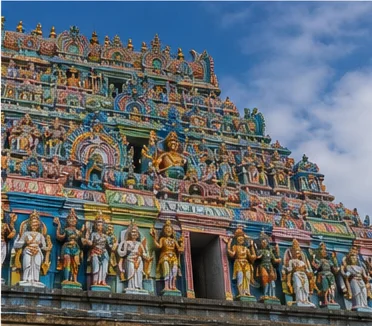
All images below are project-created editorial representations. They are not documentary photographs and should not be used to verify architectural detail.
Questions
Frequently asked questions
What should I notice first at Brihadisvara Temple, Thanjavur?
Begin with The monumental Chola vimana and axial temple plan and Extensive inscriptional record. They connect the site's visual character with its documented historical frame.
Is Brihadisvara Temple, Thanjavur an active place of worship or a protected monument?
Its current status is: UNESCO World Heritage component; ASI-protected living temple. Follow on-site instructions because worship, conservation and visitor access can overlap differently at each site.
How can I verify current access at Thanjavur?
Use the official link for ASI conservation; Tamil Nadu HR&CE temple administration and confirm again close to the visit. This guide does not freeze changing hours, tickets, queues or festival arrangements.
What is the historical frame for Brihadisvara Temple, Thanjavur?
Early 11th century CE, with later additions. The documented history and evidence sections explain the supporting records and keep sacred tradition distinct from material dating.
Editorial trust
Sources and further reading
Historical, religious-tradition and current-information checks were completed separately. Source type and review date remain visible.
- 1Great Living Chola TemplesUNESCO World Heritage CentreOfficial World Heritage record · Reviewed 9 August 2026
- 2Great Living Chola Temples: geographical dataUNESCO World Heritage CentreOfficial World Heritage map record · Reviewed 9 August 2026
- 3EpigraphyTamil Nadu State Department of ArchaeologyOfficial evidence guide · Reviewed 9 August 2026
- 4Inscriptions in Tamil scriptTamil Nadu State Department of ArchaeologyOfficial epigraphy guide · Reviewed 9 August 2026
- 5The Chola DynastyMy Tamil NaduReviewed historical guide · Reviewed 9 August 2026
Historical fact-check: chronology and attribution were checked against the listed heritage, archaeology, inscriptional and institutional records.
Tradition fact-check: devotional claims are attributed to temple or religious tradition and kept separate from independently documented construction history.
Current-information fact-check: the responsible authority link was checked on 9 August 2026; changeable hours, fees and service promises were not frozen into this page.