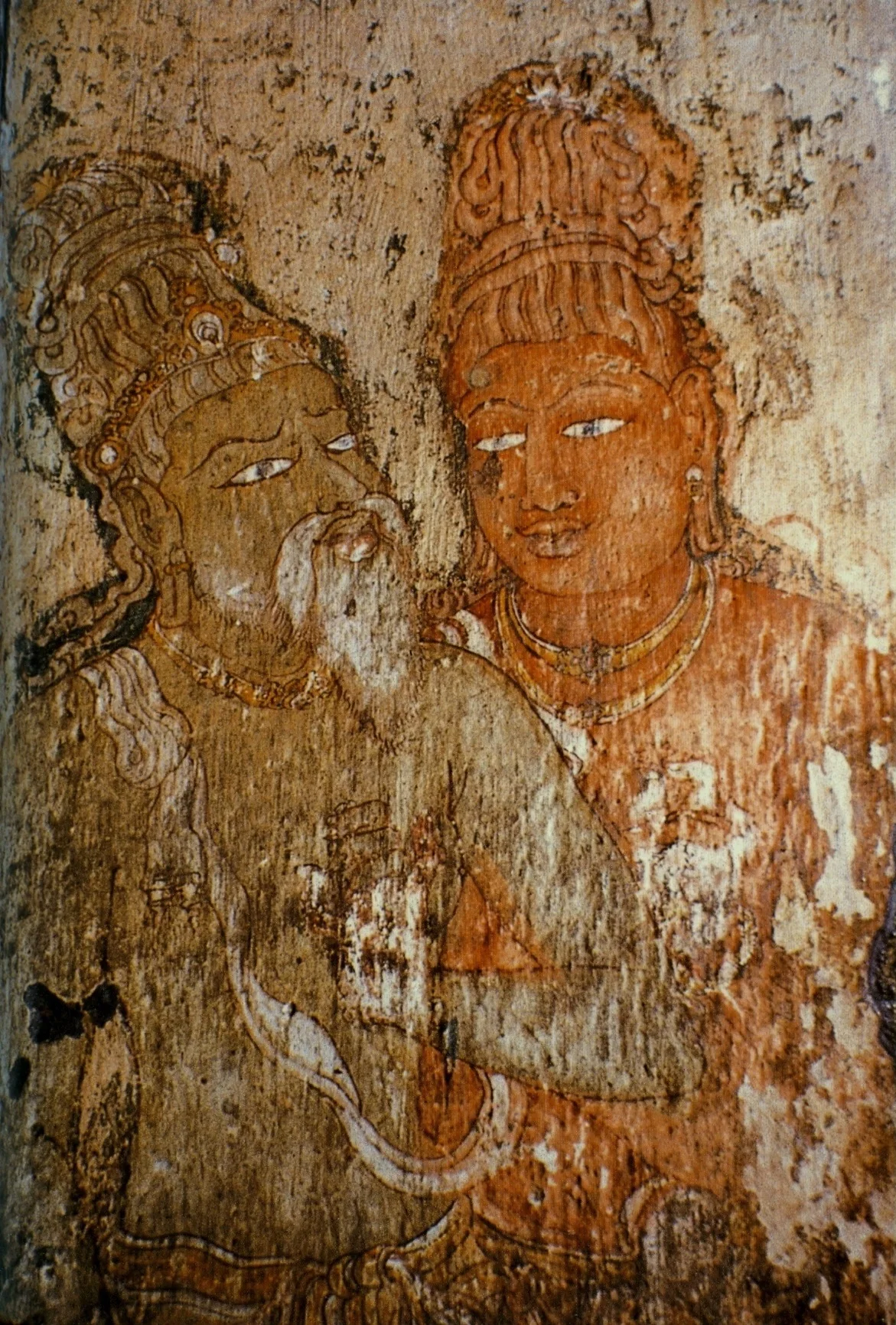
Kings & Queens · Cultural Figures
Rajaraja Chola I
முதலாம் இராஜராஜ சோழன்
Regnal name: Rajarajakesarivarman
Birth date not securely established – 1014 CE
Rajaraja Chola I ruled during a major expansion of Chola power in the late tenth and early eleventh centuries. Inscriptions and the Brihadisvara Temple at Thanjavur make his reign unusually visible, while also requiring readers to distinguish royal claims from the varied realities of rule.
Editorial status: Published · Reviewed 10 August 2026- Period
- Late 10th to early 11th century CE
- Dynasty
- Chola dynasty
- Reign
- Commonly dated c. 985–1014 CE [5]
- Major centre
- Thanjavur in the Kaveri region
- Key evidence
- Stone inscriptions and surviving monuments [2]
- Temple association
- Rajarajesvaram, now Brihadisvara Temple [1]
Life and context
Who Rajaraja Chola I Was
Rajaraja Chola I was a ruler of the medieval Chola dynasty whose reign is commonly placed from about 985 to 1014 CE. The name by which he is now widely known is a royal name; inscriptions also use titles and formulae that changed with regnal context. He succeeded Uttama Chola and was followed by his son Rajendra I, although dynastic succession should be understood through the evidence of inscriptions rather than a modern hereditary constitution. [5][4]
His reign matters because Chola authority expanded across much of southern India and into parts of Sri Lanka, while the Kaveri basin remained a central political and agrarian base. Expansion was not identical everywhere. Campaign, tribute, alliance, occupation, local administration, and durable incorporation were different relationships, and royal praise inscriptions tend to compress those differences into a language of victory. [4]
Rajaraja's visibility also comes from the scale and survival of records associated with temples. These texts name gifts, land, ritual provisions, officers, communities, performers, and objects. They illuminate institutions, but they are not neutral census returns: they survive in selected places and often present transactions through royal or donor perspectives. [2][3]
Life and context
The Chola Political Context
The medieval Cholas had re-established power in the Kaveri region before Rajaraja's accession. Earlier rulers developed a territorial base amid competition with Pandyas, Cheras, Rashtrakutas, and other powers. Rajaraja inherited institutions and conflicts rather than creating a state from nothing. His reign consolidated some of those inheritances and extended military action farther, producing the more expansive political formation visible in eleventh-century records. [5]
The word empire is useful for the scale, hierarchy, and ambition of later Chola rule, but it can mislead if imagined as a uniformly surveyed modern nation-state. Inscriptions use nested territorial units, royal officers, local bodies, temple institutions, and revenue arrangements. Authority could be intense in one zone and negotiated or episodic in another. The site's Chola dynasty guide examines that broader system without making this profile repeat it. [5][2]
Thanjavur was a major royal centre within the Kaveri landscape, not a synonym for every territory claimed by the dynasty. Present-day Thanjavur District is a modern administrative unit. The historical Chola realm crossed many current district and state boundaries, while the agricultural and riverine systems of the delta were maintained by generations of cultivators, local bodies, donors, and rulers.
Life and context
Government, Revenue, and Local Institutions
Chola government joined court authority to provincial divisions, revenue officers, military power, settlements, assemblies, merchant organizations, and temples. Records refer to bodies such as the ur, sabha, nagaram, and nattar, but their composition and powers varied. They should not be described as modern democratic municipalities. Eligibility could be restricted, and an inscription from one settlement cannot be made into a rule for the entire kingdom. [5]
Rajaraja's inscriptions reveal attention to measurement, assessment, gifts, boundaries, and institutional obligations. A famous ruler's name at the head of a record does not mean he personally performed every survey or local transaction. Officials, scribes, assemblies, donors, and service communities made administration work. Durable stone highlights transactions connected to temples while much perishable documentation has disappeared. [4][3]
Temple endowments could support lamps, food offerings, festivals, recitation, music, maintenance, and personnel. They also redirected land, produce, labor, and revenue. Reading them only as cultural generosity hides economic relationships; reading them only as taxation misses religious purpose and local participation. The inscriptions are strongest when treated as records of institutions operating inside a stratified society. [4]
Life and context
Brihadisvara Temple and Thanjavur
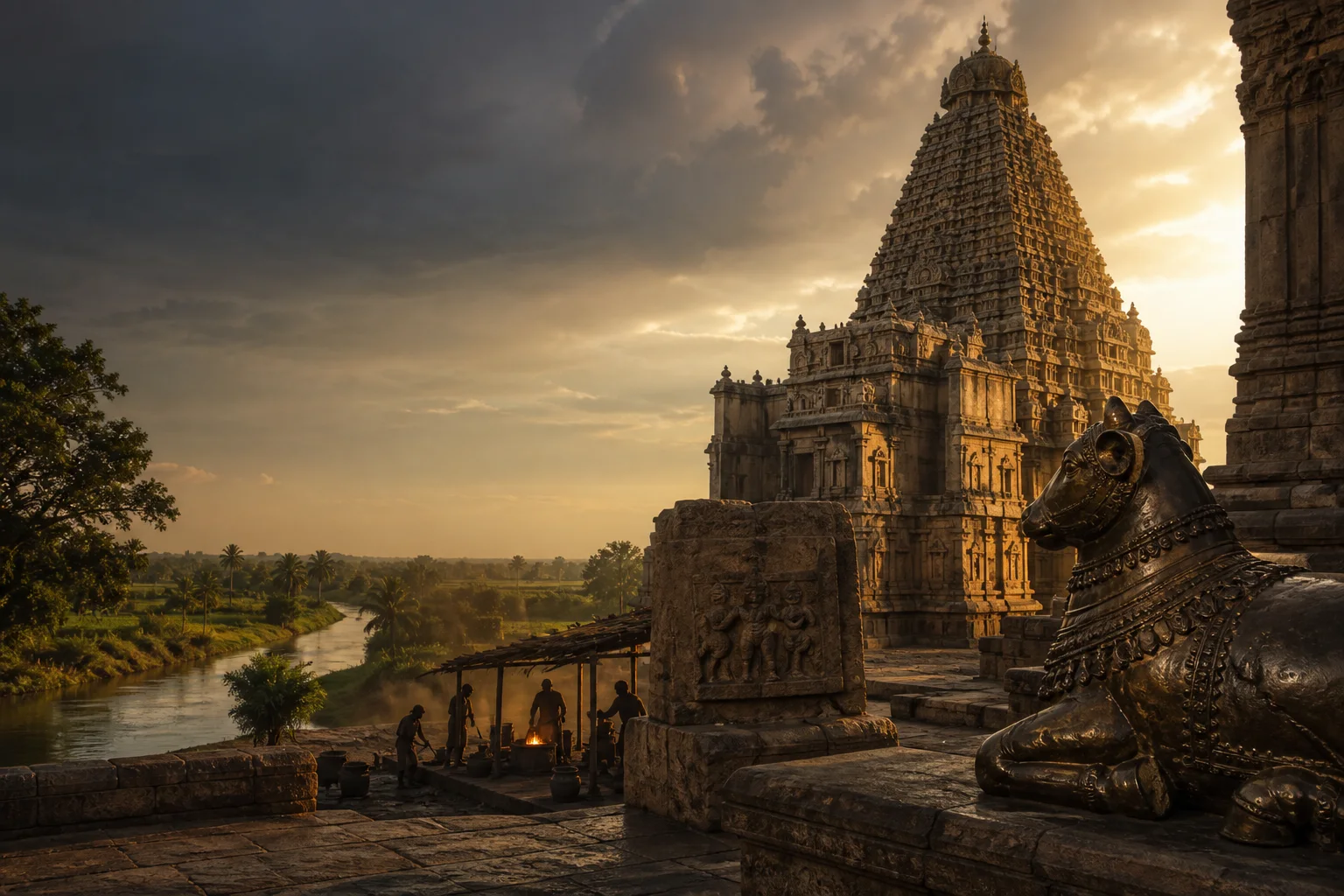
The temple known in inscriptions as Rajarajesvaram and now commonly called Brihadisvara stands at the centre of Rajaraja's architectural legacy. UNESCO describes the Thanjavur temple as the earliest component of the Great Living Chola Temples serial World Heritage property and associates its construction and consecration with Rajaraja's regnal years around 1003–1010. The monument was commissioned and endowed in a royal setting; it was not the work of one person acting alone. [1]
Designers, stone workers, sculptors, metalworkers, painters, accountants, ritual specialists, performers, suppliers, and laborers contributed to the institution recorded there. Later dynasties and communities added, repaired, used, and conserved parts of the complex. Calling it simply a frozen royal monument would erase its continuing status as a living Shiva temple and its layered history. [1][4]
The long inscriptions are as important as the tower. They record donations and institutional arrangements in substantial detail, including named people and objects. Their survival lets historians ask how royal patronage, temple economy, ritual, and administration interacted. Visitors should use the temple guide for architectural and current planning context, and verify present access or worship arrangements with the responsible authorities. [4][2]
Life and context
Campaigns and the Limits of Victory Lists
Royal inscriptions associate Rajaraja's reign with campaigns against neighboring powers and with expansion into parts of southern India and Sri Lanka. These records establish political ambition and military action, but their celebratory form requires comparison with local inscriptions, archaeology, and records from other regions. A place named in a victory formula was not necessarily administered in the same way or for the same duration as the Kaveri core. [4]
The conquest of northern Sri Lankan territory belongs to the reign's major external history, but Sri Lanka is outside current Tamil Nadu and has its own historical record. It should not be reduced to a decorative extension on a Chola map. War involved disruption, appropriation, institutions, and communities, not only dynastic prestige. The degree and duration of control changed across the island and through later reigns.
Maritime capacity supported movement across the Palk Strait and Bay of Bengal, yet Rajaraja should not be credited with permanent command of an entire ocean. Ports, merchants, ships, monsoon knowledge, and coastal powers formed a connected environment. Rajendra's later expedition toward Srivijaya was a distinct event and is treated on his own profile rather than retroactively assigned to his father.
Life and context
Religion, Art, and Patronage
Rajaraja's court is strongly associated with Shaiva patronage, especially at Thanjavur. Inscriptions and surviving art document gifts, ritual arrangements, bronzes, and personnel. Royal support for a major Shaiva institution does not mean every subject followed one religious tradition or that other institutions vanished. Medieval Tamil society included Shaiva, Vaishnava, Jain, Buddhist, local, and courtly practices in changing relationships. [4]
Bronze images associated with the Chola period are now celebrated for technical and aesthetic achievement. Their historical setting was ritual, movement, dressing, music, procession, and temple custody, not a modern museum pedestal. Attribution to a precise reign requires inscription, provenance, style, and technical study; a generic label such as Chola bronze cannot by itself prove that Rajaraja commissioned an object.
The temple record also preserves names of women, performers, officials, and donors, but visibility in an inscription is uneven. Historians must resist turning named personnel into romantic stereotypes. Their work formed part of a complex institutional economy structured by gender, occupation, status, and obligation. [4][3]
Life and context
Succession and Rajendra I
Rajendra I, Rajaraja's son, appears in the political and military world of the later reign and succeeded him in the early eleventh century. Some chronologies discuss a period of association or shared responsibility before Rajaraja's death; the precise interpretation depends on regnal and inscriptional evidence. It is safer to describe documented participation and succession than to impose a modern office such as co-president. [4][5]
Continuity between the reigns is clear in administration, campaigns, royal titles, and monumental patronage, but Rajendra was not merely an extension of his father. His northern campaign, new capital at Gangaikondacholapuram, temple, and 1025 maritime raid belong to his own political program. The two profiles therefore share only essential context and link to each other for comparison.
Succession did not close Rajaraja's historical record. Later inscriptions, temple use, conservation, scholarship, and public memory continued to shape how his reign is understood. Modern admiration should not replace analysis of power, war, labor, inequality, and evidence.
Life and context
Places Associated With Rajaraja Chola I
Thanjavur is the clearest place through which to encounter Rajaraja's reign because Brihadisvara Temple, its inscriptions, and the surrounding historical city connect monument, institution, and landscape. The modern destination and district guides explain current geography; neither should be used as a map of the medieval Chola realm. [1][6]
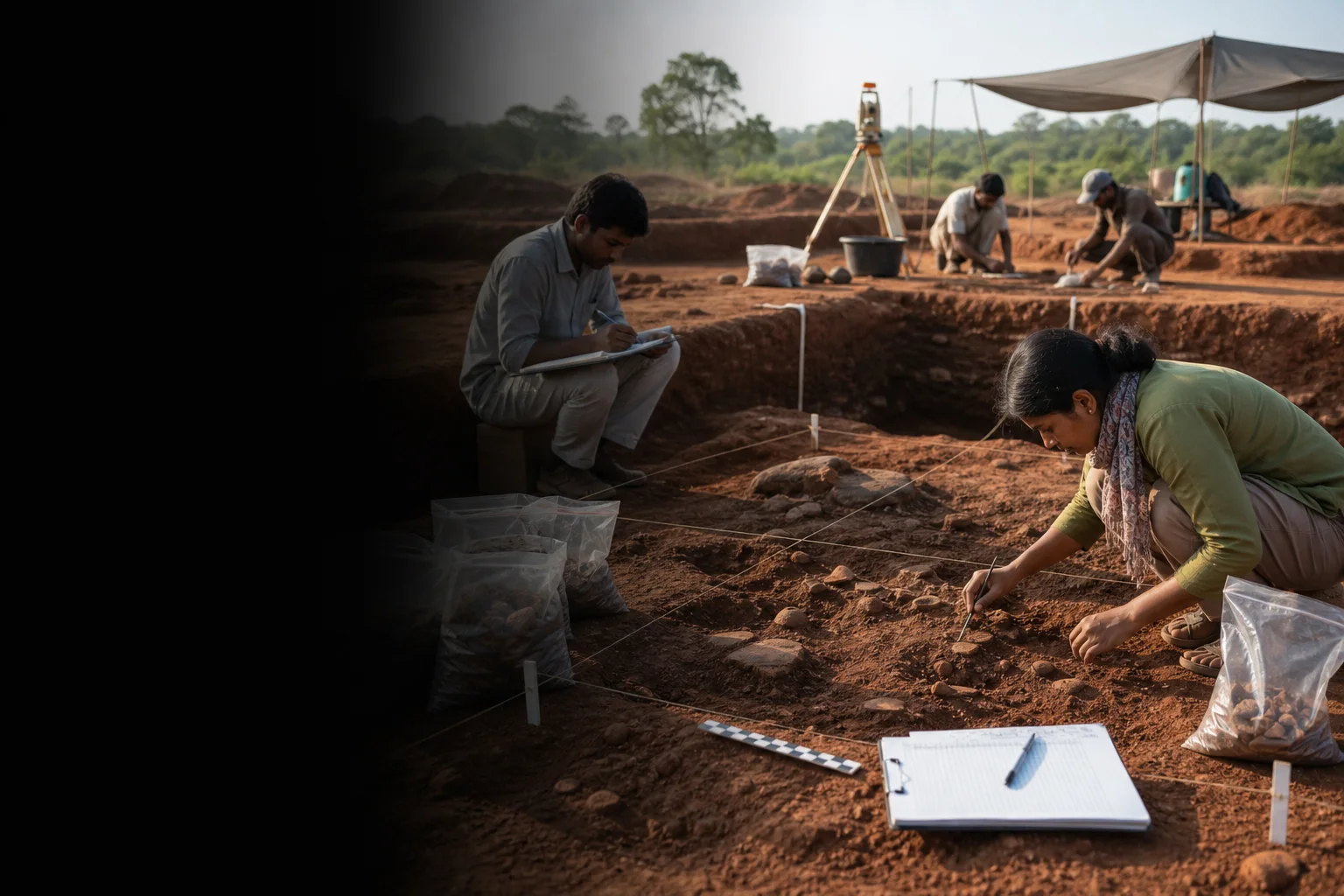
Other temples across Tamil Nadu preserve inscriptions dated to his reign, demonstrating how epigraphy distributes the record beyond one capital. An inscription's presence can document a gift, administrative act, or regnal reference without proving that the ruler personally visited the site. Each record must be read in its own location and institutional context. [2]
Places in Sri Lanka and elsewhere associated with campaigns lie outside current Tamil Nadu. They are historically relevant but are not presented here as Tamil Nadu destinations. This page links only to completed site guides where the relationship is strong and the route already exists.
Life and context
Evidence, Memory, and Legacy
Rajaraja's legacy rests on more than a claim to greatness. His reign is a major field for studying state expansion, inscriptional government, temple institutions, art, and the Kaveri region. The unusually rich record makes detailed questions possible, but it also encourages a royal-centred narrative because rulers and major donors had greater access to durable commemoration. [2][4]
UNESCO recognition concerns the outstanding universal value and continuing integrity of the Great Living Chola Temples property; it is not an endorsement of every modern statement about the king. Conservation and living worship involve ASI protection, temple administration, local communities, and ongoing stewardship. [1]
A responsible assessment holds achievement and consequence together: monumental architecture and administrative records, but also military coercion, hierarchy, and unequal archival visibility. That approach makes the reign more historically meaningful than an unsupported label such as greatest king or golden age.
Images with explicit provenance
Places and historical context
Chronology
Timeline
- c. 985 CE
Rajaraja I's accession is commonly placed around 985 CE; chronology is reconstructed from regnal and inscriptional evidence. [5]
- Late 10th century
Campaigns and administrative consolidation widened Chola authority while the Kaveri region remained a central base. [4]
- c. 1003–1010
UNESCO associates the construction and consecration sequence of Rajarajesvaram at Thanjavur with these regnal years. [1]
- Early 11th century
Rajaraja's inscriptions document extensive temple endowment and institutional arrangements at Thanjavur. [4]
- 1014 CE
Rajaraja's reign ended and Rajendra I succeeded within the Chola dynasty's continuing expansion. [5]
Keep exploring
Places, periods, and connected guides
Associated places
Temples and heritage
Questions
Frequently asked questions
Who was Rajaraja Chola I?
He was a medieval Chola ruler, commonly dated to c. 985–1014 CE, whose reign is documented through inscriptions, campaigns, administration, and monumental patronage. [5]
Why is Rajaraja associated with Thanjavur?
Brihadisvara Temple at Thanjavur, known inscriptionally as Rajarajesvaram, was commissioned and endowed in his reign and preserves a major inscriptional archive. [1][4]
Did Rajaraja build Brihadisvara Temple alone?
No. Royal commissioning and patronage operated through designers, artisans, laborers, officials, donors, and temple communities; later generations also maintained and changed the living complex.
Was the Chola realm the same as modern Thanjavur District?
No. Thanjavur District is a current administrative unit. Medieval Chola authority extended across multiple present-day regions and varied in form and durability.
Are exact details of Rajaraja's birth known?
No securely established exact birth date is used on this page. The date is therefore marked unknown rather than converted into an unsupported schema date.
How should royal victory inscriptions be read?
They are important contemporary evidence, but their celebratory conventions require comparison with local records, archaeology, and scholarship before inferring direct or permanent control.
Editorial trust
Sources & further reading
- Great Living Chola TemplesUNESCO World Heritage Centre · International heritage recordAccessed 10 August 2026
- EpigraphyTamil Nadu State Department of Archaeology · Official epigraphic overviewAccessed 10 August 2026
- Inscriptions in Tamil ScriptTamil Nadu State Department of Archaeology · Official epigraphic resourceAccessed 10 August 2026
- South Indian Inscriptions: Tamil Inscriptions of Rajaraja, Rajendra-Chola, and Others in Rajarajesvara TempleArchaeological Survey of India · Government Press · 1984 · Published inscription corpusAccessed 10 August 2026
- Cholas: Provincial and Local AdministrationUGC e-PG Pathshala / INFLIBNET · University teaching resourceAccessed 10 August 2026
- Cholas HistoryThanjavur District Administration · Official district historyAccessed 10 August 2026