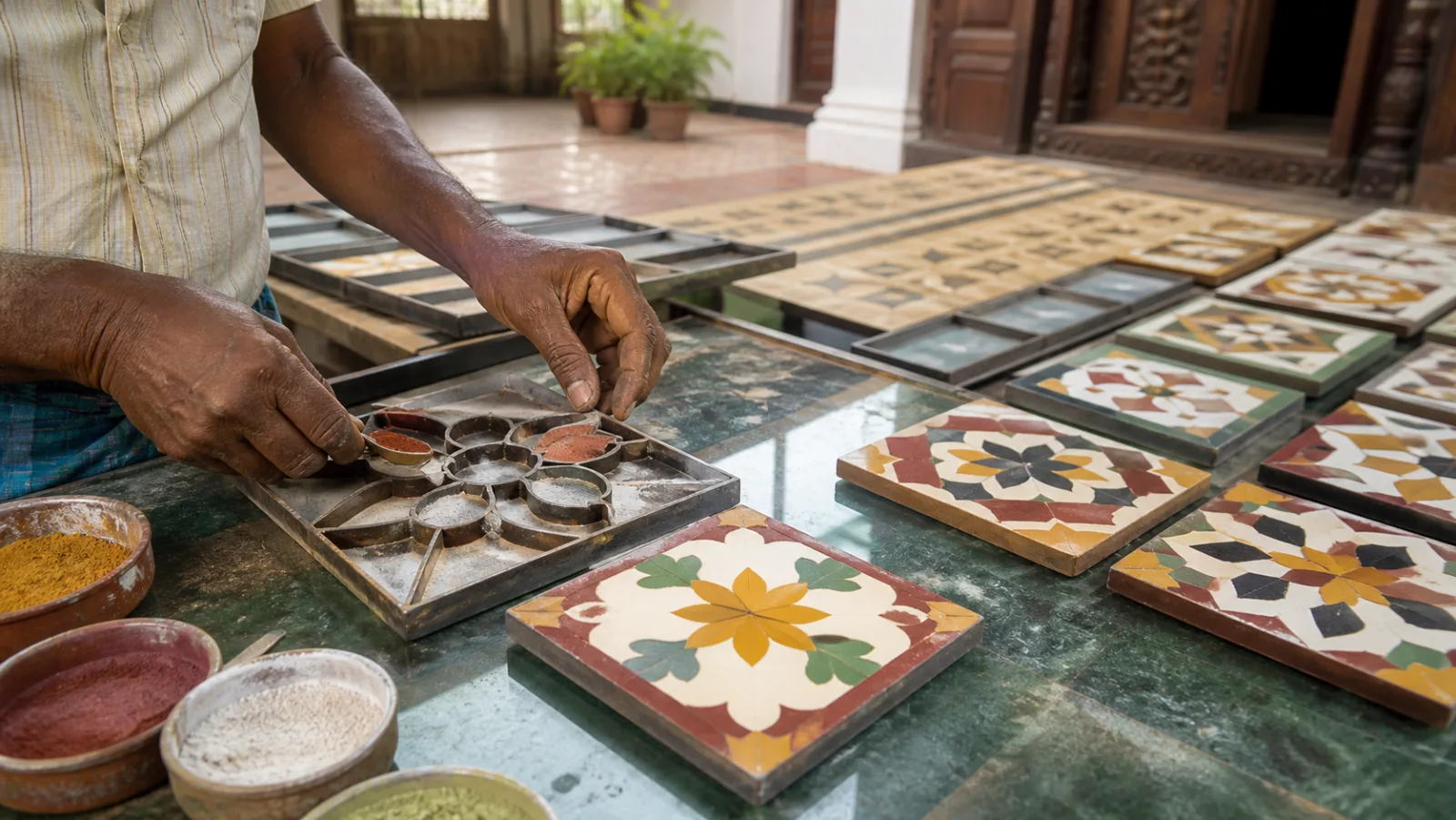
Read the floor as part of a building
Athangudi tiles are closely associated with Chettinad interiors, where patterned floors participate in a larger composition of courtyards, thresholds, columns, plaster, wood and changing light. A tile is not merely a souvenir enlarged across a room; scale, repetition and border design affect how the floor guides movement.
Sivaganga district's places-of-interest material identifies Athangudi and its handmade tiles within the Chettinad region. Karaikudi municipal history also describes locally produced cement tiles. These official accounts establish place and continuing craft, but they do not make every patterned cement tile an Athangudi product.
In a heritage building, look for wear, replacement, repairs and transitions between rooms. Do not assume that every tile was installed when the house was first built. Owners adapt properties, and a visually coherent floor can include later work that has itself acquired history.
Sources for this section: Sivaganga places, Karaikudi history.
Use careful material language
Public descriptions do not always use the same terminology. One Sivaganga district passage calls the tiles terracotta while also describing cement, sand and synthetic oxides; Karaikudi municipal material calls them cement tiles. Because those statements conflict, this guide does not flatten the craft into a fired-clay process.
Ask a maker to describe the material in the specific product being shown. Composition, pigment, surface layer, backing and curing practice can vary by workshop and order. A visual resemblance cannot establish how a tile was made, and a workshop demonstration should not be universalised into the only legitimate method.
Words such as handmade, heritage and traditional require context. Hand tools and manual stages can coexist with purchased materials, modern transport and contemporary colours. Adaptation does not automatically make the craft false, just as an old-looking pattern does not prove age or provenance.
Sources for this section: Sivaganga places, Karaikudi history.
Watch a sequence without pretending it is universal
Workshop accounts commonly describe a patterned face formed with a divider or mould on a smooth surface, coloured material placed into sections, backing layers added and the tile cured before use. The exact mixture, order, drying time and finishing practice belong to the maker and product in front of you.
A useful visit follows relationships: design to divider, pigment to wet layer, pressure to thickness, curing to strength and repeated units to the final floor. Ask which step is most sensitive and how a damaged piece is recognised. Process questions reveal more than asking only how many colours are available.
Do not touch wet work, move curing tiles or enter a production area without invitation. Keep bags and children clear of materials and tools. Photography should be agreed with the maker, especially where an original pattern, customer order or identifiable worker would be recorded.
Sources for this section: Sivaganga places, Chettinad cultural report.
Distinguish Chettinad recognition from inscription
The Chettinad Village Clusters of the Tamil Merchants are included on India's UNESCO World Heritage Tentative List. A Tentative List entry identifies a property a state party may consider for nomination; it is not the same as inscription on the World Heritage List.
UNESCO's description emphasises settlement planning, water management, architecture and the mercantile history of the region. Tiles can help a visitor read interiors and craft continuity, but one material does not represent every village or prove that an individual house falls within a protected boundary.
Avoid advertising a workshop, hotel or product as UNESCO-certified unless an authoritative document supports that exact claim. The careful formulation is that Chettinad village clusters have Tentative List status, while the legal protection, access and conservation condition of a particular property require separate verification.
Sources for this section: Chettinad Tentative List, Chettinad cultural report.
Buy with installation and replacement in mind
Colour and pattern are only the beginning of a purchase. Ask about maker identity, dimensions, thickness, batch variation, curing, intended use, substrate, installation materials, finishing, cleaning and replacement pieces. Record the agreed specification rather than relying on a photograph shared during a conversation.
Transport is part of the design decision. Weight, packing, breakage allowance and delivery handling can materially change the cost and environmental footprint. Obtain professional advice for the destination building, especially where floor level, moisture, structural load or existing heritage fabric creates constraints.
This article lists no vendors, prices or guaranteed lead times. Those are current commercial details, and ranking makers without consistent inspection would be misleading. Compare written information, inspect representative work and budget for skilled installation and a small quantity of matching replacement tiles.
Sources for this section: Sivaganga places, Karaikudi history.
Build a responsible Chettinad craft route
Combine one permitted heritage interior with one workshop visit rather than rushing through many private properties. Confirm appointments and entry rules directly. A mansion used as a home, accommodation or institution has different access conditions, and an open doorway is not blanket consent to enter.
Use Athangudi and Karaikudi as connected but distinct places. Plan the road route with current mapping, allow for heat and workshop schedules, and avoid promising a live demonstration. Travellers with mobility needs should ask about thresholds, uneven floors, workshop surfaces and seating before arrival.
End by documenting provenance: place, maker or organisation, date, material description in their own words and what you personally observed. Keep uncertainty visible. A responsible craft story credits labour, separates evidence from marketing and leaves both the floor and the working space undisturbed.
Sources for this section: Sivaganga places, Chettinad Tentative List.
Sources & Further Reading
These authoritative references support the historical, geographic, or seasonal context in this story. Current conditions and operating details still require a fresh official check.
- Places of Interest · Sivaganga District Administration, Government of Tamil Nadu
- Brief History of Karaikudi Municipality · Karaikudi Municipality, Government of Tamil Nadu
- Chettinad, Village Clusters of the Tamil Merchants · UNESCO World Heritage Centre
- Periodic Report on the Convention on the Diversity of Cultural Expressions · UNESCO
Related Stories
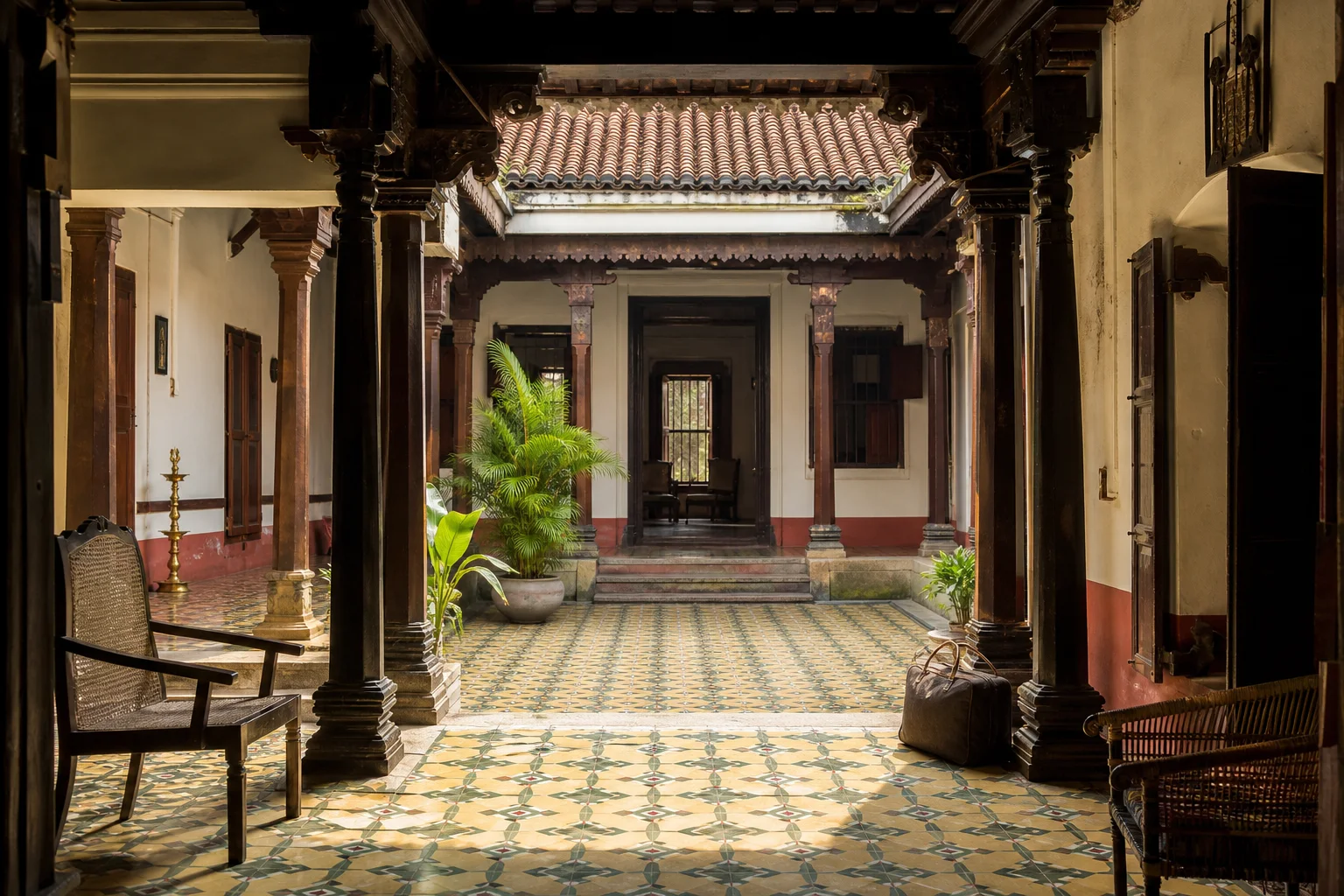
Staying in Chettinad: Reading a Mansion from the Courtyard
How to choose a mansion stay for its architecture, setting and stewardship rather than treating Chettinad as a generic luxury backdrop.
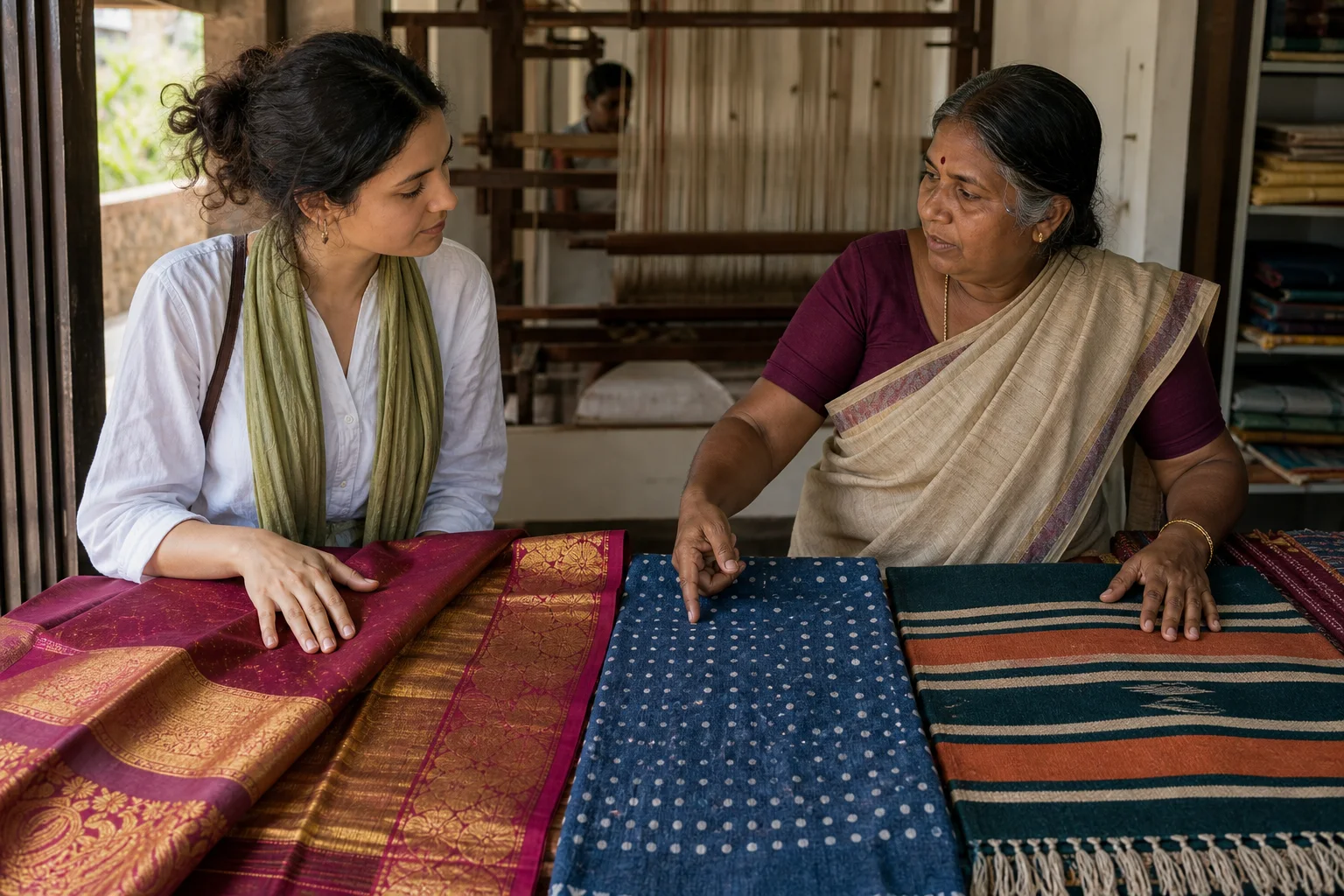
Buying Tamil Handloom: Ask About Fibre, Place and Proof
A practical festival-season guide to asking what a textile is, where it comes from and what a label actually proves before price or colour takes over.

A Food Journey Through Tamil Nadu's Regional Cuisines
Travel across Tamil Nadu through the relationships among region, crop, technique, household memory, migration, worship, and changing city life.
Frequently asked questions
Are Athangudi tiles fired terracotta tiles?
Official descriptions conflict. District material also lists cement, sand and oxides, while Karaikudi municipal material calls them cement tiles. Confirm the specific maker's composition and process.
Are the Chettinad village clusters a UNESCO World Heritage Site?
No. They are on India's UNESCO World Heritage Tentative List, which is not the same as inscription.
Does this guide recommend a particular tile seller?
No. It provides provenance, specification, installation and consent questions so buyers can assess current makers directly.
Editorial attribution
Prepared and reviewed by My Tamil Nadu Editorial Desk. Modified 2 September 2026.