Chettinad is a region, not one mansion street
Chettinad is associated with a network of settlements shaped by the Nattukottai Chettiar or Nagarathar community across parts of today's Sivagangai and Pudukottai districts. Karaikudi is a practical urban base, but the cultural landscape extends through towns and villages including Kanadukathan, Pallathur, Kottaiyur, Athangudi and others. A stay should help you understand that network rather than suggest that one restored property represents all of it.
UNESCO's World Heritage Centre records Chettinad, Village Clusters of the Tamil Merchants on India's Tentative List, submitted in 2014. Tentative List status is not World Heritage inscription. It is useful here because the submission describes settlement grids, water systems, courtyards, materials, ritual use and overseas connections as parts of an interrelated cultural landscape.
A property description that says near Chettinad may still be far from the villages you hope to see. Plot the actual address, not the marketing label, and ask how onward travel works without a private car. Regional identity is cultural and historical; it is not a standard booking radius.
Sources for this section: Chettinad Tentative List.
A courtyard is an environmental and social device
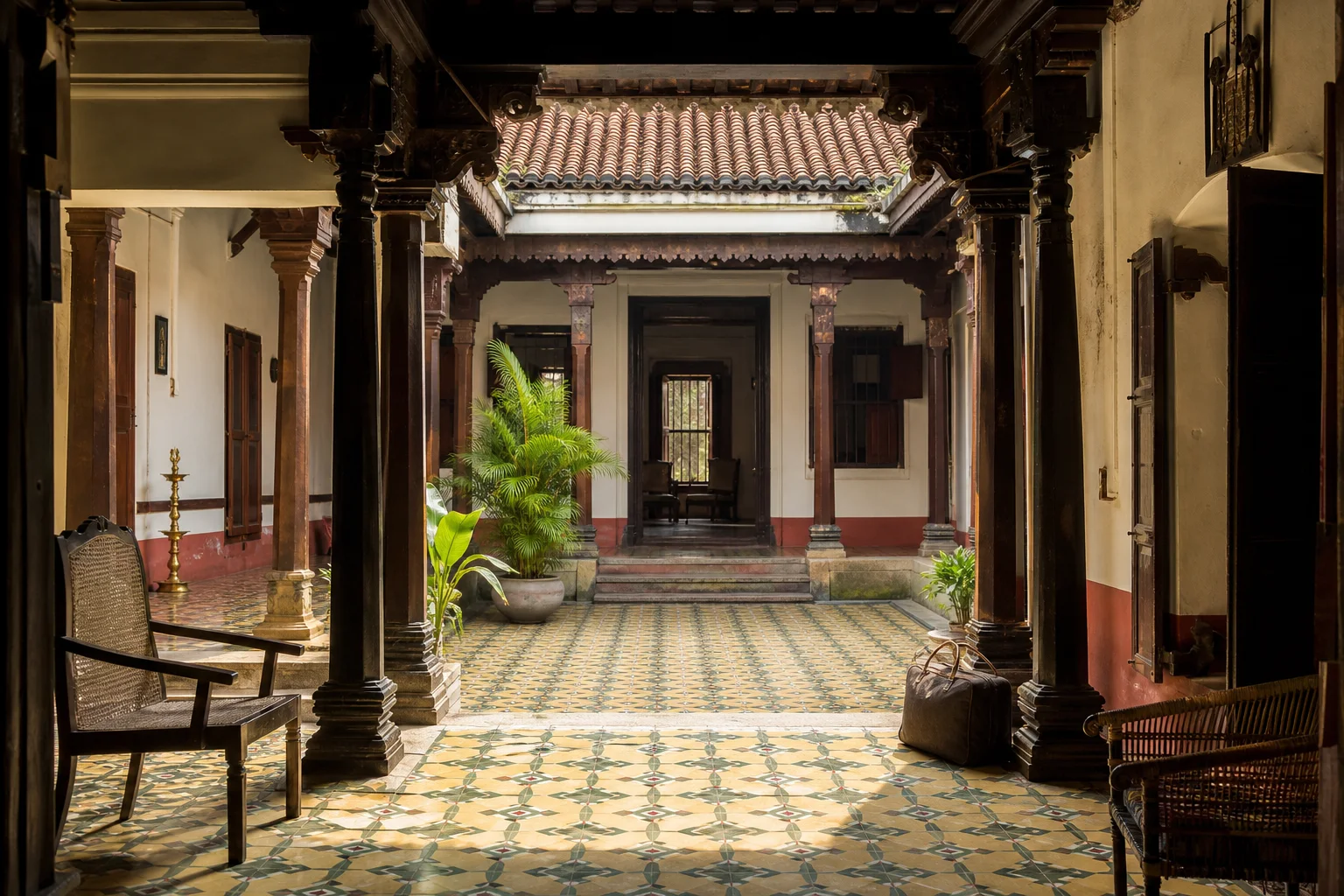
Chettinad mansions often use a long sequence from street entrance through halls and courtyards toward more private and service spaces. The UNESCO Tentative List account notes thick brick walls, lime plaster, layered tile roofs, stone or marble floors and courtyards that support shade, light and air in a hot, semi-arid setting. Imported materials and regional craft were combined rather than copied from one source.
Space also carried social and ritual functions. Courtyards could support receptions, weddings and lifecycle events, while kitchens and halls served extended households and gatherings. A converted stay may adapt those uses for bedrooms, dining or circulation. Ask what is original, restored, reconstructed or newly inserted instead of assuming every polished surface is historic fabric.
Walk the sequence slowly. Light, temperature, sound and privacy change from threshold to hall to courtyard. Those transitions explain the building more clearly than a catalogue of decorative imports, and they help reveal whether a conversion still allows the original spatial logic to be understood.
Sources for this section: Chettinad Tentative List, Chettinad heritage studies.
Choose by setting and stewardship before style
Decide whether you want a walkable Karaikudi base, a quieter village setting or a property that can arrange verified local interpretation. Then ask direct questions: Is the room in the historic structure or a newer wing? Are stairs unavoidable? Is there reliable ventilation or cooling for the season? How are bathrooms integrated? Is step-free access available from entrance to room and dining area?
A responsible operator should answer current questions without turning age into a guarantee of comfort. Heritage buildings can have level changes, deep plans, heavy doors, limited acoustic separation and evolving maintenance needs. Compare cancellation terms, taxes, meal arrangements, transport and accessibility in writing. Do not rely on an undated review or a photograph that shows only the ceremonial courtyard.
For families, ask about railings, open wells, courtyard exposure and room separation. For light sleepers, ask where the room sits relative to street, kitchen and common halls. These are ordinary accommodation questions, not criticisms of heritage, and clear answers help the building meet the traveller honestly.
Sources for this section: Accommodation guidelines, Chettinad Tentative List.
Ask what your stay helps conserve
Adaptive use can bring attention, maintenance and income to a vulnerable building, but the label heritage does not prove good conservation. Ask whether work retained significant layout and materials, whether new services were inserted reversibly where possible, and whether craftspeople familiar with lime, timber, tile and local construction were involved. Visitors will rarely audit a project, yet thoughtful questions discourage purely cosmetic claims.
UNESCO's Tentative List text acknowledges loss and uneven condition among mansions. It also links the buildings to living traditions and settlement systems. Conservation is therefore more than preserving a photogenic facade. Respect private houses, do not enter unlocked-looking compounds without permission, and avoid buying detached architectural pieces whose lawful provenance is unclear.
Photography can create its own pressure. Ask before using a tripod, drone or staged portrait, and do not move furniture or ritual objects for symmetry. If staff explain a restoration, credit the person and property accurately rather than presenting the interpretation as your own discovery.
Sources for this section: Chettinad Tentative List, Chettinad heritage studies.
Let food reveal the house without reducing the region to a menu
Chettinad cuisine is one reason travellers seek the region, and the mansion's kitchen history matters. The Tentative List account connects large cooking areas and celebration to an evolving cuisine shaped within South India and through overseas commercial networks. That context is more useful than a claim that every spicy dish is ancient, universal or served in every Nagarathar household.
Ask whether meals are included, pre-ordered or available only at set times. State dietary needs in advance and confirm ingredients directly, especially for allergies. A stay may present a curated menu rather than domestic practice. Use the cuisine guide to understand ingredients and variation, then treat the meal as one interpretation whose cooks and sources deserve acknowledgement.
Avoid measuring authenticity by heat level, a single meat dish or the size of a banana-leaf spread. Season, household, religious practice and the property's kitchen all shape what is served. Curiosity works better than asking a cook to perform a fixed internet version of the cuisine.
Sources for this section: Chettinad Tentative List, Karaikudi destination.
Build a slow regional journey around the stay
A useful two- or three-night plan might combine one town walk, one village cluster, a craft encounter arranged with consent and time inside the property to understand its spaces. Do not collect mansion facades through car windows while ignoring tanks, temples, streets and working homes. Group stops geographically and confirm which interiors are publicly accessible; some notable houses remain private or open only by arrangement.
Check current rail, road and local-transport options close to travel, and do not publish a resident's doorway as an attraction. In hotter periods, place outdoor walks early or late and allow a midday pause, while treating weather patterns as guidance rather than forecast. A good heritage stay should deepen the region, not isolate you from it behind a decorative gate.
Leave room for what cannot be booked: the geometry of a street, shade across a thinnai, a tank after rain or a conversation offered freely. Those observations connect architecture to settlement. They also keep the trip from becoming a sequence of paid interiors with no sense of the landscape between them.
Sources for this section: Chettinad Tentative List, Karaikudi destination.
Sources & Further Reading
These authoritative references support the historical, geographic, or seasonal context in this story. Current conditions and operating details still require a fresh official check.
- Chettinad, Village Clusters of the Tamil Merchants · UNESCO World Heritage Centre
- Centre for Studies in Heritage Management Magazine · Alagappa University
- Guidelines for Approval and Classification of Operational Hotels · Ministry of Tourism, Government of India
- Karaikudi · Incredible India, Ministry of Tourism
Related Stories

A Food Journey Through Tamil Nadu's Regional Cuisines
Travel across Tamil Nadu through the relationships among region, crop, technique, household memory, migration, worship, and changing city life.
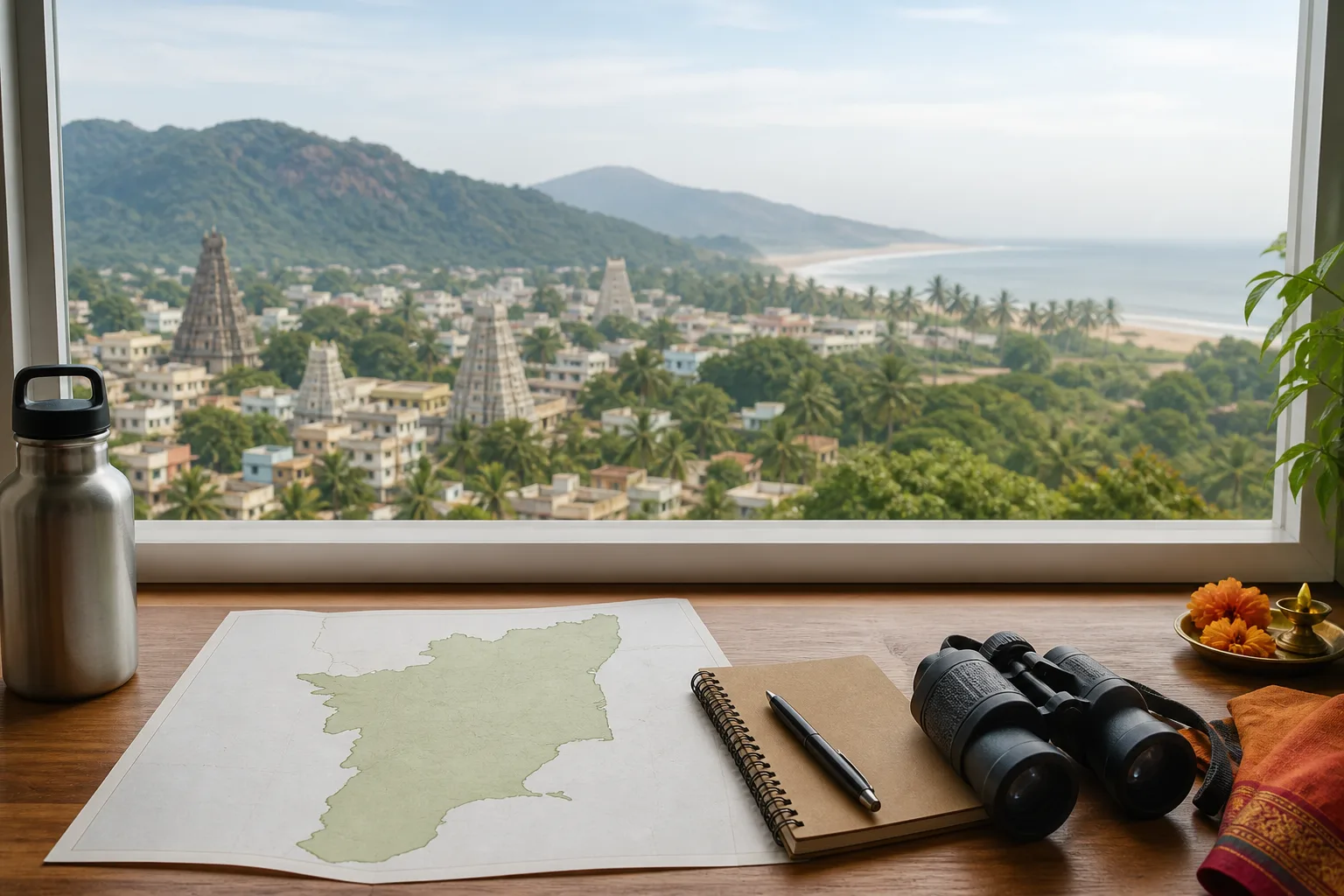
Tamil Nadu for First-Time Visitors: Choose a Base, Then a Direction
A base-first decision method for matching Chennai, Madurai, Coimbatore or Tiruchirappalli with one realistic outward direction.
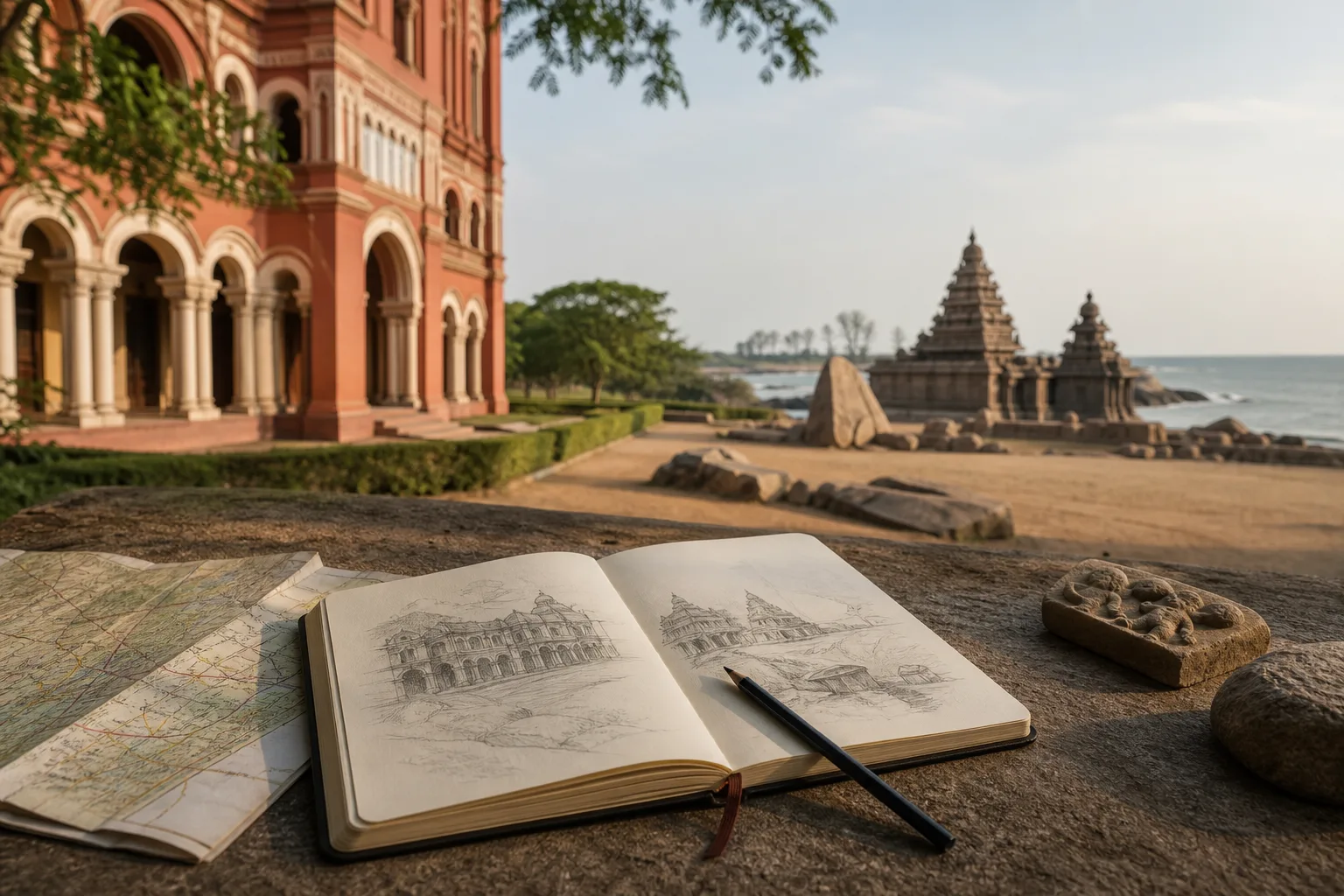
A Heritage Weekend from Chennai: How to Choose a Meaningful Route
A practical way to shape a heritage weekend from Chennai around one good question, a measured pace, and a choice between city and nearby extensions.
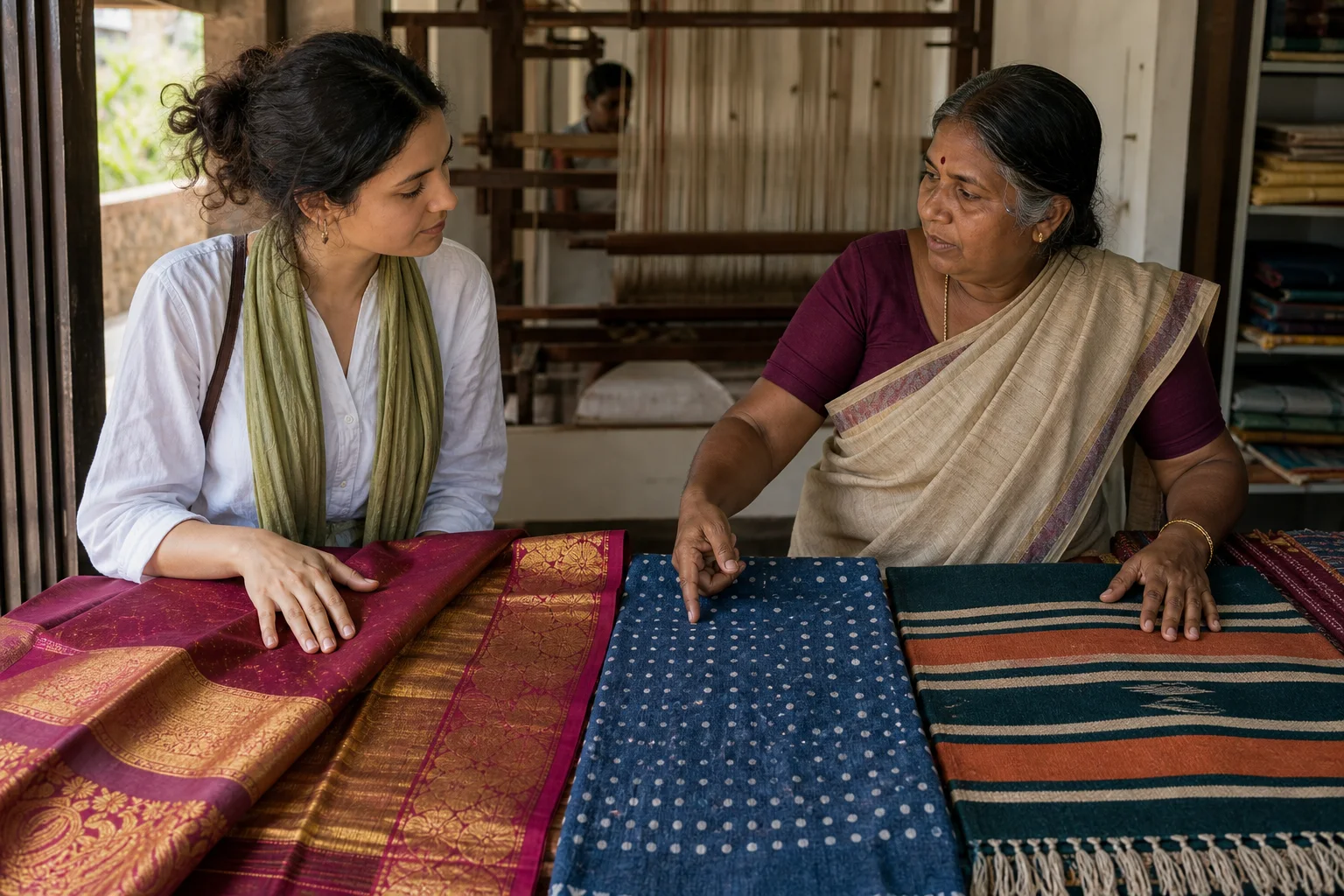
Buying Tamil Handloom: Ask About Fibre, Place and Proof
A practical festival-season guide to asking what a textile is, where it comes from and what a label actually proves before price or colour takes over.
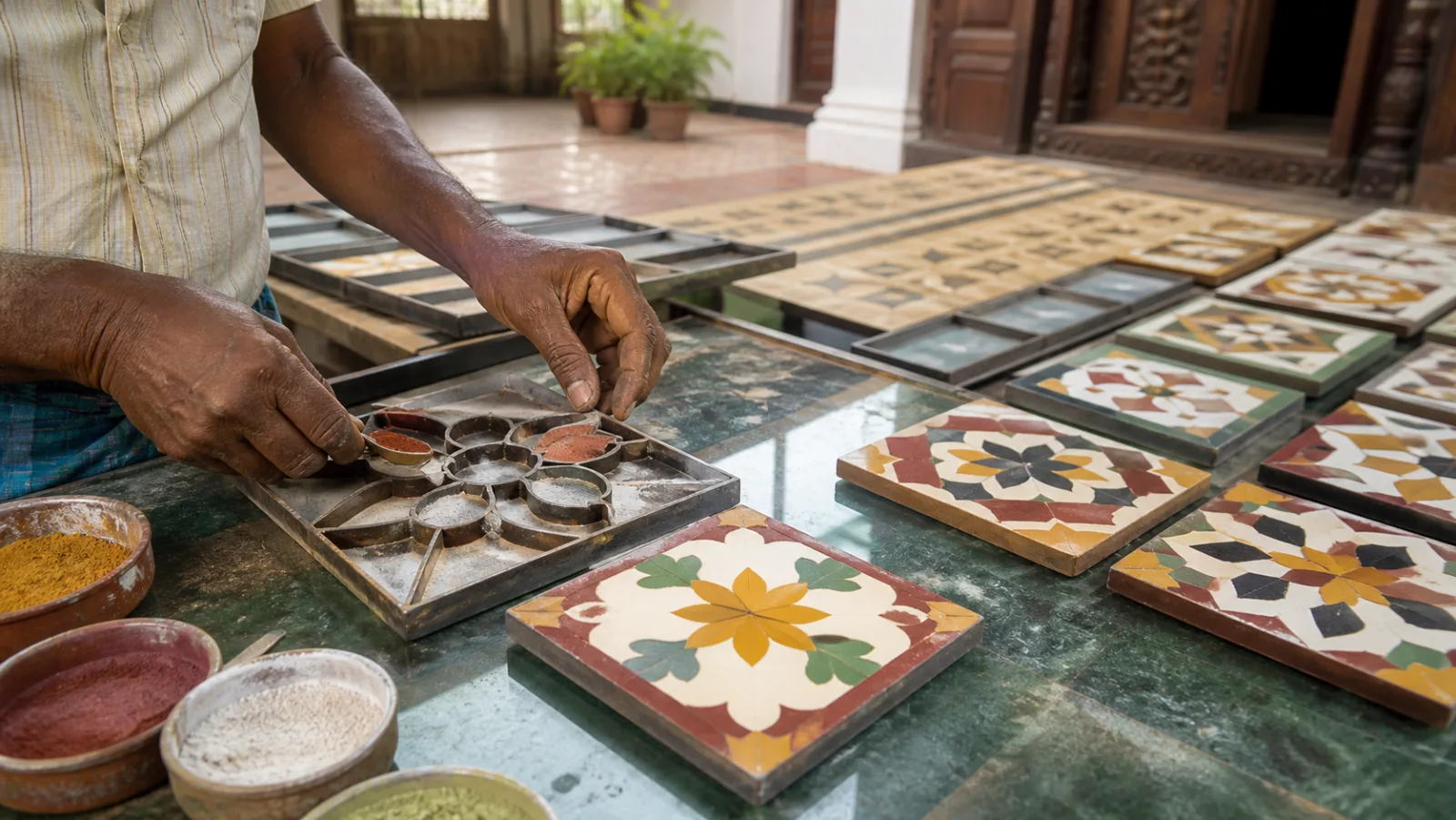
Athangudi Tiles: Read a Chettinad Floor as Working Craft
A workshop-aware guide to Athangudi tiles as living Chettinad building craft, material process and responsible purchase rather than surface decoration alone.
Frequently asked questions
Is Chettinad a UNESCO World Heritage Site?
No. Chettinad, Village Clusters of the Tamil Merchants is on India's UNESCO Tentative List; that is not inscription on the World Heritage List.
Does heritage stay mean the whole building is original?
Not necessarily. Ask which spaces and materials are original, restored, reconstructed or new, and where the booked room is located.
Does this article recommend a specific hotel?
No. Properties, prices, availability, access and service quality change; the article provides questions for comparing current options.
Editorial attribution
Prepared and reviewed by My Tamil Nadu Editorial Desk. Modified 28 August 2026.