
Respect without stereotypes
Travel Etiquette and Local Customs in Tamil Nadu
Good etiquette begins by noticing the place, asking permission and accepting a boundary without argument. No single custom describes every Tamil person or setting.
Orientation
Start with the decision, not a slogan
Tamil Nadu contains many religious, linguistic, caste, regional, professional and family traditions. Etiquette is therefore not a list of rules that every person follows. It is a method: understand what kind of place you are entering, watch how it is being used, read current instructions, ask when uncertain and accept that access or participation may have limits.
A visitor's curiosity does not create a right to photograph, touch, enter, interrupt or stage. Temples, homes, performances, markets, workshops, memorials and protected monuments each have different purposes. Respect includes giving people room to work, worship and move without becoming background material.
Avoid stereotypes about hospitality, dress, food, gender, religion or what a Tamil person should know. Ask specific questions and let the person describe their own practice. A custom explained in one household should not be published as the rule for the state.
This is an evergreen planning guide, not a live operating feed. Forecasts, warnings, transport schedules, ticket availability, opening arrangements, access controls and prices can change after editorial review. Follow the linked official service close to departure and treat a clear unavailable state as more trustworthy than a guessed answer.[5][6]
LIVING SACRED PLACES
Let worship set the terms of a temple visit
Temples are active institutions as well as historical and architectural places. Check the official temple or HR&CE source for current arrangements. Follow signs and staff instructions about entrances, footwear, clothing, bags, phones, photography and areas of access.[1]
Move around worship rather than through it. Do not block queues, doorways, processions or sightlines for a photograph. Silence or lower volume may be appropriate in sacred areas. Never pressure another person to explain or perform a ritual.
Participation rules can differ by temple and occasion. If entry to an area is limited, accept the boundary. This guide does not generalize one temple's practice to every institution.
CONTEXT
Use clothing and footwear rules as practical respect
Remove footwear where the place requires it and use the designated storage or area. Do not assume that socks, carrying shoes or leaving them in a doorway meets the rule. Hot or wet ground can affect comfort, so plan without demanding an exception.
Respectful clothing depends on the institution, event and local expectation. Carry a light layer or wrap when useful, but verify rules rather than repeating a universal dress code. Clothing advice should not become judgment about local people or travelers.
At museums, monuments and everyday urban spaces, ordinary practical clothing may be appropriate. At religious or ceremonial settings, current institutional guidance matters more. Dress also needs to work for heat, rain and walking.
CONSENT AND RULES
A camera does not remove another person's choice
Ask before photographing a person, child, worker, worshipper, performer or private property. Consent to one photograph is not consent to video, close-ups, publication, commercial use or persistent following. Accept no without asking for a reason.
Protected monuments and museums can regulate photography, filming, equipment and restricted areas. The Archaeological Survey of India directs visitors to follow posted instructions, respect active customary practice and observe filming rules. Current site rules take priority.[2]
Do not stage people, move objects, touch artworks, fly a drone or obstruct movement for an image. A quiet observational visit is often more respectful and more informative than collecting proof of attendance.
PUBLIC AND PRIVATE SPACE
Treat homes, work and neighbourhoods as lived places
An invitation into a home or workshop is specific; it does not extend to every room, object or family member. Wait to be shown where to sit, ask before recording and follow the host's lead on footwear or food. Do not turn hospitality into a claim that all households share the same practice.
Markets, fishing areas, farms and craft spaces are workplaces. Keep pathways clear, ask before handling goods and understand whether a demonstration is part of a paid experience. Credit makers and avoid bargaining that dismisses labor.
When visiting communities discussed through indigenous, caste, religious or occupational identity, use sources and self-description carefully. Do not seek sensitive sites or personal stories merely because they appear unusual to an outsider.
SHARED SPACE
Queues, volume and movement are forms of consideration
Use the visible queue and ask staff if there are separate lines or booking systems. Do not infer that confusion permits jumping ahead. Keep entrances, ticket counters, platforms and narrow streets clear for others.
Phone calls, speakers and group commentary can dominate a temple, museum, train or performance. Lower volume, silence devices where required and step aside for necessary calls. Public transport also requires attention to luggage and priority seating.
Crowding during festivals or popular periods changes the practical visit. Follow temporary barriers and official crowd arrangements. If the group cannot participate without blocking others or becoming distressed, leaving is a responsible choice.
COURTESY
Use language to connect, not to display
A greeting, please or thank-you can show care, but pronunciation mistakes are normal. Listen, ask the person's preferred language and keep the exchange practical. Do not demand praise for using a memorized phrase.
Tamil has formal, colloquial, regional and social variation. Mimicking accents or treating one variety as comic can reproduce prejudice. Translation apps may miss respect and context, so verify important information.
Names and forms of address matter. Ask how a person wishes to be addressed rather than assigning kinship, title, caste or religious identity from appearance or name.
HOSPITALITY
Ask about food, gifts and participation
Food customs vary by household, community, religion and occasion. Explain dietary needs without judging the meal, and do not assume the host can eliminate every ingredient or cross-contact. Accepting or declining can be done politely.
Eating methods and serving order vary. Watch the setting and ask rather than treating banana-leaf service or eating by hand as a performance. Do not photograph a meal, kitchen or host without permission.
A gift should not create obligation or violate institutional rules. Avoid giving money, sweets or objects to children in ways that bypass parents or responsible organizations. In a paid craft or cultural experience, clear compensation is better than vague exposure.
EVENTS AND LANDSCAPES
Respect continues beyond buildings
At performances and festivals, check organizer rules for recording, seating and participation. A public event can still contain sacred, copyrighted or community-specific elements. Credit artists and do not post identifying material where consent is unclear.
Nature etiquette includes distance from wildlife, low noise, no feeding, no litter and compliance with access rules. Never request a guide to reveal sensitive wildlife locations or leave an approved route for a closer image.[3]
On beaches and in villages, local work and safety continue around visitors. Keep away from nets, boats, livestock and private land unless invited. Current weather, sea and access controls always outrank an itinerary.
Saved in this browser
Respectful Visit
Use this as a planning prompt, then confirm current facts with the responsible operator or authority. Nothing is sent to a server.
Visual orientation
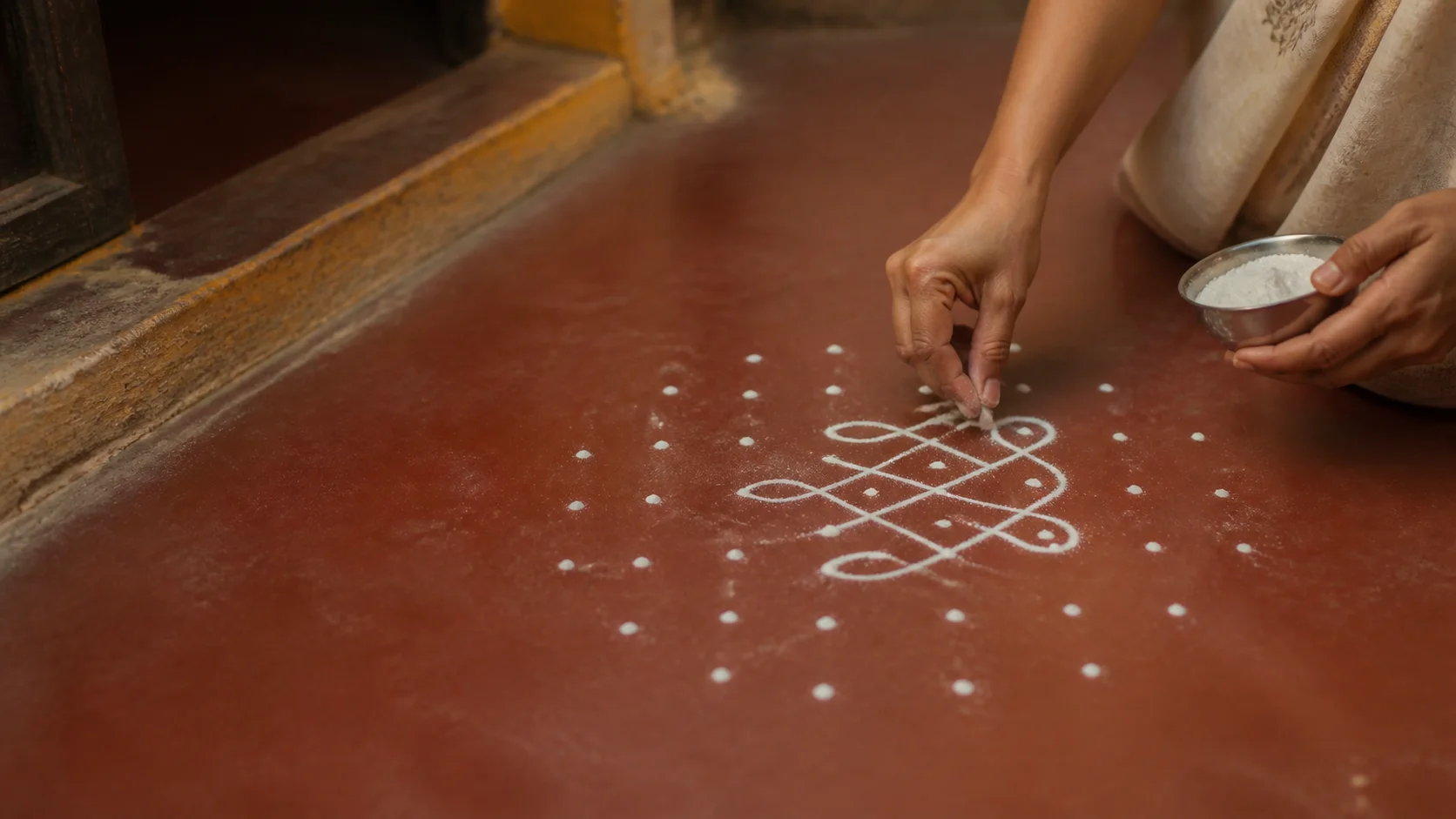
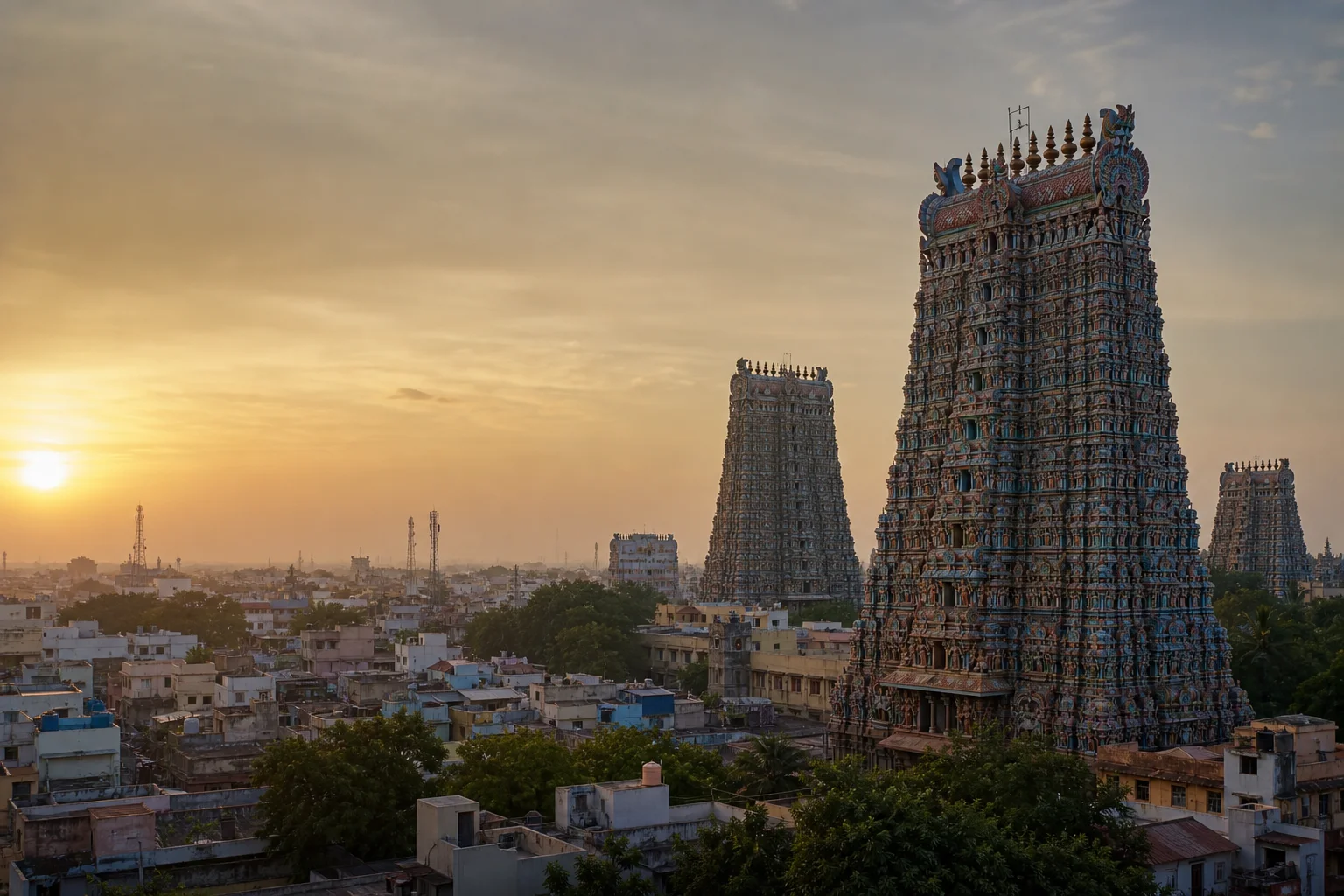
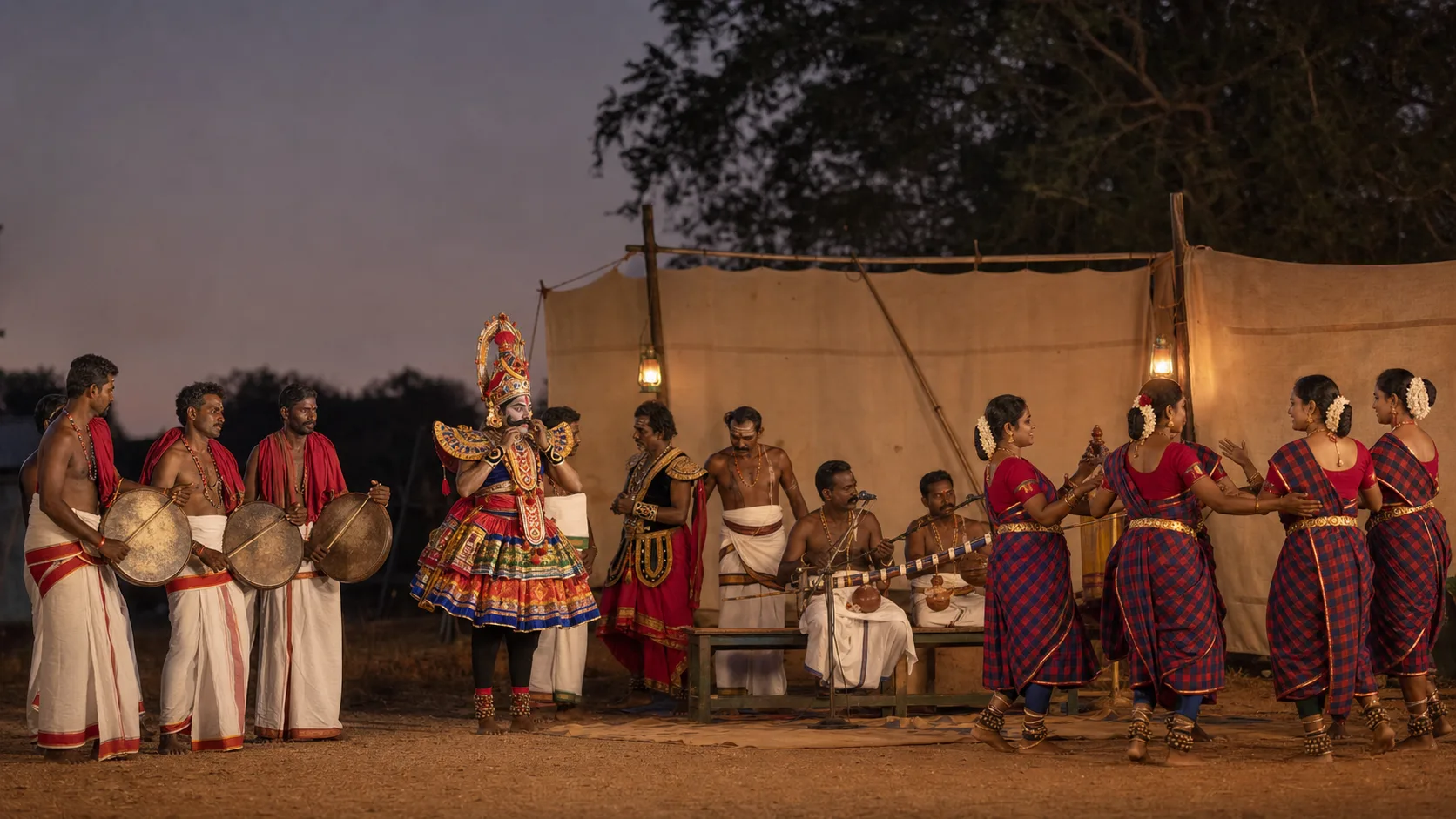
Project-created travel perspectives
These editorial images are not evidence of current weather, access, schedules, prices, businesses or crowds.
Planning questions
Frequently asked questions
Do all temples in Tamil Nadu have the same dress code?
No. Verify the exact temple's current requirements and follow posted instructions.
Must footwear always be removed?
Remove it where the institution or host requires; use the designated area.
Can I photograph people in a public place?
Ask first. Public visibility is not universal consent to close-up photography or publication.
Is bargaining always expected?
No. Ask prices clearly and do not use bargaining to dismiss a maker's labor.
Should I eat every food offered?
Dietary needs and preferences can be explained politely. Customs vary by host and occasion.
Can I record a cultural performance?
Only if the organizer and performers permit it; public access does not automatically grant recording rights.
How should I address someone?
Ask their preferred name or title rather than assigning identity or relationship.
Is this a complete list of Tamil customs?
No. It is a respectful decision framework, not a claim that every community behaves the same way.
Editorial trust
Sources and current-information handoffs
Major factual claims are cited inline. Operating details, warnings and availability must still be rechecked at the official source.
- 1Temple GuideHindu Religious and Charitable Endowments Department, Government of Tamil NaduOfficial temple-administration directory · Reviewed 14 August 2026
- 2Visitor guidance for protected monuments and sitesArchaeological Survey of IndiaOfficial monument visitor guidance · Reviewed 14 August 2026
- 3Forests and wildlife administrationTamil Nadu Forest DepartmentOfficial protected-area authority · Reviewed 14 August 2026
- 4Tamil Nadu destination overviewMinistry of Tourism, Government of IndiaOfficial tourism overview · Reviewed 14 August 2026
- 5Regional Meteorological Centre ChennaiIndia Meteorological DepartmentOfficial forecast and regional weather service · Reviewed 14 August 2026
- 6Tamil Nadu and Puducherry weather warningsIndia Meteorological DepartmentOfficial current warning service · Reviewed 14 August 2026