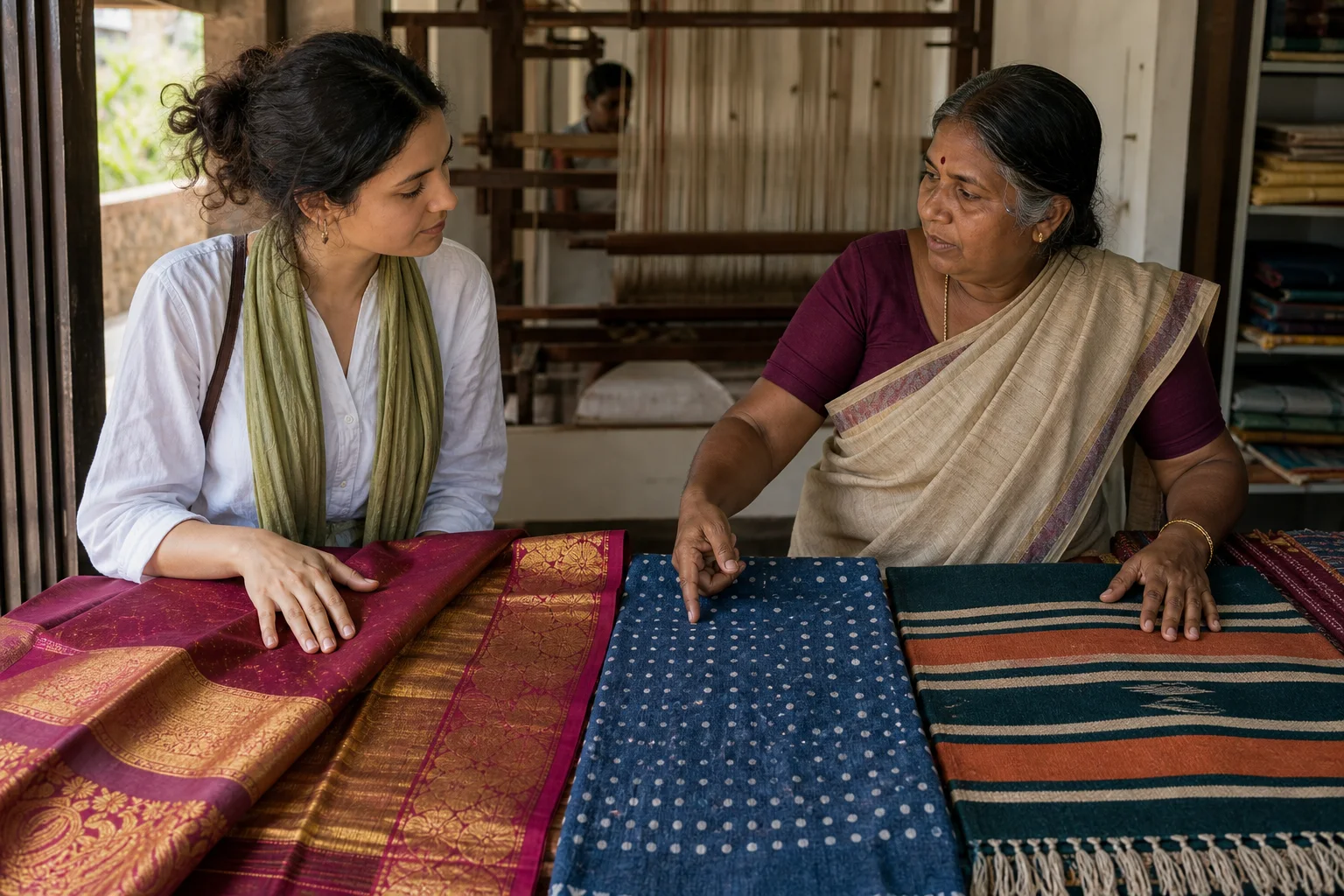
Handloom, fibre, place and GI are four different questions
Handloom describes how cloth is woven. Silk or cotton describes fibre. Kancheepuram, Madurai or Bhavani describes a geographic association. A geographical indication is a legal registration linking qualifying goods with a defined origin, reputation or characteristics. One word cannot silently prove all the others.
A handwoven cotton is not inferior because it is not silk. A silk-looking textile is not necessarily handloom. A product sold in Kanchipuram is not automatically Kancheepuram Silk, and a registered GI name does not authenticate every item carrying a similar phrase in ordinary marketing. The buyer still needs product-level evidence.
Begin by asking a neutral sequence: What is the fibre? Is it handwoven? Where was it woven or dyed? What organisation or producer made it? What label, invoice or registration information supports the claim? A knowledgeable seller should be able to separate those answers rather than repeating premium or traditional.
Sources for this section: Tamil Nadu handloom clusters, Registered GIs.
Read Kancheepuram Silk through structure, not colour alone
Intellectual Property India's register records Kancheepuram Silk as a registered GI, with the Tamil Nadu Department of Handlooms and Textiles as applicant and authorised users listed in the public record. That legal status protects a defined regional product; it does not mean all bright silk sarees with contrasting borders belong to it.
Ask about body, border and pallu construction, fibre and zari, but do not rely on one theatrical test performed at a counter. Weight, lustre, colour contrast and motif can guide conversation, not establish legal authenticity by themselves. Machine-made textiles can imitate visible features, while handwoven textiles can vary beyond the stereotype.
Request a detailed invoice that identifies the product rather than simply saree. If a GI or authorised-user claim is central to the price, ask the seller to show the relevant product documentation and explain it. Verify the registration through the official GI public search instead of trusting a copied logo image.
Sources for this section: Kancheepuram Silk GI, Tamil Nadu handloom clusters.
Madurai Sungudi is a process and place, not any dotted cotton
The GI register records Madurai Sungudi as a registered handicraft associated with Tamil Nadu. Its visual identity is often linked with small resist-dyed dots and patterned fields, but dot imagery alone does not prove the production method or origin. Printed imitation can reproduce appearance without reproducing process.
Ask whether the dots are tied-resist, printed or produced by another technique, and where dyeing and finishing occurred. Irregularity can be consistent with hand process but should not be romanticised as automatic proof. Colourfastness and care also depend on dyes, washing and finishing, so request current care instructions for the actual cloth.
Madurai is a living city, not a textile showroom. If visiting a workshop, go through an invited or public arrangement, ask before photographing hands and faces, and do not interrupt production for a staged demonstration. Pay for a formal workshop or interpretation when that is the offered model.
Sources for this section: Madurai Sungudi GI, Tamil Nadu handloom clusters.
Bhavani Jamakkalam asks you to look beyond clothing
Tamil handloom is not only sarees. Intellectual Property India records Bhavani Jamakkalam as a registered GI for textile and textile goods. The sturdy striped or patterned floor coverings associated with Bhavani expand the conversation from festive clothing to household use, durability and regional weaving economies.
Ask about dimensions, fibre, weave, colour care and intended use. A floor textile must suit the surface, washing method and weight you can manage. Fringes, density and colour arrangement may vary, so do not treat one visual pattern as the sole authentic design.
Bhavani belongs to present-day Erode district and a wider textile region. A purchase can support a cooperative or producer, but support is not proved by a sympathetic story alone. Ask who receives the payment, whether the seller is a cooperative, authorised user, producer or reseller, and request a receipt.
Sources for this section: Bhavani Jamakkalam GI, Tamil Nadu Handlooms Department.
A label is useful only when you know its question
The Development Commissioner for Handlooms links to India Handloom Brand and Handloom Mark initiatives, while GI registration is administered through Intellectual Property India. Silk-related certification can involve still another system. These marks have different scopes; seeing one does not automatically answer every question about fibre, weaving location, GI qualification or seller identity.
Look for legible, product-linked information rather than a logo displayed somewhere in the shop. Compare the invoice, attached label and seller explanation. If the evidence conflicts, pause the purchase. Do not scan an unknown QR code or submit personal information merely to satisfy a counter demonstration.
Price is also not proof. Handwork, fibre, zari, complexity, size, producer payment, retail overhead and taxes can all affect cost, but a high price can coexist with a weak claim. Set a budget before shopping and compare like with like: textile type, material, dimensions, technique and documentation.
Sources for this section: Development Commissioner Handlooms, Registered GIs.
Buy fewer pieces and learn how to keep them
Responsible buying does not require collecting one textile from every region. Choose something whose material, use and care you understand. Ask whether it needs dry cleaning, shade drying, separate washing, airing, refolding or protection from insects, and keep the invoice and maker information with the item.
Do not demand aggressive bargaining from a producer after accepting a story about skilled labour. It is reasonable to compare prices and decline a purchase; it is not necessary to turn the maker's time into entertainment. If photography is permitted, do not reveal a workshop address or individual identity without consent.
The best question after where did you buy it is what did you learn about it. A clear answer might name the fibre, technique, place, producer or cooperative, evidence and care. That knowledge honours difference better than using handloom as a vague compliment for any colourful textile.
Sources for this section: Tamil Nadu Handlooms Department, Development Commissioner Handlooms.
Sources & Further Reading
These authoritative references support the historical, geographic, or seasonal context in this story. Current conditions and operating details still require a fresh official check.
- Handlooms, Handicrafts, Textiles and Khadi Policy Note · Department of Handlooms, Government of Tamil Nadu
- Department of Handlooms · Department of Handlooms, Government of Tamil Nadu
- Development Commissioner for Handlooms · Ministry of Textiles, Government of India
- Registration Details of Geographical Indications · Intellectual Property India
- Kancheepuram Silk: GI Application 15 · Intellectual Property India
- Madurai Sungudi: GI Application 21 · Intellectual Property India
- Bhavani Jamakkalam: GI Application 16 · Intellectual Property India
Related Stories

Navaratri Golu in Tamil Nadu: Reading the Stories on the Steps
A respectful guide to the dolls, household creativity, visits, music, food and changing narratives that make Golu more than a decorative display.

Staying in Chettinad: Reading a Mansion from the Courtyard
How to choose a mansion stay for its architecture, setting and stewardship rather than treating Chettinad as a generic luxury backdrop.
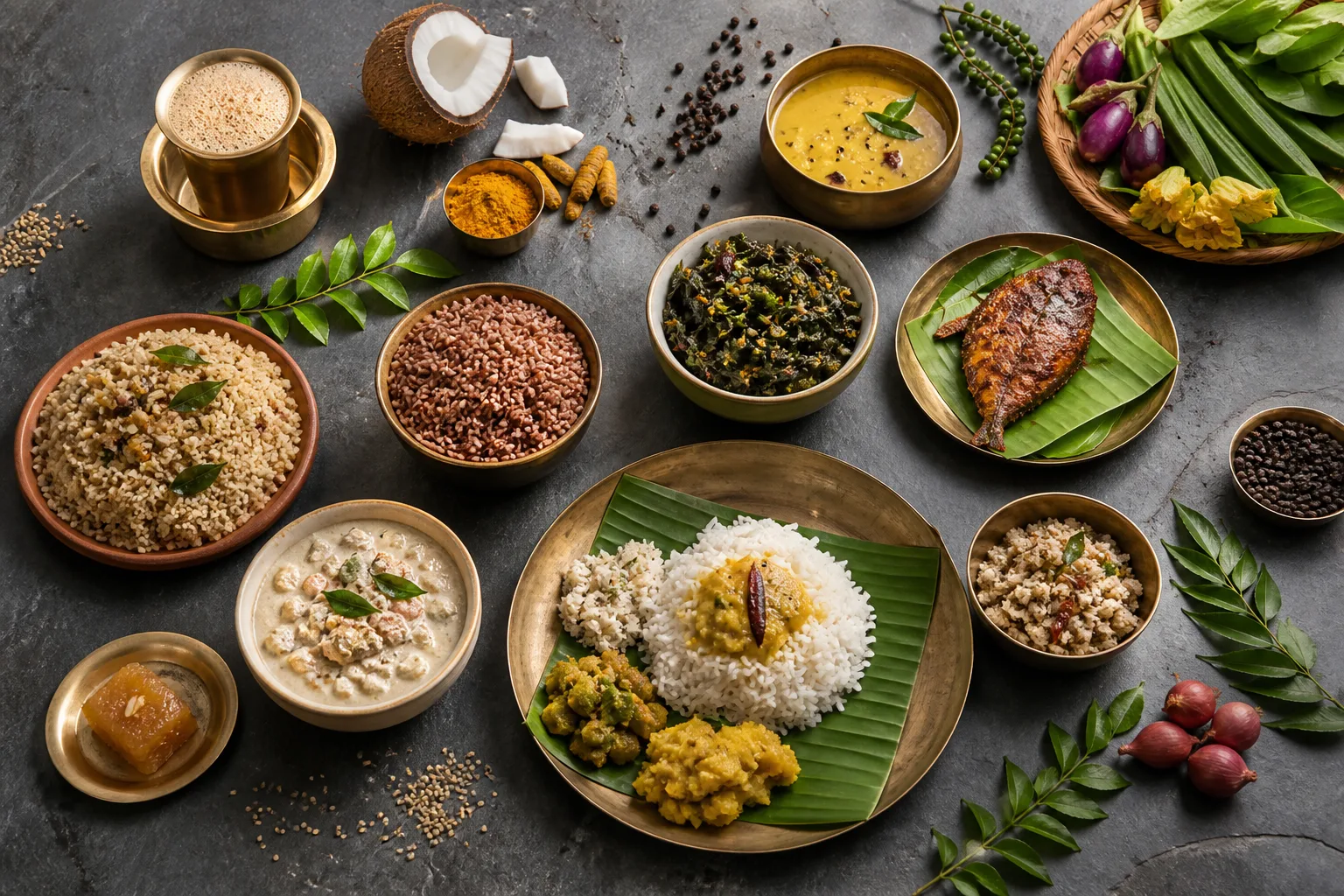
A Food Journey Through Tamil Nadu's Regional Cuisines
Travel across Tamil Nadu through the relationships among region, crop, technique, household memory, migration, worship, and changing city life.
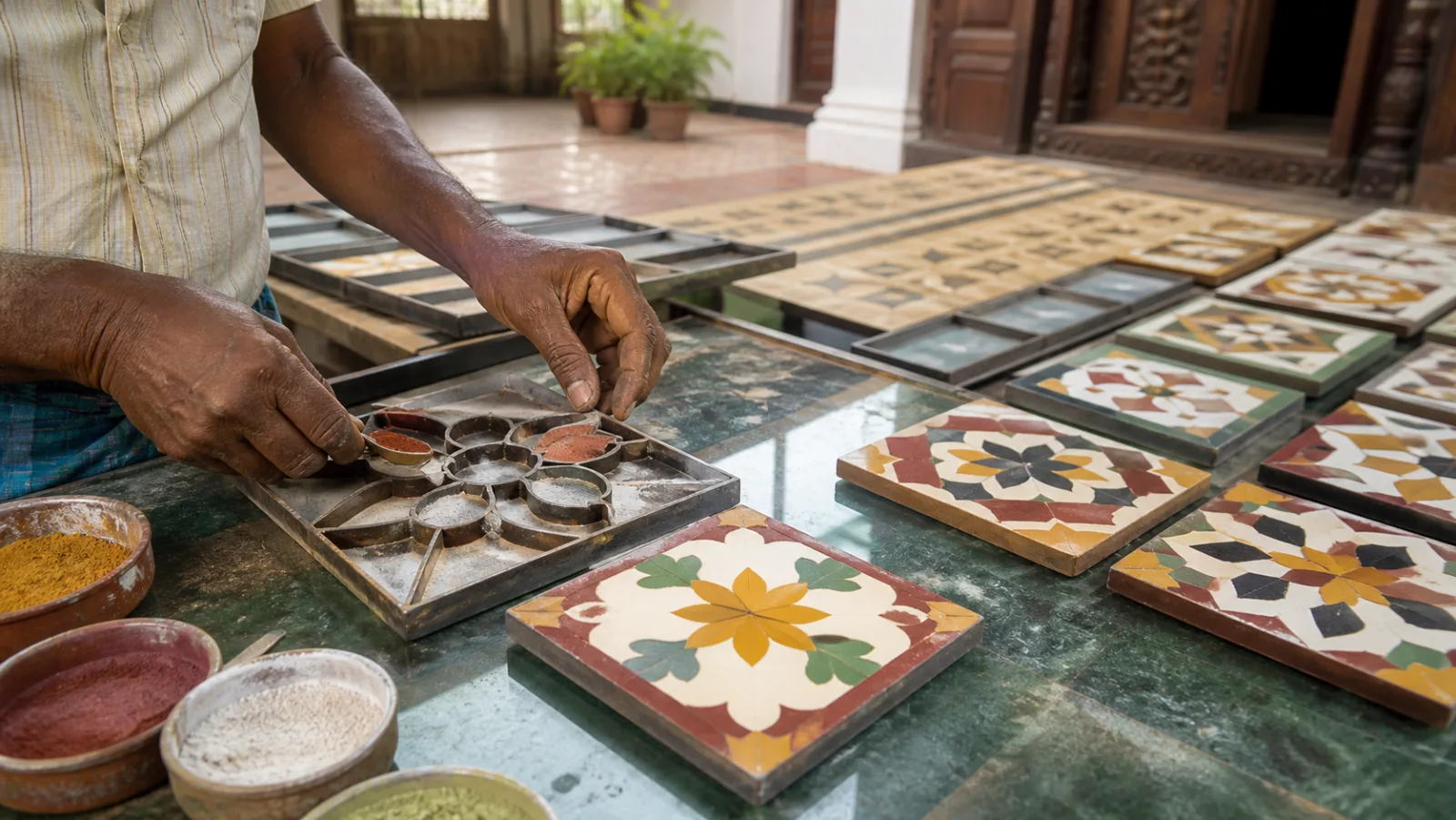
Athangudi Tiles: Read a Chettinad Floor as Working Craft
A workshop-aware guide to Athangudi tiles as living Chettinad building craft, material process and responsible purchase rather than surface decoration alone.
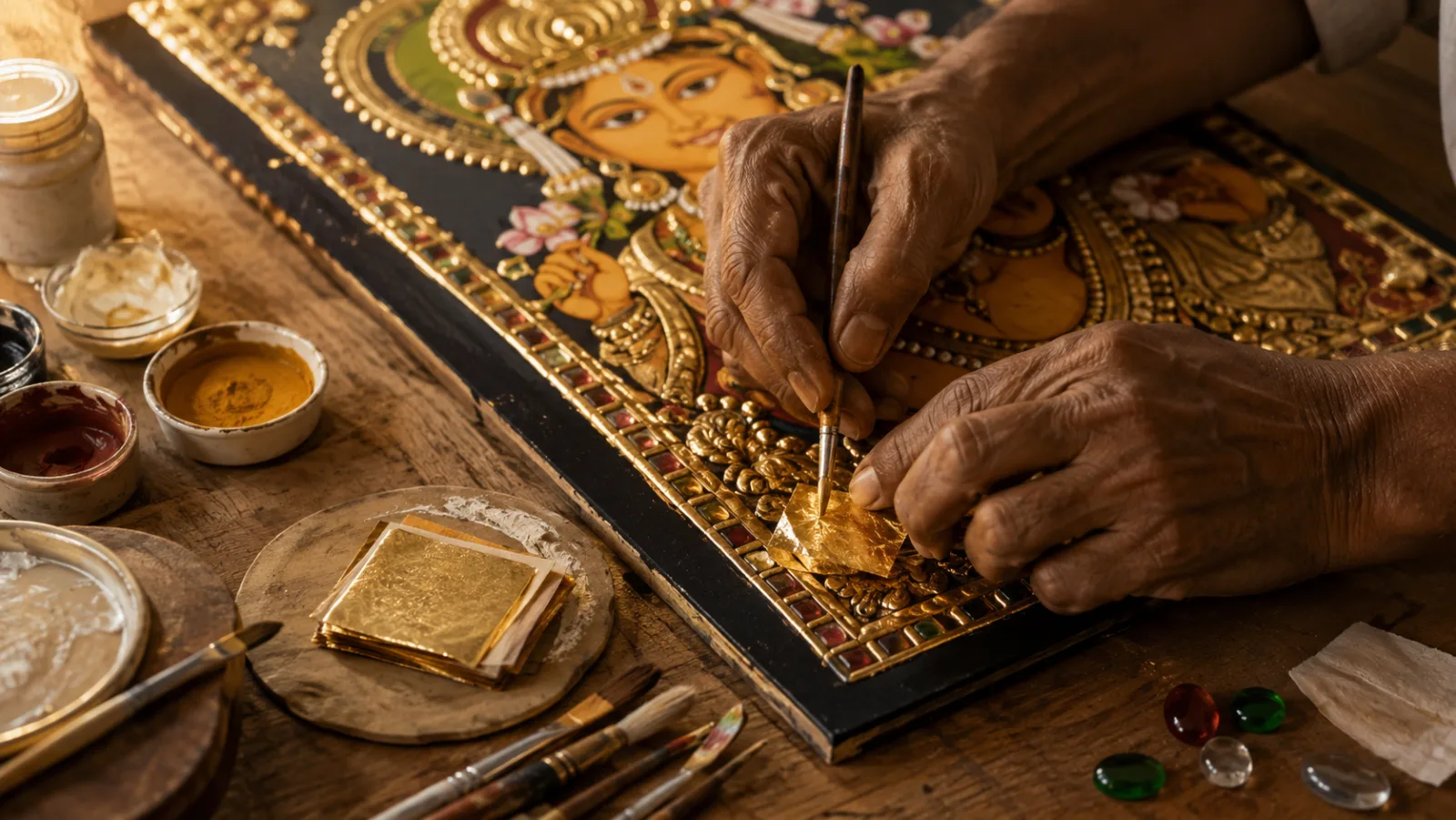
Thanjavur Painting: Read Gold, Relief and Provenance
A material and provenance guide to Thanjavur painting that credits makers and separates visual style, GI records and current authenticity claims.
Frequently asked questions
Does a GI registration prove that a specific textile is genuine?
No. It confirms the registered geographical indication. Product-level claims still need appropriate seller, authorised-user, label and invoice evidence.
Is every silk saree sold in Kanchipuram Kancheepuram Silk?
No. Place of sale, fibre, handloom production and GI qualification are separate questions.
Is an irregular pattern proof of handwork?
Not by itself. Irregularity can arise for many reasons; ask about process, producer and documentation rather than using one visual shortcut.
Editorial attribution
Prepared and reviewed by My Tamil Nadu Editorial Desk. Modified 29 August 2026.