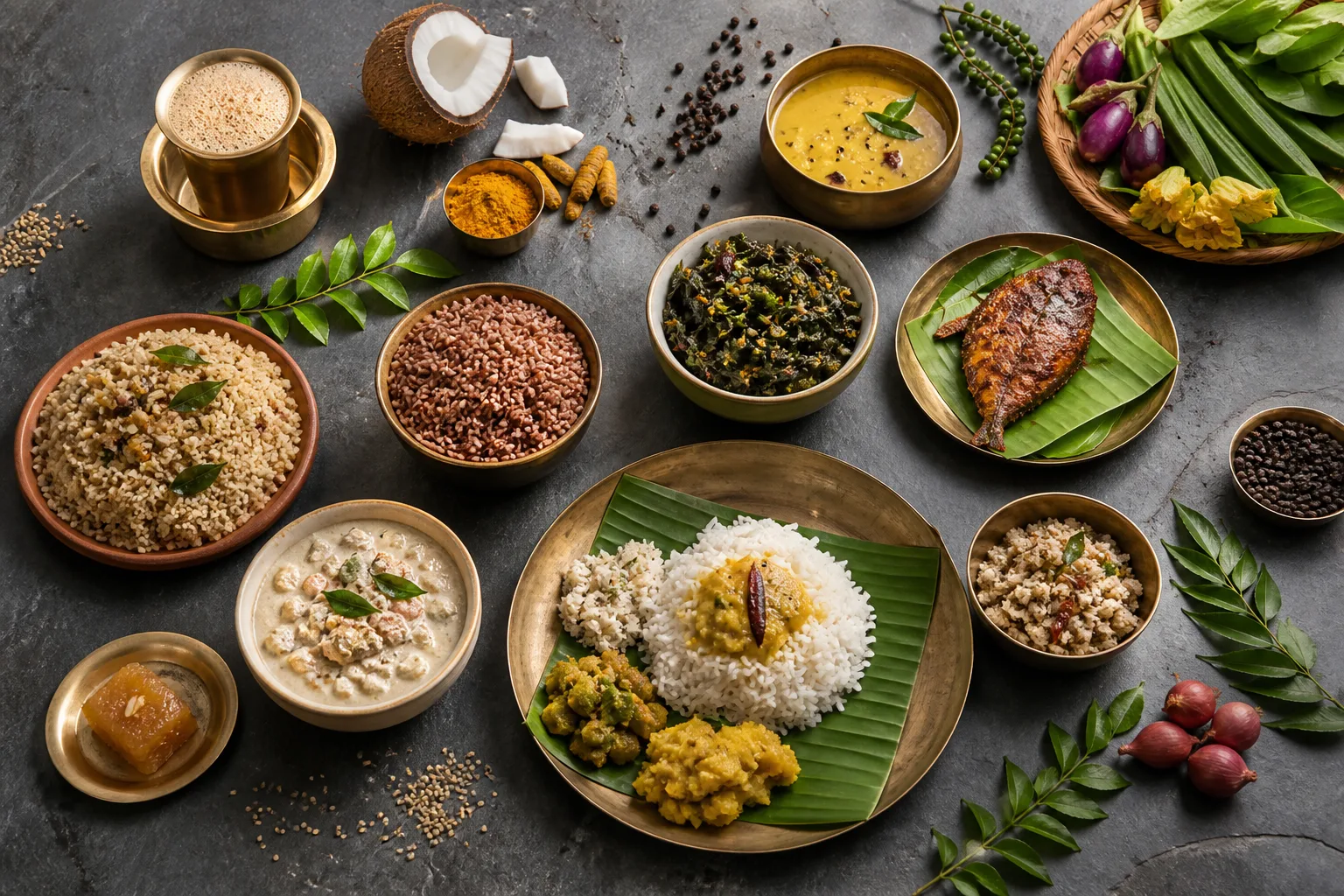
Begin by giving up the idea of one Tamil cuisine
Tamil Nadu's food cannot be contained by a restaurant menu headed simply Tamil cuisine. Rice, millets, pulses, coconut, vegetables, meat, fish, dairy, spices, sweets, snacks, and drinks appear in changing combinations. A temple meal, fisher household, farm kitchen, textile-city breakfast, and urban family table may all be Tamil without sharing the same repertoire or rules.
Regional names help us notice patterns, but they are not sealed borders. Kongunadu is a historical and cultural region rather than a present legal polygon. Chettinad is associated strongly with Nagarathar histories but is not exhausted by one community or restaurant style. Madurai and Chennai are cities fed by migration as well as nearby agriculture. This journey therefore asks what a food practice reveals about place, while leaving room for households and communities whose experience differs.
Sources for this section: TNAU western-zone crops, Alagappa University Chettinad study.
Read land and movement together
Agriculture matters, but a crop map is not a menu. Production records can show that a western zone includes turmeric, rice, groundnut, pulses, sorghum, maize, sesame, coconut, banana, and other crops in varied settings. They cannot prove how every family ate, which foods were reserved for ritual, who had access to which ingredients, or how markets changed domestic use. Water, soil, season, labour, price, caste, religion, and household preference all intervene between field and plate.
Movement matters just as much. Merchants, pilgrims, students, workers, cooks, marriage networks, and migrants carry techniques and tastes. A preparation can become strongly associated with a place without having been invented there, and a name can travel farther than one version of a recipe. Look for connection and change rather than a pure origin the evidence cannot establish.
Sources for this section: TNAU western-zone crops, Coffee in colonial Tamil Nadu.
Chennai: begin at a metropolitan meeting point
Chennai offers a useful opening because its food is openly metropolitan. Older settlements, port and administrative histories, religious communities, educational institutions, film and media work, manufacturing, information technology, and migration from across Tamil Nadu and beyond have all shaped where and how people eat. Idli, rice meals, biryani, seafood, bakery food, snacks, filter coffee, community-specific preparations, and new service formats coexist without forming one complete city canon.
Instead of asking for one definitive Chennai dish, ask which movement a meal reveals. Does it belong to a neighbourhood community, a worker's schedule, a family migration, a festival, or a commercial adaptation? A restaurant can preserve skill and memory, but a menu description is not independent proof of origin. This article publishes no business ranking or directory. Availability, hygiene, ingredients, price, and dietary suitability require a present-day check.
Sources for this section: Ministry of Tourism Chennai food, Coffee in colonial Tamil Nadu.
Kongunadu: let several agricultural zones remain visible
Kongunadu broadly refers to a historical and cultural region in western Tamil Nadu, with boundaries that vary by period and source. Coimbatore, Erode, Tiruppur, parts of Salem, Namakkal, Karur, Dharmapuri, and neighbouring areas can provide context, but they do not define one legal food territory. Irrigated river systems, wells, rainfed fields, coconut belts, hill edges, towns, and industrial cities produce different conditions within the west.
Tamil Nadu Agricultural University identifies varied western-zone crops and separately describes ragi dosa in Kongunadu context. These records support attention to grains, pulses, oilseeds, turmeric, coconut, vegetables, and changing agricultural systems; they do not establish a uniform historic diet. Arisi paruppu sadam, ragi preparations, greens, kootu, buttermilk-based foods, and non-vegetarian traditions belong to a broader field of practice. Simplicity may reflect work rhythm and technique, not a romantic claim about an unchanged rural past.
Sources for this section: TNAU western-zone crops, TNAU Kongunadu context.
Madurai: notice how a city eats across the day
Madurai's visible food identity grows from a dense temple city, market centre, educational and transport hub, and place of work at many hours. Pilgrims, traders, students, workers, families, and visitors do not all eat on the same schedule. Breakfast tiffin, rice meals, evening snacks, drinks, sweets, and late service answer different needs. That urban rhythm helps explain why particular foods become memorable, but it does not prove that the city invented every associated preparation.
The Ministry of Tourism highlights foods including idiyappam and jigarthanda and notes community influences, including Madurai's Saurashtrians. Such an official visitor page is useful evidence of public association, not a final origin archive. Madurai food is also not reducible to parotta and meat. Vegetarian homes, religious settings, markets, snacks, rice dishes, and drinks remain central. When a branded story claims a first maker or secret unchanged formula, look for independent documentary support before repeating it.
Sources for this section: Ministry of Tourism Madurai food, Madurai District.
Thanjavur: connect delta abundance with social history
The Thanjavur region is often approached through the Cauvery delta, rice cultivation, temples, courts, music, and artistic patronage. Food belongs within those relationships, but abundance should not be described as evenly shared. Landholding, labour, irrigation, caste, household economy, religious institutions, and market access shaped who produced food and who ate it. A royal or temple record can illuminate patronage and service without giving us the complete everyday diet of every community.
A traveller can still notice how rice, pulses, vegetables, dairy, sweets, and coffee appear in delta settings, while resisting the urge to label a present recipe Chola food or palace cuisine without evidence. Thanjavur is especially useful as a pause between regional names: it shows how agricultural landscape, sacred institutions, courtly memory, and modern town life can all influence culinary reputation. The city guide connects that food context with the wider heritage landscape rather than turning it into a menu.
Sources for this section: Thanjavur District.
Tirunelveli halwa: let conflicting origin stories remain visible
Tirunelveli halwa is a wheat-based sweet strongly associated with the city. Its texture depends on extraction, sugar, ghee, heat, stirring, and maker knowledge, but the association does not settle who first produced or sold it there. A municipal planning document and a government technical bulletin present differing chronologies and connections. The responsible response is not to average those stories into a convenient date or select one shop as the proven original.
Food memory often attaches to a queue, parcel, family journey, railway or bus stop, celebration, or gift carried home. Those memories are culturally meaningful even when they do not establish legal or historical priority. This site found no basis during review to publish a registered geographical-indication claim for Tirunelveli Halwa. Registry status must be checked with the official GI system before any future badge or protected-name statement. Enjoying the sweet does not require solving an origin dispute that the evidence leaves open.
Sources for this section: Tirunelveli Master Plan, ICAR halwa bulletin, GI Registry.
The far south: approach Nanjil and Kanniyakumari with precision
Kanniyakumari district's coast, cultivated land, coconut, rice, fish, spices, and close relationship with Kerala-facing routes create a food context distinct from an inland city narrative. Nanjil is used as a historical and cultural regional name, but it should not be turned into a rigid modern boundary or a claim that every household shares one cuisine. Language, religion, occupation, caste, market, and family history produce variation across a small geographic area.
Coconut-rich gravies, rice preparations, vegetables, seafood, and cross-border similarities may be visible, yet similarity does not erase local identity or prove a single direction of borrowing. A coastal dish also says nothing by itself about whether seafood is sustainably sourced or currently safe for a particular diner. Ask what the setting supports, credit specific community knowledge when it is documented, and avoid presenting a restaurant's Nanjil label as the complete cultural definition.
Sources for this section: Kanniyakumari District.
Kumbakonam degree coffee: follow a drink across supply networks
Kumbakonam degree coffee is strongly associated with place, but the cup depends on networks extending beyond the delta. Coffee may be grown in Tamil Nadu's uplands or elsewhere, roasted and blended through commercial systems, combined with chicory or not, extracted through a filter, and served with varying proportions of milk and sugar. A tumbler and davara make the ritual visible; they do not specify one universal formula.
The meaning of degree is debated. Explanations refer variously to milk quality, a lactometer, decoction strength, first extraction, or later commercial storytelling. The reviewed evidence does not establish one settled etymology. Cultural historian A. R. Venkatachalapathy also shows that coffee drinking became embedded in colonial Tamil middle-class life rather than occupying an unchanged timeless position. This history makes the drink richer: everyday routine, status, labour, equipment, plantation supply, and public commerce all meet in one familiar service.
Sources for this section: Coffee in colonial Tamil Nadu, Coffee Board regions, Coffee consumption study.
Season, faith, and service change the table
Regional cuisine is only one layer. Festival calendars can change ingredients, scale, gifting, fasting, offerings, and who cooks with whom. Pongal connects harvest language, rice, milk, sweetness, household and public celebration in varied ways, but one festive dish should not be used to describe every family's observance. Religious communities and institutions have distinct dietary practices, and words such as vegetarian do not automatically answer questions about onion, garlic, dairy, cross-contact, fasting, or ritual suitability.
Service matters too. Banana-leaf order, metal vessels, packed food, a standing tea stall, a family dining table, and a formal restaurant create different relationships among cook, server, guest, waste, and time. Do not call one service style more authentic simply because it looks older. Ask permission before photographing people or kitchens, disclose allergies clearly, and check ingredients directly. A cultural story cannot provide medical or allergen assurance for a present meal.
Sources for this section: Official Pongal overview.
Travel through food without turning it into a ranking
A useful food journey needs no ranking. In each place, ask one question: what crop or network is visible, which community or work rhythm shaped the setting, which technique changes texture, what is documented, and what remains disputed? Compare answers without declaring a winner. The purpose is to recognise specificity, not to award regional superlatives.
Keep the practical layer modest. This story names no restaurant, freezes no hours, and makes no promise that a dish will be available. Current businesses, hygiene, price, dietary needs, and transport must be checked independently. When you share what you learn, identify the source and avoid turning a family, caste, religious group, or craft worker into a decorative origin story. Pay fairly, ask before recording, and accept that some knowledge is private or learned through sustained practice rather than a brief visit.
What a regional food journey can reveal
Moving from metropolitan Chennai toward western Kongunadu, southern Chettinad and Madurai, the Thanjavur delta, Tirunelveli, and the far south does not produce one linear culinary evolution. It reveals several relationships: dry and irrigated agriculture, coast and upland, household and market, worship and commerce, migration and local identity, everyday nourishment and celebratory display. Coffee and halwa show how a portable item can acquire a powerful place name while continuing to depend on wider histories and supply chains.
Return to the permanent guides and their sources. Use district and destination pages to understand where food is prepared, sold, remembered, and changed. The conclusion is not a definitive Tamil Nadu menu, but better questions about why food differs, who sustains it, how claims become reputations, and where uncertainty remains. The journey becomes meaningful when appetite leads to attention rather than ownership.
Sources & Further Reading
These authoritative references support the historical, geographic, or seasonal context in this story. Current conditions and operating details still require a fresh official check.
- Centre for Studies in Heritage Management Magazine · Alagappa University, School of Management
- Ragi Dosa and Kongunadu Context · Tamil Nadu Agricultural University
- Cropping Pattern: Western Zone · Tamil Nadu Agricultural University
- A Foodie's Guide to Trying Local · Ministry of Tourism, Government of India
- Must Eat Local Dishes in Madurai · Ministry of Tourism, Government of India
- Madurai District · Madurai District Administration
- Thanjavur District · Thanjavur District Administration
- Tirunelveli Master Plan · Tirunelveli Corporation, Government of Tamil Nadu
- Halwa Technical Bulletin · ICAR-Central Plantation Crops Research Institute
- 'In Those Days There Was No Coffee': Coffee-drinking and Middle-class Culture in Colonial Tamilnadu · A. R. Venkatachalapathy, Indian Economic & Social History Review
- Coffee Regions of India · Coffee Board of India
- Coffee Consumption Trends in India, 2023 · Coffee Board of India
- Geographical Indications Public Search · Intellectual Property India
- Kanniyakumari District · Kanniyakumari District Administration
- Pongal Festival · Ministry of Tourism, Government of India
Related Stories
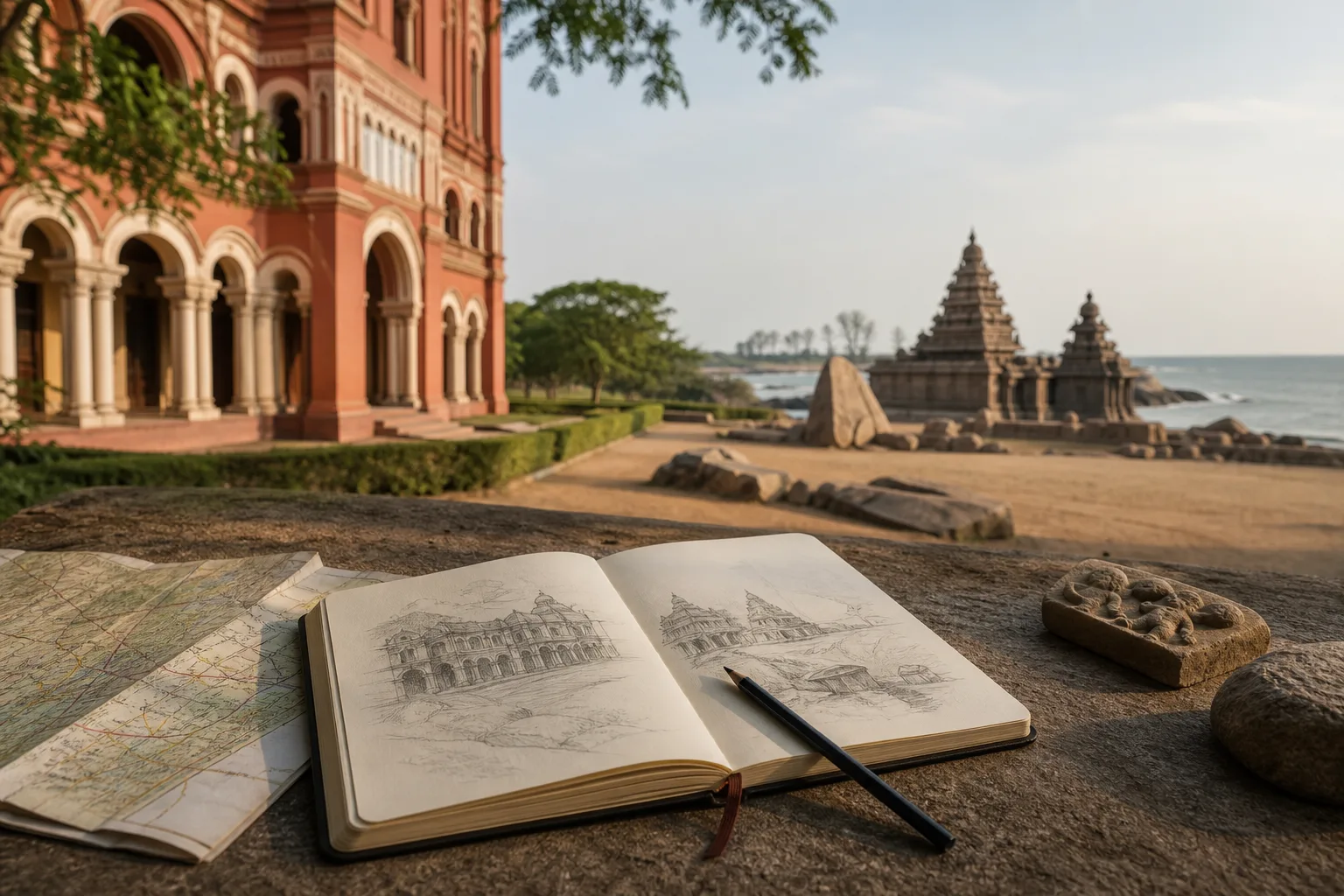
A Heritage Weekend from Chennai: How to Choose a Meaningful Route
A practical way to shape a heritage weekend from Chennai around one good question, a measured pace, and a choice between city and nearby extensions.
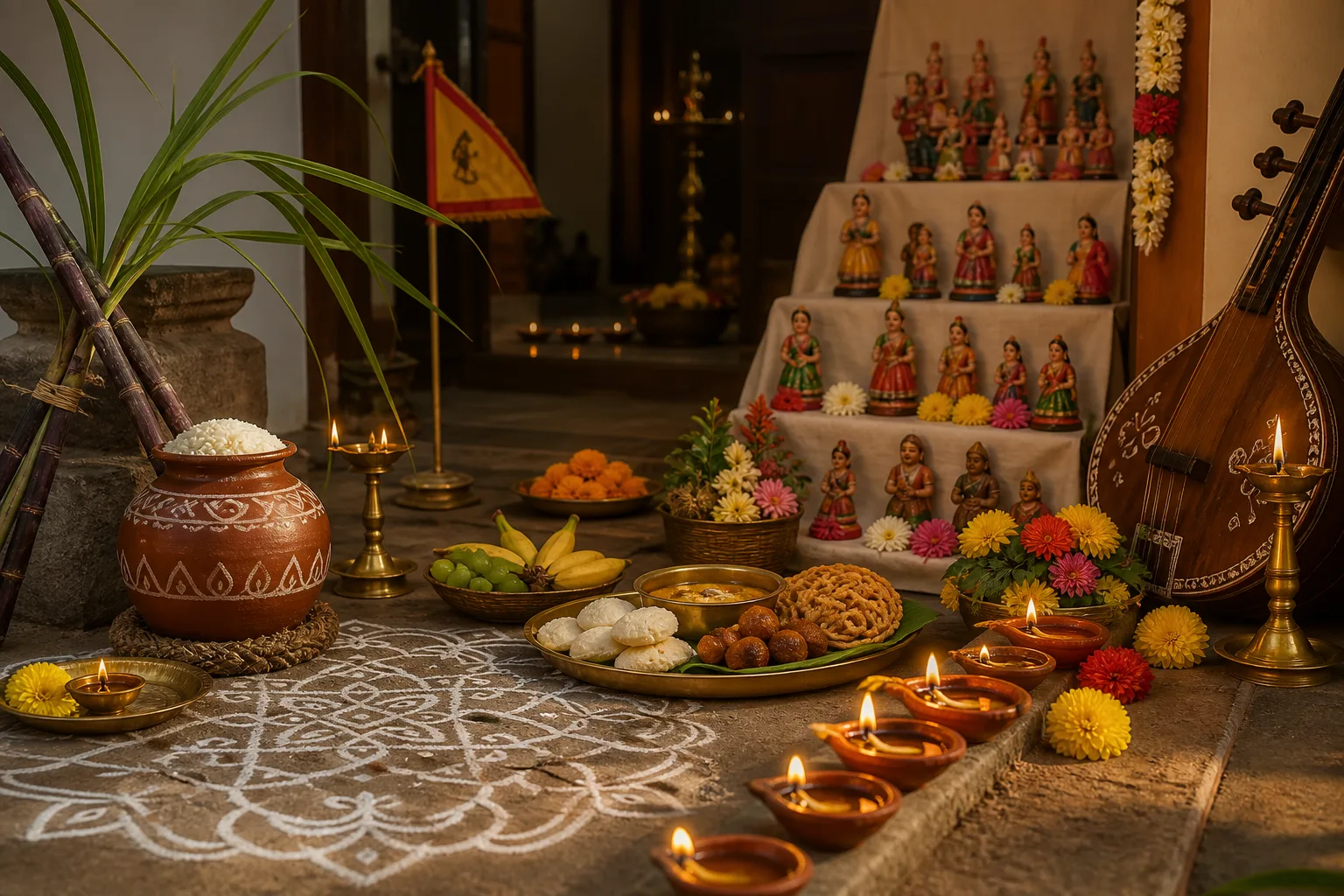
Beyond Pongal: How to Read Tamil Nadu's Festival Calendar
A cultural guide to the many clocks behind Tamil Nadu's festivals, from harvest and household practice to temple calendars and pilgrimage.
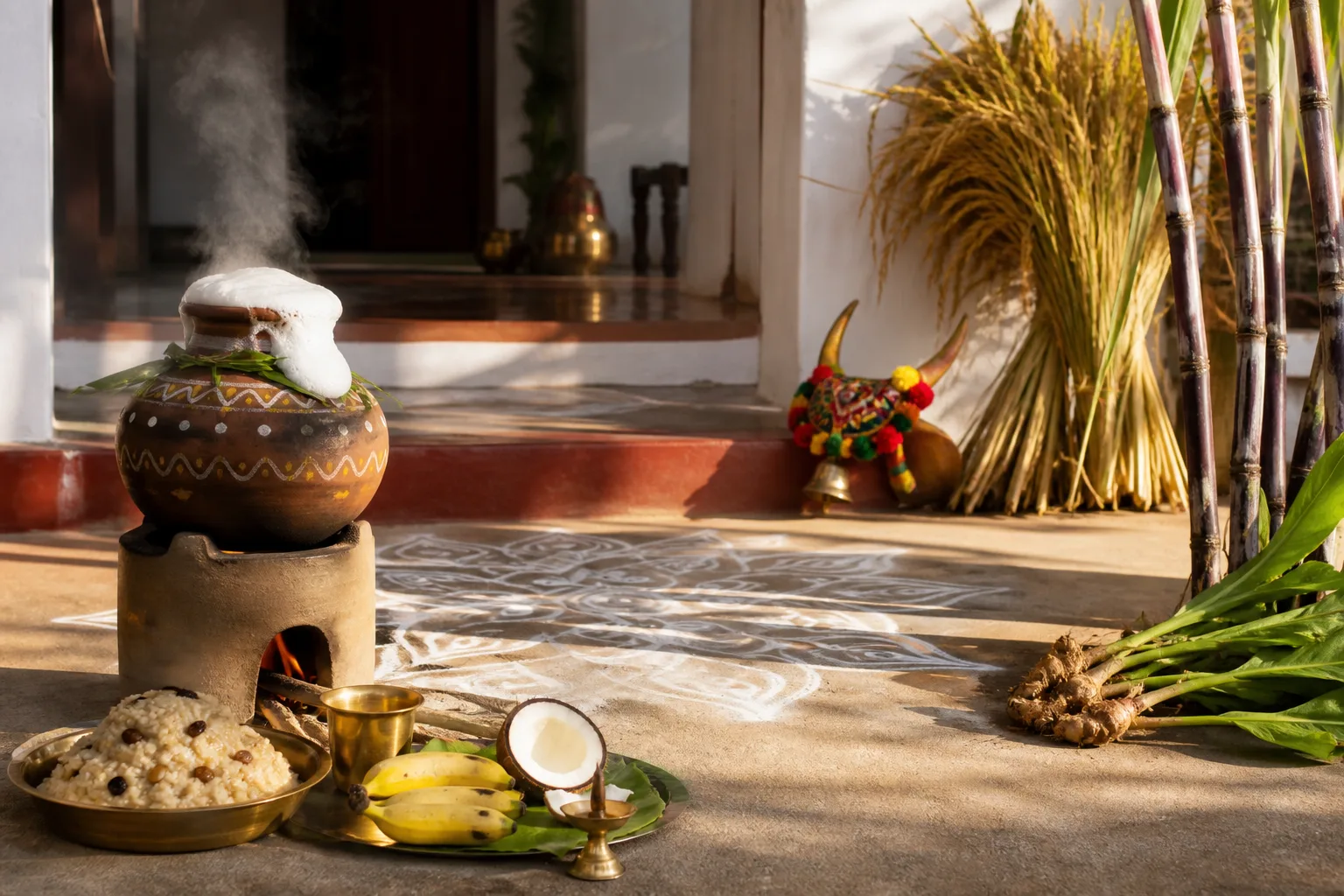
Pongal in Tamil Nadu: Understanding Four Days of Harvest Traditions
Follow Pongal across four connected observances, from renewal and the boiling pot to cattle, kinship and public gathering, without treating one household pattern as universal.
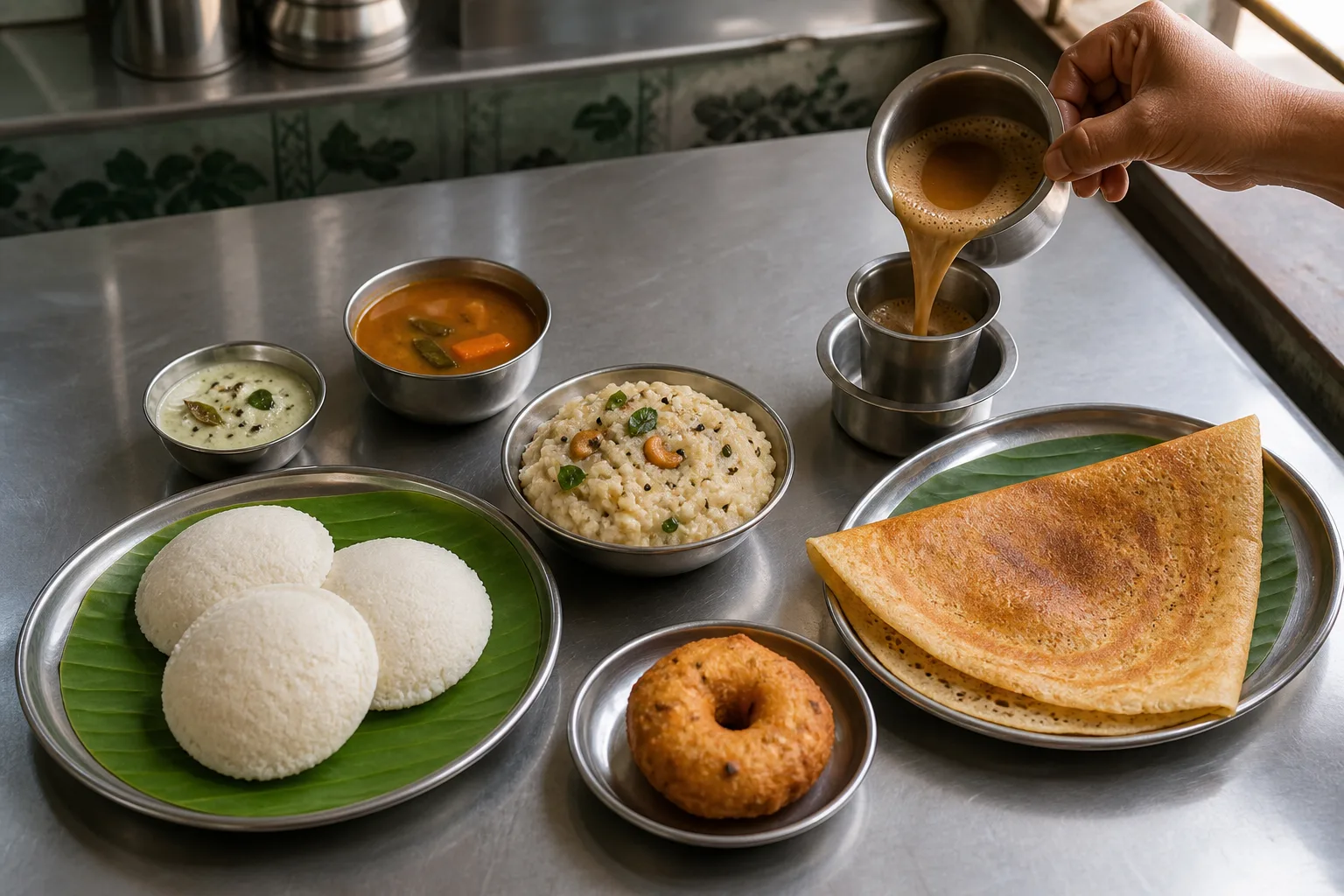
Tamil Nadu Tiffin Culture: Idli, Dosa, Pongal and the Morning Table
Read Tamil Nadu's morning table through fermented batter, quick service, home preparation, public eating and the many meanings of tiffin.
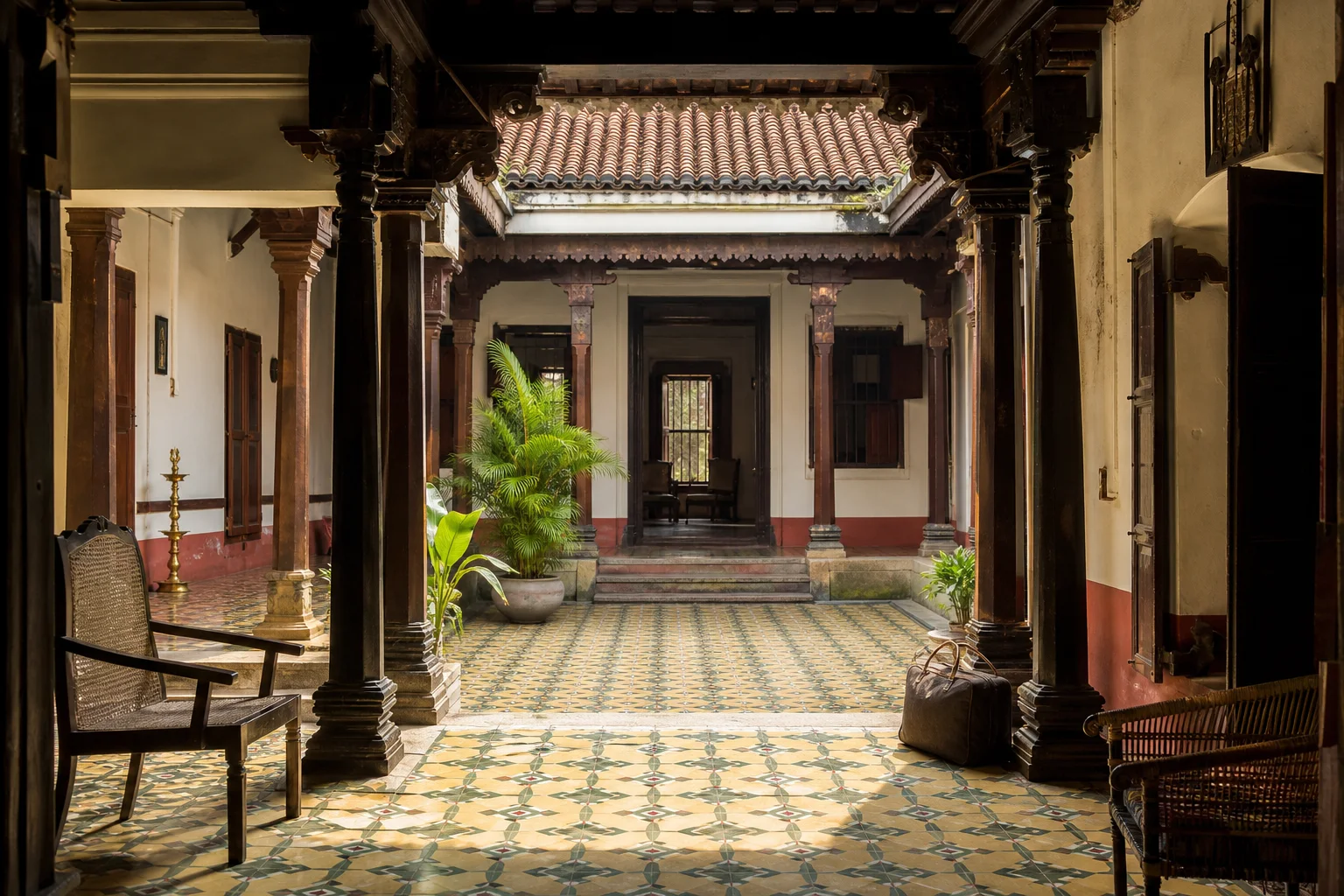
Staying in Chettinad: Reading a Mansion from the Courtyard
How to choose a mansion stay for its architecture, setting and stewardship rather than treating Chettinad as a generic luxury backdrop.
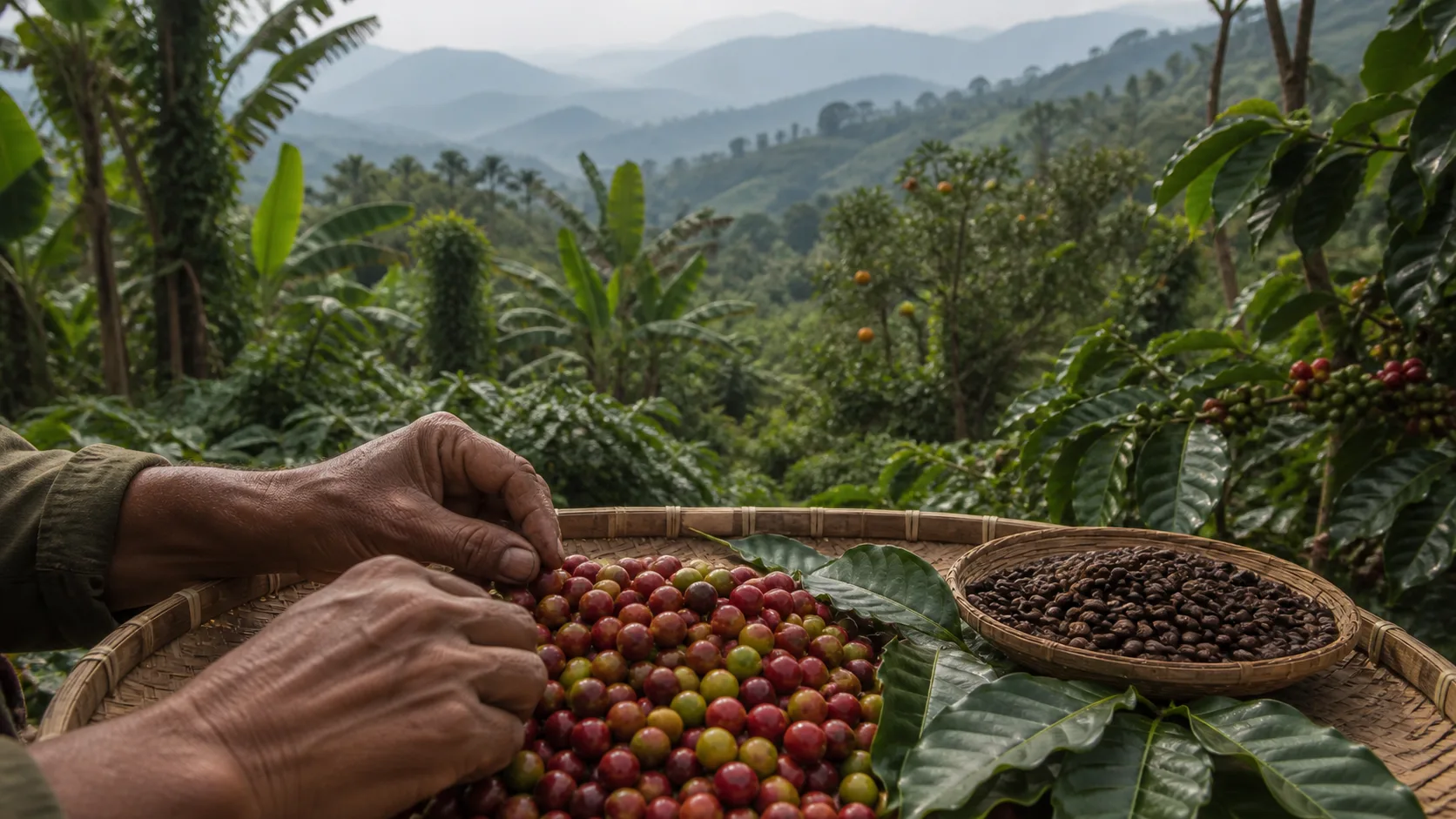
Tamil Nadu Coffee: Read Four Mountain Origins Before the Cup
A regional coffee guide that moves beyond degree coffee and café style to compare mountain origins, farm systems, processing and evidence on a packet.
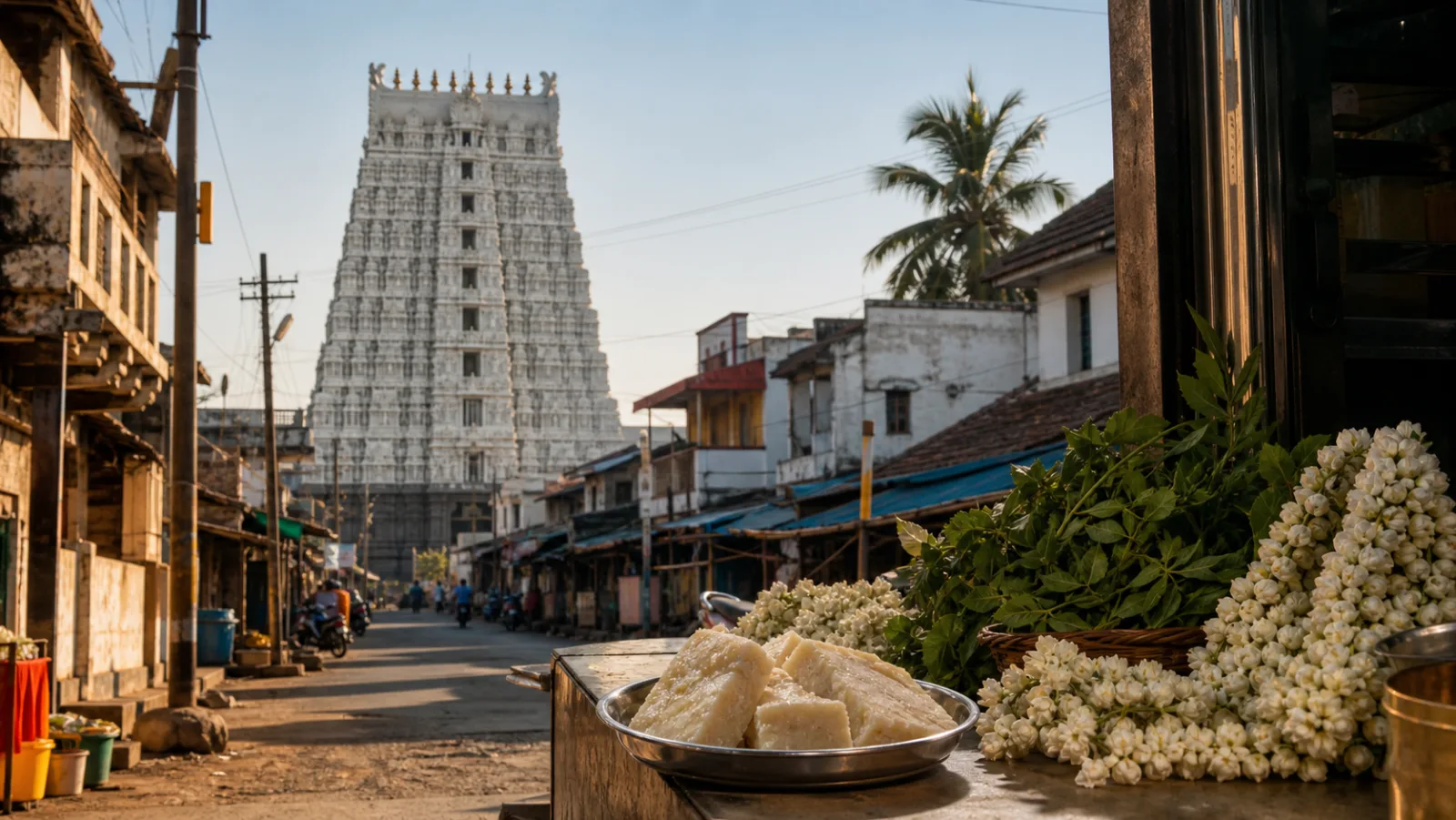
Srivilliputhur: Read Andal, the Temple Town and Palkova
A careful route through Srivilliputhur's devotional literature, living temple streets, flowers and geographically indicated milk sweet.
Frequently asked questions
What is the one authentic cuisine of Tamil Nadu?
There is no single version that represents every region, community, household, religious setting, or period. The article describes supported patterns and variation rather than setting a purity test.
Did Chettinad cuisine originate entirely through overseas trade?
No. Nagarathar trade and migration are relevant historical contexts, but they do not prove an imported origin for every spice, technique, or dish.
Where exactly is Kongunadu?
It is a historical and cultural region in western Tamil Nadu whose boundaries vary by period and source; it is not a current legal district.
Which shop invented Tirunelveli halwa?
This article does not identify one because institutional accounts conflict on chronology and early commercial narratives.
What does degree mean in Kumbakonam degree coffee?
Several explanations circulate, including milk quality and decoction strength. The reviewed evidence does not support selecting one explanation as settled.
Does this story recommend restaurants?
No. It is an editorial discovery journey, not a restaurant directory or ranking. Current businesses, hours, prices, ingredients, and hygiene require separate verification.
Editorial attribution
Prepared and reviewed by My Tamil Nadu Editorial Desk. Modified 15 August 2026.