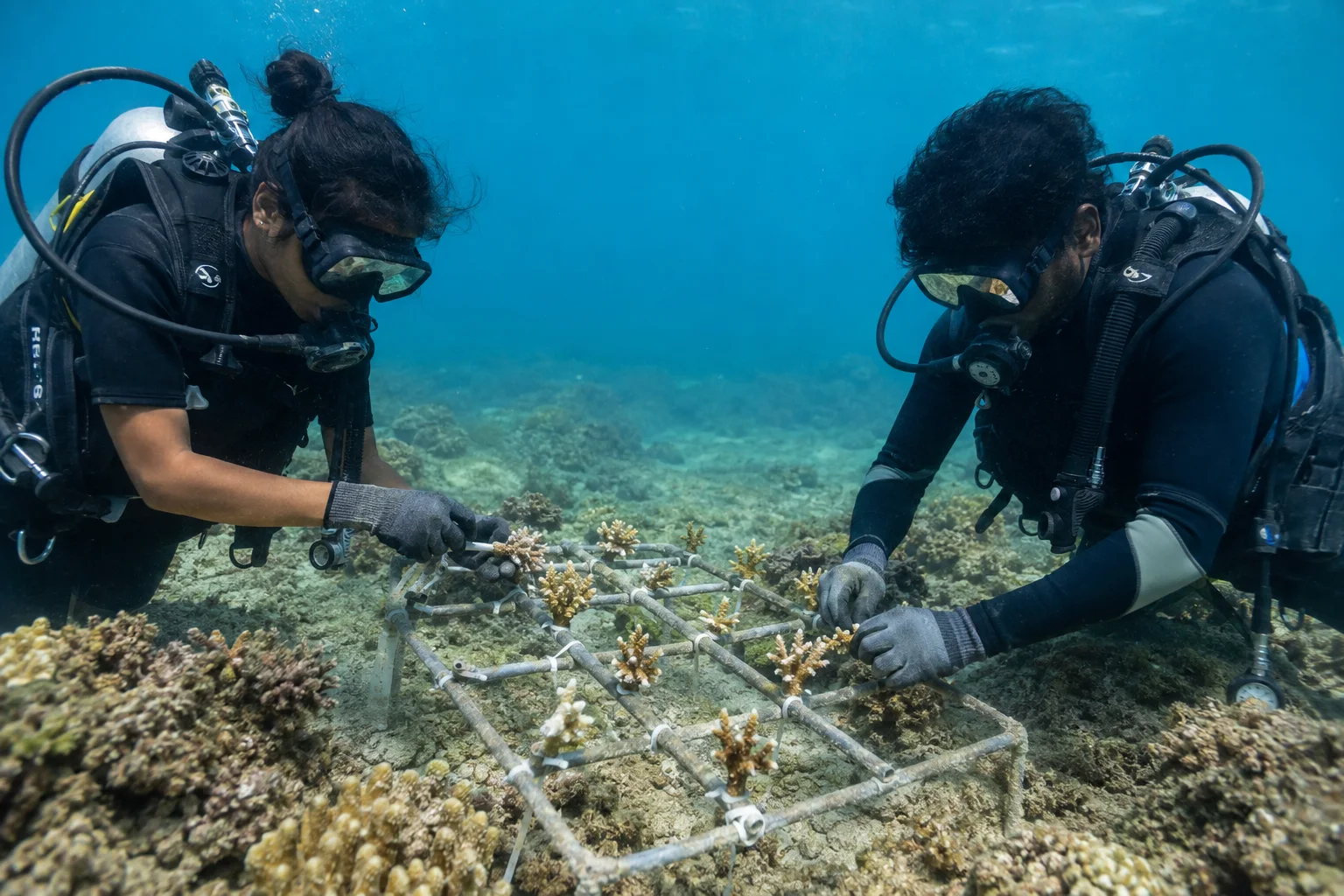
Begin with restoration, not decoration
A coral reef is a living ecological structure created over time by coral colonies and associated organisms. Restoration does not mean arranging colourful pieces for appearance. It is a planned intervention intended to support ecological recovery where damage, erosion or habitat loss has reduced the reef's ability to persist.
Tamil Nadu's environment authorities released Coral Reef Restoration in Tamil Nadu: Guidelines for Practitioners in 2026. The release signals an effort to standardize decisions and practice. It does not mean every damaged reef is suitable for transplantation or that one method should be repeated across all islands and depths.
The first question is often whether the cause of degradation has been addressed. If pollution, destructive use, sediment stress, heat or repeated physical disturbance continues, adding fragments may produce a visible project without durable recovery. Restoration belongs inside protection and management, not in place of them.
Sources for this section: 2026 guideline release, Tamil Nadu coral reefs.
Let the site determine the method
Practitioners may work with naturally broken fragments, nursery-grown material, transplantation or artificial structures, but the words alone do not establish suitability. Species, depth, substrate, currents, sediment, wave energy, water quality and the reason for loss all shape the decision.
A restoration frame can stabilize small fragments while they attach and grow, yet poorly placed material can fail or damage surviving habitat. Collection also requires restraint so donor colonies are not harmed. Method selection therefore needs ecological assessment, authorization, trained teams and a monitoring plan before installation.
The public should resist copying a photograph as a do-it-yourself technique. Corals are protected under Indian wildlife law, and work within a marine protected area carries additional controls. Touching, collecting or transplanting without authority is not citizen restoration.
Sources for this section: Tamil Nadu coral reefs, Indian coral reefs.
Keep the protected-area names precise
The Gulf of Mannar contains overlapping but non-identical designations. The Marine National Park protects a notified group of islands and adjoining marine habitat. The wider biosphere-reserve framework covers a larger social and ecological landscape. UNESCO recognition under the Man and the Biosphere Programme is another layer, not a synonym for the national park.
Tamil Nadu's coral publication also discusses the Gulf of Mannar Biosphere Reserve in relation to UNESCO and Ramsar recognition. Readers should preserve the official name, boundary and year used by each authority instead of applying one label to the entire sea between Tamil Nadu and Sri Lanka.
This distinction has practical consequences. Rules, permissions, community use and visitor access can differ by zone and activity. A boat operating in the wider region is not proof that passengers may enter every island, dive on any reef or collect marine material.
Sources for this section: Tamil Nadu coral reefs, UNESCO Gulf of Mannar, Ramsar Gulf of Mannar.
Measure recovery over years, not one launch day
A successful installation is not yet a restored reef. Monitoring may examine fragment survival, attachment, growth, disease, bleaching, structural stability, fish and invertebrate use, nearby reference habitat and the return of ecological functions. Storms and marine heat can alter results after an encouraging first season.
The 2026 technical report on artificial-reef-driven restoration at Vaan Island evaluates ecological, social and economic dimensions rather than presenting one photograph as proof. That broader frame is important because an island-restoration intervention can affect coastal protection, habitat and nearby livelihoods in different ways.
Comparisons need suitable baselines and time periods. Survival percentages from different species, sites or monitoring windows should not be combined casually. Strong reporting records failures and maintenance as well as growth, allowing later projects to change course rather than repeat an attractive but unsuitable technique.
Sources for this section: Vaan Island assessment, TNGCC publications.
Include coastal communities without romanticizing them
Reefs support fisheries, shoreline relationships and knowledge held by coastal communities. Restoration planning can affect where and how people work, and long-term monitoring may depend on local participation. Consultation is therefore not an optional story added after the technical design.
At the same time, a community should not be described as a single voice or used as visual proof that a project has consent. Fishing groups, women, boat operators, processors, researchers and officials may experience benefits and restrictions differently. Published assessments should explain whose evidence was gathered and how.
Visitors also enter this social landscape. Ask before photographing people or boats at close range, do not block landing areas and avoid bargaining for trips into restricted habitat. Responsible marine travel respects work, law and safety even when an unofficial operator promises a closer reef view.
Sources for this section: Vaan Island assessment, Coastal Restoration Mission.
Make marine learning possible without touching the reef
A restoration site is not automatically a tourism site. Do not seek project coordinates, approach divers at work or enter marine protected areas without current authorization. The safest public learning may come from an official interpretation centre, museum, shoreline viewpoint or permitted boat route rather than direct reef access.
Where snorkeling or boating is legally offered, verify the operator, weather, life jackets, protected-area permission and environmental practice. Maintain buoyancy, never stand on coral, do not feed wildlife and keep plastic, sunscreen residue and loose equipment under control. Decline any activity that handles coral for photographs.
The final lesson is modest: restoration can help selected damaged places when causes, method, law and monitoring align. It cannot promise a climate-proof reef or erase continued pressure. A responsible traveller supports prevention first and treats every intervention as evidence to be evaluated, not a spectacle to consume.
Sources for this section: Tamil Nadu coral reefs, Coastal Restoration Mission.
Sources & Further Reading
These authoritative references support the historical, geographic, or seasonal context in this story. Current conditions and operating details still require a fresh official check.
- World Environment Day 2026 · Tamil Nadu State Wetlands Authority
- Beneath the Waves: Exploring Tamil Nadu's Coral Reefs · Tamil Nadu Green Climate Company
- Socio-Ecological and Economic Valuation of Artificial-Reef-Driven Restoration of Vaan Island · Government of Tamil Nadu, IIT Madras and SDMRI
- Tamil Nadu Coastal Restoration Mission · Tamil Nadu Green Climate Company
- Reports and Publications · Tamil Nadu Green Climate Company
- Coral Reefs in India · Ministry of Environment, Forest and Climate Change
- Gulf of Mannar Biosphere Reserve · UNESCO Man and the Biosphere Programme
- Gulf of Mannar Marine Biosphere Reserve · Ramsar Sites Information Service
Related Stories
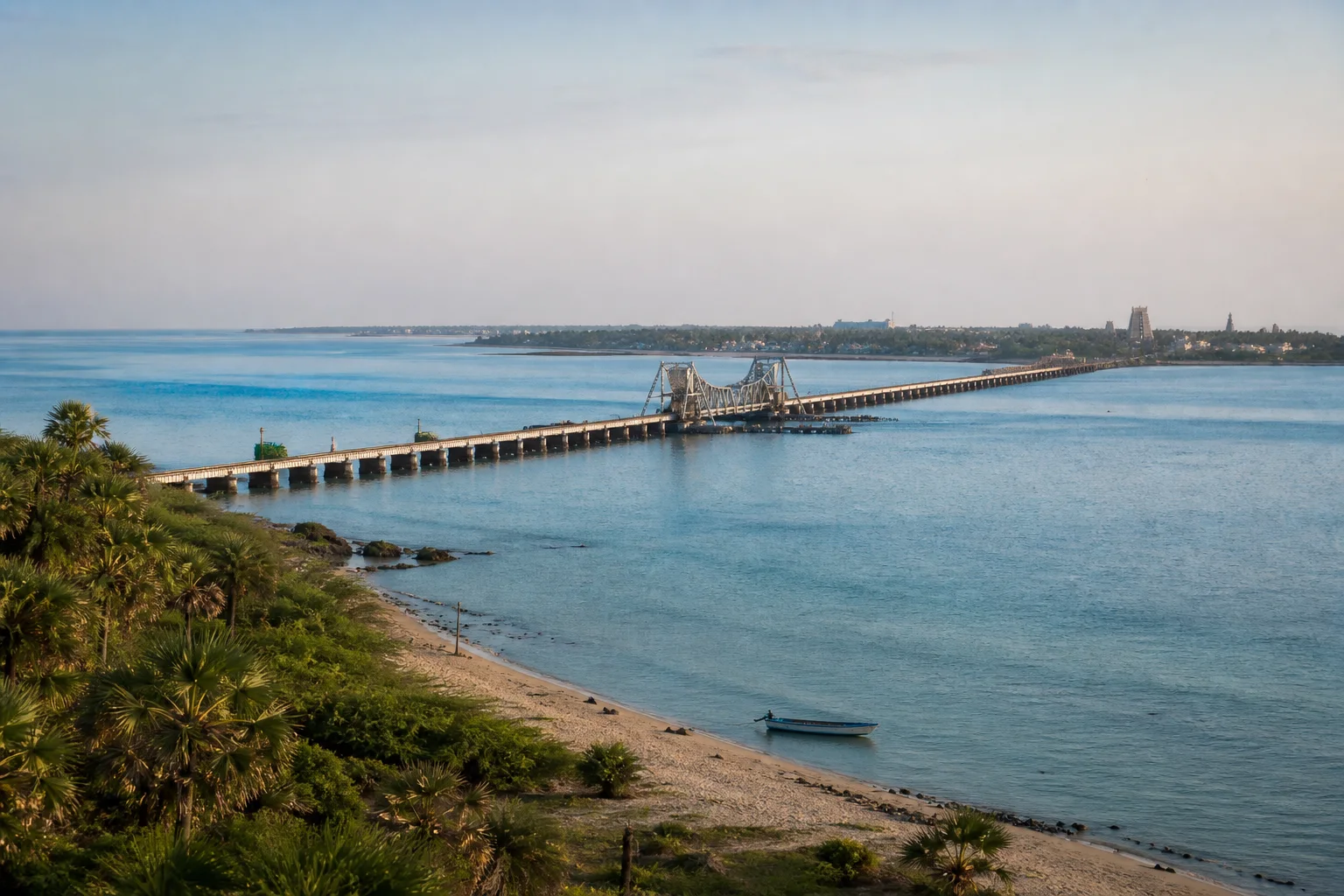
Rameswaram as an Island: Temple, Pamban, Dhanushkodi and the Sea
A connected reading of Rameswaram's sacred town, mainland crossing, exposed eastern coast and protected marine context rather than four unrelated stops.
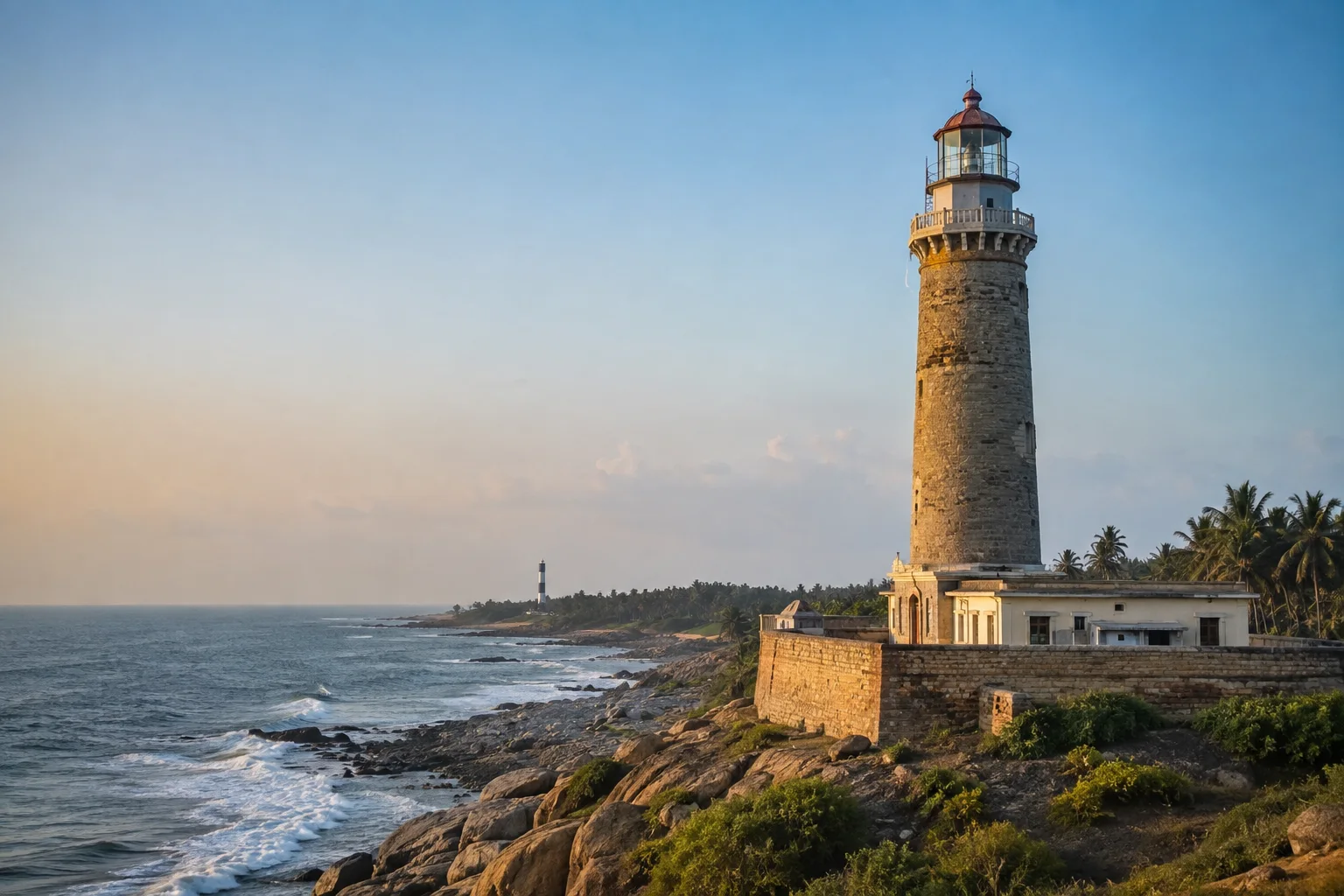
Tamil Nadu's Lighthouse Trail: Read the Coast Through Navigation
A coast-spanning guide to lighthouses as working navigation infrastructure, historical evidence and responsible places of maritime learning.
Frequently asked questions
Can visitors transplant coral in the Gulf of Mannar?
No. Coral work requires scientific assessment, authorization and trained practitioners. Do not touch, collect or move coral.
Is every part of the Gulf of Mannar a Marine National Park?
No. Several designations overlap but have different boundaries and purposes. Use the official name and rules for the specific place and activity.
Does a coral-restoration structure prove the reef has recovered?
No. Recovery needs long-term monitoring of survival, growth, stability and ecological function, including failures and changing conditions.
Editorial attribution
Prepared and reviewed by My Tamil Nadu Editorial Desk. Modified 4 September 2026.