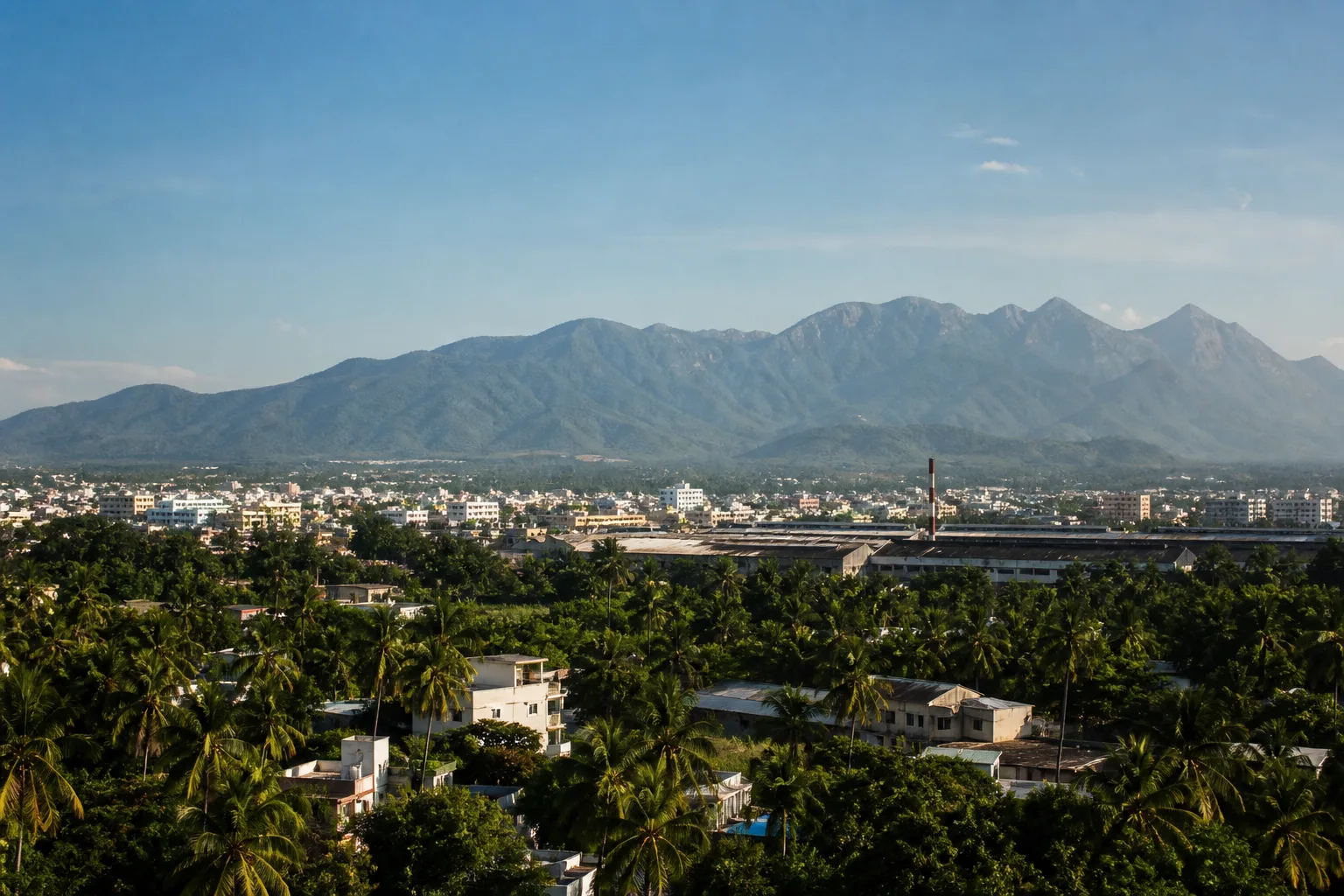
Kongu region city and western gateway
Coimbatore Travel & City Guide
Coimbatore is a major western Tamil Nadu city shaped by the Kongu region, manufacturing, education, trade and its proximity to the Western Ghats. This guide connects the urban experience with district landscapes without treating distant hill and forest sites as city-centre attractions.
On this page
Start here
Why Coimbatore
Coimbatore works as both a destination and a regional base. The district administration identifies temples, museums, waterfalls and foothill landscapes across the district, while the city itself is an important centre of commerce, industry and education. The distinction matters: a city day and a district excursion require different transport and access checks.[1]
A useful first visit should connect Coimbatore's principal landmarks with the ordinary geography between them. Streets, water systems, markets, transport nodes, worship and regional food often explain more than a sequence of isolated photo stops. This guide therefore groups places by context and gives verification notes wherever current access may change.
The right pace depends on purpose. A one-day visit can establish the main landscape and one or two major sites; a second day allows museums, neighbourhoods or craft traditions; a third is better used for a carefully chosen nearby circuit. The itineraries below are sequences rather than promised travel times.
Historical context
A short history of Coimbatore
The wider Kongu region has passed through several political and commercial formations. The district's official history outlines rule and influence associated with the Cheras, Cholas, Pandyas, Vijayanagara rulers, Nayaks, Mysore and the colonial period. A city guide should present that long context cautiously rather than assigning every surviving landmark to one simple narrative.[2]
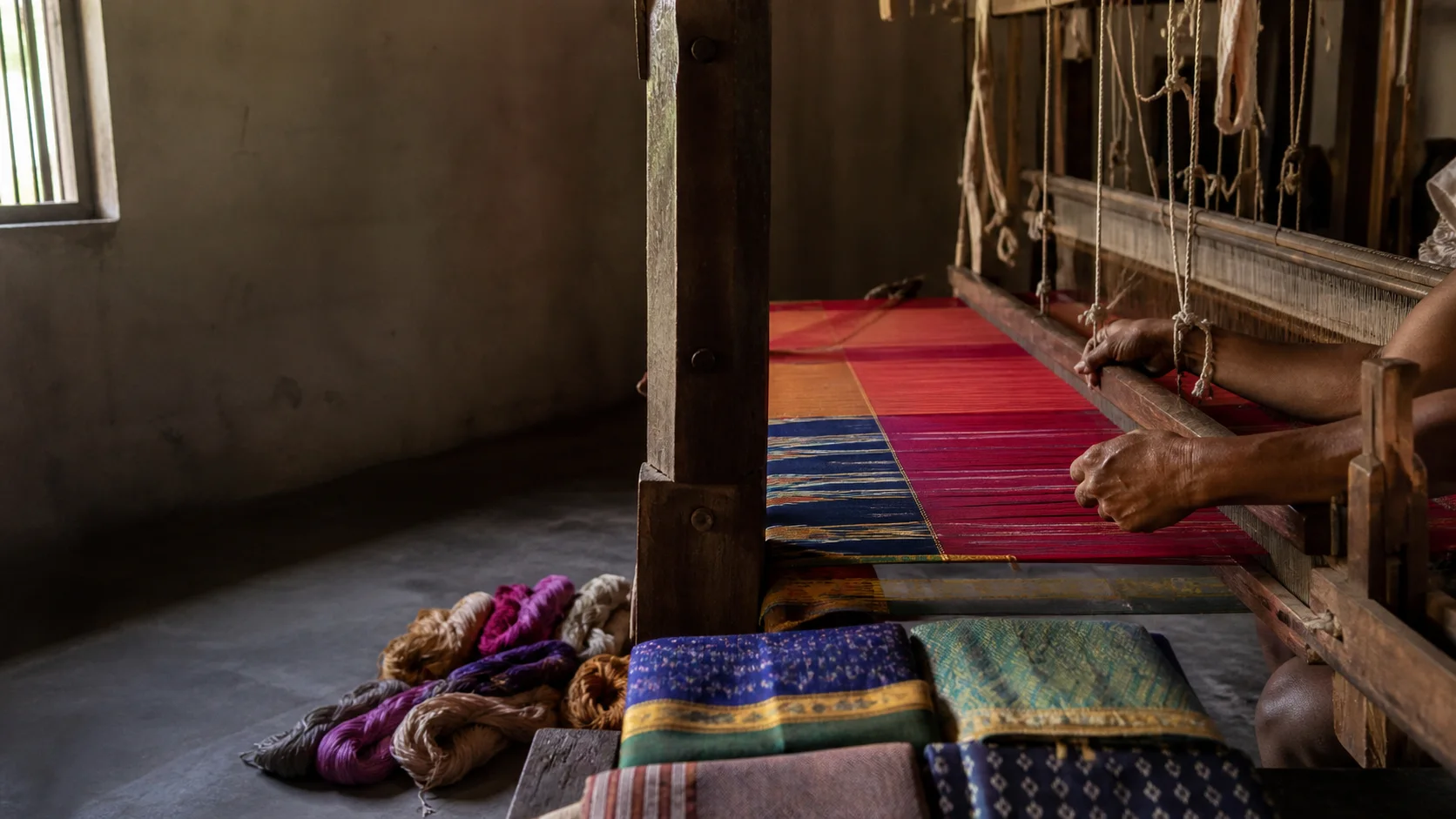
Modern Coimbatore grew through trade, cotton, engineering and manufacturing networks. Textile production became especially visible in the city's identity, but the economy is broader than one industry and includes education, healthcare, services and technology.
Kovai, the widely used Tamil name, is useful for searches and local conversation. It is an alias for the same destination, not a separate guide or municipality created by this website.
Plan your visit
Places to explore in Coimbatore
Access, opening details and current conditions should be verified with the responsible official source before travel.
Gass Forest Museum
A forestry museum that can add institutional and ecological context to the western region. Verify visitor access with the responsible authority.
Do not assume all campus areas are open.Gedee Car Museum
A specialist collection connected with engineering and mobility; check its current programme and access directly.
Current hours require verification.Town Hall and market area
A working commercial district where the city's trade character is more visible than in a single monument.
Walk with attention to traffic and commerce.Perur Patteeswarar Temple
An important Shiva temple west of the centre and a place to understand sacred architecture and continuing worship.
Verify temple access through official channels.Marudamalai
A temple in the foothill setting north-west of the city; treat the journey and sacred environment as part of the visit.
Road and worship arrangements can change.VOC Park area
A central orientation point whose current facilities should be checked locally.
Use current local information.Valankulam lake edge
A way to read water, infrastructure and public space within the contemporary city.
Follow marked public access.Isha area and Poondi foothills
A well-known destination outside the central city, best treated as a separate district outing with current road and institutional checks.
Do not combine with a dense city schedule.Choose your pace
Things to do in Coimbatore
Follow a Kongu food trail
Compare tiffin, rice meals and regionally associated preparations while asking what is local, seasonal and household-specific.
Study industry through institutions
Use museums and public interpretation rather than entering working industrial sites without permission.
Pair city and foothills
Keep one day urban and one day for a verified district excursion rather than shuttling repeatedly.
Read one place closely
Choose a museum, monument, temple or neighbourhood in Coimbatore and spend enough time to understand its setting, materials and continuing use.
Build a regional food map
Ask what is made locally, what belongs to the wider district and what arrived through migration or trade. This avoids reducing a complex food culture to one famous item.
Use the map as a planning tool
Save official place names before travel, cluster nearby stops and open current directions only when needed. The map section provides direct Google Maps handoffs without embedding unverified business data.
Living places
Temples, heritage and interpretation
Perur and Marudamalai are living religious places, not visual backdrops. Confirm current entry, dress and photography expectations through the temple or HR&CE.
Coimbatore's heritage also includes markets, educational institutions, industrial histories and water systems. Their value is often documentary and social rather than monumental.
Everyday context
Culture and food
Culture
Kongu Tamil, regional social histories, textile work, contemporary arts and migration all contribute to the city's culture. Avoid presenting a single folk form as exclusive to the city.
Public performances and exhibitions depend on current institutional calendars. Verify programmes before building a trip around them.
Explore Tamil Nadu culture →Food
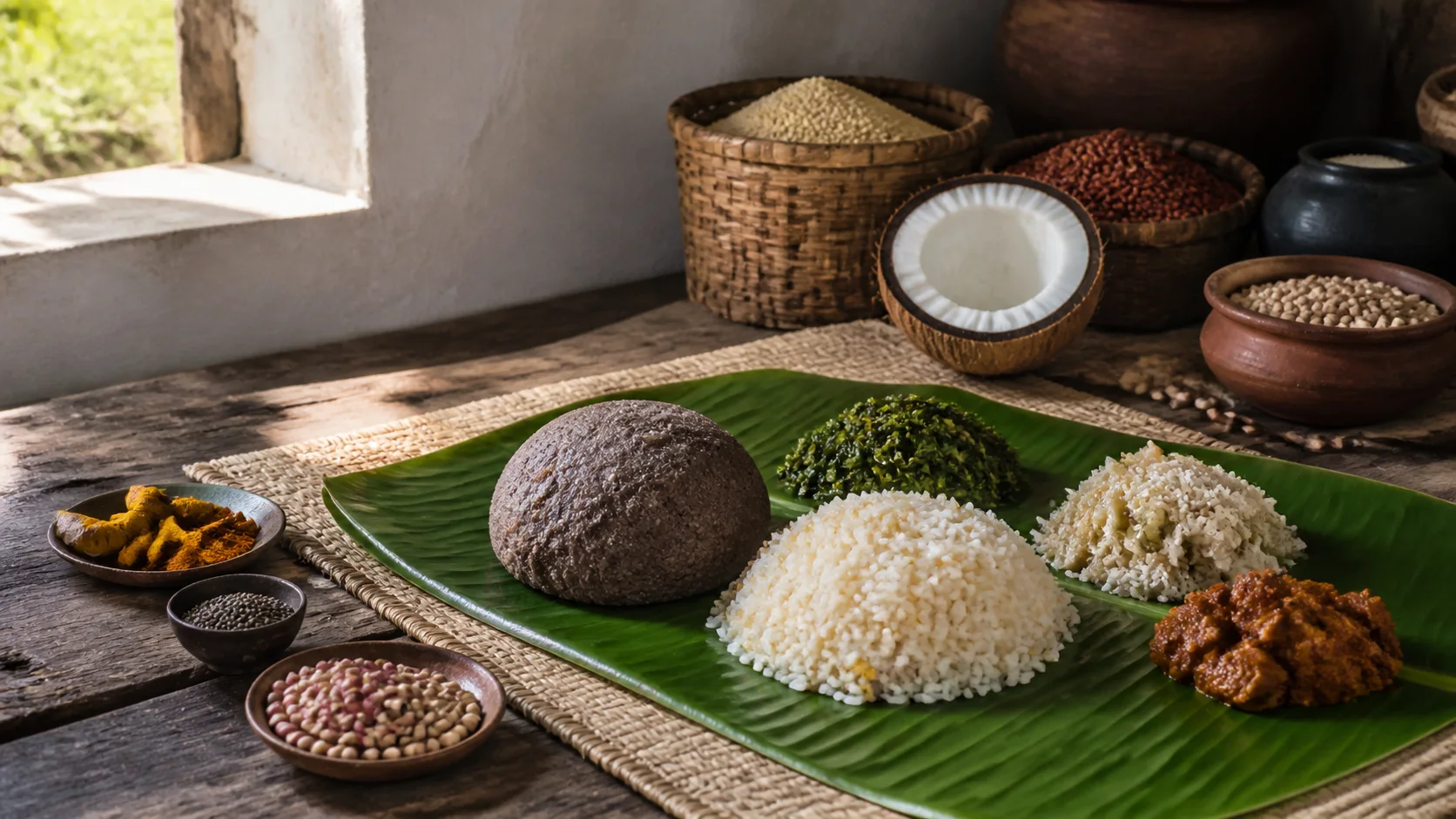
Kongu cuisine is associated with the wider western region, not only the municipal boundary. Ask about seasonal greens, millets, pulses, rice preparations and meat dishes without assuming every restaurant follows a single traditional canon.
Coimbatore also has a broad metropolitan food landscape shaped by students, workers and families from across Tamil Nadu and beyond.
Explore Tamil Nadu food →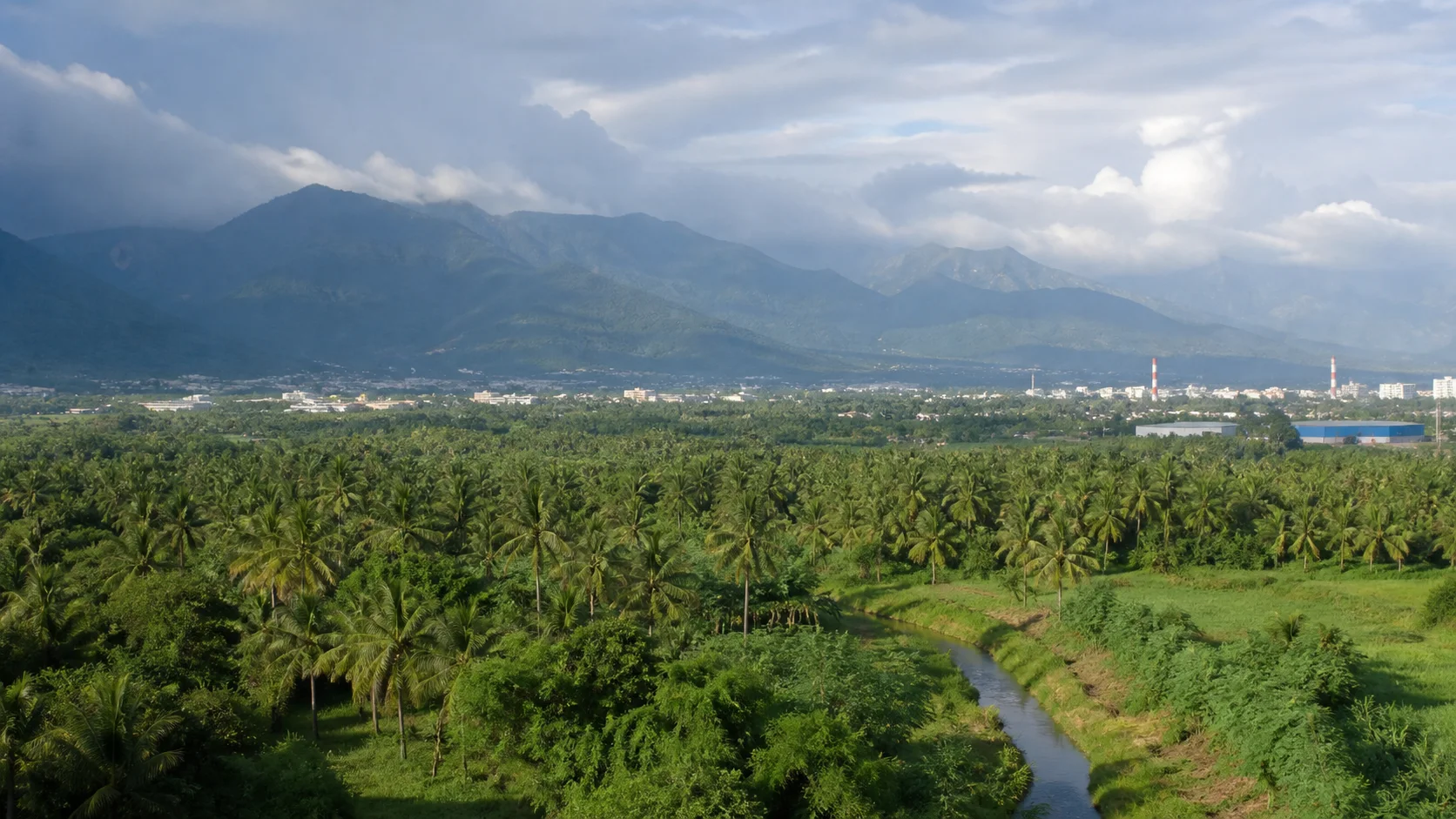
Travel with context
Nature, season and month-by-month planning
Landscape and ecology
The Western Ghats shape the region's climate, water and visitor imagination, but protected forests and distant waterfalls are not extensions of the city park system. Check forest, road and weather conditions for each excursion.
Urban lakes and the Noyyal basin invite attention to water history and contemporary environmental pressures. Use marked public spaces and avoid presenting restoration status as permanent.
Seasonal planning
There is no universal "best" month for Coimbatore. Comfort depends on heat, rain, wind, visibility, local events and the kind of experience planned. Use the statewide month guides for broad patterns, then check the India Meteorological Department forecast close to departure.[3]
Outdoor comfort often improves when days are not at their hottest, while southwest-monsoon conditions can affect western hill approaches differently from the city plain. Do not infer waterfall safety or flow from the month alone.
Festival and holiday periods can change crowd levels, transport demand and access arrangements. They may also be culturally meaningful times to visit, but a guide should never promise an event date without checking the current official calendar. Keep bookings flexible where possible.
January
Often chosen for outdoor-oriented visits; verify local conditions and holiday demand.
Open month guide →AprApril
Plan early starts, shade and indoor pauses; check the current heat outlook.
Open month guide →JulJuly
Southwest-monsoon influence varies by region; confirm rain, wind and road conditions.
Open month guide →OctOctober
Northeast-monsoon conditions may affect parts of Tamil Nadu; verify the local forecast.
Open month guide →Practical access
How to reach and get around Coimbatore
Rail
Coimbatore Junction and other city stations connect the region; confirm the exact station and service with Indian Railways.
Air
Coimbatore International Airport serves the region; check the airline and airport for current operations.
Road
State and national roads connect western Tamil Nadu and neighbouring states; verify current road conditions.
City movement
Buses, hired vehicles and walking can be combined by neighbourhood; routes and fares require current checks.
Getting around
City museums and markets can be grouped centrally, while Perur lies to the west and Marudamalai to the north-west. Foothill and forest-side destinations deserve their own half-day or day.
Keep each half-day centred on one part of Coimbatore. Save destinations by their official or widely recognized place names, show drivers the written name when pronunciation may vary, and allow time for security checks, worship, weather or traffic.
Walking conditions vary by street, season and time of day. Use marked crossings where available, avoid isolated shortcuts after dark and ask the accommodation or an official visitor desk for current local advice.
Plan by days
Suggested Coimbatore itineraries
These are editorial sequences, not promises of travel time. Confirm access and adapt the pace to current conditions.
A focused introduction to Coimbatore that keeps the first day coherent.
- MorningGass Forest Museum and Gedee Car Museum
- AfternoonContinue with a nearby cultural or food stop, leaving time to read the setting rather than race onward.
- EveningUse a central public area or a verified cultural programme; avoid scheduling a remote foothill return after an already full day.
Adds a second geographic cluster and more interpretation.
- Day 1Gass Forest Museum and Gedee Car Museum, with a measured break and verified access.
- Day 2Town Hall and market area and Perur Patteeswarar Temple, followed by a neighbourhood meal or institution whose current programme has been checked.
Keeps two days local and reserves the third for a nearby circuit.
- Day 1Gass Forest Museum and Gedee Car Museum
- Day 2Town Hall and market area and Perur Patteeswarar Temple
- Day 3Marudamalai and VOC Park area. Confirm road, monument and protected-area access before leaving.
Continue nearby
Places around Coimbatore
Open map tools
Map of Coimbatore
Interactive map data is not loaded on this static page. Open Google Maps for current place details and directions.
Before you go
Practical travel guidance
Keep the day geographically compact
Group stops by neighbourhood or transit corridor. Crossing a large city repeatedly can consume the time intended for museums, markets and heritage.
Verify institutions individually
Museums, performance venues and working civic sites publish their own access notices. Check the responsible institution rather than relying on an old roundup.
Plan for heat and rain
Carry drinking water and sun or rain protection appropriate to the forecast. Build an indoor alternative into each half-day.
Use a transport mix
Rail, city bus, app-based vehicles and walking each suit different parts of an urban visit. Confirm current services and choose well-lit pickup points.
Respect working neighbourhoods
Markets and residential streets are not staged attractions. Keep doorways clear, ask before photographing people and avoid obstructing trade.
Leave schedule margin
Traffic, queues and local events can alter access. A short list explored carefully is more useful than an overfilled checklist.
Saved only in this browser. No account or personal data is required.
Responsible travel
Visit Coimbatore as a lived place. Ask before photographing people, ceremonies, artisans or private homes; keep entrances and working areas clear; and follow the custodian's rules at sacred, civic and protected sites. A ticket or public road does not make every nearby activity open to documentation.
Choose locally accountable services, carry reusable essentials and avoid single-use litter. Do not feed wildlife, remove natural material, climb monuments, fly a drone without permission or enter farms, forests, rooftops and water edges merely because a photograph appears possible.
Questions
Frequently asked questions about Coimbatore
Is Coimbatore the same as Kovai?
Kovai is a widely used Tamil name for Coimbatore. This page is the single canonical guide for both names.
Is Coimbatore only a transit city?
No. It has its own museums, temples, markets, food culture and industrial history, while also serving as a base for wider western Tamil Nadu.
How many days are useful for a first visit?
One day can introduce Coimbatore; two days allow a more balanced city or town experience; three days can include a selected nearby circuit. The answer depends on access and pace, not a fixed checklist.
Are the timings and fees on this page current?
No hardcoded timings or fees are presented as live facts. Check the responsible temple, monument, museum, transport operator or district authority close to travel.
Can I use Google Maps from this guide?
Yes. The map section opens a place search and directions in Google Maps. Verify the selected pin before travelling because similarly named places and user-edited listings can exist.
Does the checklist require an account?
No. Checklist choices are stored only in the current browser under a destination-specific key. Reset and print controls are provided.
Which language is most useful?
Tamil is the principal local language. English is often usable in visitor-facing settings, but learning a few courteous Tamil words and carrying written place names can make local communication easier.
How should I plan around festivals?
Use an official current calendar. Festivals can change access, traffic and demand, so plan respectfully and never assume that a ritual is staged for visitors.
Editorial trust
Sources and further reading
Major factual claims were checked against the references below. Last reviewed 9 August 2026.
- Tourism in Coimbatore districtCoimbatore District AdministrationReviewed 9 August 2026
- History of Coimbatore districtCoimbatore District AdministrationReviewed 9 August 2026
- Regional Meteorological Centre ChennaiIndia Meteorological DepartmentReviewed 9 August 2026
- Official railway booking portalIndian Railway Catering and Tourism CorporationReviewed 9 August 2026
- Official Tamil Nadu Tourism portalTamil Nadu Tourism DepartmentReviewed 9 August 2026
- Official temple guideGovernment of Tamil Nadu HR&CE DepartmentReviewed 9 August 2026