Kings & Queens · Cultural Figures
Rajendra Chola I
முதலாம் இராஜேந்திர சோழன்
Regnal name: Parakesarivarman
Birth date not securely established – 1044 CE
Rajendra Chola I succeeded Rajaraja I and pursued a political program remembered through campaigns, inscriptions, and the new capital of Gangaikondacholapuram. His 1025 raid toward Srivijaya was consequential, but it was not permanent Chola rule over Southeast Asia.
Editorial status: Published · Reviewed 10 August 2026- Period
- Early to mid-11th century CE
- Dynasty
- Chola dynasty
- Reign
- Commonly dated c. 1012–1044 CE [4]
- Predecessor
- Rajaraja Chola I
- Capital association
- Gangaikondacholapuram
- Key evidence
- Inscriptions, monuments, and comparative scholarship
Life and context
Who Rajendra Chola I Was
Rajendra Chola I was an eleventh-century Chola ruler and the son and successor of Rajaraja I. His reign is commonly dated from the early 1010s to 1044 CE, although the transition includes evidence of royal participation before sole succession and chronological conventions that require care. Inscriptions identify him through regnal names and victory titles rather than the one simplified name used by modern readers. [4][3]
He inherited a state that had expanded under Rajaraja and continued campaigns in South India and Sri Lanka. Rajendra also directed a northern expedition remembered through the title Gangaikonda, founded or monumentalized a new capital at Gangaikondacholapuram, and launched the 1025 naval raid against centers linked to Srivijaya. These actions served different strategic and commemorative purposes and should not be compressed into one map of permanent conquest. [1][5][6]
The historical record is strongest when royal inscriptions are read beside monuments and scholarship. Praise texts are evidence for the court's claims and political language; they do not automatically prove uniform administration in every named place. Rajendra's profile therefore distinguishes military reach, political influence, tribute, and direct control whenever the evidence permits.
Life and context
From Rajaraja's Reign to Rajendra's Rule
Rajendra participated in the military and political world of his father's later reign before becoming sovereign. Epigraphic chronologies are sometimes described through co-regency, but that modern shorthand can imply a constitutional arrangement clearer than the surviving record. The safer conclusion is that he held substantial royal responsibility and then succeeded Rajaraja within the dynasty. [3][4]
Continuity mattered. Revenue structures, officers, local institutions, military resources, and temple patronage did not reset at accession. Yet Rajendra established his own royal identity through new campaigns, titles, gifts, and a capital associated with bringing Ganges water south. His reign needs to be understood independently rather than as an appendix to Rajaraja's. [1]
Dynastic accounts privilege royal actors. Generals, officials, sailors, merchants, artisans, cultivators, and local authorities made long-distance action and everyday government possible. Their names survive unevenly, reminding readers that a reign is a network of institutions and labor, not the biography of a single decision-maker.
Life and context
The Northern Campaign and Gangaikonda Title
Chola inscriptions celebrate Rajendra's campaign northward and the bringing of Ganges water to the new capital. The episode created a powerful royal geography linking the Kaveri-based court to northern India. A victory list, however, records the court's claimed sequence and prestige; it does not establish that the Cholas permanently administered every region crossed by an army. [3]
Military movement over such distance depended on alliances, supplies, commanders, roads, river crossings, and interactions with multiple polities. The campaign can be described as a far-reaching expedition whose commemoration strengthened Rajendra's status. Terms such as conquest need a defined object: defeating a force, receiving submission or tribute, occupying a place, and sustaining government are not interchangeable.
The title Gangaikonda, commonly understood as one who took or brought the Ganges, became associated with Rajendra and the capital Gangaikondacholapuram. The title is part of royal commemoration, while the surviving temple and archaeology provide a material setting. Ritual symbolism and political strategy can operate together without proving every later story about the water ceremony. [1][3]
Life and context
The 1025 Maritime Raid and Srivijaya
In 1025, Chola forces attacked a series of places connected with Srivijaya and the maritime networks of Southeast Asia. Scholarship treats the episode as a naval expedition or raid whose causes are examined through trade, diplomacy, strategic access, and relations with Song China. The inscriptional list demonstrates action across the Bay of Bengal, but it does not show that Rajendra ruled Indonesia or permanently controlled all named ports. [5][6]
Srivijaya was a complex maritime polity, not an empty field entered by the Cholas. Local rulers, port communities, merchants, and shipping networks had their own histories. The raid may have altered political relationships and commercial conditions, but direct Chola administration in Southeast Asia is not established by the campaign list. Later contact and restored relations also warn against imagining a simple colonial takeover. [5]
Naval capability likewise should not become a claim to control the entire Indian Ocean. Ships moved within monsoon systems and depended on ports, pilots, finance, provisions, and coastal knowledge. Rajendra's expedition was historically important precisely because it was a specific, difficult action; exaggerated claims make it less, not more, understandable. [6]
Life and context
Gangaikondacholapuram and Its Temple
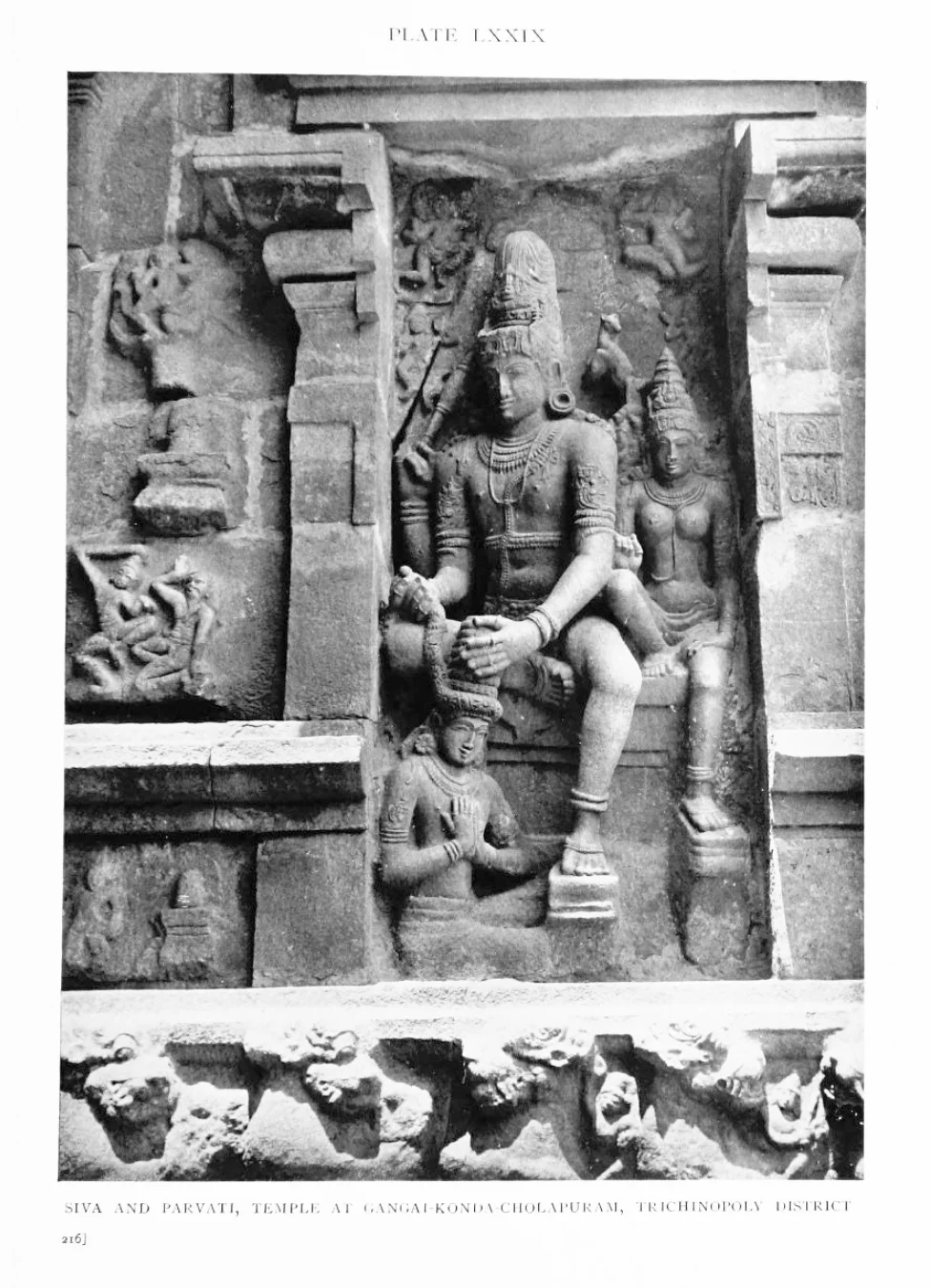
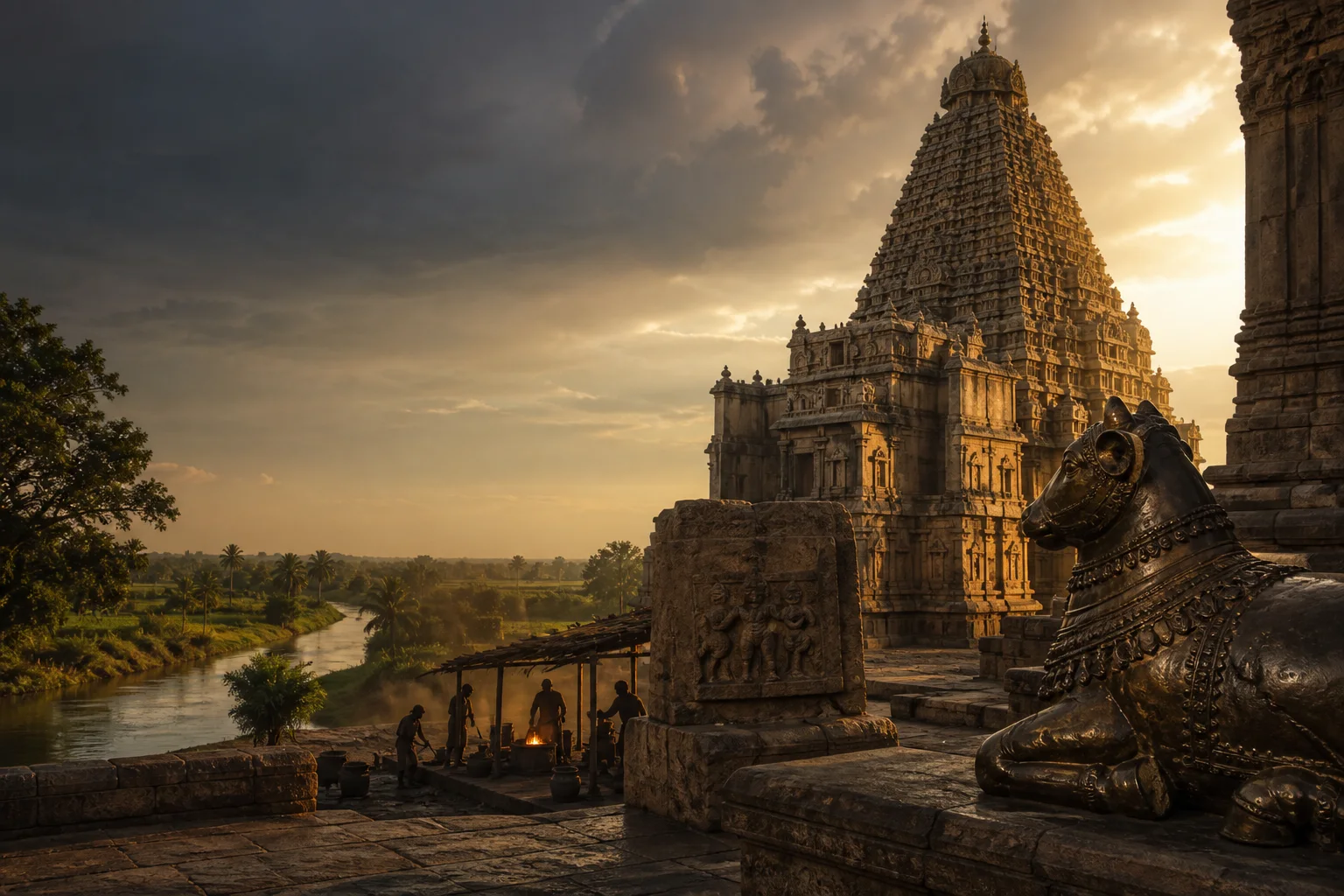
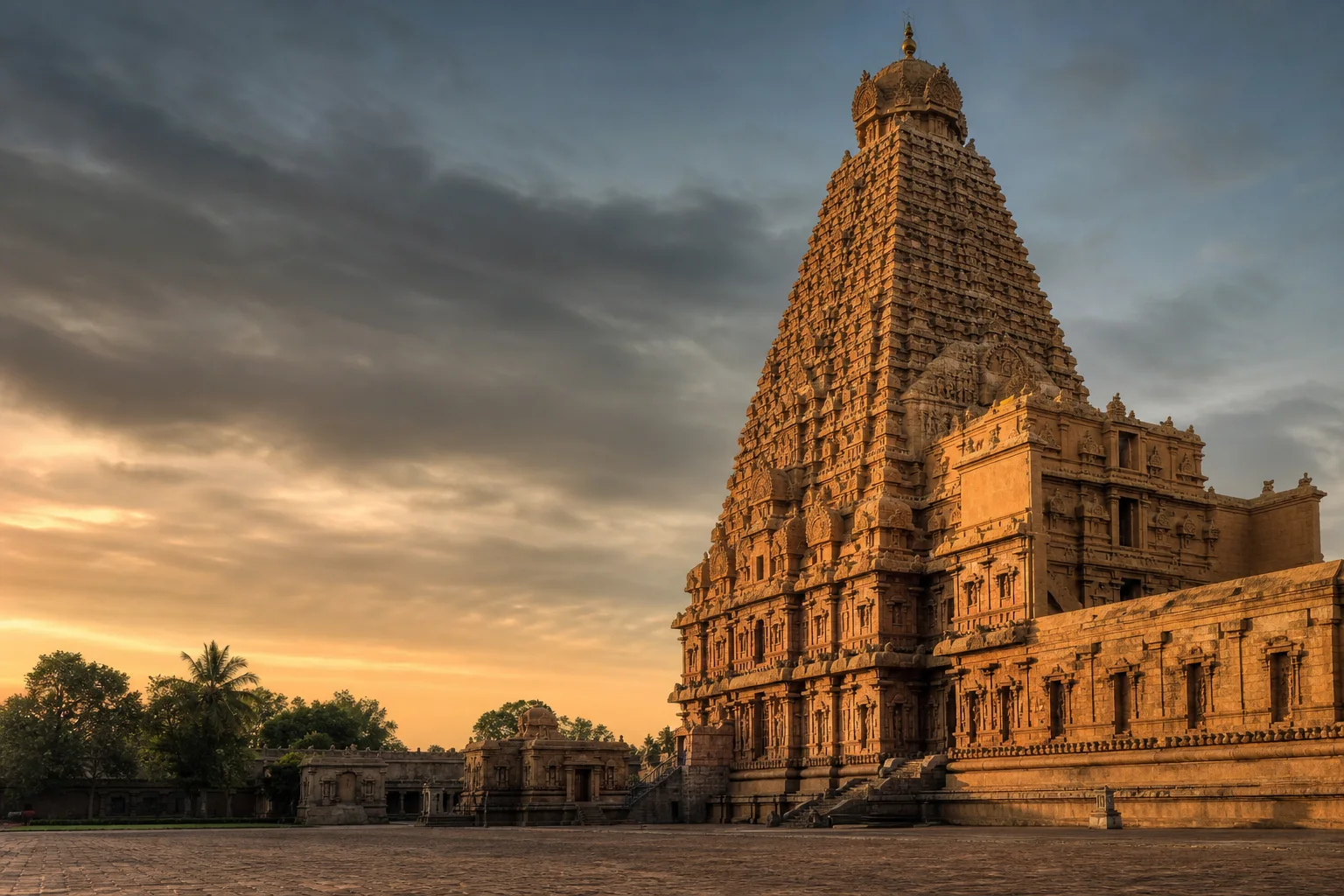
Rajendra established Gangaikondacholapuram as a new royal centre. UNESCO attributes the Brihadisvara temple there to him and records completion in 1035. The temple forms one component of the Great Living Chola Temples World Heritage property with Thanjavur and Darasuram, while the wider site includes the archaeological context of a former capital. [1]
The temple is related to the monumental model at Thanjavur but is not simply a copy. UNESCO highlights its distinctive architectural development, including the treatment of the vimana and sculpture. Designers, artisans, laborers, ritual specialists, and patrons created and sustained the complex. Rajendra's commission belongs inside that collective institutional history. [1]
Gangaikondacholapuram is in present-day Ariyalur District, not Thanjavur District. The current temple guide provides heritage detail without creating a new destination route. The historical capital's political territory cannot be inferred from today's district boundary, and visitors should distinguish the living temple from the less visible archaeological landscape around it.
Life and context
Government, Inscriptions, and Institutions
Rajendra's reign continued Chola use of territorial divisions, officers, revenue systems, local bodies, and temple records. Surviving inscriptions document gifts, taxes, settlements, royal orders, and institutional arrangements. They are highly detailed in local context but uneven in survival and concentrated where stone record-making was important. [2][4]
Royal expansion did not erase local institutions. Assemblies, merchant groups, landholders, cultivators, and temple establishments negotiated obligations and resources. The balance between central direction and local capacity varied across regions. Modern labels such as centralized or decentralized should therefore be used as analytical questions, not fixed answers. [4]
Inscriptions also help establish names and regnal sequence. A title may celebrate one campaign or alternate according to dynastic convention; it is not always a personal name in the modern sense. Good biography preserves these distinctions and avoids attaching every honorific ever used to the schema's alternateName field. [3]
Life and context
Places Associated With Rajendra Chola I
Gangaikondacholapuram is Rajendra's defining place within current Tamil Nadu. Its temple, former capital context, and inscriptions connect political commemoration with architecture. The site is in modern Ariyalur District. It should not be mislabeled as a Thanjavur attraction merely because both cities belong to Chola history. [1]
Thanjavur remains important as the centre associated with Rajaraja and with the institutional world Rajendra inherited. The two monumental temples provide a valuable comparison of patronage and architecture, while each has its own chronology and living sacred life. [1]
The Ganges basin, Sri Lanka, and Southeast Asian ports are historically associated through campaigns but lie outside current Tamil Nadu. This guide discusses them as external geographies and does not convert them into destination cards. A route relationship is shown only where My Tamil Nadu already has a relevant published guide.
Life and context
How Rajendra's Legacy Is Assessed
Rajendra's reign demonstrates the reach of an eleventh-century South Indian court across land and sea, the use of monumental capitals, and the political work of inscription and title. Its significance does not require a claim that he conquered all of Southeast Asia. Careful distinctions between raid, tribute, influence, and administration produce a stronger history. [5][6]
The temple at Gangaikondacholapuram gives the reign a major surviving monument, but the capital is also an archaeological and landscape problem. Conservation and worship continue under present institutions. UNESCO status applies to the serial temple property, not to every popular claim about Rajendra or the full boundaries of his capital. [1]
Modern memory often treats Rajaraja and Rajendra as a pair. Their relationship is essential, yet their profiles should remain differentiated: Rajaraja's page centers Thanjavur, inscriptions, and consolidation; Rajendra's centres succession, the northern campaign, the new capital, and the specific 1025 maritime expedition.
Images with explicit provenance
Places and historical context
Chronology
Timeline
- Before c. 1014
Rajendra held substantial military and royal responsibilities during the later part of Rajaraja I's reign. [3]
- c. 1012–1014
The transition to Rajendra's sovereign reign is reconstructed from overlapping regnal and inscriptional evidence. [4]
- Early 11th century
A northern expedition was commemorated through the Gangaikonda title and the new capital. [3]
- 1025 CE
Chola forces raided centers associated with Srivijaya; evidence does not support permanent Chola rule over Southeast Asia. [5][6]
- 1035 CE
UNESCO records completion of the temple at Gangaikondacholapuram. [1]
- 1044 CE
Rajendra's reign ended; succession continued within the Chola dynasty. [4]
Keep exploring
Places, periods, and connected guides
Related history
Associated places
Questions
Frequently asked questions
Who was Rajendra Chola I?
He was Rajaraja I's son and successor, an eleventh-century Chola ruler associated with major campaigns and Gangaikondacholapuram.
Did Rajendra rule Indonesia?
The 1025 expedition attacked places connected with Srivijaya, but the evidence does not establish permanent Chola administration over Indonesia or Southeast Asia. [5][6]
Why was Gangaikondacholapuram created?
It served as Rajendra's new royal centre and commemorated the northern campaign associated with the Gangaikonda title; its major temple was completed in 1035 according to UNESCO. [1]
Is Gangaikondacholapuram in Thanjavur District?
No. It is in present-day Ariyalur District. Its historical Chola connection does not change the modern district boundary.
Was Rajendra simply continuing Rajaraja's reign?
He inherited institutions and campaigns, but developed a distinct political program through his northern expedition, new capital, monumental temple, and 1025 maritime raid.
What evidence supports Rajendra's biography?
Regnal inscriptions, the surviving temple and capital context, official epigraphic resources, and scholarship comparing South and Southeast Asian evidence are central.
Editorial trust
Sources & further reading
- Great Living Chola TemplesUNESCO World Heritage Centre · International heritage recordAccessed 10 August 2026
- EpigraphyTamil Nadu State Department of Archaeology · Official epigraphic overviewAccessed 10 August 2026
- South Indian Inscriptions: Tamil Inscriptions of Rajaraja, Rajendra-Chola, and Others in Rajarajesvara TempleArchaeological Survey of India · Government Press · 1984 · Published inscription corpusAccessed 10 August 2026
- Cholas: Provincial and Local AdministrationUGC e-PG Pathshala / INFLIBNET · University teaching resourceAccessed 10 August 2026
- Military Campaigns of Rajendra Chola and the Chola-Srivijaya-China TriangleISEAS – Yusof Ishak Institute / Cambridge Core · Tansen Sen · Nagapattinam to Suvarnadwipa · 2009 · Scholarly book chapterAccessed 10 August 2026
- The Naval Expeditions of the Cholas in the Context of Asian HistoryISEAS – Yusof Ishak Institute / Cambridge Core · Hermann Kulke · Nagapattinam to Suvarnadwipa · 2009 · Scholarly book chapterAccessed 10 August 2026