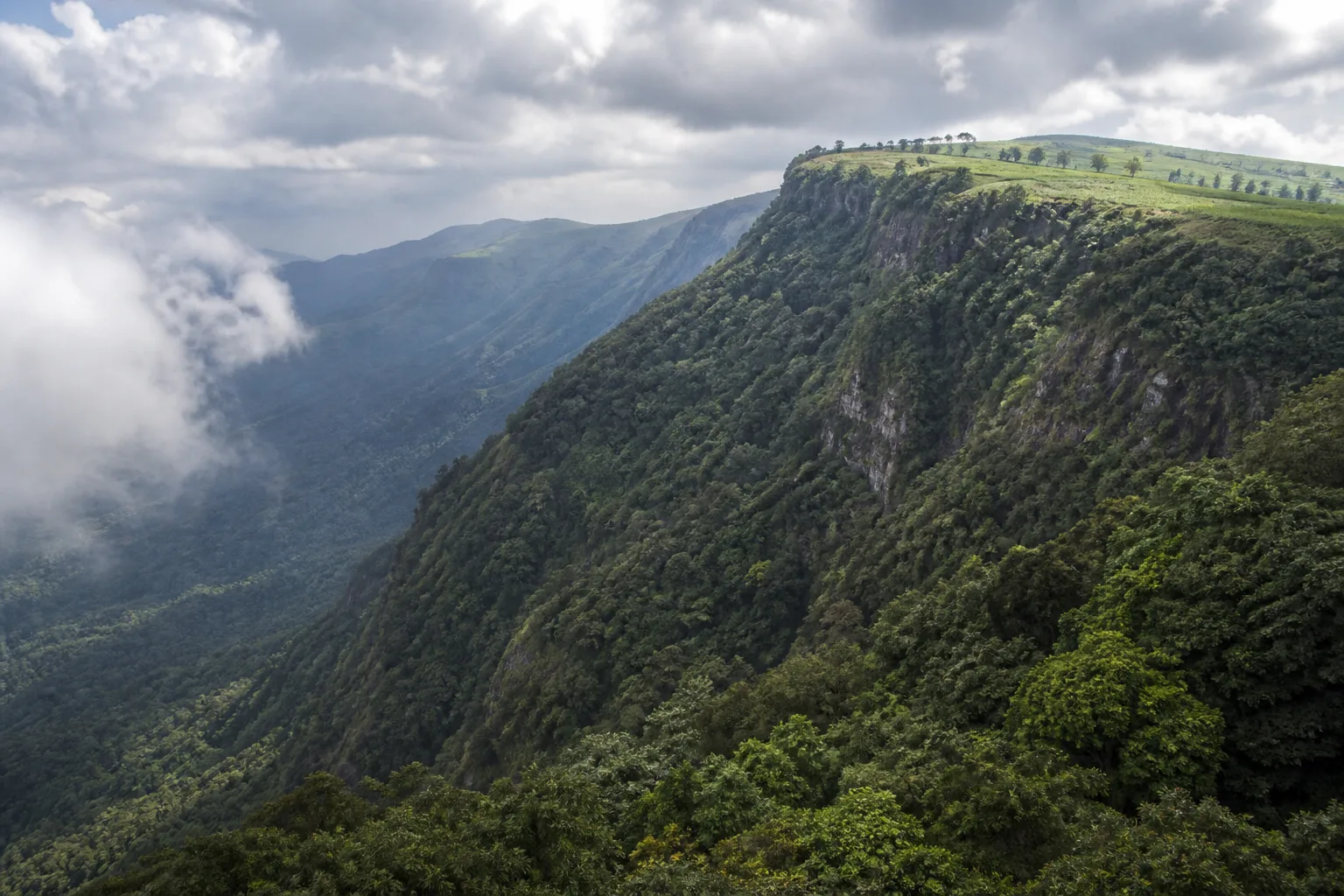
Many forest types across strong gradients
Forests of Tamil Nadu: Landscapes, Ecology and Conservation
Move beyond one image of a green forest to understand Tamil Nadu's vegetation mosaics, watersheds, wildlife habitat and rules for responsible access.
Ecological context
Why This Landscape Matters
Tamil Nadu's forests span steep moisture and elevation gradients. Forest Survey of India reporting places the state's vegetation within multiple forest type groups rather than a single tropical category.[1] Evergreen and semi-evergreen formations occur in suitable wetter settings; moist and dry deciduous forests occupy other slopes and interiors; thorn and scrub contexts occur in drier country; montane shola appears at high elevation; mangroves occupy suitable sheltered coastal wetlands.
On this page
Nature guide
Forest diversity follows land and climate
Tamil Nadu's forests span steep moisture and elevation gradients. Forest Survey of India reporting places the state's vegetation within multiple forest type groups rather than a single tropical category.[1] Evergreen and semi-evergreen formations occur in suitable wetter settings; moist and dry deciduous forests occupy other slopes and interiors; thorn and scrub contexts occur in drier country; montane shola appears at high elevation; mangroves occupy suitable sheltered coastal wetlands.
These labels describe ecological patterns, not visitor zones. A forest can change over short distances, contain natural and modified patches, and sit beside grassland, plantation, farm or settlement. Identification in the field requires expertise.
Nature guide
Western Ghats forests
The Western Ghats contain strong transitions from wet evergreen and montane forest to deciduous and drier eastern formations. In the Nilgiris, UNESCO describes a biosphere landscape ranging from montane shola and grassland through moist and dry forest systems.[5]
Anamalai and Mudumalai show why one word, forest, is insufficient. Anamalai includes wet, steep hill contexts and cultivated uplands; Mudumalai includes semi-evergreen, moist deciduous, dry deciduous, scrub, grassland and vayal contexts within the tiger-reserve description.[3]
Nature guide
Eastern Ghats and interior forests
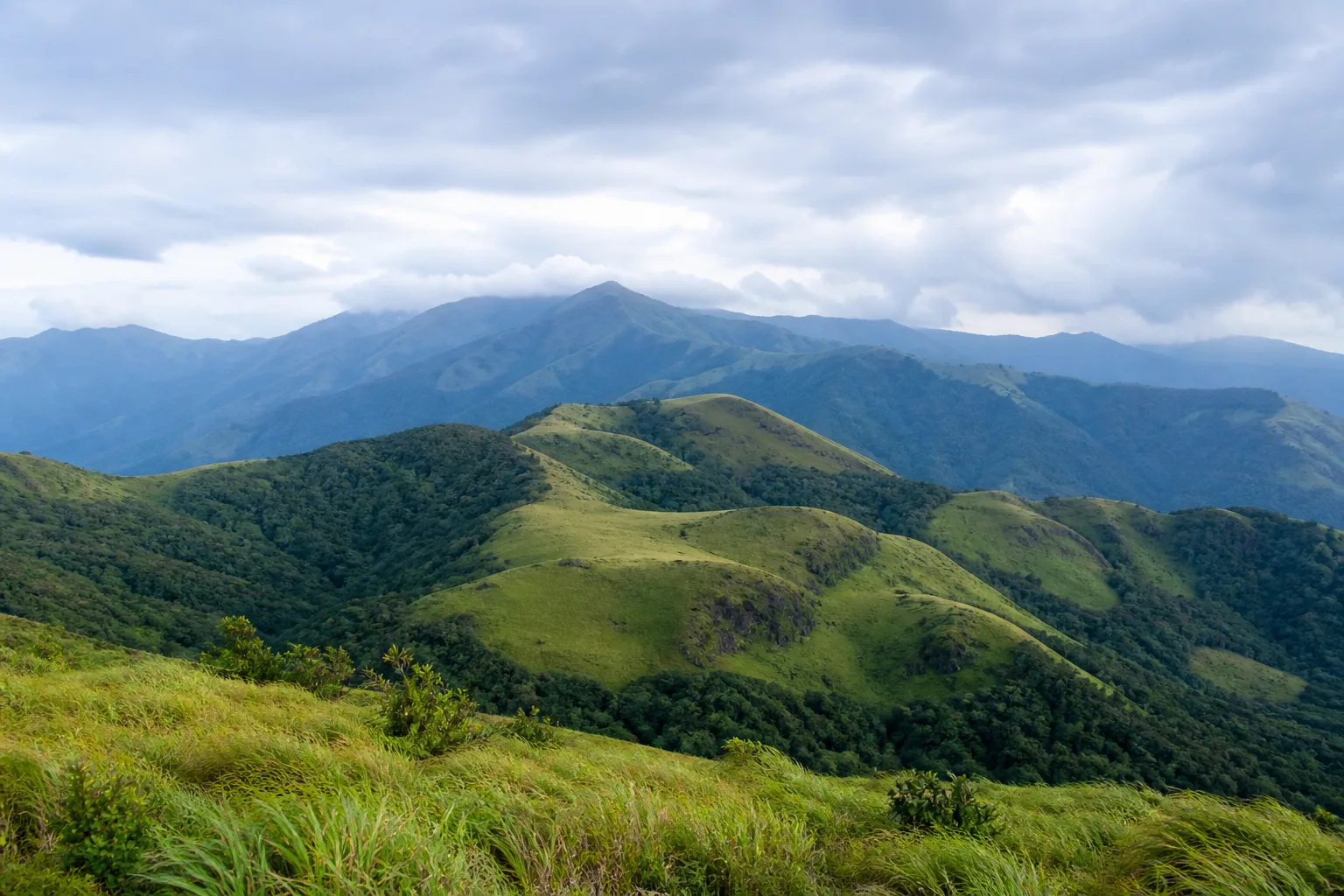
Tamil Nadu's Eastern Ghats contexts include discontinuous hill systems and drier connections to plains. Their rainfall, geology and vegetation differ from the western escarpment. Javadi, Kalvarayan and Shevaroy names should therefore be used in their own geographic context rather than relabelled as Western Ghats.
Dry deciduous, thorn and scrub habitats are not failed rainforests. They support species adapted to seasonal moisture and open structure. Responsible interpretation avoids ranking greener landscapes as more natural or valuable.
Nature guide
Mangroves and coastal wooded wetlands
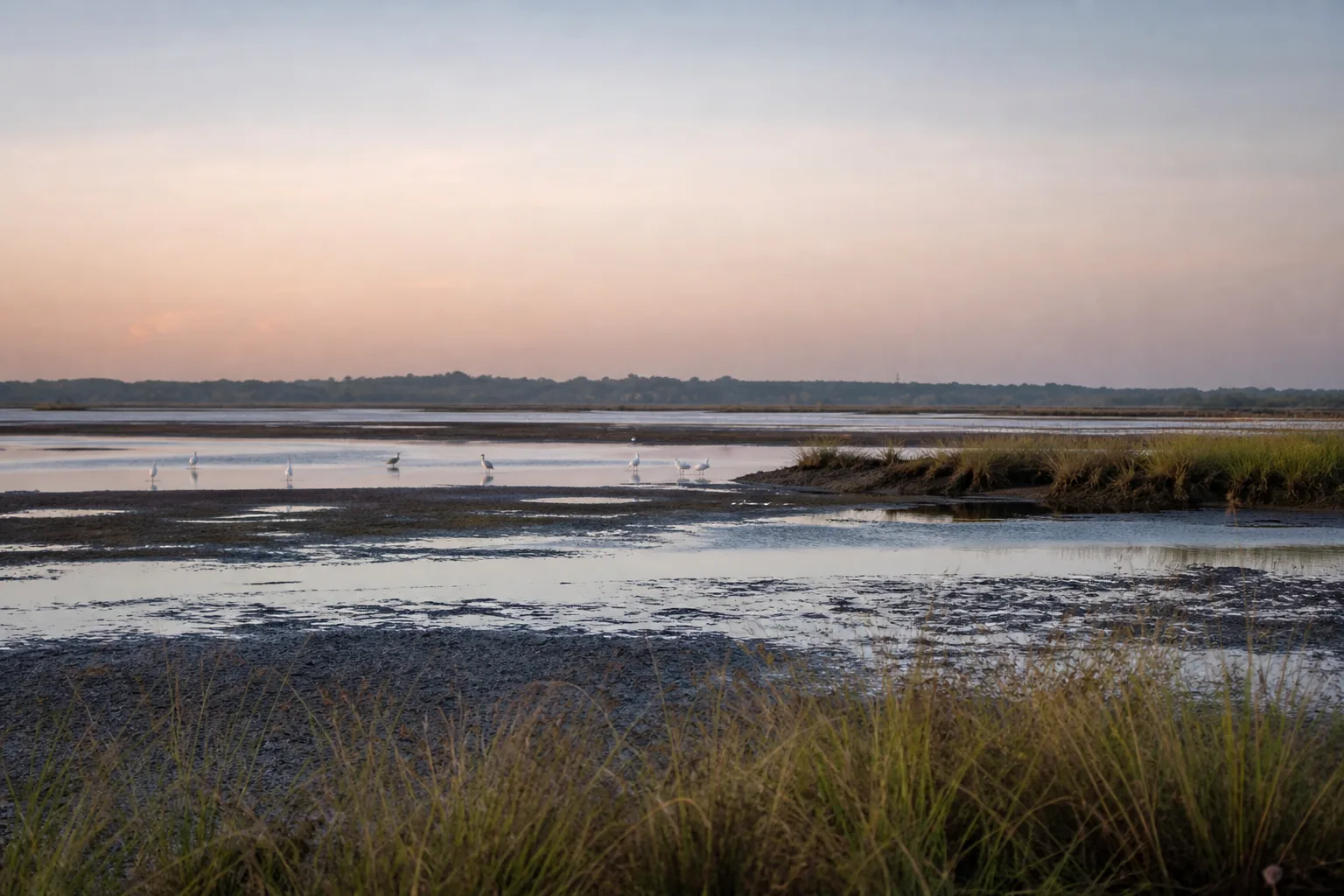
Mangroves grow where tidal, sediment and salinity conditions are suitable; they are not present along every beach. They connect land and water, provide habitat and contribute to coastal processes. Other coastal wetlands may be marsh, mudflat, salt pan, lagoon or estuary rather than mangrove.[6]
Visitors should use official boardwalks or boating systems where available and currently permitted. Do not step into restoration areas, collect plants or wildlife, or assume that a map pin grants public access.
Nature guide
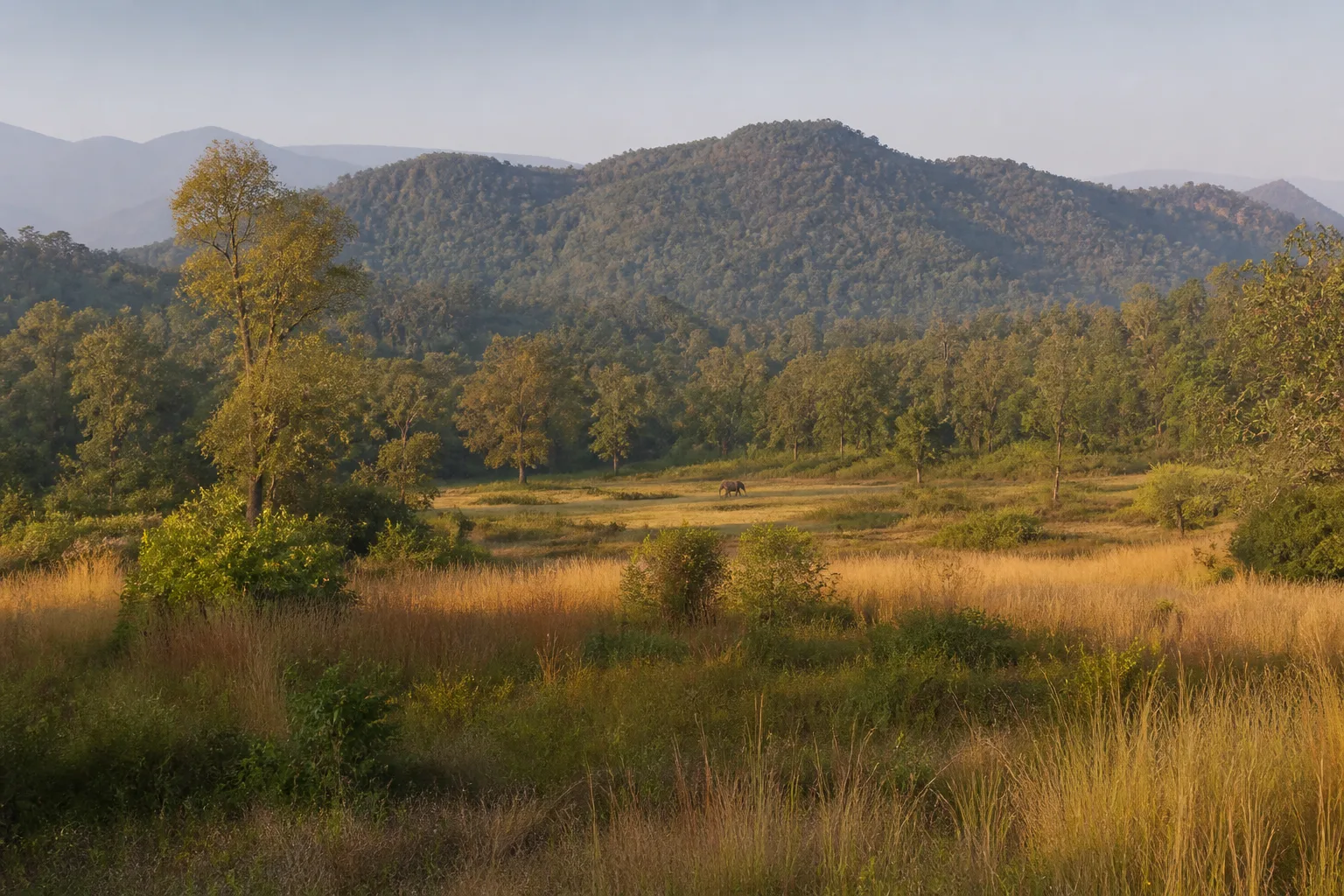
Forests as watersheds
Vegetation, litter, roots and soil influence infiltration, erosion and stream flow. Forested catchments feed water systems used by wildlife and people downstream. This does not mean every forest guarantees constant water; rainfall, geology, infrastructure and land use also matter.
Keeping to permitted trails, preventing fire, carrying waste out and avoiding soil disturbance are direct watershed actions. Unauthorized vehicle tracks and off-trail shortcuts can create erosion beyond the footprint a visitor sees.
Nature guide
Communities and forest governance
Forests intersect with indigenous and other local communities, livelihoods, sacred places, state management, research and conservation. People should not be described as attractions or as a single cultural group. Rights, histories and relationships vary.
Respect signs, privacy and local guidance. Do not photograph residents without permission or publish sensitive settlement information. Conservation stories should recognize both ecological purpose and the complexity of human relationships with land.
Nature guide
Access is specific and changeable
Reserve Forest, Wildlife Sanctuary, National Park, Tiger Reserve and Biosphere Reserve are not interchangeable terms. Each has a different legal or management context. Access rules vary by zone and can change. Check current Forest Department guidance before travelling.[2]
Use authorized trails, guides and visitor areas. Do not enter through unofficial tracks, bypass checkpoints, camp or light fires without explicit permission, or use unauthorized drones. A closed forest is not an invitation to find a quieter entrance.
Seasonal lens
Nature Through the Year
Conditions vary with rainfall and year. Use the statewide month guides for broad context, then check the responsible authority for current conditions.
Explore Tamil Nadu by Month- Landscape
- Strong seasonal interest
- Conditions
- Weather-dependent
- Planning
- Verify current access
General location only
Open a map handoff
The map opens a broad landscape or visitor destination. It does not reveal nests, dens, breeding areas, restricted islands or sensitive wildlife coordinates.
Private planning tool
Nature Trip Checklist
0 of 10 readySaved only in this browser. No login or personal data is required.
Questions
Frequently asked questions
Is visitor access guaranteed?
No. Protected areas and nature sites can close or change access rules. Check the current Forest Department, district administration or responsible site authority before travelling.
Are wildlife sightings guaranteed?
No. Wildlife is not scheduled and should never be chased. Read these guides as habitat and conservation context, then follow ranger instructions in permitted visitor areas.
Does this page show live weather or road status?
No. This is evergreen ecological and planning information. Use the India Meteorological Department and responsible local authorities for current conditions.
Can I use a drone?
Do not assume that drone use is permitted. Protected areas, coasts and other sensitive sites can have legal and operational restrictions; verify current official rules before carrying or using one.
How should I use Google Maps here?
The map handoff opens a general destination or protected-area search. It deliberately avoids nests, breeding areas, dens, restricted islands and other sensitive wildlife locations.
What forest types occur in Tamil Nadu?
Broad contexts include evergreen, semi-evergreen, moist and dry deciduous, thorn and scrub, montane shola and mangrove formations. Distribution varies with elevation, moisture, soils and geography.
Can visitors enter any forest shown on a map?
No. A mapped forest is not automatically a public visitor area. Check the exact designation, zone and current Forest Department rules.
Media record
Images with explicit provenance
All Phase 10 visuals are project-created editorial interpretations. They support learning and layout but do not document a sighting, current habitat condition or site access.
Editorial trust
Sources & Further Reading
These are the sources actually consulted for this guide. Protected-area, UNESCO, Ramsar, species, habitat and geographic claims are cited inline. Reviewed 9 August 2026.
- India State of Forest Report: Tamil NaduForest Survey of India · 2019Accessed 9 August 2026
- Forests, wildlife and conservation in Tamil NaduTamil Nadu Forest Department · 2026Accessed 9 August 2026
- Tiger ReservesTamil Nadu Forest Department · 2026Accessed 9 August 2026
- National ParksTamil Nadu Forest Department · 2026Accessed 9 August 2026
- Nilgiri Biosphere ReserveUNESCO Man and the Biosphere Programme · 2026Accessed 9 August 2026
- Wetlands of Tamil NaduTamil Nadu State Wetlands Authority · 2026Accessed 9 August 2026