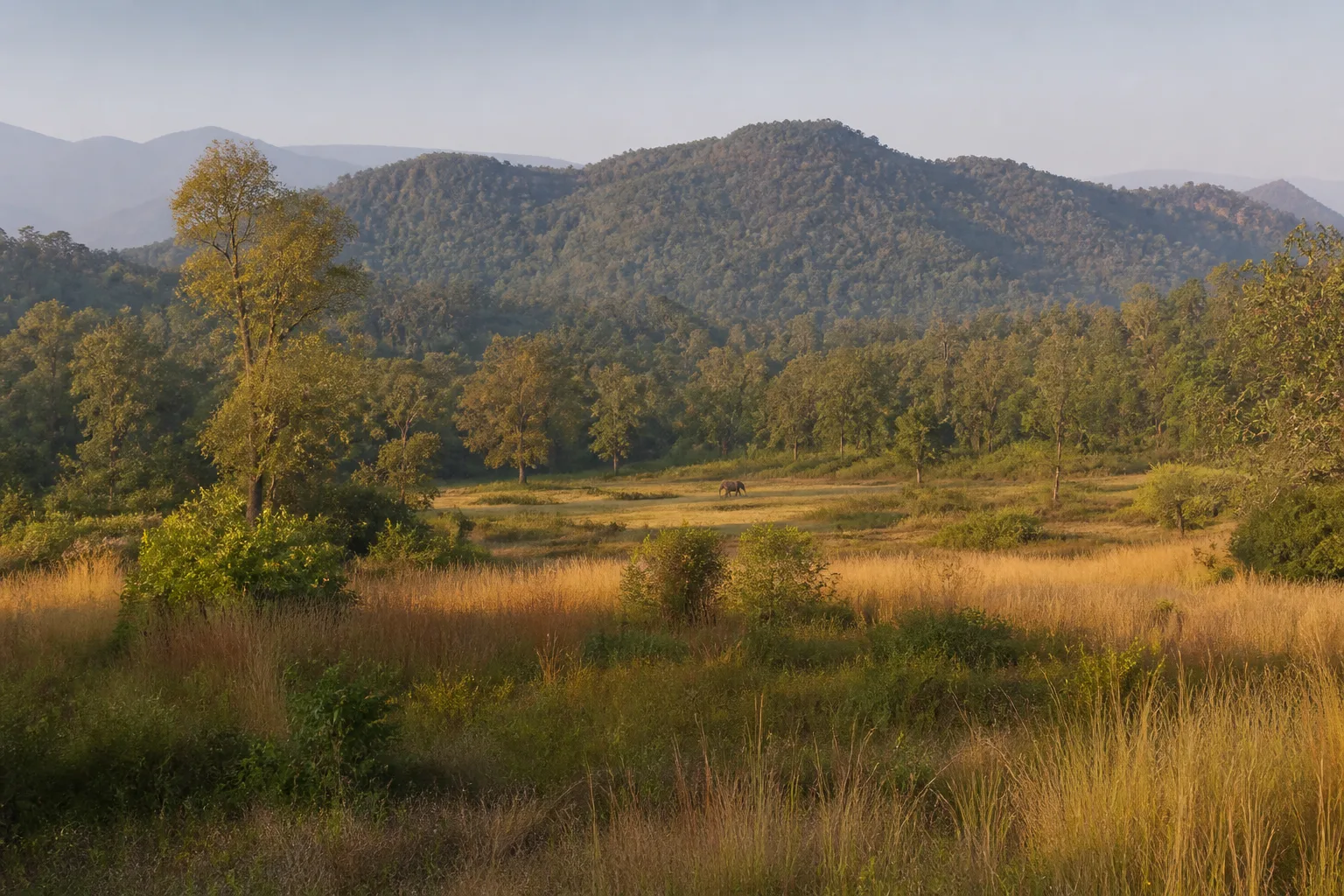
A connected protected landscape in The Nilgiris
Mudumalai: Wildlife, Forests and Responsible Travel
Read Mudumalai as habitat and conservation landscape before planning any visitor activity or expecting wildlife sightings.
Ecological context
Why This Landscape Matters
Mudumalai Tiger Reserve lies on the northwestern and northeastern slopes of the Nilgiris near Tamil Nadu's borders with Karnataka and Kerala. Tamil Nadu Forest Department describes connections with Bandipur Tiger Reserve and Wayanad Wildlife Sanctuary and wider linkages through Nilgiris forests.[1]
On this page
Nature guide
Where Mudumalai fits
Mudumalai Tiger Reserve lies on the northwestern and northeastern slopes of the Nilgiris near Tamil Nadu's borders with Karnataka and Kerala. Tamil Nadu Forest Department describes connections with Bandipur Tiger Reserve and Wayanad Wildlife Sanctuary and wider linkages through Nilgiris forests.[1]
These relationships matter because wildlife and water do not stop at state boundaries. Mudumalai should not be understood as an isolated safari enclosure or as another name for the whole Nilgiri Biosphere Reserve.
Nature guide
Tiger Reserve, National Park and Sanctuary terminology
Official Tamil Nadu sources use Mudumalai Tiger Reserve for the larger core-and-buffer management context and also document Mudumalai Wildlife Sanctuary and National Park within the protected landscape.[1][2] The terms overlap geographically in specific ways but are not interchangeable labels.
For clear visitor communication, this page leads with Mudumalai Tiger Reserve, identifies the documented National Park and Sanctuary context, and avoids making boundary claims beyond official sources. Current rules should be obtained from the Forest Department.
Nature guide
Forest and grassland mosaics
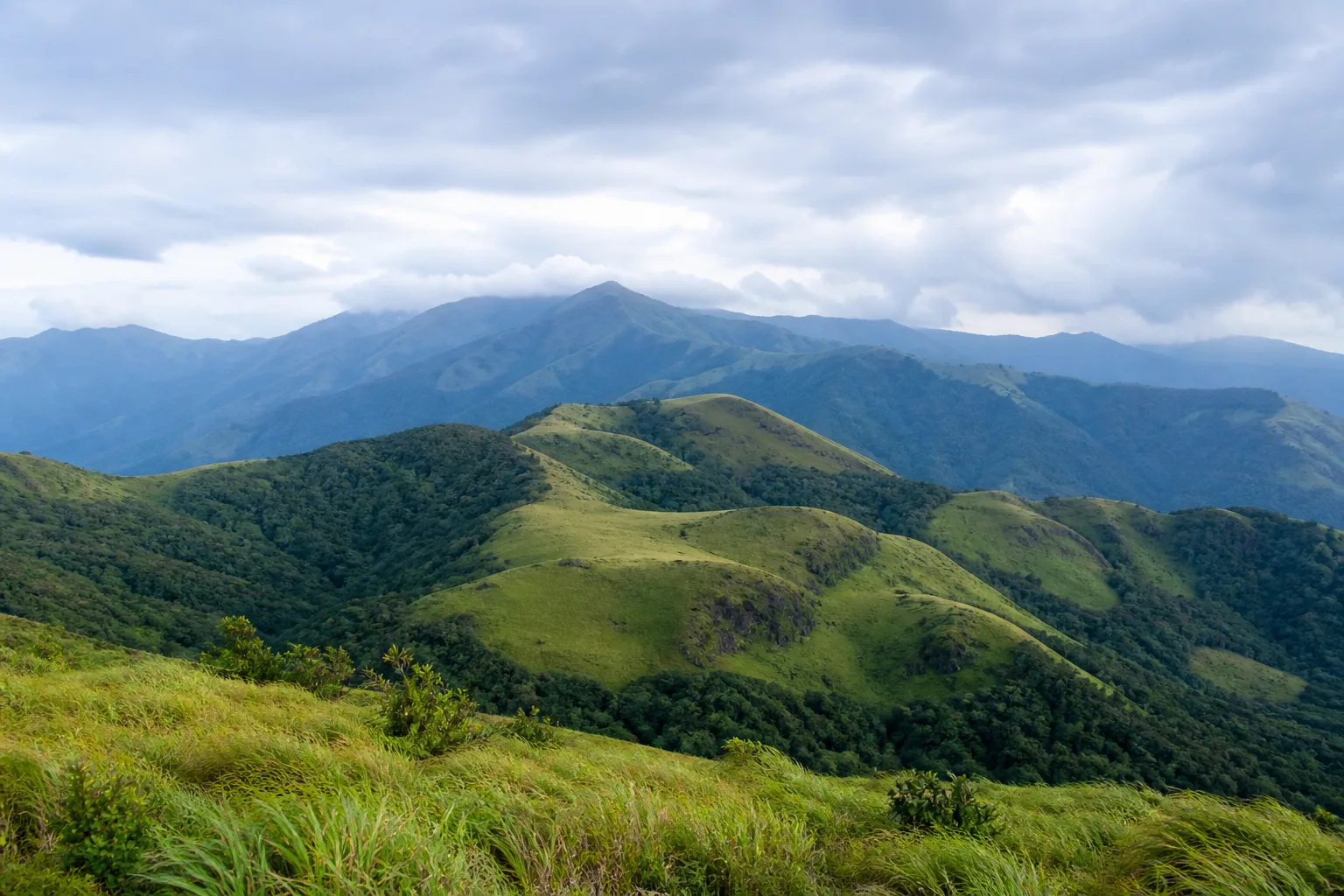
The reserve description includes semi-evergreen, moist deciduous, dry deciduous and scrub forest, along with grassland and seasonal wet depressions known as vayals.[1] This mosaic helps explain why the landscape can look very different across routes and seasons.
Dry-looking deciduous forest is functioning habitat, not an inferior version of rainforest. Seasonal leaf fall, grass and open structure affect visibility, fire risk and animal use, but none guarantees a sighting.
Nature guide
Wildlife you may encounter
Tamil Nadu Forest Department records elephant, gaur, sambar, chital, tiger, leopard and dhole among Mudumalai's fauna.[1] Visitors may encounter some wildlife from permitted areas, but sightings are never guaranteed and a species list is not a promise.
Keep the road clear, remain in vehicles where required and follow ranger or guide instructions. Never feed macaques, deer or elephants; never ask a driver to follow an animal; and never leave a permitted vehicle to improve a photograph.
Nature guide
Nilgiri Biosphere context
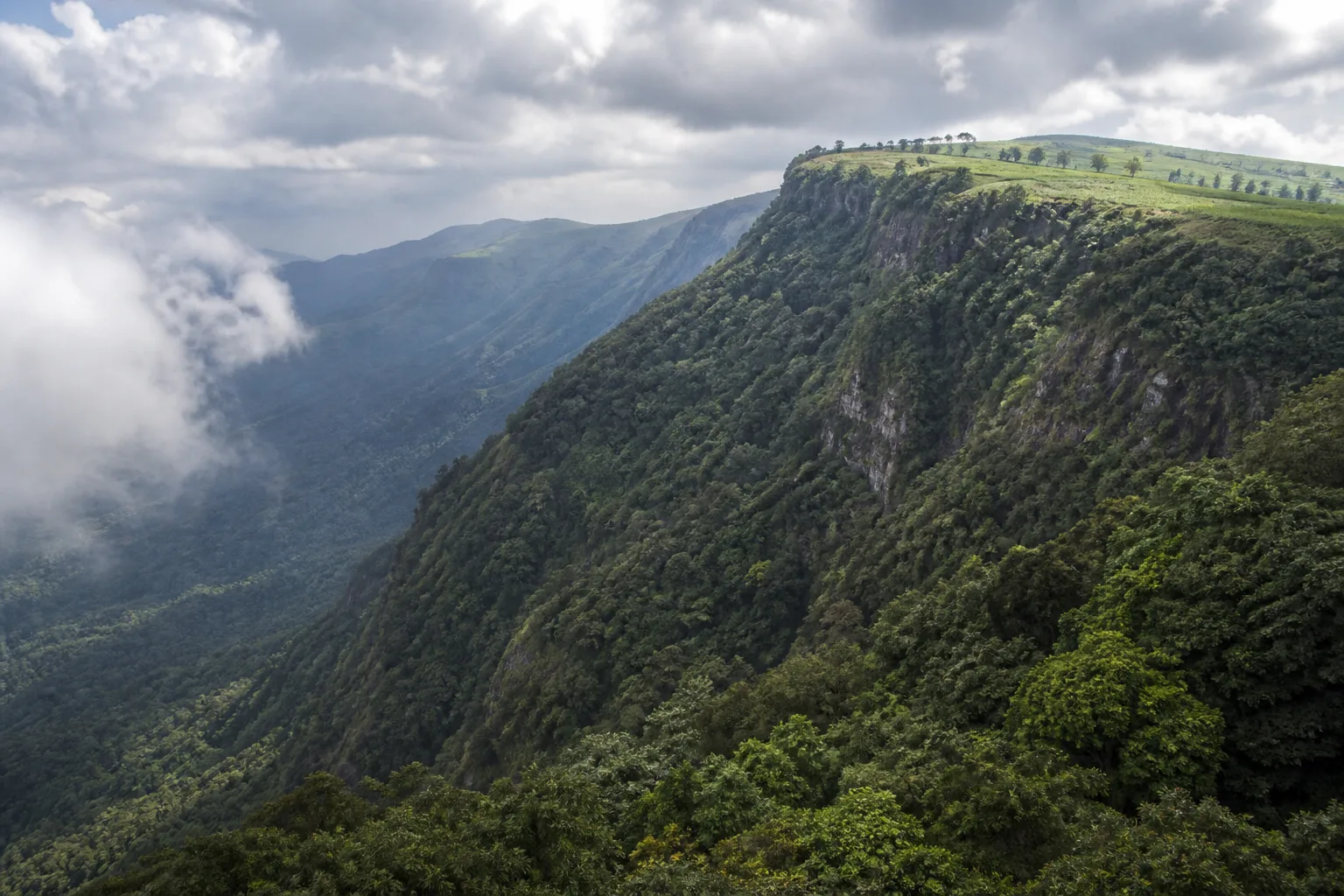
UNESCO's Nilgiri Biosphere Reserve spans a wider, multi-state landscape with montane, evergreen, deciduous and scrub ecosystems.[4] Mudumalai is one important protected landscape within that larger biosphere context.
Biosphere Reserve does not replace the legal designations inside it. It is also not the same as UNESCO's Western Ghats World Heritage serial property. Each designation should be stated for the purpose it serves.
Nature guide
Connect Mudumalai with Ooty carefully
Ooty is an established destination on the higher Nilgiris plateau, while Mudumalai occupies lower slopes and forest mosaics. They are connected within The Nilgiris district but offer different ecological and travel experiences.
Use the Ooty and district guides for town-based planning. Hill and forest roads require current weather and road checks; travel times, closures and safari arrangements are intentionally not hardcoded.
Nature guide
Responsible visitor planning
Access, safari arrangements and forest rules can change. Check the official Forest Department or site authority before travelling. Use only authorized visitor systems and accept closures without seeking unofficial alternatives.
Carry binoculars, keep noise low, secure food and waste, avoid unauthorized drones and do not publish sensitive wildlife locations. A meaningful visit can focus on forest structure, tracks interpreted by authorized guides and landscape connections even when no large animal appears.
Habitat context
Wildlife You May Encounter
These representative examples are supported by the sources on this page. They are not a sighting promise, and sensitive locations are intentionally omitted.
Asian elephant
Forest, grassland and movement context
May be encountered; keep distanceGaur
Deciduous forest and open habitat mosaic
Never approach for photographsTiger
Protected forest landscape
Presence does not imply a likely sightingDhole
Connected forest habitat
Observe only if encountered naturallySeasonal lens
Nature Through the Year
Conditions vary with rainfall and year. Use the statewide month guides for broad context, then check the responsible authority for current conditions.
Explore Tamil Nadu by Month- Landscape
- Strong seasonal interest
- Conditions
- Weather-dependent
- Planning
- Verify current access
General location only
Open a map handoff
The map opens a broad landscape or visitor destination. It does not reveal nests, dens, breeding areas, restricted islands or sensitive wildlife coordinates.
Private planning tool
Nature Trip Checklist
0 of 11 readySaved only in this browser. No login or personal data is required.
Questions
Frequently asked questions
Is visitor access guaranteed?
No. Protected areas and nature sites can close or change access rules. Check the current Forest Department, district administration or responsible site authority before travelling.
Are wildlife sightings guaranteed?
No. Wildlife is not scheduled and should never be chased. Read these guides as habitat and conservation context, then follow ranger instructions in permitted visitor areas.
Does this page show live weather or road status?
No. This is evergreen ecological and planning information. Use the India Meteorological Department and responsible local authorities for current conditions.
Can I use a drone?
Do not assume that drone use is permitted. Protected areas, coasts and other sensitive sites can have legal and operational restrictions; verify current official rules before carrying or using one.
How should I use Google Maps here?
The map handoff opens a general destination or protected-area search. It deliberately avoids nests, breeding areas, dens, restricted islands and other sensitive wildlife locations.
Are wildlife sightings guaranteed in Mudumalai?
No. Mudumalai supports diverse wildlife, but visitors should never expect, chase or pressure guides to produce a sighting.
Is Mudumalai the same as the Nilgiri Biosphere Reserve?
No. Mudumalai is a protected landscape within the much wider Nilgiri Biosphere Reserve context.
Media record
Images with explicit provenance
All Phase 10 visuals are project-created editorial interpretations. They support learning and layout but do not document a sighting, current habitat condition or site access.
Editorial trust
Sources & Further Reading
These are the sources actually consulted for this guide. Protected-area, UNESCO, Ramsar, species, habitat and geographic claims are cited inline. Reviewed 9 August 2026.
- Tiger ReservesTamil Nadu Forest Department · 2026Accessed 9 August 2026
- National ParksTamil Nadu Forest Department · 2026Accessed 9 August 2026
- Biosphere ReservesTamil Nadu Forest Department · 2026Accessed 9 August 2026
- Nilgiri Biosphere ReserveUNESCO Man and the Biosphere Programme · 2026Accessed 9 August 2026
- Environment, Climate Change and Forests Policy Note 2025-26Government of Tamil Nadu · 2025Accessed 9 August 2026
- Forests, wildlife and conservation in Tamil NaduTamil Nadu Forest Department · 2026Accessed 9 August 2026