Kings & Queens · Other Historically Significant People
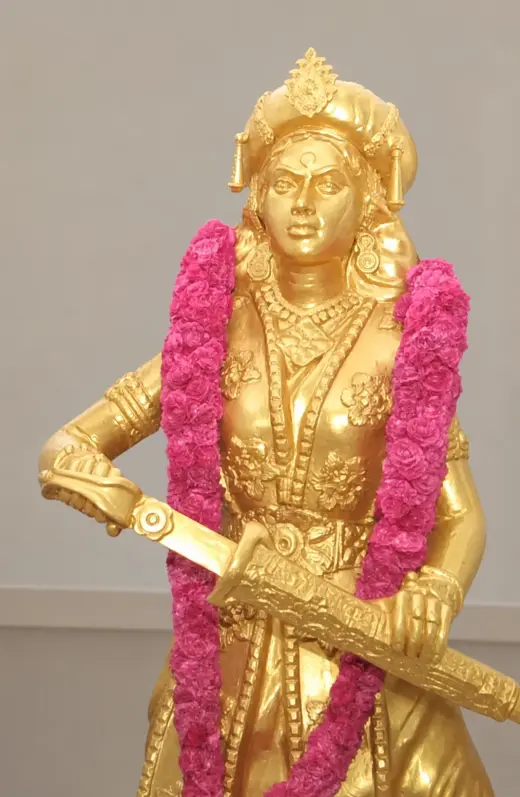
Velu Nachiyar
இராணி வேலு நாச்சியார்
1730 (official commemorative date: 3 January) – c. 1796; precise date uncertain
Velu Nachiyar was an eighteenth-century ruler of Sivaganga whose life was shaped by regional warfare, East India Company intervention, displacement, alliance, and restoration. Her resistance predates the organized nationalist movement and should be understood in its own political world.
Editorial status: Published · Reviewed 10 August 2026- Period
- 18th century
- Political setting
- Sivaganga kingdom in a changing south Indian regional order
- Conflict
- Forces linked to the Arcot Nawab and East India Company
- Key sequence
- Displacement, alliance, return, and restored rule
- Current geography
- Sivaganga District, Tamil Nadu
- Date status
- Birth year used; precise death date remains uncertain [2]
Life and context
Who Velu Nachiyar Was
Velu Nachiyar was an eighteenth-century ruler associated with the Sivaganga kingdom in southern Tamil country. The Sivaganga district administration gives 1730 as her birth year and preserves 3 January as an official commemorative date. Its Tamil account also notes uncertainty around the precise death date, generally placing it around 1796; this page therefore does not publish an unsupported exact death date in schema. [1][2]
Her political history includes marriage to Muthu Vaduganatha Thevar, conflict involving the Nawab of Arcot and East India Company forces, the death of her husband, displacement, alliance-building, and a return to power in Sivaganga. Official summaries provide a clear sequence but often compress chronology and local actors, so claims are stated at the level those sources can support. [1][3]
Velu Nachiyar is frequently called the first Indian queen to fight the British. Such superlatives depend on definitions, comparison, and evidence across many regions. This profile does not use them as fact. Her significance is specific and substantial without a ranking: she was a woman ruler who rebuilt political capacity and resisted Company-linked intervention in the late eighteenth century.
Life and context
Sivaganga and the Eighteenth-Century Political World
Sivaganga's history unfolded among regional rulers, the Arcot Nawab, Mysore, the East India Company, local military leaders, revenue interests, and neighboring polities. Alliances could change, and Company military involvement operated through Indian political relationships rather than a simple two-sided war between a modern nation and a foreign state. [3]
The term anti-colonial resistance is useful for Company opposition, but freedom movement can be misleading if it implies the organized twentieth-century nationalist institutions associated with Chidambaranar or Bharati. Velu Nachiyar's objectives emerged from sovereignty, dynastic restoration, regional alliance, and protection of a kingdom within an eighteenth-century order.
Sivaganga kingdom is a historical polity; Sivaganga District is a current administrative unit. Their names and central geography overlap, but their borders and institutions are not identical. District links on this page describe present-day travel and geography, not the full territory of the former kingdom.
Life and context
Early Life and Royal Formation
Official district accounts associate Velu Nachiyar's birth with the Ramanathapuram royal family and describe education appropriate to elite court life. Lists of languages, weapons, and accomplishments recur in commemorative retellings, but exact proficiency claims are difficult to verify from the short records available. This profile therefore treats broad royal training as context and omits decorative lists. [1]
Her marriage to Muthu Vaduganatha Thevar connected her to Sivaganga's ruling house. Marriage in this setting was both personal and political, linking families, claims, courts, and succession. A queen's role should not be assumed to have been merely ceremonial, but neither should later achievements be projected backward without evidence.
Women in eighteenth-century courts appear unevenly in colonial and regional archives. Records generated by military conflict and later memorialization can be more visible than everyday governance. The absence of a detailed contemporary biography is a reason for transparent uncertainty, not permission to fill gaps with cinematic scenes.
Life and context
Company-Linked Conflict and Displacement
Official Sivaganga history connects the death of Muthu Vaduganatha Thevar with an attack at Kalayarkoil involving forces of the Arcot Nawab and the East India Company. Velu Nachiyar then left the immediate centre of power. The sequence is central to her biography, but exact troop figures, speeches, and battlefield episodes should not be accepted from unsourced popular retellings. [1][3]
Displacement did not mean political disappearance. It created a period in which survival, communication, resource gathering, and alliances became essential. Official accounts associate her refuge and planning with Virupakshi and with support from Gopala Nayaker; Tamil Nadu government budget material commemorates Gopala Nayaker's opposition to Company power and assistance in this regional resistance. [1][5]
A narrative centered only on personal revenge obscures the political stakes of sovereignty, revenue, forts, armed capacity, and alliance. It also hides the many followers, commanders, and communities whose participation made restoration possible.
Life and context
Alliance, Strategy, and Return
Sivaganga's official account associates Velu Nachiyar with an alliance involving Hyder Ali of Mysore and regional supporters. Such an alliance was not evidence of a unified national front in the modern sense. It was a strategic relationship among powers with overlapping interests against Company-linked opponents. [1]
The Marudhu brothers are central to Sivaganga's political and military history and are connected in official district narratives with Velu Nachiyar's return. Their later resistance has its own chronology, so the relationship is explained here without creating unsupported profile links. [3]
Official summaries place her restoration in 1780. A return to rule was not a single dramatic moment but the outcome of planning, military action, negotiation, and the capacity to govern after conflict. Exact tactical stories should be checked against documentary scholarship before publication. [1]
Life and context
Restored Rule and Governance
After restoration, Velu Nachiyar ruled in Sivaganga before transferring authority within the royal succession. Short official biographies emphasize the return more than the routine work of government. That imbalance in the source base means this profile does not invent a catalogue of policies, taxes, public works, or institutions. [1]
Governance would have depended on revenue collection, military security, court personnel, local leaders, temple and land relationships, diplomacy, and settlement administration. These are historically reasonable domains, but person-specific actions require direct records. Where evidence is not established in the cited sources, the page identifies the gap rather than converting general period context into personal achievement.
Her later life is also less securely documented than the conflict and restoration narrative. Memorial accounts should be read beside archival and scholarly work as it becomes available. The uncertainty itself is an editorial finding that requires human review, especially for any future precise chronological expansion.
Life and context
Kuyili and the Boundary Between Record and Tradition
Popular narratives often connect the commander Kuyili with Velu Nachiyar and describe a self-sacrificial attack on an ammunition store. The short official materials reviewed for this profile repeat versions of the story but do not provide the contemporary documentary basis needed to establish its details. This page therefore does not narrate the episode as verified fact. [6]
Omission is not a declaration that a tradition has no value. It means that commemorative memory, later biography, oral transmission, and near-contemporary documentary evidence are different source categories. A future editorial expansion should identify the earliest traceable sources and explain their dates before making detailed claims.
No separate Kuyili page or route has been created. That decision follows this phase's exact scope and prevents a person with an uncertain surviving record from being represented by copied anecdotes rather than research.
Life and context
Places Associated With Velu Nachiyar
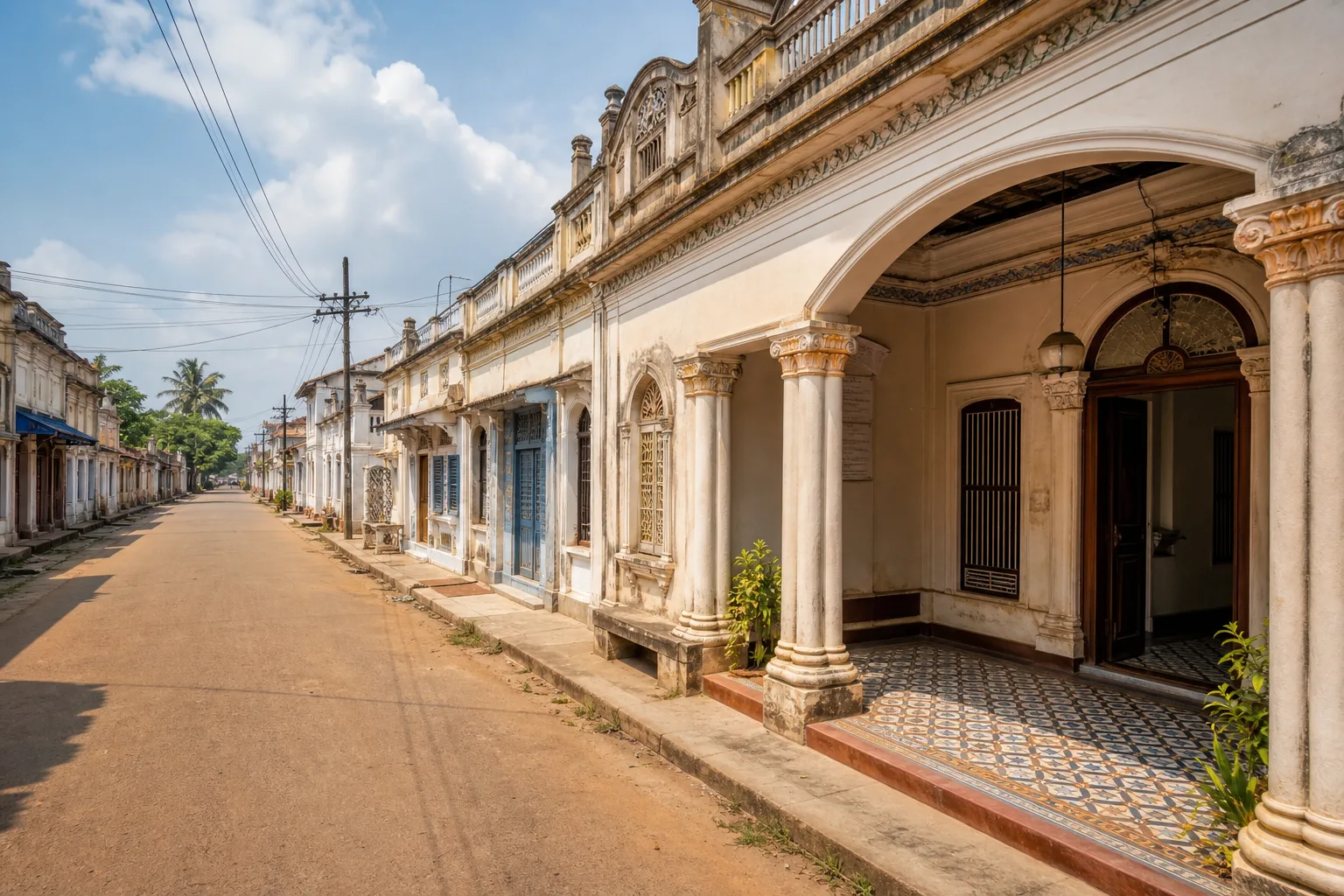
Sivaganga is the main political and memorial setting. The current district guide connects the headquarters, palace context, Kalayarkoil, and neighboring places while distinguishing Chettinad as a cultural region rather than a district. [3][4]
Kalayarkoil is associated with the conflict in which Muthu Vaduganatha Thevar died. Virupakshi, associated with refuge and alliance-building, is in present-day Dindigul District. These current labels aid geographic orientation but do not reproduce eighteenth-century boundaries. [1][5]
Ramanathapuram is associated with her family background, while Mysore lies outside current Tamil Nadu and enters the account through alliance. Only completed My Tamil Nadu routes are linked; no palace, battlefield, or memorial route has been created in this phase.
Life and context
Resistance, Memorialization, and Legacy
Velu Nachiyar's documented importance lies in the sequence of dispossession, alliance, military return, and restored female rule in a Company-linked conflict. It demonstrates that resistance to expanding Company power in South India took varied forms before the later nationalist movement. [1][3]
Statues, memorials, anniversaries, government pages, and popular culture have expanded public awareness. They also encourage fixed titles and dramatic stories. Memorial sources are valuable evidence for public memory but are not automatically contemporary evidence for eighteenth-century events.
This profile deliberately avoids first queen and first freedom fighter claims. It also keeps the death date approximate because official Tamil and English accounts are not fully consistent. Those cautions do not diminish her; they make the page a more trustworthy starting point for understanding Sivaganga's political history. [2]
Images with explicit provenance
Places and historical context
Chronology
Timeline
- 1730
Official Sivaganga records give 1730 as Velu Nachiyar's birth year; 3 January is used as a commemorative date. [1]
- 18th century
Marriage connected Velu Nachiyar with the Sivaganga ruling house. [1]
- 1772
Official district narratives associate the Kalayarkoil conflict, her husband's death, and her displacement with this year. [3]
- 1770s
She built alliances and political capacity while displaced, with Virupakshi and Mysore support prominent in official accounts. [1][5]
- 1780
Official summaries place her return and restoration to Sivaganga around 1780. [1]
- c. 1796
The Tamil district account notes uncertainty around her precise death date and places it around 1796. [2]
Keep exploring
Places, periods, and connected guides
Associated places
Questions
Frequently asked questions
Who was Velu Nachiyar?
She was an eighteenth-century ruler of Sivaganga associated with Company-linked conflict, displacement, alliance-building, return, and restored rule. [1]
Was Velu Nachiyar the first Indian queen to fight the British?
This profile does not publish that ranking as fact because first depends on definitions and comparative evidence across regions. Her specific resistance history is documented without the superlative.
How is her resistance different from the freedom movement?
Her late eighteenth-century struggle concerned sovereignty and restoration in a regional political order. It predates the organized twentieth-century nationalist movement of figures such as VOC and Bharati.
Why did Velu Nachiyar leave Sivaganga?
Official district histories connect her displacement to the 1772 Kalayarkoil conflict in which her husband was killed by forces linked to the Arcot Nawab and East India Company. [3]
What is known about Kuyili?
Kuyili is prominent in later popular and commemorative narratives, but this page does not present detailed stories as verified without a clearly identified contemporary documentary basis.
Are Velu Nachiyar's exact birth and death dates certain?
The official commemorative birth date is recorded, but the birth field is kept at year precision and the death at approximately 1796 because the district's Tamil account notes uncertainty. [2]
Editorial trust
Sources & further reading
- Eminent Personalities: Velu NachiyarSivaganga District Administration · Official district biographical recordAccessed 10 August 2026
- புகழ்பெற்ற பிரபலங்கள்: இராணி வேலு நாச்சியார்Sivaganga District Administration · Official Tamil-language district recordAccessed 10 August 2026
- History of Sivaganga DistrictSivaganga District Administration · Official district historyAccessed 10 August 2026
- Places of Interest in Sivaganga DistrictSivaganga District Administration · Official district visitor recordAccessed 10 August 2026
- Budget Speech 2010–2011Government of Tamil Nadu · Official government recordUsed only for the commemorative record concerning Gopala Nayaker and regional resistance.Accessed 10 August 2026
- Velu NachiyarMinistry of Culture, Government of India · Official commemorative recordUsed as evidence of later public memory; its dramatic Kuyili narrative is not treated as verified contemporary history.Accessed 10 August 2026