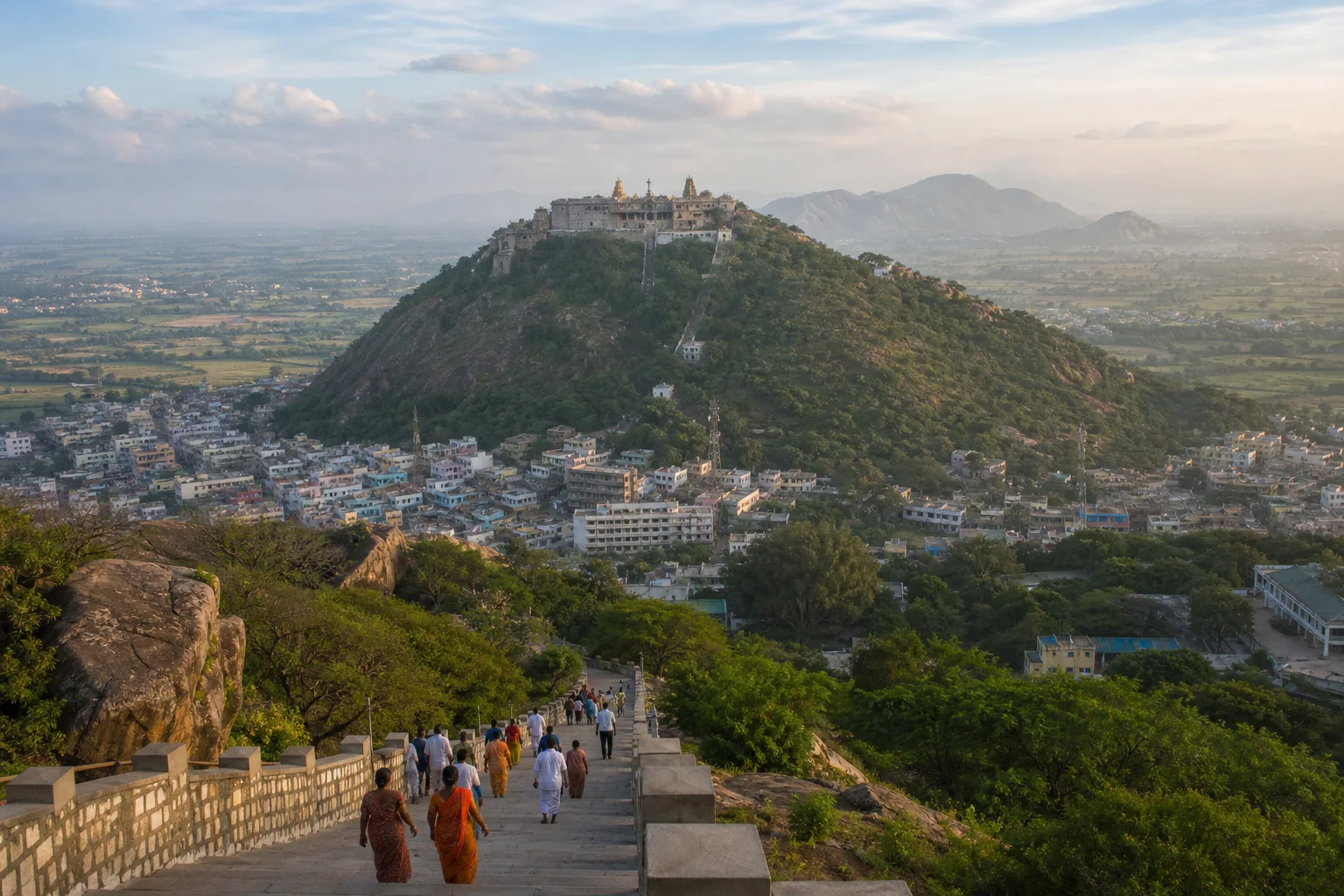
The sacred place includes both hill and town
Palani is usually pictured from below: a hill rising sharply from a busy town, with the Dhandayuthapani Swamy shrine occupying the summit. The Dindigul District Administration identifies the temple on Sivagiri, the higher of the two Palani hills. That topographic fact explains only part of the place. Pilgrimage begins before the summit, in approaches, foothill precincts, streets, lodging areas and the practical work that supports large numbers of worshippers. The hill concentrates attention, but the town makes repeated access and collective movement possible.
A landscape reading prevents the shrine from becoming an isolated postcard. Elevation changes pace and effort; the sight of the hill provides orientation; the built-up foothill mediates between ordinary movement and sacred ascent. These relationships have changed with infrastructure and urban growth, and current modes of ascent must be checked through the temple authority. The lasting point is simpler: Palani's religious meaning is experienced spatially, through approaching, looking up, gathering and moving between lower and upper sacred places.
Sources for this section: Palani temple, Palani temple history.
Sacred tradition and historical evidence need separate labels
The Palani temple tradition is closely associated with Murugan as Dhandayuthapani and with the well-known sacred narrative that gives the place a meaning of renunciation and wisdom. The official HR&CE history page also connects the region with literary names such as Potini and Avinankudi and records traditions concerning the hill shrine. These accounts are important to worship and cultural memory. They should not be rewritten as archaeologically proven events or compressed into one foundation date for a complex that has accumulated structures, inscriptions and practices over time.
Evidence can take several forms: literature, inscriptions, sculpture, architecture, administrative records and continuing ritual. Each answers a different question. A literary reference may establish the importance of a regional sacred place without describing every present structure. An inscription may document a donation or phase without dating the entire hill. A respectful guide allows tradition to remain tradition and evidence to remain evidence, avoiding the false choice between uncritical belief and dismissive scepticism.
Sources for this section: Palani temple history, Dindigul protected monuments.
Ascent is part of the practice, not a neutral transfer
Moving from the foothill to the summit is one of Palani's defining experiences, whether a pilgrim uses steps or an authorized mechanical service. The modes, operating status, eligibility and queues are changeable and belong to official visitor information, not an evergreen article. What can be understood without a live promise is the meaning of vertical movement. The ascent separates the hilltop precinct from the surrounding town while keeping every stage visually connected to the plain below.
For some worshippers, physical effort is part of a vow or devotional journey. For others, mobility, age, health or crowd conditions require a different choice. Neither should be romanticized. Inclusive planning means checking current accessibility information, allowing more time than a promotional itinerary suggests and respecting priority arrangements. Visitors should never assume that a traditional route is suitable for every body or that a mechanical option will be operating at a particular hour.
Sources for this section: Palani temple history, Palani temple.
The foothill belongs to a wider sacred network
Palani's sacred geography is not confined to the summit. The official temple account links the regional tradition with Thiru Avinankudi, while other foothill and associated places contribute to pilgrimage practice. Their exact ritual order and theological meaning deserve specialist and community-aware explanation; a general travel story should not impose one universal sequence on all worshippers. It is enough to recognize that lower and upper shrines create a network of movement rather than a single destination point.
This network also changes the visitor's sense of scale. A short map distance can contain several different forms of attention: waiting, purchasing offerings, resting, worshipping, eating and joining onward movement. The town's streets are therefore part of the pilgrimage landscape even when they are not formally sacred. Responsible visitors keep access routes clear, follow footwear and photography rules, and avoid presenting worshippers as a visual spectacle.
Sources for this section: Palani temple history, Palani temple.
Pilgrimage movement reaches beyond Palani
Palani participates in wider Murugan traditions and attracts journeys that may be individual, family-based or collective. Kavadi, vows and walking pilgrimages can be visible expressions of devotion, especially around festival periods, but their meanings vary and should be described through reliable religious and ethnographic review rather than spectacle. The existence of a major pilgrimage flow does not justify predicting crowd size, road controls or procession routes for a future date.
For a traveller, the practical lesson is to distinguish an ordinary visit from a major observance. Transport, accommodation, ascent services and street access may operate differently when attendance rises. Check the temple authority, district administration and transport operator close to departure. Do not rely on a past-year video as a current guide. When joining a pilgrimage environment, allow worshippers to set the pace and treat any photography restrictions as part of the place rather than an inconvenience.
Sources for this section: Palani temple history, Dindigul District.
A pilgrimage centre is also a working town
Palani Municipality's records show that civic administration has long had to account for sanitation and development associated with visitors. That administrative history is a useful reminder that pilgrimage depends on ordinary municipal systems: water, waste, streets, transport, public health and local labour. The sacred economy includes priests and temple staff, but also vendors, drivers, cleaners, cooks, accommodation workers and residents whose daily lives continue beyond festival imagery.
Visitors can reduce pressure by carrying less disposable material, using designated waste points, choosing lawful accommodation and avoiding obstruction around entrances. Prices, parking arrangements and lodging quality are current commercial matters and should be checked directly. A responsible account does not claim that every part of the town benefits equally from pilgrimage, nor does it reduce local identity to service work. Palani is a municipality with schools, neighbourhoods and civic needs as well as a sacred destination.
Sources for this section: Palani Municipality, Dindigul District.
Place Palani within the wider hill landscape
The name Palani also belongs to a wider hill region extending beyond the sacred town. The Palani Hills form part of Tamil Nadu's western mountain geography, but the temple hill should not be casually equated with high-elevation forest or protected-area landscapes elsewhere in the range. Town, agricultural plain, isolated sacred hills and higher mountain systems are related without being the same environment. This distinction prevents a pilgrimage stop from becoming an unsupported wildlife or trekking claim.
A thoughtful journey can connect Palani with Dindigul District and the wider Western Ghats while keeping each place's rules separate. Use maps for broad orientation, verify roads and access, and never infer forest entry from the visibility of a hill. Palani's distinctiveness lies in concentration: sacred meaning, physical ascent, town life and regional landscape meet within a compact field of view. Reading all four together produces a more honest account than treating the summit as the whole place.
Sources for this section: Palani temple, Dindigul protected monuments.
Sources & Further Reading
These authoritative references support the historical, geographic, or seasonal context in this story. Current conditions and operating details still require a fresh official check.
- Temple History · Tamil Nadu Hindu Religious and Charitable Endowments Department
- Arulmigu Dhandayuthapani Swamy Temple, Palani · Dindigul District Administration
- About Palani Municipality · Palani Municipality
- Dindigul District · Dindigul District Administration
- Monuments - District wise · Tamil Nadu Department of Archaeology
Related Stories
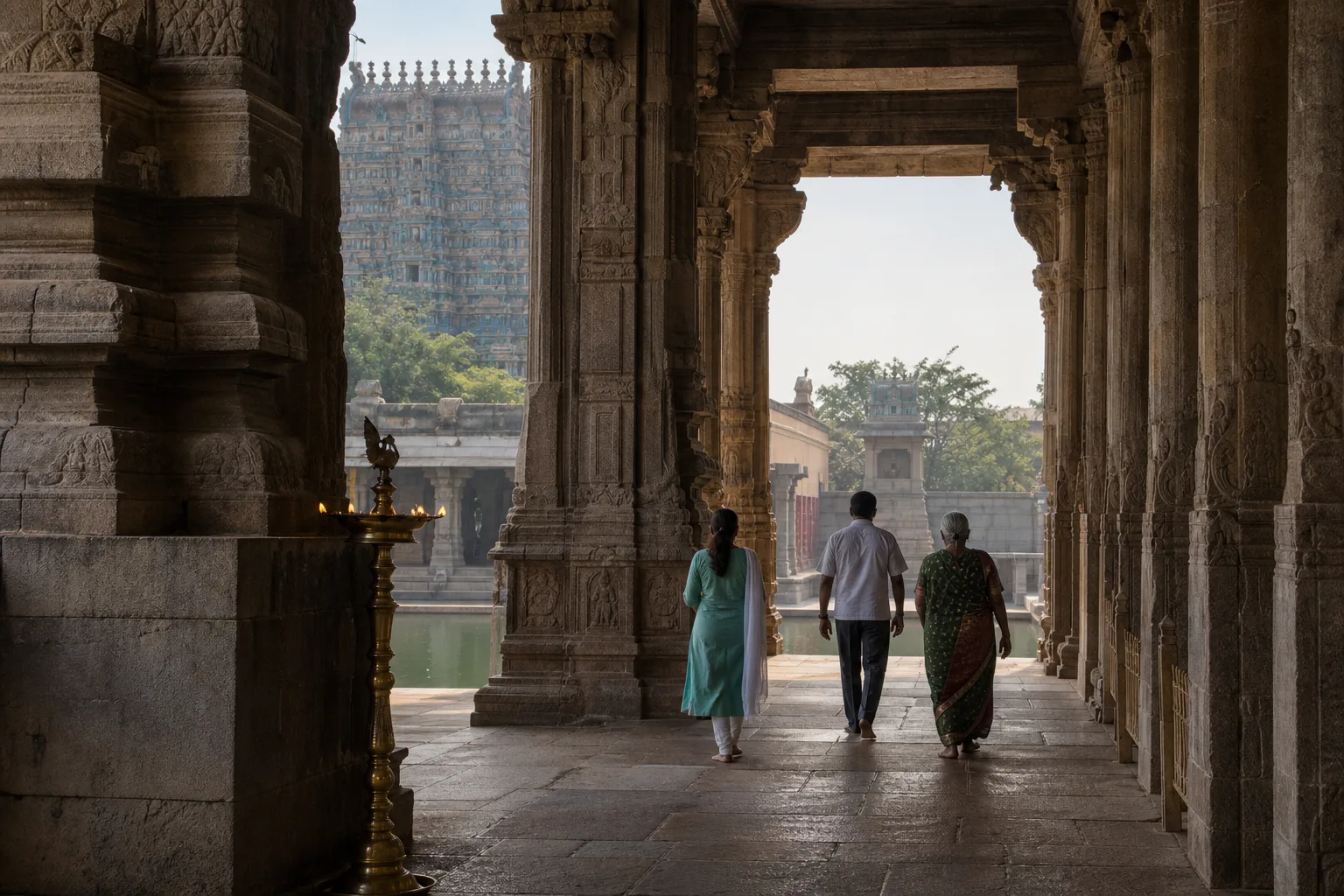
How to Read a Tamil Nadu Temple: Architecture, Ritual Space and Respectful Travel
A visitor's guide to reading temple architecture and ritual space without forgetting that the monument is also a living sacred place.
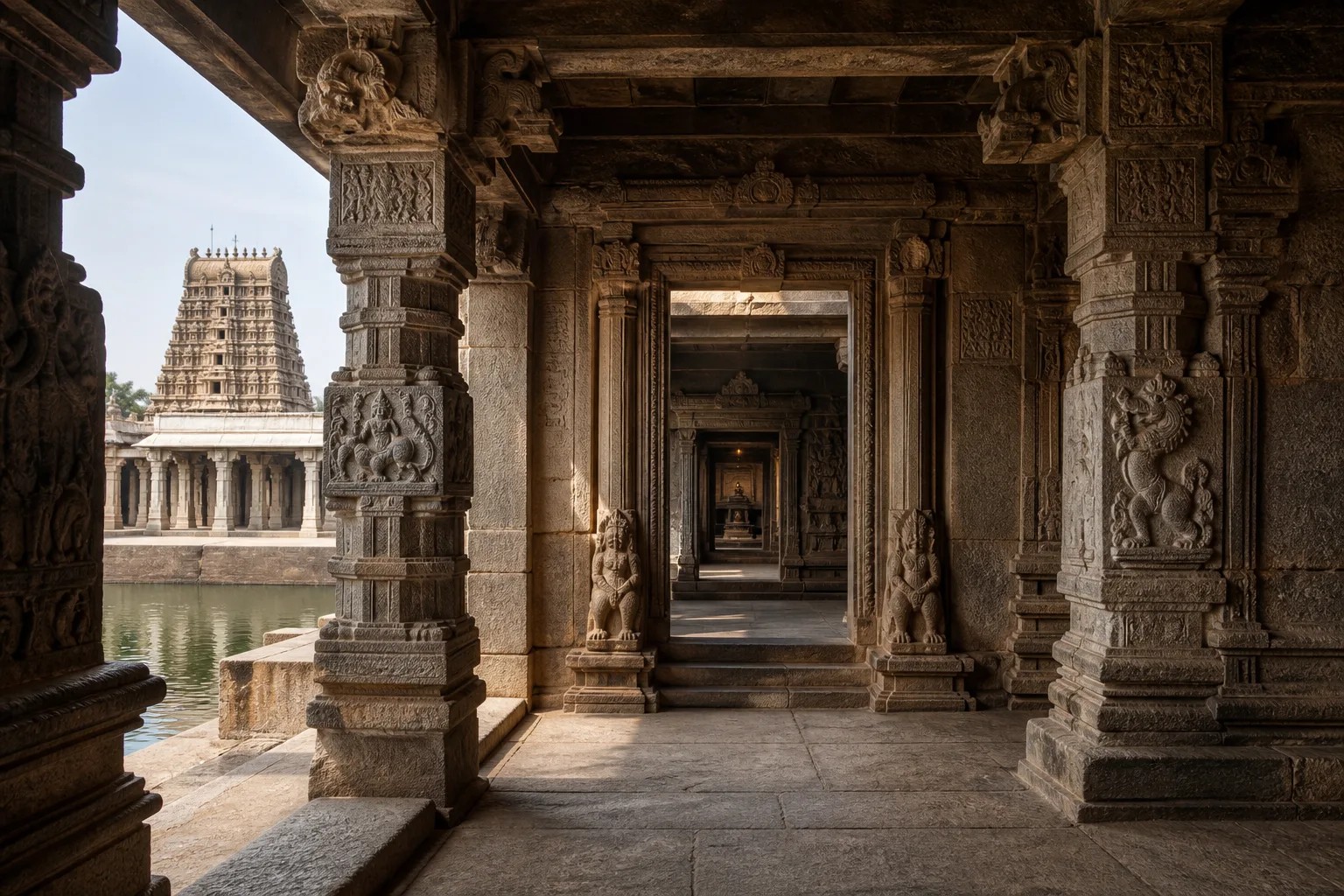
How to Read a Tamil Nadu Temple: Gopurams, Mandapams, Prakarams and Sacred Space
An architectural reading guide to gateways, halls, enclosures, sanctuary towers, tanks, sculpture and inscriptions, grounded in the fact that temples remain living sacred places.
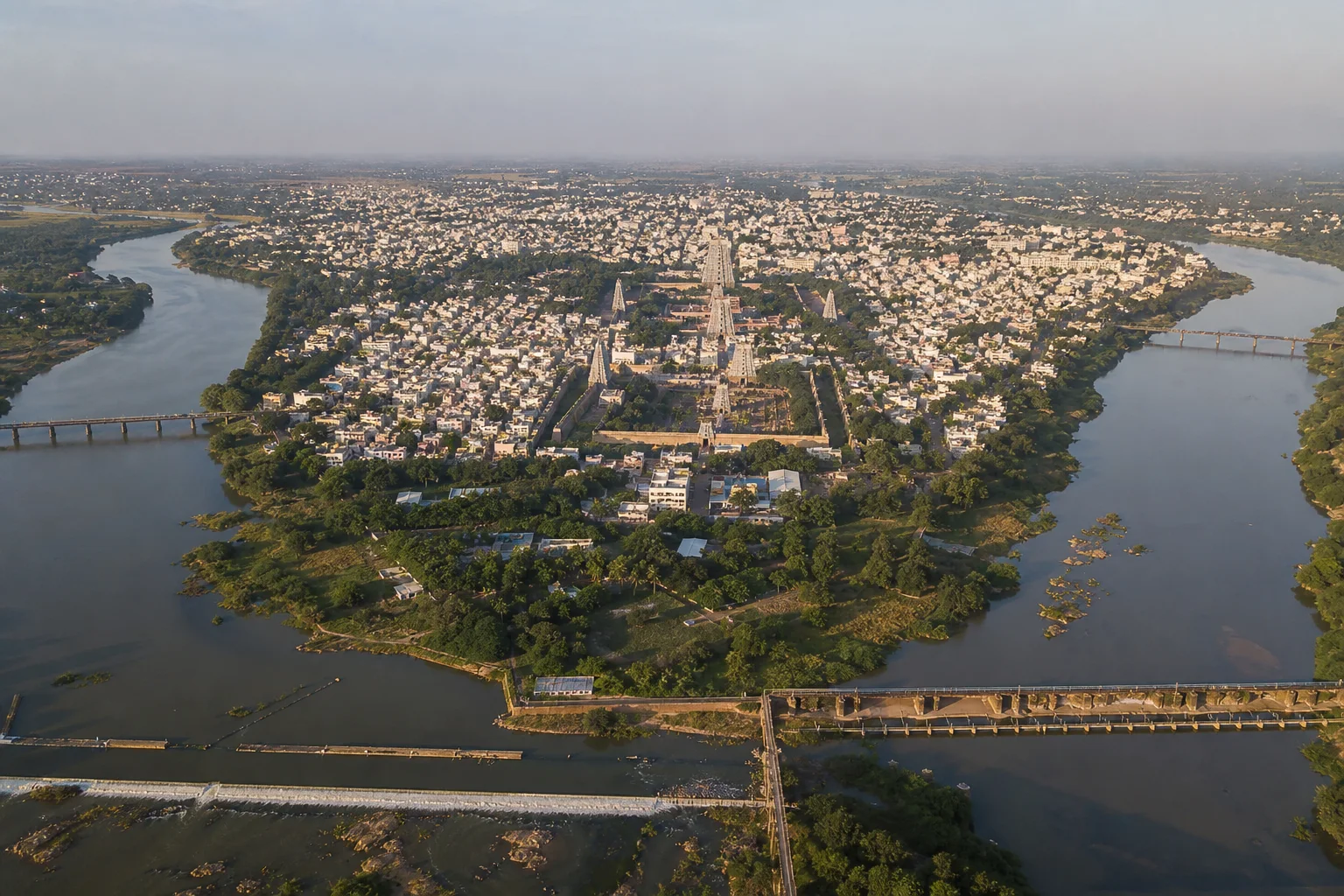
Srirangam Beyond the Temple: Island, Sacred Town and Pilgrimage Landscape
Look beyond a single monument to understand how rivers, streets, enclosures, worship and everyday settlement make Srirangam a distinctive sacred town.
Editorial attribution
Prepared and reviewed by My Tamil Nadu Editorial Desk. Modified 24 August 2026.