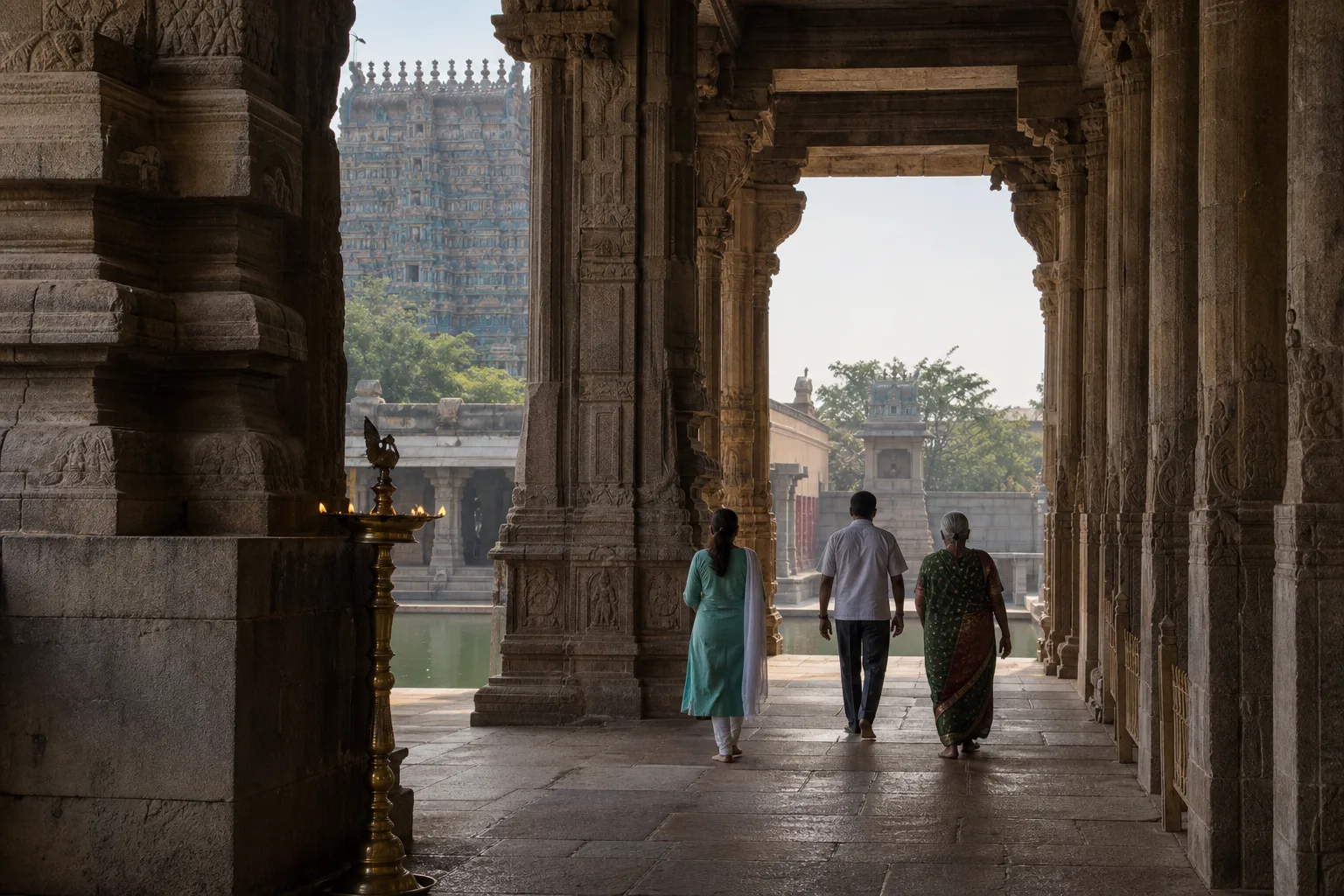
Begin with a living sacred place, not an architectural exhibit
The most useful first adjustment is to stop treating a Tamil Nadu temple as a facade followed by an interior. Many complexes are active religious institutions in which worship, processions, offerings, music, administration, conservation and ordinary neighbourhood movement occupy the same ground. A carved pillar can be art historical evidence, a devotional surface, part of a route used on festival days and an element requiring protection at once. Visitors understand more when they watch how people move and pause before deciding where the visual centre must be.
This does not mean that every temple has the same plan, age, scale or ritual life. Brihadisvara at Thanjavur belongs to the UNESCO-listed Great Living Chola Temples, the Shore Temple is part of Mamallapuram's protected monumental ensemble, and Meenakshi Sundareswarar is embedded in Madurai's active urban and ritual geography. Their gateways, enclosures and visitor arrangements answer different histories. Use this article as a reading method, then let the named temple's official and reviewed guide supply the specific evidence.
Sources for this section: HR&CE conservation overview, UNESCO Chola temples, UNESCO Mamallapuram.
Read the approach before the gateway
A temple visit often begins in the town, street or landscape around it. Processional streets in a temple city, a hill path, a seafront sacred geography or the archaeological setting of a protected monument can explain why the complex faces, expands or receives visitors as it does. Notice flower sellers, footwear points, tanks, chariots, subsidiary shrines and changes in traffic or sound. They are not visual clutter around the real object; they may reveal how the institution connects with public life, pilgrimage and seasonal movement.
Approach slowly enough to distinguish official instructions from habit. A place to leave footwear may be outside one gateway at one site and organised differently elsewhere. Security checks, queue entrances and access lanes can change with crowd conditions or conservation work. Follow signs and staff rather than copying the nearest person. If the surrounding street is busy, keep entrances open, ask before photographing workers or worshippers, and avoid turning a threshold into a group meeting point.
Sources for this section: HR&CE temple directory, Meenakshi temple, Ramanathaswamy temple.
A gopuram is a threshold, not a universal summary
The monumental gateway tower called a gopuram is one of the most recognisable forms associated with Dravidian temple architecture. It can announce an enclosure, mark an axis and organise arrival from the surrounding settlement. Its tiers, stucco figures, colour, inscriptions and later repairs may belong to different moments. A tall gateway does not automatically identify the date of every shrine behind it, and the most visually dominant tower need not be the oldest or ritually central element in the complex.
Look through the opening as well as up at the tower. The gateway frames a transition from public street to regulated sacred precinct, and that change may be expressed through footwear, sound, photography or movement rules. Compare the elaborate urban gateways at Madurai with the very different massing of Chola temples and the coastal structural architecture at Mamallapuram. The comparison is valuable because it breaks the assumption that one postcard form represents every Tamil temple.
Sources for this section: Meenakshi temple, UNESCO Mamallapuram.
Prakarams make architecture legible through movement
A prakaram is an enclosure or circumambulatory zone, but its meaning is clearer in motion than in a glossary. Passing through successive enclosures can change scale, light, noise and proximity to principal shrines. Corridors may hold subsidiary shrines, sculpture, paintings, lamps, inscriptions, queues and places of rest. Circumambulation follows religious logic, while everyday circulation may be adjusted by barriers or staff. Do not assume that the shortest line to a sanctum is the intended or permitted route.
Ramanathaswamy Temple is widely understood through its extensive corridors and theertham-related pilgrimage context, while other temples use tighter courts or more open axial space. At Brihadisvara, the monumental vimana and enclosure produce a different visual hierarchy. These are invitations to compare spatial experience, not to rank complexes. Walk to the side when pausing, keep processional or queue paths clear, and let worshippers set the pace in areas where ritual movement is active.
Sources for this section: Ramanathaswamy temple, UNESCO Chola temples.
Mandapas connect gathering, performance and ritual work
Mandapa is commonly translated as hall or pavilion, but a label alone says little about function. A hall may support assembly, waiting, ritual preparation, marriage imagery, festival display, music, dance, processional movement or a later administrative use. Pillars can carry sculptural programmes that reward close looking, yet the space between the pillars is equally informative: it shows how bodies, objects and ceremonies can be organised. Function may also change over centuries without erasing earlier fabric.
Observe whether a hall is open, screened, used for a queue or set aside from visitors. Never step across ropes or occupy a ritual preparation area for a photograph. At a protected monument, touching carved surfaces accelerates wear; at a living temple, leaning on a pillar can also disregard sacred use. When a guide offers a single dramatic story for every carving, compare it with inscriptions, official interpretation and reviewed scholarship before repeating it as fact.
Sources for this section: HR&CE conservation overview, UNESCO Chola temples.
Understand the sanctum through access, attention and restraint
The sanctum is the principal sacred focus in many Hindu temples, but a visitor should not reduce it to a room at the end of an architectural route. Thresholds, attendant shrines, lamps, bells, offerings, priests, queues and moments of darshan shape how the space is approached. Access can be limited by religious practice, temple policy, crowd management or conservation, and those limits may differ between temples or change for a festival. Being able to see less does not make the visit incomplete.
Put cameras away before reaching a restricted zone and do not argue from what was allowed on a previous visit. If you are uncertain about where to stand, whether to receive an offering or how to move after darshan, ask a staff member or follow an orderly queue without blocking it. Visitors who are not participating in worship can remain attentive and unobtrusive. Respect is expressed less by performing unfamiliar gestures than by giving the place and its community room to function.
Sources for this section: HR&CE temple directory, Arunachaleswarar temple.
Temple tanks and water belong to a larger sacred and civic setting
A temple tank may carry ritual associations, organise open space and connect the complex with older systems of water, settlement and procession. Its presence does not mean that visitors may enter the water, and its condition or access cannot be inferred from a historic description. Look at steps, edges, adjoining shrines, streets and the relationship between water level and surrounding fabric. Where a tank is absent, a temple may instead connect to a river, seafront, hill spring or named theertham.
At Madurai, Potramarai Kulam is part of the temple's internal spatial experience; at Rameswaram, sacred-water practices connect the temple to a wider island and pilgrimage geography. These should not be flattened into one generic ritual. Follow current barriers and instructions, avoid feeding animals or leaving offerings unless the temple provides a recognised process, and never interpret visible water as evidence that bathing is safe or permitted.
Sources for this section: Meenakshi temple, Ramanathaswamy temple.
Read inscriptions and sculpture as evidence with limits
Temple inscriptions can record gifts, personnel, ritual provisions, land relationships, royal language and institutional decisions. Sculpture and painting can reveal iconographic programmes, patronage, craft practice and later alteration. None of these sources explains itself. An inscription was produced for a purpose, a sculptural surface may have been repaired, and a painted layer may not be contemporary with the masonry beneath it. Reliable interpretation separates what is visible from what a publication or official record establishes.
This is especially important at monuments with long building histories. A temple may preserve an early core, later gateways, repainted figures, added halls and current devotional objects within one enclosure. Avoid assigning a single dynasty to everything you see. Photograph an information panel for later study where photography is allowed, record the exact location of a feature, and use the site's reviewed guide to distinguish documented chronology from temple tradition and popular storytelling.
Sources for this section: UNESCO Chola temples, HR&CE conservation overview.
Make respectful behaviour practical
Wear clothing suitable for a place of worship, keep shoulders and legs reasonably covered, and carry an extra layer when a site's stated policy is more specific. Remove footwear where directed rather than applying one rule to the entire precinct. Keep conversations and phone audio quiet, avoid public displays that obstruct worship, and ask before photographing people. A queue is not empty space for a group portrait, and a festival crowd is not consent for close-up documentary photography.
Food, leather items, bags and electronic devices may be managed differently from one temple to another. Do not publish a universal prohibited-items list from memory. Travel light, use official storage only where provided, and be prepared to leave an item securely elsewhere. Families should agree on a meeting point outside the busiest threshold. Anyone with mobility, sensory or health needs should contact the temple or responsible authority because historic fabric and current crowd systems can affect access in ways an evergreen page cannot certify.
Sources for this section: HR&CE temple directory.
Treat photography, queues and festival conditions as current facts
Photography rules may distinguish outer courts, archaeological fabric, worship areas and the sanctum. They can also change during ceremonies, conservation work or high-crowd periods. A phone image posted yesterday is not official permission today. Look for signs, ask staff and accept a refusal without negotiation. Where photography is allowed, avoid flash, tripods, drones, intrusive portraits and poses that turn a sacred threshold into a prop. The most respectful record may be a written observation made after leaving.
Festival days can alter routes, waiting time, vehicle access and the balance between worship and architectural observation. Do not rely on a standard weekday plan, and never invent an exact queue duration. If your purpose is quiet study, a major festival may not be the right moment; if your purpose is to understand public ritual, prepare for limited visibility and follow crowd controls. Check official temple channels and district notices close to the visit, then use Tamil Nadu Today only as an additional orientation layer.
Sources for this section: HR&CE festival calendar, Arunachaleswarar temple.
Use a simple reading sequence, then let the temple differ
Begin outside: note the settlement, landscape and arrival pattern. At the gateway, identify what changes in behaviour and access. Inside, follow the sequence of courts and enclosures rather than rushing to the most famous object. Notice how mandapas, subsidiary shrines, water, inscriptions and sculpture relate to movement. Near the sacred focus, reduce your physical and photographic footprint. Afterward, compare what you observed with the named temple guide and authoritative sources before attaching dates or meanings.
The method is deliberately modest. It will not make every ritual visible, resolve every construction phase or grant access to every space. It can, however, replace checklist tourism with attentive travel. The reward is not that all Tamil Nadu temples become easy to decode, but that their differences become legible: Chola monument and living institution, Pallava coastal ensemble, urban goddess temple, island pilgrimage centre, hill temple and countless local sacred places each ask to be understood on their own terms.
Sources for this section: HR&CE conservation overview, UNESCO Chola temples, UNESCO Mamallapuram.
Sources & Further Reading
These authoritative references support the historical, geographic, or seasonal context in this story. Current conditions and operating details still require a fresh official check.
- Temple conservation and cultural heritage overview · Tamil Nadu Hindu Religious and Charitable Endowments Department
- Tamil Nadu temple directory · Tamil Nadu Hindu Religious and Charitable Endowments Department
- Temple festival calendar · Tamil Nadu Hindu Religious and Charitable Endowments Department
- Great Living Chola Temples · UNESCO World Heritage Centre
- Group of Monuments at Mahabalipuram · UNESCO World Heritage Centre
- Arulmigu Meenakshi Sundaraswarar Temple · Tamil Nadu Hindu Religious and Charitable Endowments Department
- Arulmigu Ramanathaswamy Temple · Tamil Nadu Hindu Religious and Charitable Endowments Department
- Arulmigu Arunachaleswarar Temple · Tamil Nadu Hindu Religious and Charitable Endowments Department
Related Stories
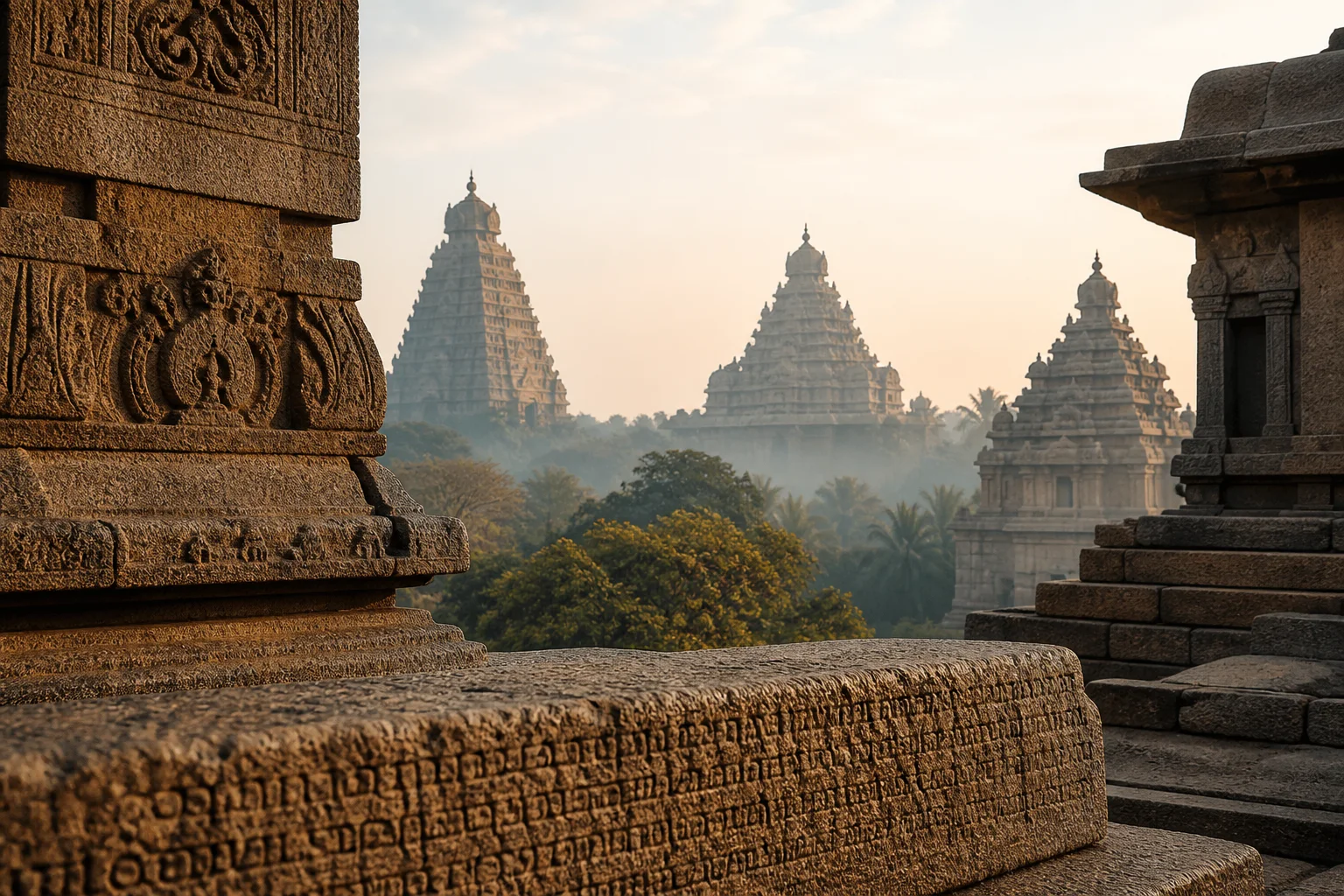
A Journey Through Chola Heritage in Tamil Nadu
Follow a thoughtful route through three living Chola temple landscapes, learning to read architecture, inscriptions, patronage, and place without rushing.
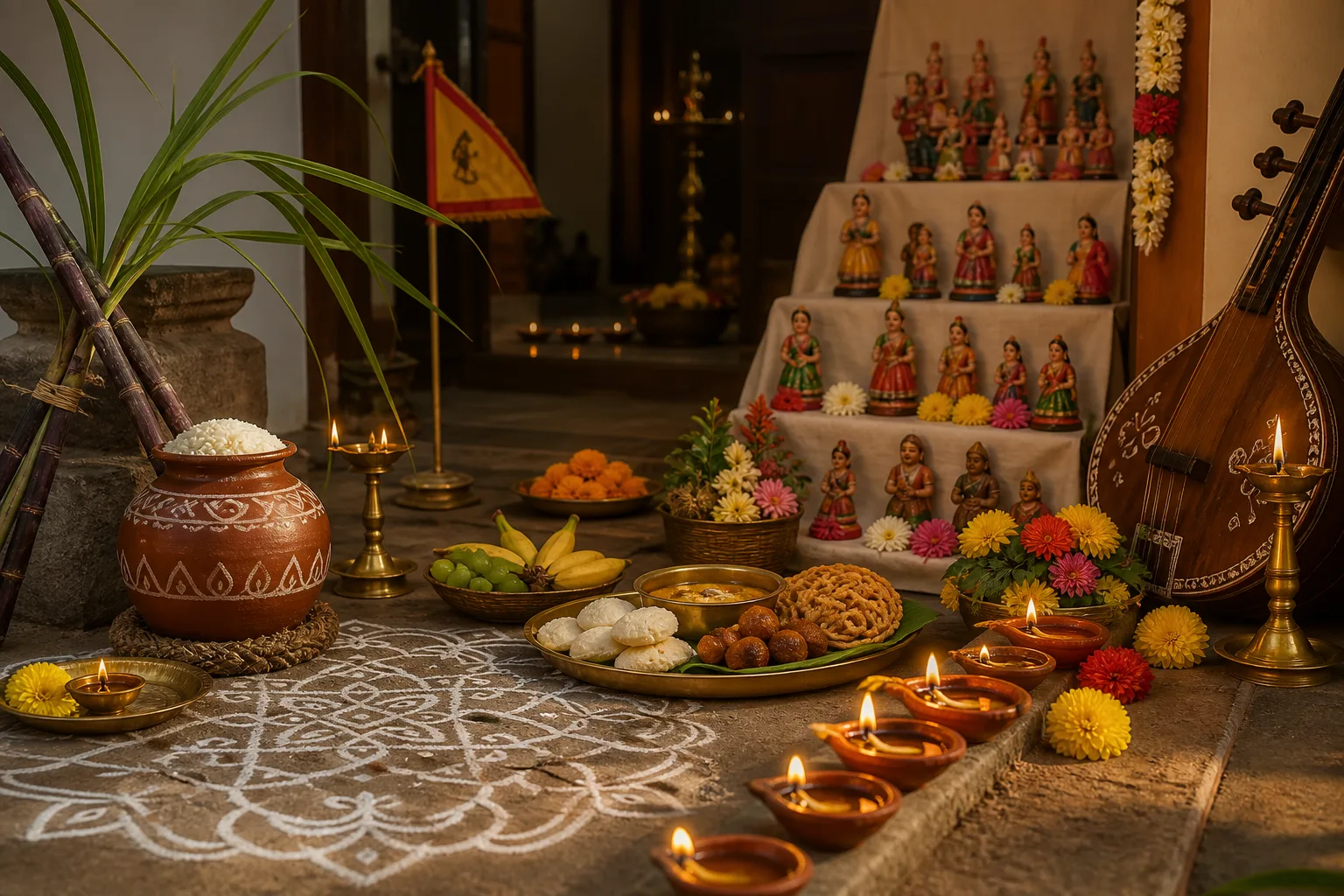
Beyond Pongal: How to Read Tamil Nadu's Festival Calendar
A cultural guide to the many clocks behind Tamil Nadu's festivals, from harvest and household practice to temple calendars and pilgrimage.
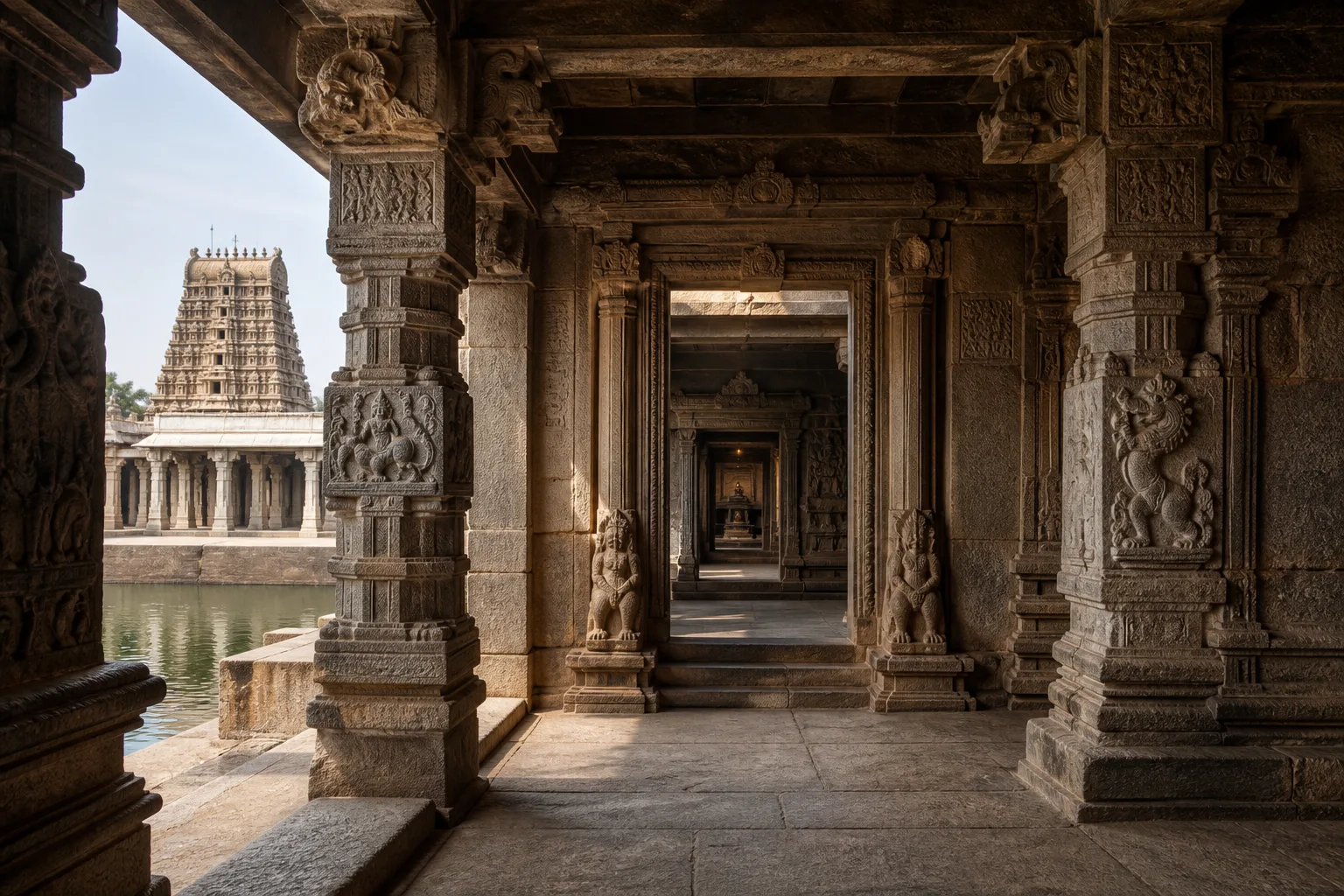
How to Read a Tamil Nadu Temple: Gopurams, Mandapams, Prakarams and Sacred Space
An architectural reading guide to gateways, halls, enclosures, sanctuary towers, tanks, sculpture and inscriptions, grounded in the fact that temples remain living sacred places.
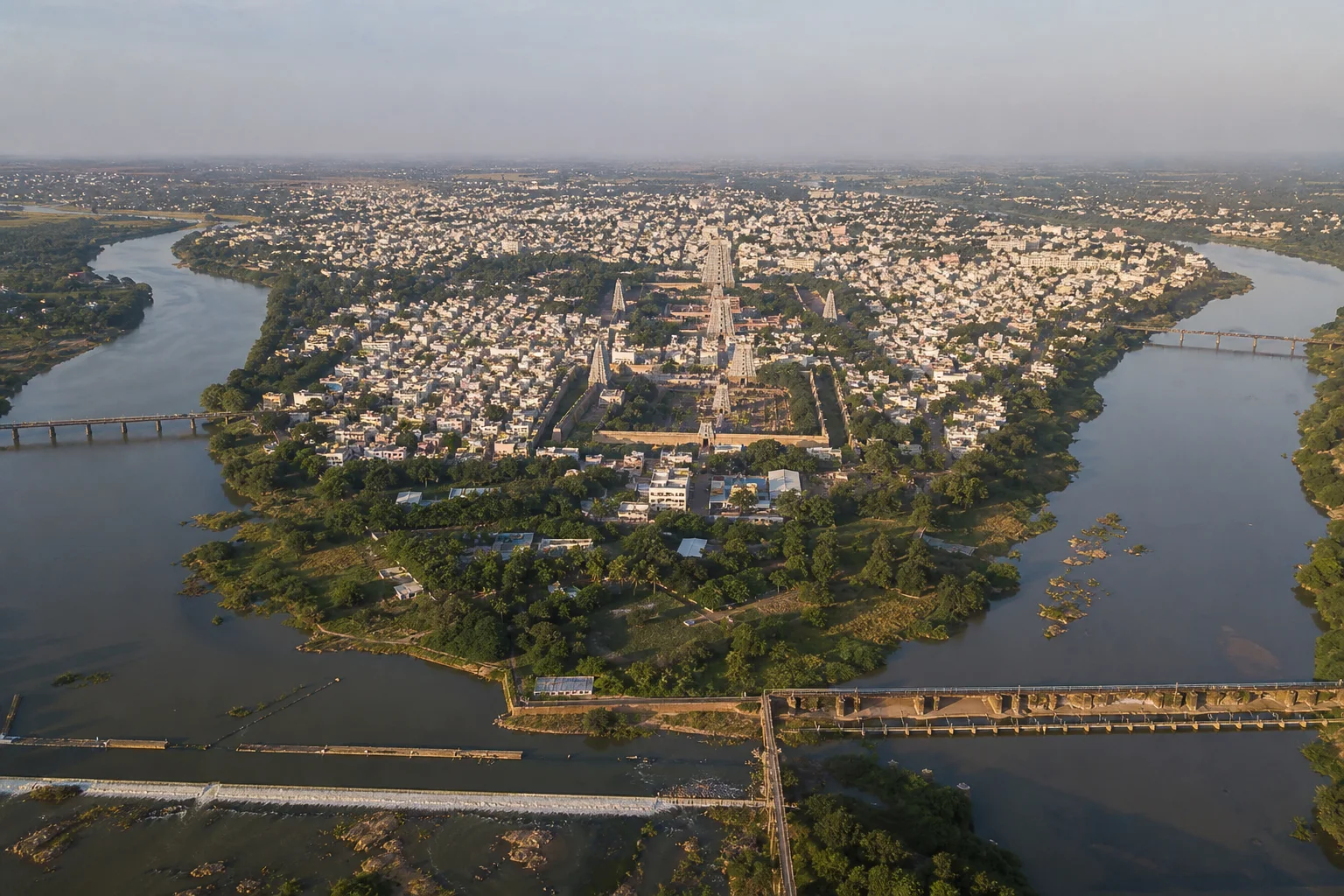
Srirangam Beyond the Temple: Island, Sacred Town and Pilgrimage Landscape
Look beyond a single monument to understand how rivers, streets, enclosures, worship and everyday settlement make Srirangam a distinctive sacred town.
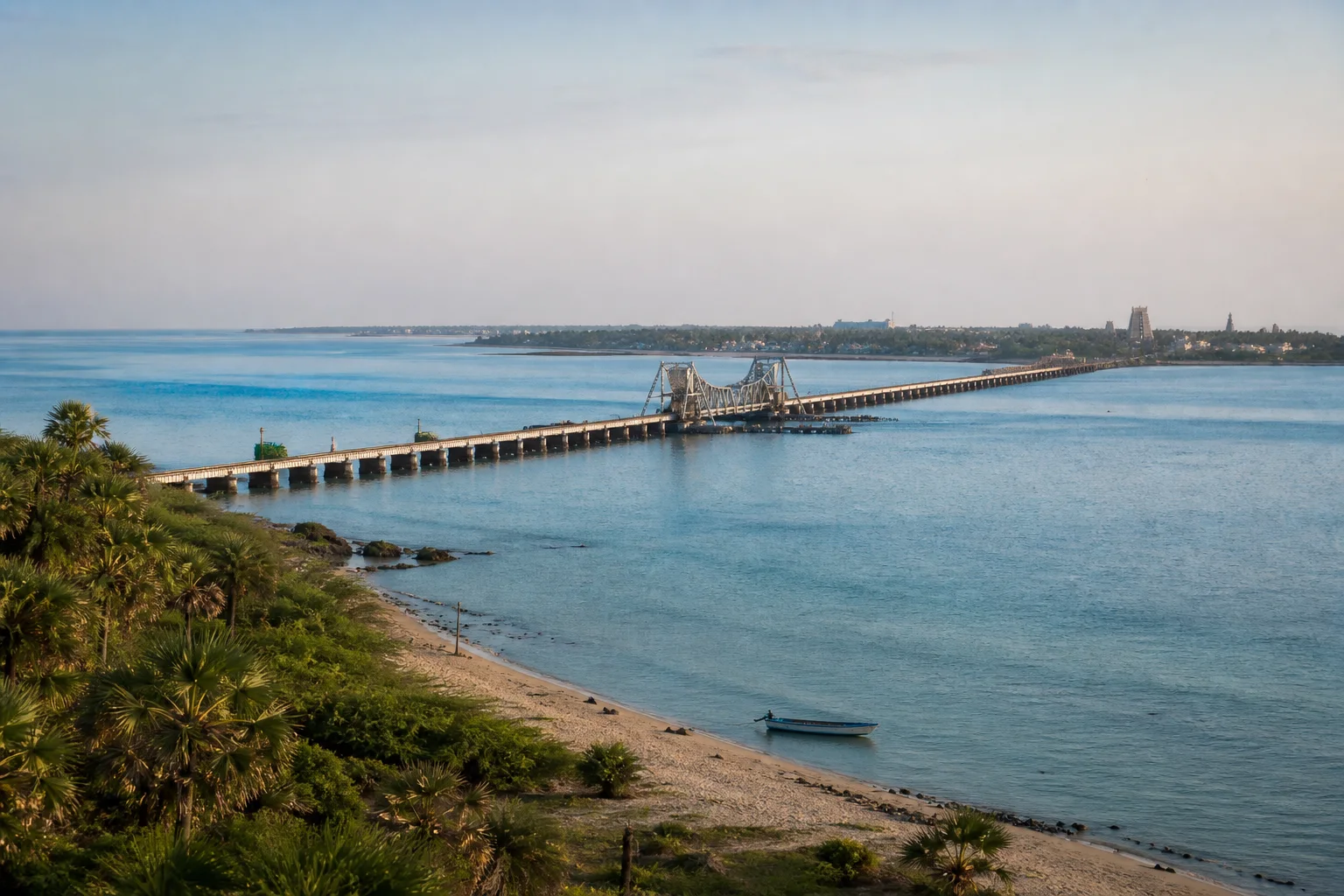
Rameswaram as an Island: Temple, Pamban, Dhanushkodi and the Sea
A connected reading of Rameswaram's sacred town, mainland crossing, exposed eastern coast and protected marine context rather than four unrelated stops.
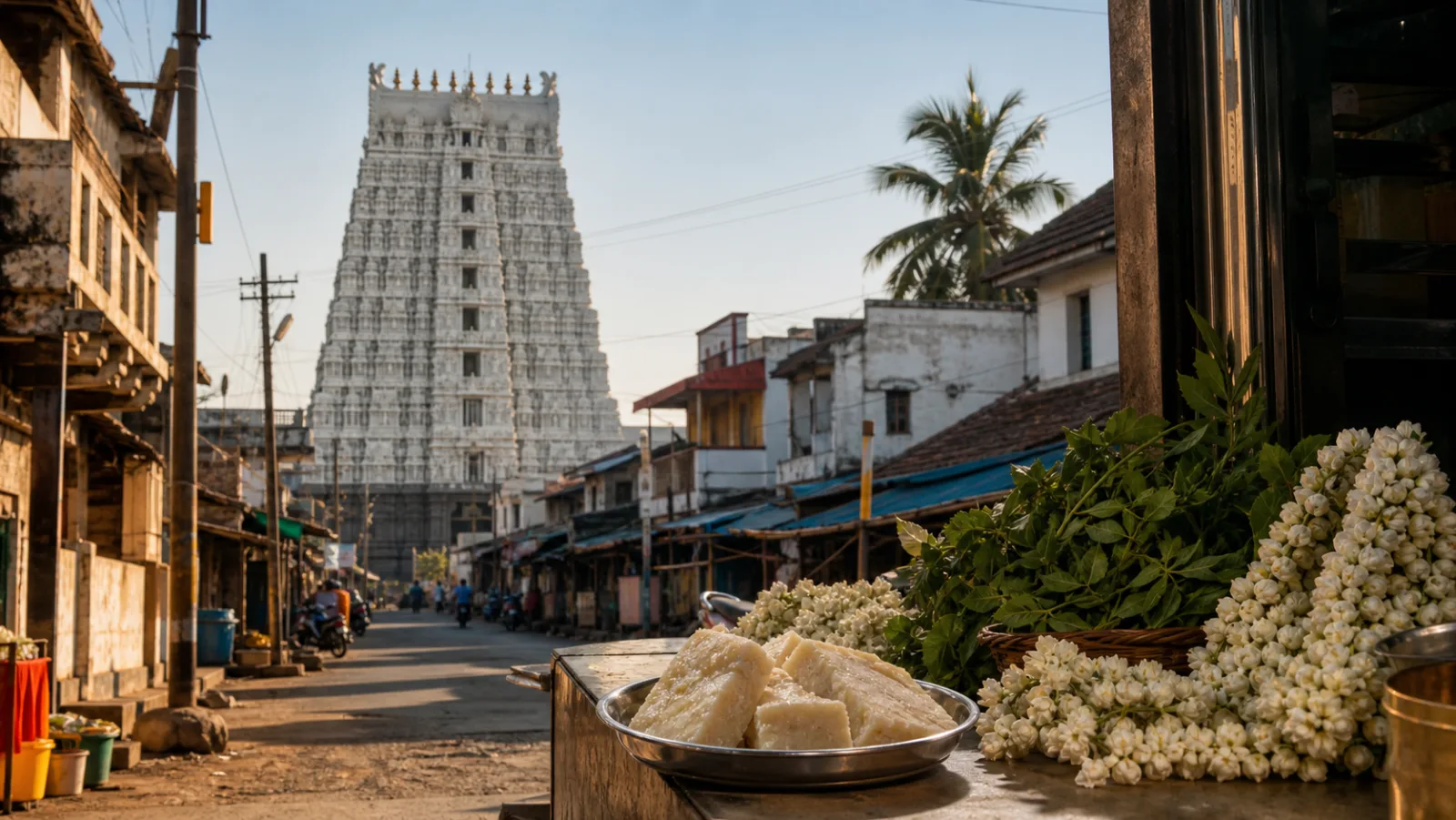
Srivilliputhur: Read Andal, the Temple Town and Palkova
A careful route through Srivilliputhur's devotional literature, living temple streets, flowers and geographically indicated milk sweet.
Frequently asked questions
Is photography allowed inside every Tamil Nadu temple?
No. Rules vary by temple and by zone, and they can change for worship, festivals, security or conservation. Read current signs and ask authorised staff before using a camera.
Do all temples have a gopuram, prakaram, mandapa and tank?
No. These are useful architectural terms, not a universal checklist. Plan, scale, age, sectarian tradition, landscape and later additions differ substantially.
What should I wear for a temple visit?
Choose modest clothing suitable for worship and confirm any place-specific rule through the temple's official channel. Carry a light extra layer instead of assuming one statewide dress code.
Can a non-Hindu visitor enter every part of a temple?
Do not assume so. Access rules can differ by temple and sacred zone. Follow official signs and staff instructions without treating restricted access as a problem to work around.
How can I verify festival-day arrangements?
Check the official temple or HR&CE channel and relevant district notices close to the date. Exact routes, timings, restrictions and queues are current information.
Editorial attribution
Prepared and reviewed by My Tamil Nadu Editorial Desk. Modified 15 August 2026.