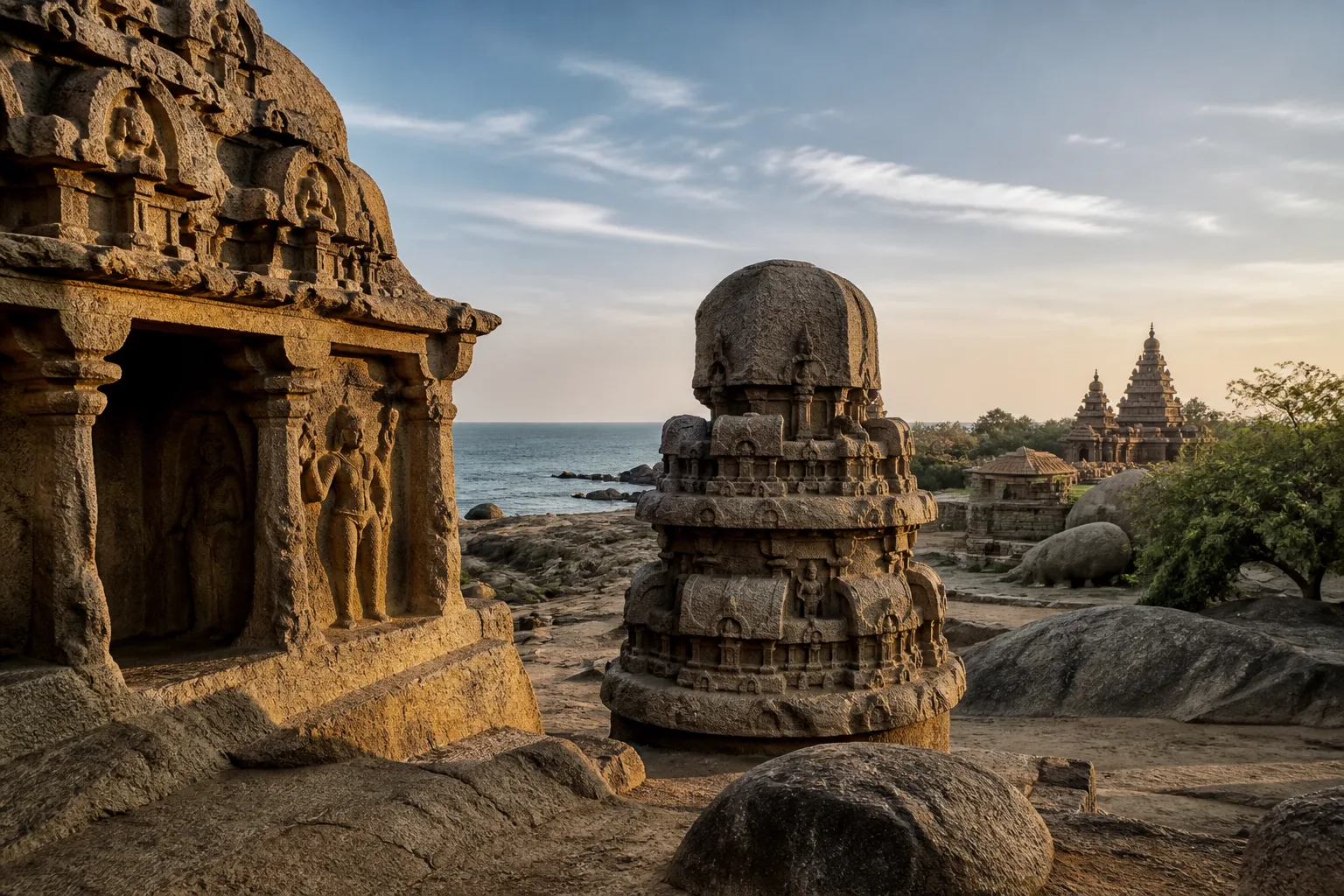
Begin with a Pallava question, not a dynasty ranking
Tamil Nadu's architectural history is often narrated toward the monumental Chola temples of the Cauvery delta. That later achievement matters, but it can turn Pallava heritage into a brief developmental step. A better journey asks what Pallava-period monuments reveal about experimentation with rock, freestanding masonry, sculptural narrative, sacred space and royal representation. Kanchipuram and Mamallapuram make that question tangible because they preserve different relationships among material, settlement and worship.
The Pallava Dynasty guide provides the wider historical frame and explains why chronology must be tied to inscriptions, scholarship and monument-specific evidence. This article does something narrower. It follows an observer between an inland sacred city and a coastal monument landscape, comparing what can be seen without claiming that every cave, shrine or later addition belongs to one ruler or workshop.
Sources for this section: UNESCO Mahabalipuram, UNESCO Kanchipuram.
Read Kanchipuram and Mamallapuram as different landscapes
Kanchipuram is a long-lived city of temples, streets, tanks, institutions, craft and continuing worship. Its Pallava associations survive within a place repeatedly altered by later patrons and present needs. Mamallapuram is a coastal settlement where rock-cut sanctuaries, monolithic forms, large reliefs and structural temples are encountered as a protected monument group. The sea, exposed stone, tourism and a working town shape the modern experience.
Moving between them is useful because similarity cannot be assumed. A protected sandstone temple inside an active sacred city raises different questions from a granite form carved from an outcrop. UNESCO's tentative-list record for Kanchipuram and World Heritage record for Mahabalipuram also have different statuses. Neither label should be stretched beyond its defined property or used to date everything nearby.
Sources for this section: UNESCO Mahabalipuram, UNESCO Kanchipuram, Mamallapuram district guide.
In Kanchipuram, architecture remains part of a sacred city
Kanchipuram cannot be reduced to a Pallava open-air museum. Temples associated with several periods stand within neighbourhoods where worship, processions, commerce and daily movement continue. A dynastic label may describe an early core, inscription or major building phase while later gateways, halls, repairs and ritual arrangements change how the complex is entered today. The city rewards comparison, but only when each site's current sacred use remains primary.
Begin with street and enclosure. Notice whether a temple withdraws behind a wall or announces itself through a later gateway, how the approach aligns with the shrine and where later structures meet earlier fabric. Do not infer dates from colour or apparent age. Sandstone can weather softly; plaster and paint can be renewed; granite additions can be later than a more fragile-looking surface. Published conservation and archaeological records outrank visual guesswork.
Sources for this section: ASI Chennai monuments, UNESCO Kanchipuram.
Kailasanatha offers a concentrated structural study
Kailasanatha Temple is especially useful for studying an early structural complex associated with Pallava patronage. Its principal shrine, enclosure, subsidiary shrines and sculptural programme can be considered as relationships rather than isolated motifs. Walk around only where permitted and watch how repeated forms establish rhythm, how enclosure changes proximity and how sandstone allows a different carved surface from the granite encountered at Mamallapuram.
The monument has also undergone later work and conservation. A clean plan should never be mistaken for a building untouched by time. Repairs, weathering, altered access and continuing reverence belong to its history. The permanent temple guide carries site-specific chronology and current-information boundaries; here Kailasanatha acts as one point in a comparison between constructing with dressed units and releasing architecture from living rock.
Sources for this section: ASI Kailasanatha plan, ASI Chennai monuments.
Mamallapuram reads like a landscape of different stone problems
UNESCO describes the Group of Monuments at Mahabalipuram through several forms: rock-cut cave sanctuaries, monolithic rathas, sculpted reliefs and structural temples. Their value lies partly in that range. A cave is made by removing material into an outcrop. A monolith is shaped from a single mass. A relief activates a broad surface. A structural temple assembles stone into a freestanding building. Calling all four simply carvings hides the decisions each form demands.
Treat the landscape as a sequence of experiments without assuming that it presents a perfectly ordered textbook chronology. Attribution and dating depend on evidence and scholarly interpretation. Look at unfinished or irregular surfaces with care: they may reveal working process, damage or later intervention, but a visitor cannot diagnose which from appearance alone. The monument group is most useful when it encourages questions more precise than which object is most famous.
Sources for this section: UNESCO Mahabalipuram, Mamallapuram district guide.
Caves, rathas and reliefs teach different ways of seeing
At a cave sanctuary, compare facade and interior: columns establish a public threshold while the excavated chamber changes light, sound and movement. At the monolithic rathas, walk around the exterior and observe how roof, wall, projection and sculptural niche are tested in three dimensions. Their popular chariot names are convenient labels, not proof that the monuments functioned as wheeled vehicles or form one ordinary temple street.
The large relief commonly called the Descent of the Ganges or Arjuna's Penance demonstrates why interpretation needs humility. Its figures, cleft, animals and ascetic imagery have supported more than one reading. Rather than pretending the debate is solved by a caption, notice how the natural rock surface participates in the composition. Responsible heritage writing can explain competing interpretations while keeping the official monument record visible.
Sources for this section: UNESCO Mahabalipuram, ASI Chennai monuments.
The Shore Temple changes the relationship between stone and coast
The Shore Temple is structural rather than excavated from living rock. Its towers, enclosure, shrine arrangement and coastal position make it an important comparison with the caves and monoliths. Yet it should remain part of the wider monument group. A single seaward silhouette cannot represent the full range of Pallava work at Mamallapuram, and the most photographed view does not explain the building's sacred or conservation history.
Salt-laden air, wind, sand, water and heavy visitation make the coastal setting more than atmosphere. Follow barriers and current instructions, do not touch carved surfaces and avoid inventing submerged-temple certainty from legend or a dramatic tide. Archaeological discoveries and marine claims require evidence from the responsible institutions. The permanent Shore Temple guide separates supported history, sacred tradition and current visitor information.
Sources for this section: UNESCO Mahabalipuram, ASI Chennai monuments.
Connect later traditions without drawing a straight line
Pallava-period architecture forms an essential part of the history from which later south Indian temple traditions developed, but influence is not a relay baton passed unchanged to one successor. Chola patrons, craftspeople and institutions worked in different political, material and regional conditions. Forms could be adapted, enlarged, rejected or newly combined. A similarity between towers or plans therefore begins an inquiry; it does not prove direct copying by itself.
Comparing Pallava heritage with the Great Living Chola Temples is most productive when scale does not become a verdict. Ask how material is handled, how shrine and gateway relate, where inscriptions appear, how sculpture meets architecture and how a living institution has changed the place. The temple-architecture story provides the shared vocabulary, while the Chola journey shows how a later landscape needs its own evidence and pace.
Sources for this section: UNESCO Mahabalipuram, ASI Kailasanatha plan.
Build a Pallava journey around close looking
A meaningful Pallava journey does not need every monument in one day. Choose Kanchipuram or Mamallapuram as the primary setting, read two or three relationships carefully and use the other place as a later comparison. Current opening arrangements, worship, conservation zones, weather and road conditions must be checked with the responsible authority. This article supplies no travel time, fee or access promise.
Carry water, protect yourself from sun and keep carved surfaces free from touch, chalk, rubbing and staged photographs. Ask before photographing worshippers, workers or craftspeople. Use the Architecture and Heritage hubs to choose what question comes next. Pallava heritage becomes more than an early chapter when the traveller leaves with a sharper understanding of material, setting and uncertainty rather than a longer collection of labels.
Sources for this section: ASI Chennai monuments, Mamallapuram district guide.
Sources & Further Reading
These authoritative references support the historical, geographic, or seasonal context in this story. Current conditions and operating details still require a fresh official check.
- Group of Monuments at Mahabalipuram · UNESCO World Heritage Centre
- Temples of Kanchipuram · UNESCO World Heritage Centre Tentative List
- List of Centrally Protected Monuments and Sites · Archaeological Survey of India, Chennai Circle
- Conservation Management Plan for Kailasanatha Temple, Kanchipuram · Archaeological Survey of India
- Mamallapuram · Chengalpattu District Administration
Related Stories
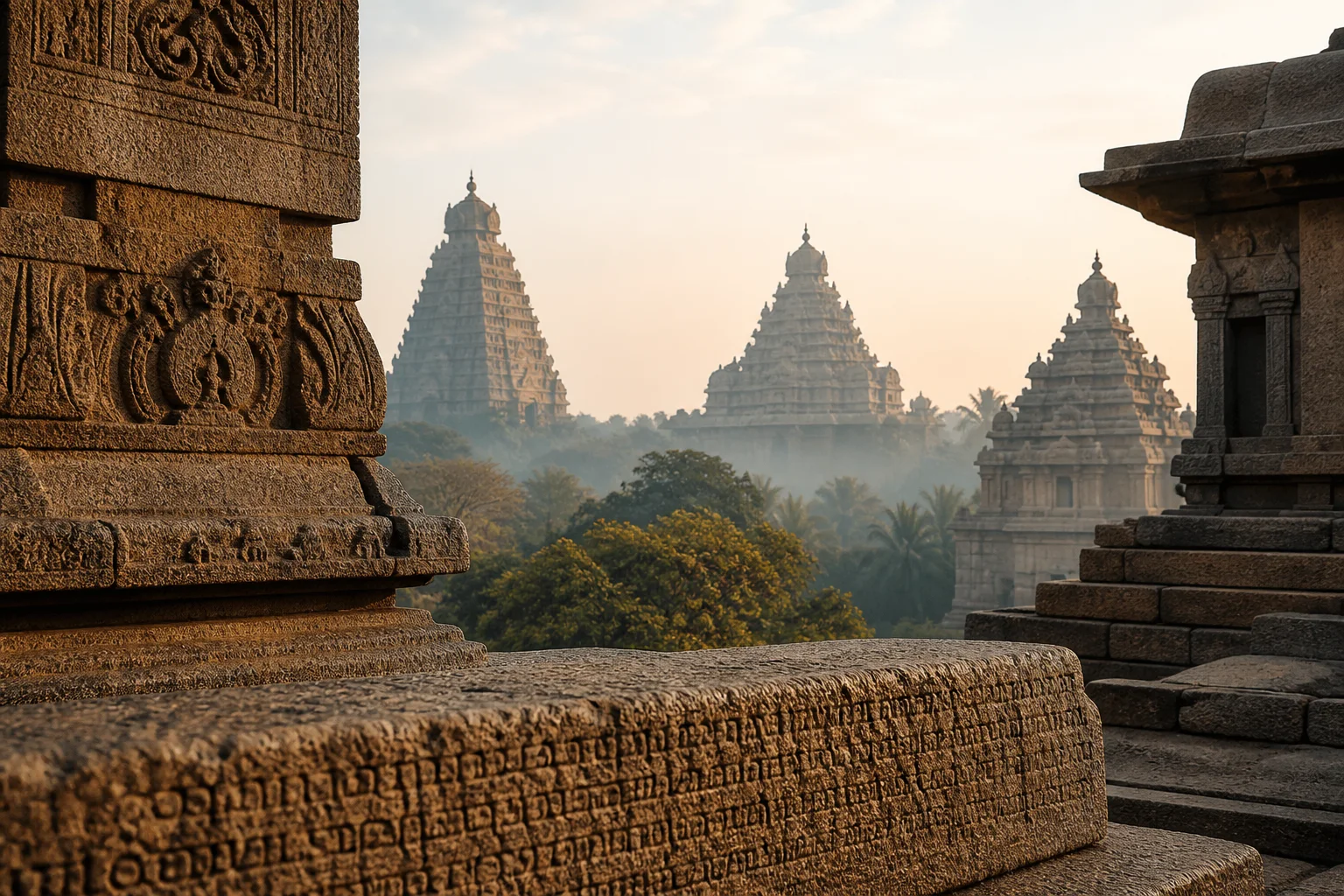
A Journey Through Chola Heritage in Tamil Nadu
Follow a thoughtful route through three living Chola temple landscapes, learning to read architecture, inscriptions, patronage, and place without rushing.
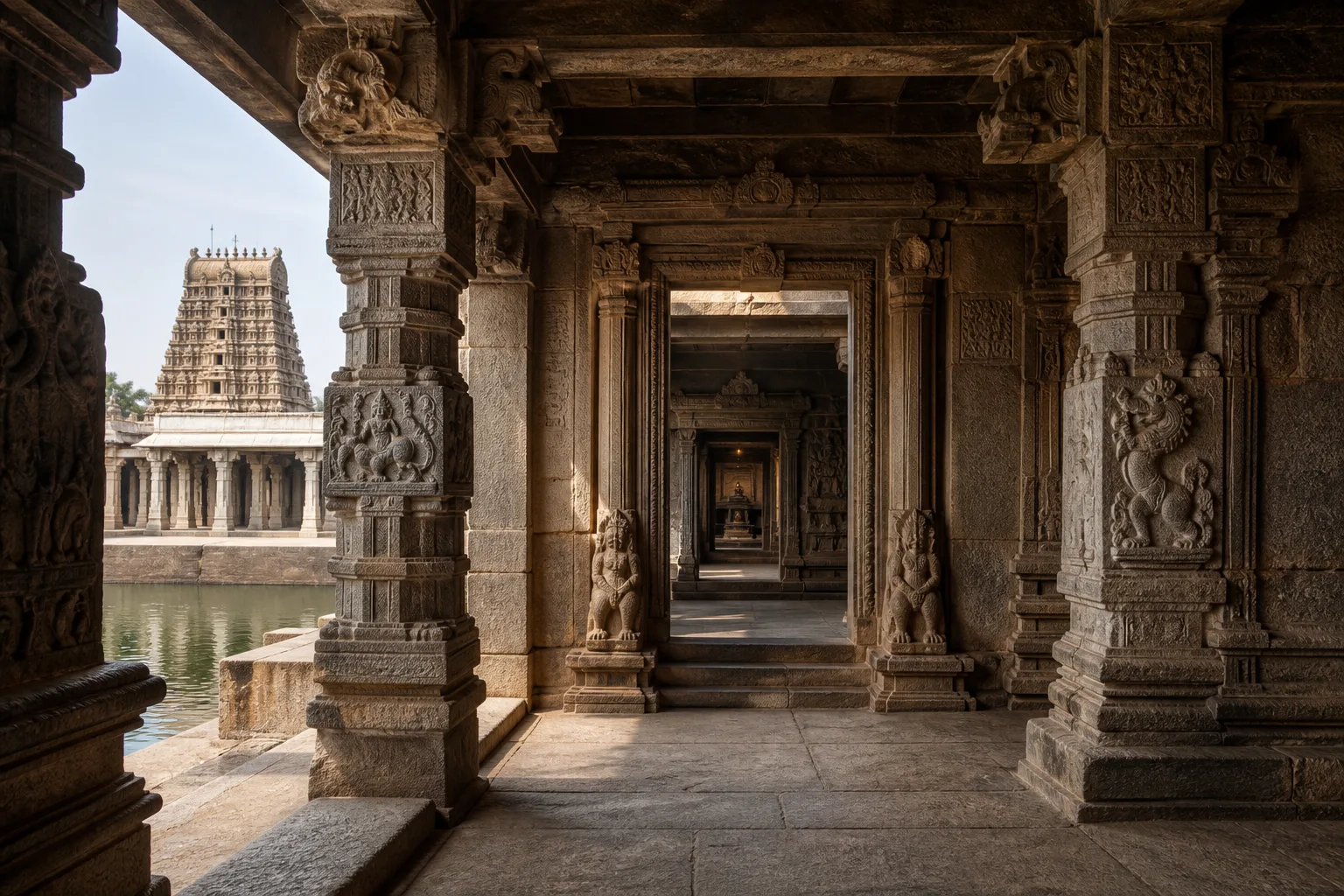
How to Read a Tamil Nadu Temple: Gopurams, Mandapams, Prakarams and Sacred Space
An architectural reading guide to gateways, halls, enclosures, sanctuary towers, tanks, sculpture and inscriptions, grounded in the fact that temples remain living sacred places.
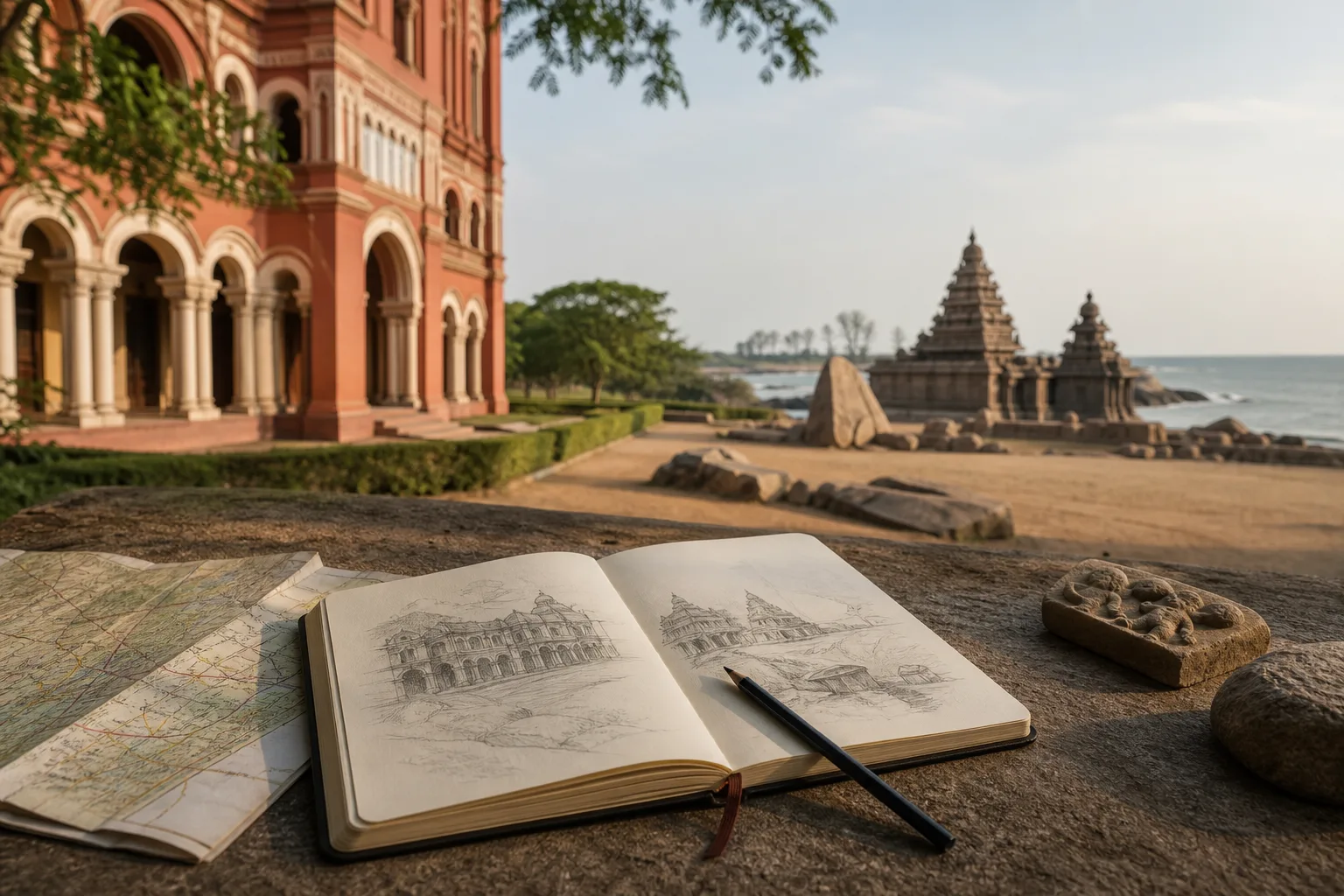
A Heritage Weekend from Chennai: How to Choose a Meaningful Route
A practical way to shape a heritage weekend from Chennai around one good question, a measured pace, and a choice between city and nearby extensions.
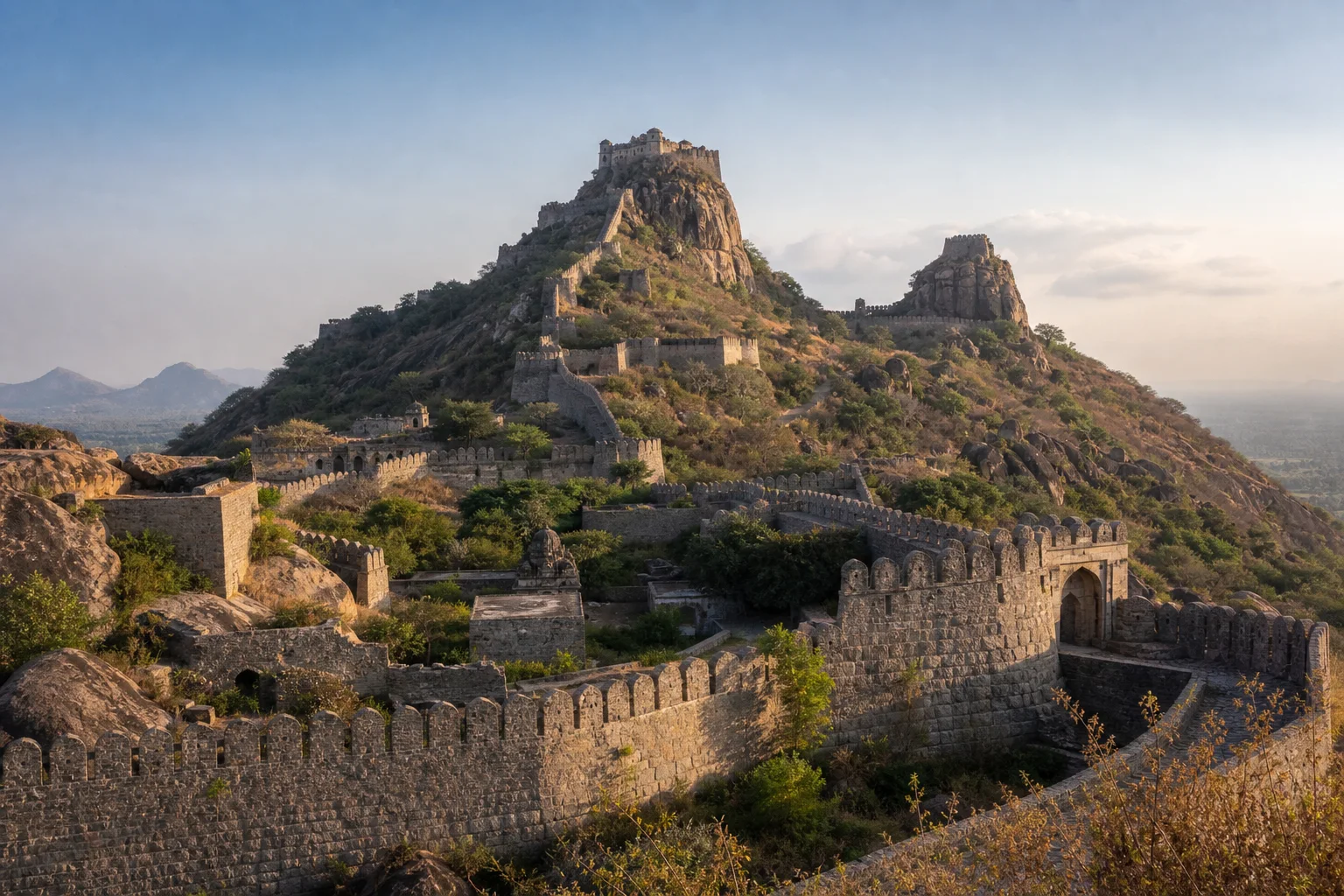
Gingee Fort After UNESCO: Reading a Military Landscape, Not Just a Ruin
What Gingee's place in a 12-fort World Heritage serial property means, and why its granite hills, walls, water and layered history must be read together.
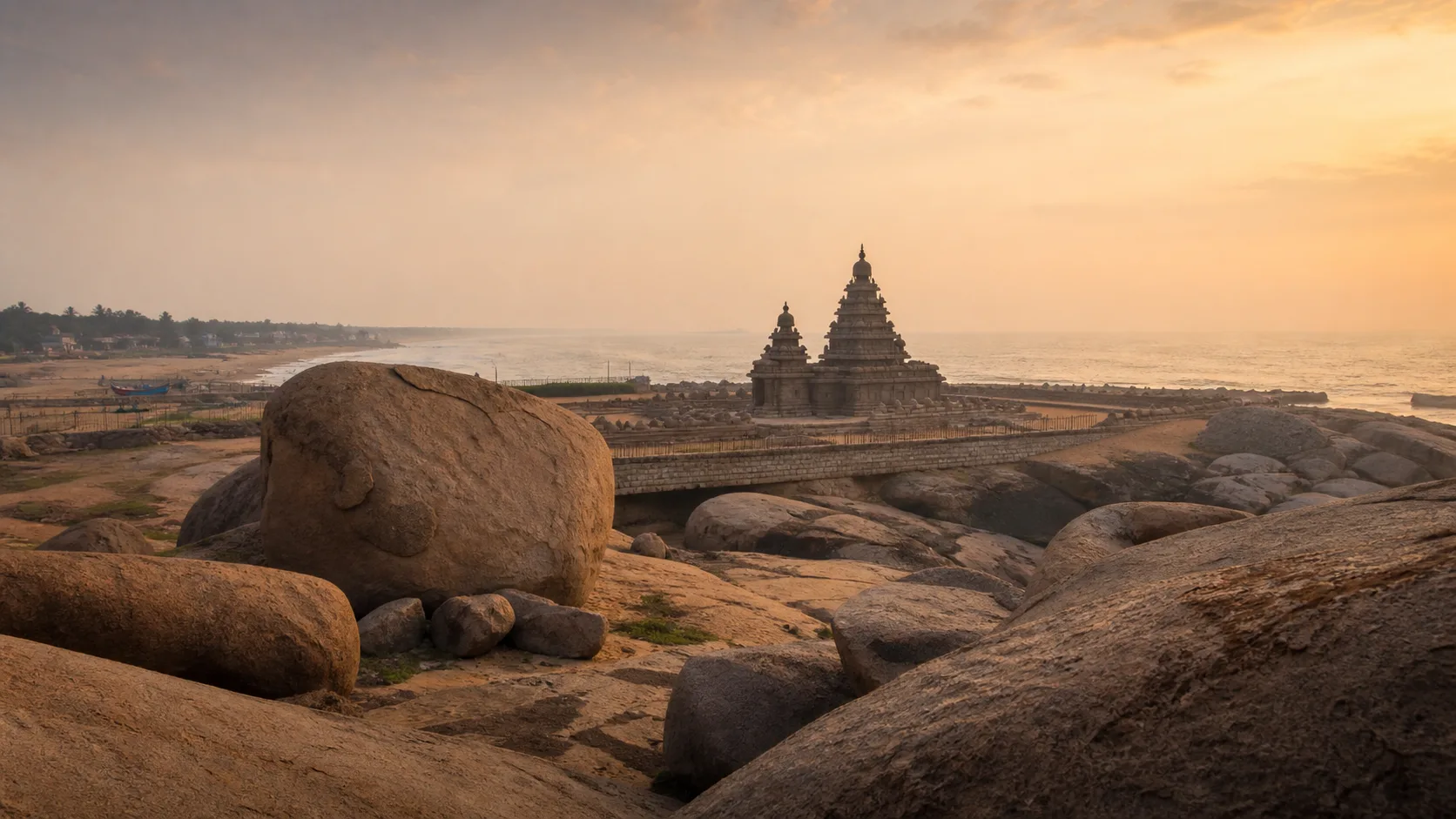
Mamallapuram: Read a Coastal World Heritage Landscape
A connected reading of Mamallapuram that moves from granite outcrops and carved caves to monolithic experiments, open-air reliefs, the Shore Temple and a living coastal town.
Editorial attribution
Prepared and reviewed by My Tamil Nadu Editorial Desk. Modified 20 August 2026.