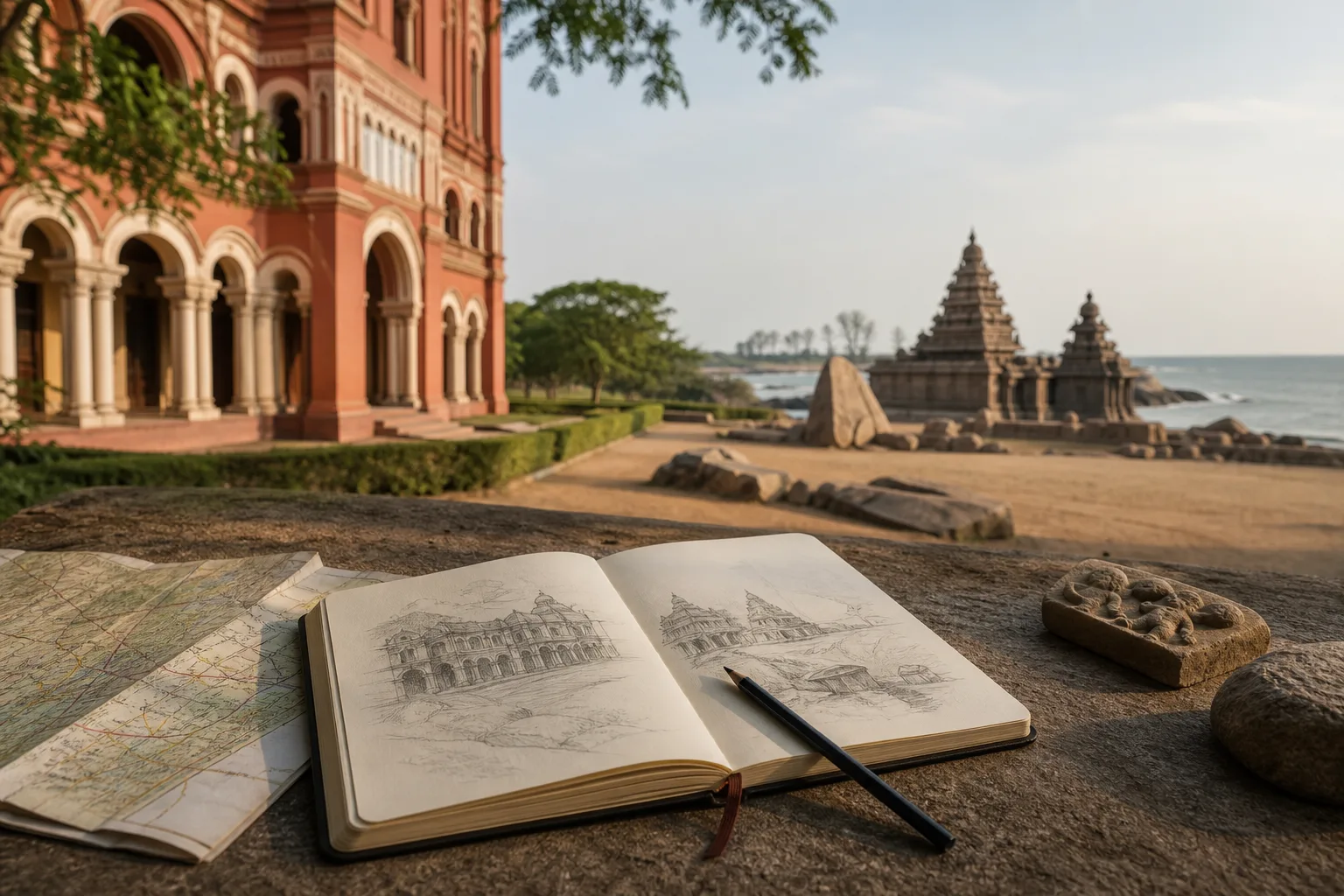
Start with a question, not a list
A heritage weekend from Chennai can easily become a race among monuments, museums, sacred places, neighbourhoods, and coastal sites. The result may cover more ground while revealing less. A stronger beginning is one question: how has the city represented power, how did stone architecture change under Pallava patronage, how do religious and civic histories share urban space, or how does a protected monument remain connected to a working settlement? One question gives unrelated-looking places a reason to speak to one another.
This is an editorial way of choosing, not a timetable. It deliberately avoids distances, journey durations, entry fees, opening hours, current traffic, and road-status claims. Those facts change and should be checked shortly before travel. The permanent destination and planning guides hold the reference layer; this story helps you decide what kind of attention to bring. A satisfying weekend may include only a few stops if each one changes how you understand the next.
Sources for this section: Chennai district history, UNESCO Mahabalipuram.
Treat Chennai as the first archive
Chennai is not merely the point from which a weekend drive begins. Its coast, fortifications, institutions, worship spaces, planned and unplanned streets, neighbourhood names, and public collections hold evidence of different political and social periods. The district's official history provides one institutional outline, but a city is larger than that outline. Colonial administration, older Tamil settlements, maritime exchange, religious communities, migration, labour, education, and modern civic growth overlap rather than arriving in tidy chapters.
Choose one part of that overlap. You might compare an institution that collected and classified objects with a neighbourhood where heritage remains embedded in daily use. You might ask how a fort or civic building projects authority, then notice whose work and movement are less visible in the official architecture. The goal is not to turn every facade into a proven story. Read plaques cautiously, distinguish a documented date from a local account, and use the city guide to connect place names with responsible sources.
Sources for this section: Chennai district history, ASI Chennai Circle.
Use a museum to learn how to look
The Government Museum in Chennai can serve as a method rather than a box to tick. Its archaeology collections include stone sculpture, inscriptions, bronzes, coins, and other material categories that help separate period, material, technique, iconography, and provenance. Begin with a small number of objects. Read what the label actually establishes, notice what remains uncertain, and ask where the object came from and how it entered a collection. That practice makes later monument visits more exact.
Museum display is itself a historical activity. Classification, conservation, gallery arrangement, and institutional language affect what a visitor sees. Do not assume that every object associated with a dynasty has a secure date or that a style label identifies one workshop. Gallery access, temporary displays, and institutional arrangements can change, so confirm current information directly with the museum. An unavailable room need not collapse the weekend; the exercise is close looking, and that can continue in another collection or public setting.
Sources for this section: Government Museum archaeology, Government Museum Chennai.
Keep Chennai's heritage plural
A city heritage route should not imply that one colonial building, one religious landmark, or one museum represents Chennai as a whole. Fort St George belongs to a history of the English East India Company and later administration, while San Thome Basilica belongs to a living Catholic setting with its own devotional and institutional history. Other temples, mosques, churches, civic buildings, markets, and residential areas carry different communities and chronologies. Their proximity does not erase their distinctions.
At a place of worship, heritage interest does not override sacred use. Observe dress, access, photography, and service expectations; avoid turning worshippers into background material. Around working streets and markets, do not block entrances or photograph people without consent. A short trip cannot represent every community fairly, so name the route's limits. That honesty is better than calling a selected cluster the complete heritage of Chennai.
Sources for this section: Chennai district history, ASI Chennai Circle.
Choose one nearby extension
Once the city lens is clear, choose one extension rather than collecting every famous direction. Mamallapuram is a strong match when the question concerns rock-cut, monolithic, relief, and structural forms in a coastal Pallava landscape. Kanchipuram is a different match when the question concerns a long-lived sacred city, temple architecture, and the relationship between protected monuments and active worship. Both can connect with Chennai, but they do not need to occupy the same short weekend.
Make the choice by intellectual continuity and personal pace. A traveller who spent a long first day reading objects and inscriptions may gain more from one concentrated archaeological landscape than from another city sequence. Someone focused on sacred urban continuity may prefer Kanchipuram and leave Mamallapuram for another journey. Current road conditions and live routing still matter, but they should refine an already meaningful choice rather than dictate the story by whichever pin appears nearest.
Sources for this section: UNESCO Mahabalipuram, UNESCO Kanchipuram tentative-list record.
At Mamallapuram, compare forms instead of collecting monuments
UNESCO describes the Group of Monuments at Mahabalipuram as a property that includes rock-cut cave sanctuaries, monolithic rathas, sculpted reliefs, and structural temples associated with Pallava patronage. That variety is the reason to slow down. The forms are not interchangeable examples of one style. A cave uses a rock face differently from a freestanding monolith; a large relief organises figures and landscape differently from a structural temple experienced in the round.
Look for how a maker responds to material, ground, edge, light, and movement. Avoid assigning every figure an instant identity from an unsourced caption. Keep the World Heritage language precise: the designation is the Group of Monuments, not a guarantee that every old-looking stone nearby belongs to the listed property. The coastal setting also brings salt, weather, sand, tourism pressure, and a living town into the heritage encounter. Conservation boundaries and visitor controls deserve the same respect as the sculpture.
Sources for this section: UNESCO Mahabalipuram, Chengalpattu district Mamallapuram.
Let the Shore Temple remain part of a group
The Shore Temple is visually prominent, but it should not swallow the rest of the Mamallapuram story. Its structural form and coastal position invite questions that differ from those raised by the caves, rathas, and reliefs. Observe the relationship between enclosure, towers, carved surfaces, sea exposure, and movement around the protected space. The strongest comparison is not which monument looks best, but what each way of making stone allowed patrons, designers, craftspeople, and worshippers to express.
It is also important not to freeze a living coast into a Pallava-period photograph. Present-day fishing activity, town life, site management, conservation, and visitor movement belong to the place you encounter now, although they should not be folded carelessly into a claim about the past. Follow barriers and photography rules, and verify any current access or ticket information with the responsible authority. The permanent temple guide holds the focused reference material that this narrative intentionally does not repeat.
Sources for this section: UNESCO Mahabalipuram, ASI Chennai Circle.
Compare the weekend with notes, not verdicts
Carry a small notebook and record relationships rather than superlatives. In Chennai, note how an institution frames an object or how a building meets the street. At Mamallapuram, sketch the way a form emerges from or stands apart from stone. If you choose Kanchipuram, note how worship, settlement, and monumental architecture coexist. A few written observations will expose easy assumptions: old does not always mean original, protected does not mean unused, and visually similar does not mean contemporary.
At the end, compare no more than three questions. What kind of evidence did each place offer? Which voices were made visible by labels, architecture, ritual, or administration, and which remained difficult to hear? How did the modern setting change the encounter? These questions keep heritage from becoming a ranking exercise. They also make a return visit productive, because the unanswered parts become a reading list instead of an excuse for confident invention.
Let food and ordinary city life create pauses
A heritage weekend needs intervals in which the traveller stops interpreting monuments. A meal, coffee, shaded rest, bookstore, or ordinary neighbourhood walk can restore attention and reveal the present city. Food should not be used as proof that one recipe has survived unchanged from a dynasty or that one business is the original. Chennai's metropolitan food reflects multiple communities and migrations; coastal and temple-town settings have their own changing practices.
Choose food for context and accessibility rather than a ranking. Ask what ingredients, work rhythms, religious settings, or migration histories may be relevant, then allow uncertainty. Verify hygiene and dietary needs for yourself, and avoid photographing staff or diners without consent. This slower social layer prevents the weekend from treating Tamil Nadu as a collection of empty architectural objects.
Practise a responsible presence
Heritage care is made of small actions. Do not touch carvings, lean equipment on walls, trace inscriptions, cross barriers, climb for a photograph, or move objects. Keep sound low in sacred and museum settings. Ask before photographing people, ceremonies, crafts, or working spaces. Pay required fees through official channels and follow staff instructions even when another visitor ignores them. A public-facing monument is not an unrestricted surface.
Heat, rain, mobility, crowds, and personal energy also affect responsible behaviour. A tired schedule encourages rushing, shortcuts, and conflict. Build rest into the plan, carry water responsibly, and select accessible stops according to current information. If conservation, worship, or local administration changes access, accept the limit rather than searching for an unofficial entrance. The weekend succeeds when the places remain unharmed and the people using them are not displaced by your experience.
Keep live routing separate from evergreen guidance
A story can recommend a relationship between Chennai and a nearby heritage direction, but it cannot certify present traffic, road work, diversions, transport schedules, parking, or travel duration. Use the site's road-trip and map handoffs near departure, compare the route with official local notices, and check again before leaving. A map line is a navigation aid, not evidence that a road is open, suitable, permitted, or comfortable in current weather.
Avoid building a chain in which every later stop depends on an exact arrival minute. Keep one priority, one optional place, and a clear point at which the extension becomes a future trip. This protects the quality of the visit and makes changing conditions easier to absorb. Public transport and hired transport require their own current checks; this article does not endorse an operator or preserve a schedule.
Build the weekend you can actually read
A simple structure is enough: choose one heritage question, one Chennai anchor, one contrasting city layer, and one nearby extension only if the pace supports it. Add a resilient indoor or low-exposure alternative, a food or rest pause, and a final current-information check. The sequence can change without losing its meaning because the question, not the timetable, holds it together. That is the advantage of an editorial route over a copied itinerary.
Use the Trip Planner to record interests, bases, and pace, but treat its output as an organising aid rather than live travel advice. Return to the destination guides for substantive place knowledge and follow their sources. After the weekend, keep the route open: Mamallapuram can lead deeper into Pallava history; Kanchipuram can lead into sacred-city study; a Chennai museum object can lead to a district or temple you have not yet considered. A short journey has done its work when it improves the next question.
Sources & Further Reading
These authoritative references support the historical, geographic, or seasonal context in this story. Current conditions and operating details still require a fresh official check.
- History of Chennai District · Chennai District Administration
- List of Centrally Protected Monuments and Sites · Archaeological Survey of India, Chennai Circle
- Archaeology Section · Government Museum Chennai
- About the Government Museum Chennai · Government Museum Chennai
- Group of Monuments at Mahabalipuram · UNESCO World Heritage Centre
- Mamallapuram · Chengalpattu District Administration
- Temples of Kanchipuram · UNESCO World Heritage Centre
Related Stories
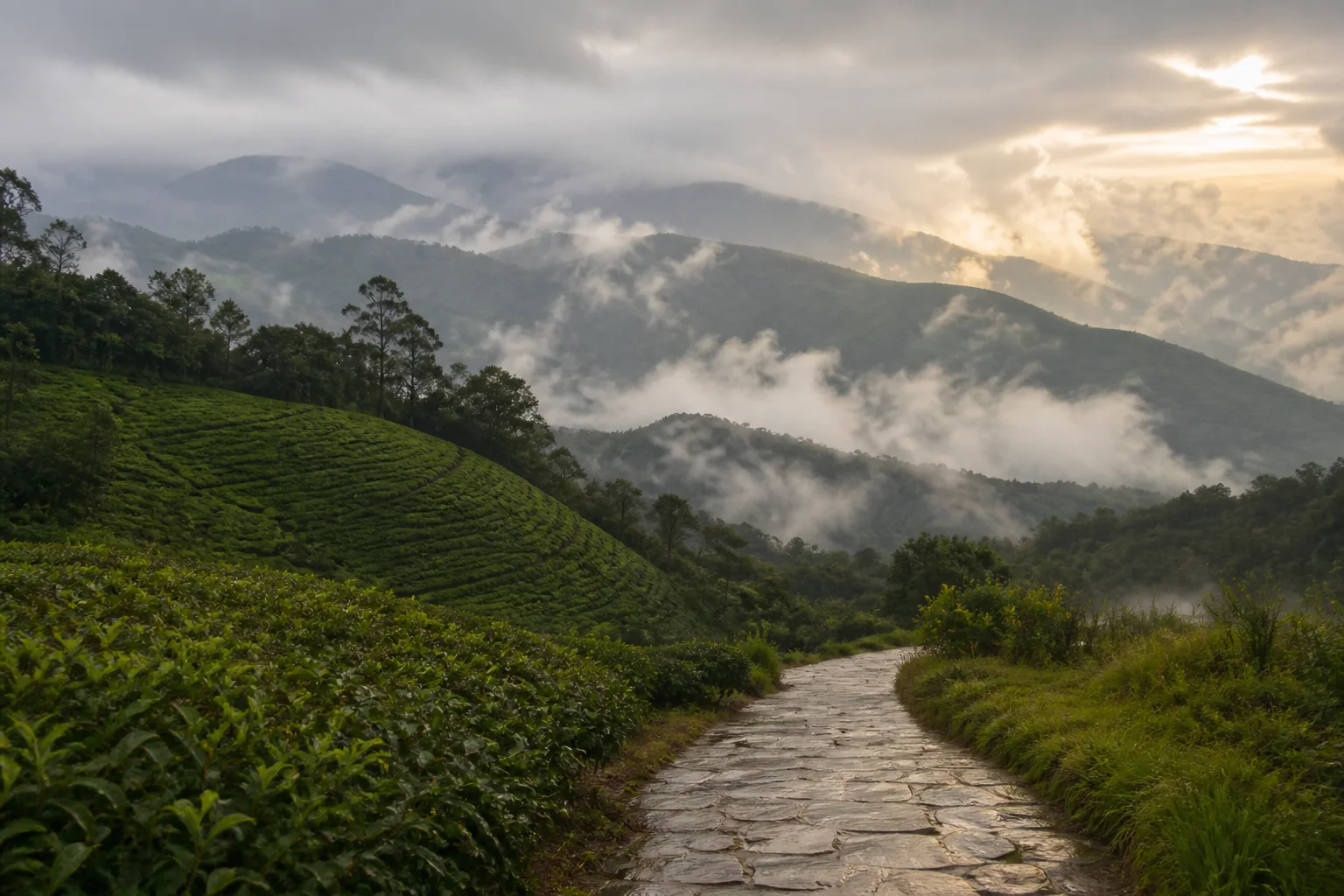
Tamil Nadu in the Late Southwest Monsoon: Where to Travel in August and September
A weather-aware way to choose between Tamil Nadu's hills, heritage cities, waterfalls, and coast during August and September.
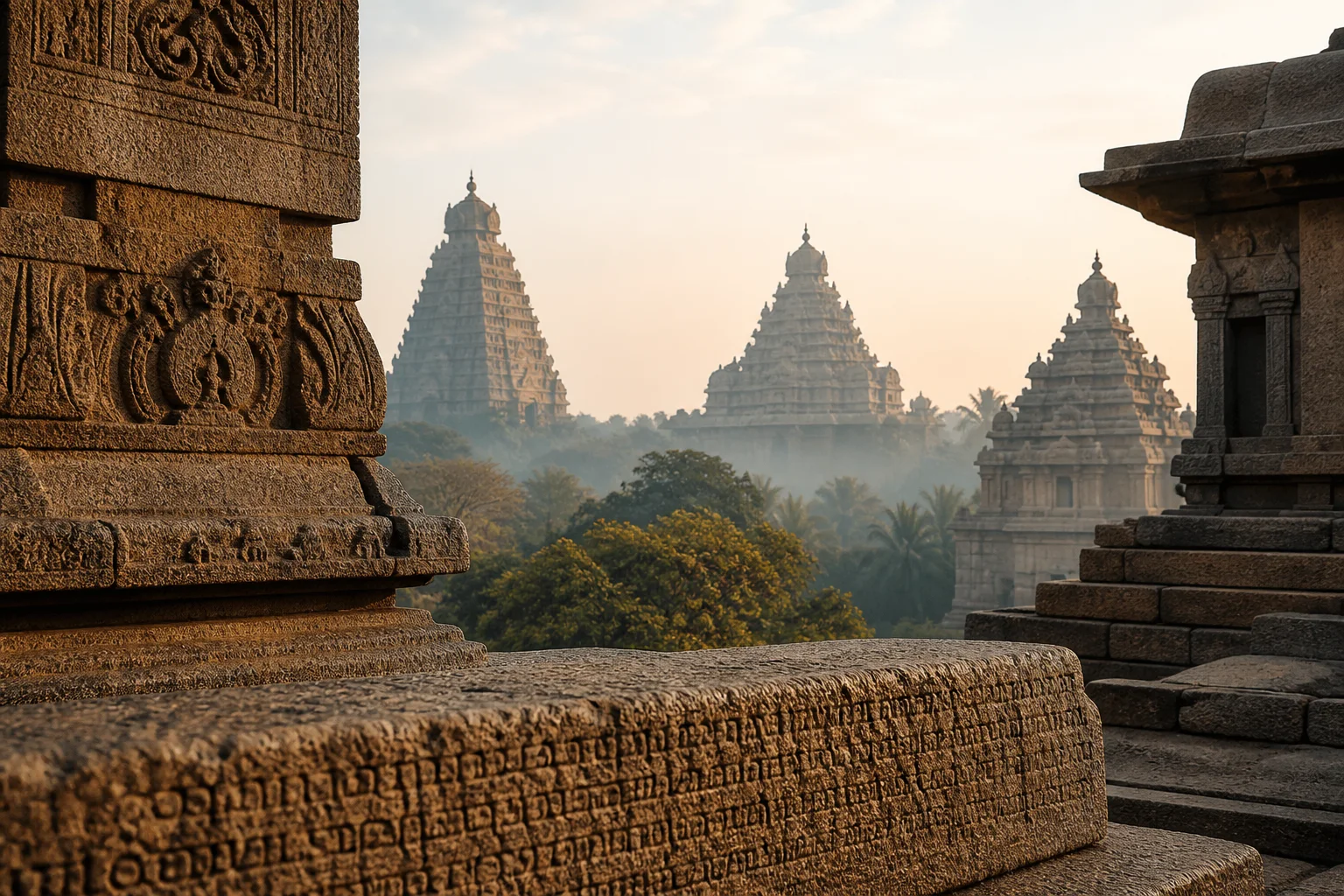
A Journey Through Chola Heritage in Tamil Nadu
Follow a thoughtful route through three living Chola temple landscapes, learning to read architecture, inscriptions, patronage, and place without rushing.
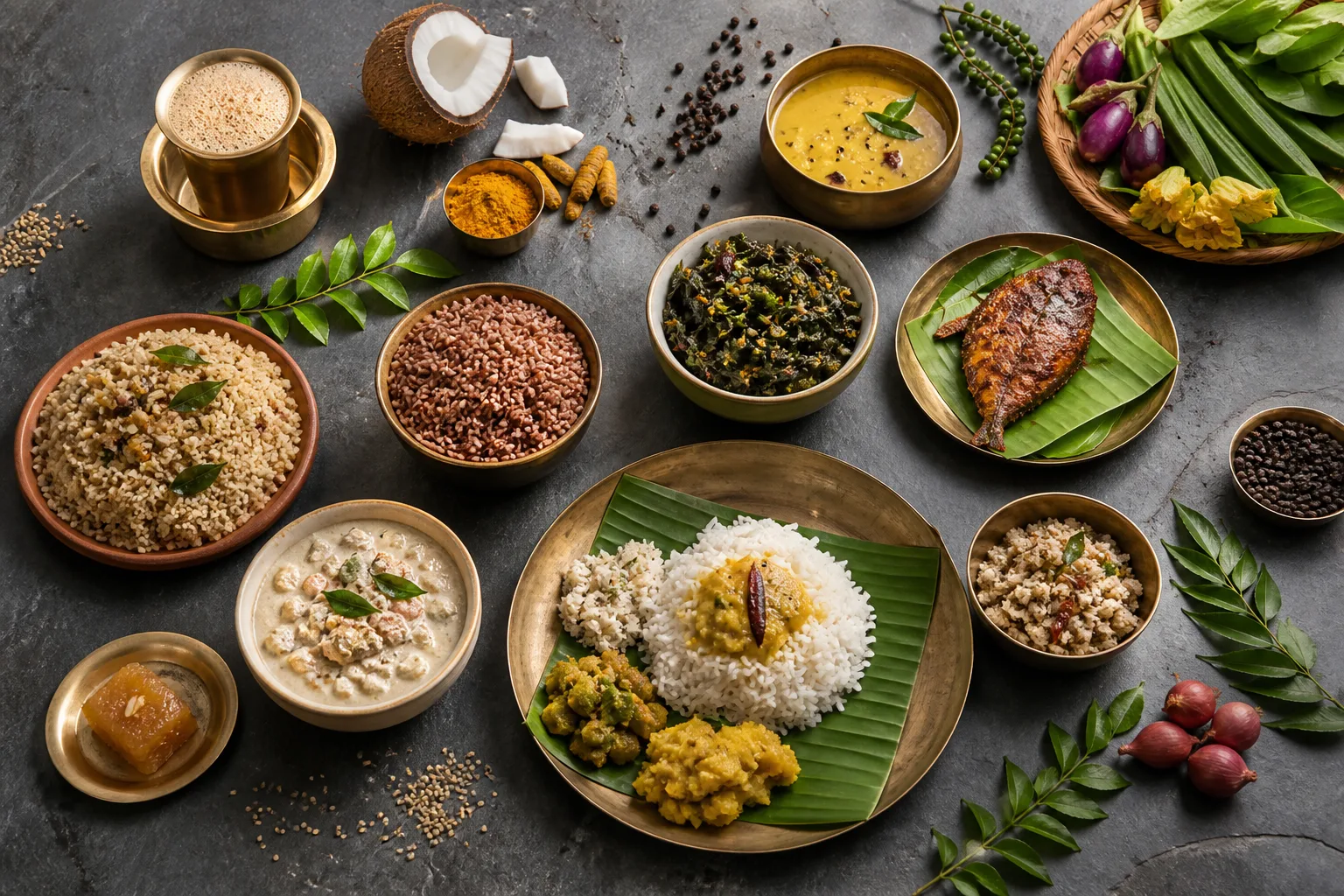
A Food Journey Through Tamil Nadu's Regional Cuisines
Travel across Tamil Nadu through the relationships among region, crop, technique, household memory, migration, worship, and changing city life.
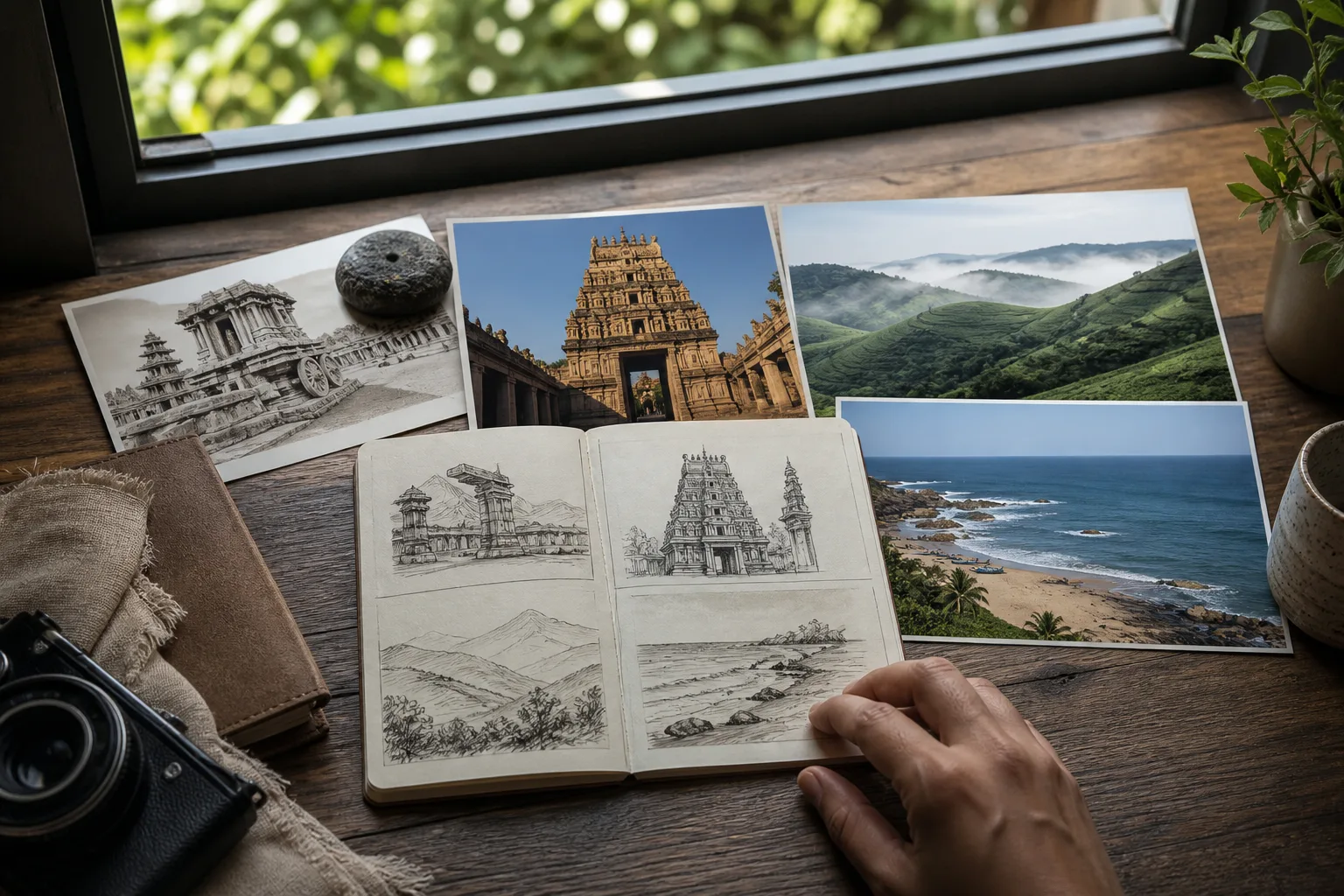
Choosing Your First Tamil Nadu Trip: Heritage, Temples, Hills or Coast?
A decision framework for choosing the kind of Tamil Nadu journey you want before choosing a long list of destinations.
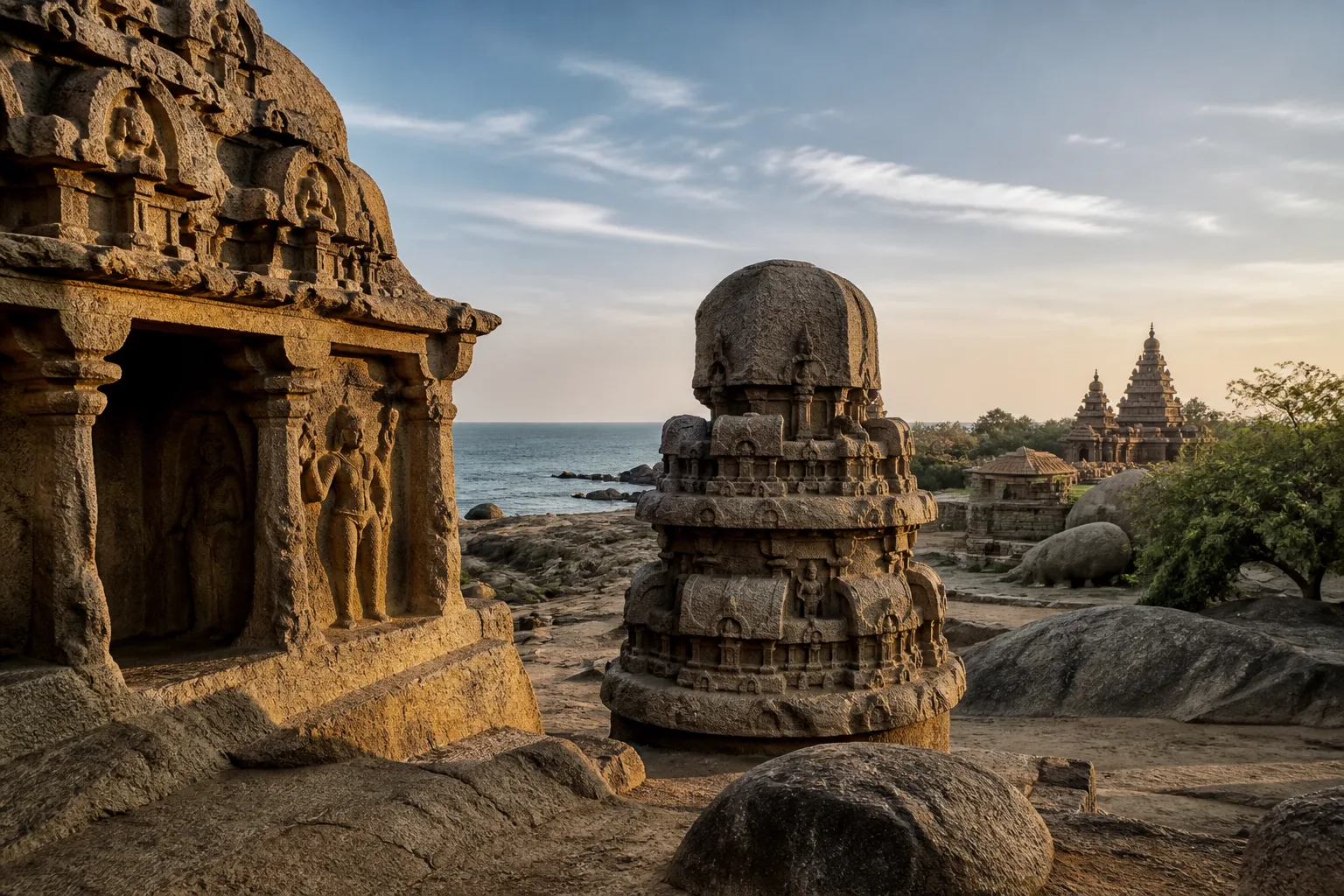
Beyond the Cholas: Exploring Pallava Heritage Across Tamil Nadu
Follow Pallava heritage from Kanchipuram's sacred city to Mamallapuram's coastal stone workshop, learning to compare form, material and evidence.
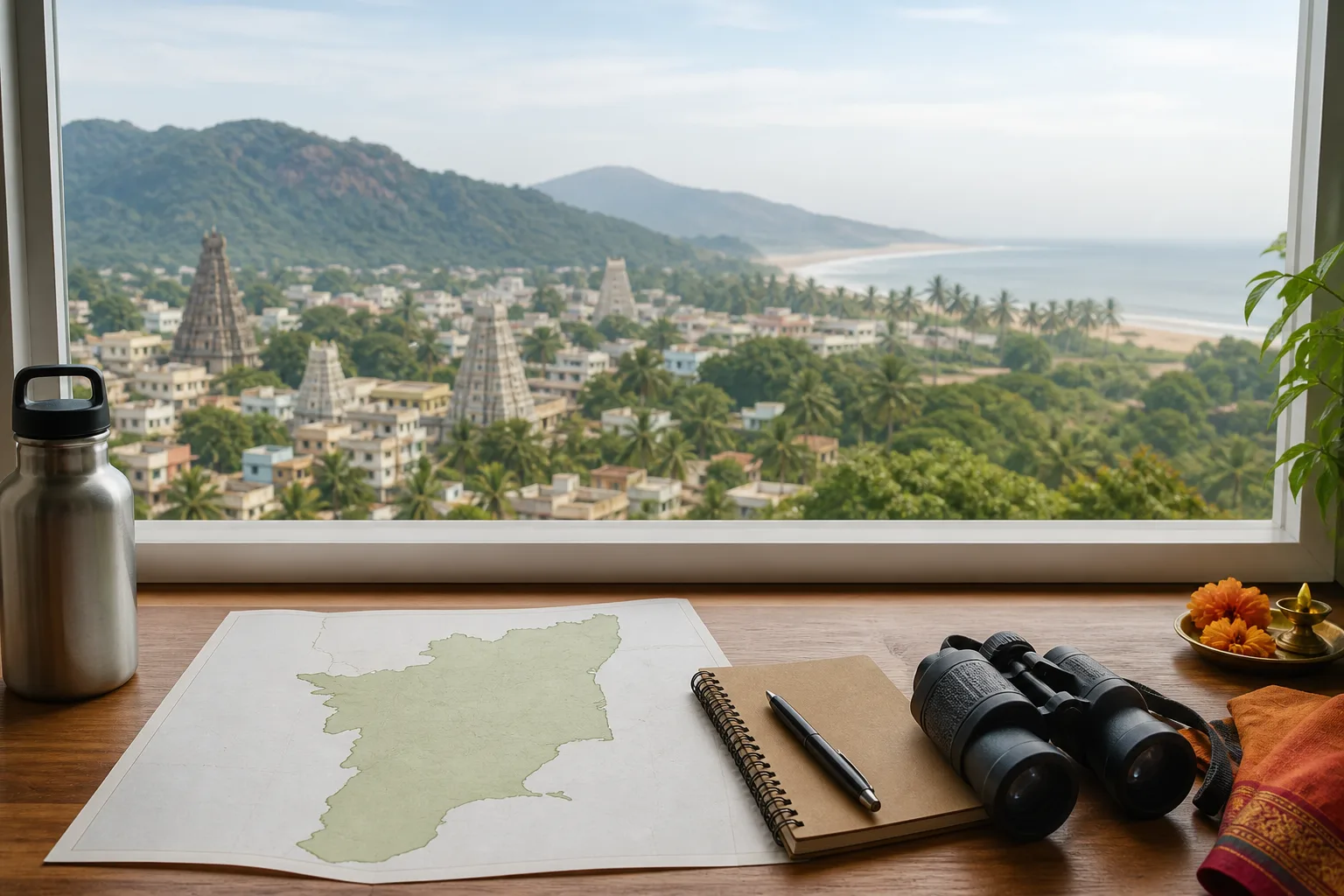
Tamil Nadu for First-Time Visitors: Choose a Base, Then a Direction
A base-first decision method for matching Chennai, Madurai, Coimbatore or Tiruchirappalli with one realistic outward direction.
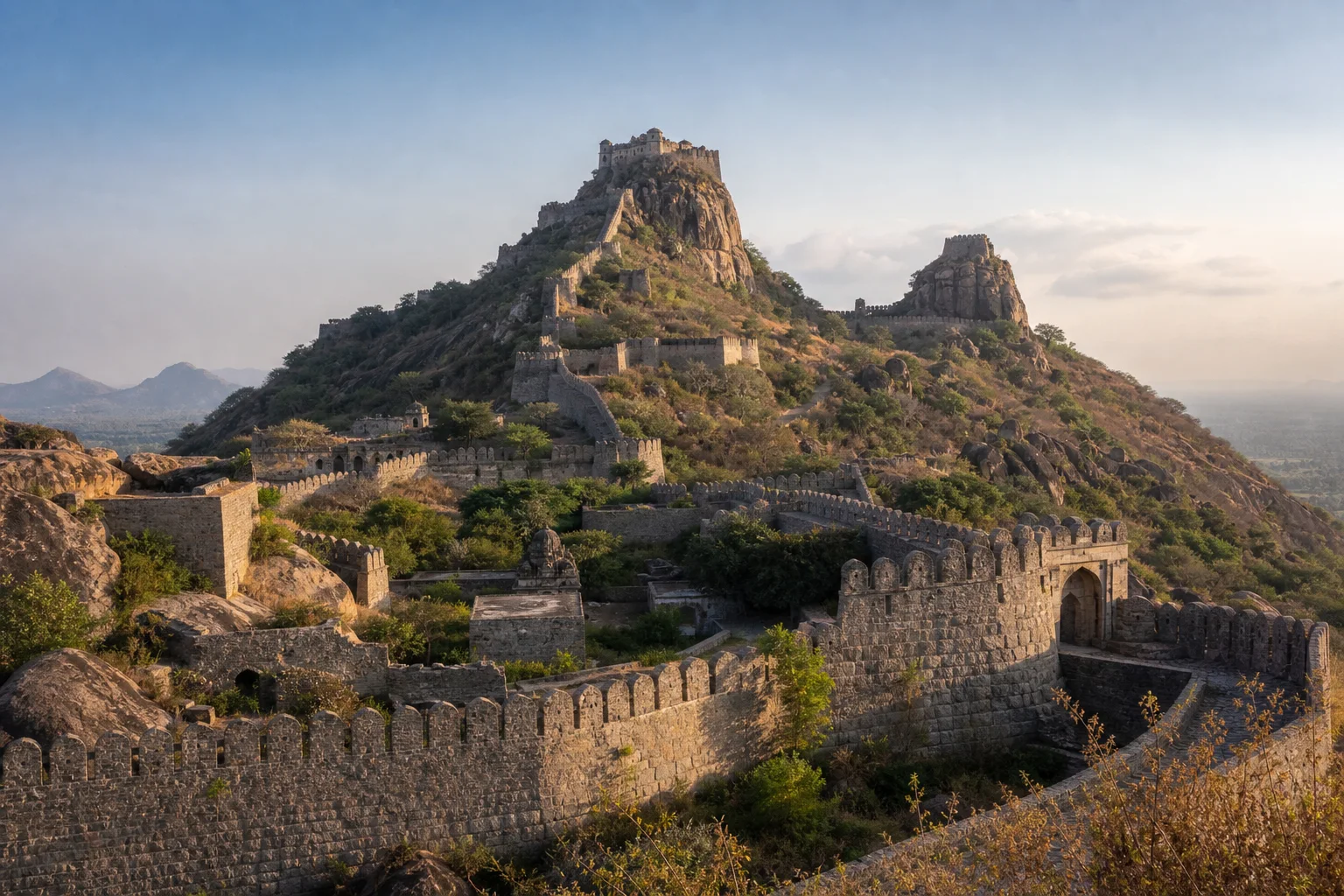
Gingee Fort After UNESCO: Reading a Military Landscape, Not Just a Ruin
What Gingee's place in a 12-fort World Heritage serial property means, and why its granite hills, walls, water and layered history must be read together.
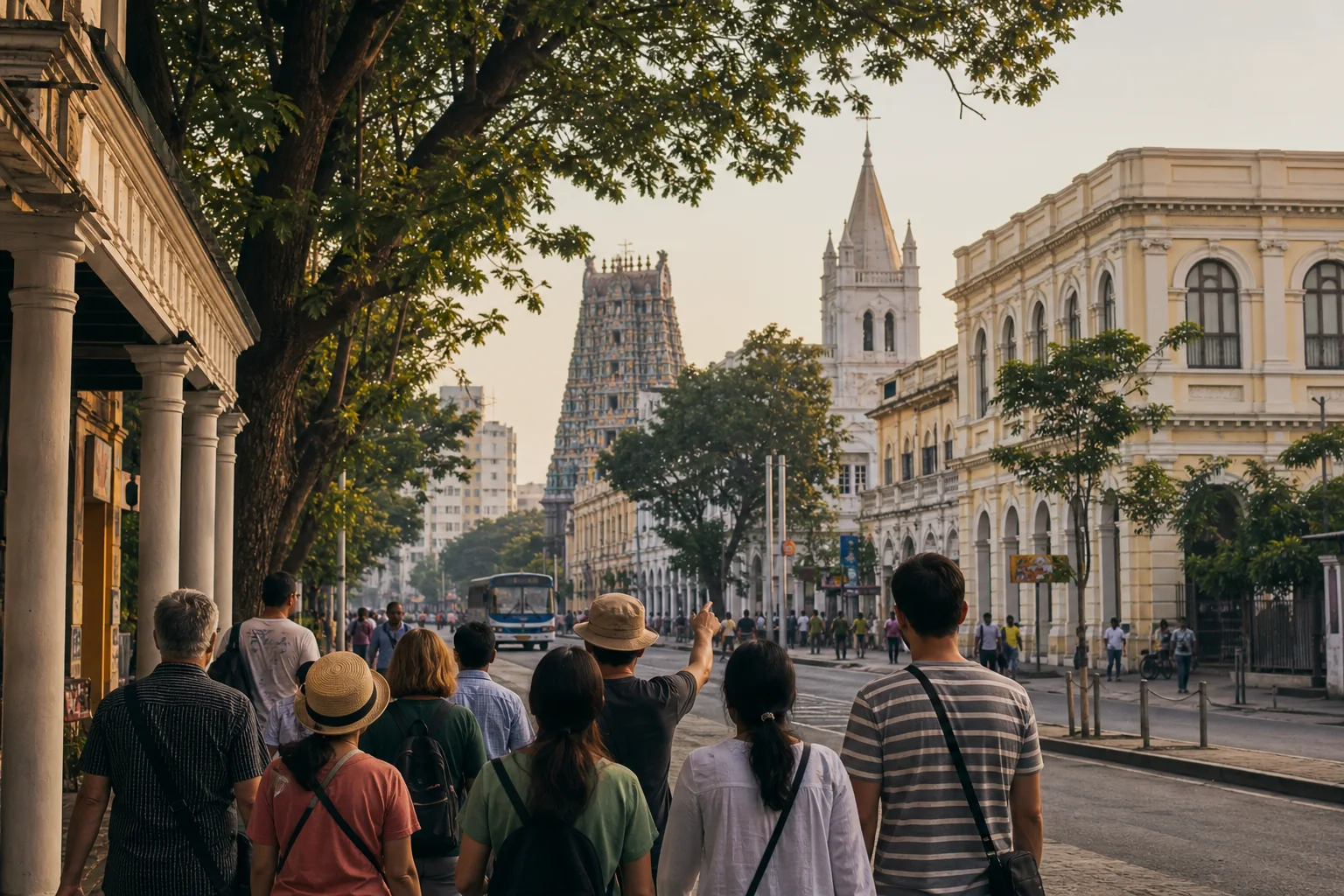
Madras Day Beyond One Date: How to Walk Chennai's Layers
A practical way to turn Madras Day curiosity into year-round neighbourhood reading without reducing Chennai's history to one fort or founding story.
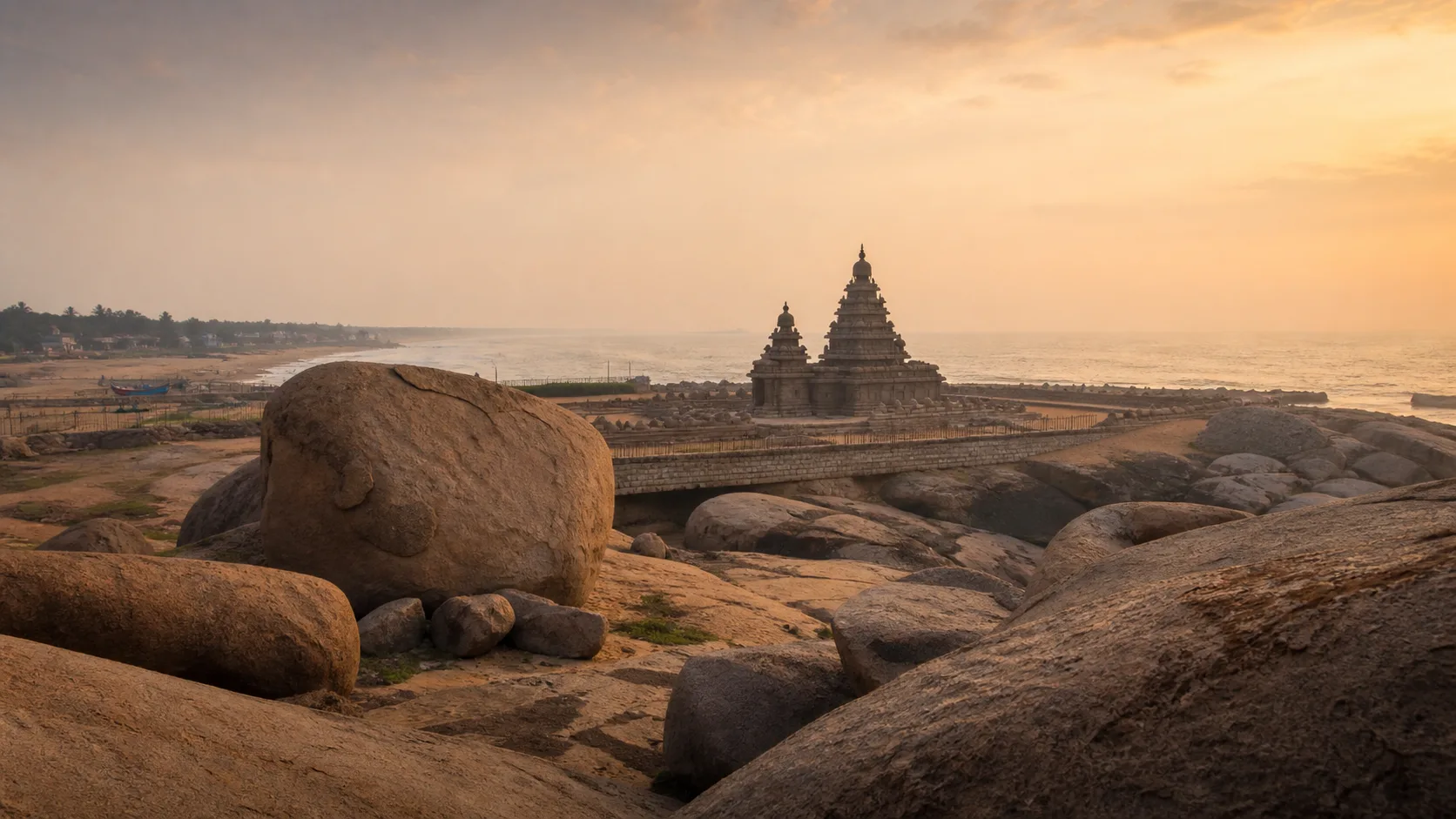
Mamallapuram: Read a Coastal World Heritage Landscape
A connected reading of Mamallapuram that moves from granite outcrops and carved caves to monolithic experiments, open-air reliefs, the Shore Temple and a living coastal town.
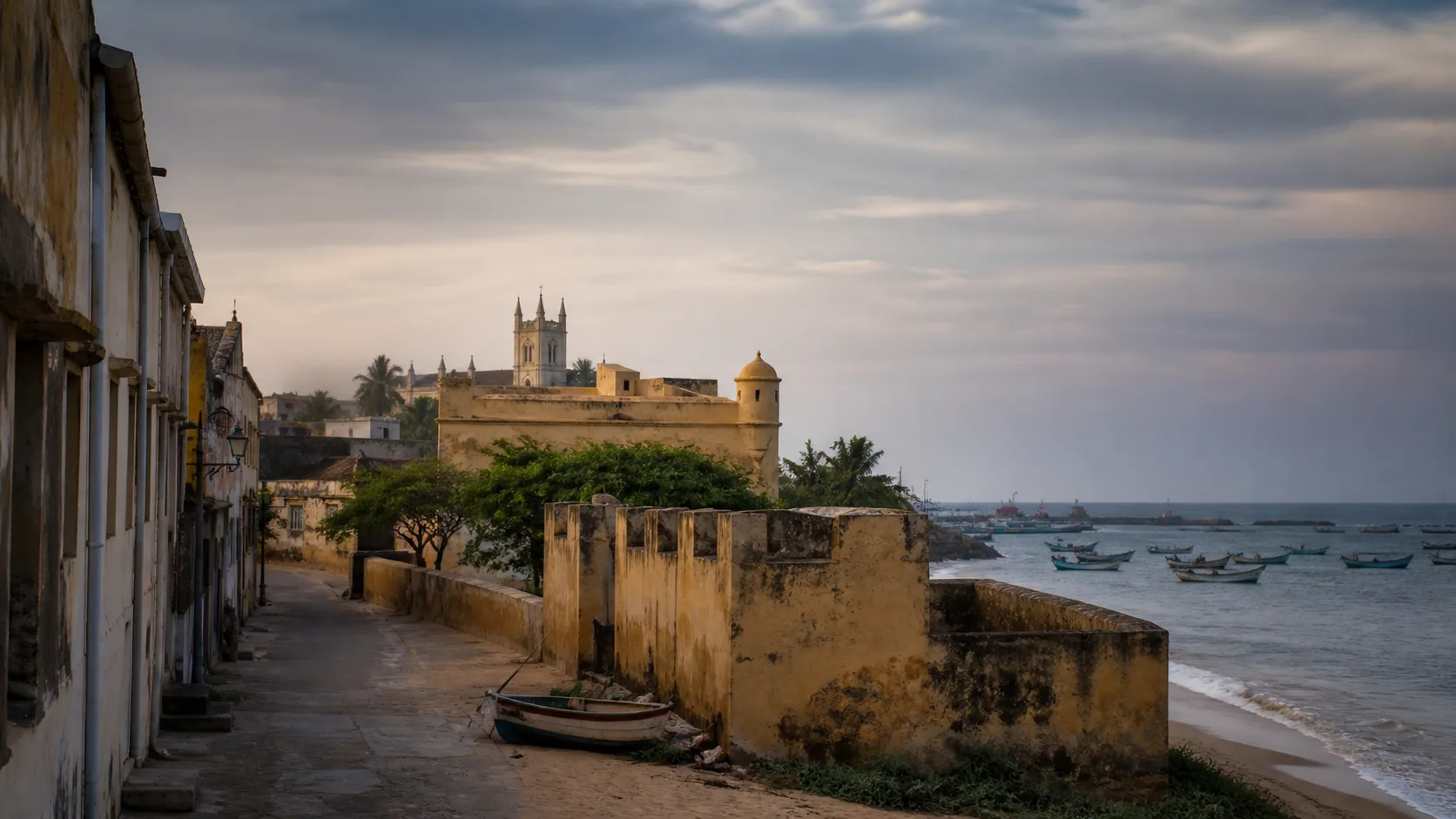
Tharangambadi: Read the Fort, Printing History and Living Coast
A layered coastal-town guide that begins before the Danish fort, follows trade and printing history, and returns heritage to a living Bay of Bengal shoreline.
Frequently asked questions
Is this a fixed two-day itinerary?
No. It is a method for choosing a meaningful heritage weekend. It deliberately avoids fixed times, distances, opening hours, fees, and current road claims.
Should I visit both Mamallapuram and Kanchipuram in one weekend?
Not necessarily. Choose the extension that continues your heritage question and fits your pace. The other direction can become a separate journey.
Are Mamallapuram and Mahabalipuram the same place?
Both names are widely used for the coastal heritage town. UNESCO's property title uses Mahabalipuram, while the destination guide uses Mamallapuram in its editorial text.
Where should I check opening times, fees, and current access?
Check the responsible museum, monument, temple, district, or transport authority close to travel. This evergreen story does not certify current operating details.
Can I use Google Maps to follow the route?
Yes, use the site's Maps handoff for current navigation, but verify road condition, access, parking, permissions, and local instructions separately.
Editorial attribution
Prepared and reviewed by My Tamil Nadu Editorial Desk. Modified 15 August 2026.