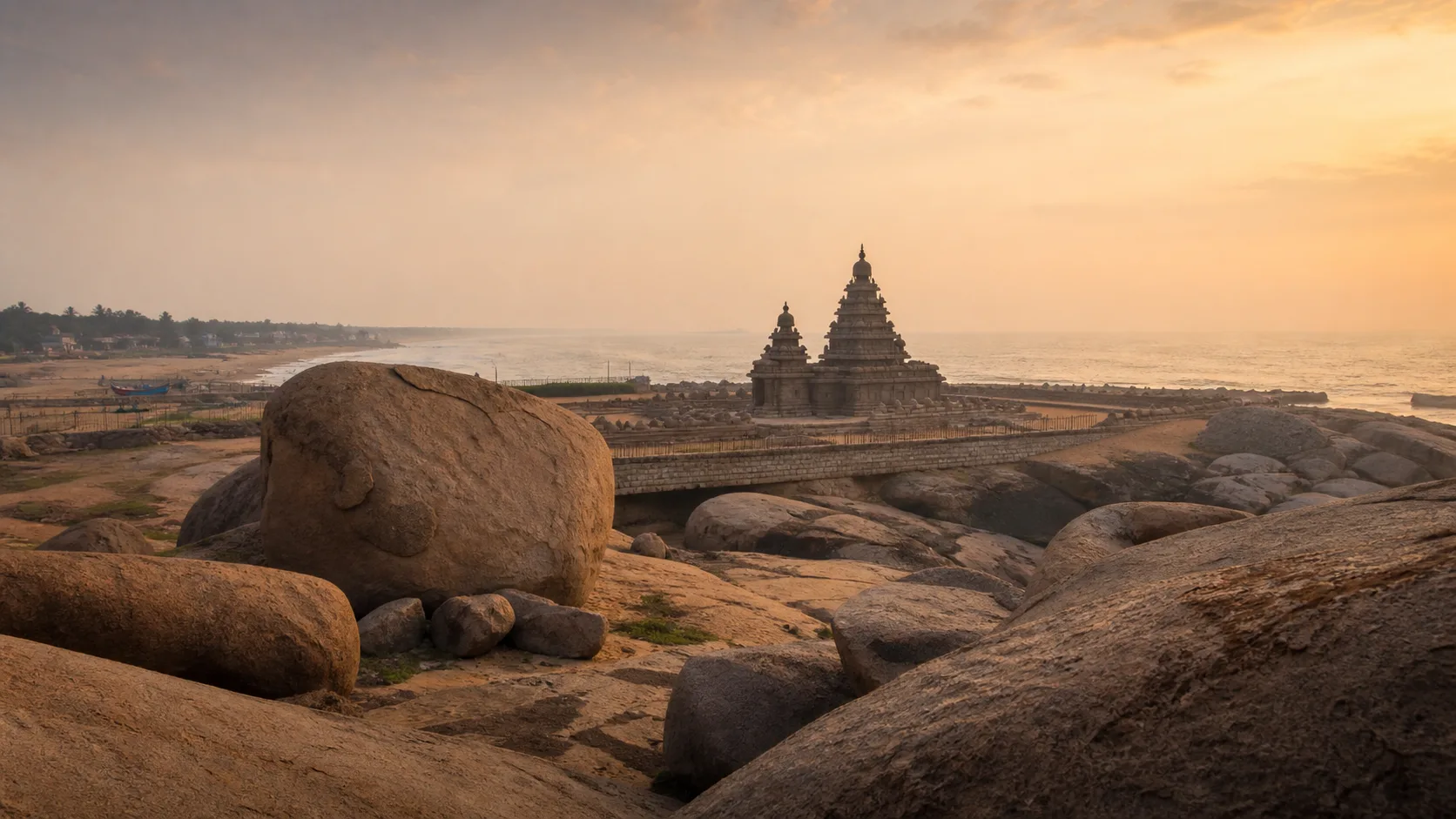
Begin with a group, not one monument
UNESCO inscribed the Group of Monuments at Mahabalipuram in 1984 under four cultural criteria. The property is serial: its significance is expressed through several components rather than one enclosed complex. UNESCO identifies rock-cut cave temples, monolithic temples, open-air reliefs, structural temples and excavated remains as essential parts of the Pallava landscape.
That distinction changes a visit. The Shore Temple is not a summary of everything here, and the Five Rathas are not five ordinary buildings placed beside one another. Each cluster demonstrates a different relationship between design and stone. Moving between them becomes a lesson in architectural thinking rather than a race through famous names.
Use the official protected-site map or a reliable town map before walking. Components are separated by roads, neighbourhoods and public space. Do not cross barriers or use unmarked paths because two monuments look close on a phone screen; a World Heritage boundary is not permission to enter every piece of ground between its elements.
Sources for this section: Mamallapuram World Heritage property, World Heritage property map.
Read four ways of making architecture in stone
A rock-cut mandapa begins by removing material from a living outcrop to create an interior. A monolithic ratha is shaped from an individual mass of stone so that exterior form, storeys and roof types emerge from one block. A structural temple is assembled from quarried pieces. Relief sculpture uses a rock face as an expansive narrative surface.
These are not simply decorative categories. They reveal decisions about excavation, load, sequence, sacred image and how a viewer approaches form. UNESCO describes Mamallapuram as an important field of experiment in rock architecture that culminated in structural temples. The word experiment should not imply unfinished practice was crude; variation itself is evidence of design knowledge.
Look slowly at transitions: a pillar meeting a ceiling, a lion base supporting a column, a modelled roof emerging from a boulder, or figures responding to the natural fissure in a relief. Never touch, trace, chalk or wet carvings to improve a photograph. Weathered stone is not a surface available for visitor enhancement.
Sources for this section: Mamallapuram World Heritage property, Centrally protected monuments.
Let the great relief reorganise your attention
The large open-air relief commonly called Arjuna's Penance or the Descent of the Ganges is not a flat picture with one uncontested caption. Its ascetics, deities, animals and natural cleft have supported layered readings. UNESCO uses Descent of the Ganges in its significance statement while common visitor language preserves the alternative name.
Instead of trying to settle the title in a few seconds, watch how scale and movement work. Elephants anchor the lower field; smaller creatures and human figures create multiple rhythms; the cleft links stone, water imagery and vertical descent. The relief asks the viewer to move closer and farther away, changing the relationship between detail and whole.
Crowds can collect at the most legible viewpoint. Take turns and keep circulation open. A wide-angle photograph should not require stepping backward into traffic or climbing a protected ledge. If light is harsh, return when conditions suit your itinerary rather than touching the surface or blocking others while staging a long sequence.
Sources for this section: Mamallapuram World Heritage property, Mamallapuram destination overview.
The Shore Temple belongs to both architecture and coast
The Shore Temple is a structural complex and one component of the World Heritage property. Its position beside the Bay of Bengal makes weathering visible, but the sea should not turn conservation into a romance of inevitable ruin. UNESCO identifies the Archaeological Survey of India as the responsible protection and management authority for the property.
Read its compact massing, towers, shrines, enclosure and repeated sculptural forms before seeking the familiar silhouette. The relationship with horizon and salt-laden air is real, yet visitors should avoid claiming that every eroded detail proves a particular storm, legend or submerged structure. Archaeological evidence and coastal folklore are different forms of knowledge.
Beach access, sea conditions and monument access are current matters. Never climb coastal defences, enter wave-washed restricted areas or assume a calm-looking sea is safe. Confirm official opening, ticketing and weather information close to travel, and keep the protected monument separate from recreational beach behaviour.
Sources for this section: Mamallapuram World Heritage property, Shore Temple overview.
A protected property sits inside a living town
Mamallapuram also contains homes, workshops, shops, streets, religious practice and coastal livelihoods. Stone-carving traditions and tourism economies may reference the monuments, but a contemporary craft object is not automatically an archaeological replica or protected antiquity. Ask what material, maker and production process a seller is describing.
Photographing a public monument and photographing an artisan at work are different acts. Request permission before recording a person, workshop interior or identifiable home. Do not present every stone worker as an unbroken hereditary continuation of Pallava sculptors unless the individual or a reliable source makes a specific, supportable claim.
Spend beyond the ticket gate with care: eat locally, use lawful guides and buy only what you can carry and document. Never purchase an object represented as an excavated antiquity or remove stone, shell or pottery from the landscape. A heritage town is not a source of loose souvenirs.
Sources for this section: Mamallapuram destination overview, Centrally protected monuments.
Build a route around questions, shade and attention
A useful sequence begins with one monument type, compares it with another and ends by reconsidering the coast. For example, pair a cave mandapa with the monolithic rathas, then examine the great relief and structural Shore Temple. The aim is not a compulsory order but a route with an intellectual thread.
Heat, humidity, rain and crowding can make a nominally short circuit demanding. Carry water, use sun protection, schedule rest and avoid promising that every component fits comfortably into one rushed stop. Current timings, ticket rules and restricted areas must come from ASI or the responsible authority, not from an undated itinerary.
Leave with a five-part vocabulary: cave, monolith, relief, structural temple and coastal landscape. That framework makes the famous views more meaningful and gives unfinished or less-photographed works a place in the story. Mamallapuram becomes a connected field of ideas rather than five unrelated photo stops.
Sources for this section: Mamallapuram World Heritage property, World Heritage property map.
Sources & Further Reading
These authoritative references support the historical, geographic, or seasonal context in this story. Current conditions and operating details still require a fresh official check.
- Group of Monuments at Mahabalipuram · UNESCO World Heritage Centre
- Group of Monuments, Mahabalipuram - India · UNESCO World Heritage Centre
- Centrally Protected Monuments and Sites: Tamil Nadu · Archaeological Survey of India
- Explore the Top Places in Mamallapuram · Incredible India, Ministry of Tourism
- Shore Temple: A Majestic Relic of the Pallava Dynasty · Incredible India, Ministry of Tourism
Related Stories
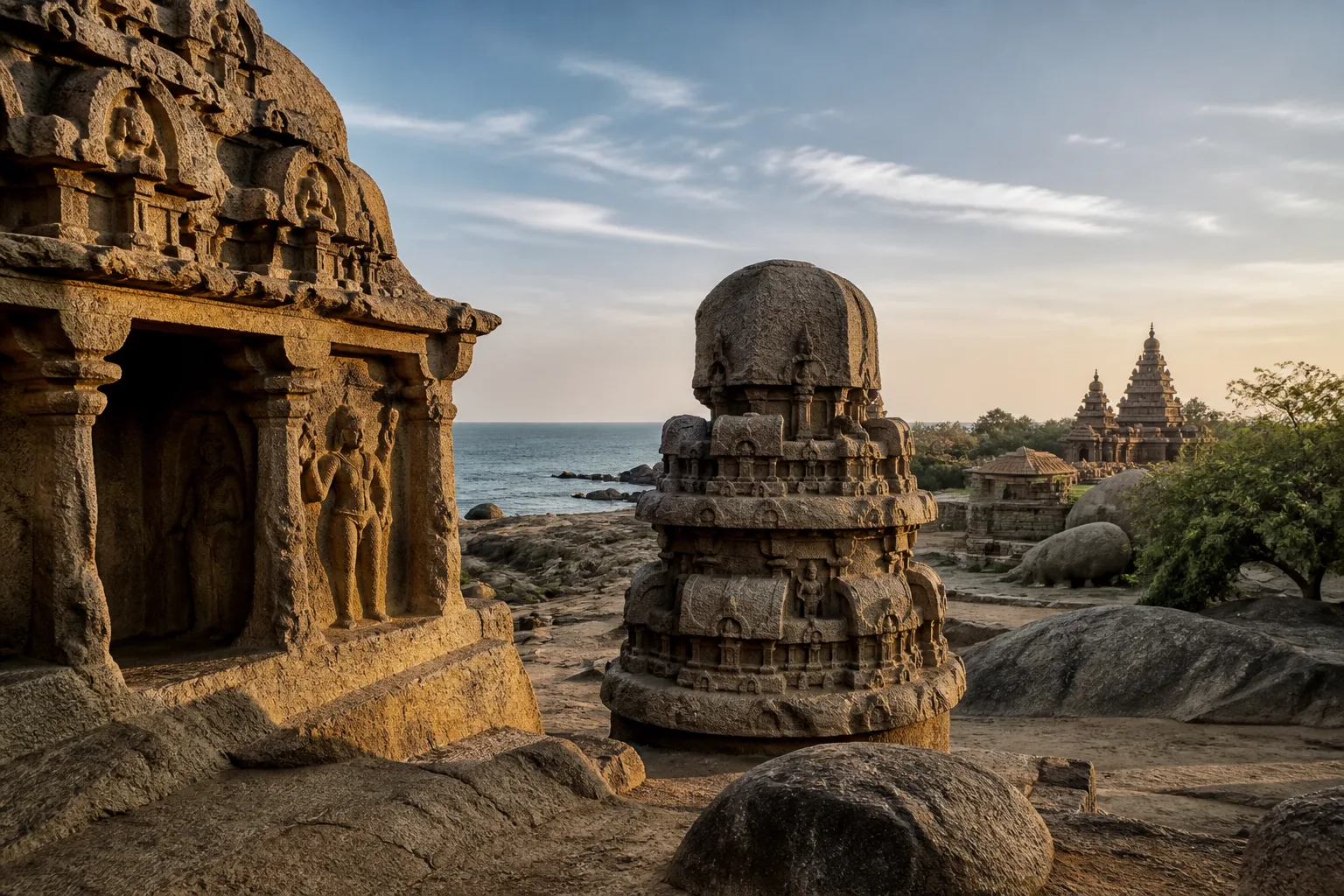
Beyond the Cholas: Exploring Pallava Heritage Across Tamil Nadu
Follow Pallava heritage from Kanchipuram's sacred city to Mamallapuram's coastal stone workshop, learning to compare form, material and evidence.
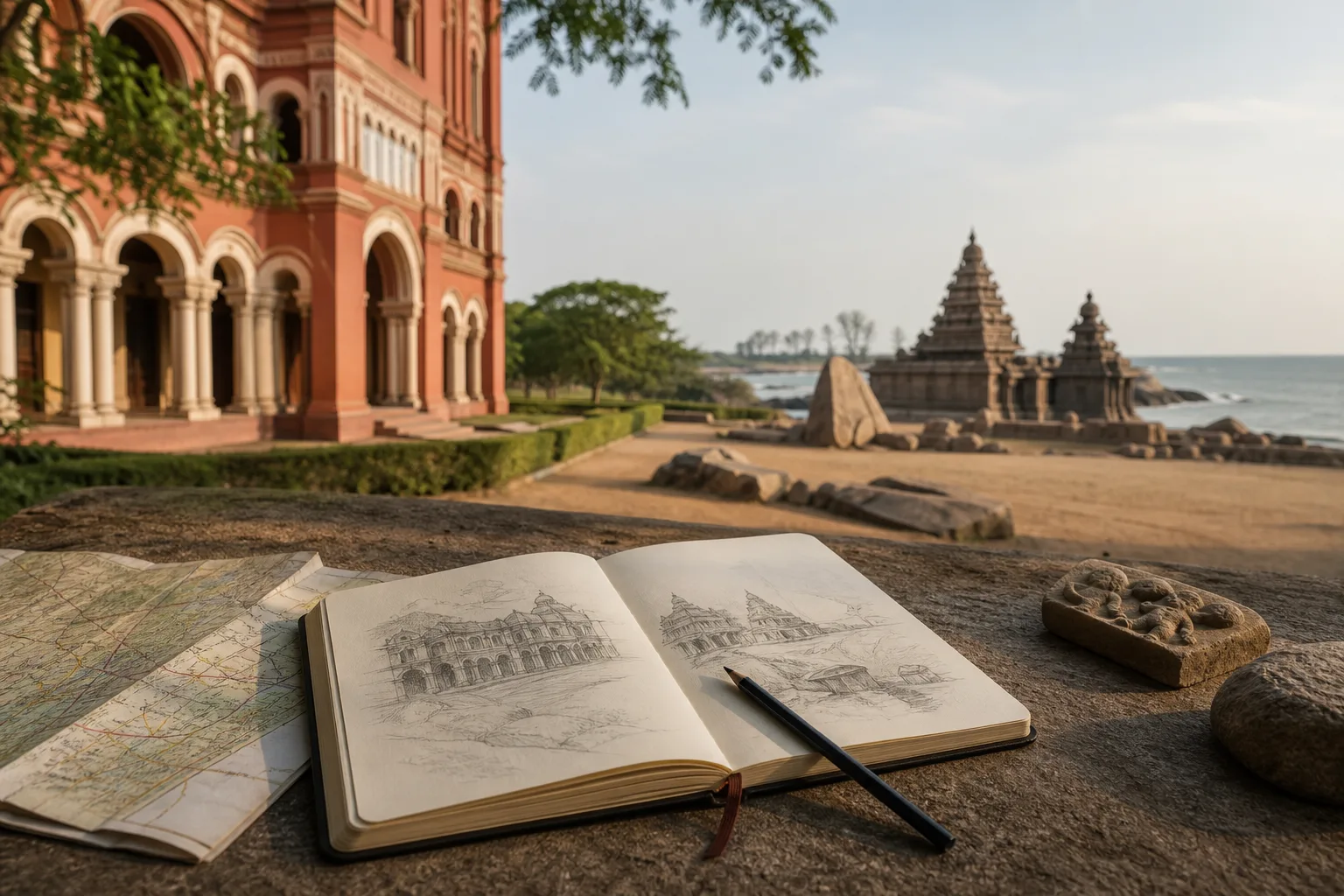
A Heritage Weekend from Chennai: How to Choose a Meaningful Route
A practical way to shape a heritage weekend from Chennai around one good question, a measured pace, and a choice between city and nearby extensions.
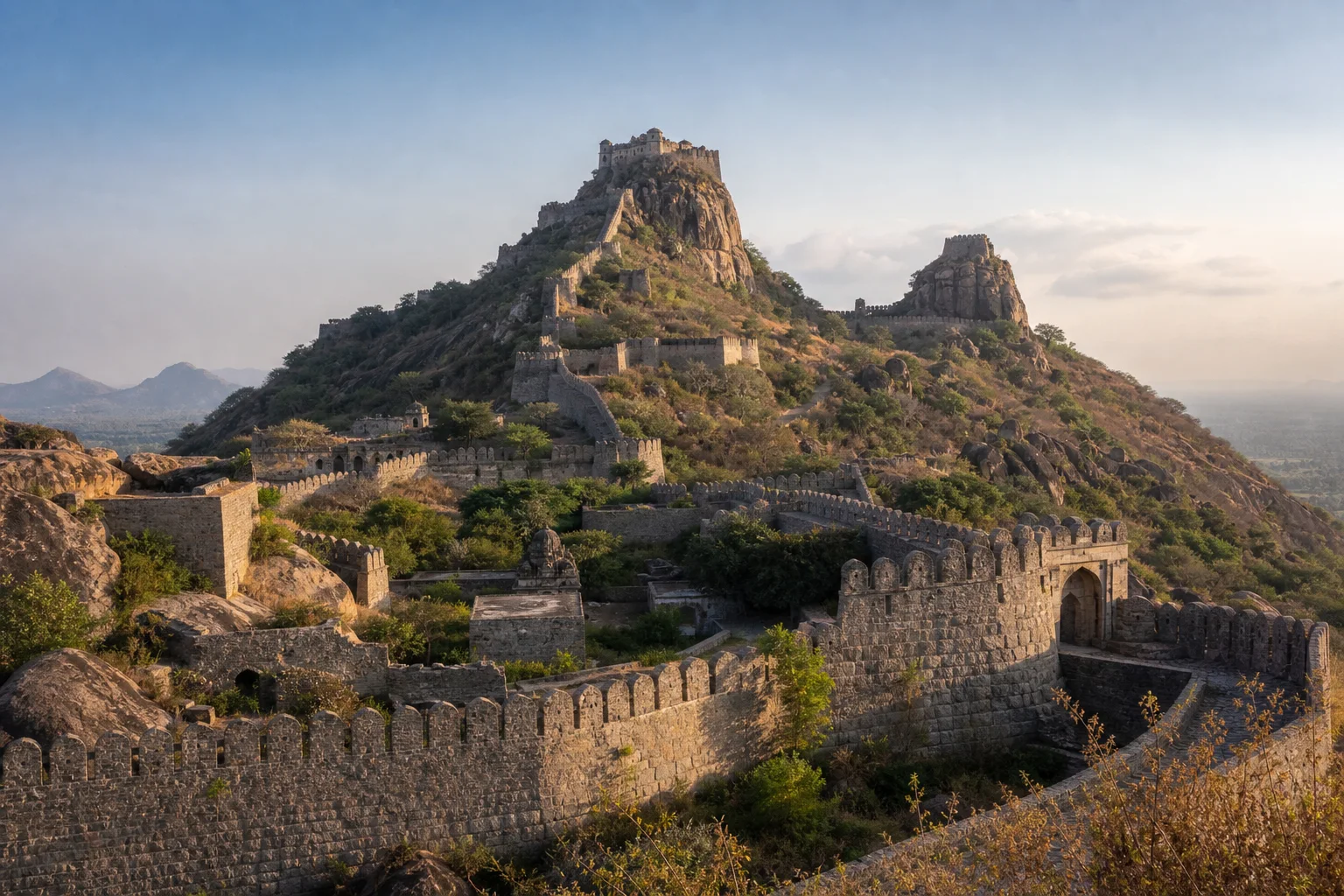
Gingee Fort After UNESCO: Reading a Military Landscape, Not Just a Ruin
What Gingee's place in a 12-fort World Heritage serial property means, and why its granite hills, walls, water and layered history must be read together.
Tamil Nadu's Lighthouse Trail: Read the Coast Through Navigation
A coast-spanning guide to lighthouses as working navigation infrastructure, historical evidence and responsible places of maritime learning.
Frequently asked questions
Is Mamallapuram one UNESCO monument?
No. It is a serial World Heritage property made up of several monument components and types.
Are the Five Rathas ordinary structural temples?
They are monolithic works carved from individual rock masses and are best read as architectural experiments in stone.
Can this guide confirm monument timings or tickets?
No. Check current Archaeological Survey of India or responsible-authority information close to travel.
Editorial attribution
Prepared and reviewed by My Tamil Nadu Editorial Desk. Modified 30 August 2026.