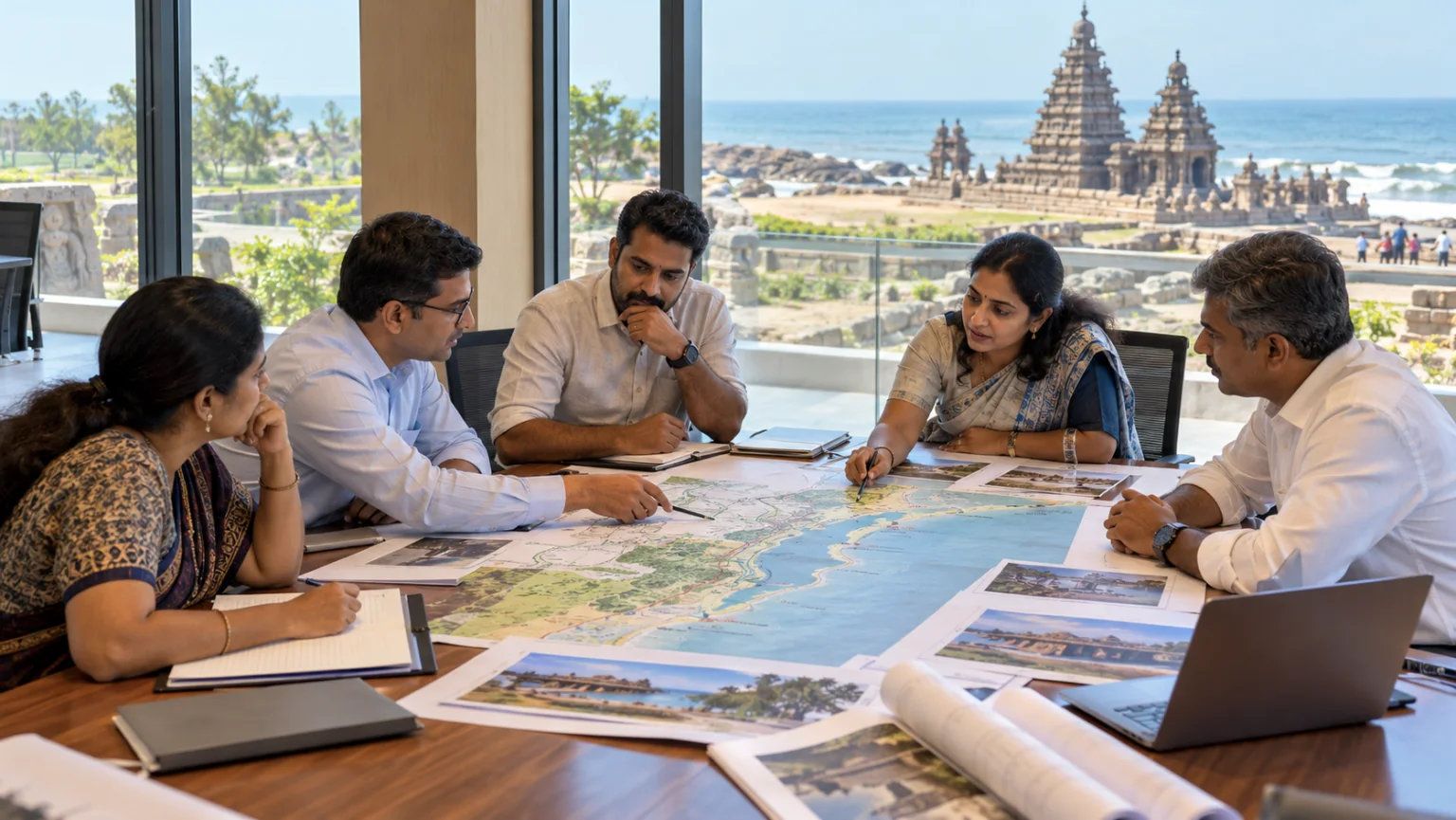
What Tamil Nadu announced in 2026
Tamil Nadu's Global Tourism Summit was held at Mamallapuram on 2 and 3 February 2026. State tourism communications and contemporary reporting described 127 memoranda of understanding with proposed investment of Rs 22,795 crore and an employment projection of about 66,000 jobs. The announcements covered a broad tourism economy rather than one mega-attraction, with attention to accommodation and niche areas such as heritage, eco, medical, adventure, caravan and rural or agricultural tourism.
Those headline numbers matter because investment can widen the range of places where travelers sleep, eat, learn and move. New supply outside established circuits could distribute tourism income and make longer regional trips easier. Better visitor facilities can also improve accessibility and safety. Yet every benefit depends on execution: land, approvals, finance, construction, staffing, environmental conditions and operating quality all stand between a signed document and a guest experience.
Travelers should read the announcement as a pipeline, not an inventory. It indicates what government and investors intend to explore or deliver; it does not prove that all 127 proposals will open, open on the same schedule or retain their original scope. A reliable trip uses services that can be verified today and treats future projects as context until an operator publishes a genuine opening and accepts bookings through a confirmed channel.
Sources for this section: Global Tourism Summit 2026, 2026 summit investment report, Tamil Nadu tourism policy note.
An MoU is not an open door
A memorandum of understanding records an intention or framework between parties. Depending on the project, later steps can include site selection, detailed design, land arrangements, statutory clearances, finance, procurement, construction, recruitment, training and operating approvals. Some steps can overlap; others can stop or reshape a proposal. That is normal project development, which is why a summit announcement should not be converted into a travel date.
Four phrases should remain separate: announced, approved, under construction and open. Announced means a proposal has entered public view. Approved means a responsible authority has granted a particular permission, not necessarily every permission. Under construction means work is visible or officially reported, but guests cannot assume access. Open means the responsible operator publishes current visitor information and is actually delivering the service.
Marketing language can blur those stages. A booking intermediary may use a future project's name to attract searches, while a map listing can appear before construction finishes. Look for a legal operator, complete address, current contact, dated opening notice, published terms and a working booking path. If these elements conflict, do not transfer money merely because the project's investment value appeared in a credible news report.
- Announced: intention is public.
- Approved: a specific permission has been granted.
- Under construction: work is progressing, but access is not implied.
- Open: the verified operator is serving guests now.
Sources for this section: 2026 summit investment report, Tourism investment land.
Where travelers may eventually notice change
Accommodation is the most visible possibility. Additional hotels, resorts and smaller experience-led stays could add rooms in established destinations or create bases near lesser-visited landscapes. More rooms do not automatically mean lower prices or better service; location, transport, water, waste systems, staffing and local relationships determine whether a property improves a journey. Travelers should compare the operating hotel, not the investment promise behind its brand.
Niche tourism may create guided products around farms, wellness, medical travel, caravans, adventure, ecology or heritage. These experiences require more than scenery. Adventure needs competent operators, equipment, risk systems and appropriate permissions. Eco-tourism needs carrying limits, conservation rules and community benefit. Medical travel needs accredited clinical care and clear separation between treatment and leisure marketing. Heritage use must protect the place rather than turning it into a decorative background.
Infrastructure around a project can matter as much as the attraction: safe approach roads, public transport links, toilets, accessible routes, visitor information and trained local staff. SIPCOT's tourism land information shows that the state is presenting specific development opportunities, but a plot listing is not a visitor facility. Watch for completed public infrastructure and operating details rather than assuming that land availability equals destination readiness.
Sources for this section: Tourism investment land, Tamil Nadu tourism policy note.
Use seven signs to decide whether a project is genuinely bookable
First, find the operator's official website or verified channel independently. Second, confirm a complete physical address that matches maps and local context. Third, look for a dated opening notice rather than an undated coming-soon page. Fourth, test whether the booking system shows real inventory, total price, taxes, cancellation terms and a confirmation process. A payment link sent only through private messaging is not enough.
Fifth, call a number obtained from the official source and ask a factual operating question: Which facilities are open now? Sixth, check recent reviews cautiously for evidence that guests actually stayed or visited, while recognizing that reviews can be manipulated. Seventh, confirm the service with a second reliable source when the purchase is expensive, remote or safety-sensitive. For a hotel, that might be the brand and local property; for an activity, the operator and relevant authority.
Never send identity documents or a deposit until you understand who receives them and why. Use a payment method with a record, read refund terms before authorizing and save the booking page. If a project cannot answer basic questions because it is still being built, the correct response is to plan around an established alternative and revisit the proposal later.
Sources for this section: National Consumer Helpline, Tamil Nadu Tourism.
Example 1: a Mamallapuram weekend after a summit headline
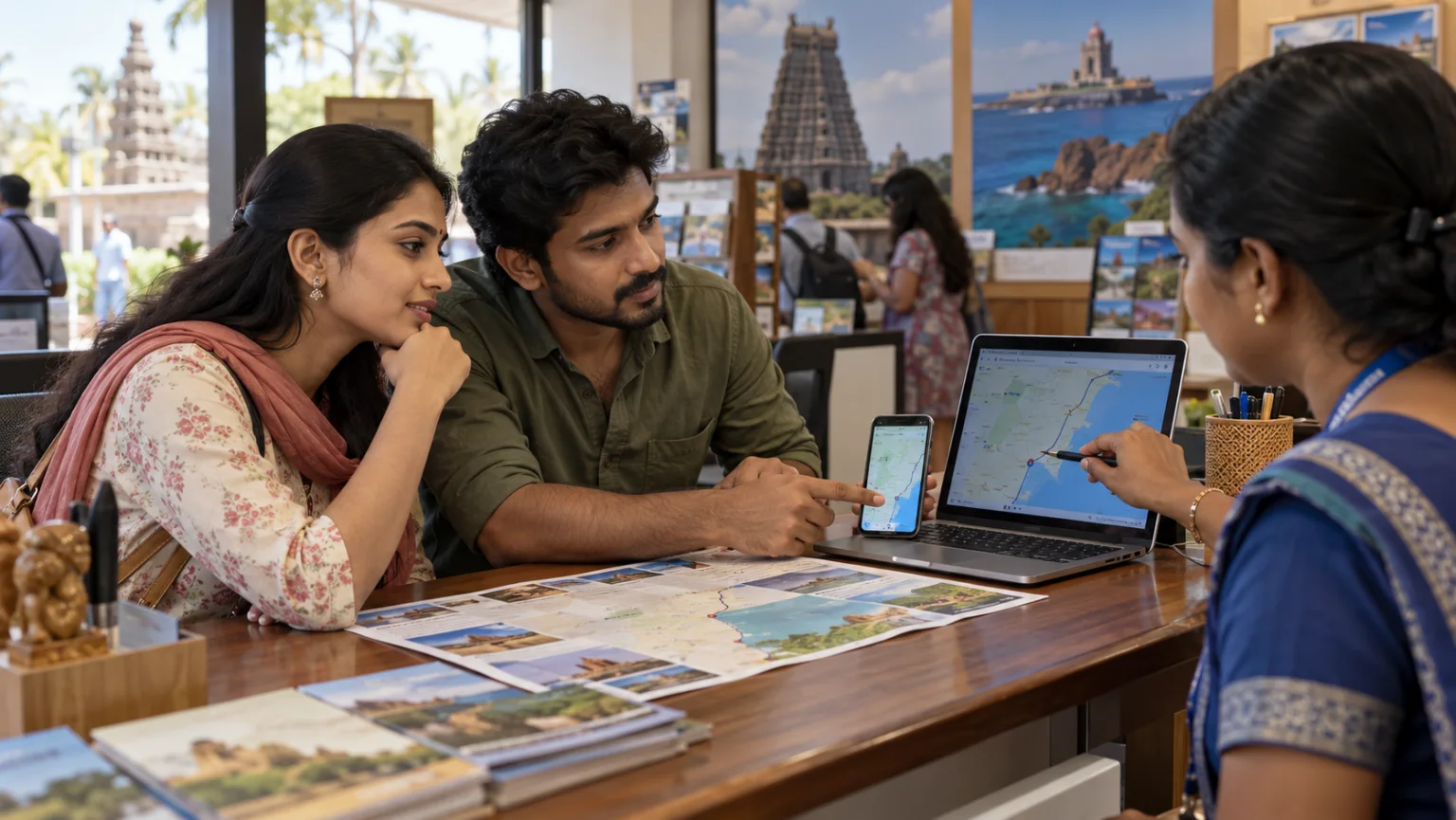
A couple reads that the 2026 summit was held in Mamallapuram and assumes several announced coastal properties are already available. Instead of searching by headline alone, they build the weekend around existing, verifiable accommodation and the established monument landscape. They use the Archaeological Survey of India and local operator information for current access, then compare hotels by location, cancellation terms and recent operating evidence.
One attractive listing describes a future resort but lacks an exact opening date and sends a private payment request. The couple does not pay. They email the named company through independently found contact details and learn that reservations have not begun. An existing hotel becomes the base, while the unbuilt project remains a note for a later trip. This protects the weekend without dismissing the investment story.
Their itinerary also avoids assuming that every summit promise concerns Mamallapuram. They visit the living town and World Heritage monuments, hire a recognized local guide and spend with existing restaurants and craft sellers. Investment news can make a destination feel newly discovered, but local businesses and residents were already carrying its tourism economy before the conference arrived.
Sources for this section: 2026 summit investment report, Mamallapuram monuments.
Example 2: evaluating a new eco or adventure experience
A group sees a promotional post for a new nature experience said to be part of Tamil Nadu's investment push. The images are compelling, but the post does not name the land manager, operating season or safety standard. Before booking, the group asks for the exact location, operator identity, permissions, guide qualifications, group size, equipment, weather policy, emergency plan and cancellation terms.
The operator answers only with a payment deadline and says all clearances are handled. The group pauses. They check the relevant forest, tourism or district source and find no current visitor notice for that product. Rather than testing access on arrival, they choose an established guided experience whose rules and carrying limits are published. This is not excessive caution; remote activities transfer greater risk when claims cannot be verified.
Months later, the proposed operator may complete approvals and build a sound program. At that point the group can reassess using current evidence. Responsible tourism investment should welcome these questions because safety, conservation and local benefit are operating requirements, not obstacles. Travelers help raise the standard when they reward transparent services and refuse pressure-based bookings.
Sources for this section: Tamil Nadu tourism policy note, Tamil Nadu Forest Department.
Judge investment by community, environment and accessibility
A large investment total says nothing by itself about who benefits. Strong projects buy locally, create skilled year-round work, respect customary access and give nearby communities a real role. Weak projects can consume land and water while producing only a thin visitor enclave. Travelers cannot audit an entire development, but they can ask who runs the experience, whether local guides and products are included, and how the property manages water, waste and transport.
Environmental claims also need specifics. Eco in a name does not prove low impact. Look for limits on group size, waste and wastewater systems, habitat protection, dark-sky or noise measures where relevant and honest seasonal closures. Coastal and hill projects face different constraints, and a photogenic infinity pool is not evidence of responsible water use. Follow official access restrictions even when a private operator suggests a shortcut.
Accessibility should be described route by route, not as a single icon. Ask about step-free arrival, room and toilet dimensions, lift reliability, surface conditions, hearing or visual support and emergency evacuation. A new project has the opportunity to design inclusion from the beginning. Publishing accurate limitations is better than claiming universal access and failing the guest at the entrance.
Sources for this section: Tamil Nadu tourism policy note, Tourism investment land.
How to follow the pipeline without chasing rumors
Start with the Tamil Nadu Tourism Department and state policy or summit communications for the public framework. Use company announcements for a named operator's milestone, and local authorities for land, building, environmental or operating information within their jurisdiction. News reporting helps connect the pieces, but publication of an investment figure is not a substitute for a current service page.
Create a simple note with project name, announced location, responsible company, latest dated milestone and source link. Update it only when a credible source changes the status. Ignore recycled articles that present the summit announcement as new months later. Before travel, discard the investment timeline and perform a fresh booking check. Projects can advance while individual facilities remain closed, and soft openings can offer limited services.
For 2026 and beyond, the most useful question is not which announcement is biggest. Ask which completed project improves a real route, meets its legal and environmental responsibilities, employs and includes local people, publishes honest access information and delivers the experience it sells. Tamil Nadu's pipeline is significant. Travelers can welcome it while keeping their money and itinerary attached to evidence.
Sources for this section: Tamil Nadu Tourism, Global Tourism Summit 2026, 2026 summit investment report.
Sources & Further Reading
These authoritative references support the historical, geographic, or seasonal context in this story. Current conditions and operating details still require a fresh official check.
- Tamil Nadu Global Tourism Summit 2026 · Tamil Nadu Tourism
- Tamil Nadu bags Rs 22,795 crore tourism investments, 66,000 jobs at Global Tourism Summit · The New Indian Express
- Tourism, Culture and Religious Endowments Department Policy Note 2026-2027 · Government of Tamil Nadu
- Tourism Land Request · State Industries Promotion Corporation of Tamil Nadu
- Tamil Nadu Tourism Department · Government of Tamil Nadu
- Group of Monuments at Mahabalipuram · Archaeological Survey of India
- Tamil Nadu Forest Department · Government of Tamil Nadu
- National Consumer Helpline · Department of Consumer Affairs, Government of India
Related Stories
Why Tamil Nadu Leads India's Overnight Leisure Trips in 2026
A new national survey puts Tamil Nadu at the centre of India's overnight leisure and pilgrimage travel. Here is what the figures mean for a real trip.

Tamil Nadu Digital Tourism 2026: AI, Apps and Smarter Trip Planning
Tamil Nadu's new tourism website, app, AI content and innovation challenge point toward a more connected trip. Here is how to use the change carefully.
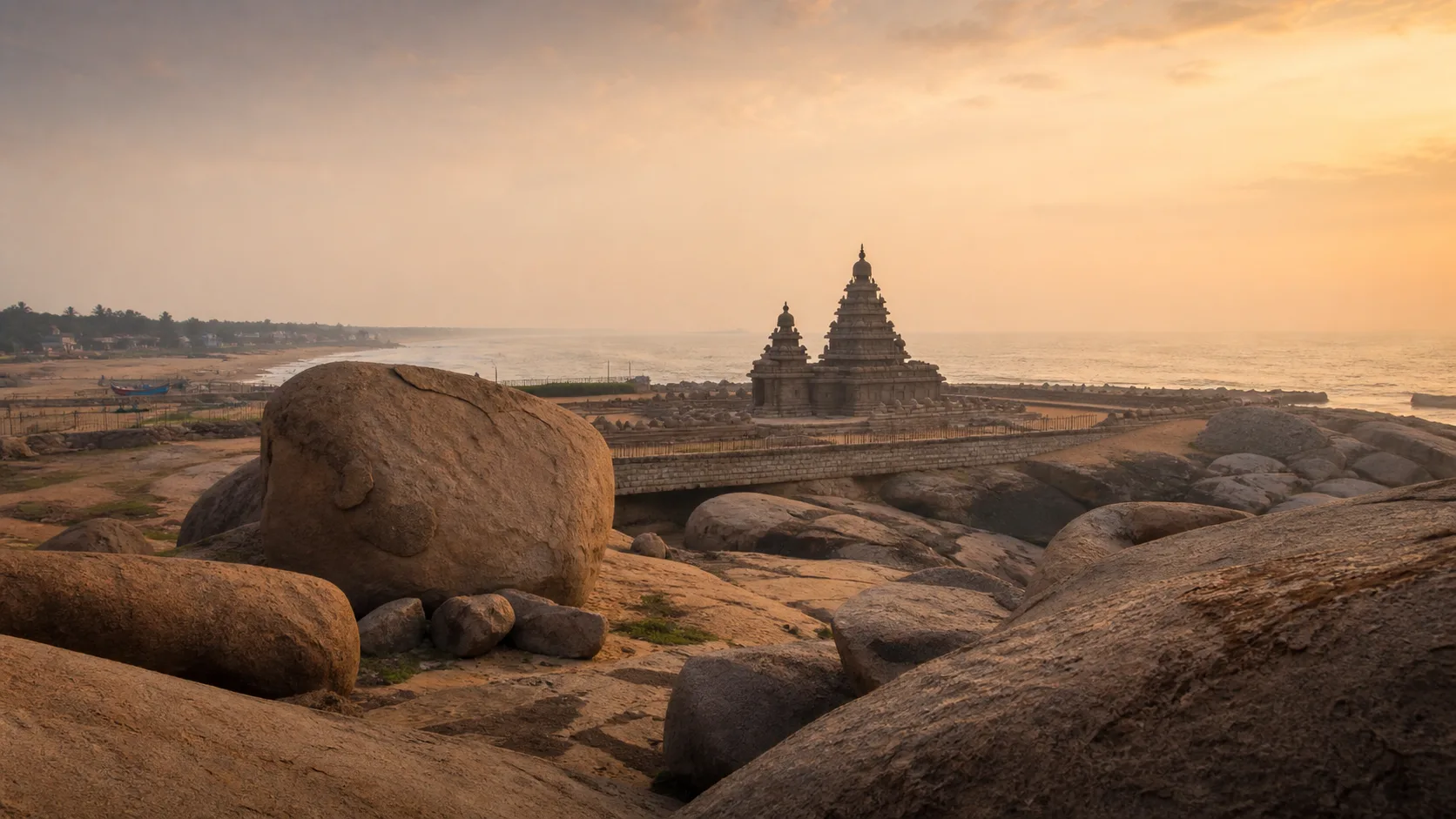
Mamallapuram: Read a Coastal World Heritage Landscape
A connected reading of Mamallapuram that moves from granite outcrops and carved caves to monolithic experiments, open-air reliefs, the Shore Temple and a living coastal town.
Frequently asked questions
What did Tamil Nadu announce at the 2026 Global Tourism Summit?
The state announced 127 MoUs with proposed investment of about Rs 22,795 crore and a projected 66,000 jobs across tourism-related sectors.
Does an MoU mean a tourism project is open?
No. An MoU records an intention or framework. Land, approvals, finance, construction, staffing and operating steps may still be required before guests can visit.
Where was the 2026 Tamil Nadu Global Tourism Summit held?
It was held at Mamallapuram on 2 and 3 February 2026.
What types of projects were discussed?
The announced pipeline covered accommodation and niches including heritage, eco, medical, adventure, caravan and rural or agricultural tourism, among other areas.
How can I tell whether a new hotel is really open?
Verify the operator, complete address, dated opening notice, live inventory, total price, cancellation terms and current contact. Confirm expensive bookings through a second reliable channel.
Should I pay a deposit for a coming-soon project?
Only after independently verifying the legal operator, booking terms, opening status and payment recipient. A news article or private message is not sufficient evidence.
Are all announced projects guaranteed to be completed?
No. Proposals can change scope, timing or outcome as they move through land, approval, finance and construction stages.
How should travelers judge an eco-tourism claim?
Look for specific evidence: permissions, group limits, trained guides, habitat rules, waste and water systems, seasonal closures, emergency procedures and local community benefit.
Editorial attribution
Prepared and reviewed by My Tamil Nadu Editorial Desk. Modified 18 October 2026.