Begin with a surface that is built, not merely painted
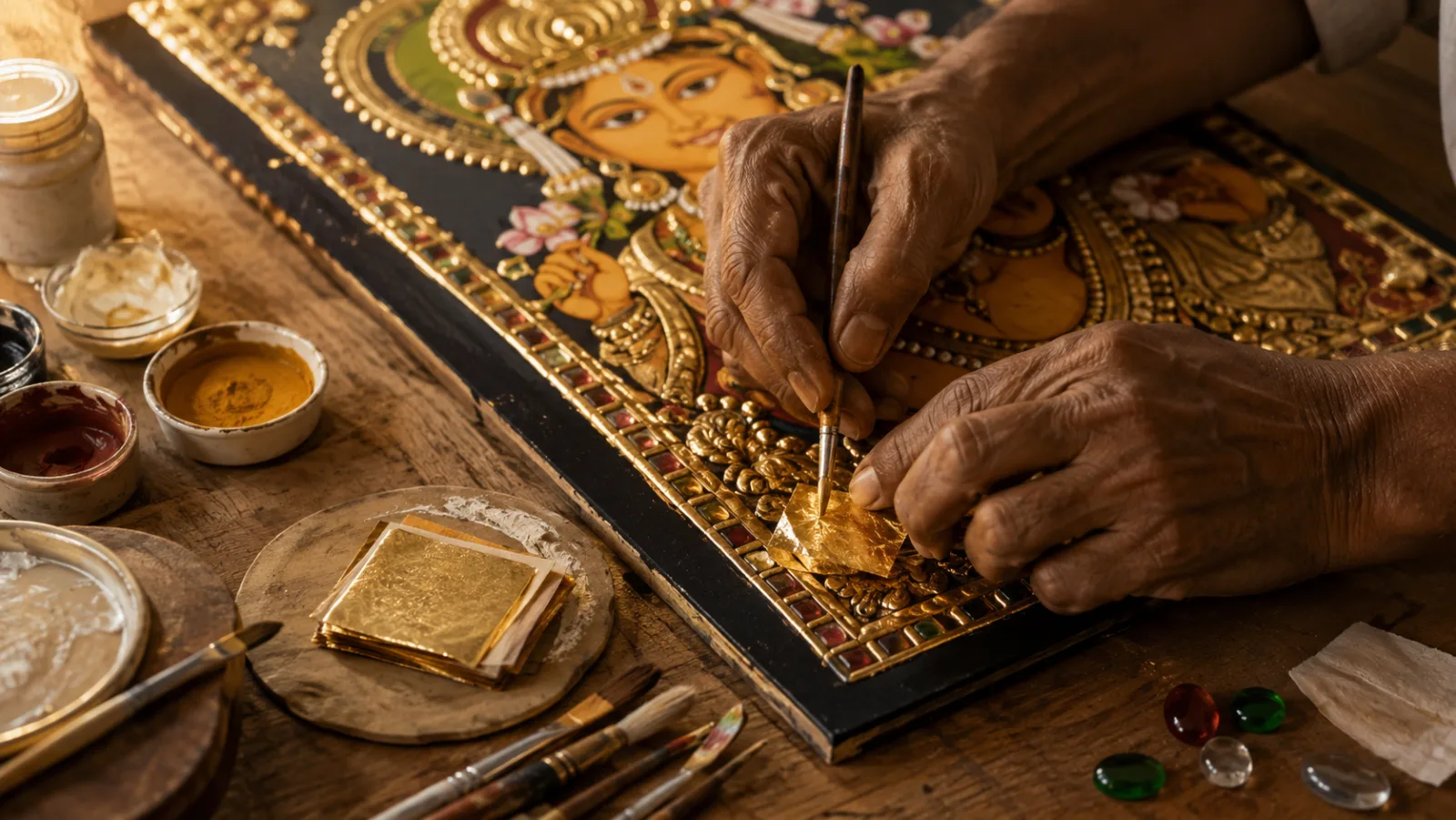
A Thanjavur painting is usually experienced as a layered object. Prepared support, drawing, raised decorative work, reflective metal leaf, inset elements and colour combine into a surface whose relief responds to changing light. Calling it only a painting can hide the work of construction beneath the final image.
The Development Commissioner's handicrafts compendium describes Thanjavur Paintings as a registered handicraft and emphasises gem-set technique, gilded gold leaves, central figures and religious orientation. That institutional summary helps identify broad features, but it should not be treated as a complete recipe followed identically by every maker.
Look from more than one angle without touching. Relief becomes clearer when light moves across the panel, while the edge can reveal support and thickness. Museum display, household worship, workshop production and contemporary sale are different contexts; the same visual vocabulary can function differently in each.
Sources for this section: GI handicrafts compendium, Thanjavur Paintings GI.
Ask about process without imposing one fixed recipe
A maker may describe preparing a board and cloth layer, building a smooth ground, transferring or drawing an image, creating raised ornament, applying stones or glass, gilding and adding colour. Materials, adhesives, tools, order and finishing can vary with workshop practice, commission and period.
Do not infer quality from one dramatic material alone. More gold, deeper relief or denser stones do not automatically produce better drawing, durable construction or thoughtful iconography. Ask which stages were completed in the workshop and whether any printed, moulded or pre-fabricated elements were used.
A demonstration is labour, not free theatre. Arrange a visit, remain outside the working zone until invited and seek permission before close photography. Do not touch wet relief, loose leaf or finished surfaces. If publishing the method, attribute it to the maker rather than presenting it as the only traditional process.
Sources for this section: GI handicrafts compendium, Registered GI list.
Read iconography before treating the work as decoration
Many Thanjavur paintings centre a Hindu deity within an architectural or ornamental frame, often accompanied by attendants or associated figures. Gesture, attribute, posture, vehicle and surrounding symbols contribute to identification. Familiar gold and colour do not replace the need to read the subject carefully.
Devotional imagery may be made for worship, gifting, collecting or display. Ask how the maker or owner understands the work and avoid staging sacred images as novelty props. Photography permission in a shop does not automatically extend to a shrine or private household setting.
Historical style also changes. Patronage, available materials, workshop transmission and customer demand influence format. Avoid claiming that every contemporary panel reproduces a court-period original unchanged, or that any variation is automatically inauthentic. Continuity can include adaptation while still requiring honest description.
Sources for this section: GI handicrafts compendium, Thanjavur district.
Treat the GI as a legal record, not a visual shortcut
IP India's public record lists Thanjavur Paintings as registered under application 47, a handicraft associated with Tamil Nadu. It identifies the applicant, filing and certificate details. A geographical indication protects a defined product relationship; it does not automatically authenticate every gold-toned panel sold under a familiar name.
The same public record currently displays a registration-valid-until date of 3 January 2026. Because that date has passed, this article does not claim a presently renewed term without a newer official record. The broader state-wise register still lists the product, but current legal status should be verified directly before making a commercial claim.
Ask whether the maker or seller relies on GI authorisation, another cooperative or institutional record, or simply a descriptive style name. Preserve invoices, maker identity and written material statements. A convincing image, geographical shop address or high price is not equivalent to documented provenance.
Sources for this section: Thanjavur Paintings GI, Registered GI list.
Buy by asking material, maker and care questions
Start with maker name, workshop location, dimensions, support, relief material, metal-leaf description, inset elements, pigments or paints, protective finish and expected care. Ask which terms are verified and which are trade descriptions. Record the answers that matter to value and conservation.
Gold leaf, gold-coloured foil and metallic paint are not interchangeable, while precious and imitation stones require clear description. This article does not provide a visual test that can replace documentation or expert examination. Avoid pressing a seller for certainty they cannot support; uncertainty should reduce the strength of the claim.
Plan transport before purchase. Relief and inset elements can be vulnerable to impact, humidity, abrasion and unsuitable packing. Obtain current shipping and conservation advice for the particular work. No universal price range is offered because size, labour, material, maker, age, condition and provenance can all change cost.
Sources for this section: Thanjavur Paintings GI, GI handicrafts compendium.
Build a responsible Thanjavur craft route
Pair one museum or palace-context visit with one arranged workshop or cooperative visit, allowing time to compare display, use and production. Current opening, permission and demonstration details must be confirmed directly. Do not enter a private studio because it appears in an old article or map review.
Connect painting to Thanjavur's wider environment of temples, music, bronzes, manuscripts and courtly histories without claiming that one dynasty invented every form. The city accumulated artistic practices under different patrons and institutions. A precise source is more useful than a grand but unsupported golden-age sentence.
Leave with a provenance note: maker or organisation, date, location, materials as described, process personally observed and documents received. Credit the artist whenever the image is shared. Responsible craft travel supports labour by making the maker visible rather than letting gold become the entire story.
Sources for this section: Thanjavur district, GI handicrafts compendium.
Sources & Further Reading
These authoritative references support the historical, geographic, or seasonal context in this story. Current conditions and operating details still require a fresh official check.
- GI Application 47: Thanjavur Paintings · Geographical Indications Registry, IP India
- State-wise Registered Geographical Indications · Intellectual Property India
- A Compendium of Indian Handicrafts and Handlooms Covered under Geographical Indications · Development Commissioner (Handicrafts), Ministry of Textiles
- Thanjavur District · Thanjavur District Administration, Government of Tamil Nadu
Related Stories
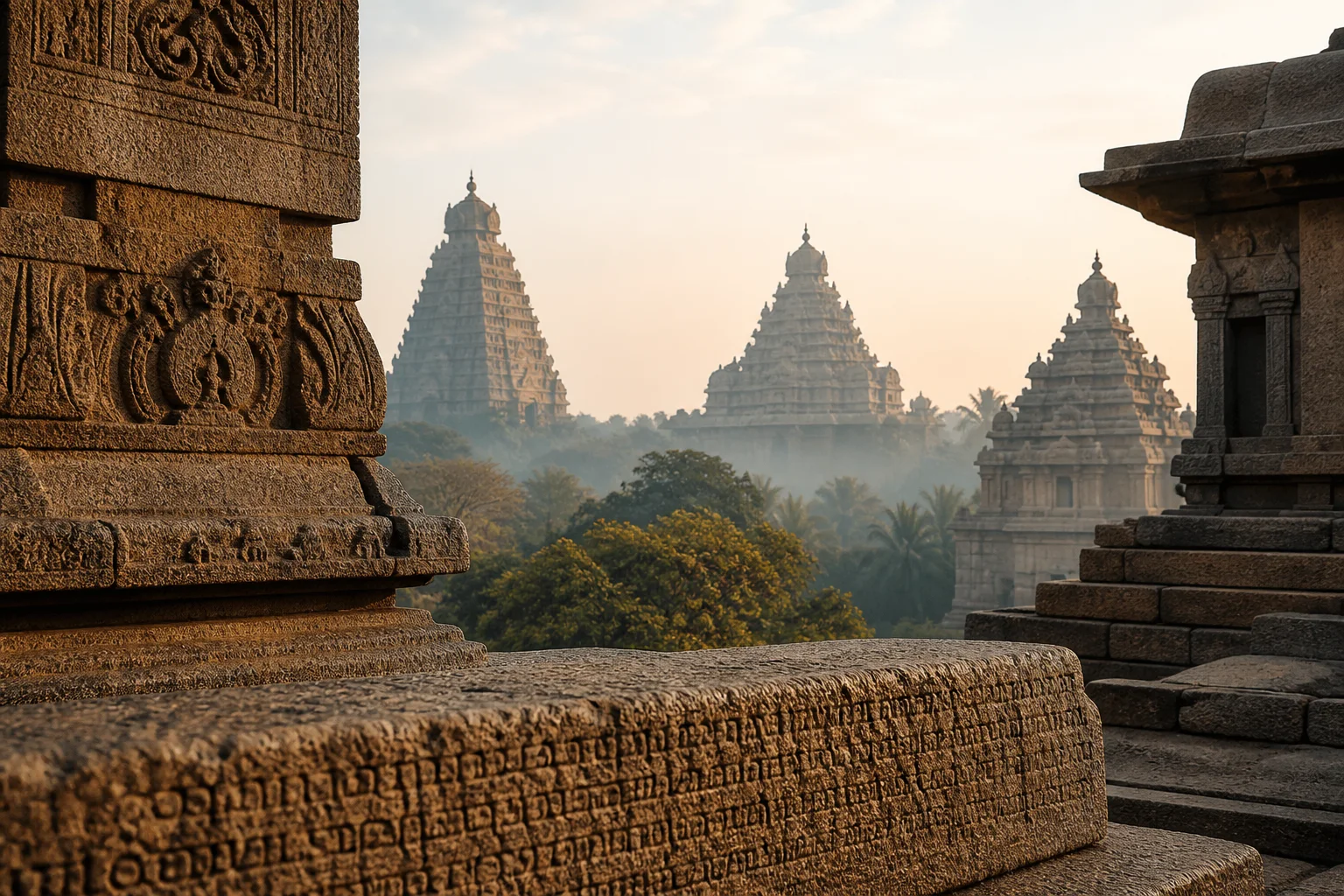
A Journey Through Chola Heritage in Tamil Nadu
Follow a thoughtful route through three living Chola temple landscapes, learning to read architecture, inscriptions, patronage, and place without rushing.
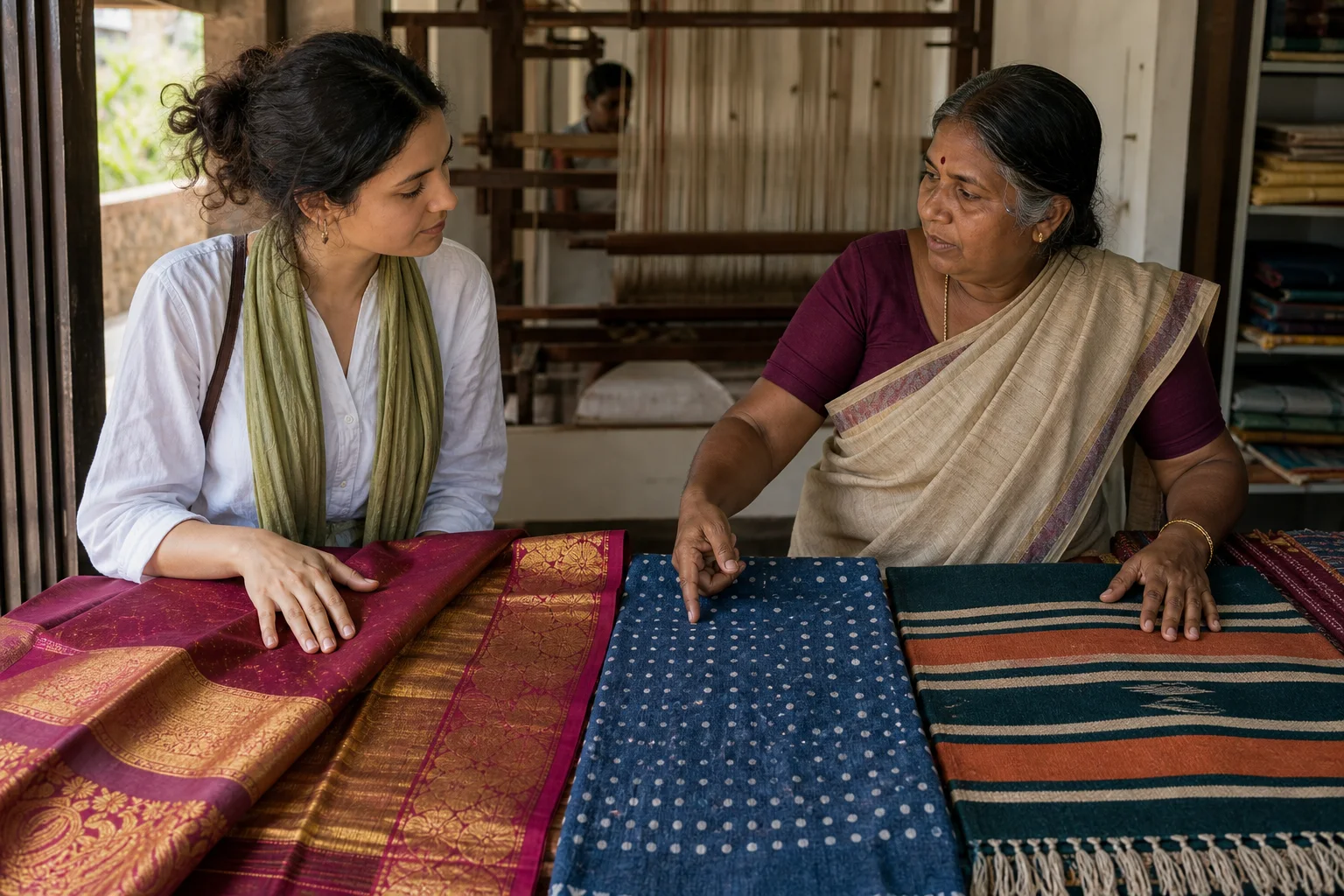
Buying Tamil Handloom: Ask About Fibre, Place and Proof
A practical festival-season guide to asking what a textile is, where it comes from and what a label actually proves before price or colour takes over.
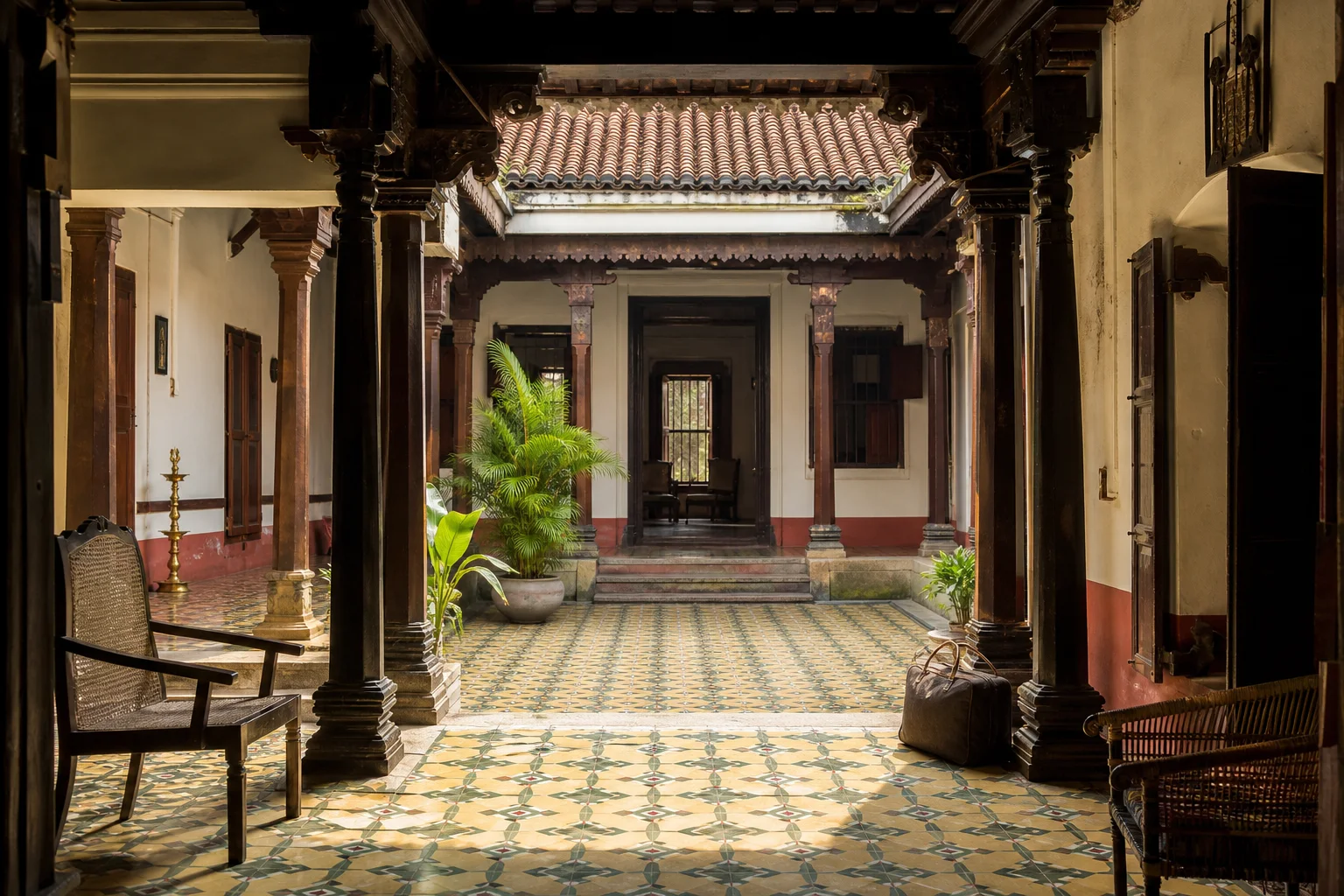
Staying in Chettinad: Reading a Mansion from the Courtyard
How to choose a mansion stay for its architecture, setting and stewardship rather than treating Chettinad as a generic luxury backdrop.
Frequently asked questions
Does gold colour prove that real gold leaf was used?
No. Ask for a clear material description and documentation; visual appearance alone cannot distinguish all metallic materials.
Is every Thanjavur-style painting GI-authenticated?
No. A familiar style or place of sale does not establish authorisation or provenance.
Is the Thanjavur Paintings GI registration currently renewed?
The public detail page displays a validity date ending 3 January 2026. Verify any newer legal status directly with IP India before making a current claim.
Editorial attribution
Prepared and reviewed by My Tamil Nadu Editorial Desk. Modified 3 September 2026.