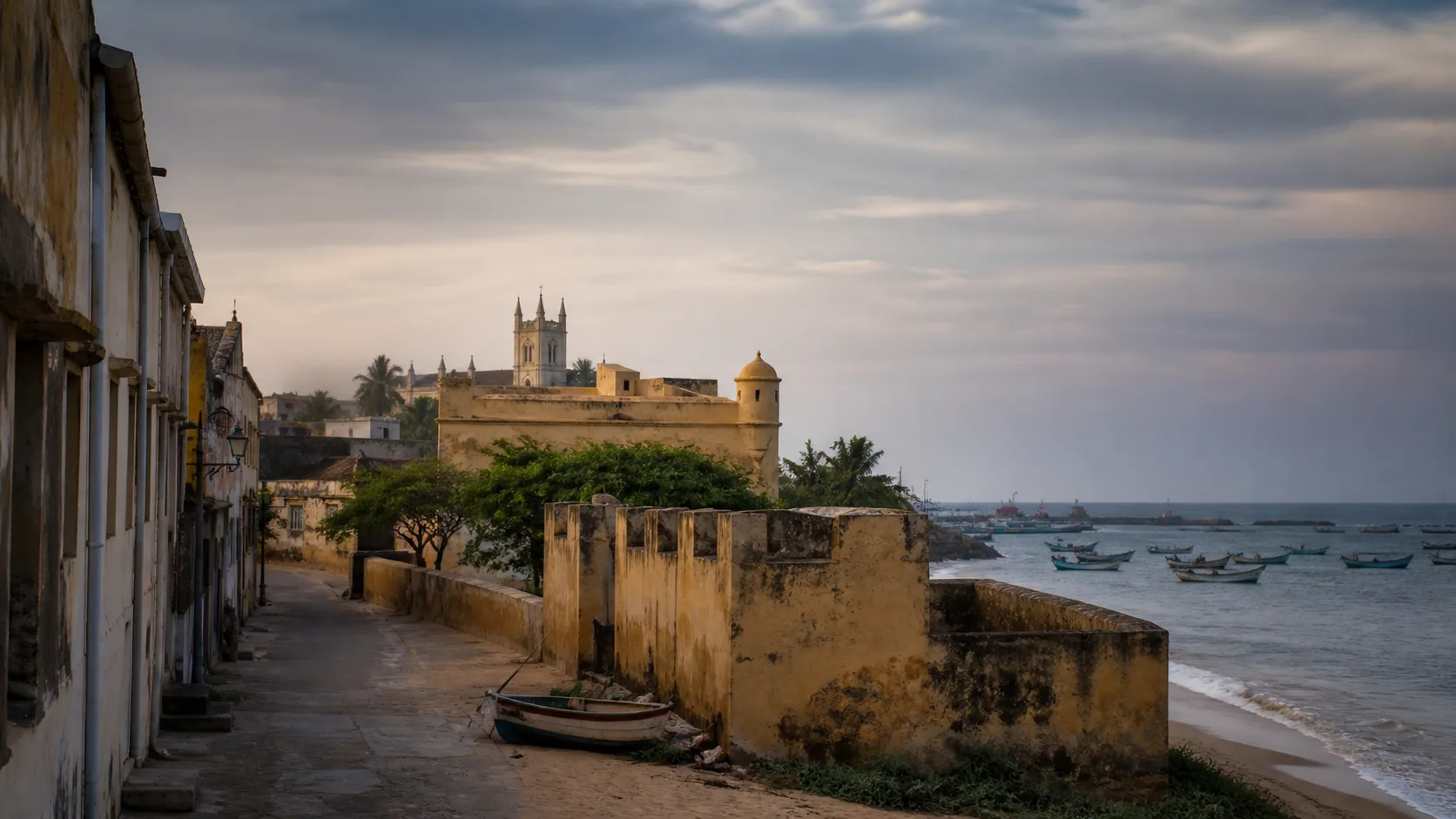
Begin before the name Tranquebar
The Tamil Nadu Department of Archaeology notes a fourteenth-century inscription referring to the place as Sadanganpadi, also called Kulasekarapattinam. That earlier reference matters because Tharangambadi did not begin when a European company arrived. It already belonged to a Tamil coastal world of settlement, political authority, fishing, exchange and movement.
Tranquebar is a European rendering associated with the Danish period; Tharangambadi is the present place name. Both appear in archives and travel writing, but using only the colonial name can make local history look like a prologue to Europe. Begin with the modern town and ask which historical layer a source is describing.
A coast is never a fixed stage. Shoreline movement, storms, erosion, harbour use and rebuilding affect what survives and how buildings relate to the sea. Do not use the present beach line as a precise map of an earlier port without archaeological and coastal evidence.
Sources for this section: Danish Fort history, Tharangambadi district guide.
Read Fort Dansborg as trade infrastructure
The district administration dates the fort to 1620, while the archaeology department places it within competition among European trading companies on the Tamil coast. A fort was not only a picturesque residence. It organised storage, defence, administration and commercial relationships backed by unequal political and military power.
Look at walls, sea-facing position, internal rooms and relationship with the settlement. Ask what goods, documents, workers and decisions moved through such spaces. Avoid treating every room label, cannon or object as unchanged from one founding moment; museums often display material from several periods and contexts.
The fort now houses a Tamil Nadu archaeology site museum. Current opening days, tickets, gallery access and conservation closures must be checked directly. Do not climb walls, touch displayed objects or cross a barrier for a sea photograph.
Sources for this section: Tharangambadi district guide, Danish Fort Site Museum.
Printing history is about language, labour and circulation
Mayiladuthurai district history associates Tharangambadi with the introduction and expansion of printing, type and paper-making through Danish missionary activity. That history is often told through named European missionaries, but printed books also depended on Tamil language knowledge, translators, compositors, artisans, teachers and readers.
A printing press changes more than the number of books. Type design turns script into repeatable metal forms; translation forces choices about vocabulary and audience; paper, ink, binding and distribution create material networks. Religious purpose, linguistic documentation and colonial power can coexist in the same archive without becoming the same thing.
When viewing an old printed page, separate date of composition, translation, printing and the age of the displayed copy. A facsimile can teach history without being the original object. Follow museum labels and source catalogues rather than assuming every old-looking page was printed in Tharangambadi.
Sources for this section: Mayiladuthurai district history, Danish Fort Site Museum.
The town contains several religious and civic histories
Tharangambadi's built environment includes churches, streets, gateways, houses and institutions linked with different communities and periods. The presence of a church near a fort does not make the entire town a single missionary compound, just as earlier Tamil references should not be used to erase later residents and buildings.
Read architectural features cautiously: material, roof form, street alignment, courtyard and adaptation to coastal climate. A restored facade is evidence of conservation as well as age. Do not enter a place of worship as though it were merely an architectural exhibit, and ask before photographing services or people.
Residents live inside the heritage landscape. Keep doorways clear, lower voices in residential streets and avoid photographing homes through open windows. A heritage walk should not turn ordinary domestic life into an attraction without consent.
Sources for this section: Tharangambadi district guide, Danish Fort history.
Return every heritage story to the living coast
Fishing boats, beach access, weather, salt and coastal livelihoods are not background decoration. They are part of the present town. Ask before photographing workers, nets or boats, and never move equipment to improve a composition. A boat on shore does not mean it is abandoned or available to climb.
Sea state and beach safety are live conditions. Avoid seawalls, slippery structures and rough-water edges, especially during warnings. This guide does not confirm swimming safety, cyclone conditions, erosion status or access after storms; district and weather authorities must decide those questions close to travel.
A responsible visit connects inscription, fort, printing, worship, street and sea without claiming that one layer is the authentic town. Eat locally, use lawful guides and leave archaeological material, shells and building fragments where they belong.
Sources for this section: Tharangambadi district guide, Danish Fort history.
Plan a visit by sequence, not by a checklist
Begin with the district and archaeology sources before arriving, then orient yourself from a lawful public route. A useful sequence is town context, fort and museum interpretation if open, language and printing history, respectful observation of religious and residential streets, and finally the coast from a safe public point.
Keep the plan short enough to absorb labels and notice changes in material, street form and shoreline relationship. Combining Tharangambadi with several distant coastal stops can reduce a layered place to a photograph. Build extra time for heat, rain, worship activity, conservation work and ordinary town traffic.
Carry water, dress for active places of worship and confirm current transport and museum information shortly before travel. If a gallery or street is unavailable, the visit can still remain meaningful through the district history, public architecture and coastal setting without crossing a closure or disturbing residents.
Sources for this section: Tharangambadi district guide, Danish Fort Site Museum.
Sources & Further Reading
These authoritative references support the historical, geographic, or seasonal context in this story. Current conditions and operating details still require a fresh official check.
- Tharangambadi · Mayiladuthurai District Administration
- Danish Fort · Tamil Nadu State Department of Archaeology
- Danish Fort Site Museum - Tranquebar · Tamil Nadu State Department of Archaeology
- History · Mayiladuthurai District Administration
Related Stories
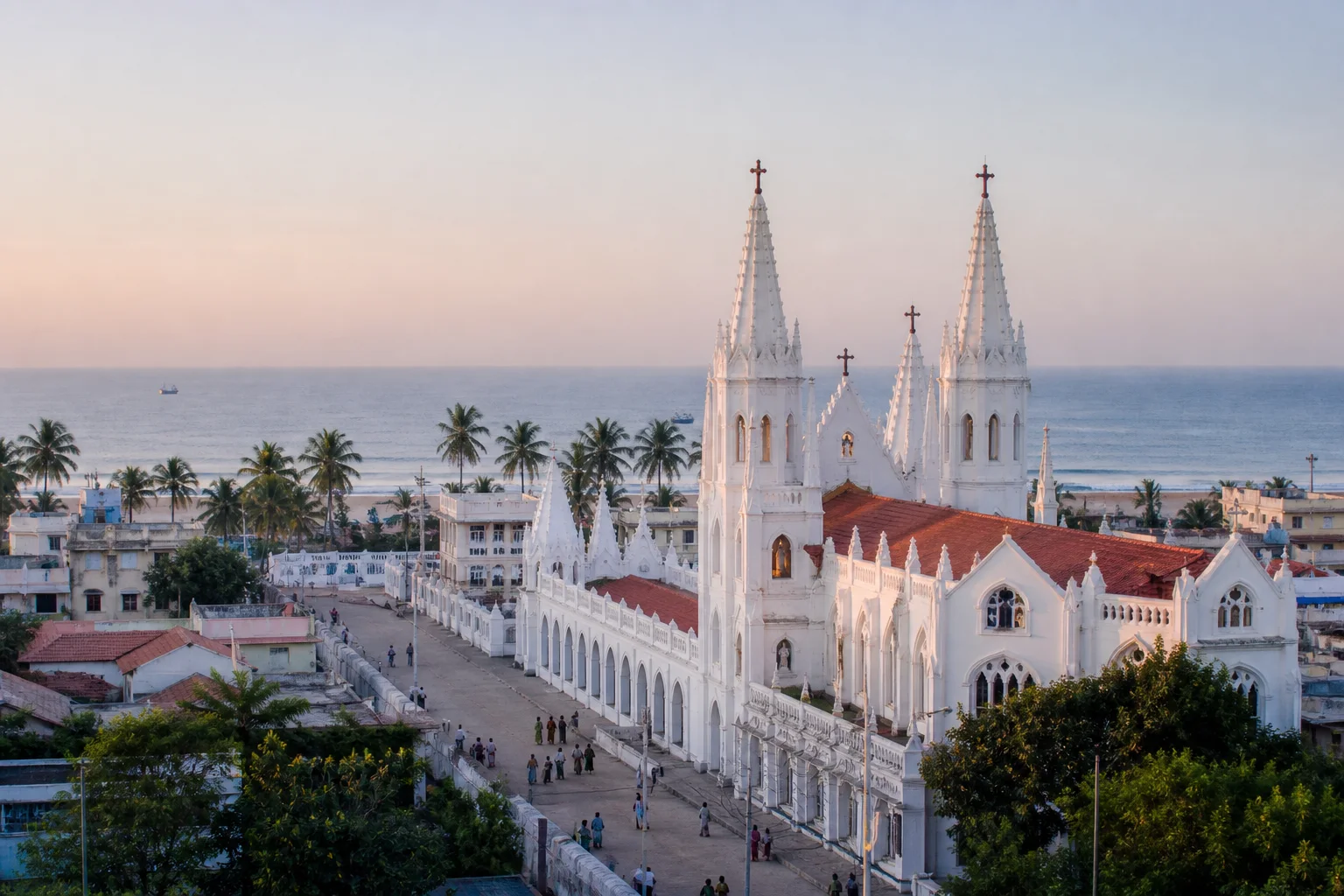
Velankanni: Reading a Pilgrimage Town Beside the Sea
A first-visit guide to the relationship between the Shrine Basilica, pilgrim movement, town services and an exposed Bay of Bengal coast.
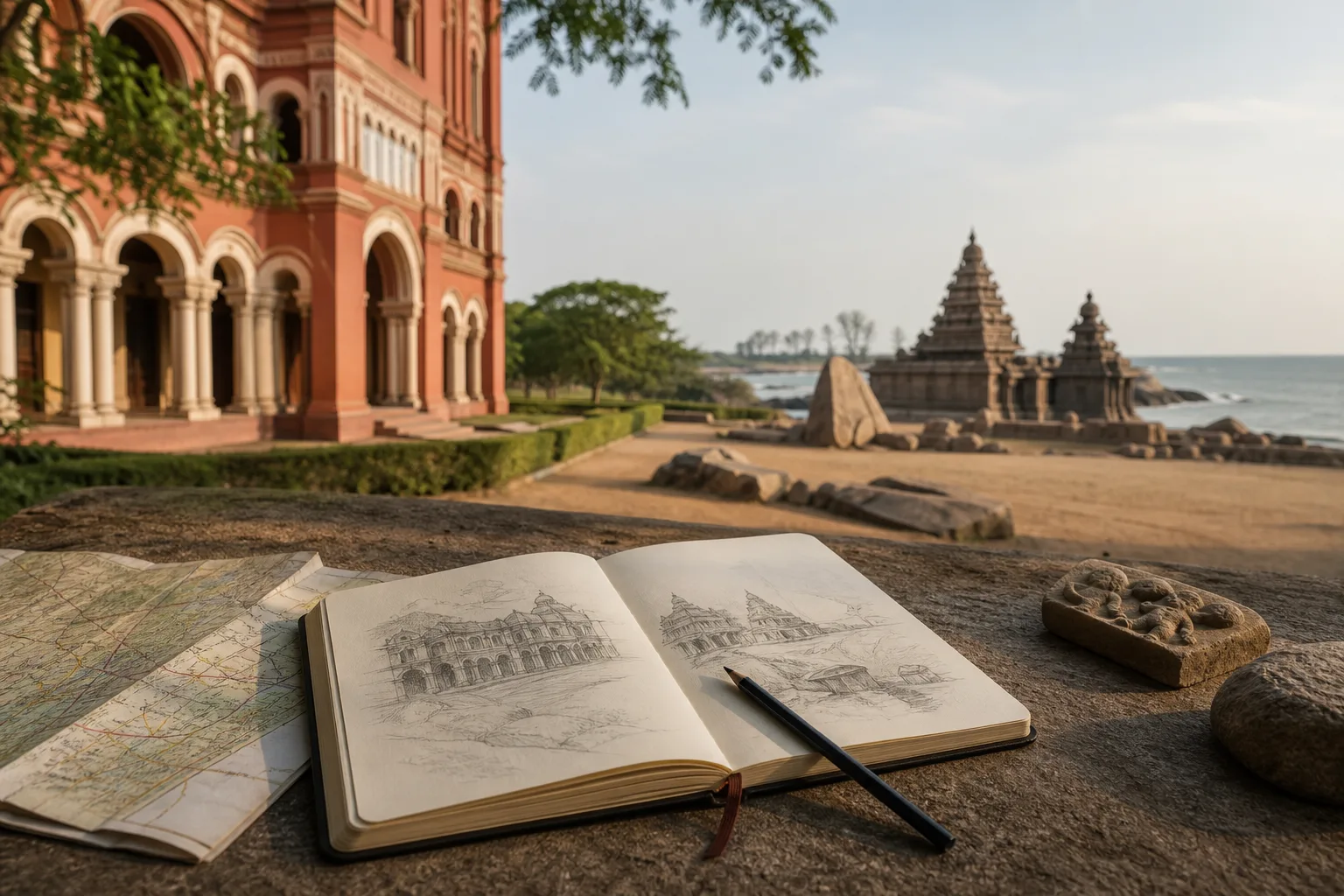
A Heritage Weekend from Chennai: How to Choose a Meaningful Route
A practical way to shape a heritage weekend from Chennai around one good question, a measured pace, and a choice between city and nearby extensions.
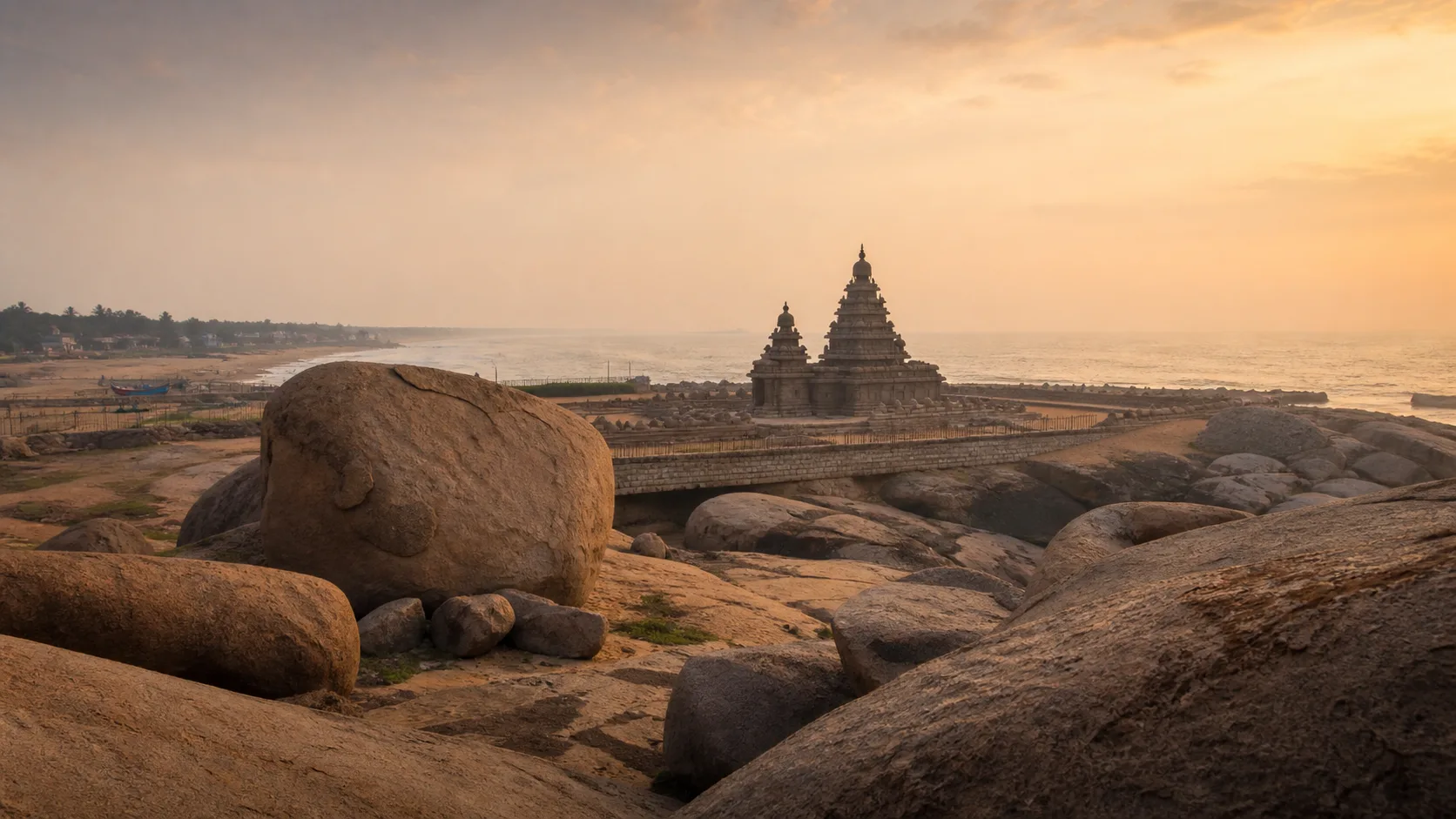
Mamallapuram: Read a Coastal World Heritage Landscape
A connected reading of Mamallapuram that moves from granite outcrops and carved caves to monolithic experiments, open-air reliefs, the Shore Temple and a living coastal town.
Frequently asked questions
Are Tharangambadi and Tranquebar the same place?
Yes. Tranquebar is a historical European rendering; Tharangambadi is the present place name.
Is Fort Dansborg only a scenic viewpoint?
No. It should be read as trade, administrative, military and museum history within a wider town.
Does this guide confirm museum hours?
No. Confirm current opening, tickets and gallery access with the responsible authority.
Editorial attribution
Prepared and reviewed by My Tamil Nadu Editorial Desk. Modified 31 August 2026.