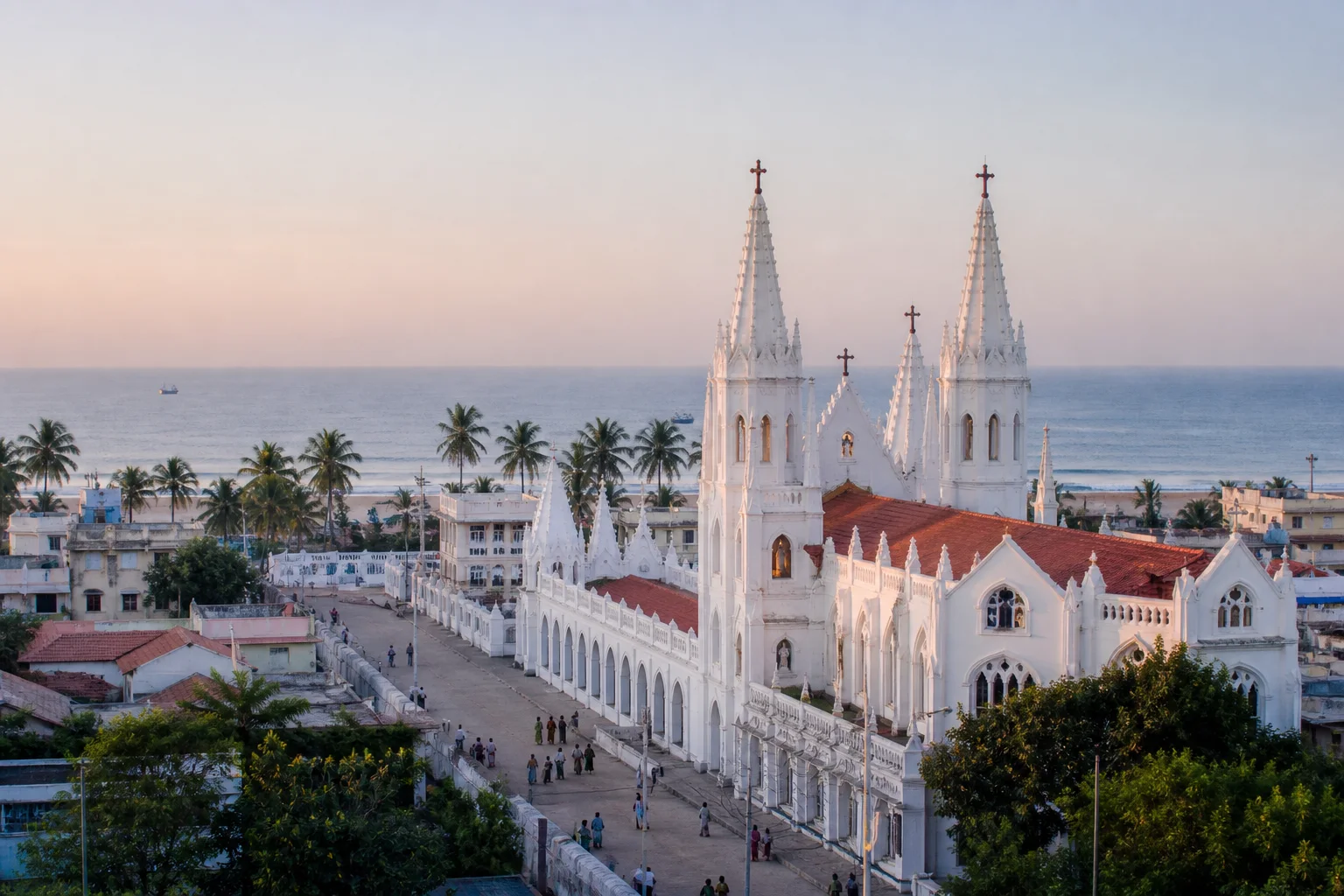
Velankanni is more than a photographed facade
Velankanni lies on the Bay of Bengal coast in Nagapattinam district and is known for the Shrine Basilica of Our Lady of Good Health. The district administration describes it as a pilgrimage centre visited by people from different faiths. The white church forms are the strongest visual signal, but the place is also made by prayer spaces, processional movement, accommodation, food, transport and ordinary coastal-town life.
A visitor should therefore arrive with two maps in mind: the sacred complex and the wider town. The first helps distinguish worship areas from circulation and service spaces. The second shows the relationship with Nagapattinam, the coast and onward regional travel. Neither map replaces signs, staff directions or current crowd arrangements.
Sources for this section: Velankanni district guide, Municipal places guide.
Read devotion and documented history carefully
The shrine is dedicated to Our Lady of Good Health. Its official and diocesan accounts connect the devotion with local traditions about apparitions, healing and sailors reaching the coast, and record the church's later institutional development. These narratives are part of the shrine's religious memory and should be described as traditions of faith rather than as archaeological proof.
The Diocese of Thanjavur identifies Vailankanni within its institutional history, while the shrine provides current liturgical and contact information. A visitor does not need to share a belief to behave respectfully. Observe how votive practice, language and architecture express devotion, and avoid reducing prayer or healing testimony to spectacle.
Sources for this section: Official shrine, Diocesan history.
A pilgrimage centre speaks through many languages
Velankanni draws pilgrims from Tamil Nadu and beyond. Language appears in worship, signs, songs, shops and conversations, and the site is often experienced through family or parish journeys rather than individual sightseeing. This diversity is more meaningful than a claim that every visitor follows the same route or custom.
During prayer, keep phones silent, dress with respect for the sacred setting and follow photography restrictions. Do not photograph a person in distress, private prayer or a religious act without consent. Give priority to pilgrims using worship spaces, and do not block entrances or processional routes while composing an image.
Sources for this section: Velankanni district guide, Official shrine.
The annual feast needs annual verification
Official local sources describe a major feast period associated with late August and early September. That recurring context explains why interest in Velankanni rises at this time, but exact services, processions, traffic controls, special trains, accommodation availability and public-safety measures belong to the current year. They should never be copied forward as permanent travel facts.
If travelling for the feast, consult the shrine and district administration close to departure. If travelling outside it, do not assume the complex will be empty or that every chapel follows one timetable. Build flexibility around worship and crowd flow. Festivals and Events can explain how to verify a moving calendar without turning an evergreen page into an outdated noticeboard.
Sources for this section: Official shrine, Municipal places guide.
The sea is part of the setting and a separate safety question
Velankanni's coastal location shapes humidity, wind, rain and the town's wider identity. A visible beach does not mean bathing is safe. Sea state, warnings, erosion, access controls and local conditions can change quickly, especially during active weather. Check India Meteorological Department warnings and follow local authorities rather than judging the water from appearance.
The Nagapattinam coast is also a working and regulated coastal environment. Fishing livelihoods, settlement and habitat do not become visitor space merely because they are near a pilgrimage centre. Keep away from working gear, do not leave waste and do not enter dunes or sensitive shore areas. Coastal maps describe regulation and vulnerability; they are not recreational access maps.
Sources for this section: IMD weather, Coastal zone maps.
Build a visit around purpose, rest and regional context
Decide whether the journey is primarily pilgrimage, architecture, family travel or regional exploration. That purpose determines how much time belongs inside the shrine complex and how much belongs to the wider district. Keep walking capacity, heat, queues, meals and quiet rest in the plan. Confirm accessibility details directly because ramps, wheelchairs, crowd routes and vehicle drop-off arrangements can change.
Use Maps for broad orientation and the Nagapattinam guide for related places, but resist collecting sacred centres as interchangeable stops. Velankanni deserves attention as a living institution in a vulnerable coastal town. A respectful visit verifies the current programme, leaves room for worship and carries no certainty from an old timetable into a new travel day.
Sources for this section: Velankanni district guide, Official shrine, IMD weather.
Sources & Further Reading
These authoritative references support the historical, geographic, or seasonal context in this story. Current conditions and operating details still require a fresh official check.
- Velankanni · Nagapattinam District Administration
- Shrine Basilica of Our Lady of Health Vailankanni · Shrine Basilica Vailankanni
- History of the Diocese of Thanjavur · Diocese of Thanjavur
- Places of Interest · Nagapattinam Municipality
- India Meteorological Department · India Meteorological Department
- Approved Coastal Zone Management Plan Maps · Tamil Nadu State Coastal Zone Management Authority
Related Stories
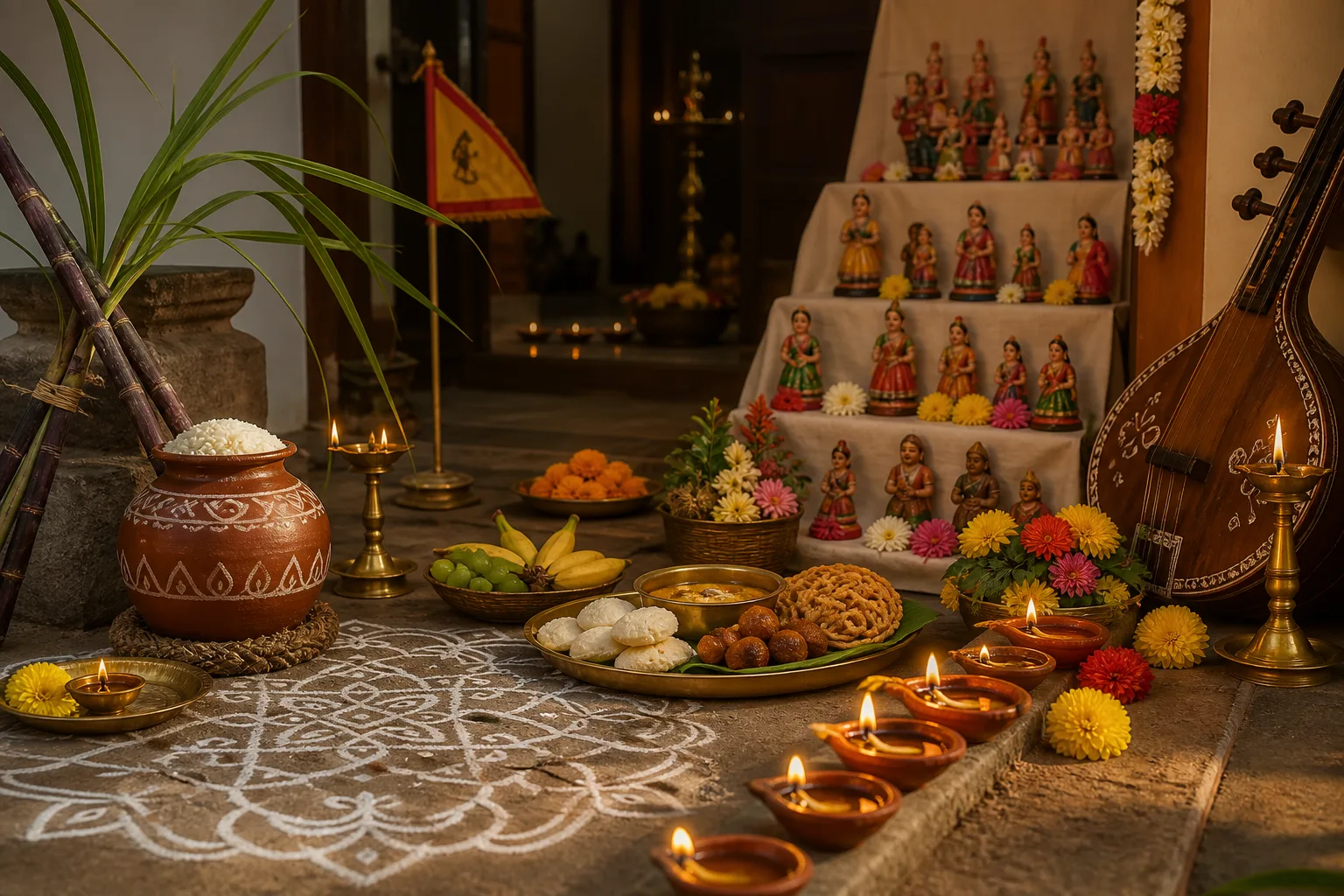
Beyond Pongal: How to Read Tamil Nadu's Festival Calendar
A cultural guide to the many clocks behind Tamil Nadu's festivals, from harvest and household practice to temple calendars and pilgrimage.
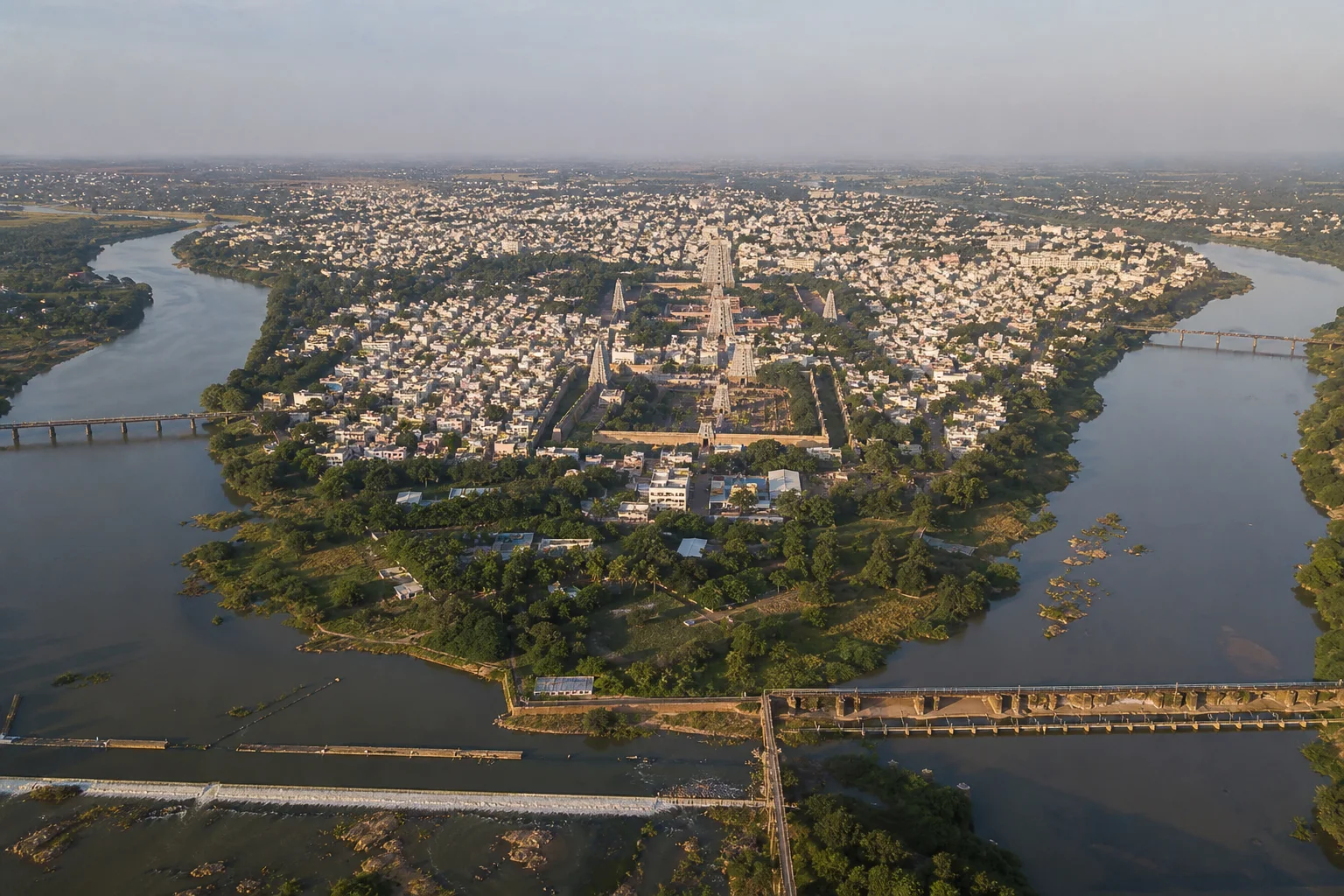
Srirangam Beyond the Temple: Island, Sacred Town and Pilgrimage Landscape
Look beyond a single monument to understand how rivers, streets, enclosures, worship and everyday settlement make Srirangam a distinctive sacred town.
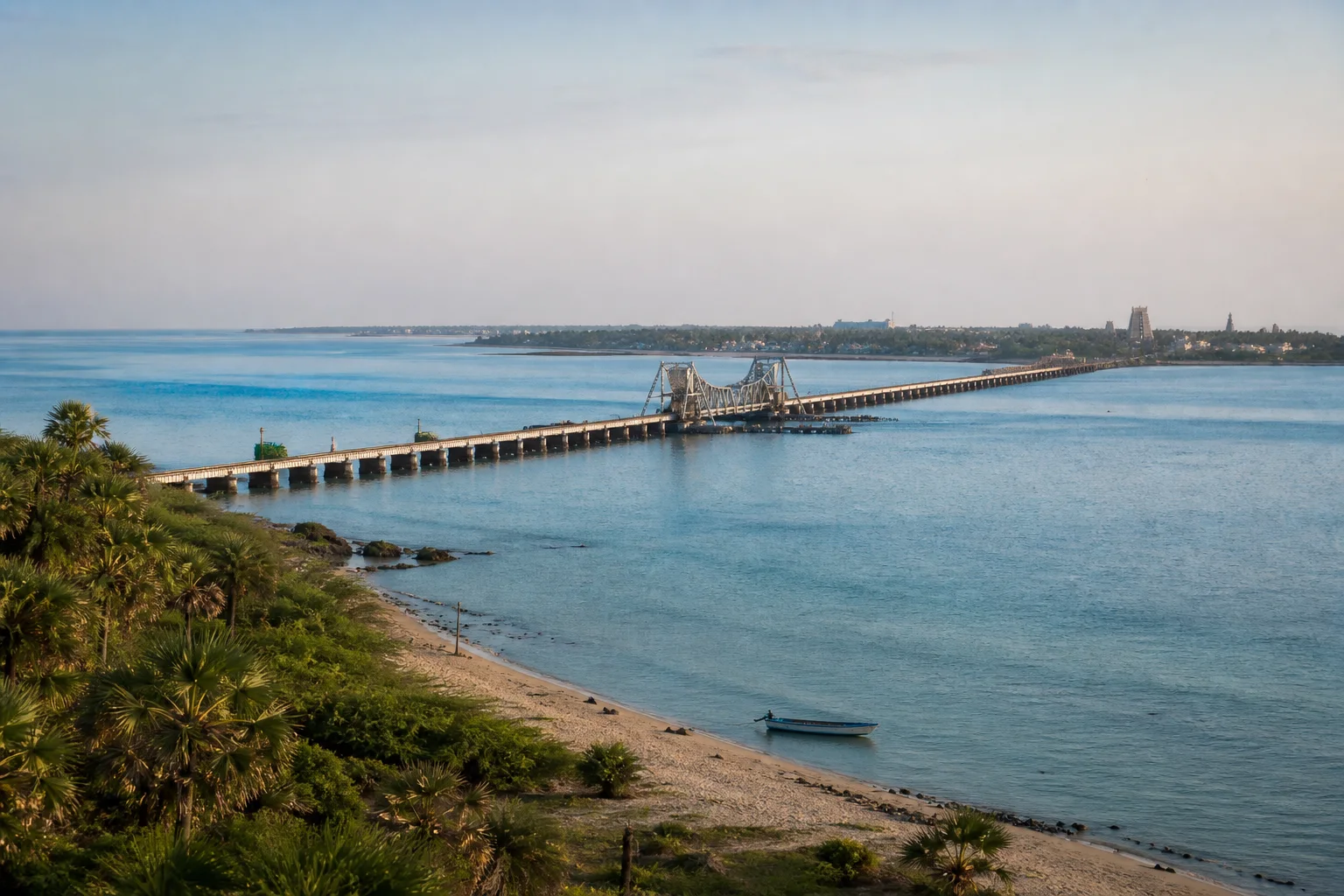
Rameswaram as an Island: Temple, Pamban, Dhanushkodi and the Sea
A connected reading of Rameswaram's sacred town, mainland crossing, exposed eastern coast and protected marine context rather than four unrelated stops.
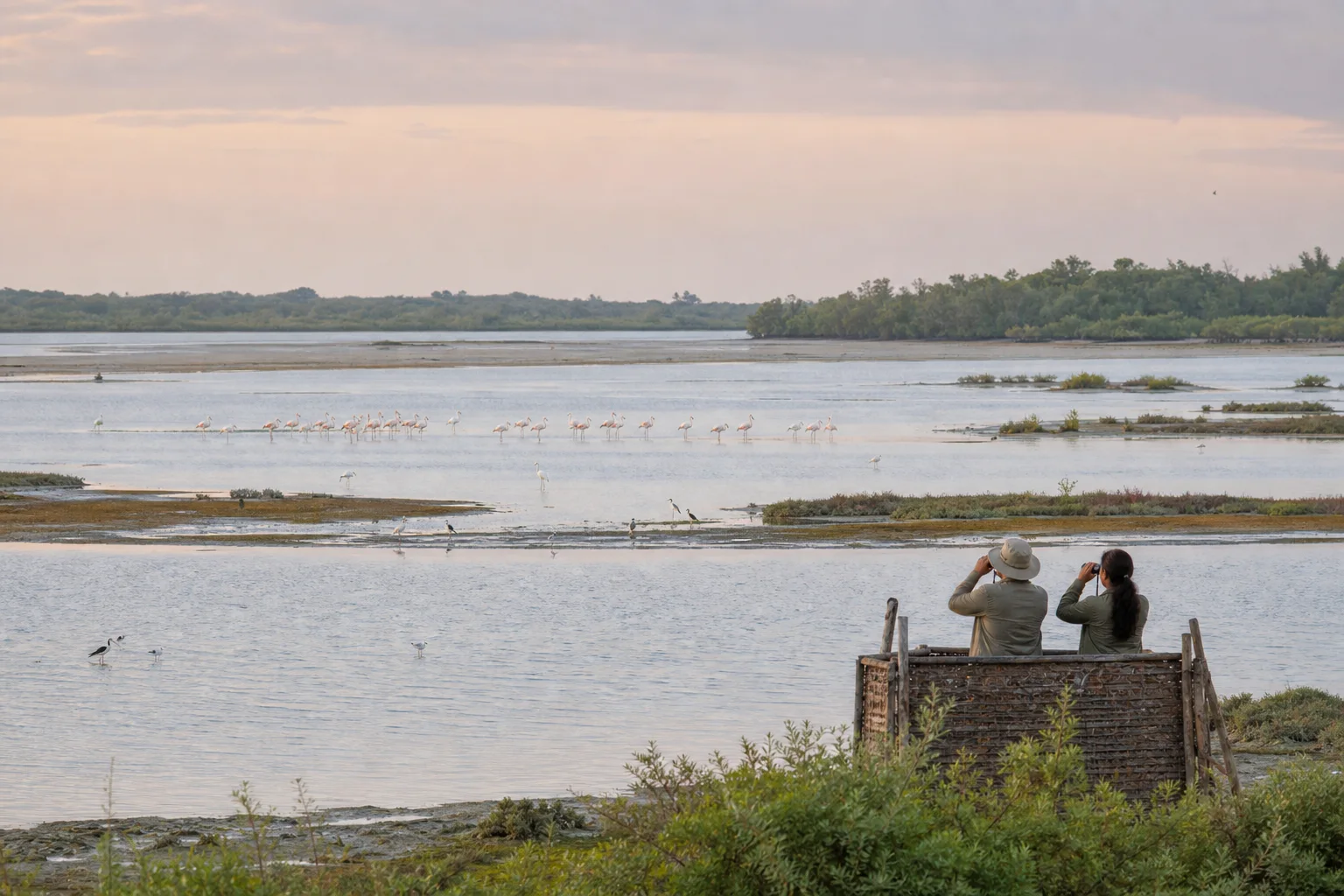
Point Calimere: A Wetland-First Birdwatching Journey
How to read mudflats, saline lagoons, forest, salt pans and coast before looking for a species list at Kodikkarai in Nagapattinam district.
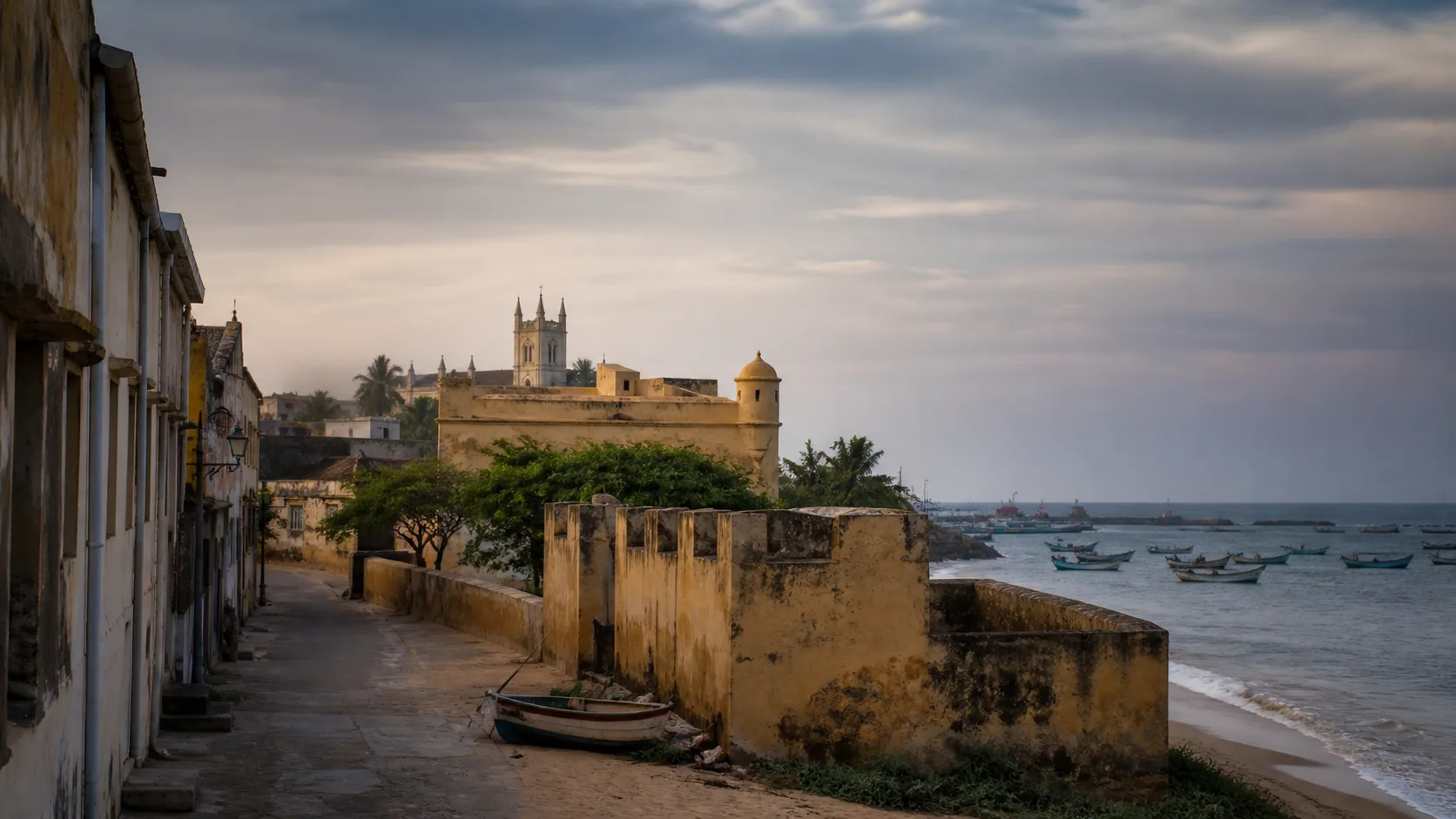
Tharangambadi: Read the Fort, Printing History and Living Coast
A layered coastal-town guide that begins before the Danish fort, follows trade and printing history, and returns heritage to a living Bay of Bengal shoreline.
Frequently asked questions
When is the Velankanni annual feast?
Official sources associate the main feast period with late August and early September, but exact annual services, processions and controls must be checked with the shrine and district.
Is Velankanni only for Catholic pilgrims?
It is a Catholic shrine, while official district material notes that visitors and pilgrims also come from other faith backgrounds. Everyone should respect worship and site rules.
Is the sea at Velankanni always safe for bathing?
No. Never infer safety from appearance. Check current warnings and obey local signs and authorities.
Editorial attribution
Prepared and reviewed by My Tamil Nadu Editorial Desk. Modified 26 August 2026.