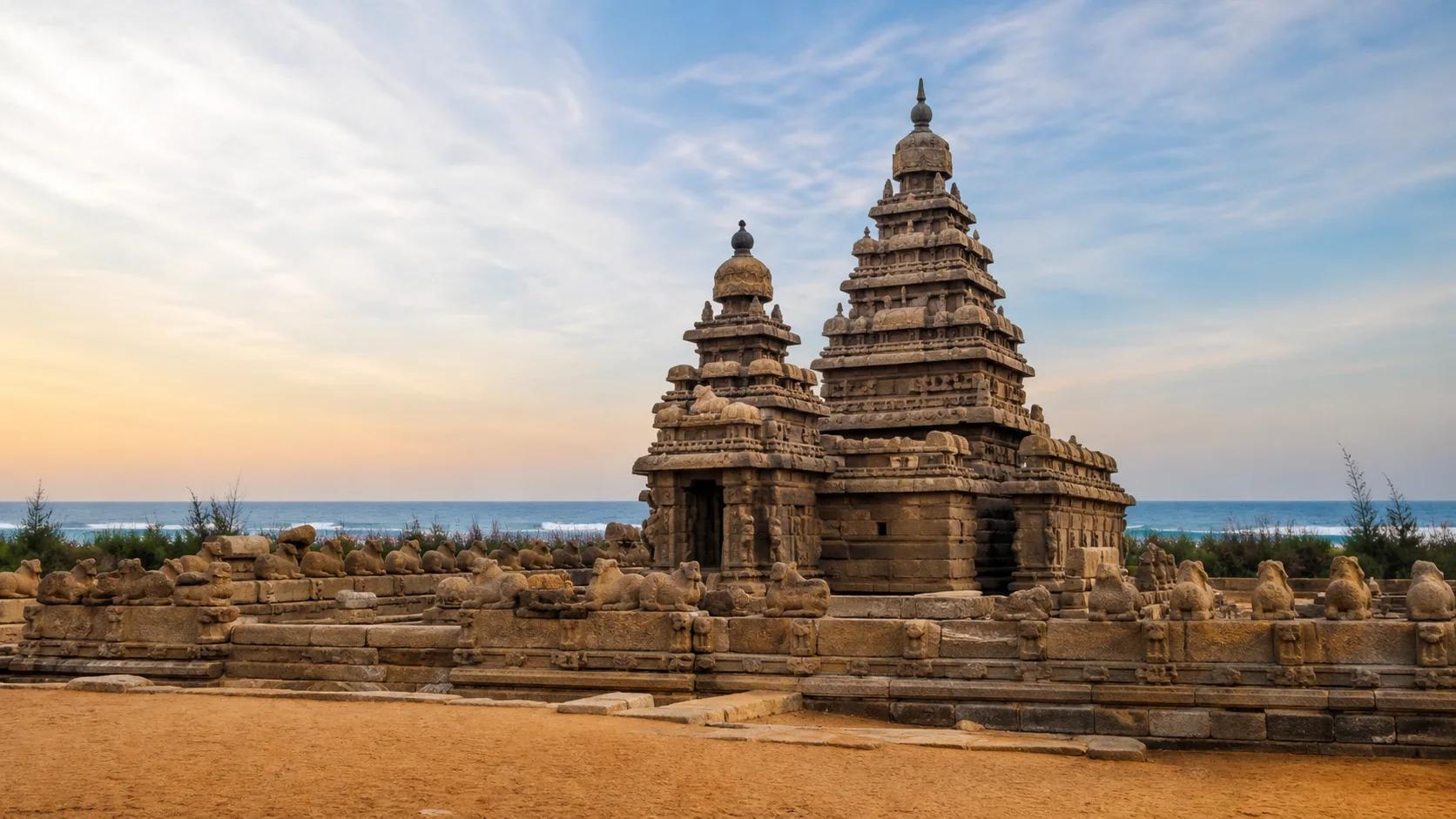
Pallava coast, wetlands and fast-changing corridors
Chengalpattu District: Heritage, Coast and Places to Explore
Chengalpattu district joins the Pallava monument landscape of Mamallapuram to a long Bay of Bengal coast, temple towns, tanks, bird habitat, agricultural areas and rapidly urbanising corridors south of Chennai. Created from the former Kancheepuram district in 2019, its modern boundaries matter whenever older sources use Kancheepuram as a broad regional label.On this page
District overview
Understanding Chengalpattu district
Chengalpattu district came into existence in 2019 after division of the former Kancheepuram district. Older books, archives and web pages may therefore place current Chengalpattu sites under Kancheepuram; this page uses modern boundaries for geographic classification.[chengalpattuAbout]
The district reaches from metropolitan-edge settlements to agricultural and coastal areas. It should not be described as only Chennai's outskirts or only the Mamallapuram tourism corridor.
Why it matters
Why explore Chengalpattu?
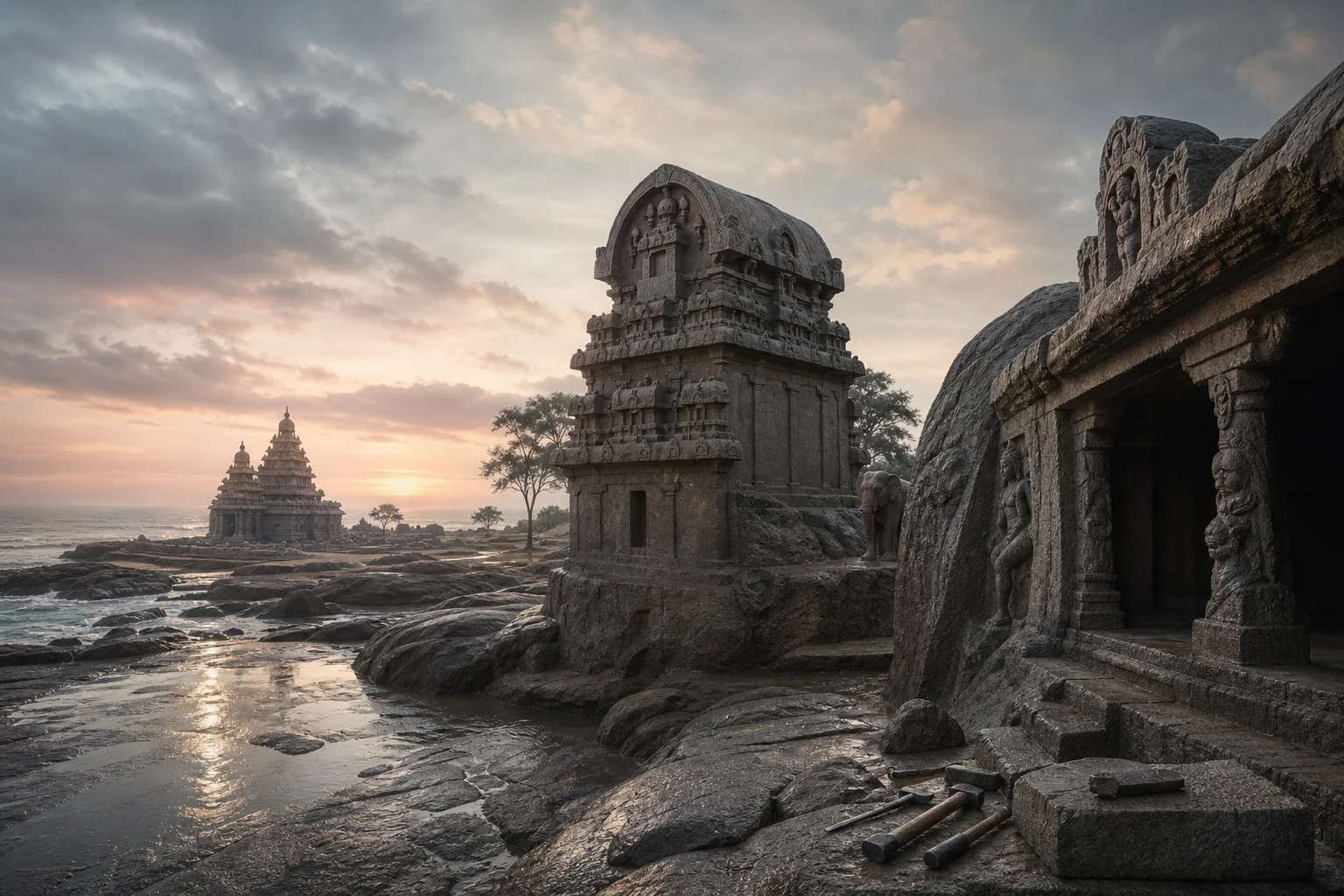
Mamallapuram is an internationally important Pallava monument group of rock-cut caves, monolithic forms, reliefs and structural temples.[mamallapuram]
The coast also includes fishing settlements, sacred places, lagoons and heavily visited roads where livelihood and environmental risk are more important than resort imagery.
Vedanthangal and the district's many tanks show how managed water landscapes can support agriculture and bird habitat without becoming guaranteed wildlife theatres.[chengalpattuTourism]
Chengalpattu town, Tambaram and industrial or institutional corridors reveal the district's rapid contemporary transition.
Land and water
Geography and regional identity
The district occupies a north-eastern Tamil Nadu coastal plain with the Bay of Bengal to the east and inland connections toward Kancheepuram and Tiruvannamalai.[chengalpattuAbout]
The Palar system, smaller rivers, irrigation tanks, wetlands and coastal backwaters shape agriculture, drainage and habitat.
Coastal conditions differ from the inland headquarters and metropolitan edge; one weather label cannot cover Mamallapuram, Tambaram and interior tank landscapes.
Beaches, estuaries and lakes require current access and safety information. A Google Maps pin does not establish public entry.
Evidence and change
Historical overview
The district shares the long history of the wider Kanchi and Tondaimandalam region, but modern administrative identity began only after the 2019 division.[chengalpattuAbout]
Pallava patronage is visible most powerfully at Mamallapuram, where experimentation across rock-cut, monolithic and structural forms belongs to a coastal port setting.[mamallapuram]
Chola, Vijayanagara and later political phases affected the region; Chengalpattu fort and lake also entered eighteenth-century French-British conflict.[chengalpattuAbout]
Modern growth follows rail, road, education, industry and metropolitan expansion, creating pressure on water, coast, heritage and settlement.
Continue with Tamil Nadu history →Within the district
Cities, towns and local centres
These are district contexts, not newly created destination pages.Chengalpattu
Town, rail and road connections anchor the district's inland administrative geography.
Tambaram
A dense metropolitan-edge corporation and transport centre with a different identity from coastal heritage towns.
Mamallapuram
A living sculpture, fishing and visitor town around a protected serial monument group.
Madurantakam
Water management, transport and sacred history connect the southern interior.
Tirukalukundram
Vedagiriswarar hill-temple context links sacred landscape and surrounding settlements.
Pallavaram and southern corridors
Older quarry, transport, residential and industrial histories need current boundary-aware interpretation.
Living and protected places
Temples and spiritual places
Shore Temple
A protected Pallava structural monument in Mamallapuram; it is not treated as a conventional living temple directory entry.
Open full guideVedagiriswarar Temple
A living temple and hill context in Tirukalukundram; verify access and festival arrangements officially.
Tiruvidanthai
A coastal Vaishnava temple setting whose worship context should remain central.
Madurantakam temple context
Town and tank histories overlap with living sacred institutions; current visitor details are withheld.
Interpret carefully
Heritage and architecture
Group of Monuments at Mamallapuram
UNESCO identifies caves, rathas, reliefs, temples and excavated remains within the serial property.
Chengalpattu fort context
The fort and lake illustrate strategic geography and eighteenth-century conflict; current access must be verified.
Sculpture traditions
Contemporary stone-working exists beside protected monuments but should not be collapsed into one unchanging Pallava craft.
Older water systems
Tanks and channels are infrastructure and historical landscape, not empty scenic features.
Living knowledge
Culture, food and regional products
Culture and festivals
Mamallapuram's sculpture ecosystem, temple traditions and coastal communities represent different forms of cultural work.
Festival programmes and public events change annually; district identity should not be reduced to one tourism festival.
Urban migration and new institutions are reshaping culture along Tambaram and southern metropolitan corridors.
Food and cuisine
Food varies between coastal fishing communities, urban corridors, temple towns and agricultural interiors.
Seafood availability does not justify a freshness or sustainability claim; current sourcing and local practice require direct verification.
The guide avoids assigning Chennai restaurant culture to the whole district or inventing a single Chengalpattu dish.
Making and provenance
Regional products and crafts
Stone sculpture and craft activity are closely associated with Mamallapuram, but buyers should identify maker, material and process.
Pottery, weaving and salt production appear in district historical accounts; the page does not imply unchanged present scale.[chengalpattuAbout]
No GI claim is made without a matching official registry record.
Landscape first
Nature and wildlife
Vedanthangal is a protected bird sanctuary in the district, but access, season and sightings require Forest Department confirmation.[chengalpattuTourism][forest]
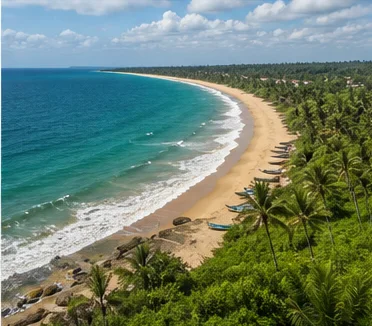
Lakes and coastal wetlands are working hydrological systems vulnerable to disturbance, pollution and encroachment.
The Bay of Bengal coast requires weather, wave and local safety checks; beach presence never guarantees safe swimming.
Work and change
Economy and livelihoods
Administration, education, manufacturing, services, construction, agriculture, fishing and visitor economies coexist across the district.
Metropolitan growth is concentrated unevenly; inland and coastal settlements face different opportunities and pressures.
Tourism should be discussed alongside conservation, fishing work, water management and local mobility.
Build a coherent route
Places to explore in Chengalpattu
Mamallapuram monument group
Study multiple monument types rather than treating Shore Temple as the whole site.
Shore Temple
Understand coastal conservation and structural temple development.
Vedanthangal
Visit only under current Forest Department access and responsible birdwatching rules.
Tirukalukundram
Explore sacred hill and town context without assuming festival access.
Chengalpattu town and lake
Read administration, rail history and water landscape together.
Madurantakam
Connect water infrastructure, settlement and temple context.
Tiruvidanthai
Combine living worship with a careful coast route.
Southern coast and backwaters
Use official boating and sea information; no operator is endorsed.
Choose your pace
Things to do
Compare Pallava media
Study caves, monoliths, relief and structural temples as different experiments.
Read a tank as infrastructure
Observe water, agriculture and settlement without entering restricted structures.
Visit a living temple respectfully
Separate worship rules from monument access.
Explore sculpture with provenance
Ask who made an object and from what material.
Watch birds responsibly
Keep distance and follow sanctuary controls; sightings remain uncertain.
Plan a coast day conditionally
Sea warnings can remove the beach from the plan.
Contrast town and corridor
Compare Chengalpattu or Madurantakam with the Tambaram urban edge.
Connect to Pallava history
Use the history pillar before interpreting architectural change.
Conditions, not promises
Best season and current checks
The coast remains humid and exposed, while inland tanks and urban areas can feel different on the same day.
Northeast-monsoon rain and coastal warnings require flexible routes and current IMD information.[imd][warnings]
Bird habitat, lake levels and agricultural appearance vary with actual rainfall and access, not a calendar guarantee.
Plan by days
Suggested duration
1 day
Choose Mamallapuram or one inland wetland-and-town theme, not the entire district.
2 days
Pair Pallava heritage with one carefully verified temple, wetland or headquarters route.
3 days+
Add southern coast or urban-transition study with separate bases and realistic margins.
Regional access
How to reach
Rail
Chengalpattu and Tambaram are major rail anchors; use Indian Railways for current services.
Road
Major north-south and coastal corridors cross the district, but journey times and road conditions are not hardcoded.
Air
The metropolitan airport relationship is useful, but terminal and district-boundary details should be checked currently.
Local movement
Getting around
A private vehicle can simplify dispersed places, but protected sites, parking and coastal roads still require current checks.
Mamallapuram works on foot in parts; the district as a whole does not. Avoid building one day around repeated long transfers.
Place-name links
Map of Chengalpattu district
No fabricated coordinates or heavy map embed are used.Map data is not embedded on this lightweight page. Open a place-name search in Google Maps for current roads, business details and directions.
Continue geographically
Nearby districts
Continue by subject
Related My Tamil Nadu guides
Practical planning
Save a district checklist
Saved only in this browser. No login or personal data is needed.
Questions
Frequently asked questions about Chengalpattu
Is Mamallapuram in Chengalpattu district?
Yes. Modern district administration places Mamallapuram in Chengalpattu district.
Why do older sources call it Kancheepuram district?
Chengalpattu district was created from the former Kancheepuram district in 2019.
Is one day enough?
One day is useful for Mamallapuram or one separate inland theme, not the whole district.
Is Vedanthangal access guaranteed?
No. Check current Forest Department information, season and local restrictions.
Can I swim at district beaches?
Never infer safe swimming from a beach listing; follow current sea and local safety instructions.
Does this page create a Mahabalipuram destination guide?
No. It links only to the existing Shore Temple and Pallava history guides.
What makes the district distinct?
Its combination of Pallava coast, tanks, bird habitat, temple towns and rapidly urbanising corridors.
Editorial trust
Sources and further reading
Major factual claims were checked against authoritative references. Last reviewed 9 August 2026.- About Chengalpattu districtChengalpattu District Administration · Official district profileReviewed 9 August 2026
- Places of interestChengalpattu District Administration · Official district visitor recordReviewed 9 August 2026
- Tourist placesChengalpattu District Administration · Official district visitor recordReviewed 9 August 2026
- Group of Monuments at MahabalipuramUNESCO World Heritage Centre · International heritage authorityReviewed 9 August 2026
- Forest and wildlife informationTamil Nadu Forest Department · State governmentReviewed 9 August 2026
- Regional Meteorological Centre ChennaiIndia Meteorological Department · Official weather authorityReviewed 9 August 2026
- Tamil Nadu and Puducherry warningsIndia Meteorological Department · Official warning serviceReviewed 9 August 2026
- National Train Enquiry SystemIndian Railways · Official transportReviewed 9 August 2026