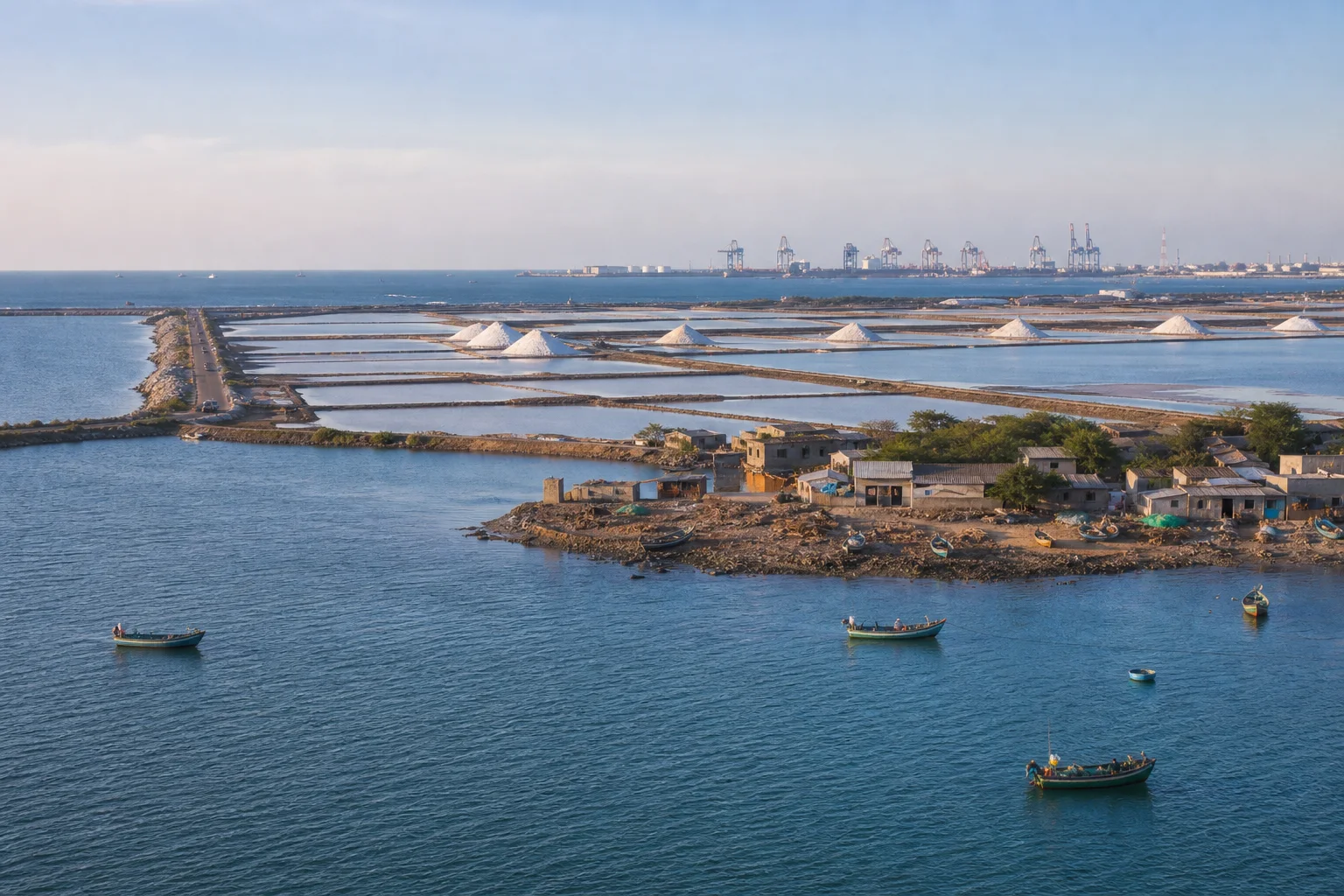
Working port city, salt landscape and freedom-movement centre
Thoothukudi Port City & Travel Guide
Thoothukudi, historically called Tuticorin in English, is a working Gulf of Mannar port city shaped by maritime exchange, salt production, fishing communities, Christian heritage, V.O. Chidambaranar's swadeshi shipping history and modern industry. Its value lies in these connections, not in treating restricted infrastructure as sightseeing space.
On this page
Start here
Why Thoothukudi
District history describes Thoothukudi as a maritime centre shaped by pearl-fishery memory, Portuguese, Dutch and British phases, swadeshi shipping and the development of port infrastructure. Each belongs to a different period and evidence base.[1]
The V.O. Chidambaranar Port Authority represents the contemporary working port. Its operational role matters to the city's identity, but port land and industrial infrastructure are controlled workplaces rather than casual visitor zones.[3]
Thoothukudi deserves a place guide because its value lies in relationships: sacred or civic institutions, streets, work, water, memory and regional movement. This page explains that whole setting and hands detailed temple, history, heritage and nature questions to their canonical guides.
A useful visit is therefore thematic rather than list-driven. Choose one principal story, add a second nearby context, and keep enough time for ordinary town life. Current conditions, institutional access and festival operations always require separate verification.
Historical context
A short history of Thoothukudi
The wider coast participated in older Pandya and Indian Ocean exchange, with Korkai forming an important historical and archaeological context. The modern city should not be described as unchanged since that early port.[1]
Portuguese arrival, Dutch control and British expansion contributed to the city's early modern and colonial maritime history. Local communities, fishers, divers, merchants and labourers must remain visible beside European institutions.[1]
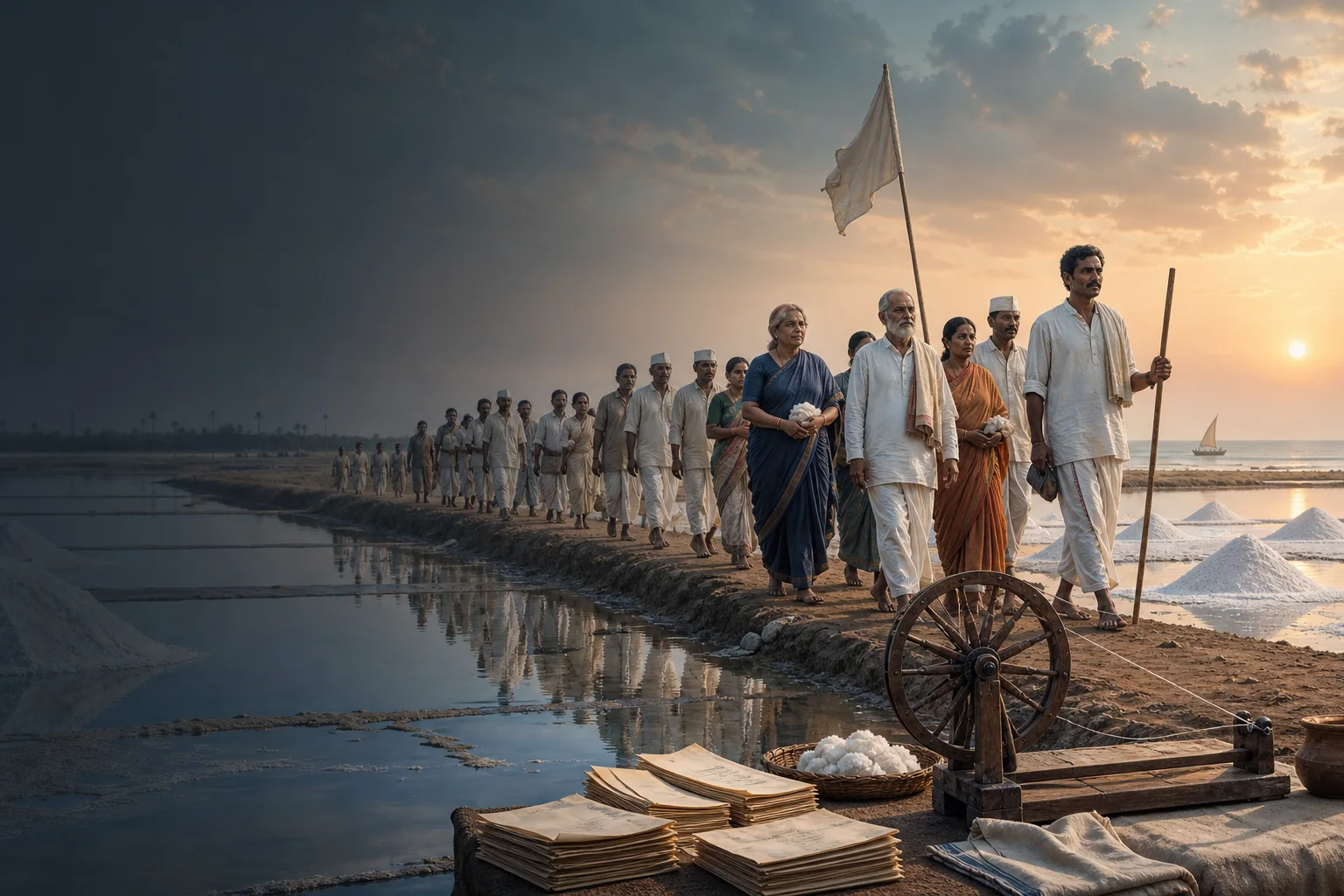
V.O. Chidambaranar's Swadeshi Steam Navigation Company made the city important to anti-colonial economic action. The biography and freedom-movement guides provide the fuller political and legal context.
The port, rail and industrial systems expanded through modern engineering and administration. Current cargo, production, employment and access figures are deliberately omitted because they change.[3]
Plan your visit
Places to explore in Thoothukudi
Access, opening details and current conditions should be verified with the responsible official source before travel.
Public port-city context
Use public viewpoints and civic interpretation to understand the working harbour.
Never enter restricted port or industrial areas.Our Lady of Snows Basilica context
A major coastal religious institution within the city's history.
Verify current church access and observance.V.O.C. memorial context
Connect the city to swadeshi shipping, labour and colonial law.
Use the dedicated biography for depth.Salt landscape context
Salt pans help explain the dry coast and labour history.
Enter only with explicit authorization.Fishing coast
Landing, repair and market areas reveal maritime livelihoods.
Do not obstruct work or photograph people without consent.City markets
Markets connect coastal, inland and industrial communities.
Food origin should be checked seller by seller.District museum or interpreted collection
Use verified museums and memorials to connect city history with the wider district.
Confirm current access before travel.Choose your pace
Things to do in Thoothukudi
Trace four maritime layers
Separate early port history, colonial commerce, swadeshi resistance and today's major port instead of merging them.
Read a working coast
Observe fishing, salt and port landscapes only from legal public places and with respect for labour.
Connect city and biography
Use the V.O. Chidambaranar guide to place swadeshi shipping within a broader political career.
Read one place carefully
Spend time with one temple, fort, museum, waterfront or neighbourhood and distinguish what is documented, what belongs to living tradition and what remains uncertain.
Use the planning handoffs
Continue with Maps, Trip Planner, Getting Around, accommodation guidance and Tamil Nadu Today instead of relying on static prices, schedules or conditions.
Living places
Temples, heritage and interpretation
The district identifies Our Lady of Snows church as a major living Christian site within the port city. Festival dates and access arrangements must be verified for the current year.[2]
Port and salt infrastructure are modern industrial heritage only where lawful interpretation exists; working facilities are not open-air museums.
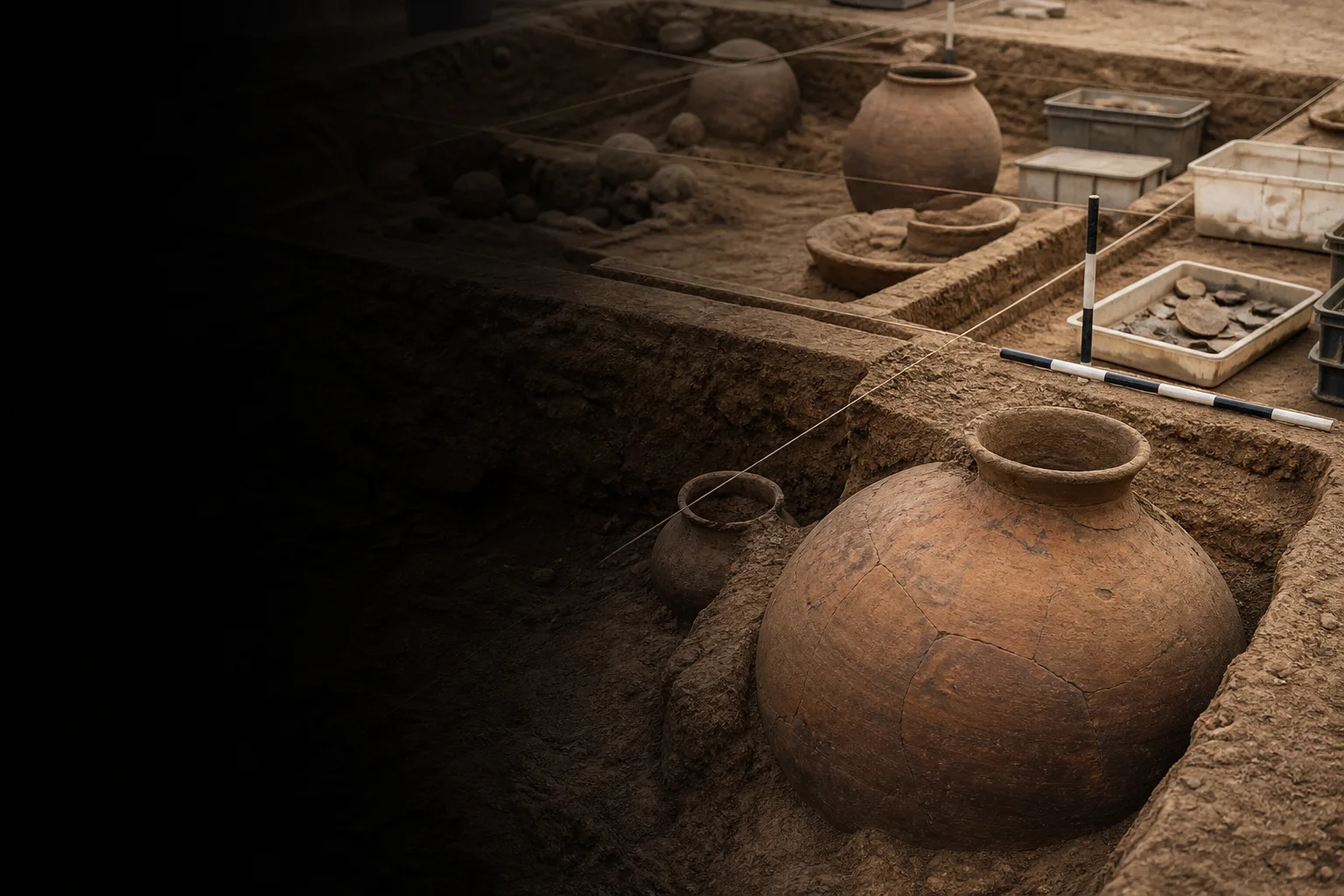
Korkai, Adichanallur, Tiruchendur and Ettayapuram belong to the wider district, not the city centre. Their canonical guides should carry their distinct archaeological, sacred and literary histories.
Everyday context
Culture and food
Culture
Fishing, salt-working, Christian, Hindu, Muslim, industrial and migrant communities contribute to the city's culture. No one festival or occupation represents all residents.
V.O.C. memory is part of civic identity, while church observance and fishing work follow their own institutions and rhythms.
Explore Tamil Nadu culture →Food
The city's food context includes fish and seasonal seafood, Tamil meals, tiffin and dishes shaped by coastal and inland movement. Availability, species and origin should be checked directly.
Responsible seafood choices follow current conservation and fisheries guidance. A harbour view does not certify a restaurant or supply chain.
Explore Tamil Nadu food →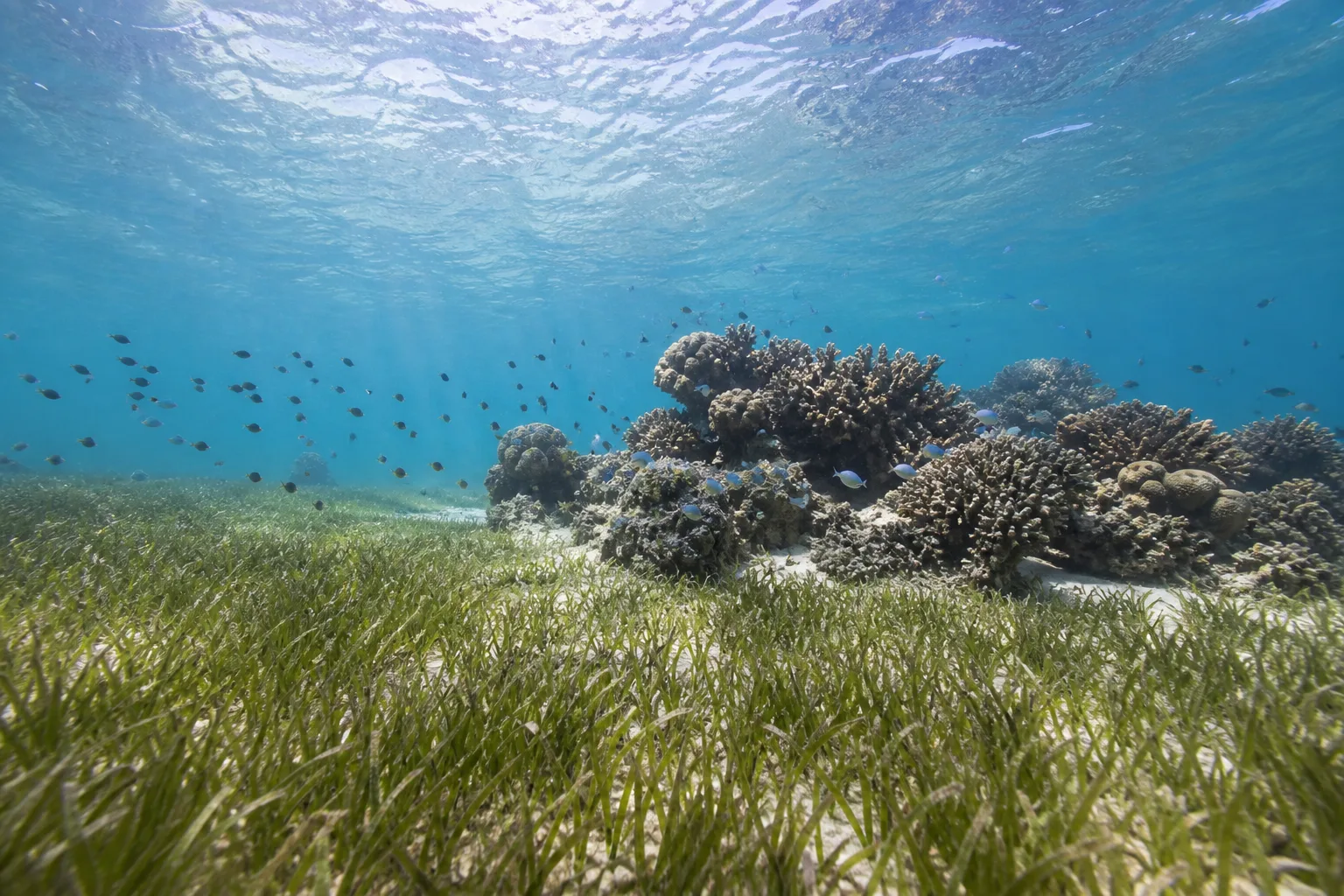
Travel with context
Nature, season and month-by-month planning
Landscape and ecology
The Gulf of Mannar is an ecologically sensitive marine region. A city visit does not grant access to protected islands, reefs or other controlled habitats.
Sea state, cyclone warnings, heat and air quality can affect plans independently. Swimming suitability is never inferred from appearance.
Seasonal planning
There is no universal best month for Thoothukudi. Heat, rain, wind, sea conditions, festival crowds and the chosen activity all matter. Check the India Meteorological Department forecast close to departure.[4]
The exposed coast can be hot, windy and affected by northeast-monsoon or cyclone conditions. Salt, fishing and port operations follow their own safety regimes.
Religious calendars, civic events and holiday periods can change transport demand and access. Verify the named institution and current organizer rather than inferring dates from an earlier year.
January
Often suitable for longer outdoor blocks, with current festival and weather checks.
Open month guide →AprApril
Shift exposed walking toward cooler hours and retain shaded or indoor stops.
Open month guide →JulJuly
Rain and wind influence vary by region; verify local conditions and road information.
Open month guide →OctOctober
Northeast-monsoon planning becomes important for the eastern side of Tamil Nadu.
Open month guide →Practical access
How to reach and get around Thoothukudi
Rail
Thoothukudi has rail services; verify current routes and the correct station.
Road
Roads connect Tirunelveli, Madurai, Ramanathapuram and district coastal towns.
Air
Use the current airport and airline information for flights and ground connections.
Local
Autos, buses and hired vehicles suit public city areas; restricted industrial access is excluded.
Getting around
Group the public city centre, church and memorial context together. Treat port, salt and fishing landscapes only through confirmed legal access.
District sites such as Adichanallur, Korkai, Tiruchendur and Ettayapuram require separate days or realistic onward routes.
Plan by days
Suggested Thoothukudi itineraries
These are editorial sequences, not promises of travel time. Confirm access and adapt the pace to current conditions.
A focused introduction to Thoothukudi.
- MorningPublic port-city context and Our Lady of Snows Basilica context
- AfternoonContinue with one nearby cultural, museum or neighbourhood context after verifying access.
- EveningUse active public streets, the verified waterfront context or a current religious programme. Avoid isolated industrial and working-shore edges.
Adds a second geographic cluster without turning the visit into a checklist.
- Day 1Public port-city context and Our Lady of Snows Basilica context, with time for the surrounding streets.
- Day 2V.O.C. memorial context and Salt landscape context, followed by a locally appropriate meal or institution.
Uses the third day for one selected regional connection.
- Day 1Public port-city context and Our Lady of Snows Basilica context
- Day 2V.O.C. memorial context and Salt landscape context
- Day 3Fishing coast and City markets. Confirm current access before leaving the centre.
Continue nearby
Places around Thoothukudi
Open map tools
Map of Thoothukudi
Interactive map data is not loaded on this static page. Open Google Maps for current place details and directions.
Before you go
Practical travel guidance
Keep each half-day compact
Group places by neighbourhood or route. A regional centre is easier to understand when time is spent in its streets and institutions rather than in repeated cross-town transfers.
Verify each institution
Sacred places, museums, protected monuments, ports and universities have separate custodians. Check the responsible source rather than assuming one citywide rule.
Plan for coastal or interior weather
Use the current forecast and carry suitable water, sun and rain protection. Keep a sheltered alternative for each outdoor block.
Respect working places
Harbours, salt pans, hospitals, markets, fishing areas and residential streets are working environments, not unrestricted attractions.
Use current transport information
Routes, fares, schedules and travel times are deliberately not frozen into this guide. Confirm them with the operator close to travel.
Leave room for worship and security
Queues, ceremonies, security checks and conservation work can change the sequence of a visit. Follow staff instructions and keep a flexible plan.
Saved only in this browser. No account or personal data is required.
Responsible travel
Treat Thoothukudi as a lived place. Ask before photographing people, worship, work, private homes or institutional interiors; keep entrances clear; and follow each custodian's rules.
Use accountable local services, carry reusable essentials and leave no waste. Do not enter ports, salt pans, protected habitats, railway land, hospital campuses or private property without explicit authorization.
Questions
Frequently asked questions about Thoothukudi
Are Thoothukudi and Tuticorin the same place?
Yes. Thoothukudi is the official modern name; Tuticorin remains a historical English and legacy institutional form.
Can visitors enter the port or salt pans?
Not without explicit authorization. They are controlled working environments.
Is Adichanallur in Thoothukudi city?
No. It is in the wider district and requires a separate route and archaeological guide.
How many days are useful?
One day can establish Thoothukudi; two days allow a more balanced visit; a third day is useful only for a carefully chosen nearby circuit.
Are timings, fares and prices current?
No. Volatile details are intentionally omitted. Use the responsible authority or operator close to travel.
Can this guide open Maps?
Yes. It uses an exact place-name search rather than guessed coordinates. Always verify the selected result before travelling.
Does the checklist require an account?
No. It is stored only in the current browser and can be reset or printed.
Editorial trust
Sources and further reading
Major factual claims were checked against the references below. Last reviewed 21 August 2026.
- History of ThoothukudiThoothukudi District AdministrationReviewed 21 August 2026
- Places of interest in Thoothukudi districtThoothukudi District AdministrationReviewed 21 August 2026
- Port of ThoothukudiV.O. Chidambaranar Port AuthorityReviewed 21 August 2026
- Regional Meteorological Centre ChennaiIndia Meteorological DepartmentReviewed 21 August 2026
- Official railway booking portalIndian Railway Catering and Tourism CorporationReviewed 21 August 2026
- Official Tamil Nadu Tourism portalTamil Nadu Tourism DepartmentReviewed 21 August 2026