
Season, region and trip type
Best Time to Visit Tamil Nadu
There is no single best month for every Tamil Nadu journey. Compare the coast, plains, hills and your planned activities, then use current official forecasts before committing.
Orientation
Start with the decision, not a slogan
The useful question is not simply when Tamil Nadu is best. It is when a specific journey is most workable for the people taking it. Chennai's coast, the dry interior, the Kaveri delta, the far south and the Western Ghats do not share one weather pattern. A comfortable museum-and-food visit can also have different needs from a waterfall, pilgrimage, beach, wildlife or hill journey.
Seasonal summaries describe recurring patterns, not promises. Tamil Nadu receives major rainfall from the northeast-monsoon season, while western uplands can respond differently to the southwest monsoon. Heat, humidity, wind, visibility and rain can vary sharply within the state and within a month. Current forecasts and warnings therefore outrank any evergreen best-time label.[2][3]
Start by choosing destinations, travel pace and the amount of outdoor exposure. Then compare the twelve month guides, retain flexible alternatives and recheck conditions before each transfer. A trip planned this way can adapt without pretending that a past climate average predicts a particular day.
This is an evergreen planning guide, not a live operating feed. Forecasts, warnings, transport schedules, ticket availability, opening arrangements, access controls and prices can change after editorial review. Follow the linked official service close to departure and treat a clear unavailable state as more trustworthy than a guessed answer.[2][3]
SEASONAL FRAME
Read Tamil Nadu as several travel climates
Lowland cities and inland plains can feel demanding during hotter periods, especially when a day is built around exposed walking. Shade, rest and shorter outdoor blocks matter more than squeezing an itinerary into a supposedly ideal season. Museums, archives, food exploration and neighbourhood visits can provide useful lower-exposure alternatives.
The east coast and delta require particular attention during the northeast-monsoon period. Rainfall is not evenly distributed and a seasonal label cannot predict an individual week. Coastal systems may affect roads, rail, flights, sea conditions and local access beyond the place where rain is falling, so follow official warnings rather than social-media images.[2][3]
Western hill and forest landscapes need their own review. Rain, mist, visibility, slope conditions and road work can alter a hill journey even when the plains appear settled. Protected-area access is an administrative decision as well as a weather question; verify it with the Forest Department or responsible local authority.[4]
Review northeast-monsoon and sea-condition information.
Plan heat-aware timing and lower-exposure alternatives.
Check rain, visibility, roads and protected-area access separately.
JANUARY TO FEBRUARY
A popular period that still needs local checks
January and February are often selected for city, heritage and outdoor travel because many visitors find conditions more manageable than hotter lowland periods. That broad tendency does not guarantee cool days, dry weather or light crowds. Exposed monuments, long queues and midday walking can still be tiring.
January also carries harvest-season cultural context, including Pongal, while performance and temple calendars may influence accommodation and local movement. Exact dates, venue programmes, procession routes and public arrangements belong to the current-year organizer, not an evergreen guide.
This period can work well for a first visit that combines Chennai, a Kaveri-delta heritage base or Madurai, provided transfers remain realistic. Hill nights may feel very different from coastal afternoons, so one packing list should not assume a uniform state climate.
MARCH TO MAY
Build the day around heat rather than fighting it
March through May commonly requires more deliberate heat planning in many lowland and interior destinations. The practical response is not a statewide prohibition. Choose fewer exposed sites, start earlier where current opening arrangements allow, protect the middle of the day and avoid assuming that a vehicle removes every heat risk.
Hill stations may seem like an automatic alternative, but popularity, traffic, water constraints, local rain and accommodation demand still matter. A hill destination is a real settlement and landscape, not a climate-control service. Confirm road and local conditions, and avoid building a schedule that depends on perfect traffic.
Temple visits, archaeology and city walking need respectful clothing plus breathable layers, water planning and rest. Current access rules must be checked with the responsible institution. This guide does not make medical claims; travelers with individual health concerns should seek appropriate professional advice.
JUNE TO SEPTEMBER
The southwest monsoon is not one statewide experience
From June to September, southwest-monsoon influence is especially important in western and hill landscapes, while other parts of Tamil Nadu can experience different rainfall and heat patterns. A green photograph does not establish current waterfall flow, safe access or road condition.
Nature itineraries should use a short decision chain: check the exact district forecast, check official warnings, verify site access, and keep a lower-risk alternative. Waterfalls and forest edges deserve particular caution because upstream rain, slippery surfaces and local closures may not be obvious from the city where the day begins.[2][3][4]
This period can still support city, food, museum and heritage travel when the plan allows rain margins. Rail or road transfers need extra flexibility, and luggage should be protected for the actual route rather than a generic monsoon assumption.
OCTOBER TO DECEMBER
Give the northeast monsoon real planning weight
October to December is the principal northeast-monsoon season for the Tamil Nadu meteorological subdivision. That makes rainfall and coastal-weather review central to planning, especially for east-coast and delta routes. It does not mean every day or district is wet, and it does not justify predicting a future trip from one earlier year.[2]
Keep cancellation terms, indoor alternatives and transfer margins visible before booking. During a current warning, follow official instructions and avoid making a sightseeing plan compete with public-safety guidance. A route can be shortened without becoming a failed trip.
December is also popular for cultural and holiday travel in several destinations. Popularity can affect availability and crowding, but this page does not publish live demand or prices. Confirm programmes, accommodation and transport directly.
MATCH THE JOURNEY
Choose timing by what you will actually do
A heritage trip benefits from comfortable walking conditions and enough daylight, but museums and archives may provide alternatives. A temple journey must account for worship, queues, festival arrangements and current institutional rules. A food-focused city trip can be flexible, while a hill, coast or wildlife trip depends more strongly on weather and access.
Wildlife should never be planned around guaranteed sightings. Habitat, observation ethics and official access matter in every season. Beach and marine plans require current sea and weather information; a general dry-season description is not permission to swim, boat or approach exposed shores.[4][3]
Families and senior travelers often benefit from fewer base changes and one priority per half-day. Accessibility must be verified for each property, station, monument or temple. Seasonal comfort is personal, so the best time is the period in which the group's real needs can be met with flexible current information.
DECISION METHOD
A six-step way to choose dates
First, select one or two connected regions. Second, identify the activities that would be difficult to replace. Third, note heat, rain, coast, hill and crowd sensitivities for the group. Fourth, compare the relevant month guides. Fifth, book with suitable change terms. Sixth, check current official information before departure and again before weather-sensitive days.
Separate what can be known early from what must remain open. Cultural context, geography and route logic are evergreen. Forecasts, warnings, timetables, site access and event programmes are current information. Mixing those categories is how a confident itinerary becomes brittle.
Use the Today page for transparent current-provider status, not as the only source for a high-consequence decision. Follow through to the named official provider whenever conditions could affect travel, and retain a practical alternative rather than waiting for certainty that no forecast can provide.[2][3]
Saved in this browser
Choose Your Travel Window
Use this as a planning prompt, then confirm current facts with the responsible operator or authority. Nothing is sent to a server.
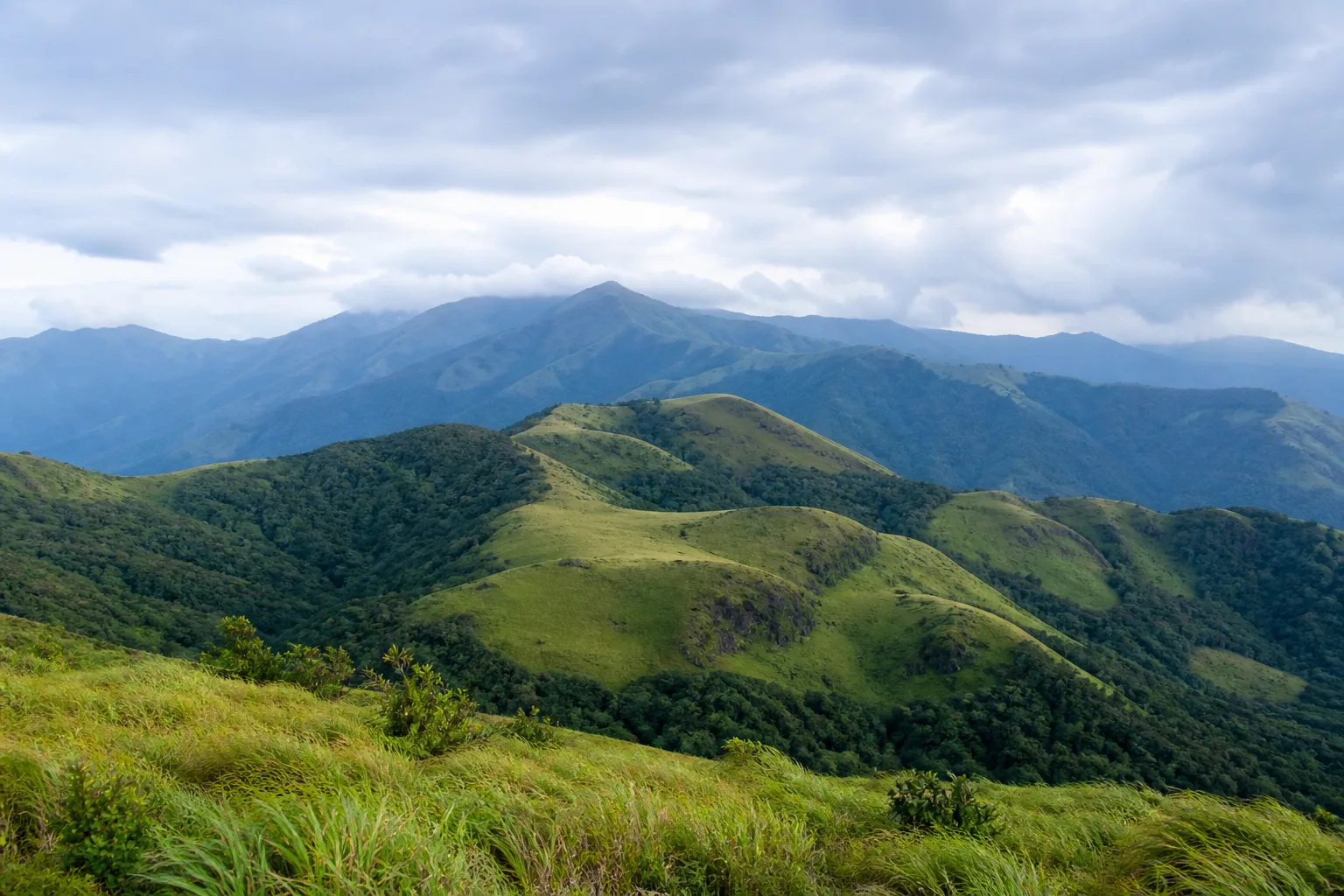
Visual orientation
Project-created travel perspectives
These editorial images are not evidence of current weather, access, schedules, prices, businesses or crowds.


Planning questions
Frequently asked questions
What is the best month to visit Tamil Nadu?
There is no single best month. Choose a region and activity, then compare month context with current forecasts.
Is December always dry?
No. Seasonal tendencies are not guarantees, and parts of Tamil Nadu can still receive rain. Check IMD.
Is summer unsuitable for every trip?
No. Heat-aware pacing, destination choice and indoor alternatives matter, but personal needs and current conditions decide suitability.
When should I visit hill stations?
Compare the specific hill landscape, road conditions, rain, visibility and crowd context rather than using one statewide rule.
Can the month guides predict waterfall flow?
No. Flow and access depend on recent rain, upstream conditions and local controls.
Are festival dates fixed in this guide?
No. Confirm exact current-year dates and arrangements with the responsible organizer.
Should I cancel whenever rain is forecast?
A forecast needs location, timing and official interpretation. Adjust using current warnings and operator advice rather than a universal rule.
Where can I see current conditions?
Use the Today page for provider status and follow its links to IMD and relevant authorities.
Editorial trust
Sources and current-information handoffs
Major factual claims are cited inline. Operating details, warnings and availability must still be rechecked at the official source.
- 1Tamil Nadu destination overviewMinistry of Tourism, Government of IndiaOfficial tourism overview · Reviewed 14 August 2026
- 2Regional Meteorological Centre ChennaiIndia Meteorological DepartmentOfficial forecast and regional weather service · Reviewed 14 August 2026
- 3Tamil Nadu and Puducherry weather warningsIndia Meteorological DepartmentOfficial current warning service · Reviewed 14 August 2026
- 4Forests and wildlife administrationTamil Nadu Forest DepartmentOfficial protected-area authority · Reviewed 14 August 2026