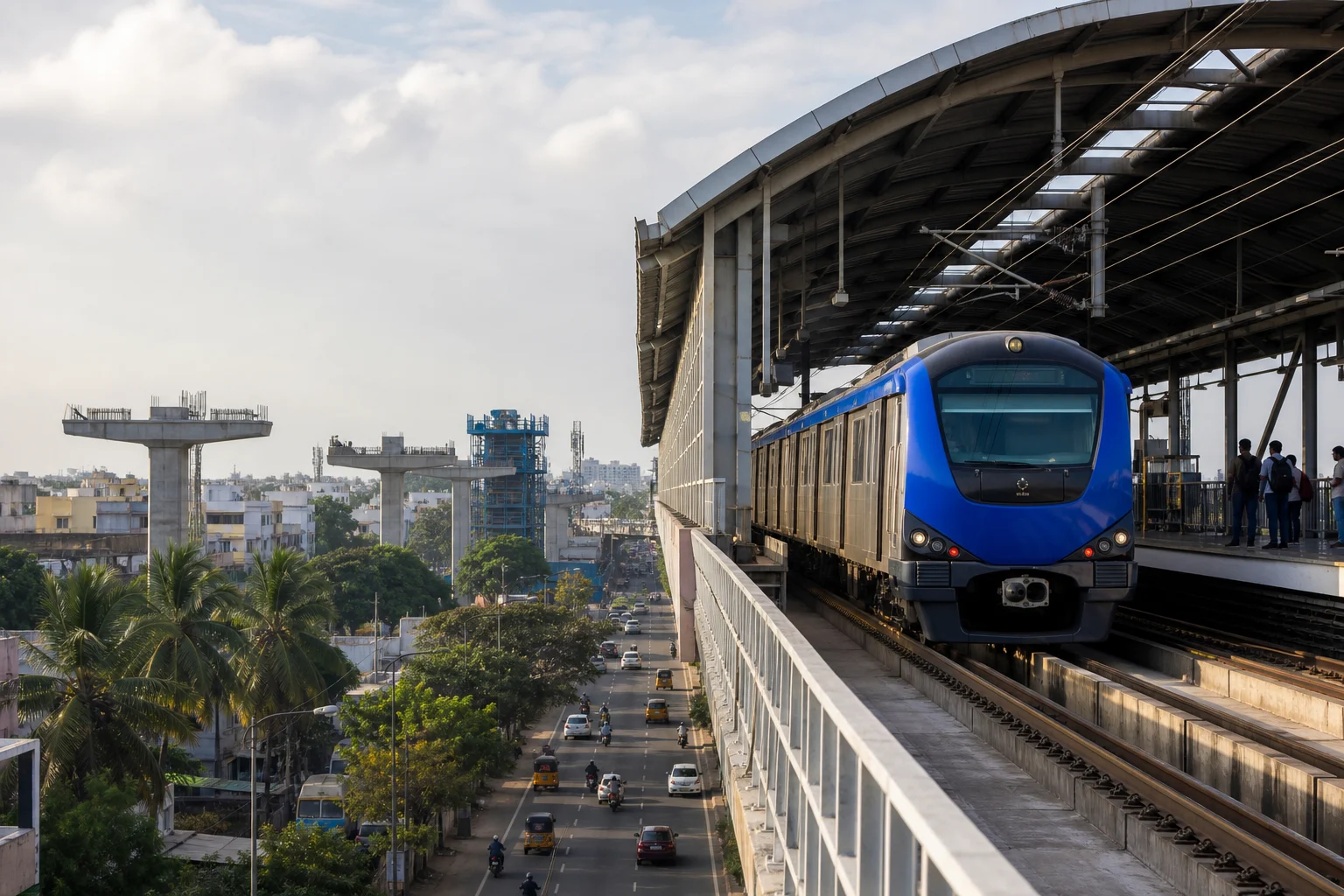
Begin with a network people already use
CMRL reported that 1.04 crore passenger journeys were recorded in August 2026. That monthly figure is a timely signal of scale, but it is not a promise about crowding, frequency or waiting time on a particular platform. It shows why Metro travel has become part of ordinary Chennai movement rather than a specialist option reserved for airport transfers or first-time sightseeing.
For a visitor, the practical advantage is predictability of route structure. A rail line can remove several road decisions from a city day, especially when a destination lies close to a station or when a Metro journey connects with an airport, long-distance railway terminal, suburban train or bus corridor. The final walk or feeder leg still matters, and heat, rain, luggage and accessibility can change whether a short map distance feels workable.
Use the Metro as one layer in Chennai's mobility system. Do not treat a ridership headline as evidence that every attraction is Metro-adjacent, that every station entrance is equally convenient, or that the service conditions reported this month will remain unchanged.
Sources for this section: August 2026 ridership, Station information.
Separate the operating network from Phase II
CMRL's current passenger information identifies the Blue and Green lines and their operating stations. Phase II is a separate expansion under construction through Corridors 3, 4 and 5. An official combined map can show both systems at once, which is useful for understanding the future shape of the city but risky if every coloured line is read as open today.
Recent construction releases illustrate the difference. CMRL reported completion of piling and U-girder casting for an OMR package in Corridor 3, and a tunnel-boring-machine breakthrough at Moolakadai within another Corridor 3 contract. These are meaningful engineering milestones inside a long sequence that also includes station works, track, systems, testing, safety authorization and operational readiness.
A completed pile, girder or tunnel drive does not by itself open a passenger route. Before travel, consult CMRL's current line map or station information rather than a project visualization, real-estate graphic or social post. Treat future station names and opening expectations as planning context until the operator confirms public service.
Sources for this section: CMRL line map, OMR construction milestone, Moolakadai TBM breakthrough.
Plan by station entrance, not only by line colour
A line map answers which stations connect. It does not always answer which entrance places you on the useful side of a wide road, how far a lift is from your approach, or whether the destination name used locally matches the label in a travel app. CMRL's station pages list entrances, nearby landmarks, platforms, lifts, escalators and selected facilities, making them a better final check than a schematic map alone.
Start with the destination and work backward. Identify the nearest useful station, read its entrance information, then examine the walk between that entrance and the place you actually want to reach. Repeat the process for the return journey because a median, one-way road or closed entrance can change the route. Never cross a divided road informally because a map pin appears close.
If the last leg is uncomfortable in heat, rain or with luggage, choose a lawful feeder option or a different station. A slightly longer rail journey can produce a simpler street-level arrival.
Sources for this section: Station information.
Use interchanges and terminals as deliberate handoffs
The official multimodal page links Metro stations with Chennai Airport, major railway terminals, suburban rail, bus points and other transport. Chennai Central and Alandur are also important Metro interchange points within the operating network. These connections can simplify a regional journey, but the word connected does not mean that every transfer is indoors, step-free, short or protected from weather.
At an airport or railway transfer, allow time to find the correct exit, move through security or ticketing, and reach the next platform with luggage. At Central and Egmore, distinguish the Metro station from the several railway facilities and street approaches around it. At Guindy and St Thomas Mount, confirm which system and platform your onward journey uses.
Build one transfer at a time. Save the operator page, the terminal information and the destination address offline. A multimodal trip becomes resilient when each handoff can still be understood after a weak data connection or a changed pickup point.
Sources for this section: Multimodal integration, CMRL line map.
Keep ticketing and service details in the live-information layer
CMRL groups current fare, timetable, travel-card, QR-ticket and passenger notices in its official passenger-information channels. Those details can change more quickly than an editorial guide. This article therefore does not preserve a fare, first or last train, frequency, parking charge, ticket discount or app workflow as though it were permanent.
Before departure, check the official service notice and the payment method you intend to use. Confirm whether a temporary event service, maintenance change or entrance closure affects the journey. Screenshots from an earlier month and advice from an old video are not substitutes for a current operator notice.
Keep a fallback for payment and for the final leg. A functioning digital ticket does not guarantee that the phone battery, mobile data or chosen entrance will cooperate throughout the day. The aim is not to collect every ticket option but to arrive with one verified method and one simple alternative.
Sources for this section: Passenger information, CMRL press releases.
Check the whole accessible journey chain
CMRL lists step-free and inclusive provisions including kerb ramps, tactile paths, lower ticket counters, wide gates, lifts, platform seating, audio information, wheelchair spaces and accessible toilets. This establishes the system's intended accessibility framework. It does not prove that a particular lift, entrance, pavement or connecting vehicle is available at the moment a passenger arrives.
An accessible trip is a chain: street approach, entrance, ticketing, gate, lift, platform, train, exit and onward path. Verify the station-specific entrance and lift arrangement, then consider the footpath and road crossing beyond the station boundary. Contact CMRL when a working facility is essential and current confirmation is needed.
Allow extra transfer time without assuming that a disabled traveller must always travel with assistance. Ask what support is wanted, keep mobility aids within the user's control and avoid blocking tactile paths or lift doors.
Sources for this section: Accessibility facilities, Station information.
Read Phase II construction at street level with patience
Phase II is being built through live neighbourhoods and traffic corridors. Elevated work can occupy medians and junctions; underground work can reshape access around station boxes and shafts. CMRL's OMR release describes piling beside active traffic and integration with flyovers at major junctions, while the Moolakadai release describes tunnelling beneath a canal and road with monitoring.
For travellers, the lesson is modest: a route that worked on an earlier visit may now include barricades, narrower pavements, changed bus stops or a longer crossing. Do not enter a work zone, move barriers, stand beneath lifting activity or use construction edges as photo locations. Follow traffic police, site signs and local directions even when a navigation app suggests otherwise.
Construction photographs are snapshots, not completion evidence. A responsible article can explain the engineering sequence and city impact while leaving diversions, dates and opening claims to current official notices.
Sources for this section: OMR construction milestone, Moolakadai TBM breakthrough.
Sources & Further Reading
These authoritative references support the historical, geographic, or seasonal context in this story. Current conditions and operating details still require a fresh official check.
- 1.04 Crore Passengers Recorded in August 2026 · Chennai Metro Rail Limited
- Chennai Metro Line Map · Chennai Metro Rail Limited
- Chennai Metro Station Information · Chennai Metro Rail Limited
- Multimodal Integration · Chennai Metro Rail Limited
- Facilities for Differently Abled People · Chennai Metro Rail Limited
- Passenger Information · Chennai Metro Rail Limited
- Press Releases · Chennai Metro Rail Limited
- Phase II OMR Corridor 3 Piling and U-Girder Milestone · Chennai Metro Rail Limited
- TBM Nilagiri Breakthrough at Moolakadai · Chennai Metro Rail Limited
- CMRL Advisory on Metro Etiquette · Chennai Metro Rail Limited
Related Stories
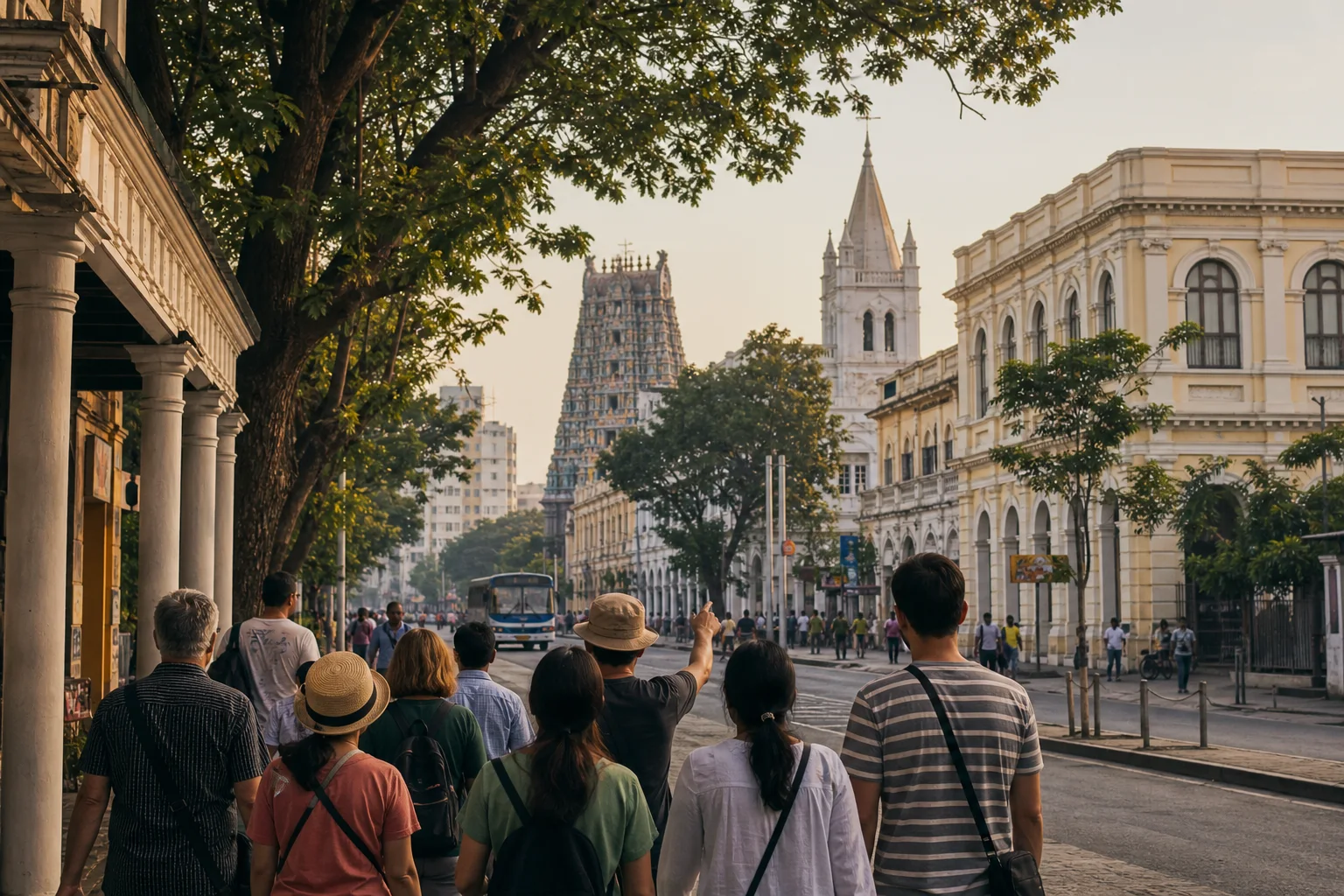
Madras Day Beyond One Date: How to Walk Chennai's Layers
A practical way to turn Madras Day curiosity into year-round neighbourhood reading without reducing Chennai's history to one fort or founding story.

Choosing Your First Tamil Nadu Trip: Heritage, Temples, Hills or Coast?
A decision framework for choosing the kind of Tamil Nadu journey you want before choosing a long list of destinations.
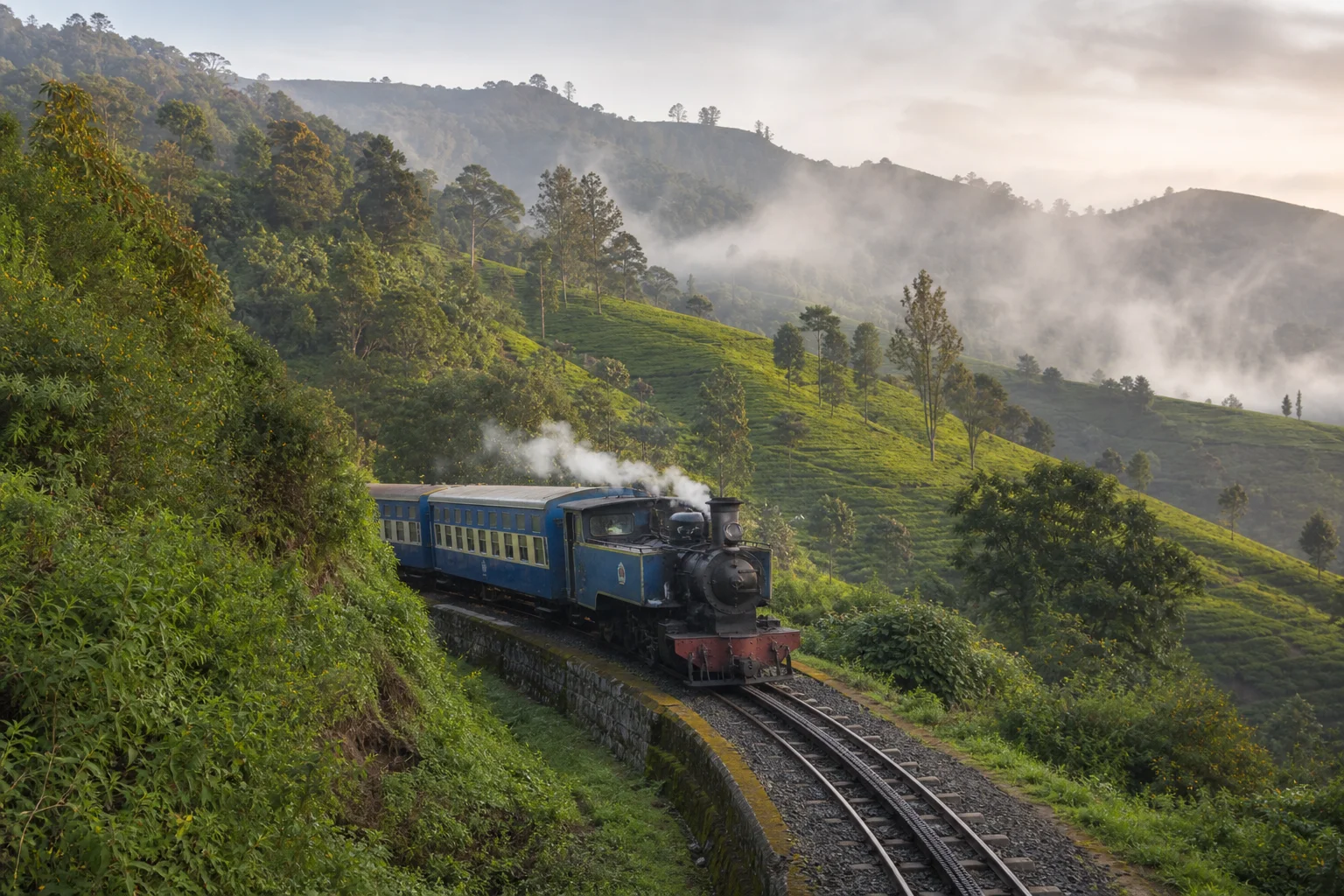
Nilgiri Mountain Railway: Read the Line, Not Just the View
A practical heritage journey from the plains toward Udagamandalam that treats the railway as working engineering, a regional connection and a changing service.
Frequently asked questions
Are all lines shown on Chennai Metro project maps open?
No. Combined maps may show the operating Blue and Green lines alongside Phase II corridors under construction. Confirm the current passenger network with CMRL before travel.
Does a completed tunnel or viaduct mean the route is ready for passengers?
No. Civil milestones are followed by other works, systems, testing, safety authorization and operational preparation.
Is this article a live timetable or fare guide?
No. Timetables, fares, ticket products, entrance access and service notices should be checked through current official CMRL information.
Is Chennai Metro accessible?
CMRL lists universal-access facilities across the system, but passengers who depend on a specific lift, entrance or connection should verify its current availability and the street-level route.
Editorial attribution
Prepared and reviewed by My Tamil Nadu Editorial Desk. Modified 5 September 2026.