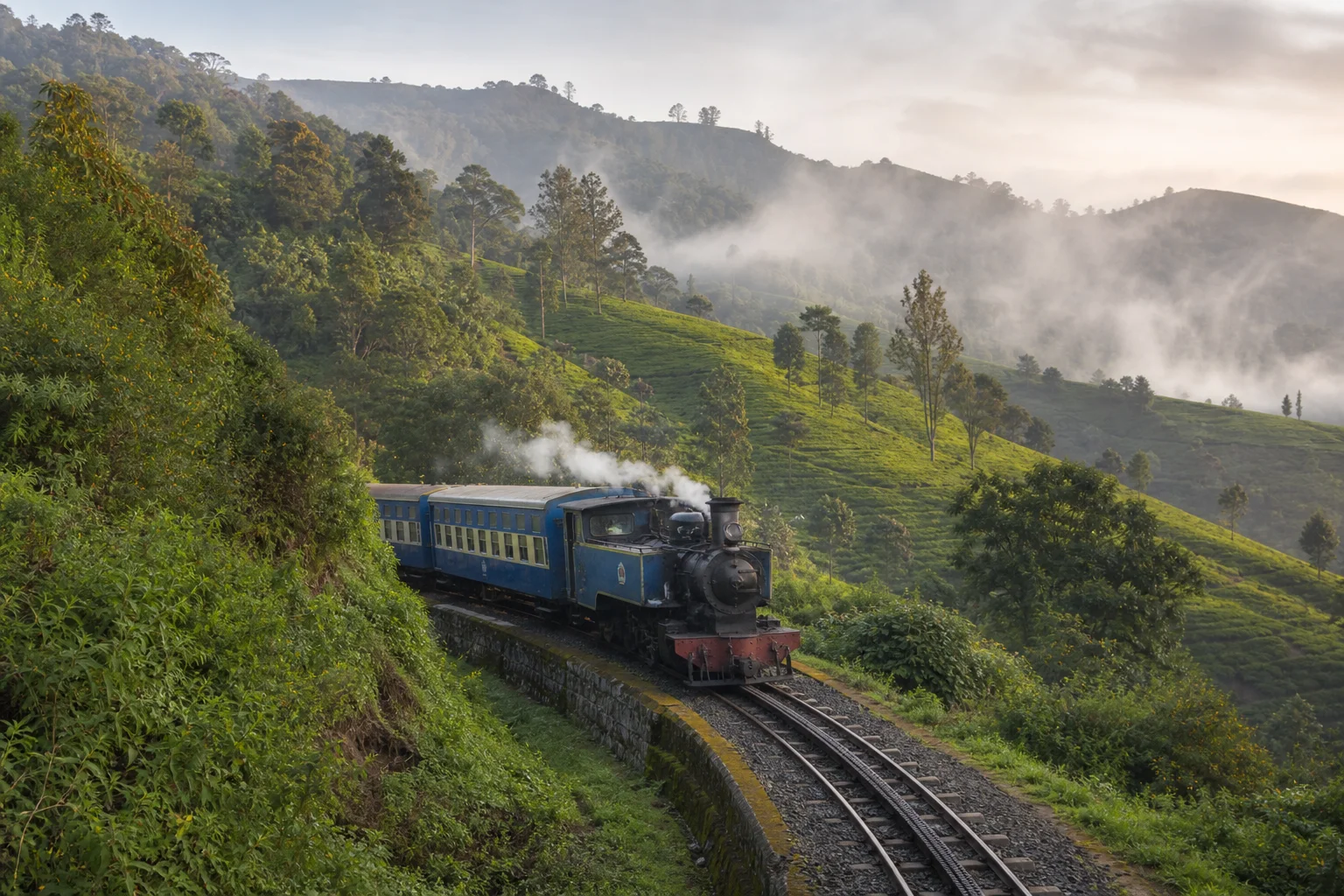
Why toy train is an incomplete name
Toy train is an affectionate travel label, not an engineering category. UNESCO describes the Nilgiri Mountain Railway as a metre-gauge, single-track mountain line extending about 46 kilometres and climbing from roughly 326 metres to 2,203 metres. Construction began in the late nineteenth century and the line was completed to Udagamandalam in the early twentieth century.
The railway became part of UNESCO's serial Mountain Railways of India World Heritage property in 2005. The property also includes the Darjeeling Himalayan Railway and Kalka Shimla Railway. It is therefore precise to call NMR a component of a serial World Heritage property, not a separate UNESCO site that covers the whole Nilgiris district.
Words shape behaviour. A toy exists for amusement; this railway carries passengers, uses protected infrastructure and operates under railway rules. Treat stations, tracks, workshops and rolling stock as working public transport and heritage, not a film set where a visitor may enter restricted space for a photograph.
Sources for this section: Mountain Railways of India, NMR route map.
Read the rack section as an answer to gradient
UNESCO identifies the rack-and-pinion traction arrangement as a distinctive engineering response to the steep climb. Southern Railway describes X-class locomotives maintained at Coonoor for the Mettupalayam-Coonoor section and notes the severe gradient they negotiate. The central toothed rack visible between running rails is functional infrastructure, not an ornamental third rail.
On an adhesion railway, locomotive wheels grip the rails. On the steep rack section, a cog engages the rack to help control traction. The mechanism, retaining walls, bridges, cuttings, water arrangements and operating routines should be read together. A dramatic valley view is only one expression of the work needed to keep a mountain line moving.
Do not lean from doors, stand between coaches or step onto the track to inspect the rack. Platform boundaries and staff directions apply even during a long halt. If an engineering feature cannot be seen safely from a public area, a photograph or official technical account is the responsible substitute.
Sources for this section: Mountain Railways of India, Southern Railway heritage locomotives.
The plains, rack climb and plateau are different journeys
Mettupalayam is the plains gateway. The climb toward Coonoor passes through the most technically demanding mountain section, while the onward railway across the upper Nilgiris connects places including Wellington, Aruvankadu, Ketti and Udagamandalam. A shorter upper-section ride and the full climb do not provide the same landscape or engineering experience.
Choose the segment by your base, available time and tolerance for a long rail day. A one-way railway journey with a separately planned road return can work, but only after confirming current trains and transport. Do not assume a taxi will wait at a small station or that every service stops where a travel video stopped.
The Nilgiris District Administration places Ooty, Coonoor and Kotagiri within one wider mountain district. The railway strongly serves two of those better-known bases but should not be made to represent every Nilgiri landscape. Shola-grassland, tea, towns, cantonment history and working settlements appear in different proportions along the corridor.
Sources for this section: Mountain Railways of India, The Nilgiris District.
Use official railway systems for the actual journey
Train number, timetable, fare, class, quota, availability and operating status are live railway information. IRCTC's official guidance explains that travellers can inspect a train's route and timings within the booking flow and must confirm the displayed train and station details before purchase. This article does not reproduce availability or promise a steam-hauled service.
Search using the correct station pair for the segment you actually want. Mettupalayam, Coonoor and Udagamandalam are not interchangeable labels for one boarding point. Check the date, origin, destination, class and passenger details before payment, then keep the official reservation record accessible rather than relying on a screenshot from an unofficial agent.
Demand can be high, yet an online claim about how many days ahead to book may become obsolete. Use current IRCTC and Indian Railways rules. If the desired service is unavailable, redesign the day around road transport or another date instead of buying through an unverified person who promises a special quota.
Sources for this section: Official e-ticket guidance, Nilgiris tourist information.
A mountain railway has operational limits
Rain, slope stability, fallen material, maintenance or other operating decisions can alter a mountain service. UNESCO's management account notes that Indian Railways considers climatic and geological effects and carries out protective action. That resilience does not mean every planned train will run regardless of conditions.
Check service status close to travel and keep a fallback that does not depend on racing the train by road. Mist may hide a view; heavy rain may change local movement; a clear morning may not remain clear. Seasonal pattern is useful for packing, but it is not a forecast or permission to ignore a railway announcement.
Carry a light layer, water and rain protection appropriate to the day, while keeping luggage manageable in a compact heritage coach. Anyone with mobility, motion-sensitivity or toilet-access concerns should verify the current train and station facilities directly before booking rather than inferring them from the age of the railway.
Sources for this section: Mountain Railways of India, The Nilgiris District.
Travel as a passenger, observer and temporary neighbour
Keep doors, windows and aisles usable, and follow staff instructions about seating and photography. Never throw waste from a coach or encourage wildlife with food. The line passes through inhabited and ecologically sensitive mountain space; a window does not turn every house, worker or schoolchild into an image available without thought.
At stations, notice how rail movement meets roads, markets and local routines. Buy food only where time and rules allow, return before the stated departure and do not pressure staff to delay a service. Heritage survives through ordinary operating discipline as much as through restoration and celebration.
After the ride, connect what you saw to the correct map: plains gateway, rack climb, Coonoor and upper plateau. This turns a famous attraction into an intelligible route. The most responsible souvenir is not a trackside stunt photograph, but a clearer understanding of why the line exists and how it continues to work.
Sources for this section: NMR route map, Nilgiris tourist information.
Sources & Further Reading
These authoritative references support the historical, geographic, or seasonal context in this story. Current conditions and operating details still require a fresh official check.
- Mountain Railways of India · UNESCO World Heritage Centre
- Map Showing the Route of Nilgiri Mountain Railway · UNESCO World Heritage Centre
- Southern Railway Mechanical Assets · Southern Railway, Indian Railways
- Book E-Ticket · Indian Railway Catering and Tourism Corporation
- The Nilgiris District · The Nilgiris District Administration
- Tourist Information · The Nilgiris District Administration
Related Stories
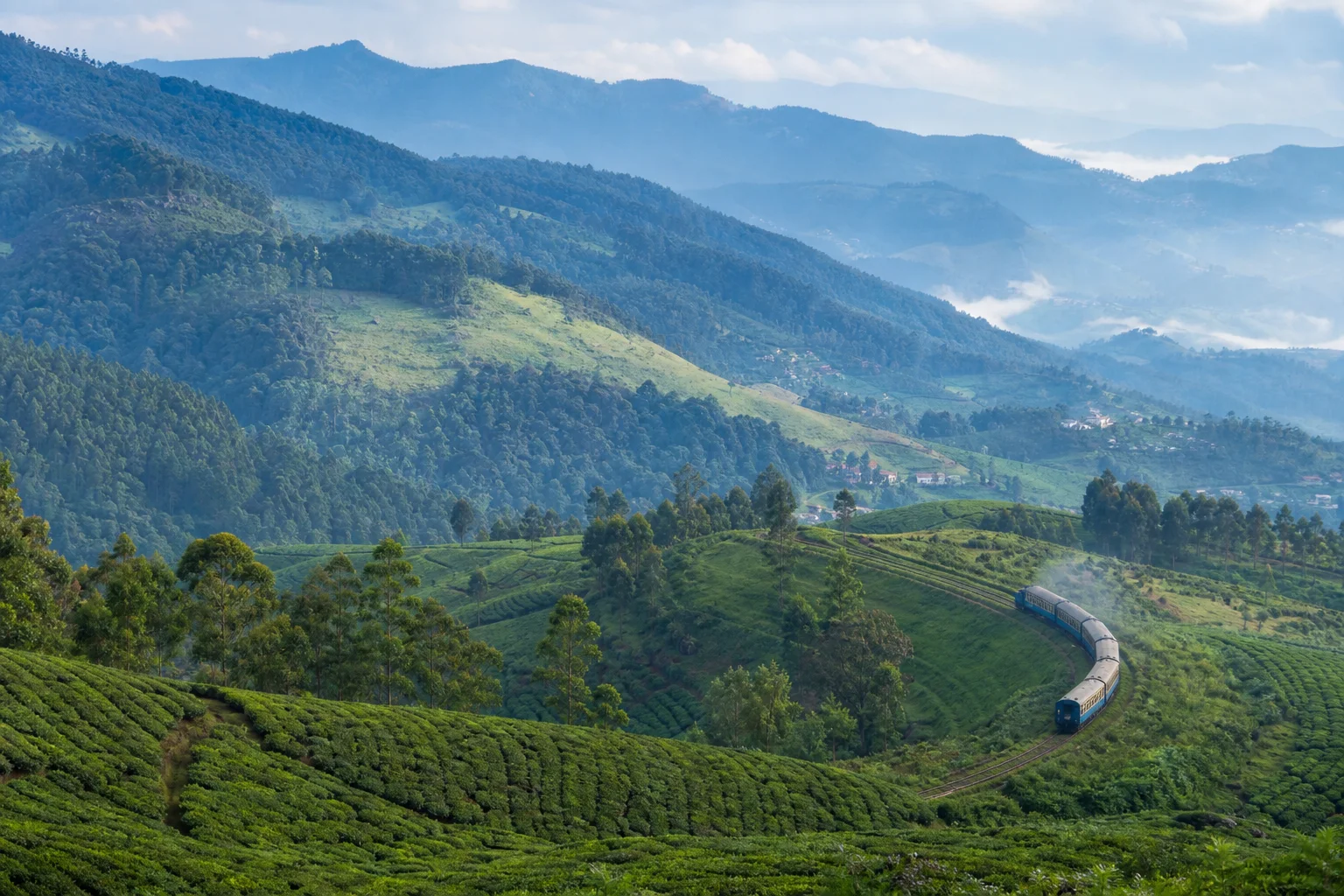
Ooty, Coonoor or Kotagiri: How to Choose a Nilgiris Base
A practical, non-ranking comparison of the Nilgiris' three best-known hill towns for first visits, slower stays, rail interest and landscape-led travel.
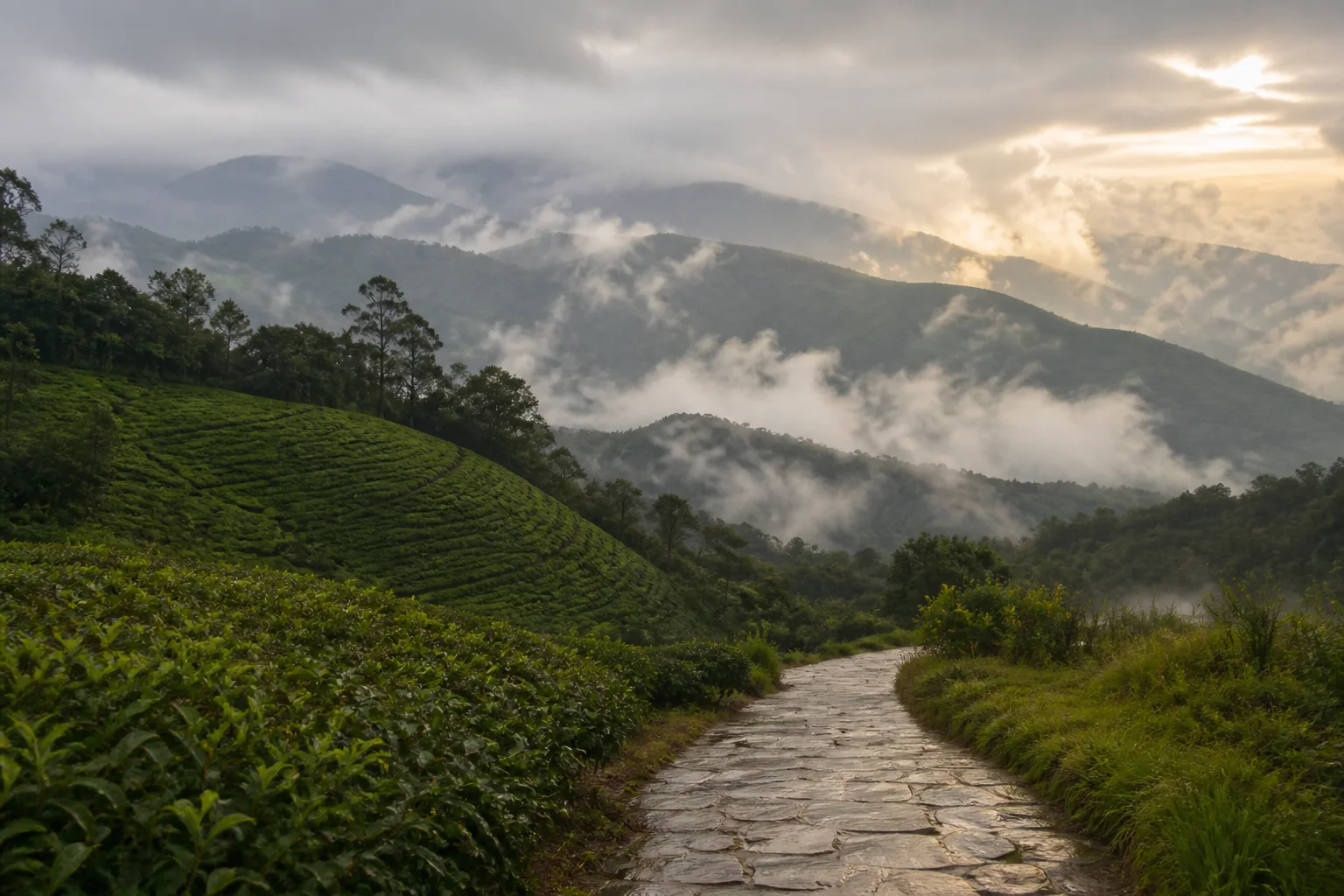
Tamil Nadu in the Late Southwest Monsoon: Where to Travel in August and September
A weather-aware way to choose between Tamil Nadu's hills, heritage cities, waterfalls, and coast during August and September.
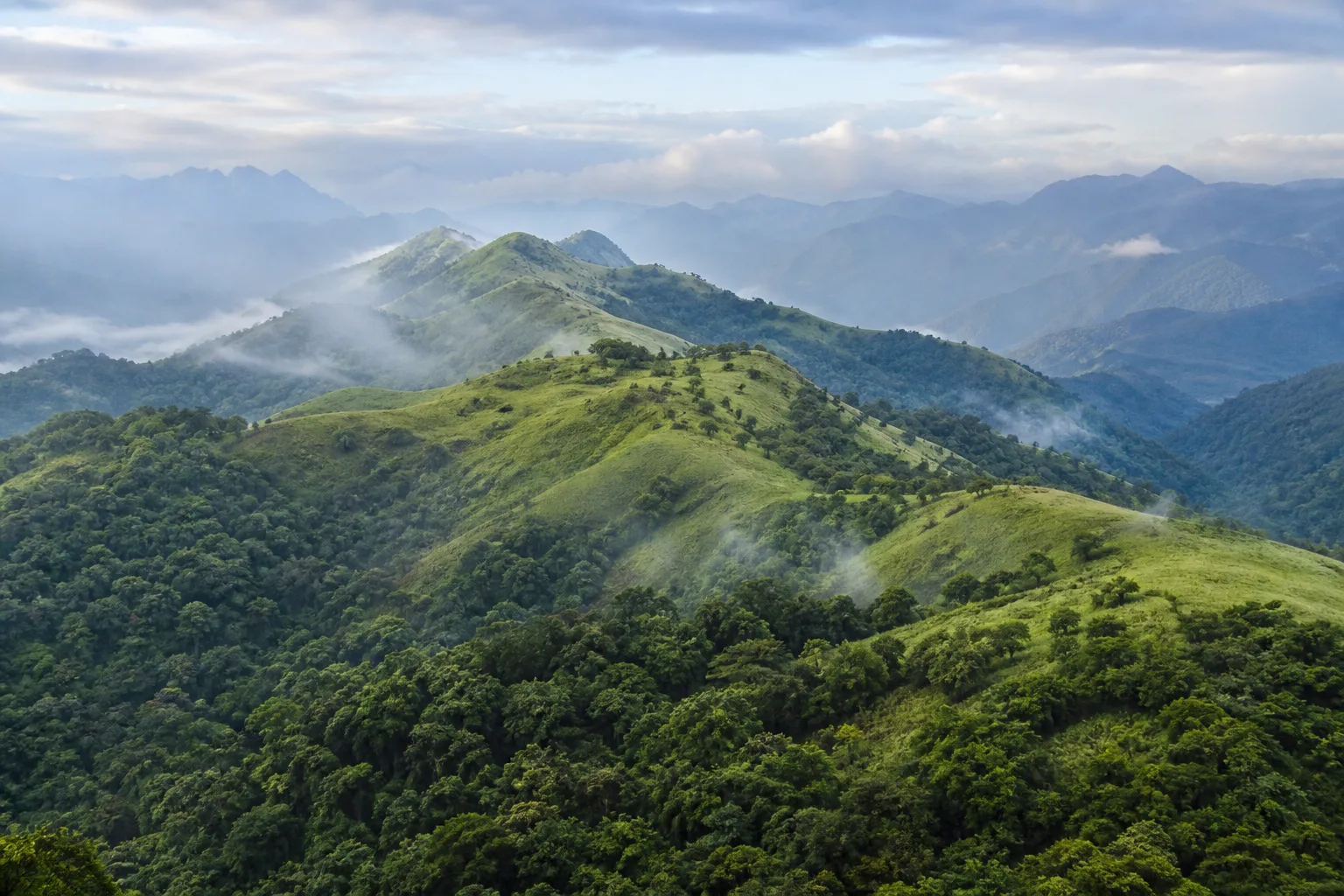
The Western Ghats of Tamil Nadu: Through Hills, Forests and Living Landscapes
A mountain journey through the Nilgiris, Anamalai and Palani Hills, reading elevation, forest, water, wildlife habitat and human settlement as one connected landscape.
Frequently asked questions
Is the Nilgiri Mountain Railway a UNESCO World Heritage Site?
It is a component of UNESCO's serial Mountain Railways of India World Heritage property, added as an extension in 2005.
Does every Nilgiri Mountain Railway service use a steam locomotive?
Do not assume so. The locomotive, train, segment and operating conditions must be confirmed through current official railway information.
Can this guide confirm tickets or timings?
No. Use IRCTC and Indian Railways for the current train, route, fare, availability and operating status.
Editorial attribution
Prepared and reviewed by My Tamil Nadu Editorial Desk. Modified 29 August 2026.