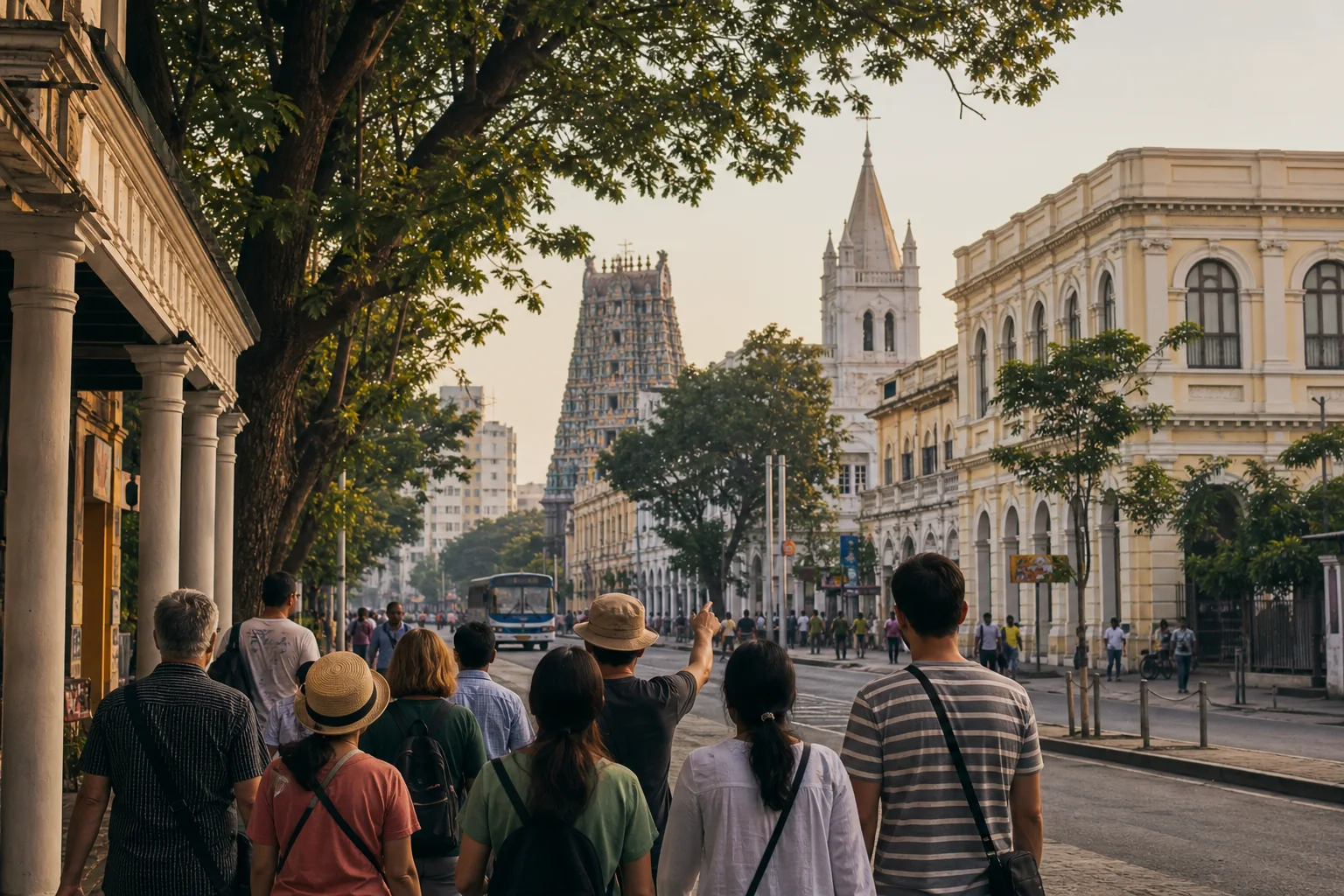
Why Madras Day is useful after August ends
Madras Day is associated with 22 August and has grown into a community-led period of walks, talks, exhibitions, quizzes, food trails and nature events. The 2026 programme again showed that interest in Chennai is not limited to famous buildings. Events followed cinema sites, trees, waterways, food streets, institutions and neighbourhood memory. Because each year's programme changes, this article does not reproduce registrations or schedules.
The enduring lesson is that city history can be entered through a manageable route. A street name, market, place of worship, railway edge, canal or public building can lead into questions about land, labour, language and governance. Madras Day is therefore best treated as an invitation to research Chennai, not as a claim that the city began fully formed on one date.
Sources for this section: Madras Day 2026, Origin and growth of Chennai.
Use the founding story as one layer, not the whole city
Greater Chennai Corporation's historical account distinguishes the earlier village of Madraspatnam from the settlement that developed around Fort St George in the seventeenth century. It also records the roles of local Nayak authority, East India Company agents, Indian merchants, artisans and weavers. The fort-centred story matters, but it does not erase older sacred places, fishing settlements or regional connections.
Names also carry political and social history. Madras, Madraspatnam, Chennapatnam and Chennai appear in different sources and periods. A careful walk asks which name a source uses and why. It avoids turning an uncertain etymology into fact or presenting colonial records as the only voice available.
Sources for this section: Origin and growth of Chennai, Corporation history.
Choose one neighbourhood question
George Town can be read through trade, warehouses, religious institutions and dense commercial streets. Mylapore opens questions about sacred geography, tanks, music, printing and later urban expansion. Triplicane, Egmore, Royapuram and Mount Road each produce different stories. Combining them all into one hurried route usually creates a list rather than understanding.
Choose a compact question: how a market uses the street, how worship shapes a block, how a railway changed movement, or how shade trees affect walking. Compare a historic map or institutional record with what is visible now. A vanished building is still evidence when its plot, name or surrounding activity can be responsibly traced.
Sources for this section: Origin and growth of Chennai, Madras Day walks.
Read trees, water, food and movement too
The 2026 Madras Day programme included tree, bird, butterfly, food and waterway walks alongside architectural routes. That range matters because a city is an environmental and social system. The Cooum, Adyar, Buckingham Canal, coast, tanks and marshes have shaped settlement and risk. Food routes reveal migration and trade, while trees show both ecological adaptation and public-space decisions.
Do not treat an urban wetland, fishing area or working market as a backdrop. Stay on public routes, avoid disclosing sensitive wildlife locations and ask before photographing vendors or worshippers. When a route enters a campus, archive, religious institution or protected building, current permission overrides an old event description.
Sources for this section: Madras Day walks.
A heritage walk still uses a living street
Use footpaths where available, cross at safe points and keep the group narrow enough for other pedestrians. Do not block shops, doorways, bus stops or religious entrances. Chennai heat and humidity can make a short route demanding; carry water, use sun or rain protection and build rest into the plan rather than treating distance as achievement.
Photography is not automatic consent. Ask before focusing on a person, private interior or small business. Avoid climbing structures or leaning on fragile fabric. If a guide shares an oral account, preserve its attribution and distinguish memory from an archival date. Responsible walking keeps residents at the centre of the neighbourhood rather than turning them into scenery.
Sources for this section: Madras Day walks, Corporation history.
Build a small route that can survive schedule changes
Begin with two or three related stops and one source question. Use Maps for broad orientation, then confirm opening, access and photography rules with each institution. Keep a public street alternative in case a building is closed. Current Metro, bus and traffic conditions should be checked on the travel day; an evergreen heritage article cannot promise a transfer time.
After the walk, record what changed between source and street. Which building was reused? Which community still maintains a tradition? What disappeared, and what evidence remains? This practice turns Madras Day from an annual checklist into a year-round way of reading Chennai with curiosity and care.
Sources for this section: Origin and growth of Chennai, Madras Day 2026.
Sources & Further Reading
These authoritative references support the historical, geographic, or seasonal context in this story. Current conditions and operating details still require a fresh official check.
- Events and Happenings 2026 · Madras Day
- Heritage Walks, Tours, Nature and Food Walks 2026 · Madras Day
- Origin and Growth · Greater Chennai Corporation
- Brief Note about Greater Chennai Corporation · Greater Chennai Corporation
Related Stories
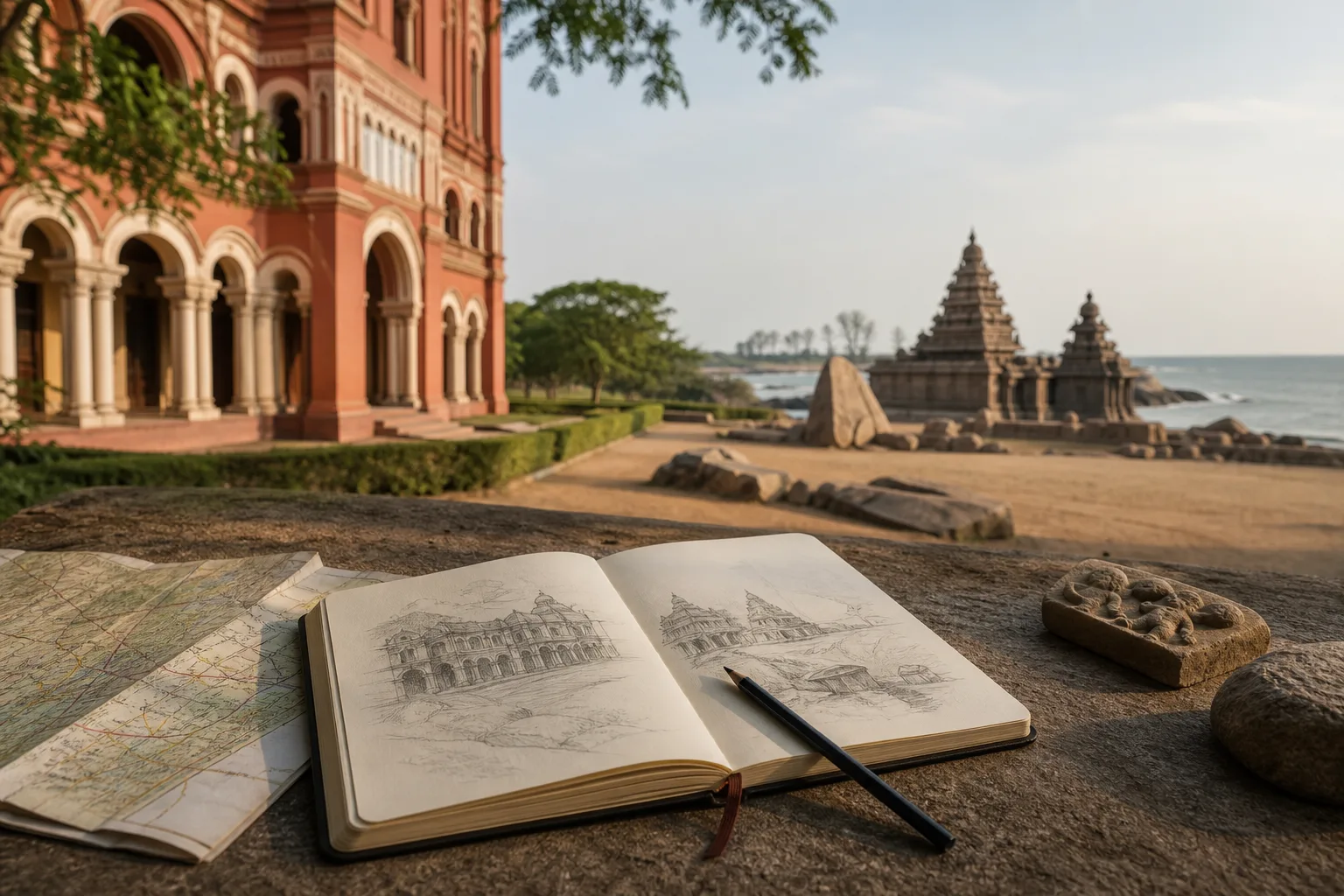
A Heritage Weekend from Chennai: How to Choose a Meaningful Route
A practical way to shape a heritage weekend from Chennai around one good question, a measured pace, and a choice between city and nearby extensions.
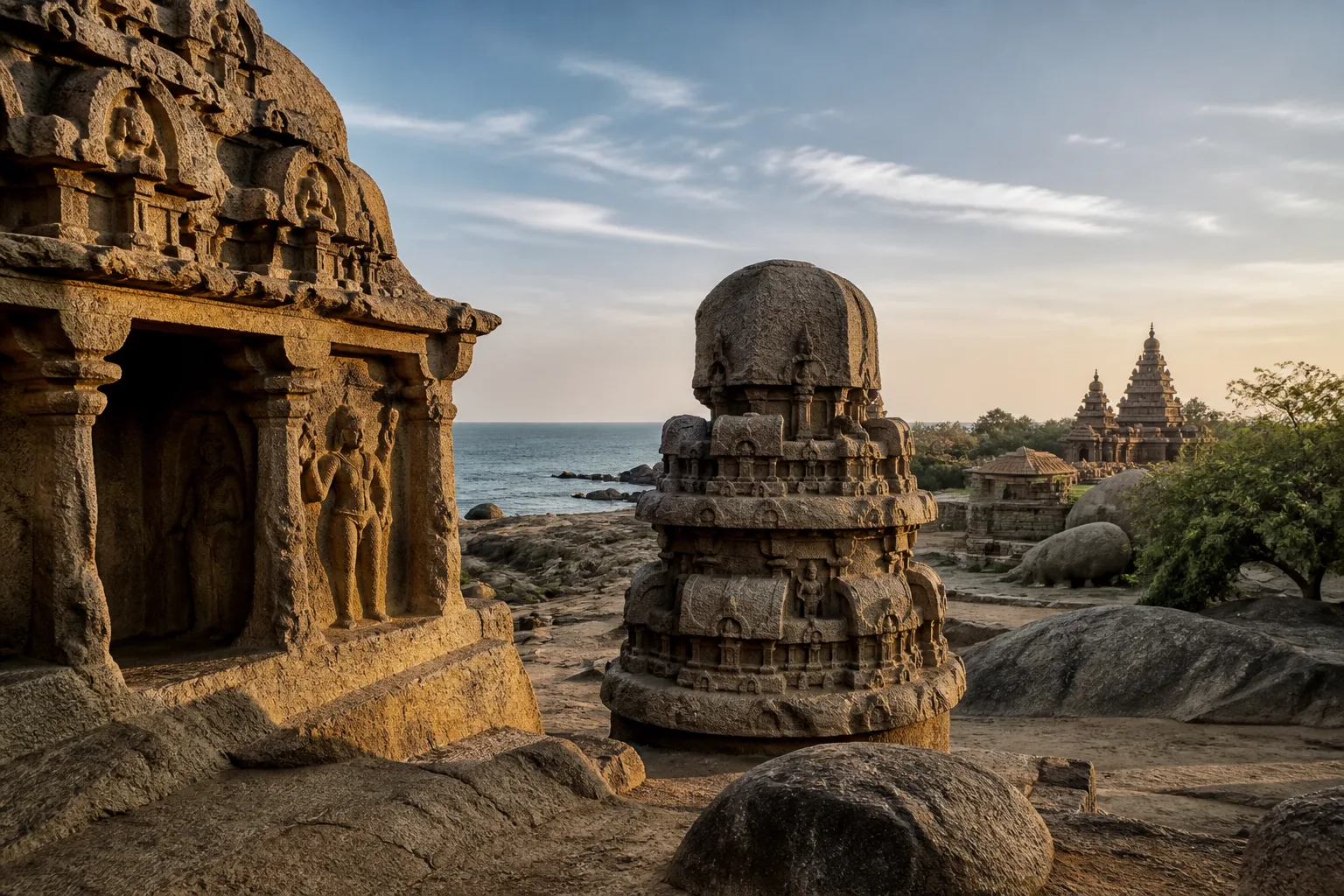
Beyond the Cholas: Exploring Pallava Heritage Across Tamil Nadu
Follow Pallava heritage from Kanchipuram's sacred city to Mamallapuram's coastal stone workshop, learning to compare form, material and evidence.
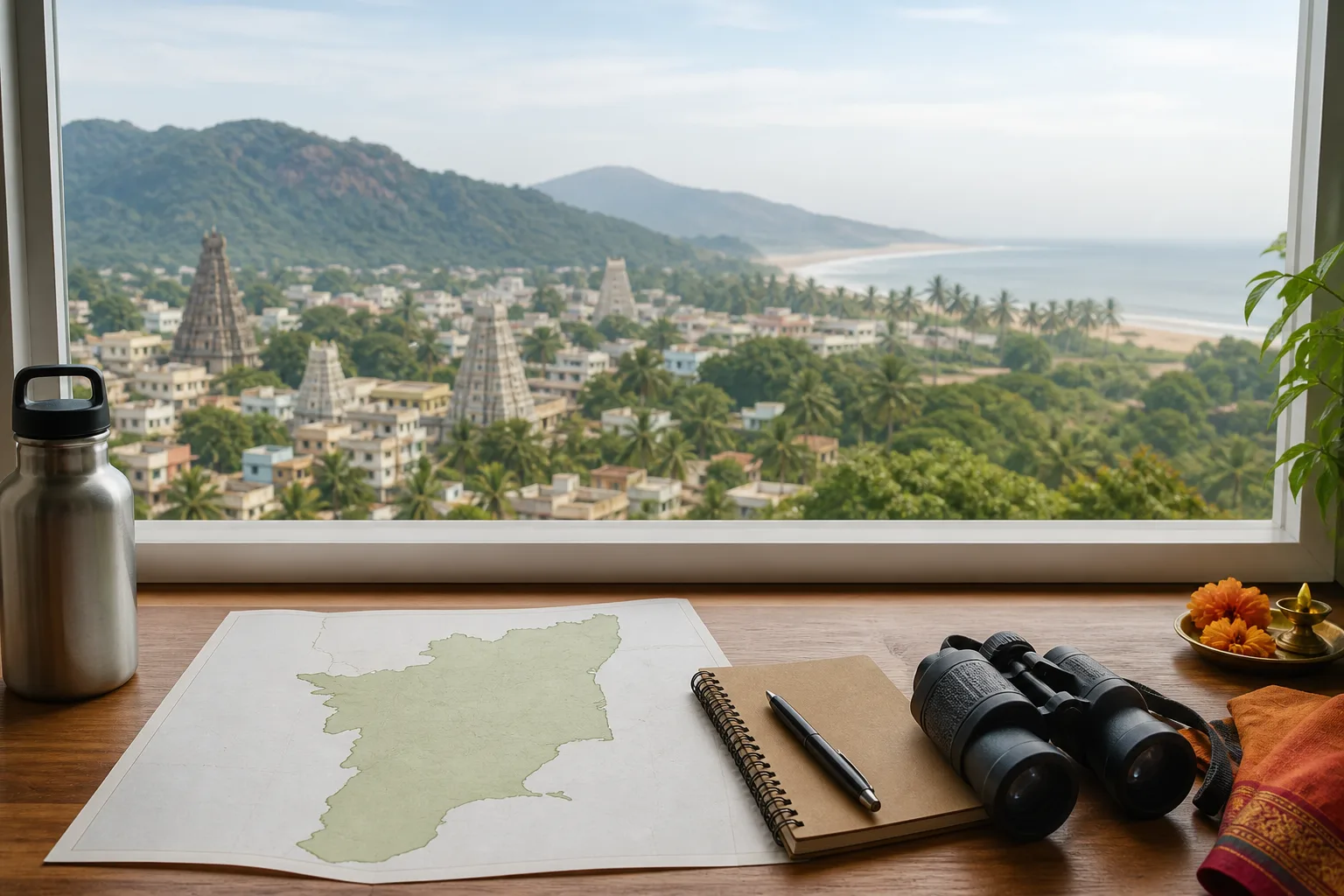
Tamil Nadu for First-Time Visitors: Choose a Base, Then a Direction
A base-first decision method for matching Chennai, Madurai, Coimbatore or Tiruchirappalli with one realistic outward direction.
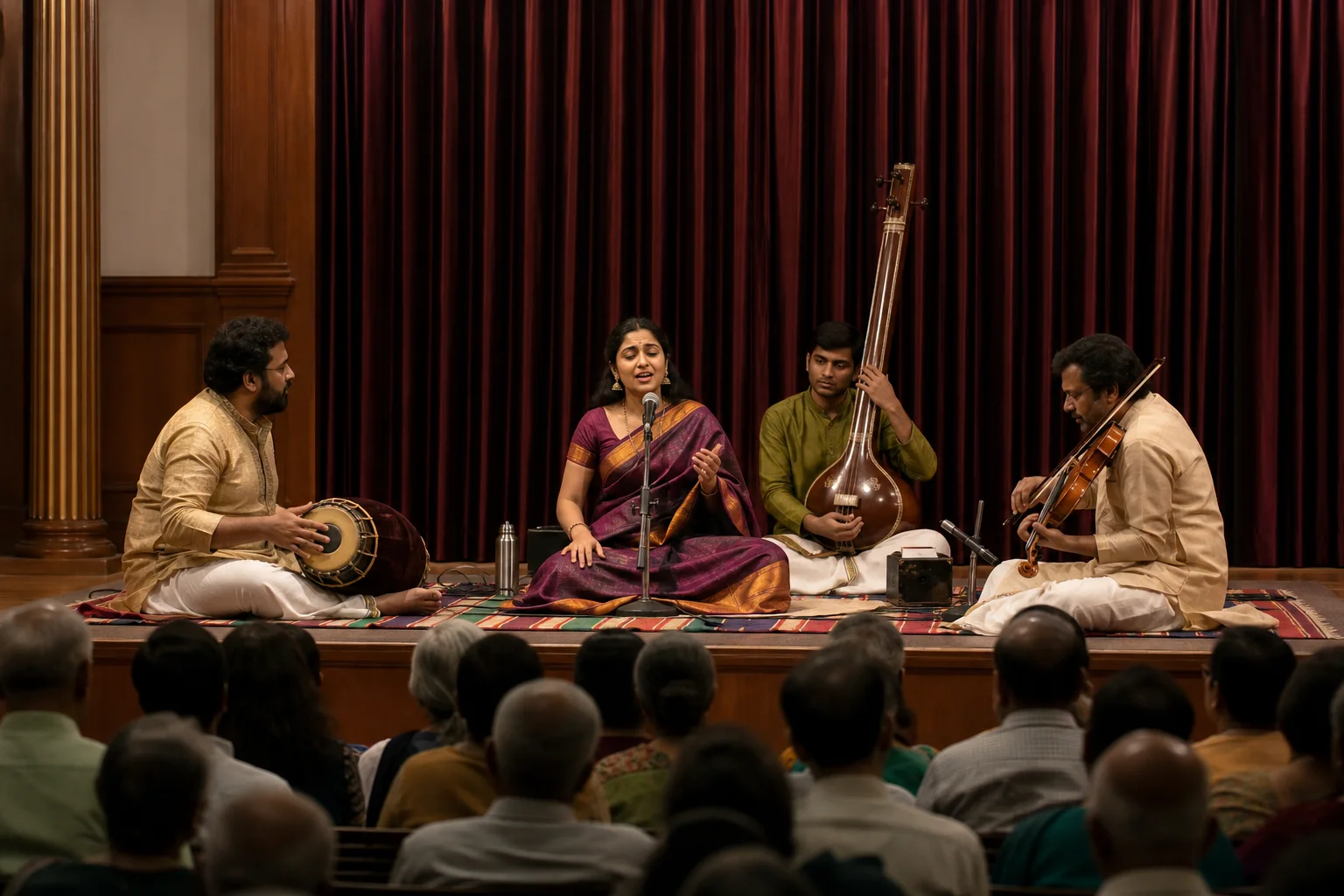
Chennai Music Season: A First Listener's Way In
A calm way to enter Chennai's distributed December concert season without trying to understand every raga, artist or sabha at once.
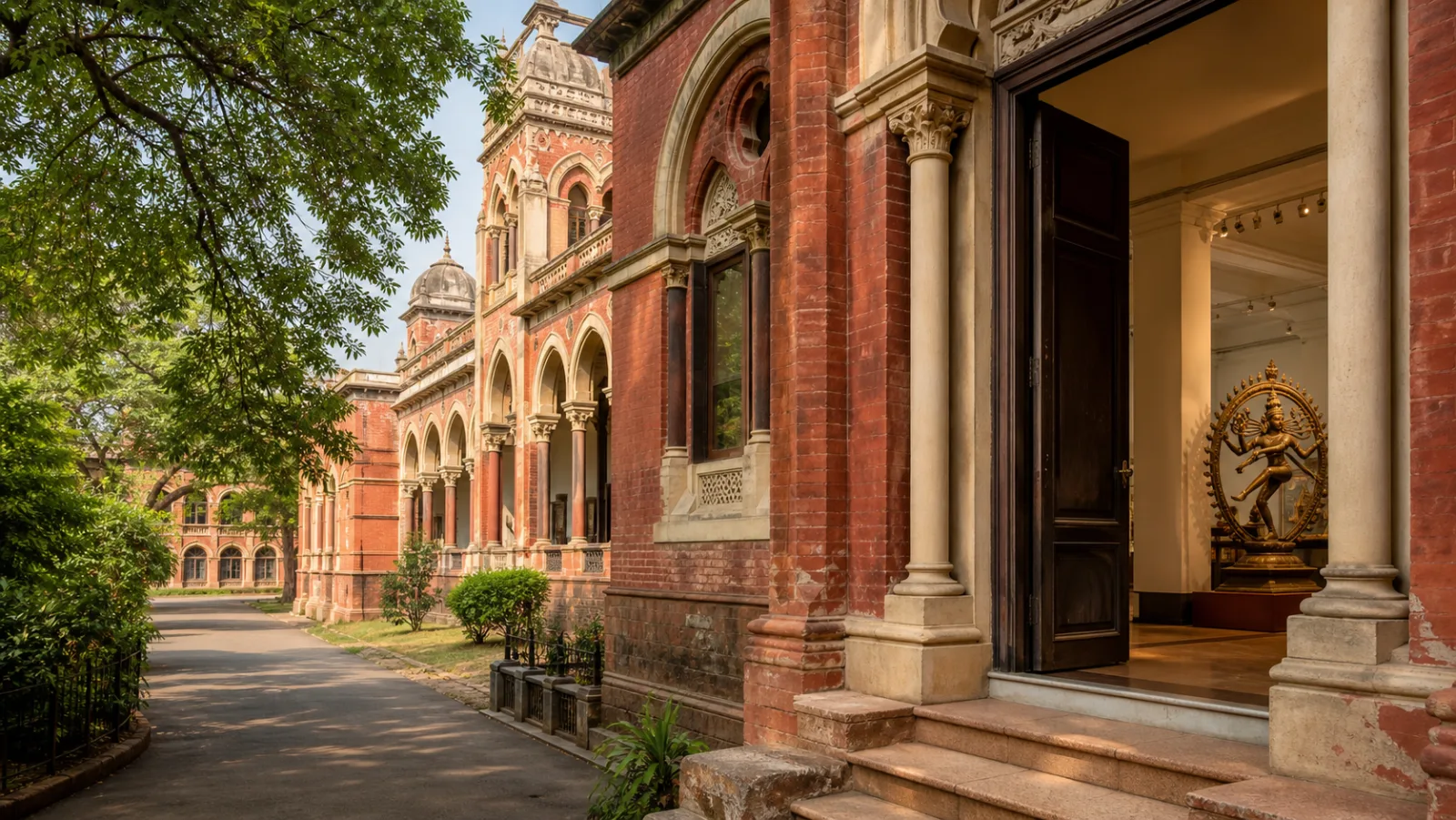
Chennai Government Museum: Read a Campus of Collections
A first-visit method for reading the Egmore museum as an evolving campus of architecture, archaeology, bronzes, inscriptions and public education.
Frequently asked questions
Is Madras Day only on 22 August?
It is associated with 22 August, while community programmes often extend across several days or weeks and vary each year.
Did Chennai begin only with Fort St George?
No. The fort and Company settlement are major layers, but earlier villages, sacred places, communities and regional networks also belong to the city's history.
Are the 2026 heritage-walk registrations still valid?
No assumption should be made. Event schedules and registrations are year-specific; verify any current programme with its organizer.
Editorial attribution
Prepared and reviewed by My Tamil Nadu Editorial Desk. Modified 27 August 2026.