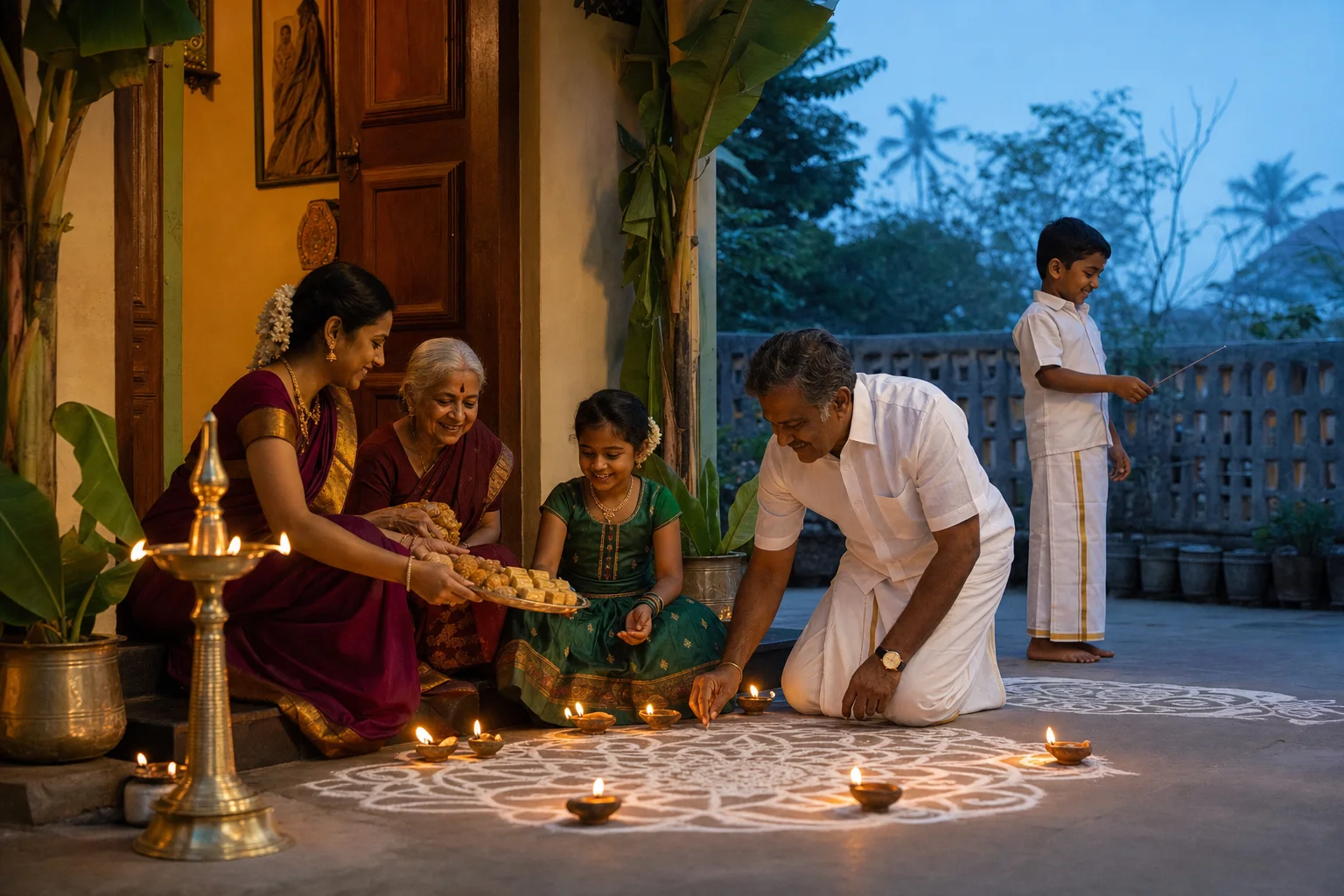
One festival name does not produce one household script
Deepavali means a row of lights and is celebrated across India and beyond through many religious and regional narratives. Ministry of Tourism material presents a broad multi-day Diwali framework, including Dhanteras, Naraka Chaturdashi, a principal worship day, Govardhan Puja and Bhai Dooj. That sequence is useful national context, not a compulsory description of every Tamil household.
In Tamil Nadu, the Naraka Chaturdashi morning is especially prominent in many Hindu family traditions. Other communities, mixed households and individuals observe differently or not at all. Some emphasise temple worship, some family meals and visits, some lamps, some fireworks, and some quieter forms of celebration.
Ask what a host does before announcing what Deepavali is. Vocabulary also varies: Deepavali and Diwali are both widely understood, while particular foods, blessings and stories can belong to family or community memory. Editorial care means describing patterns without turning them into a test of authenticity.
Sources for this section: Diwali overview.
Why the Tamil Deepavali day often begins before sunrise
Many Tamil accounts of the day foreground an early oil bath, festive clothing, blessings and food. A household may prepare sesame oil, herbal bathing products and garments in advance. The sequence is intimate and domestic; a visitor should not assume it is available for observation or photography simply because it is culturally familiar.
New clothes can express renewal, gifting and family care, but they do not require expensive purchasing. Handloom, stitched clothing or garments already chosen by the household may all be part of the day. A festival article should not turn social expectation into pressure to spend beyond a person's means.
Dawn activity also produces practical needs: quiet movement in shared buildings, care around wet floors, and supervision near lamps. If staying with a family, ask when to be ready, where footwear belongs and whether a bathing or blessing practice is private. Respect is often logistical before it becomes symbolic.
Sources for this section: Diwali overview, Tamil Nadu handlooms.
Read the table through preparation and variation
Sweets and savoury snacks circulate through homes, workplaces and visits. Adhirasam, murukku and mixture may appear alongside many other recipes, but no short list represents every district or household. Ingredients, technique, time and family memory matter more than declaring one definitive Tamil Deepavali menu.
Ask before serving a guest with allergies or dietary restrictions, and do not assume a homemade item is free from nuts, dairy, gluten or cross-contact. If buying from a shop, current ingredients, storage and hygiene belong to the seller's information. A traditional name does not replace a safety question.
Gifts need not become wasteful abundance. Smaller quantities, reusable containers and clear ingredient notes can make sharing easier. When photographing food prepared by a host, credit the cook if they agree; recipes and labour should not disappear behind a generic festival aesthetic.
Sources for this section: Diwali overview.
The threshold joins beauty with shared space
Oil lamps and electric lights can mark thresholds, prayer areas and gathering spaces. Kolam may be renewed for the occasion. These forms are visually compelling, but they remain part of a working entrance. Do not step across a design, move a lamp for symmetry or block a doorway while composing a photograph.
Keep flame away from fabric, paper decorations, curtains and crowded circulation. Place lamps on stable surfaces where children, older adults and animals can move safely. Never leave an open flame unattended, and use the building's actual fire-safety requirements rather than assuming a traditional object is automatically safe.
In an apartment corridor or shared street, decoration must coexist with neighbours, emergency access and cleaning. Ask before extending a display beyond the household boundary. A respectful threshold welcomes without claiming more public space than the celebration can safely manage.
Sources for this section: Safe Diwali guidance, Green Deepavali appeal.
Fireworks are optional, regulated and never risk-free
Tamil Nadu Fire and Rescue Services publishes safe-Diwali guidance, and state authorities issue current environmental and timing notices. Those notices, not last year's social-media graphic, decide the permitted window and restrictions. The article deliberately does not publish a 2026 firework time because rules must be checked close to the festival.
Use only lawful products from authorised sellers, follow the printed instructions, keep water or suitable extinguishing resources ready and ensure active adult supervision. Never relight a failed item immediately, hold an explosive firework, aim it toward people or buildings, or use it near hospitals, schools, courts, religious places, huts and other fire-prone areas identified in official advice.
Noise and smoke affect infants, older adults, people with respiratory or sensory conditions, workers, animals and birds. Choosing lamps, food, visits or a low-noise celebration is not a lesser Deepavali. The Tamil Nadu government's green-Deepavali appeal explicitly frames light, family and environmental care as a better direction than noise and smoke.
Sources for this section: Safe Diwali guidance, Green Deepavali appeal.
Plan visits around people, animals and the journey home
Confirm whether a household is receiving visitors and at what time. Carry a modest gift only if appropriate, remove footwear where requested and ask before photographing prayers, children or elders. A greeting does not create consent for a public post, especially when a home interior or address is visible.
Road noise, smoke and scattered debris can affect evening movement. Check current public transport and visibility, avoid driving after alcohol, and give children and animals a secure indoor area away from sudden sound. Clean firework remains only after they are cold and handle them according to local waste guidance.
Deepavali can be read through renewal, generosity and light without pretending that every family tells the same story. The best visitor posture is to participate at the scale offered: a sweet, a lamp, a greeting or a meal, with enough restraint that someone else's safety and quiet remain part of the celebration.
Sources for this section: Safe Diwali guidance, Diwali overview.
Sources & Further Reading
These authoritative references support the historical, geographic, or seasonal context in this story. Current conditions and operating details still require a fresh official check.
- Diwali · Utsav, Ministry of Tourism, Government of India
- Tips for Safe Diwali · Tamil Nadu Fire and Rescue Services
- Government Appeal for a Noiseless, Smokefree and Safe Deepavali · Department of Information and Public Relations, Government of Tamil Nadu
- Department of Handlooms · Department of Handlooms, Government of Tamil Nadu
Related Stories
Beyond Pongal: How to Read Tamil Nadu's Festival Calendar
A cultural guide to the many clocks behind Tamil Nadu's festivals, from harvest and household practice to temple calendars and pilgrimage.
Navaratri Golu in Tamil Nadu: Reading the Stories on the Steps
A respectful guide to the dolls, household creativity, visits, music, food and changing narratives that make Golu more than a decorative display.
Tamil Nadu Tiffin Culture: Idli, Dosa, Pongal and the Morning Table
Read Tamil Nadu's morning table through fermented batter, quick service, home preparation, public eating and the many meanings of tiffin.
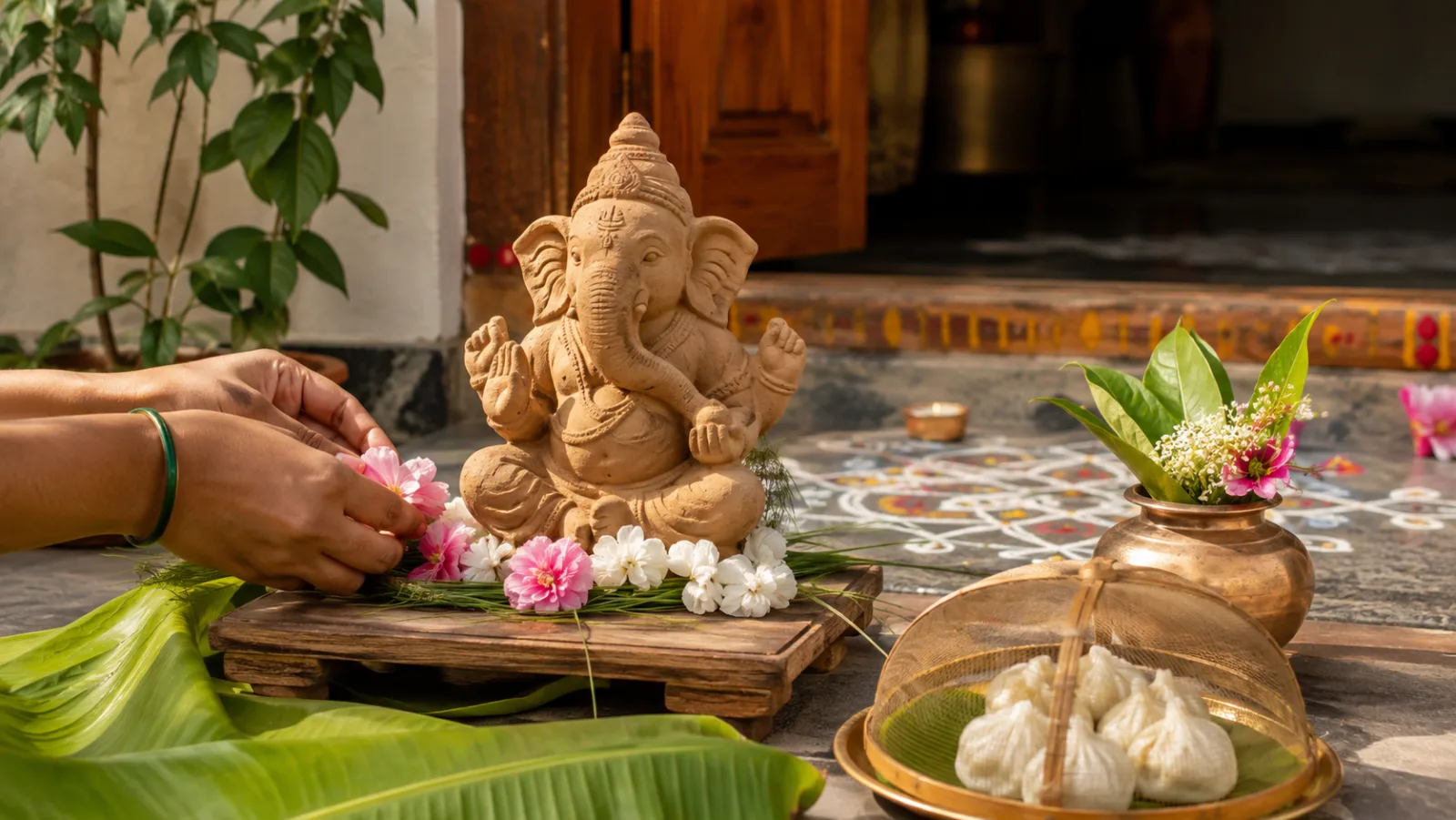
Vinayagar Chaturthi in Tamil Nadu: Clay, Kozhukattai and Care
A respectful festival guide connecting household preparation, temple traditions, food and water responsibility without turning one practice into a universal rule.
Frequently asked questions
Is Tamil Nadu Deepavali always celebrated in the morning?
Early-morning observance is important in many Tamil Hindu households, but timing and practice vary by family, community and circumstance.
What time can fireworks be used in 2026?
This article does not preserve a time window. Check the current Tamil Nadu government, pollution-control and fire-service notices close to the festival.
Are fireworks required for Deepavali?
No. Families can centre lamps, prayer, food, clothing, gifts and visits, and may choose a quieter celebration for safety, health or environmental reasons.
Editorial attribution
Prepared and reviewed by My Tamil Nadu Editorial Desk. Modified 29 August 2026.