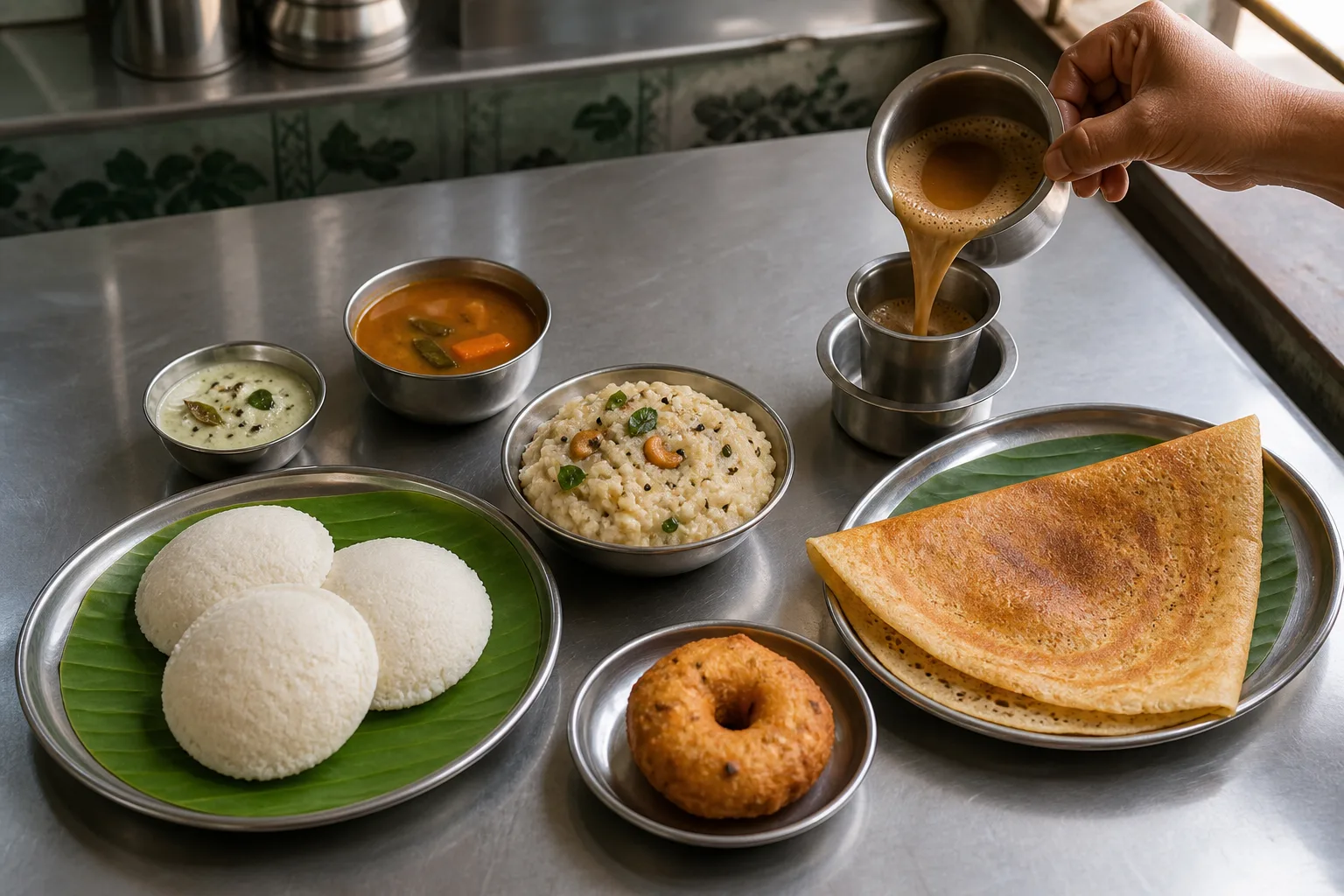
Tiffin names a meal context more than a single menu
In Tamil Nadu, tiffin can describe light meal foods associated with breakfast, evening service, travel, canteens or a quick restaurant order. The boundary is flexible. Idli and dosa may appear in the morning, while vadai, upma, pongal, appam, idiyappam or other preparations enter according to region, household, institution and time. A tiffin item can be substantial; the word does not guarantee a small portion or one nutritional profile.
That flexibility is culturally useful. Rice meals often organise a different part of the day, while tiffin foods can adapt to work, school, pilgrimage, transport and domestic schedules. Yet no statewide routine fits every household. Occupation, income, religion, caste, migration, health needs, fuel, equipment and personal preference all shape what reaches the morning table.
Sources for this section: Official Chennai food guide, Official Madurai food guide.
Fermentation turns breakfast into advance planning
Idli and many dosa traditions rely on batters prepared before the moment of cooking. Soaking, grinding, proportion, ambient temperature, water and time affect fermentation and texture. That means a seemingly quick breakfast can depend on work performed the previous day. Domestic skill includes reading batter rather than following one clock, while commercial kitchens manage larger volumes, refrigeration and service consistency in different ways.
There is no universal idli-dosa batter. Rice and pulse types, grinding equipment, thickness, salt, fermentation and reuse vary. Millet and other grain preparations widen the category further; Tamil Nadu Agricultural University documents ragi dosa in a Kongunadu context without making it the only regional method. This article explains the food system but does not offer a recipe or safety guarantee.
Sources for this section: TNAU ragi context.
Idli makes softness, steam and accompaniment visible
Idli is often described through simplicity: a pale steamed round served quickly. That appearance hides decisions about batter, fermentation, mould, steaming and holding. Texture can range from dense to very soft, and size is not standard. Rice-and-pulse versions are common, but names such as idli do not certify identical ingredients in every kitchen. A diner with allergies or dietary restrictions must ask directly.
The idli also reveals how accompaniments construct the meal. Coconut chutney, other chutneys, sambar, podi and oil may appear singly or together. Their flavour and consistency change by household and service setting. Calling one combination authentic makes ordinary variation look like error. Better questions concern what is prepared fresh, what is seasonal, how the kitchen balances speed and waste and which accompaniment the eater associates with home.
Sources for this section: Official Chennai food guide.
Dosa is a family of forms, not one crisp standard
Dosa can be thin and crisp, soft, thick, small, large, plain, filled or made from batters that do not share the familiar fermented rice-and-pulse base. The hot griddle makes service visible: spreading, fat, heat and timing shape the surface in front of the diner. A paper-thin restaurant dosa and a softer household dosai can belong to the same broad tradition without one being the definitive version.
Fillings and names add another layer. Masala, onion, podi, ghee and regional or commercial variations describe preparation, but a menu name may not establish historical origin. Avoid claims that one city invented dosa or that a modern oversized form represents ancient continuity unless strong documentary evidence supports it. The Food hub treats dosa as a varied tiffin family rather than a protected formula.
Sources for this section: TNAU ragi context, Official Chennai food guide.
Ven pongal and vadai change texture and pace
Ven pongal brings rice and pulse into a soft savoury preparation commonly seasoned with pepper, cumin, ginger, curry leaf, cashew or other variations. It can be breakfast, temple-associated food or part of a wider service context. The dish should not be confused with the whole Pongal harvest festival or assumed to carry the same ritual meaning in every setting. The shared name requires context, not a single explanation.
Vadai contributes a fried contrast, but the category includes different pulse batters, shapes and names. A medu-vadai-like ring is visually familiar, while other vadai forms work differently. Crisp exterior, softer centre and quick service make it a common companion to tiffin, yet availability, oil, ingredients and freshness are current kitchen matters. A cultural article cannot certify them for a particular diner.
Sources for this section: Official Pongal overview, Official Madurai food guide.
Chutney and sambar are not supporting background
A plate of idli or dosa changes completely with its accompaniments. Coconut chutney may be mild, hot, thick, loose or tempered differently; tomato, onion, mint, coriander, peanut and other forms enter varied kitchens. Sambar changes with pulse, souring, vegetables, spice blend and service purpose. Tiffin sambar is not one standardized preparation replicated across Tamil Nadu.
Accompaniments also reveal labour and waste decisions. A busy establishment may design a service system around rapid replenishment, while a household may use what is available or carry over a carefully stored preparation. Unlimited service is a commercial practice, not a cultural requirement. Ask before assuming refills, and do not equate abundance with quality or hospitality with an obligation to over-serve.
Sources for this section: Official Chennai food guide, Official Madurai food guide.
Home and public tiffin organise labour differently
At home, breakfast may involve grinding, fermenting, steaming, packing and cleaning before others leave for work or school. That labour is often made invisible by describing tiffin as effortless traditional food. Appliances, packaged batter, refrigeration and smaller households have changed the sequence without erasing skill. Convenience can preserve a routine as much as it transforms one.
Public tiffin settings range from canteens and messes to small shops, hotels, railway-area service and contemporary cafes. Standing, sharing a table, reading a token, paying at a counter or receiving food in a particular sequence are social practices, but none is universal. Photographing workers, kitchens or other diners requires permission. This site does not rank establishments or freeze their hours, prices and hygiene status.
Sources for this section: Official Chennai food guide.
Regional difference appears in grain, accompaniment and routine
The familiar idli-dosa-pongal set is only one route into Tamil Nadu's mornings. Appam and idiyappam are significant in several southern settings; millet preparations connect with agricultural and regional contexts; meat or fish accompaniments may appear in particular communities; and rice, wheat or semolina preparations expand the table. Vegetarian description applies to a preparation, not automatically to a kitchen or every accompaniment.
Madurai's public food rhythm, Kongunadu's grain and crop context, the Cauvery delta's coffee associations and Chennai's metropolitan mixture create different stories. Region is not exclusivity. A dish crossing district boundaries does not lose authenticity, and a local label does not prove that every resident eats it. Use destination and cuisine guides to understand place without converting variation into rivalry.
Sources for this section: Official Madurai food guide, TNAU ragi context.
Filter coffee closes some mornings and begins others
Filter coffee brings decoction, milk, sugar, metal equipment, plantation supply and service performance into one small drink. Pouring between tumbler and davara can cool and aerate the coffee, but not every household or establishment uses the same vessels, blend, chicory proportion, milk or sweetness. Coffee is widely visible without being a universal Tamil identity or an unchanged ancient custom.
Coffee Board records connect production with growing regions and wider supply systems, while historical scholarship places coffee drinking within modern colonial and middle-class change. Kumbakonam degree coffee adds a powerful place association, but explanations of degree remain debated. The permanent guide keeps that uncertainty visible rather than selecting one attractive origin story.
Sources for this section: Coffee Board regions, Coffee in colonial Tamil Nadu.
The morning table keeps changing
Packaged batter, delivery platforms, workplace canteens, nutrition concerns, migration, global cafe formats and changing household schedules all reshape tiffin. Change does not automatically mean decline, and an older method is not automatically more ethical or accessible. The useful question is what labour, ingredient knowledge and social relationship each system preserves, moves or hides.
Explore tiffin without turning breakfast into a checklist. Compare one steamed, one griddled and one rice-and-pulse form; notice accompaniment and service; ask specific questions without demanding a secret recipe or origin claim. Confirm allergens, ingredients, price and availability directly. A good food journey leaves room for household difference and gives cooks and servers more attention than a photograph of the plate.
Sources for this section: Coffee in colonial Tamil Nadu, Official Chennai food guide.
Sources & Further Reading
These authoritative references support the historical, geographic, or seasonal context in this story. Current conditions and operating details still require a fresh official check.
- A Foodie's Guide to Trying Local · Ministry of Tourism, Government of India
- Must Eat Local Dishes in Madurai · Ministry of Tourism, Government of India
- Ragi Dosa and Kongunadu Context · Tamil Nadu Agricultural University
- Coffee Regions of India · Coffee Board of India
- In Those Days There Was No Coffee: Coffee-drinking and Middle-class Culture in Colonial Tamilnadu · A. R. Venkatachalapathy, Indian Economic & Social History Review
- Pongal Festival · Ministry of Tourism, Government of India
Related Stories
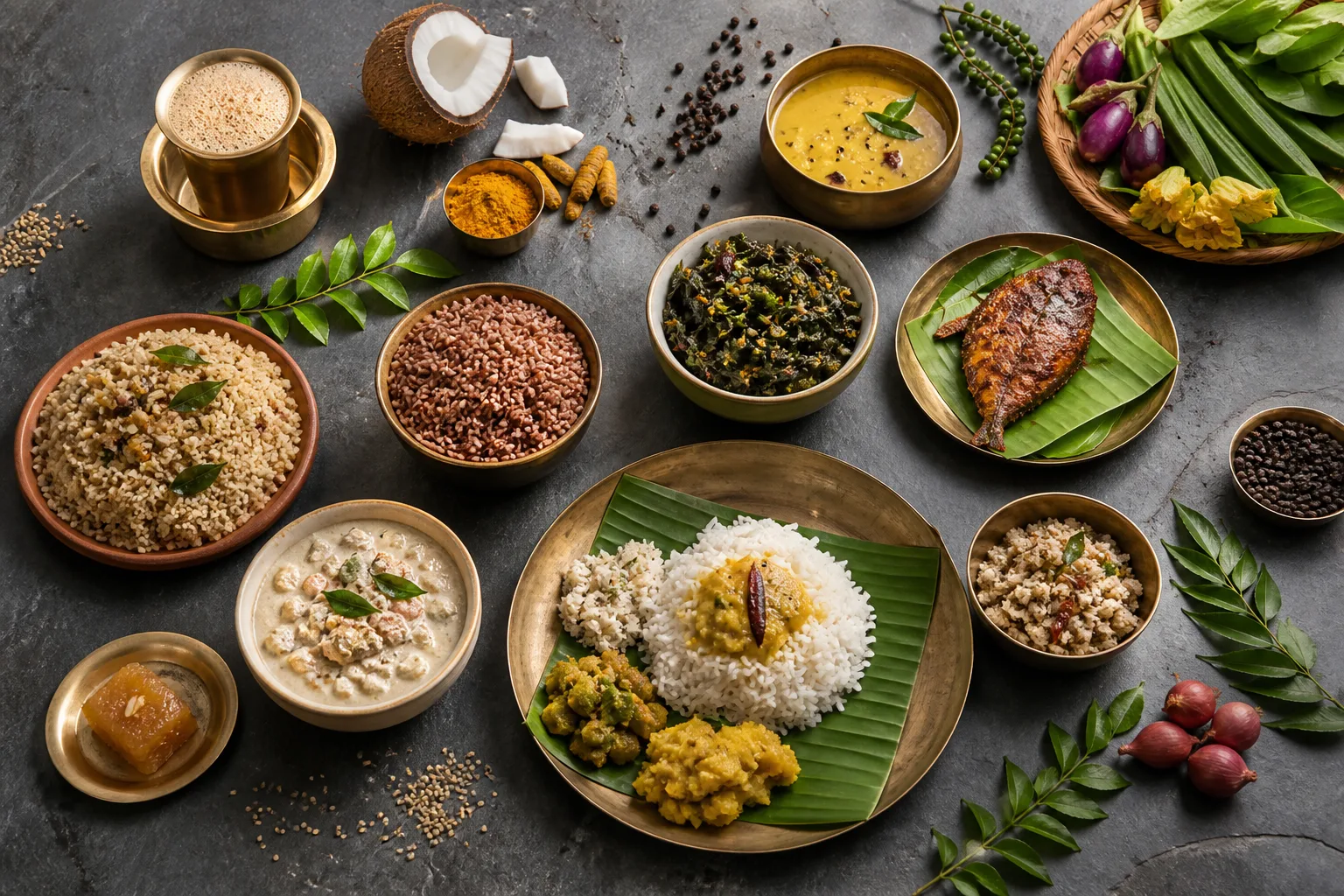
A Food Journey Through Tamil Nadu's Regional Cuisines
Travel across Tamil Nadu through the relationships among region, crop, technique, household memory, migration, worship, and changing city life.
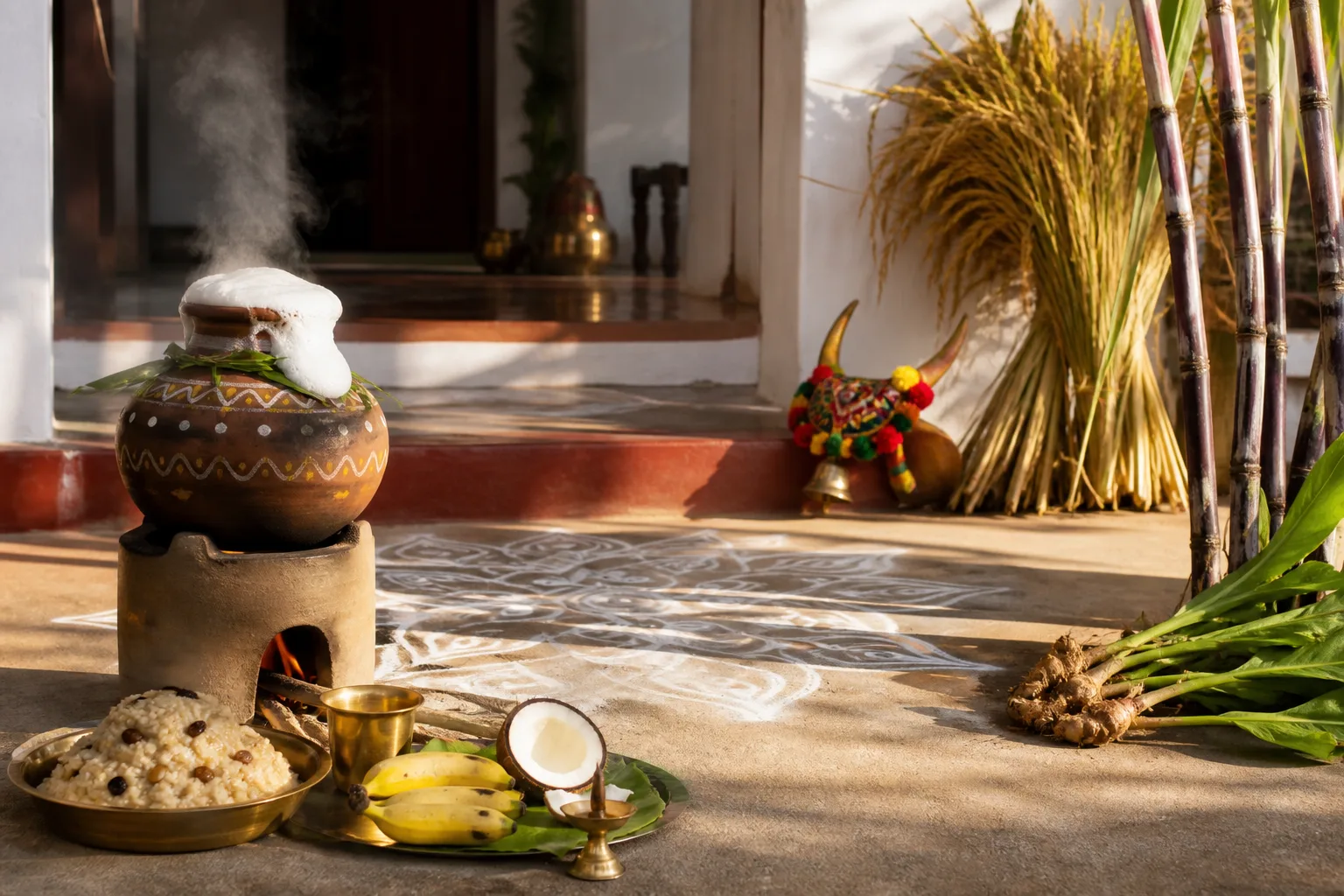
Pongal in Tamil Nadu: Understanding Four Days of Harvest Traditions
Follow Pongal across four connected observances, from renewal and the boiling pot to cattle, kinship and public gathering, without treating one household pattern as universal.
Editorial attribution
Prepared and reviewed by My Tamil Nadu Editorial Desk. Modified 20 August 2026.